How to Make Foaming Hand Soap (2 Ingredients, 2 Minutes, Costs Pennies)
Last updated: March 13, 2026
I went through foaming hand soap at a ridiculous rate for years — three kids, a kitchen sink that gets heavy use after garden work and animal chores, and a habit of buying those $6 Bath and Body Works refills without thinking twice. Then I looked up the ratio. Two minutes and a bottle of dish soap later, I've never bought foaming soap refill again.
This is genuinely one of those "why didn't I know this sooner" projects. Here's everything you need.
QUICK SNAPSHOT
- Ratio: 1 part liquid soap + 4–5 parts water
- What soap works: Any liquid hand soap, castile soap, or dish soap
- What you need: A foaming soap dispenser (regular pumps won't foam)
- Time: Under 2 minutes
- Cost: ~$0.15–$0.25 per refill vs. $5–6 for store-bought
- The only thing you might need to pick up is a foaming soap dispenser — if you don't already have one, I use a glass one and love it. [glass dispenser link]
What Makes Foaming Soap Foam?
Here's the part that makes this all make sense: the foam comes from the dispenser, not from the soap. A foaming pump has a two-chamber design — one chamber holds the soap, and a smaller chamber forces air into the soap as you press down the pump. That rush of air is what turns the liquid into foam.
Regular liquid soap is too thick for this mechanism — it can't move through the pump and get properly aerated. When you add water, you thin it down to exactly the right consistency for the pump to do its job.
Once you understand this, you realize that any liquid soap works. The soap just needs to be thin enough. You're not changing the soap chemistry; you're just getting it to the right viscosity.
Is It Really Worth Making Your Own? (Cost Breakdown)
Yes — and it's not close. Here's the math: a standard 16 oz bottle of liquid hand soap costs about $3 at any grocery store. At a 1:4 ratio, that makes approximately four to five full refills of a 10 oz foaming dispenser. Store-bought foaming soap refills run $5–6 each. That means you're saving roughly 70–80% per refill.
The more soap your family goes through, the faster this adds up. In our house, making our own foaming soap saves at least $40–$50 a year just for the kitchen sink. That's before counting the bathroom dispensers.
The Basic Foaming Hand Soap Recipe
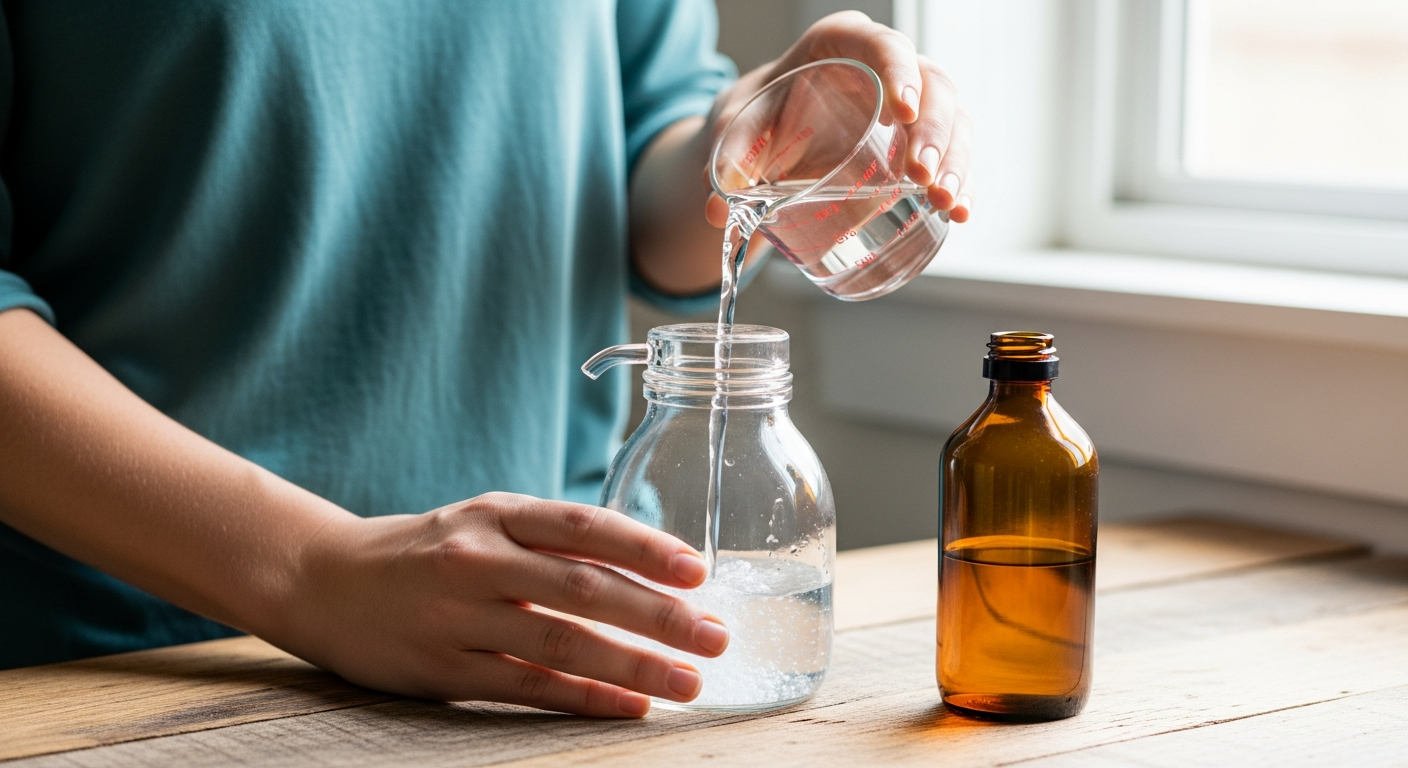
Add water first — always. If you pour soap in first and then add water, you'll create a bottle full of foam that makes it impossible to see your fill level. Water first, soap second, every time.
You'll need:
- A foaming soap dispenser (empty)
- Liquid soap of your choice
- Water
- Optional: 10–15 drops of essential oil for scent
Steps:
- Start with a clean, empty foaming soap dispenser.
- Pour water in first — fill the bottle to about 80% full.
- Add your liquid soap — roughly 1 part soap to every 4–5 parts water. (For a 10 oz dispenser: about 1.5–2 oz soap + fill the rest with water.)
- If you're adding essential oils for scent, add them now.
- Gently tip the dispenser back and forth a few times to mix. Don't shake it — that creates bubbles.
That's it. You're done.
Which Foaming Dispenser Works Best?
You have three real options, depending on where you're starting:
- Free: Reuse an empty commercial foaming soap dispenser. Bath and Body Works, Method, Softsoap — if the pump foams, it'll work. This is the easiest way to start.
- Budget: A basic plastic refillable foaming pump bottle runs $5–8 on Amazon and works perfectly well.
- Upgrade: A glass foaming dispenser is heavier, won't tip over when the bottle gets low, and looks a lot nicer sitting on your counter. This is what I use now. [glass dispenser link]
I used an old Bath and Body Works bottle for my first batch, then switched to a glass one and never looked back. It just looks so much nicer next to my kitchen sink.
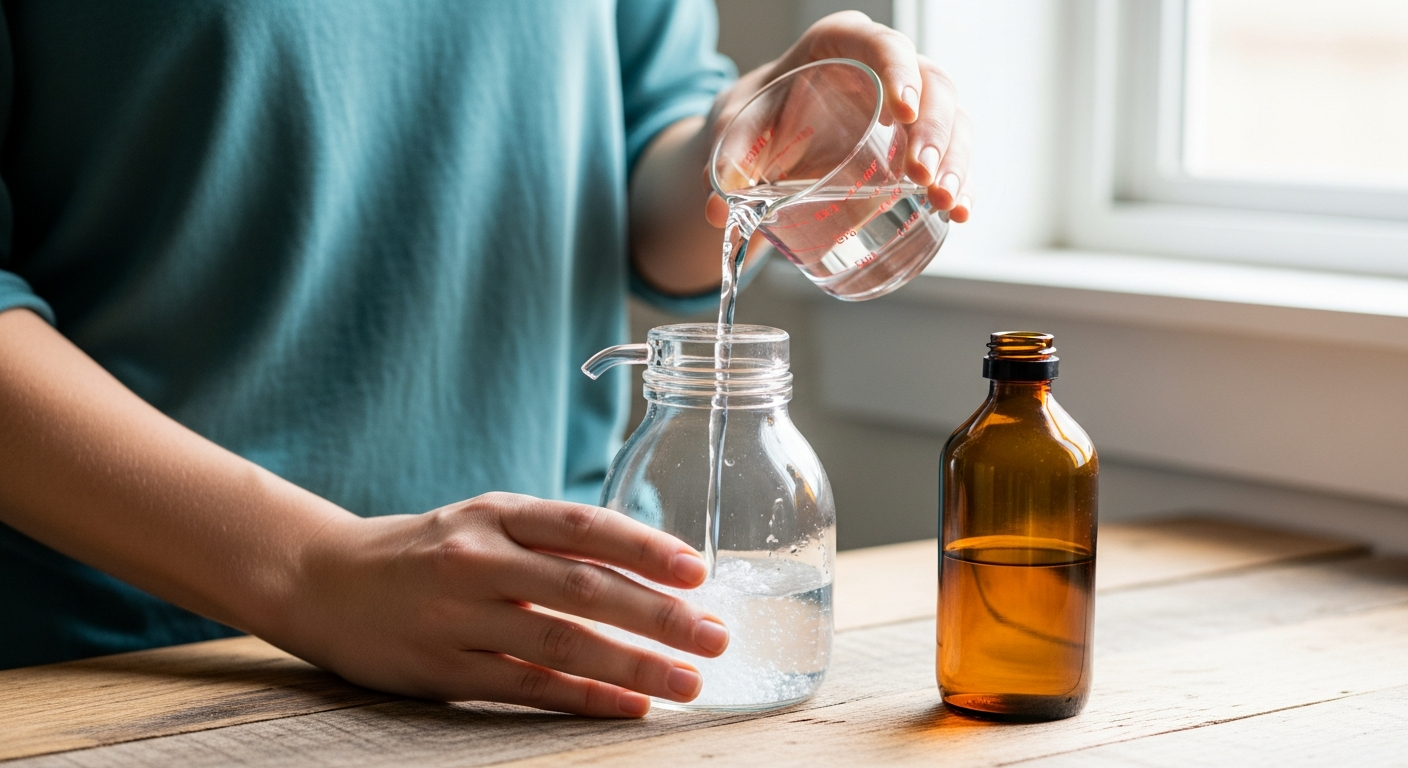
5 Ways to Make Foaming Soap (Use What You Have)
The best soap to use is whatever you already have in the cabinet. Here's how each type works.
Regular Liquid Hand Soap
This is the simplest starting point. Softsoap, Method, store brands, any generic liquid hand soap — all work at the standard 1:4 to 1:5 ratio.
The most budget-friendly approach: buy the big $3–4 refill bottle at the grocery store. One refill bottle makes four or five dispensers worth of foaming soap. If you have liquid hand soap in the house right now, you can make this today.
Castile Soap (Best Natural Option)
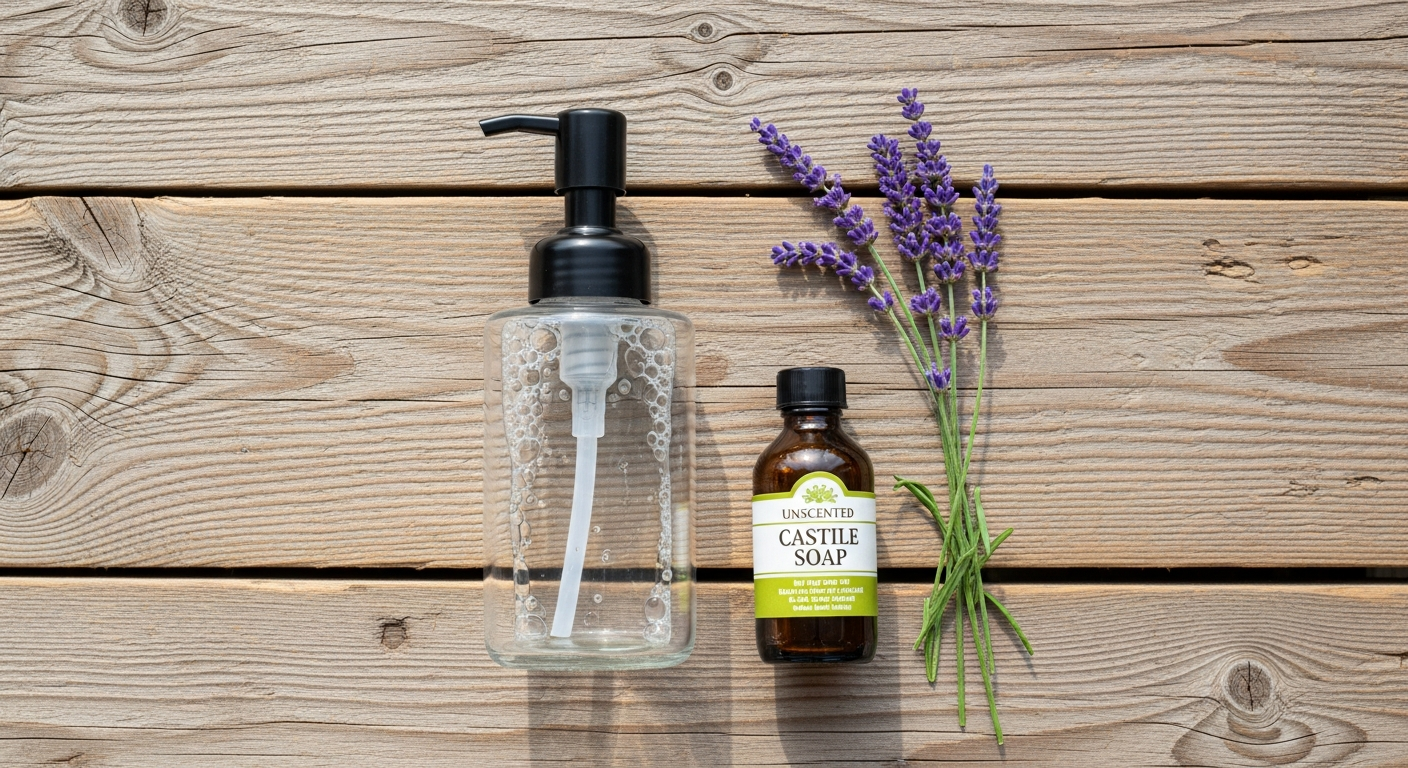
Castile soap is my go-to for the kitchen sink, especially in gardening season. It's plant-based, biodegradable, completely food-safe, and works beautifully for washing up after garden work or coming in from the chicken coop. Dr. Bronner's is the standard — the unscented or baby formula works best as a neutral base. [Dr. Bronner's link]
Use a slightly higher water ratio with castile soap: 1 part castile to 5–6 parts water. Castile is more concentrated than regular hand soap, so it needs more dilution. Add 10–15 drops of your favorite essential oil for scent since you're starting with an unscented base.
Dish Soap
Dawn, Seventh Generation, Mrs. Meyers dish soap — all work at the standard 1:4 to 1:5 ratio. This is the budget option, and it's perfectly fine for the kitchen sink.
One note: dish soap formulas are generally more drying than hand soaps, so this works best in the kitchen rather than the bathroom, especially if you have sensitive skin or wash your hands frequently.
Body Wash
If you have a body wash with a scent you love, it makes surprisingly nice hand soap. Use a thin, liquid formula — thick, creamy conditioning body washes can gum up the pump over time. Ratio is the same: 1:4 to 1:5. It's a great way to try a scent at a lower commitment before you decide to commit to buying that scent in a proper hand soap.
From Bar Soap (Zero-Waste Option)
This takes a few extra minutes but is a great option if you make your own bar soap or want to use up odds and ends.
Grate 1–2 tablespoons of bar soap using a fine cheese grater. Add to 2 cups of hot (not boiling) water and stir until fully melted. Let it cool completely to room temperature before pouring into your dispenser. The ratio will vary depending on how concentrated your bar soap is — start with a small test batch and adjust.
Natural bar soaps (like castile bar soap) work best. Heavily scented commercial bar soaps can leave a residue in the pump over time.
Best Essential Oils for Homemade Foaming Hand Soap
Adding essential oils is optional, but it's an easy way to customize the scent — and some oils have genuinely useful properties beyond just smelling nice. Use 10–15 drops per 10 oz dispenser.
- Lavender — calming, classic, works in any room
- Lemon or sweet orange — bright and clean, my favorite for the kitchen sink
- Tea tree — naturally antibacterial; great for the kitchen sink after handling raw meat
- Peppermint — fresh and invigorating, especially nice in winter
- Eucalyptus + lavender — a natural spa combination, beautiful in the bathroom
- Clove or Thieves blend — warm and spicy; perfect for fall and winter
I use a budget essential oil brand for everyday DIY projects like this — you don't need to spend Young Living prices for a soap scent. [essential oils link]
Troubleshooting Common Problems
The ratio is forgiving, but if something feels off, here's what's probably happening:
| Problem | Fix |
|---|---|
| Soap is too watery, not enough foam | Too much water — reduce to a 1:3 ratio |
| Pump is sluggish or clogged | Too much soap — add more water; rinse the pump with warm water |
| Soap separates when sitting | Normal, especially with castile — gently swirl before each use |
| Way too many bubbles, soap overflowing | Too much soap — try a 1:5 or 1:6 ratio |
Don't overthink it. If your first batch isn't quite right, adjust the ratio slightly on the next one. You'll dial it in within two batches.
Frequently Asked Questions
Can I use regular liquid soap in a foaming dispenser?
Yes. You just need to dilute it — about 1 part liquid soap to 4–5 parts water. Regular liquid soap is too thick for a foaming pump on its own; the water brings it to the right consistency for the pump to aerate it into foam.
What's the ratio of soap to water for foaming hand soap?
The standard starting point is 1 part liquid soap to 4–5 parts water. Thicker soaps (concentrated hand soaps, dish soaps) may need more water — try 1:5 or 1:6. Castile soap is best at 1:5 to 1:6 as well since it's more concentrated than standard hand soap.
Is foaming soap just watered-down soap?
Technically yes — but that's actually the whole point. Foaming dispensers are engineered for a much thinner soap than standard liquid pump bottles. Because the pump aerates the soap into foam, you use less product per hand wash, less water to rinse, and each bottle lasts significantly longer than a regular liquid soap of the same volume.
Is it cheaper to make your own foaming hand soap?
Yes, significantly. A $3 bottle of liquid hand soap makes approximately 4–5 full refills of a standard 10 oz foaming dispenser. Store-bought foaming refills cost $5–6 per bottle — so making your own saves roughly 70–80% per refill.
Can I use castile soap to make foaming hand soap?
Yes — and it's the best option if you want a natural formulation. Use 1 part castile soap (Dr. Bronner's is the standard) to 5–6 parts water, and add 10–15 drops of essential oil for scent since castile soap is unscented. It's food-safe and works especially well in the kitchen.