What Is Rooting Hormone — And Do You Actually Need It? (A Beginner's Guide)
Last updated: March 12, 2026
Before you make a trip to the garden center, check your kitchen. The first time I tried to propagate my grandma's hydrangea, I failed twice. The third time, I dipped the cutting in a little honey-water I'd mixed up on my counter. Three weeks later, roots. I didn't buy anything special — I just used what I had.
That's the honest truth about rooting hormone that most articles skip over: you might not need to buy it at all. Here's everything you actually need to know.
QUICK SNAPSHOT
- What it is: A product that tells a plant cutting to grow roots at the cut end
- Active ingredient: Auxin — a hormone your plants already produce naturally
- Do you need it? Not always. Most herbs and houseplants root without any help
- Free kitchen alternatives: Honey, cinnamon, willow water
- Worth buying for: Roses, hydrangeas, dahlias, hibiscus — the stubborn ones
What Is Rooting Hormone?
Rooting hormone is a product that encourages plant cuttings to form roots. It contains a synthetic version of auxin — a growth hormone that plants already produce on their own — and applying it to a fresh cutting essentially tells the plant's cells: yes, make roots right here, right now.
Here's the slightly fascinating part: when auxin is applied to the cut end of a stem, the plant's fresh cells essentially forget what they were supposed to become and just start growing roots instead. Think of it as a nudge — "you're a root cell now, get to work."
Rooting hormone comes in three forms: powder (the most common for home gardeners), gel (better contact with the cutting), and liquid (stronger, used for woody or hardwood cuttings). It's available at almost any garden center or hardware store.
That said, it's not a magic fix. It speeds up and improves root formation, but some plants still need time and the right conditions regardless of what you apply.
Honest Answer: Do You Actually Need Rooting Hormone?
Probably not — if you're propagating herbs, tomato suckers, or most houseplants.
This is the thing that almost every article about rooting hormone gets wrong. They assume you're asking because you want to use it. But the more useful question is whether you actually need it, and for most backyard homesteaders just starting out, the answer is no. Pothos roots in a glass of water with zero help. Mint practically roots itself if you look at it sideways. Most herbs will root in moist soil without anything added.
Where rooting hormone genuinely makes a difference is with harder-to-root plants — the ones with woodier stems or slower growth habits. Roses, hydrangeas, hibiscus, and dahlias are notoriously stubborn. I tried propagating my hydrangeas three times before I figured that out. It wasn't that I was doing anything wrong — it's that hydrangeas are just difficult. Once I started using rooting hormone (or honey, more on that below), my success rate went up significantly.
Spring is also worth noting here: this is the best time to take softwood cuttings, which is exactly when most people first encounter this question. Soft, actively growing stems root faster and respond better to any rooting aid you use.
Plants That Root Fine on Their Own (No Hormone Needed)
If you're just starting out, there's a good chance your plant doesn't need any help at all. These plants root easily in water or moist soil with nothing added:
- Pothos — roots in water in a week or two
- Mint — roots aggressively with almost no effort
- Basil — a glass of water on the windowsill is all you need
- Coleus — soft stems root quickly in soil or water
- Impatiens — one of the easiest plants to propagate
- Willow — roots in water so readily it's used to make rooting hormone for other plants
- Forsythia — roots from cuttings without any help
- Tomato suckers — just break one off, stick it in soil, water it
- Most soft-stemmed herbs — oregano, thyme when young, lemon balm
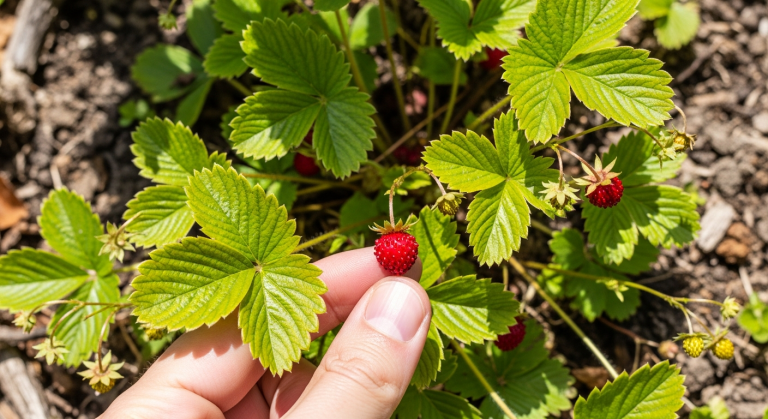
- Strawberry runners — these are practically pre-rooted
- Begonias — roots easily from stem or leaf cuttings
Plants That Genuinely Benefit From Rooting Hormone
These plants have slower or more difficult root formation — the extra auxin really does make a difference:
- Roses — especially hybrid teas and climbing roses
- Hydrangeas — bigleaf and panicle types are both stubborn
- Hibiscus — woody stems don't root quickly on their own
- Dahlias — tuber divisions respond well to rooting hormone
- Blueberries — hardwood cuttings need all the help they can get
- Lavender from woody stems — young green-tip cuttings are easier, but woody ones need help
- Rosemary from hardwood — softwood cuttings are easier; hardwood is slow
- Figs — can root without help but much faster with it
- Most fruit trees from hardwood cuttings — slow to root without auxin
Free Alternatives You Probably Already Have (Natural Rooting Hormones)
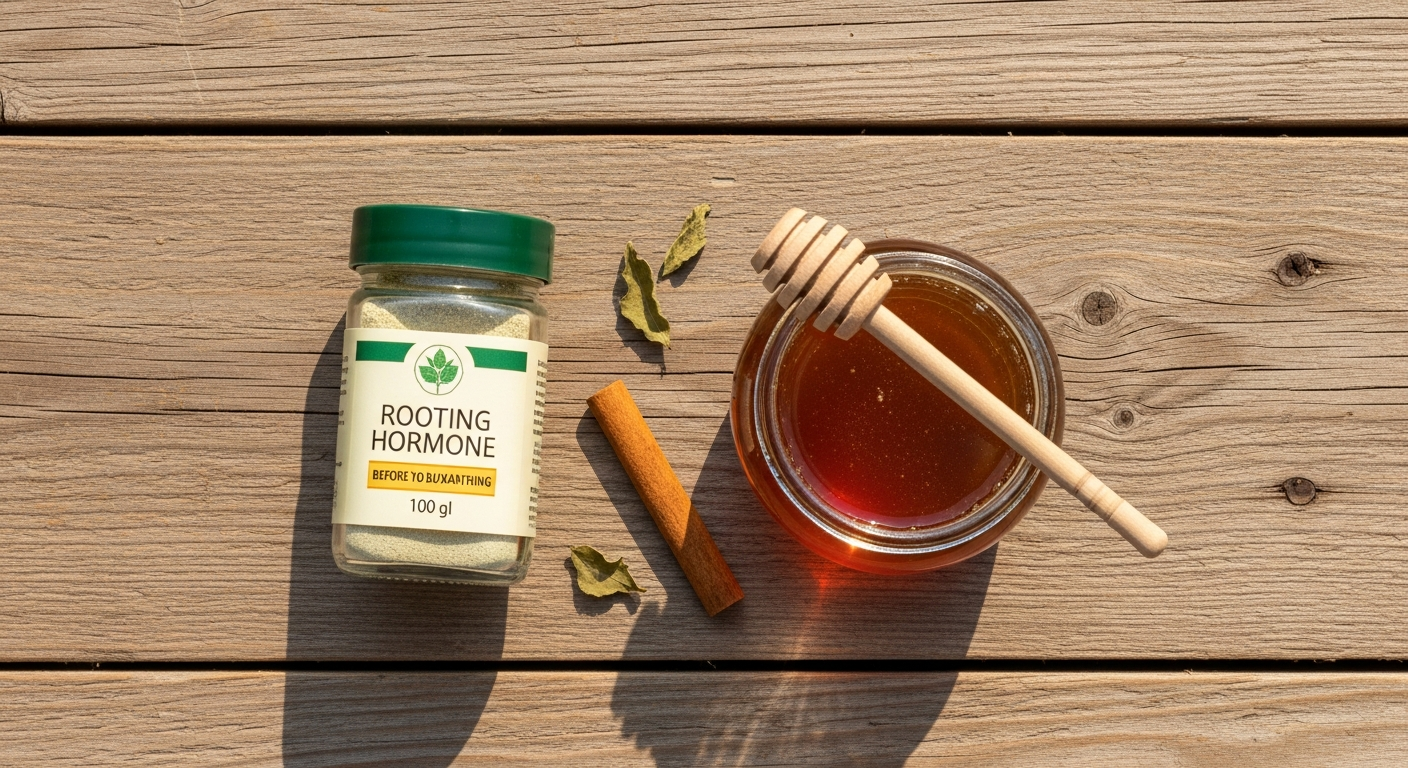
Before you buy anything, check your kitchen. These three options work — and for the plants most homesteaders are propagating, they work just as well as the commercial stuff.
Honey
Honey works as a natural rooting aid because of its antimicrobial properties. It prevents rot at the cut end — which is one of the main reasons cuttings fail — and it also promotes cell division to encourage root growth.
Why it works: Antimicrobial action prevents fungal rot at the vulnerable cut site; natural enzymes promote early root cell development.
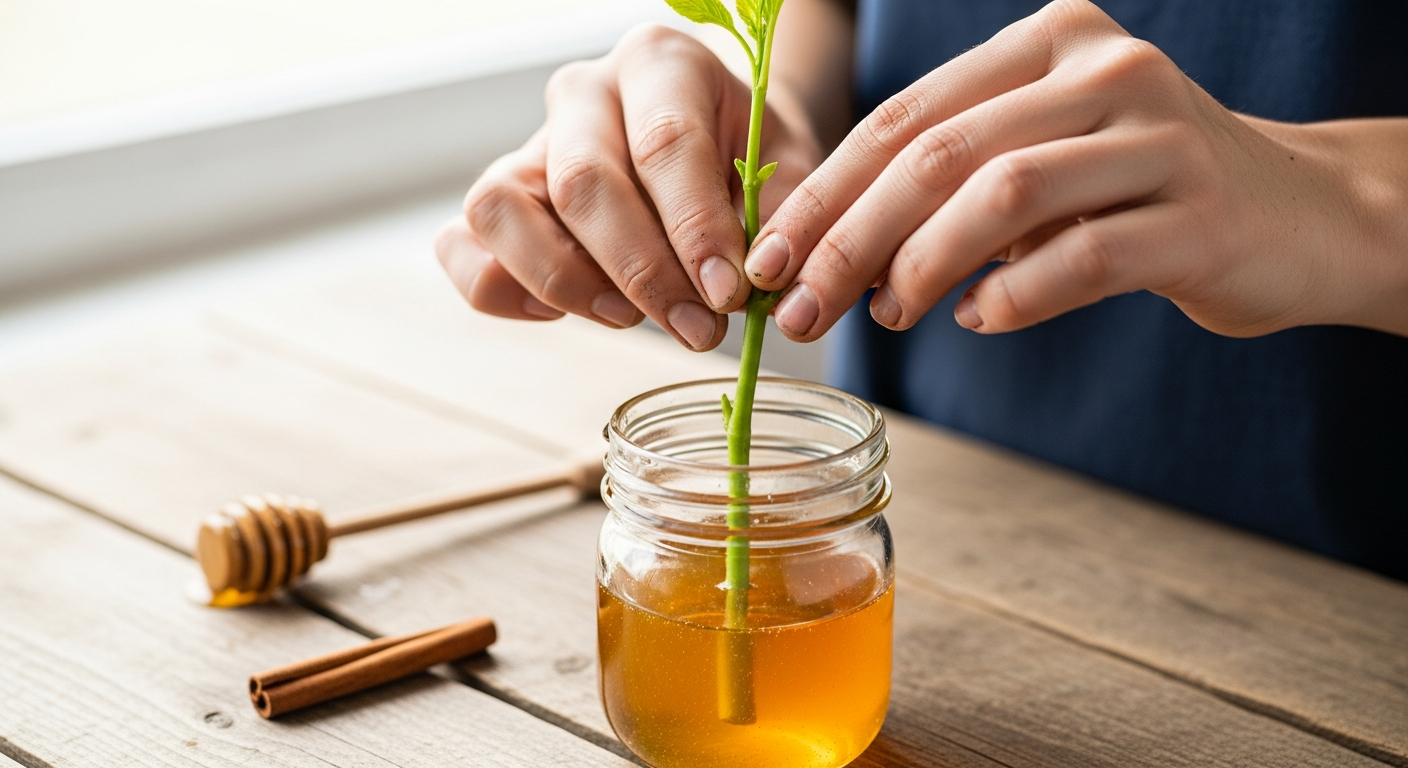
How to use it: Mix 2 tablespoons of honey into 2 cups of boiling water. Stir well to combine, then let it cool completely before using. Dip the bottom inch of your cutting into the honey water and plant it immediately — don't let it sit in the solution.
I use raw honey from a local beekeeper for almost everything around here, but regular grocery store honey works just fine for this. It doesn't need to be fancy.
Edible plant note: Completely food-safe. Use this for herbs, strawberries, and fruit tree cuttings without any concern.
Cinnamon
Cinnamon isn't quite as potent for root stimulation as honey or willow water, but it's an excellent antifungal — and preventing rot is half the battle with cuttings. I use cinnamon on almost every cutting now because I always have it, it costs nothing, and it takes about five seconds to apply.
Why it works: Ground cinnamon contains natural antifungal compounds that slow mold and rot at the cut base, protecting the cutting during the vulnerable early rooting period.
How to use it: Wet the bottom of your cutting in plain water first, then dip the cut end into a small dish of ground cinnamon powder. Tap off any excess so you have a light coating, not a clump. Plant immediately.
Cinnamon combines well with either honey water or willow water for a stronger effect. You can dip in the liquid first, then dust with cinnamon before planting.
Edible plant note: Completely food-safe — and it actually improves the flavor of some herbs, or at least doesn't hurt them.
Willow Water Tea
This is the most potent natural option, and if you have any willow on your property, it's completely free. Willow branches naturally contain IBA — indole-3-butyric acid — which is the same active ingredient in most commercial rooting hormone products. They also contain salicylic acid, which has antifungal properties.
The other thing that makes willow water special: it's the only natural rooting option that works for water propagation, since it's already a liquid you can dilute.
Why it works: Willow naturally contains IBA (the same compound in store-bought rooting hormone) plus salicylic acid that prevents fungal growth.
How to make it:
- Gather fresh growing tips of willow twigs in spring — the young green growth works best
- Remove the leaves; cut or break the twigs into small pieces
- Place 1 part willow material in a jar and cover with 2 parts boiling water
- Steep for 24–48 hours, then strain out all the solids
- Use the liquid immediately — it doesn't keep well
For soil propagation: dip your cuttings directly into the willow water before planting. For water propagation: dilute 50/50 with plain water and use that as your rooting vessel.
We have a big willow at the back of our property, and I've made this multiple times. It genuinely works, and it costs nothing if you have the willow.
Edible plant note: Completely food-safe.
Types of Store-Bought Rooting Hormone (If You Decide to Buy)
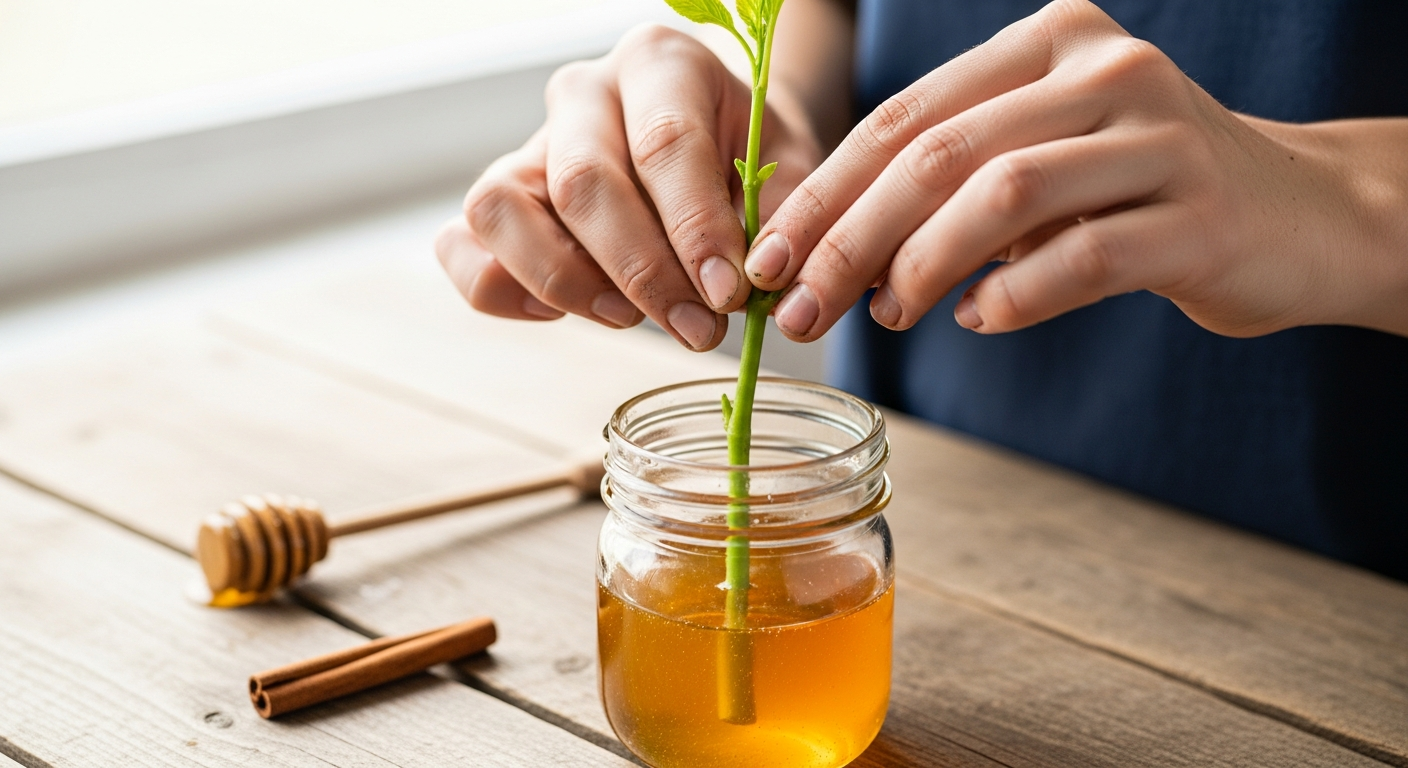
If you've got roses or hydrangeas to propagate and you want the commercial option, here's what to know. There are three forms — powder, gel, and liquid — and for most beginners, powder is the easiest to start with.
| Form | Best for | How to use | Note |
|---|---|---|---|
| Powder | Beginners; most plants | Dip moistened cutting, tap off excess | Most common; least expensive |
| Gel | Houseplants; succulents | Dip and plant — no extra steps | Better contact; slightly pricier |
| Liquid | Woody/hardwood cuttings | Quick-dip 1–5 seconds | Stronger; risk of over-application |
One important note: synthetic rooting hormone should not be used in water propagation. It washes off immediately and does nothing. If you're rooting in water, use willow water instead (see above).
A basic rooting powder is what most beginners start with and what I keep in my propagation kit — it's available at any garden center for around $6.
How to Use Rooting Hormone: 10 Simple Steps
This protocol is for powder, the most common form for home gardeners. The same basic steps apply to gel and liquid with minor adjustments noted.
- Take your cuttings in the morning when the plant is most hydrated — stems are full of water and will root more readily.
- Use clean, sharp scissors or a knife — cut just below a node (the slight bump where a leaf joins the stem). A clean cut heals faster and roots better than a ragged one.
- Make the cutting 3–6 inches long and strip all the leaves from the bottom half. You want bare stem to go into the soil, not leaves.
- Let the cut end air-dry for 2–3 minutes to slightly callus over. This short rest helps prevent rot once the cutting is planted.
- Pour a small amount of rooting hormone into a separate container — never dip directly from your main supply. Dipping into the original container spreads pathogens between cuttings and ruins the whole jar over time.
- Dip the bottom 1–2 inches of the cutting into the hormone and gently tap off any excess. You want a light, even coating — not a thick paste or clump.
- Use a pencil to pre-poke a planting hole in moist, soilless potting mix before inserting the cutting. If you push the cutting directly into soil, the hormone rubs off on the way in.
- Insert the cutting and firm the soil gently around it so there's good contact between the stem and the mix.
- Cover with a clear plastic bag or humidity dome to maintain moisture around the cutting while roots develop.
- Place in bright indirect light — not direct sun, which will cook a cutting that has no roots yet — and keep the soil evenly moist. Roots typically form in 2–8 weeks depending on the plant.
Common mistakes to avoid:
- Using too much: Excess hormone can burn or dehydrate the cut end and actually slow rooting
- Getting it on the leaves: Hormone on leaf tissue causes distorted, curled growth
- Propagating while the plant is flowering: Plants in bloom have less energy for root development
- Dipping into the original container: Spreads disease between cuttings — always use a separate dish
Frequently Asked Questions About Rooting Hormone
Do you really need rooting hormones?
Not always. Easy-to-root plants like herbs, pothos, tomato suckers, and most houseplants propagate without any help — often just in a glass of water. Where rooting hormone (or a natural alternative like honey or willow water) genuinely helps is with harder-to-root plants like roses, hydrangeas, hibiscus, and dahlias, or when you're propagating a lot of cuttings at once and want consistent results.
What can I use instead of rooting hormone?
Honey, cinnamon, and willow water are three effective natural alternatives. Mix 2 tablespoons of honey in 2 cups of boiling water, let it cool completely, dip the cutting base, and plant. Cinnamon powder prevents rot at the cut end. Willow water is the most potent natural option — made from steeping willow twigs in hot water for 24–48 hours — and is the only natural option that also works in water propagation.
Can I use rooting hormone in water propagation?
Synthetic rooting hormone — powder, gel, or liquid — should not be used in water. It washes off immediately and does nothing. However, willow water tea works in water propagation: dilute it 50/50 with plain water and use that as your rooting vessel. Many easy-to-root plants don't need anything at all in their water.
How long does rooting hormone take to work?
Roots typically begin forming within 2–8 weeks, depending on the plant, the type of hormone used, and conditions. Warmth (65–75°F), consistent humidity (a plastic bag or dome helps), and bright indirect light all speed up the process. Woody cuttings and hardwood propagation can take longer — sometimes 8–12 weeks.
Is rooting hormone safe for edible plants?
Most synthetic rooting hormones are not labeled for use on edible plants. If you're propagating herbs, strawberries, blueberries, or fruit trees, use honey, cinnamon, or willow water instead — all three are completely food-safe and effective.
Can I use too much rooting hormone?
Yes. Too much can burn or dehydrate the cutting base, cause leaf distortion, and in some cases prevent the plant from forming flowers later. Always tap off excess after dipping — a thin, even coating is all you need. And keep it off the leaves entirely.