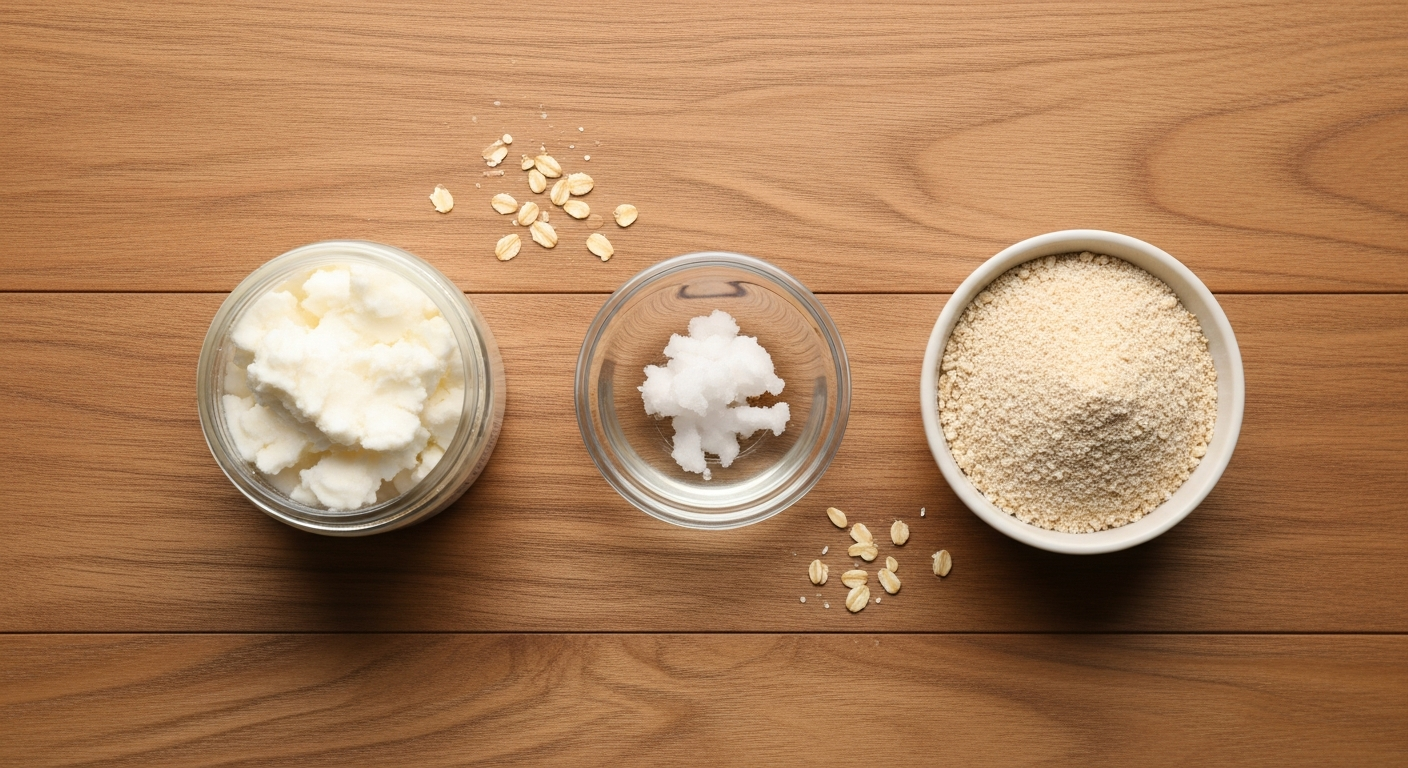
Easy Homemade Eczema Cream Recipes That Actually Work (2026)
Last updated March 2026
I started making my own eczema cream a few years back when one of my kids had a rough patch — literally — that wouldn't quit. We'd tried every store brand we could find, and they either made things worse or barely made a dent. So I did what I always do: I went into my kitchen and figured it out. What I found surprised me. With a handful of simple ingredients — most of which I already had on hand — I could make a cream that actually calmed the itching, softened the skin, and held up through the day.
Here's what you'll find in this post:
- My personal go-to eczema salve recipe (4 ingredients, 10 minutes)
- A soothing colloidal oatmeal cream for stubborn itch
- An aloe vera balm that skips coconut oil entirely
- A baby-safe recipe with no essential oils
- A calendula healing salve for inflamed patches
- What to do if your cream doesn't set right, how to store it, and which ingredients to swap if you have sensitivities
Cream, Salve, or Balm — What's the Difference?
Before diving into the recipes, let me clear up the terminology because it trips a lot of people up.
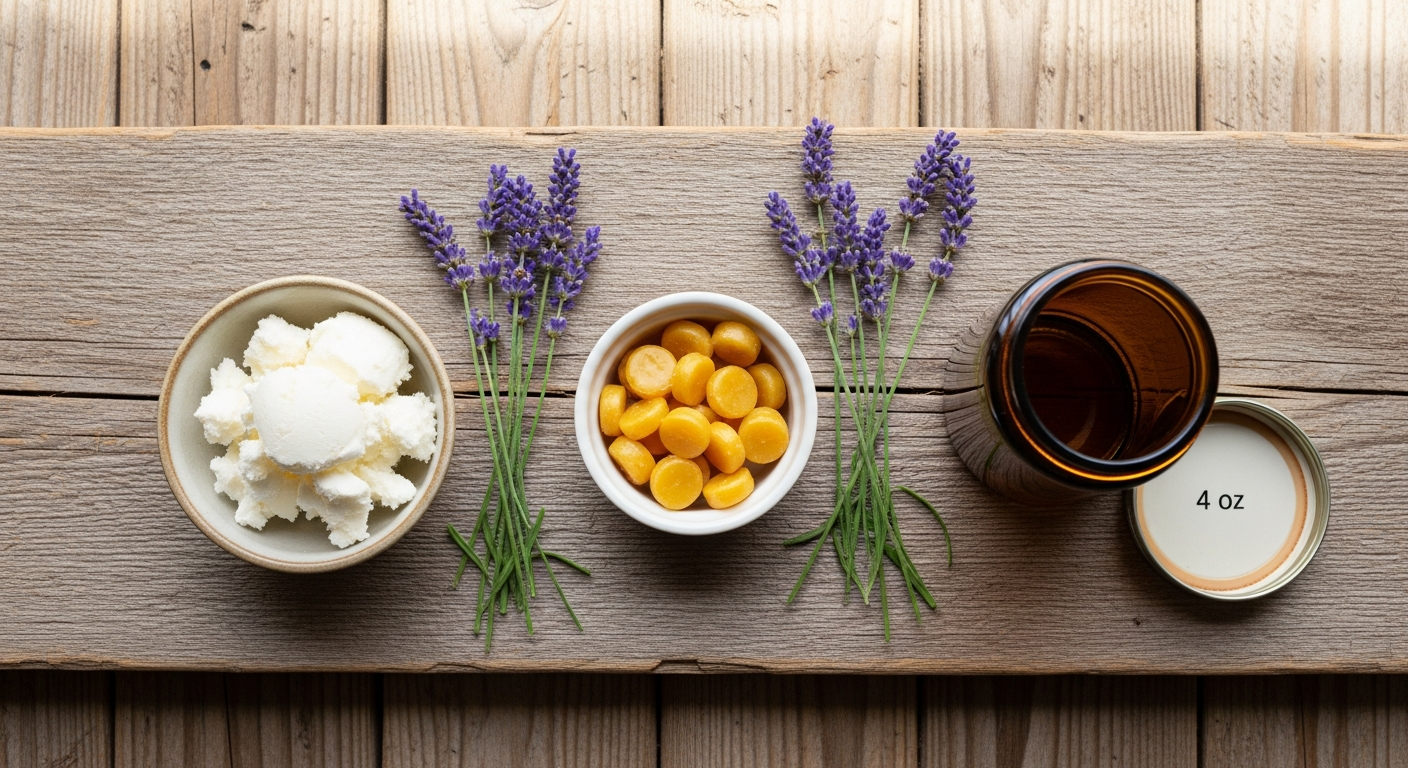
A salve or balm is made with oils and beeswax — no water, no aloe. Because it's all-oil, it has a long shelf life (up to 6 months at room temperature), creates a strong protective barrier on the skin, and is very beginner-friendly to make. It sets firm in the jar and melts slightly when you rub it in.
A cream or lotion incorporates a water-based ingredient — usually aloe vera gel — which makes it lighter and faster-absorbing. The tradeoff is a shorter shelf life (4–6 weeks in the fridge) because water-based products can grow bacteria without a preservative.
If you've never made anything like this before, start with a salve. It's the most foolproof option, and honestly, for eczema relief, the thicker barrier is usually exactly what dry, irritated skin needs.
Do Homemade Eczema Creams Actually Work?
The short answer is yes — for mild to moderate symptoms, they genuinely help. Natural ingredients like shea butter, colloidal oatmeal, and aloe vera have real anti-inflammatory and moisturizing properties. They work by reducing irritation, locking moisture into the skin, and supporting the skin's natural barrier — which is exactly what eczema disrupts.
That said, homemade creams aren't a cure, and they work best as part of a consistent skincare routine. If your eczema is severe, spreading, or infected, please see a dermatologist — I've included a short section on when to see a doctor at the end of this post. For everyone else, always patch test any new cream on a small area of skin before applying it widely, even if you've used all the individual ingredients before.
Best Natural Ingredients for Homemade Eczema Cream
These are the ingredients that show up again and again in DIY eczema recipes — and there's a reason for that. Each one brings something specific to the formula.
-
Shea butter — Rich in fatty acids and compounds that calm inflamed skin and deeply moisturize. It's one of the best base ingredients for an eczema cream and you can get it in bulk for a reasonable price. I buy raw, unrefined shea butter — it has a subtle nutty smell but the skin benefits are worth it.
-
Coconut oil — Antimicrobial, moisturizing, and it helps build a protective barrier on the skin. Most people do great with it, though some eczema sufferers find it irritating (more on that in the swap section).
-
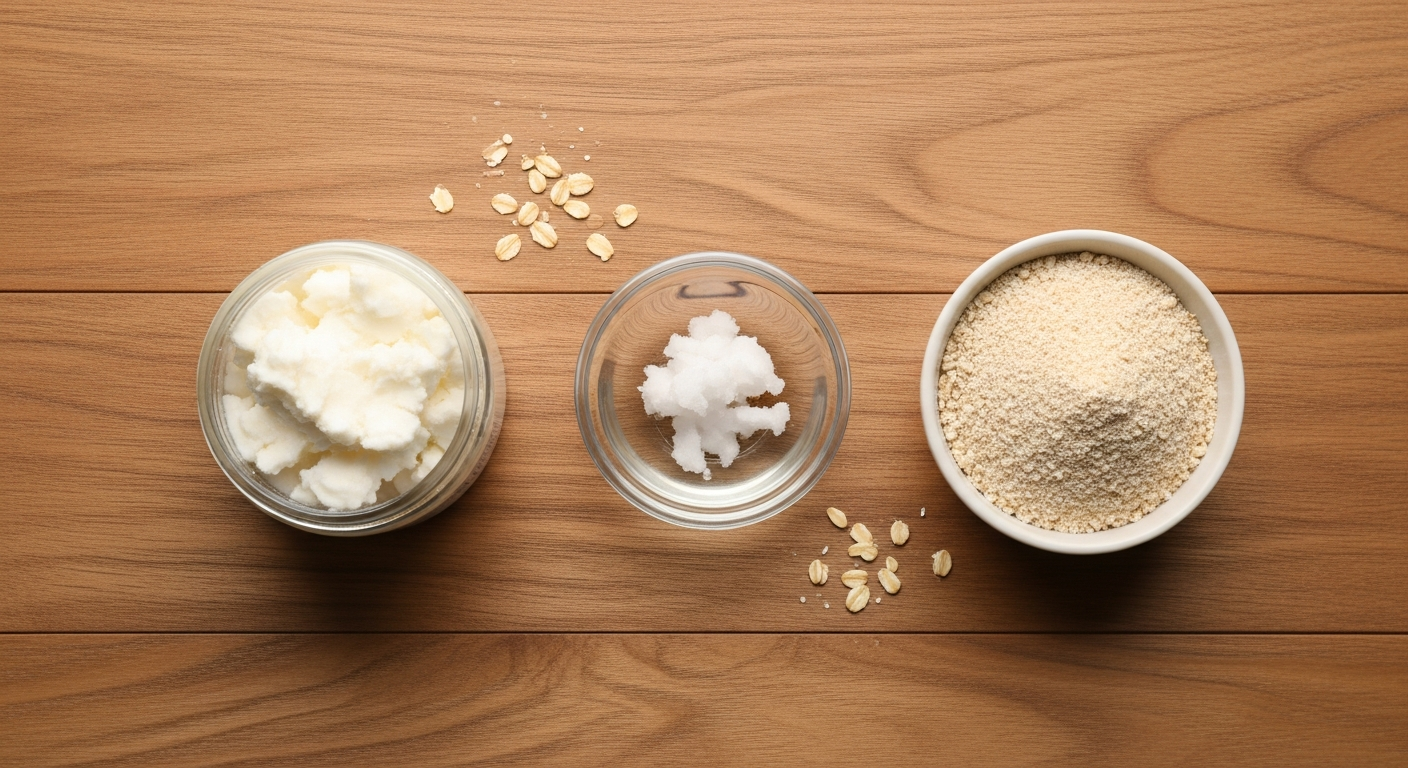
Colloidal oatmeal — Clinically studied for itch relief and skin soothing. One important note: colloidal oatmeal is NOT the same as rolled oats you'd use for breakfast. It's finely milled and specially processed for skin use — you can't just grind regular oats and get the same result. I buy it online since it's hard to find in most grocery stores.
-
Beeswax — This is what gives salves and balms their thick, protective texture. It creates a physical barrier over the skin that locks in moisture and keeps irritants out. I always use beeswax pastilles (the little pellets) because they melt much more evenly than a solid block.
-
Aloe vera gel — Lightweight, cooling, and anti-inflammatory. It's great for people who find heavier creams feel too greasy, and it's the base for the coconut oil–free recipe in this post.
-
Lavender essential oil — Calming on irritated skin and one of the gentler essential oils for topical use. It's my go-to for eczema creams. (See the essential oil safety section before adding any EOs — a few important rules to know first.)
-
Vitamin E — Acts as both an antioxidant and a natural preservative for the oils in your cream. It also supports skin healing. You can buy it as a liquid oil or just poke open a few capsules.
-
Calendula oil — Infused from calendula flower petals, this oil is one of the gentlest, most anti-inflammatory options you can use for sensitive or reactive skin. If you grow calendula in your garden, you can make your own infused oil — otherwise, it's easy to find online.
My Go-To Homemade Eczema Salve (4 Ingredients)
This is the recipe that lives on my bathroom counter right now. I've been making it for a few years, and no matter how many variations I try, I always come back to this one. It's simple, it works, and I usually have all four ingredients already on hand.
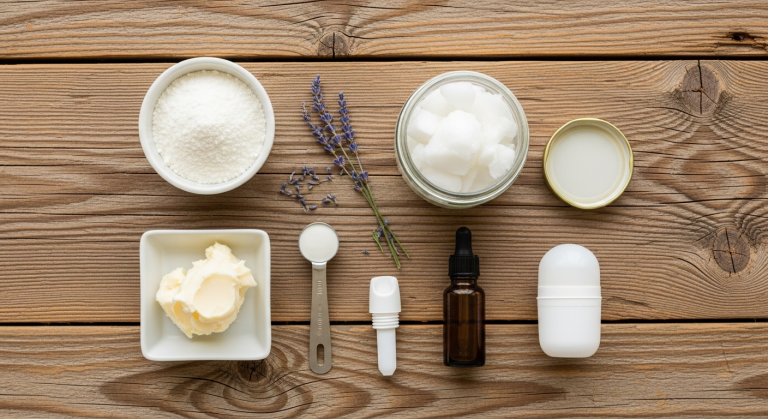
Ingredients:
- ¼ cup unrefined shea butter
- 2 tablespoons coconut oil
- 1 tablespoon beeswax pastilles
- 10 drops lavender essential oil
Makes: 1 jar (approximately 4 oz)
Instructions:
- Set up a double boiler: place a glass bowl over a pot with 1–2 inches of simmering water. The bowl shouldn't touch the water — you want the gentle steam to do the melting work.
- Add the shea butter, coconut oil, and beeswax pastilles to the bowl. Stir occasionally as they melt together — this usually takes about 5–7 minutes.
- Once everything is fully melted and combined, remove the bowl from the heat. Let it cool for 2–3 minutes.
- Add the lavender essential oil and stir to combine.
- Pour the mixture into a clean 4 oz glass jar. Let it cool completely at room temperature before putting the lid on — this usually takes an hour or two. Don't put it in the fridge to speed up the setting; it can cause a grainy texture.
- Once set, it's ready to use. Apply a small amount to clean, slightly damp skin and rub it in gently.
Storage: See the storage section below — this salve keeps well for up to 6 months at room temperature.
More Homemade Eczema Cream Recipes
Once you've made the basic salve, here are a few variations worth trying. Each one is designed for a slightly different skin type or situation.
Soothing Colloidal Oatmeal Eczema Cream
This is the simplified version of an oatmeal eczema cream — no emulsifying wax, no preservatives, no chemistry lab required. It's a bit softer than the salve and has a slightly powdery feel from the oatmeal, which is really soothing when skin is actively itchy.
Because this recipe doesn't use a preservative, it needs to be stored in the refrigerator and used within 4–6 weeks. That's the honest tradeoff for keeping it simple.
Quick note on colloidal oatmeal: It's finely milled oatmeal that's been specially processed for skin use — it behaves very differently from regular oats and you can't substitute one for the other. I buy colloidal oatmeal online since it's hard to find in most stores.
Ingredients:
- ½ cup unrefined shea butter
- ¼ cup coconut oil (or sunflower oil if coconut oil irritates your skin)
- 2 tablespoons colloidal oatmeal
- 10 drops lavender essential oil
Instructions:
- Melt the shea butter and coconut oil together using a double boiler (bowl over simmering water). Stir until completely melted and combined.
- Remove from heat and let cool for 5–10 minutes — you want it warm but not hot.
- Stir in the colloidal oatmeal until evenly mixed.
- Add the lavender essential oil and stir again.
- Transfer to a glass jar and refrigerate. The cream will firm up as it cools.
Storage: Refrigerator, up to 4–6 weeks.
Aloe Vera Eczema Balm (Coconut Oil–Free)
If coconut oil irritates your skin — and it does for some eczema sufferers — this recipe is the answer. The lauric acid in coconut oil can trigger reactions in some people with sensitive skin, so this version swaps it out entirely for a lighter aloe base.
This balm is cooler and lighter than the salve, which makes it especially nice in warmer weather or on patches that tend to feel hot and inflamed.
Ingredients:
- ¼ cup unrefined shea butter
- 2 tablespoons aloe vera gel
- 1 teaspoon vitamin E oil
- 10 drops lavender essential oil (optional)
Instructions:
- Melt the shea butter gently using a double boiler. Remove from heat once fully melted.
- Let the melted shea butter cool until it's warm but no longer hot — about 5 minutes. If you add aloe to hot oil, it can separate.
- Stir in the aloe vera gel until as evenly combined as possible. (Note: because this recipe combines oil and water-based ingredients without an emulsifier, it may not combine perfectly smooth — that's okay. Stir before each use.)
- Add the vitamin E oil and lavender essential oil, if using.
- Transfer to a jar and refrigerate.
Storage: Refrigerator, up to 4–6 weeks. Stir before use if the mixture has separated — that's normal.
Gentle Baby Eczema Cream (No Essential Oils)
When my youngest had those rough, rashy patches, I wanted something gentle enough that I didn't have to second-guess every ingredient. This recipe is as simple as it gets: three ingredients, no essential oils, and nothing that would surprise a pediatrician.
Important: Do not add essential oils to any product used on babies under 2. Even gentle oils like lavender are too concentrated for infant skin.
Ingredients:
- ¼ cup unrefined shea butter
- 2 tablespoons coconut oil
- 1 tablespoon finely ground oatmeal
Instructions:
- Melt shea butter and coconut oil together using a double boiler or 30-second microwave intervals, stirring between each.
- Remove from heat and let cool for 5 minutes.
- Stir in the finely ground oatmeal (use a blender or food processor to get regular oats to a fine powder — for babies, the finer the better).
- Pour into a small clean jar and let set completely before using.
Patch test: Always apply a tiny amount to a small patch of skin first and wait 24 hours before using more widely, especially on baby skin.
Calendula Healing Salve (For Stubborn or Inflamed Patches)
Calendula has been used for centuries to soothe inflamed, irritated skin — it's one of those garden herbs that's earned its reputation. The oil made from calendula flowers is deeply anti-inflammatory and gentle enough for the most reactive skin. I use this one when a patch is particularly stubborn or looks especially red and angry.
The oil can be store-bought, or if you grow calendula in your garden (which I highly recommend — it's one of the easiest flowers to grow), you can make your own infused oil. Just pack dried calendula flowers into a jar, cover with a carrier oil like olive or sunflower oil, and let it infuse for 4–6 weeks in a cool, dark spot. Strain out the flowers and you've got calendula oil ready to use.
Ingredients:
- ½ cup calendula-infused oil
- 2 tablespoons beeswax pastilles
- 1 tablespoon shea butter (optional, makes it creamier)
Instructions:
- Melt the beeswax pastilles and shea butter (if using) in a double boiler, stirring until smooth.
- Add the calendula oil and stir to combine.
- Remove from heat and let cool for 2 minutes.
- Pour into a clean jar. Let set at room temperature.
Storage: Room temperature in an airtight jar, up to 6 months.
The Overnight Eczema Treatment Method
The best overnight remedy for eczema is to apply a generous layer of a beeswax-based salve to the affected area before bed, then cover it with a clean cotton cloth or wear cotton gloves if treating your hands. This is called occlusive therapy — the covering traps moisture against the skin all night while it repairs itself, maximizing absorption.
This works especially well in winter, when heated indoor air pulls moisture from skin and eczema flares tend to be worst. I started doing this with my go-to salve on the really rough nights and it made a noticeable difference by morning. Use any of the beeswax salve recipes in this post — just be generous with the application before bed.
Ingredient Swaps for Allergies and Sensitivities
Don't have one of these ingredients, or did your skin react to something in a recipe? Here are your substitution options.
-
If you want to avoid coconut oil: Use sunflower oil, avocado oil, or sweet almond oil. Sunflower oil is the most similar in texture and is very well-tolerated by sensitive skin.
-
If you want to avoid shea butter: Try mango butter or cocoa butter. Both melt similarly and provide good moisturizing properties, though cocoa butter has a stronger chocolate scent.
-
If you want a vegan option instead of beeswax: Candelilla wax is a plant-based alternative that works in the same ratio as beeswax.
-
If lavender essential oil doesn't work for your skin: Roman chamomile and frankincense are both gentler options that are also anti-inflammatory and less likely to trigger reactions.
If your skin flares up after trying a recipe, do an elimination test: try each ingredient separately on a small patch of skin and wait 24 hours before moving to the next one. Nine times out of ten, the culprit is either coconut oil or an essential oil.
How to Store Homemade Eczema Cream
How long your cream lasts depends entirely on what's in it.
Beeswax-based salves and balms: Store in an airtight jar at room temperature, away from heat and direct light. They'll keep for up to 6 months. No refrigeration needed.
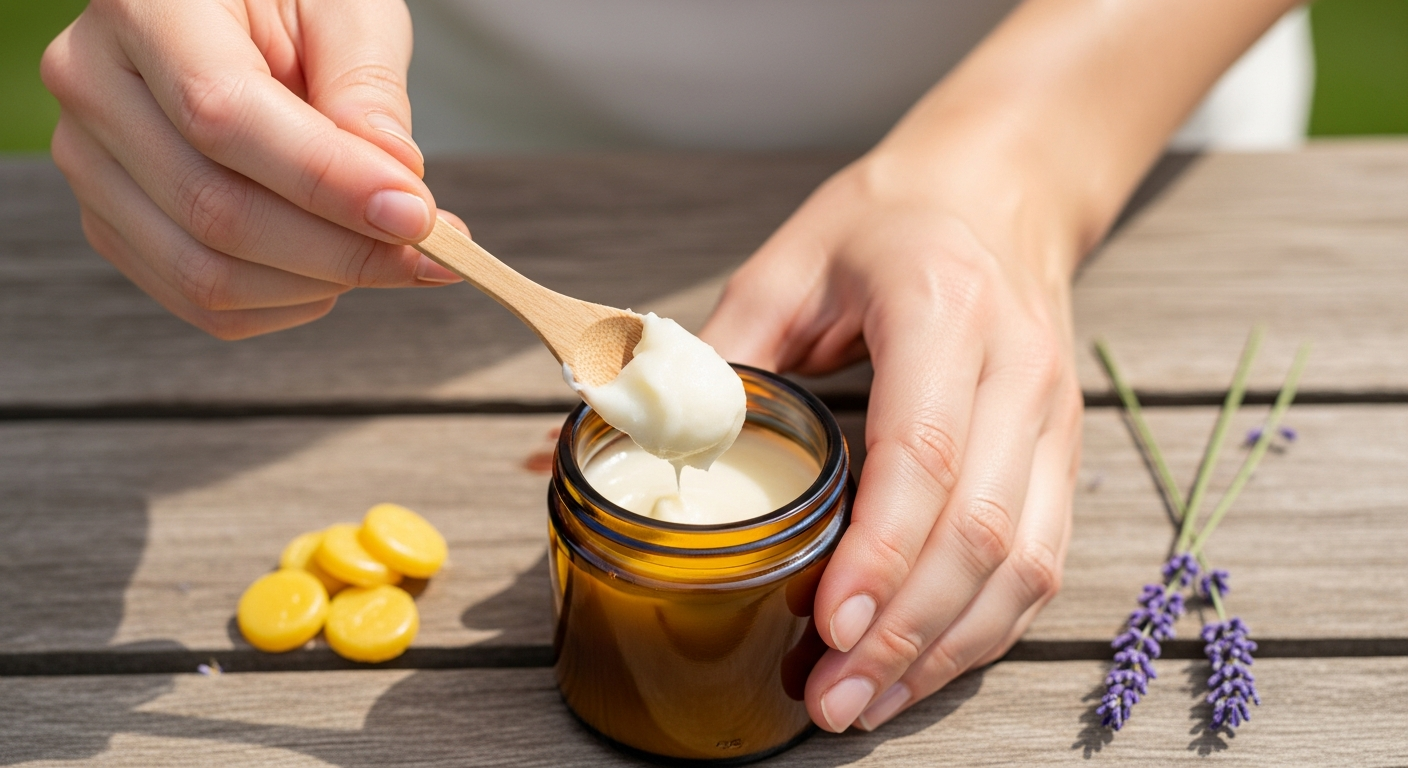
Aloe vera or colloidal oatmeal creams (no preservative): Store in the refrigerator and use within 4–6 weeks. The water content in aloe or the oatmeal cream makes these more susceptible to bacterial growth over time. Always use a clean spoon — not your fingers — to scoop out product, and keep the jar sealed when not in use.
A few practical storage tips that make a real difference:
- Label every jar with the date you made it. I use a small piece of masking tape on the bottom.
- Keep salves away from heat sources — a warm bathroom shelf in summer can make them go soft.
- Use small jars. I fill multiple 4 oz jars rather than one large one so I'm not opening and closing the same jar repeatedly.
I use 4 oz amber glass jars for all my homemade skincare. The dark glass protects the oils from light breakdown, and they look good sitting on a bathroom shelf, which is a small but real thing.
Essential Oil Safety for Eczema
Essential oils can be a genuinely helpful addition to eczema creams — but there are a few things to know before you start adding them.
The EOs that work well for eczema: Lavender, roman chamomile, and frankincense are all calming and anti-inflammatory. These are safe choices for most adults when properly diluted.
EOs to avoid putting on eczema-affected skin: Citrus oils (orange, lemon, bergamot), cinnamon, peppermint, and clove can all cause irritation or make inflammation worse. Skip them entirely in any eczema recipe.
Dilution rules: For adults, aim for a 1–2% dilution — that's about 10–12 drops of essential oil per ounce of carrier (oil or finished product). For children ages 2–6, use no more than 0.5%. For babies under 2, use no essential oils at all.
Patch test: Even safe EOs can trigger reactions on sensitized skin. Always test on a small area before applying to the full affected area.
Troubleshooting Your Homemade Cream
Here's the stuff I wish someone had told me the first time I tried making a salve. These issues are common and every single one is fixable.
It's too hard and waxy: You used too much beeswax. To fix the batch you have, remelt it and stir in a tablespoon or two of additional oil until you reach the texture you want. Next time, use slightly less beeswax.
It's too soft and greasy: Not enough beeswax. Remelt and add a little more beeswax — about half a teaspoon at a time, testing the texture as you go. Pour a small drop on a cold plate to check how it sets before pouring the whole batch.
It separated: If it's an aloe-based recipe, that's completely normal — aloe and oil don't emulsify on their own without a binding agent. Just stir it before each use and keep it refrigerated. If your beeswax salve separated, it likely got too warm while setting — next time, pour it into the jar and let it cool undisturbed on the counter away from any heat source.
Your skin reacted: Start with a process of elimination. The most common culprits are coconut oil and essential oils. Try a simpler recipe with just shea butter and sunflower oil, patch test it, and add one ingredient back at a time until you identify the trigger.
When to See a Doctor About Eczema
Home remedies work well for mild to moderate eczema, but there are times when you need a professional in your corner. Here's when to make an appointment:
- Signs of infection: If the skin is weeping, crusting over, spreading warmth, or getting more painful rather than better, it may be infected and needs medical treatment.
- No improvement after 2–4 weeks: If you've been consistently applying a homemade cream and seeing no change, it's worth talking to a dermatologist about stronger options.
- Severe or widespread flares: Eczema covering large areas of the body, or flares that are significantly disrupting sleep or daily life, need professional evaluation.
- Significant eczema in infants: Dry skin in babies is common and normal, but eczema that's extensive, weeping, or not responding to gentle care should be evaluated by a pediatrician.
Home remedies are great first-line care — but your doctor is always the right call if things aren't improving.
Frequently Asked Questions
What is the best homemade remedy for eczema?
A simple shea butter and beeswax salve with a few drops of lavender essential oil is one of the most effective starting points. It moisturizes deeply, creates a protective barrier on the skin, and the lavender has calming, anti-inflammatory properties. Apply it to clean, slightly damp skin for the best absorption.
What is the overnight remedy for eczema?
Apply a thick layer of a beeswax-based salve to the affected area before bed and cover with a clean cotton cloth or cotton gloves if treating hands. The occlusion effect locks moisture against the skin overnight while it repairs, making it one of the most effective ways to use any of these homemade creams.
Is coconut oil good or bad for eczema?
It depends on the person. Coconut oil is moisturizing and antimicrobial, and many people with eczema find it genuinely helpful. However, some people react to it — the lauric acid content can trigger irritation in certain skin types. If you try a recipe with coconut oil and your skin flares up, swap it out for sunflower oil or avocado oil instead.
Can I use homemade cream on my baby's eczema?
Yes, but keep it very simple. Shea butter, coconut oil, and finely ground oatmeal is a safe starting point for babies. The most important rule: never add essential oils to any product for babies under 2 years old, even gentle ones like lavender. Always patch test first and check with your pediatrician if you're unsure.
How long does homemade eczema cream last?
Beeswax-based salves stored in an airtight jar at room temperature will keep for up to 6 months. Creams made with aloe vera or colloidal oatmeal have no preservative, so they should be refrigerated and used within 4–6 weeks.
What is colloidal oatmeal and how does it help eczema?
Colloidal oatmeal is oatmeal that's been finely milled and processed specifically for skin use. It contains compounds called beta-glucans that reduce inflammation and relieve itching. It's different from regular rolled oats — you can't substitute one for the other in these recipes.
Is shea butter good for eczema?
Yes — shea butter is one of the best natural moisturizers for eczema. It contains fatty acids and compounds that help calm irritated skin, reduce inflammation, and support the skin's natural barrier. Raw, unrefined shea butter retains more of these beneficial compounds than highly processed versions.