Plantain Salve Recipe — Simple Homemade First Aid in a Tin
Last updated March 13, 2026
Quick Snapshot
What it is Healing salve made from a common backyard weed Primary uses Bug bites, bee stings, minor cuts, splinters, dry skin Core ratio 1 cup infused oil + 1 oz (28g) beeswax Quick method Crockpot "keep warm" or double boiler, 2–4 hours Slow method Cold infusion in a jar, 4–6 weeks Shelf life 12+ months Yield ~8 oz (fills 8 small 1-oz tins)
There is a plant growing through the cracks in my driveway that has lived rent-free in my first-aid kit for the past three years. It's plantain — not the banana-relative at the grocery store, but the broad-leafed "weed" that shows up in lawns, paths, and disturbed soil all across North America. Most people spend their summers pulling it out. Once you know what it does, you'll start being more careful about where you step.
Plantain salve is one of the most useful things I've ever made for a homestead first-aid kit. It's two ingredients plus time, it keeps for over a year, and the plant to make it is almost certainly growing in your yard right now.
What Plantain Salve Does (And Why It Works)
Plantain has two active compounds worth knowing. Aucubin is an iridoid glycoside with anti-inflammatory properties and — here's the part that makes plantain special — a drawing action. It literally helps pull foreign matter toward the skin surface. Venom from bee stings, irritants from bug bites, splinters, thorns. This is why plantain has been called "nature's band-aid" for centuries.
Allantoin is a cell-regenerating compound that promotes wound healing and speeds skin repair. You'll find it listed in plenty of commercial skincare products; in plantain, it's there naturally.
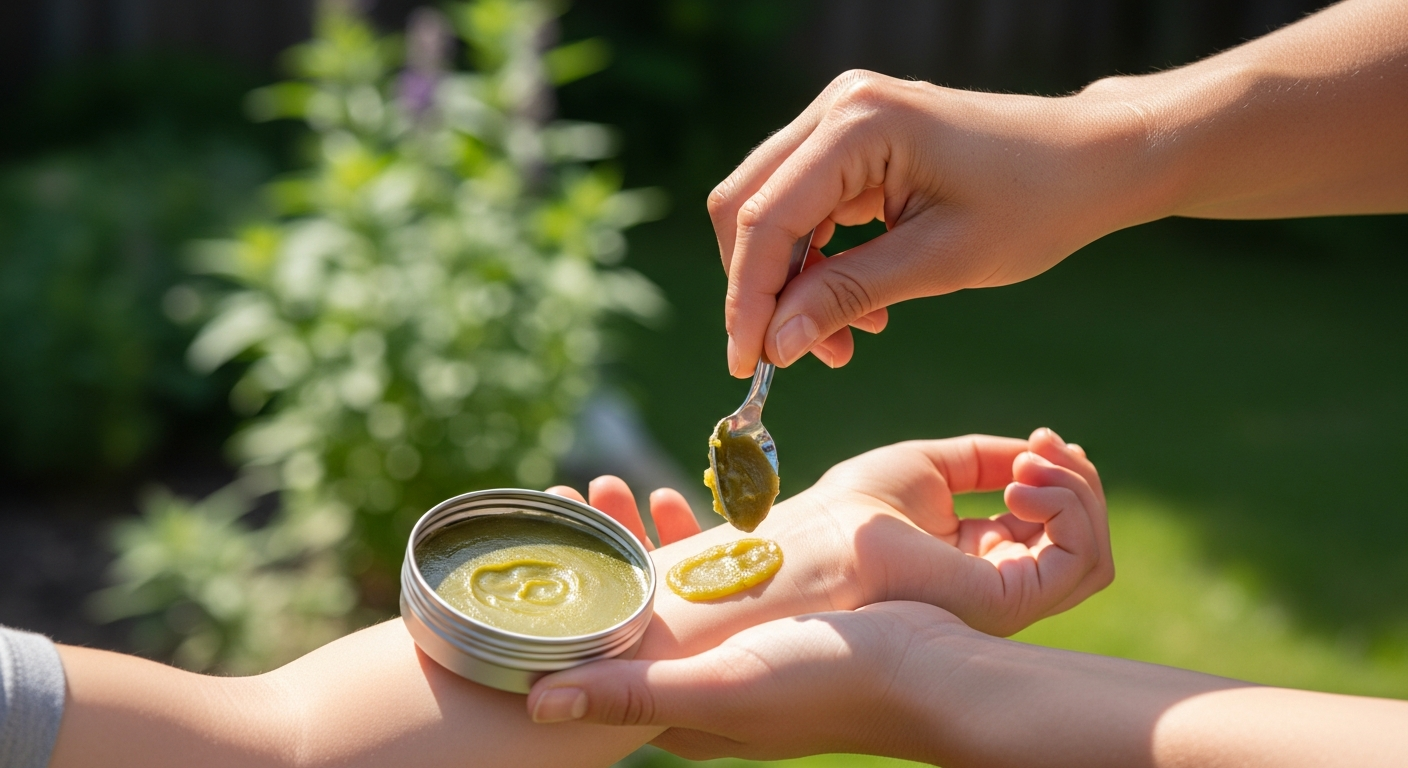
Plantain salve is good for: bee and wasp stings, mosquito bites, minor cuts and scrapes, splinters, dry or chapped skin, and eczema flares. What it won't do: heal deep wounds, treat infections, or replace medical attention for anything serious. It's a first-aid remedy for the minor daily injuries of life on a homestead — and for those, it's excellent.
Is the Plantain in Your Yard the Right Kind?
Almost certainly yes. Broadleaf plantain (Plantago major) and narrowleaf plantain (Plantago lanceolata) are both medicinal — and both of them look like ordinary lawn weeds. They're the plants that grow through sidewalk cracks, along fence lines, and in the compacted soil around garden paths.
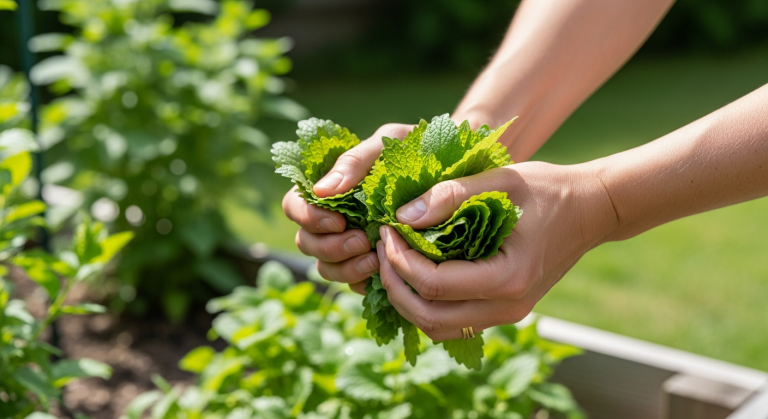
To identify it: look for parallel veins running lengthwise down the leaf. Most plant leaves have branching veins; plantain's run straight from stem to tip, like strings on a guitar neck. The leaf stalks are ribbed and fibrous — try to tear one and the fiber strings are obvious. The plant grows in a rosette pattern, low to the ground, and sends up thin seed stalks when it flowers.
The emergency field test: pick a fresh leaf, chew it for a few seconds, and apply the pulp to a bee sting or bug bite. The relief is genuine and fast. This is a centuries-old remedy, and when you feel it work, the plant stops being a weed forever.
A few notes on foraging: harvest before the plant flowers (spring through early summer is best), use plants that haven't been treated with pesticides or herbicides, and collect well away from roads or areas that may have been sprayed.
How to Dry Plantain Leaves for Salve
This step is non-negotiable. Fresh leaves contain water, and water in an oil infusion creates the perfect environment for mold. If your finished oil is cloudy or smells off after a few weeks, moisture contamination is almost always the culprit.
You have three good options:
Air drying — Lay clean leaves on a wire rack, window screen, or paper towels in a warm, well-ventilated space. Keep them out of direct sun (sun fades the beneficial compounds). Ready in 2–3 days.
Dehydrator — Lowest setting, typically 95–100°F. 4–6 hours. This is my preferred method — it's fast and you don't have to think about it.
Oven — Set to the lowest temperature (usually around 170°F) with the door slightly cracked. 2–3 hours. Watch them — you're drying, not cooking. Pull them when they crinkle and crumble easily.
Dried leaves are ready when they crinkle and crumble between your fingers. They shouldn't feel pliable or damp. If you're unsure, let them go a little longer.
How to Make Plantain Infused Oil
The ratio is the same for both methods: loosely packed dried plantain leaves, completely covered with oil.
Quick Method (2–4 Hours)
Fill the insert of a crockpot or a heatproof bowl with your dried plantain. Pour oil over the top until all the herb is completely submerged with about half an inch of oil above the surface. Set the crockpot to "keep warm" — or, if using a double boiler, set the heat as low as it will go.
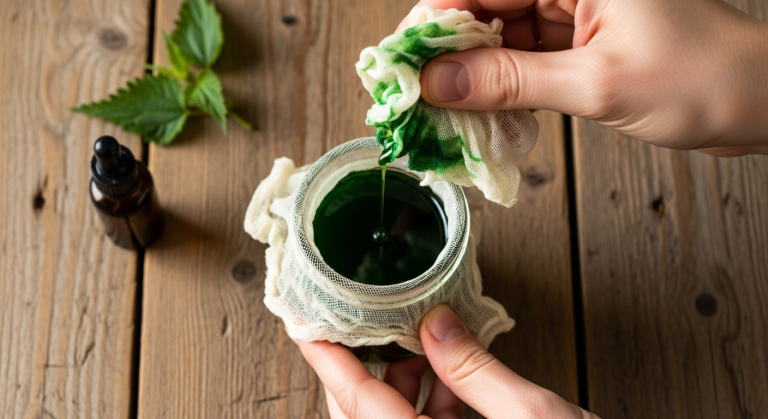
The goal is gentle warmth, not cooking. Keep the temperature under 150°F. Infuse for 2–4 hours, then strain through cheesecloth, squeezing the spent herbs to extract every bit of oil. Let it cool completely before making salve.
Slow Cold Infusion (4–6 Weeks)
Fill a clean, completely dry jar loosely with dried plantain. Cover with oil until all the plant material is submerged — any herb sticking up above the oil will mold. Lid on, store in a cool dark place for 4–6 weeks. Agitate or gently stir every few days. Strain through cheesecloth when ready.
The cold infusion takes longer but many herbalists prefer it — no heat means no potential degradation of heat-sensitive compounds.
Which oil to use:
- Olive oil — the classic choice, excellent shelf life, produces a greenish oil
- Sweet almond oil — lighter texture, absorbs faster, neutral smell
- Fractionated coconut oil — stays liquid at room temperature, very shelf-stable, no scent
- Regular coconut oil — solidifies below 76°F; fine to use, just know it contributes to a firmer salve
Plantain Salve Recipe
Ingredients:
- 1 cup (240ml) strained plantain-infused oil
- 1 oz (28g) beeswax pellets
- Optional: 20–30 drops lavender or tea tree essential oil
Equipment: Double boiler (or heatproof bowl over a saucepan), small salve tins or glass jars, cheesecloth
Instructions:
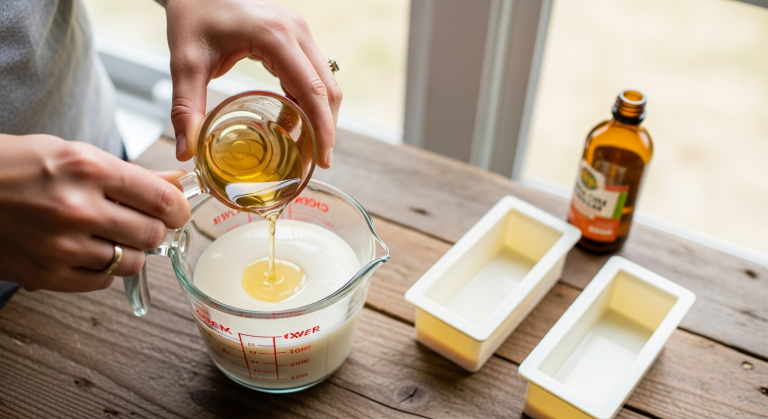
- Combine the strained infused oil and beeswax pellets in the top of a double boiler over low heat.
- Stir gently until the beeswax is fully melted and well incorporated into the oil.
- Do the spoon test: Dip a cold metal spoon into the melted salve, then set the spoon aside for 30–60 seconds. The film that forms tells you the final texture. If it's too soft, add more beeswax a small amount at a time. If it's too hard, stir in a little more oil. Repeat the spoon test until you're happy with the texture.
- Remove from heat. If you're adding essential oils, stir them in now.
- Pour immediately into your prepared tins or jars — salve sets quickly once it cools.
- Leave undisturbed at room temperature until fully set, 30–60 minutes. Don't put them in the refrigerator to speed things up (this causes graininess).
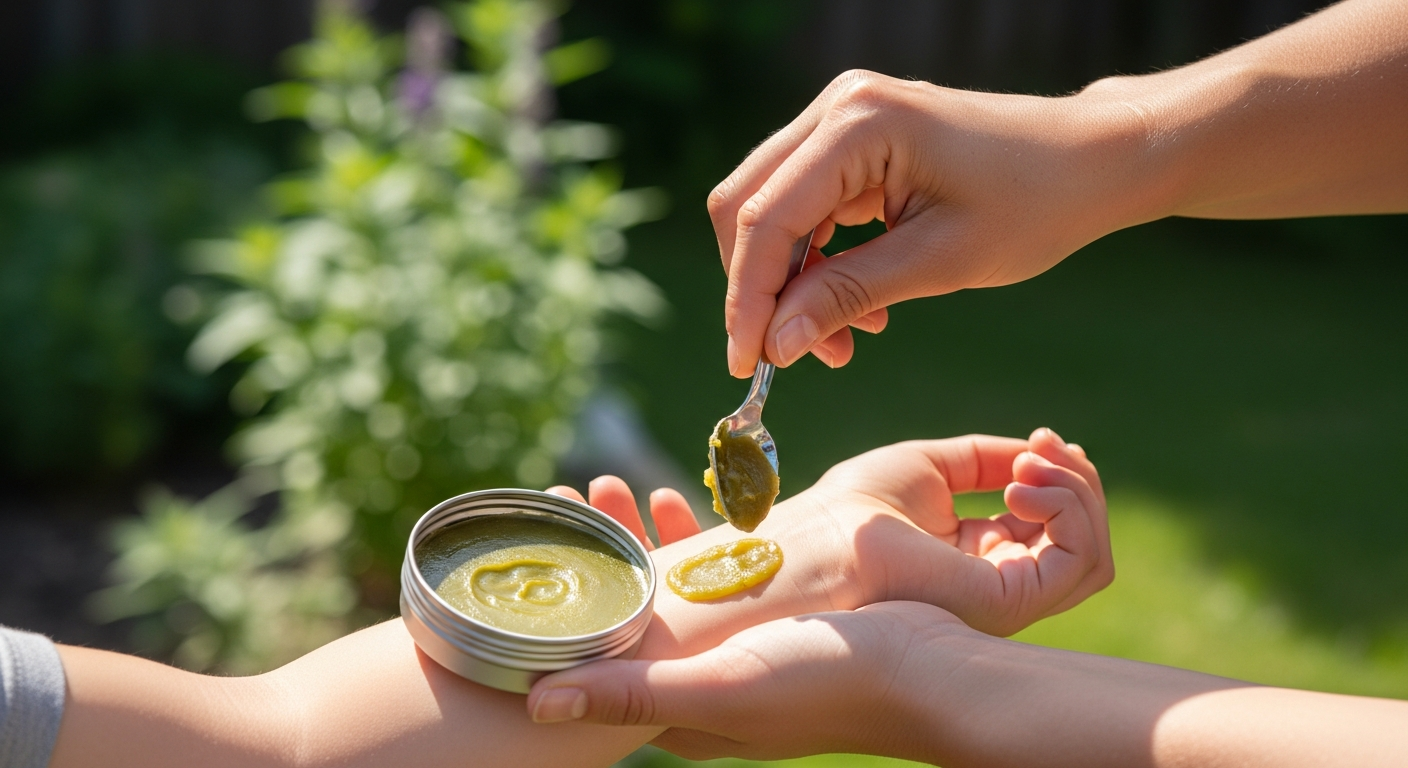
Yield: About 8 oz, which fills eight 1-oz tins — plenty to keep one in the kitchen, one in the first-aid kit, and a few to give away.
Adjust the texture with this ratio table:
| Texture | Oil | Beeswax | Best for |
|---|---|---|---|
| Soft / body balm | 1 cup | 0.75 oz (21g) | Daily moisturizing, cold climates |
| Medium / standard | 1 cup | 1 oz (28g) | General first aid, all seasons |
| Firm / travel-ready | 1 cup | 1.25 oz (35g) | Tins in a hot car or barn |
Troubleshooting Plantain Salve Problems
These are the most common issues that come up — and every single one is fixable.
Salve won't set up / still liquid after cooling — Not enough beeswax. Reheat the batch completely until it's liquid again, add beeswax ¼ oz at a time, do the spoon test, then repour.
Salve is too hard / difficult to scoop — Too much beeswax. Reheat and stir in more infused oil a tablespoon at a time until the spoon test feels right.
Grainy or sandy texture — This happens when the salve was disturbed while cooling, or cooled too quickly. Reheat the entire batch until smooth and fully liquid, pour back into clean containers, and leave completely undisturbed until set.
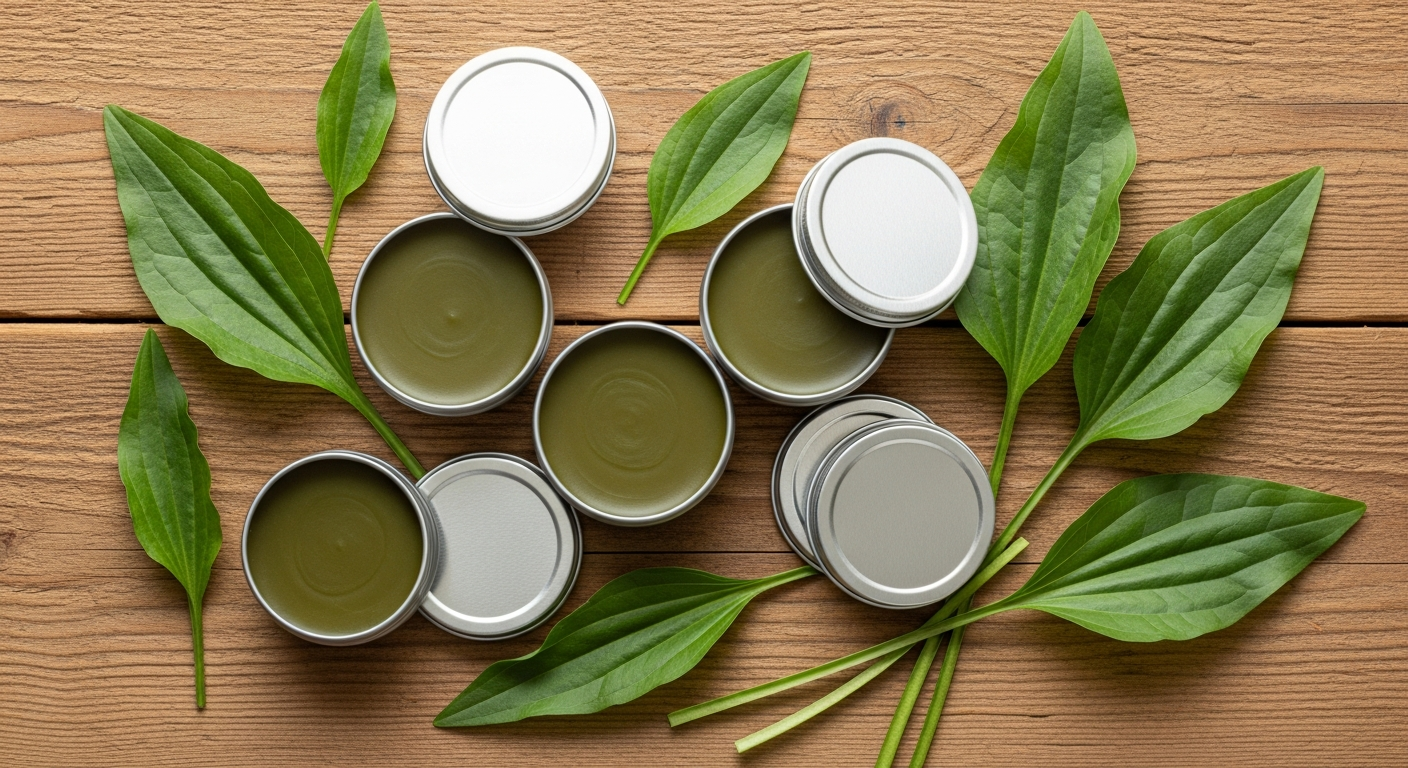
Color is pale yellow instead of green — Totally normal. Olive oil and high plantain content produce the deepest green. Coconut or sweet almond oil bases produce a lighter, more yellow salve. Both are correct.
Mold spots or cloudy infused oil — Fresh leaves were used, or moisture got into the oil during infusion. Discard this batch. Ensure all leaves are fully dried and all equipment is completely dry before your next attempt.
Salve Variations Worth Trying
The base recipe stays the same — just change what you infuse into the oil.
- Calendula + plantain — Use half plantain, half dried calendula flowers in the oil infusion. Enhanced skin healing for eczema, rashes, and sensitive or irritated skin.
- Comfrey + plantain — Half and half. Comfrey's allantoin content is even higher than plantain's; this combination is excellent for bruises, strains, and sore muscles.
- Jewelweed + plantain — For poison ivy and intense itching. Jewelweed neutralizes urushiol; plantain soothes the inflammation.
How Long Does Plantain Salve Keep?
Made with fully dried herbs and a quality carrier oil, plantain salve keeps for 12 months or more in a cool, dark location. Olive oil has naturally good shelf stability; fractionated coconut oil is even more so.
The best way to check freshness is the sniff test. Fresh salve smells gently herbal. A salve that's turned will smell rancid — like stale oil or crayons. You'll know immediately. Other warning signs: significant color change, texture that seems separated or grainy when it wasn't before, or any visible mold (rare if the recipe was made correctly, but possible if moisture got in).
If it smells good and looks right, it's good.
Frequently Asked Questions
What is the best carrier oil for plantain salve? Olive oil is the most traditional and has excellent shelf life — it's the first choice for most herbalists making a first-aid salve. Sweet almond oil is a good option if you want something lighter that absorbs faster. Fractionated coconut oil is highly shelf-stable with no scent. For a first batch, olive oil is the most forgiving and the easiest to find.
Does plantain salve actually work? Yes — for what it's designed for. The active compounds aucubin (drawing agent, anti-inflammatory) and allantoin (cell regeneration) are well-documented. The drawing action on bee stings and splinters is genuinely effective, and allantoin is widely used in commercial wound-care products. Plantain salve won't treat infections or deep wounds, but for everyday homestead scrapes, stings, and bites, it earns its place in the first-aid kit.
Is plantain good for wrinkles? Allantoin, one of plantain's key compounds, promotes skin cell regeneration and is a common ingredient in commercial anti-aging skincare. Regular use of plantain salve on dry or maturing skin may improve texture and support healthy skin turnover. That said, this isn't a wrinkle cream — it won't fill lines or replace a dedicated skincare routine. It's an excellent all-purpose moisturizer that happens to contain a skin-regenerating compound.
Can I use coconut oil for plantain salve? Yes. Regular coconut oil solidifies below about 76°F, so your salve will be firm at room temperature and softer in summer — which is actually a nice texture. Fractionated coconut oil stays liquid at all temperatures and works just like sweet almond oil in the recipe. Either version works well.
Is plantain salve safe during pregnancy? Topical use of plantain salve on intact skin is generally considered low-risk — you're applying a small amount of herbal-infused oil, not taking a concentrated internal preparation. That said, check with your midwife before using any new herbal product during pregnancy, especially if you plan to use it frequently or over a large area.
Can children use plantain salve? Yes — plantain salve is one of the gentler herbal preparations and is widely used on children for bug bites, bee stings, and minor scrapes. For babies and young children, make or use a batch with no essential oils added. Plain plantain salve is safe and effective without the essential oil component.