How to Make Echinacea Tea (From Fresh or Dried Flowers, Leaves, or Root)
Last updated March 13, 2026
Quick Snapshot
What it is Herbal infusion from echinacea flowers, leaves, or root Best for Immune support during cold and flu season Standard ratio 1 tablespoon dried herb per 8–10 oz water Steep time 5–10 minutes (infusion); 20 minutes (root decoction) Fresh flower method 1–2 blooms per 2 cups water, 5–7 minutes Dried herb shelf life Up to 1 year
I grew purple coneflowers in my garden for three years before someone told me they were the same plant I'd been buying at the health food store in capsule form. Echinacea purpurea — those familiar magenta blooms with the spiky orange centers — is one of the most studied medicinal herbs in North America, and if you grow them, you've already got a winter immune tonic growing in your backyard.
Making echinacea tea at home is simple once you know which part of the plant to use and how long to brew it. Here's everything you need.
Which Part of the Echinacea Plant Do You Use for Tea?
This is the question most recipes skip over, and it's worth answering before you start.
Flowers and leaves make a standard infusion — you pour hot water over them and steep, the same way you'd make any herbal tea. This is the easiest method and works well with both fresh and dried plant material.
Roots are stronger. They require a decoction — meaning you simmer them in water rather than just steeping — because the harder, woodier material needs more heat and time to release its compounds. Root tea is more intense in flavor and generally considered more potent.
Seed heads are bitter and best left on the plant (or for the birds).
One important note if you want to harvest root from your own plants: wait until the plant is at least 3 years old. Digging the root on a younger plant will kill it. For root harvests, fall is the traditional time — after the aerial parts die back for the season. For flowers, harvest in early bloom when the petals are just beginning to open, before the flower is fully mature.
How to Make Echinacea Tea — Basic Dried Recipe
The ratio and method are simple. Here's the standard approach for dried flowers or leaves.
Ingredients:
- 1 tablespoon dried echinacea flowers, leaves, or a mix
- 8–10 oz just-boiled water
Instructions:
- Bring water to a boil, then let it sit for about 1 minute. Slightly-off-boil water is gentler on the plant compounds than a hard rolling boil.
- Place the dried echinacea in a tea strainer, reusable muslin bag, or directly in your mug.
- Pour the hot water over the herbs.
- Steep for 5–10 minutes — the longer you steep, the more earthy and medicinal the flavor. I usually go 8 minutes.
- Strain (if you brewed loose), sweeten with honey if you'd like, and drink while warm.
Yield: 1 cup
Here's a ratio guide for all three brewing methods:
| Method | Herb amount | Water | Time |
|---|---|---|---|
| Dried flowers or leaves (infusion) | 1 tablespoon | 8–10 oz | 5–10 minutes |
| Dried root (decoction) | 1/2 tsp ground or 1 tsp chopped root | 8 oz | Simmer 20 minutes |
| Fresh flowers (infusion) | 1–2 whole blooms | 2 cups | 5–7 minutes |
How to Make Fresh Echinacea Tea From Garden Coneflowers
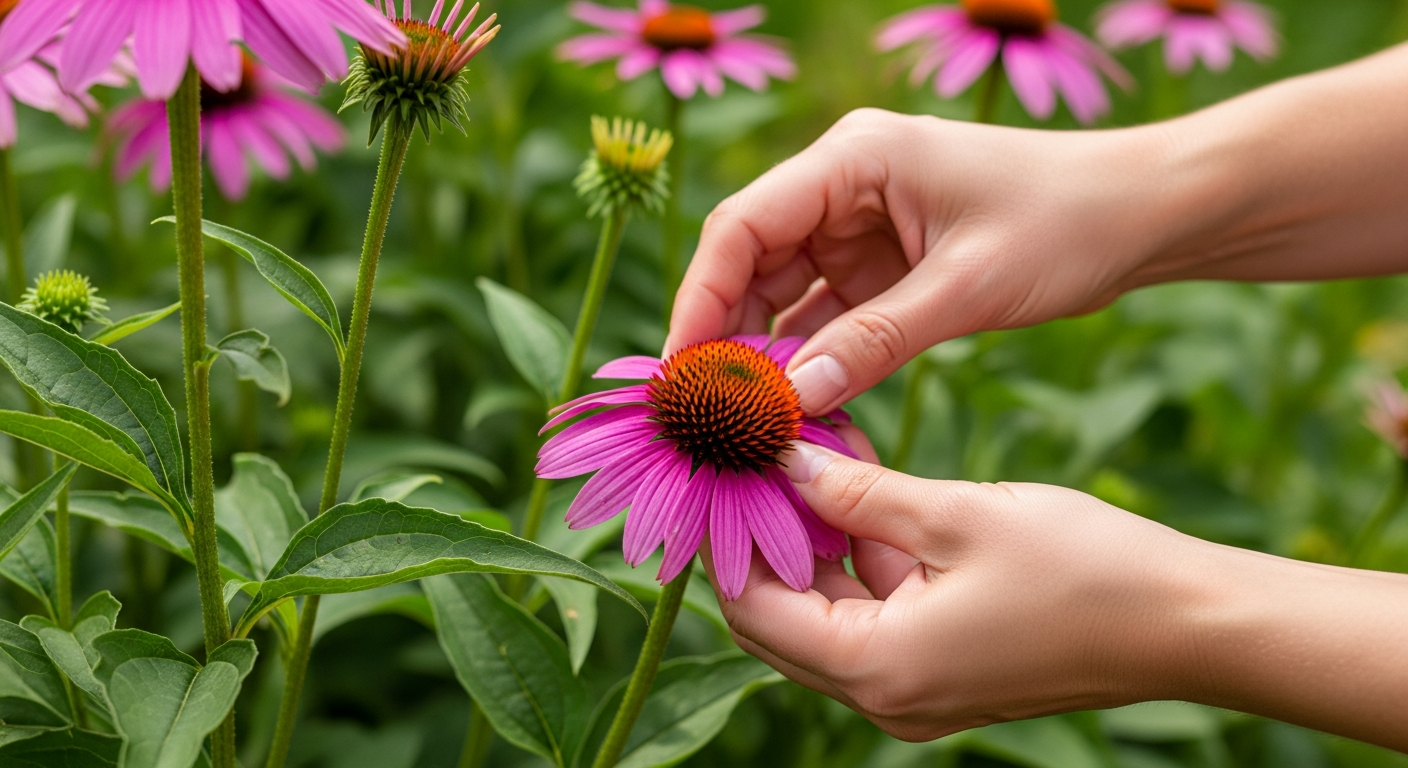
If you grow purple coneflowers, you've got fresh echinacea from June through late summer. Fresh tea is milder in flavor than dried — a nice gateway for people who find dried echinacea too intense — and there's something deeply satisfying about picking flowers from your garden and turning them into medicine the same afternoon.
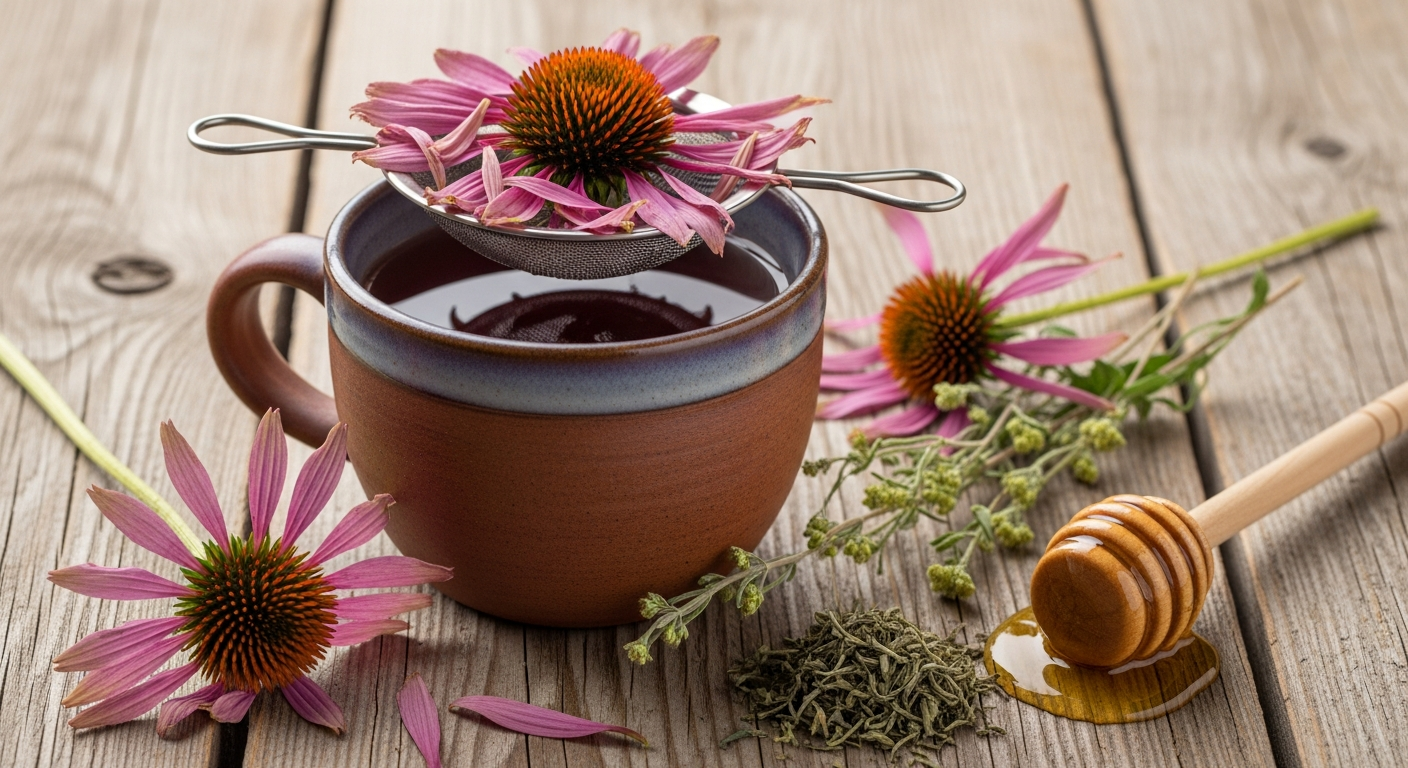
Rinse 1–2 fresh blooms under cold water. Pull off any visible debris. Place the flowers in a mug and add any large leaves you harvested alongside them — the leaves add depth to the flavor and contribute their own medicinal compounds.
Pour 2 cups of just-boiled water over the flowers and steep for 5–7 minutes. Strain and add honey if you like. If you want something stronger, add a pinch or two of dried echinacea alongside the fresh blooms.
One note worth knowing: the ornamental purple coneflower you see in every garden center is echinacea purpurea. If you've been growing it as a landscaping plant, you already have a medicinal herb growing in your yard. Just make sure your plants haven't been treated with systemic pesticides before you harvest for tea.
How to Make Echinacea Tea Taste Better
Echinacea has a distinctive flavor — earthy, slightly bitter, with a mild tingling sensation on the tongue and the back of the throat. That tingle is actually a good sign; it comes from alkylamides, active compounds in the plant that are associated with its immune-stimulating effects. If you feel it, your echinacea is potent.
That said, not everyone loves drinking something that tastes like forest floor and numbs their tongue. Here's how to make it more pleasant:
- Honey — the simplest and most effective fix; raw honey adds its own antimicrobial benefit
- Fresh lemon juice — brightens the flavor considerably and cuts the earthiness
- Fresh or dried ginger — warming, slightly spicy, and pairs naturally with the herbal flavor
- Peppermint — add a few fresh leaves or 1/2 tsp dried; it refreshes and softens the bitterness
- Elderberry — adds a deep fruity note and layers in complementary immune support
Simple Immune-Boost Blend
When I feel a cold coming on, this is the blend I make:
- 1 tablespoon dried echinacea
- 1 teaspoon dried ginger (or 3 thin slices fresh)
- Juice of 1/4 lemon
- 1 teaspoon raw honey
Steep the echinacea and ginger together in 10 oz just-boiled water for 10 minutes. Strain. Add the lemon juice and honey after straining — heat degrades some of the benefit of raw honey, so stir it in at the end.
How Often Should You Drink Echinacea Tea?
Echinacea is a short-course herb — it's designed to give your immune system a boost when you need it, not something to drink daily year-round.
During illness: 2–3 cups per day is reasonable. Use it for up to 10 consecutive days, then take a break. This is the most common recommendation from herbalists and supported by most of the clinical research on echinacea.
For prevention during cold season: 1 cup a day during your highest-risk weeks is a common approach. Some people do 1–2 weeks on, then 1 week off, rotating through the season. Continuous daily use may reduce effectiveness over time, so building in breaks is wise.
The research on echinacea is genuinely solid for shortening the duration and severity of colds — it's one of the more studied herbs out there. But it's not a guarantee, and it works best as part of a broader wellness approach.
Who Shouldn't Drink Echinacea Tea?
Echinacea is well-tolerated by most healthy adults, but there are some situations where caution is worth taking.
Autoimmune conditions — Echinacea works by stimulating immune activity. If you have rheumatoid arthritis, lupus, multiple sclerosis, or another condition where immune over-activity is the problem, talk to your doctor before adding echinacea to your routine.
Ragweed or daisy family allergies — Echinacea is in the Asteraceae family, the same as ragweed, chrysanthemums, and marigolds. If you have known allergies to these plants, you may have a cross-reaction. Start with a small amount and watch how your body responds.
Sedative medications — There's some evidence that echinacea can interact with sedative drugs, potentially enhancing their effects. Check with your pharmacist if you're on sleep medications, anti-anxiety medications, or anything that affects the central nervous system.
Pregnancy and nursing — The research on echinacea during pregnancy is limited. Most herbalists and midwives recommend being cautious during the first trimester and discussing use with your care provider before drinking it regularly.
Frequently Asked Questions About Echinacea Tea
Can I make echinacea tea from my garden coneflowers? Yes — purple coneflowers (Echinacea purpurea) are medicinal echinacea. If you grow them without pesticides, you can use the flowers, leaves, and roots. Harvest flowers in early bloom, leaves any time during the growing season. Roots should be harvested from plants at least 3 years old, in the fall after the plant dies back.
Is echinacea good for candida overgrowth? Echinacea has documented antifungal properties alongside its better-known antiviral and immune-stimulating effects. Some natural health practitioners include it in candida protocols for its immune support and antifungal activity. It's a reasonable supportive herb, but it's not a substitute for targeted antifungal treatment if you have a significant overgrowth. Think of it as one tool in the toolkit.
What part of echinacea is used for tea? Flowers and leaves for a standard infusion; roots for a stronger simmered decoction. All parts of echinacea purpurea are usable. Skip the seed heads — they're bitter. Roots are generally considered the most potent part but require the plant to be at least 3 years old before harvesting.
How long should I steep echinacea tea? For dried flowers or leaves, steep 5–10 minutes. Five minutes gives a milder flavor; 10–15 minutes gives a stronger, more medicinal brew. For a root decoction, start the root in cold water and simmer for 20 minutes. Fresh flower tea is ready in 5–7 minutes.
Is echinacea tea safe to drink every day? Short-term daily use (up to 10 consecutive days) is the most common recommendation. Continuous year-round use isn't generally advised — most herbalists suggest taking breaks to maintain effectiveness. A 1–2 week on, 1 week off rotation during cold season is a practical approach.
Can I drink echinacea tea while pregnant? The research on pregnancy safety is limited. Most herbal practitioners recommend caution during the first trimester and consulting your midwife or doctor before using echinacea regularly during any stage of pregnancy or while nursing.