Nettle Tincture: How to Make It, Benefits, and Dosage Guide
Last updated March 13, 2026
Stinging nettles grow along the edges of my property every spring, and for a long time I just pulled them and moved on. Once I started making my own herbal remedies, they became one of the first plants I started harvesting intentionally. Nettle tincture is now a regular part of my spring routine — I start taking it a few weeks before allergy season, and I keep a bottle on the shelf for achy joints and times when I need a mineral boost.
This guide covers everything: what nettle tincture actually does, how to tell apart the different types (leaf, root, and seed — they're not interchangeable), the recipe, dosage, and storage. Whether you're using nettles from your own property or buying dried herb, the process is straightforward.
| Main uses | Allergies, joint/arthritis pain, mineral support, urinary health |
| Part to use | Nettle LEAF (for this recipe) — not root or seed |
| Alcohol | 100 proof (50%) vodka for dried; 151 proof (75%) for fresh |
| Infusion time | 4–6 weeks |
| Standard dosage | 1–2 dropperfuls (30–60 drops), 1–3 times daily |
| Shelf life | 5+ years in amber glass, stored in a cool dark place |
What Does Nettle Tincture Do?
Nettle tincture is a concentrated herbal extract made from stinging nettle leaves that supports allergy relief, reduces inflammation, provides mineral nourishment, and supports healthy urinary function.
Stinging nettle (Urtica dioica) has been used as both food and medicine for centuries across Europe, Asia, and North America. It's one of the most mineral-dense plants around — rich in iron, calcium, magnesium, potassium, and amino acids — and it has a long track record of traditional use for everything from springtime allergies to joint pain. A tincture pulls those beneficial compounds into alcohol for a concentrated, long-lasting form that's more practical for daily use than brewing fresh tea.
Here's what most people reach for it for:
- Allergies and hay fever — Acts as a natural antihistamine, helping calm the sneezing, itchy eyes, and congestion that come with spring. It works best as a preventive: start taking it daily 2–4 weeks before your usual allergy season hits.
- Joint pain and arthritis — Anti-inflammatory properties make it useful for achy joints and sore muscles. Many herbalists recommend pairing it with a topical nettle salve or comfrey salve for an internal-and-external approach.
- Mineral nourishment — One of the most nutrient-dense plants you can use medicinally. Iron, calcium, magnesium, potassium, and amino acids — it reads like a multivitamin from the hedgerow.
- Urinary and kidney support — Has mild diuretic action and supports healthy urinary function; traditionally used for general kidney health.
- Energy and adrenal support — Nettle is deeply nourishing and has been used traditionally during times of depletion — pregnancy, menopause, recovery from illness, or periods of chronic stress.
- Blood sugar balance — Some evidence that nettle has a mild effect on blood sugar; worth noting if you're diabetic (more on this in the safety section).
Nettle Leaf vs. Nettle Root vs. Nettle Seed — What's the Difference?
Short version: leaf = general wellness and allergies; root = prostate; seed = kidneys.
These are not the same thing, and using the wrong part won't give you the results you're looking for.
Nettle leaf is what this article covers — general wellness, seasonal allergies, mineral support, joint inflammation, and urinary health. Most nettle tinctures you'll find sold commercially are leaf-based.
Nettle root tincture — not the leaf — is the traditional remedy for prostate support and BPH (benign prostatic hyperplasia). The root contains different compounds than the leaves, which is why it specifically targets prostate health. If you're looking for prostate benefits, you need a product labeled "nettle root" — a leaf tincture won't do the same job.
Nettle seed tincture is a more specialized preparation used for kidney support and adrenal fatigue. Some traditional herbalists use it in the context of kidney health, including questions about kidney function markers. This is a more specialist area — if you're dealing with kidney disease or have concerns about kidney function, talk to your doctor before using any form of nettle therapeutically.
How to Make Nettle Tincture (Step by Step)
What You'll Need
Ingredients:
- Dried or fresh stinging nettle leaves
- Alcohol: 100 proof (50%) vodka for dried nettles; 151 proof (75%) grain alcohol for fresh nettles
- Clean glass jar (pint or quart)
Equipment: cheesecloth or fine-mesh strainer, amber glass dropper bottles for storage, labels
Why Alcohol Proof Matters Fresh nettles contain a lot of water. If you combine them with standard 80 proof vodka, the water in the plant dilutes the final tincture too much. You need higher-proof alcohol to compensate. Dried nettles have lost that moisture, so 100 proof vodka achieves the right balance on its own. The rule is simple: dried nettles = 100 proof vodka; fresh nettles = 151 proof alcohol. Don't overthink it — just match your alcohol to your herb.
Folk Method (Simplest — No Scale Required)
For dried nettles:
- Fill a clean glass jar about halfway with dried nettle leaves.
- Pour 100 proof vodka over the herbs until the jar is full, ensuring all plant material is submerged.
- Cap tightly and shake well.
- Store in a cool, dark cabinet for 4–6 weeks, shaking every few days when you think of it.
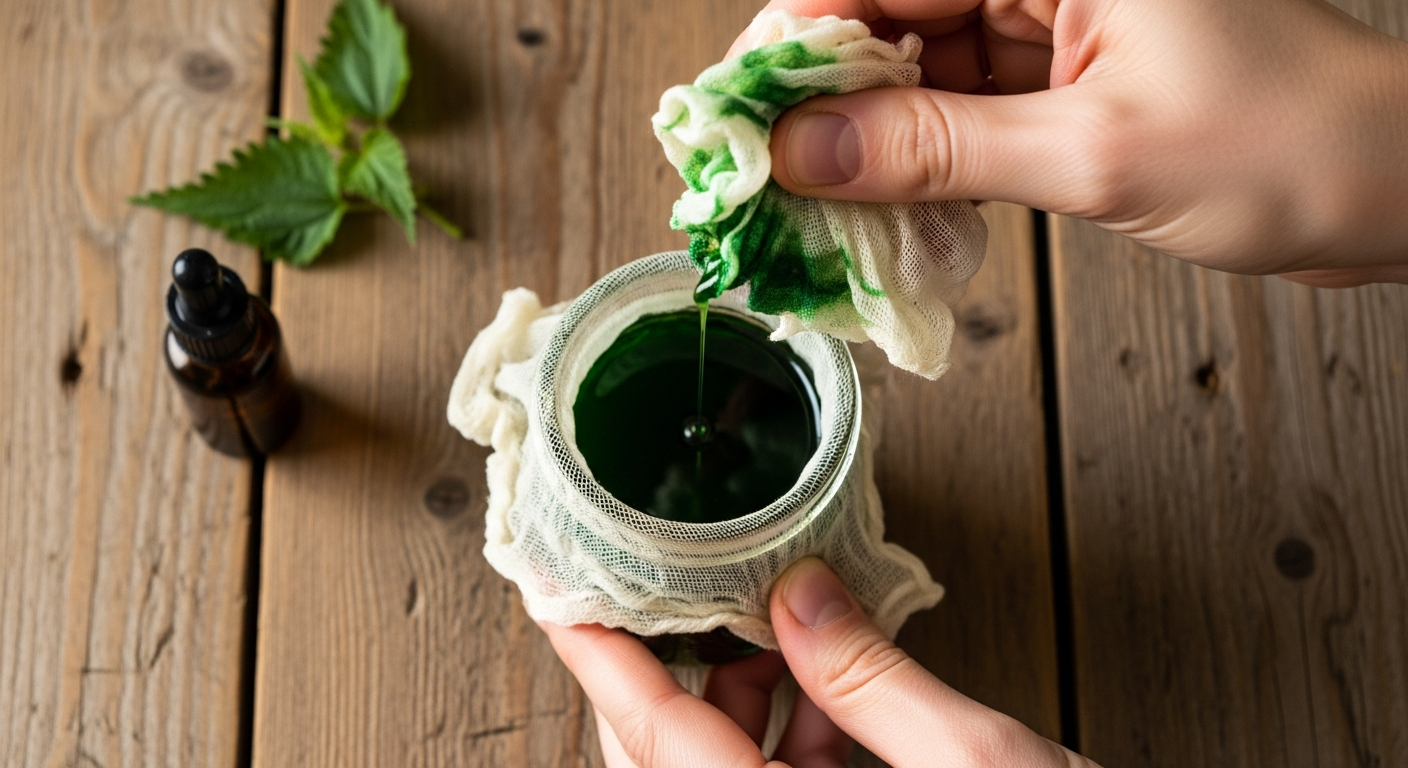
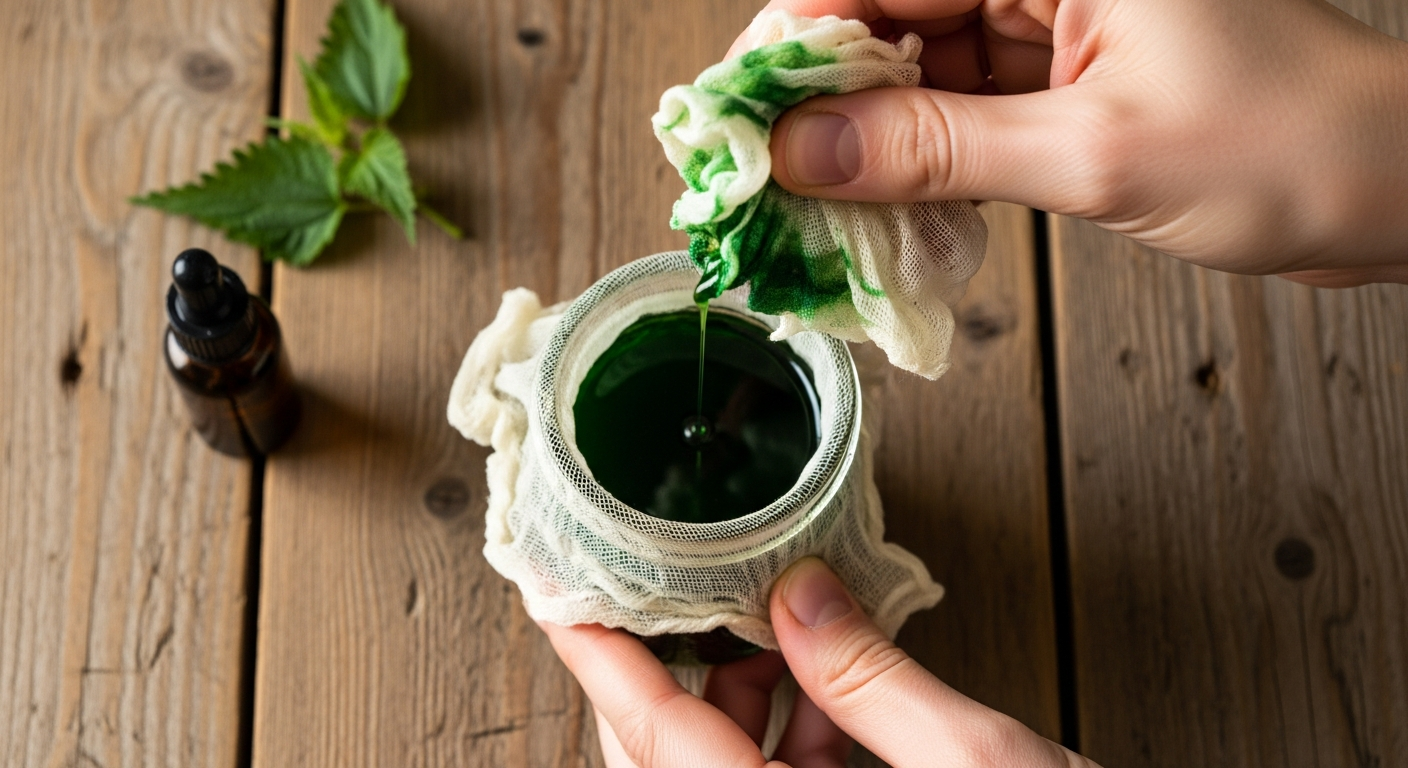
- After 4–6 weeks, strain through cheesecloth into a clean bowl; press or squeeze the spent herbs firmly to extract all the liquid.
- Pour into amber glass dropper bottles, label with date and contents, and store in a dark place.
For fresh nettles:
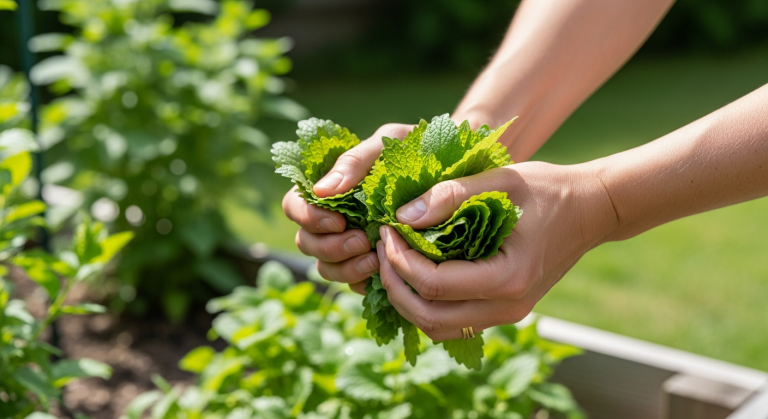
The process is the same, with two differences: fill the jar ¾ of the way with chopped fresh leaves, and use 151 proof alcohol instead of standard vodka. One important note — wear kitchen gloves when handling fresh nettles until they're submerged in the alcohol. The sting disappears quickly once the plant is in the alcohol, but handling fresh nettles bare-handed will remind you why they're called stinging nettles.
Standardized Method (By Weight — For Consistent Potency)
If you want consistent potency from batch to batch, measuring by weight rather than volume gives you more reliable results. Here's the formula:
| Dried Nettle | Fresh Nettle | |
|---|---|---|
| Herb | 100g dried leaves | 100g fresh leaves |
| Alcohol | 500ml 100 proof (50%) vodka | 200ml 151 proof (75%) alcohol |
| Ratio | 1:5 | 1:2 |
The folk method is perfectly effective for home use — most homestead herbalists use it. The standardized method is worth the extra step if you're making large batches or want consistency across multiple batches over time.
Nettle Tincture Dosage — How Much to Take
Standard adult dosage: 1–2 dropperfuls (about 30–60 drops) in a small amount of water or juice, 1–3 times per day.
Starting low: If you're new to nettle tincture or prefer to introduce things gradually, start with 3–5 drops and work up to a standard dose over a week or two. It's not strictly necessary — nettle is a food herb and generally very well tolerated — but it's how many herbalists approach a new tincture, and it doesn't hurt.
Timing: Take in the morning or afternoon, not right before bed. Nettle has mild diuretic properties, meaning it encourages urination. An evening dose can interrupt your sleep. For seasonal allergies, daily morning use starting 2–4 weeks before your typical allergy season gives the best results.
Making it palatable: Nettle tincture is earthy, green, and distinctly herby. Most people mix their dose into a small glass of juice, stir it into a spoonful of honey, or add it to a cup of hot tea after steeping. The heat helps dissipate the alcohol taste. Once you're used to it, it's not bad — but the first few times you'll appreciate having something to mix it into.
How to Store Nettle Tincture (And How Long It Lasts)
Store in amber glass dropper bottles in a cool, dark location. Heat and direct light degrade tinctures over time — a kitchen cabinet or pantry shelf away from the stove works well. Avoid storing in the bathroom, where humidity fluctuates.
Properly stored, an alcohol-based tincture lasts 5 years or longer. The high alcohol content acts as a natural preservative. Signs it's past its prime: murky or grey color, an off or rancid smell, or visible particles settling in the liquid.
For reference: dried nettle loses most of its potency after 9–12 months, and nettle tea should be used within a few days of brewing. Tincture is by far the most shelf-stable way to preserve nettle — the 4–6 week wait is worth it when you end up with something that's good for years.
Safety Notes and Who Should Use Caution
Nettle leaf has been used as food and medicine for centuries and is generally considered safe for most adults at normal doses. A few specific cautions worth knowing:
- Diuretics: Nettle has its own mild diuretic action. If you're already on prescription diuretics, consult your doctor before adding nettle tincture to your routine.
- Diabetes medications: Nettle may have a mild blood-sugar-lowering effect. If you're managing diabetes with medication, check with your healthcare provider first.
- Pregnancy: The traditional guidance is to consult a healthcare provider before using nettle medicinally during pregnancy. Nettle as food (in tea or soups) is widely considered safe, but tincture is a more concentrated form.
- Nettle allergy: Rare, but if you've ever had a reaction to touching or eating nettles, avoid the tincture.
As always: this isn't medical advice, and if you're dealing with a specific health condition or taking medications, it's worth running it by your healthcare provider.
Frequently Asked Questions About Nettle Tincture
What does nettle tincture do?
Nettle tincture supports allergy relief, reduces inflammation, provides rich mineral nourishment (iron, calcium, magnesium, potassium), and supports healthy urinary function. It's made from stinging nettle leaves extracted in alcohol, which concentrates the plant's beneficial compounds into a form that's easy to take daily and stays potent for years. Most people use it for seasonal allergies, joint and muscle pain, or as a general mineral tonic.
Does nettle leaf reduce creatinine?
Nettle leaf tincture (made from the leaves) isn't specifically studied for creatinine reduction. Nettle seed tincture has been used in traditional herbalism for kidney support, and some practitioners use it in the context of kidney health — but "reducing creatinine" is a specific medical claim that goes beyond what over-the-counter herbal use can reliably promise. If you have elevated creatinine or kidney disease, talk to your doctor before using nettle in any form.
Is nettle tea or tincture good for an enlarged prostate?
Nettle ROOT — not the leaf — is the part traditionally used for prostate support and BPH (benign prostatic hyperplasia). This recipe uses nettle leaves, which serve different purposes (allergies, inflammation, general wellness). If you're looking for prostate benefits specifically, look for a product labeled "nettle root extract" or "nettle root tincture," not a leaf-based product.
Can I make nettle tincture with fresh nettles?
Yes — fresh nettles work well and some herbalists prefer them. The key is using higher-proof alcohol (151 proof / 75%) rather than standard vodka, because fresh nettles already contain water and you need stronger alcohol to compensate. Wear kitchen gloves when handling fresh nettles before they go into the alcohol — the sting disappears once they're submerged.
What proof alcohol should I use for nettle tincture?
Use 100 proof (50%) vodka for dried nettle and 151 proof (75%) grain alcohol for fresh nettle. The difference matters because fresh plants contain water, which dilutes the tincture if you use standard 80 proof vodka. Dried plants have no moisture, so 100 proof gives you the right alcohol-to-water balance.
How long does homemade nettle tincture last?
A properly made and stored alcohol-based tincture lasts 5 years or more. Store it in amber glass dropper bottles in a cool, dark place. Signs it's past its prime include murky color, an off smell, or visible particles. For comparison, dried nettle lasts 9–12 months and nettle tea lasts a few days — tincture is the most shelf-stable form by a significant margin.