Apple Cider Vinegar Soap: Benefits + a Beginner Recipe (No Lye Needed)
Last updated March 13, 2026
If you've got a bottle of Bragg ACV sitting in your pantry — and I'm guessing you do — you might have wondered whether it's actually good for your skin. Apple cider vinegar soap has been showing up in natural skincare circles for a while now, and there's real science behind why it works. Here's what it actually does for your skin, and how to make your own batch at home in about 30 minutes with no lye required.
Quick Snapshot
| Benefits | Best For |
|---|---|
| Fights acne-causing bacteria | Oily and acne-prone skin |
| Gently exfoliates with natural AHAs | Dull or uneven skin tone |
| Soothes irritation and inflammation | Eczema-prone and sensitive skin |
| Fades dark spots over time | Hyperpigmentation, post-acne marks |
| Balances scalp pH, reduces dandruff | Oily scalp, dandruff-prone hair |
You can make a batch at home in about 30 minutes — no lye required. Recipe is below.
What Makes Apple Cider Vinegar Soap Worth Using?
ACV soap works because apple cider vinegar brings a few genuinely useful things to your skin — not just marketing claims. Here's what's actually happening when you use it.
It Fights Acne and Breakouts
Apple cider vinegar contains acetic acid, which is naturally antibacterial. When it's in your soap, it helps keep acne-causing bacteria in check while you wash, making it a smart choice for oily or breakout-prone skin. It won't replace a targeted acne treatment, but as a daily cleanser it's a solid upgrade from plain glycerin soap.
It Exfoliates Gently Without Scrubbing
ACV naturally contains alpha hydroxy acids — AHAs — which are the same category of ingredient used in a lot of higher-end skincare products. AHAs are basically nature's gentle exfoliant: they help loosen dead skin cells and encourage cell turnover. The effect is mild in a rinse-off soap, but it's real, and over time it contributes to smoother, clearer skin without any scrubbing required.
It Soothes Irritated and Eczema-Prone Skin
ACV has natural anti-inflammatory properties, which is part of why it's long been used as a rinse for irritated skin. In soap form, those same properties make it especially worth trying for eczema-prone or reactive skin — I go deeper on that in the eczema section below.
It Helps Fade Dark Spots Over Time
The AHA activity in apple cider vinegar can help fade hyperpigmentation — dark spots left over from acne, sun exposure, or skin irritation. This isn't a one-use fix; it works gradually with consistent use over several weeks. But if you're dealing with post-acne marks, an ACV soap bar is a low-effort way to work on them every day.
Bonus: It Works as a Hair and Scalp Bar
ACV soap used as a shampoo bar can help balance scalp pH and reduce dandruff — the same reason an ACV rinse is popular for hair. It's a good option for oily scalp types. If your hair is very dry or color-treated, the acidity may be too much, so stick to your face and body in that case.
Apple Cider Vinegar Soap for Eczema and Sensitive Skin
If you've been dealing with eczema for any length of time, you know how exhausting it is to try product after product and still end up with itchy, irritated skin. I hear from a lot of readers who are looking for something gentler than commercial soap — and ACV soap is worth trying for certain skin types.
The reason ACV soap comes up in the eczema conversation is the same reason diluted ACV rinses do: it's both anti-inflammatory and antimicrobial. Those two properties together can help calm reactive skin and reduce the bacterial load that sometimes makes eczema worse.
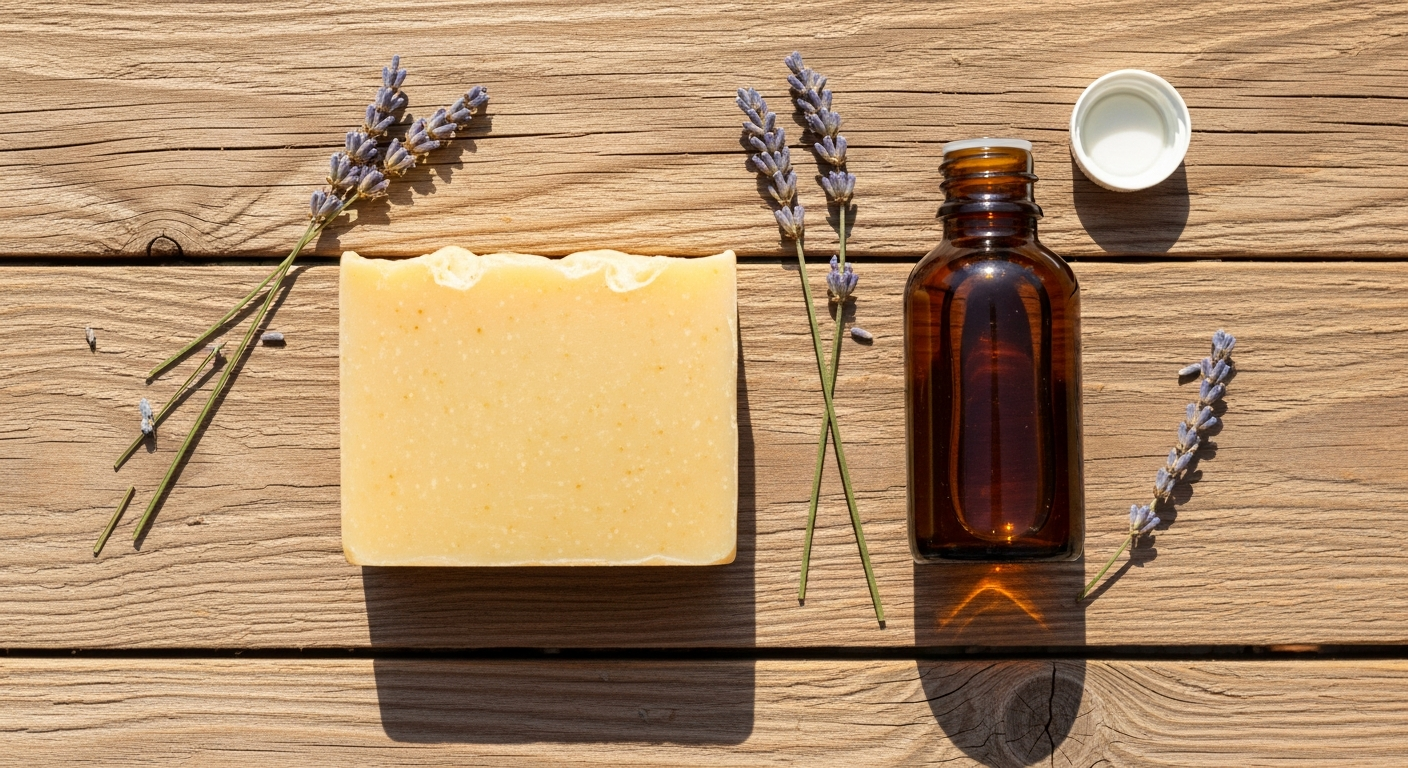
In soap form, the ACV is more diluted than a direct rinse, and it gets rinsed off — so it's gentler than applying it straight to skin. That makes melt-and-pour ACV soap a reasonable starting point for people with sensitive or eczema-prone skin who are curious about ACV but nervous about using it undiluted. The goat milk soap base in the recipe below makes it even gentler, since goat milk is naturally moisturizing and lower in lye residue than many commercial soap bases.
That said, I want to be honest with you: soap alone is not an eczema treatment. It may help soothe irritated skin and reduce flares, but if you're dealing with severe eczema, please work with a dermatologist alongside any DIY options. And always do a patch test first — apply a small amount to the inside of your wrist and wait 24 hours before using it all over.
ACV soap is best for oily eczema patches and reactive, sensitivity-prone skin. If your eczema involves very dry, cracked skin, the acidity may be irritating rather than helpful — in that case, the plain goat milk melt-and-pour base without the ACV would be a gentler choice.
How to Make Apple Cider Vinegar Soap at Home (No Lye Required)
I'll be honest — I was nervous about soap making for a long time because every tutorial seemed to start with "first, carefully handle your lye." Lye (sodium hydroxide) is the chemical that turns fats into soap in the traditional cold-process method, and it requires safety goggles, gloves, and careful ventilation. I wasn't ready for that on a Tuesday evening.
Melt-and-pour soap changes everything. The saponification has already happened — the lye work is done for you at the factory. You melt a pre-made soap base, add your ingredients, pour into molds, and you're done. No lye handling, no safety gear, no waiting weeks for the soap to cure.
There's also a chemistry reason why melt-and-pour is actually better for ACV specifically. In cold-process soap making, the lye (NaOH) reacts with and largely neutralizes ACV's acetic acid during saponification — so a lot of the active properties you're adding the ACV for get cancelled out in the process. With melt-and-pour, you're adding the ACV to an already-made base, so its active compounds integrate more directly rather than being neutralized. No other soap tutorial I've seen addresses this honestly — but it's the reason I recommend this method for ACV soap specifically.
What You'll Need
- Melt-and-pour soap base (goat milk, 1 lb) — Goat milk base is my first choice here because it's naturally moisturizing and gentle on sensitive skin. It also has a creamy white color that pairs well with the slight tint ACV can add. You can find it in craft stores or on Amazon.
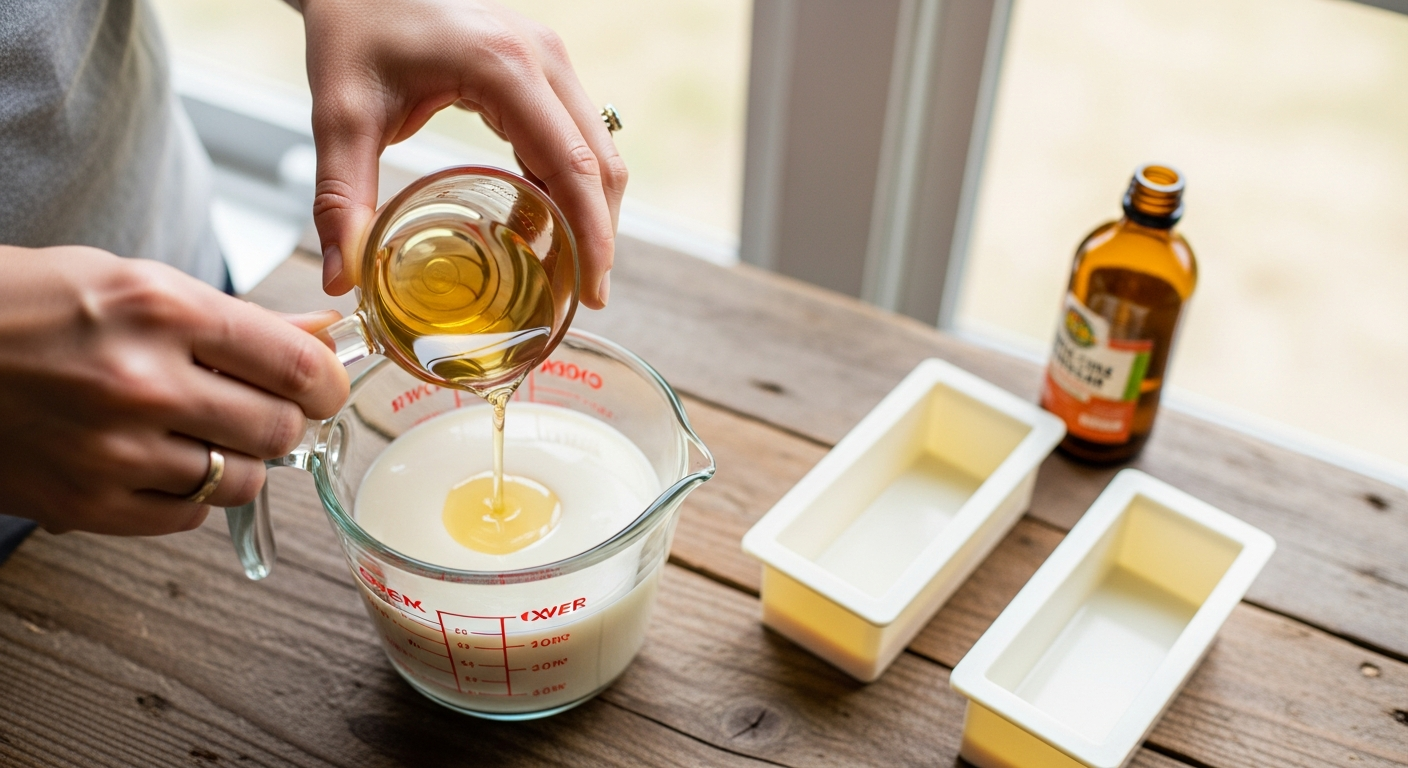
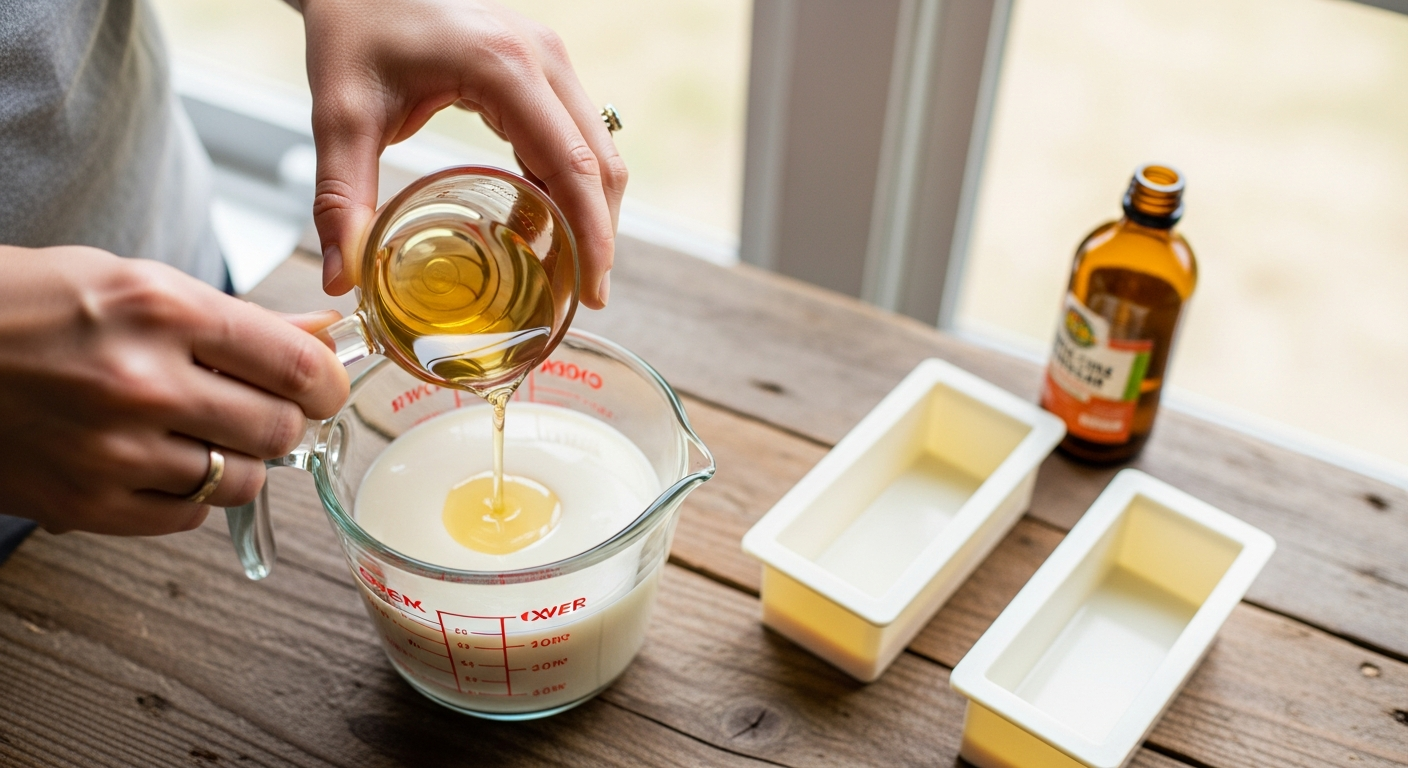
- Raw apple cider vinegar, 2 tablespoons — Use raw, unfiltered ACV with the mother — Bragg is the one I keep on hand, but any raw ACV works. The "mother" contains the enzymes and beneficial compounds you actually want in the soap.
- Essential oil, 20–30 drops — Lavender for sensitive and eczema-prone skin, tea tree for acne-prone skin, or rosemary if you're making a hair bar. All of these are widely available and inexpensive.
- Silicone soap molds — Bar molds are easiest. A basic silicone bar mold set is perfect and easy to pop the bars out of once they've set.
- Glass measuring cup — For melting the soap base in the microwave. Glass is important here — don't melt soap base in plastic if you can avoid it.
- Rubbing alcohol in a spray bottle — Just a small amount. This is used to pop surface bubbles after pouring and gives you a smoother top on each bar.
Step-by-Step Instructions
Yield: approximately 8 standard bars per pound of soap base
-
Cut the soap base into 1-inch cubes. Smaller pieces melt more evenly and faster. A sharp knife works fine — the base cuts easily.
-
Melt in the microwave in 30-second intervals. Stir between each round. It usually takes 2–3 rounds. Don't rush this — overheating the base can affect the final texture and color.
-
Let it cool until it's no longer steaming — about 5 to 7 minutes, or until the temperature is around 110°F. This step matters. If you add ACV to hot soap base, the acidity can react and cause the soap to seize or get grainy. Give it a few minutes to come down in temperature first.
-
Add the ACV — 2 tablespoons per pound of base. Stir gently. The mixture may look slightly cloudy at first; that's normal.
-
Add your essential oils — 20 to 30 drops. Stir slowly to incorporate without creating too many bubbles.
-
Pour slowly into your molds. A slow, steady pour minimizes air bubbles.
-
Spritz the top of each bar with rubbing alcohol. This pops surface bubbles and gives you a cleaner, smoother top on each bar. One or two spritzes per bar is enough.
-
Let set at room temperature for 2 to 4 hours. Don't put it in the fridge to speed things up — temperature changes can cause cracking or sweating. Just leave it on the counter.
-
Pop the bars from the molds and air-cure for 24 to 48 hours before first use. The bars are technically ready to use right away, but letting them harden for another day or two extends their shelf life and makes them last longer in the shower.
Recipe Variations
Once you've made the basic batch, it's easy to adapt the recipe for different needs. Just swap the essential oils and adjust the ACV ratio as noted:
- Eczema/sensitive skin: Goat milk base + lavender essential oil + 2–3 drops frankincense. Keep ACV at 2 tablespoons.
- Acne-prone skin: Clear glycerin base (instead of goat milk) + tea tree essential oil + a few drops of lemon. Clear glycerin keeps the bar lighter and better suited for oilier skin.
- Hair bar: Keep the goat milk base, increase ACV to 3 tablespoons per pound, and use rosemary essential oil. The higher ACV ratio helps more with scalp pH balance when used as a shampoo bar.
How to Store Your ACV Soap
Wrap finished bars in wax paper or store them on a draining soap dish between uses — keeping them dry between showers is the biggest factor in how long they last. Wet soap sitting in a puddle dissolves much faster than soap that gets a chance to dry out. Stored properly, your bars should last 6 to 12 months.
Can You Use ACV Soap on Your Face?
Yes — with a few caveats. ACV soap is a good fit for oily and acne-prone facial skin. The antibacterial and mild exfoliating properties that make it useful on the body apply to the face too, and many people find it helps reduce breakouts and keep pores cleaner over time.
If you're new to it, start at 2 to 3 times per week rather than daily. This gives your skin a chance to adjust to the mild acidity before making it part of your everyday routine. If your skin handles it well after a couple of weeks, you can use it daily.
Always follow up with a moisturizer. Even for oily skin, rinsing with any soap strips some of your skin's natural oils, and ACV soap is no exception — a lightweight moisturizer after washing keeps your skin balanced rather than triggering more oil production.
The gentlest version for the face is the goat milk base with lavender essential oil — that combination is mild enough for most skin types. Avoid getting any soap near your eyes, and if you have very dry or sensitive facial skin, stick to using it 2 to 3 times per week maximum or consider the plain goat milk base without the ACV.
Frequently Asked Questions
What is apple cider vinegar soap good for?
Apple cider vinegar soap is most commonly used for acne and oily skin — the acetic acid is naturally antibacterial and helps reduce breakouts. It also contains natural AHAs (alpha hydroxy acids), which gently exfoliate and help fade dark spots and post-acne marks over time. For people with eczema or reactive skin, ACV's anti-inflammatory properties can help calm irritation. And used as a shampoo bar, it helps balance scalp pH and reduce dandruff. It's a versatile bar that pulls double duty for both face and body.
Does lye neutralize the ACV in cold-process soap?
Largely, yes. In cold-process soap making, the lye (sodium hydroxide) reacts with the acetic acid in ACV during saponification — the chemical process that turns fats into soap. Most of ACV's acid gets neutralized in that reaction, so some of the active properties you're hoping to add may not survive the process. Some nutrients from raw ACV may carry through, but the acid-based benefits are largely cancelled out. That's the honest answer, and it's why I recommend the melt-and-pour method for ACV soap specifically — you're adding ACV to a base that's already been saponified, so it integrates more directly without being neutralized.
What kind of apple cider vinegar should I use in soap?
For melt-and-pour, use raw, unfiltered ACV with the mother — the cloudy sediment at the bottom of the bottle. The mother contains enzymes and beneficial compounds that you want preserved in the final bar. Bragg is the most widely available option, but any raw unfiltered ACV works. For cold-process soap, most of the ACV is neutralized during saponification anyway, so regular 5% distilled vinegar works just as well — there's no meaningful difference in the end product.
Is apple cider vinegar soap safe for daily use?
For most skin types, yes — after doing a patch test first. Start at 2 to 3 times per week and work up to daily use once you know how your skin responds. Oily and acne-prone skin generally tolerates it best. Very dry skin may find it slightly drying, especially with daily use, so follow with a good moisturizer regardless of skin type. ACV soap is generally well-tolerated, but everyone's skin is different — if you notice increased redness or dryness, scale back to a few times a week.