Dandelion Syrup Recipe: 3 Ingredients, Ready in Under an Hour
Last updated March 13, 2026
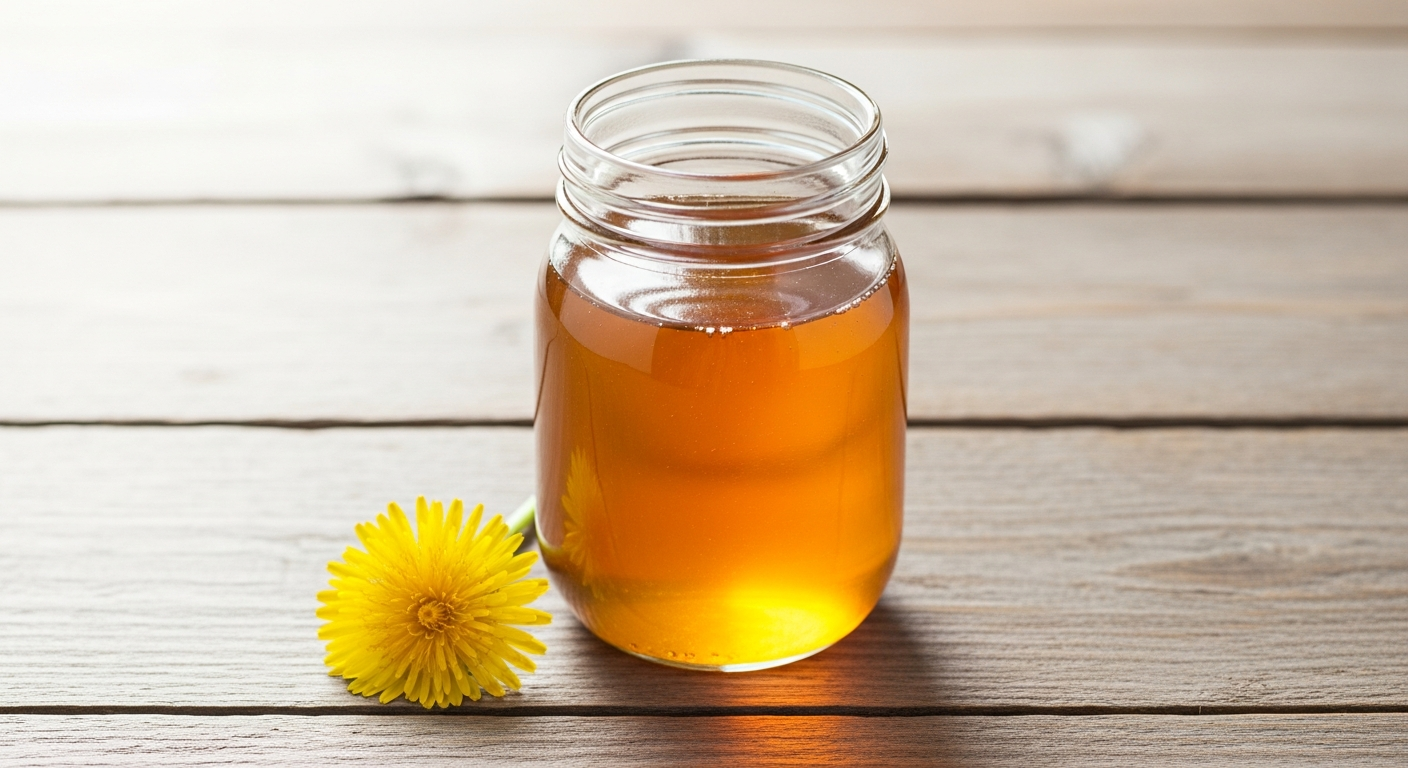
Every spring my yard fills up with dandelions. For years I pulled them — now I make syrup. With just 3 ingredients and under an hour of your time, you can turn those "weeds" into a gorgeous golden syrup that tastes remarkably like honey. It's one of the easiest foraging projects you can do, and you don't need any special skills or equipment to pull it off.
Quick Snapshot ⚡
- Flowers needed:
2 cups whole blossoms (50–80 flowers) - Ingredients: 3 (dandelion petals, sugar, lemon juice)
- Total time: 45–60 minutes
- Yield: ~1 cup finished syrup per cup of sugar used
- Storage: Fridge 1–2 months | Freezer up to 1 year | Canned up to 1 year
Is Dandelion Syrup the Same as Dandelion Honey?
Yes — "dandelion syrup" and "dandelion honey" refer to the same base recipe. The difference is just cook time: syrup is cooked to a lighter, pourable consistency while dandelion honey is cooked longer until it thickens to mimic real honey. Both use the same 3 ingredients and the same process, so you can decide after tasting how thick you'd like yours.
What Does Dandelion Syrup Taste Like?
Dandelion syrup tastes honey-like and floral, with a mild earthy note and a delicate sweetness that's lighter than commercial honey. Think: spring in a jar.
How to Harvest Dandelions for Syrup
How Many Dandelions Do You Need?
This is the question that trips up most first-time makers, because recipes across the internet give wildly different numbers — anywhere from 50 to 200 flowers. Here's the simple rule: dandelion blossoms shrink dramatically when you separate the petals, so you need about 4 times as many blossoms as you think.
For this recipe, plan on 2 cups of whole flower heads, which works out to roughly 50–80 blossoms depending on their size. That gives you about half a cup of cleaned petals, which yields about 1 cup of finished syrup. The good news is the recipe scales easily — just keep the ratio of 2 cups water to 1 cup cleaned petals to 1 cup sugar.
Only Use Dandelions from Unsprayed Areas ⚠️
I want you to be able to feed this to your family, so let's be clear about this one: only pick dandelions from lawns or fields that haven't been treated with herbicides or pesticides this season. If your yard gets a lawn service treatment, use a neighbor's yard or a local park that doesn't spray. Avoid dandelions growing near roadsides or along fence lines where runoff from treated areas could contaminate them. Give your blossoms a quick rinse under cold water before you start — it's optional, but it's a good habit.
The Fastest Way to Separate Petals from Greens
The green parts of a dandelion are bitter — especially the green sepals that surround the base of the flower head — and if they end up in your syrup, it'll have an unpleasant bitter edge. The trick is getting the yellow petals out without touching the greens.
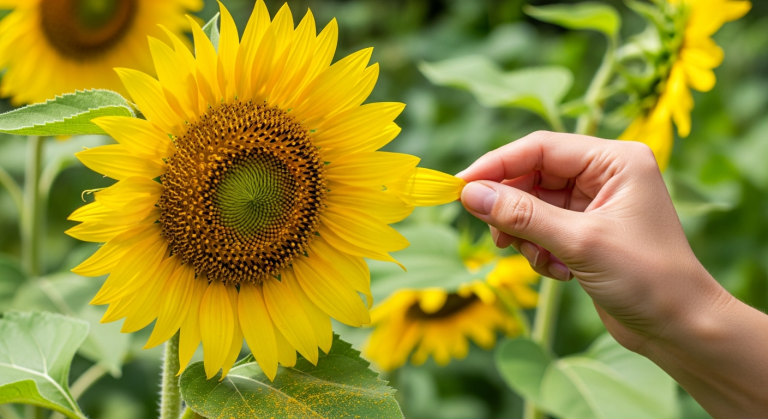
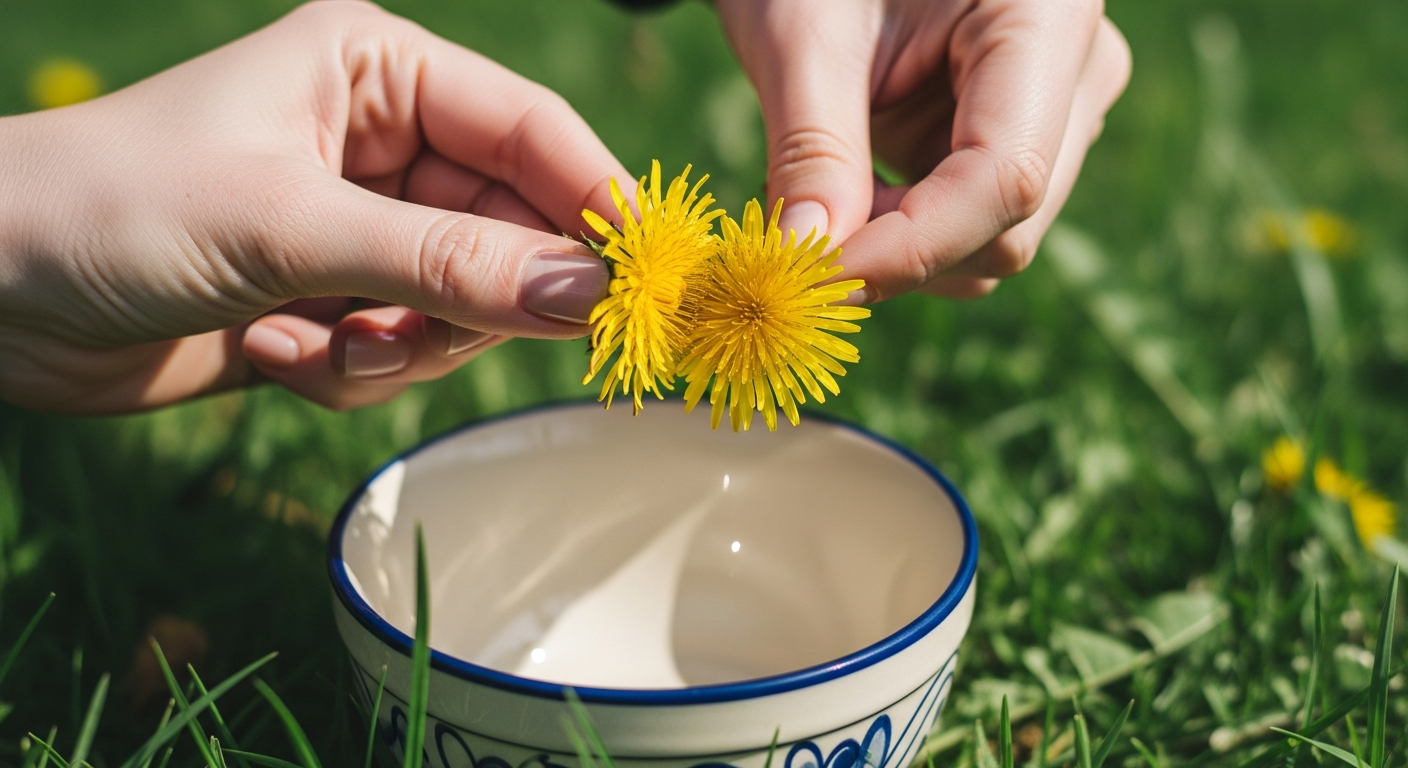
Here's the method that actually works: hold the flower head and snap it in half from left to right, exposing the center. Now you can see all the yellow petals packed in the middle. Pull them out from the center with your fingers, leaving the green parts behind. Once you get the hang of it, you can clean a quart of blossoms in about 15 minutes. It's a perfect task to do outside while kids run around the yard — let them harvest while you separate.
Dandelion Syrup Recipe
Ingredients
Per 1 cup of cleaned dandelion petals:
- 2 cups water
- 1 cup white sugar
- ½ tablespoon lemon juice — not optional. Lemon juice acts as a natural preservative and brightens the flavor. A squeeze of fresh lemon is fine. Bottled works too.
Honey swap: You can substitute raw honey for white sugar — use the same amount but watch the heat carefully, since honey scorches more easily than sugar.
Equipment You'll Need
- Medium saucepan
- Fine mesh strainer or cheesecloth
- Measuring cups
- Clean mason jars for storage
- Candy or instant-read thermometer (optional, but highly recommended — it makes knowing when the syrup is done completely foolproof)
How to Make Dandelion Syrup (Step by Step)
- Harvest and separate your dandelion petals using the technique above. Measure your cleaned petals and scale the recipe accordingly.
- Bring 2 cups of water to a boil in your saucepan, then remove it from the heat.
- Add the cleaned petals and let them steep in the hot water for 20–30 minutes.
Steeping note: 20–30 minutes is plenty. Many recipes say to steep overnight, but testing shows the flavor difference is minimal — you'll still get a beautiful golden syrup. Save yourself the wait.
- Strain through a fine mesh strainer, pressing the petals firmly with a spoon to squeeze out all the liquid. Discard the petals.
- Return the liquid to your pot and add the sugar and lemon juice.
- Bring to a hard, rolling boil over high heat, stirring until the sugar dissolves completely.
- Cook at a rolling boil for 8–12 minutes, stirring occasionally. The syrup will thicken as it cools — don't judge doneness by how thick it looks in the pot.
- Test for doneness (see the section below).
- Pour into clean mason jars, let cool completely, then seal and store.
How Do You Know When Dandelion Syrup Is Done?
This is the step where most first-time makers get tripped up, and it's why I'm giving it its own section instead of burying it in the recipe notes.
With a thermometer: Cook to 230–235°F on a candy or instant-read thermometer. This is called "thread stage" in candy-making — the sugar has concentrated enough to be thick and syrupy when cool, without being hard or sticky. The syrup will look thinner than you expect in the pot; it thickens significantly as it cools. A $12–15 candy thermometer takes all the guesswork out of this step — here's the one I use in my kitchen.
Without a thermometer (cold plate test): Before you start cooking, put a small plate in the freezer. When you think the syrup might be ready (around the 8-minute mark), drop a small spoonful onto the cold plate and tilt it. If the syrup clings slightly and threads off a spoon, it's done.
If it's too thin: Return the pot to the stove, bring it back to a boil, cook for 2 more minutes, and test again.
If it sets too hard: You went past thread stage — not a big deal. Thin it out by stirring in a small splash of warm water. It'll still taste great.
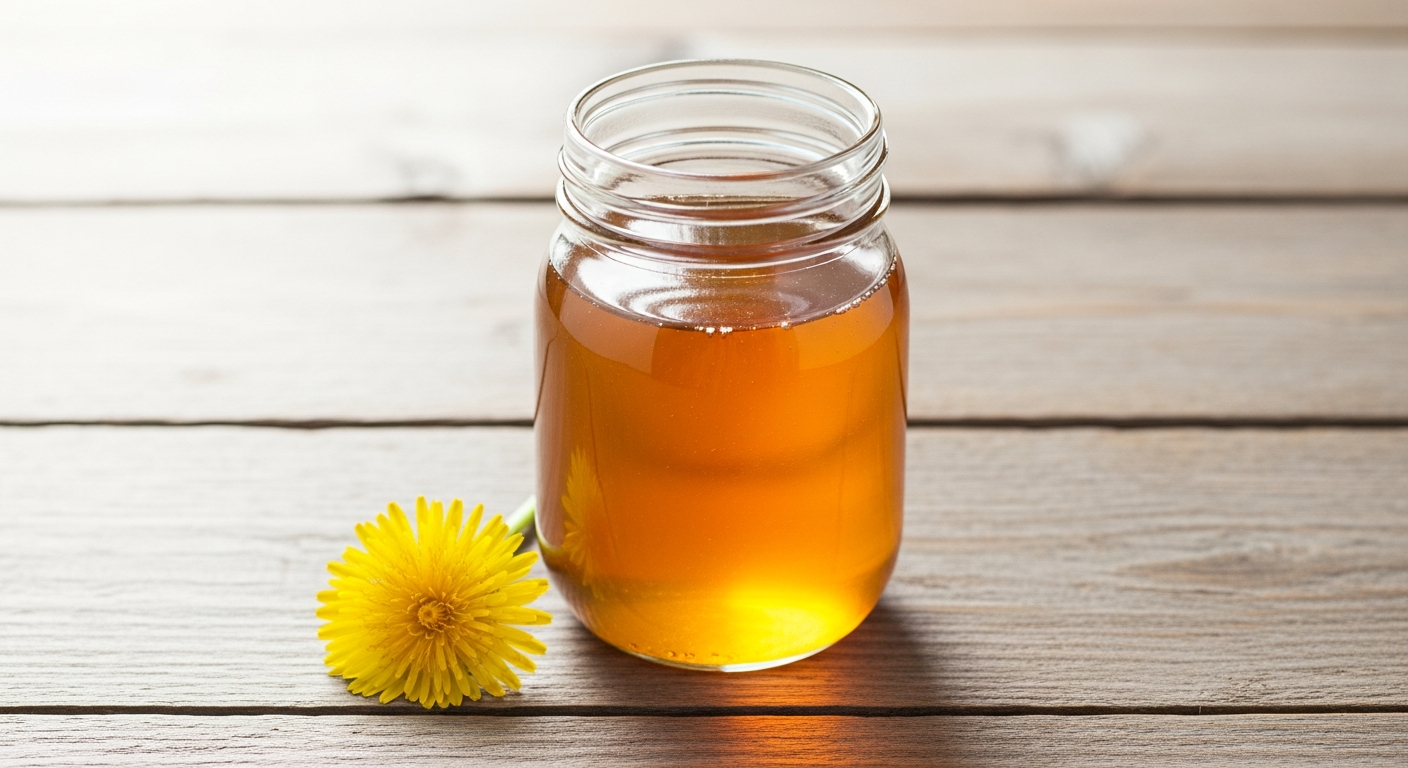
How to Store Dandelion Syrup + How Long It Lasts
Refrigerator: Store in a sealed mason jar for 1–2 months. This is the simplest option for a small batch — I use wide-mouth pint mason jars. Keep it in the back of the fridge where temperatures are most stable.
Freezer: Pour into freezer-safe jars with about 1 inch of headspace and freeze for up to 1 year. Thaw overnight in the refrigerator before using.
Water bath canning: Process sealed jars for 10 minutes at altitudes under 6,000 feet (15 minutes above). Once properly canned, the syrup is shelf-stable for up to 1 year. The lemon juice in the recipe provides the acidity needed for safe water bath canning. If you're new to canning, read a beginner's water bath canning guide before you start.
6 Ways to Use Dandelion Syrup
- Sweeten tea or coffee — replaces sugar or honey 1:1 with a lovely floral note
- Drizzle over pancakes or waffles — the spring breakfast upgrade your family didn't know they needed
- Add to cocktails and mocktails — a dandelion lemon spritz (syrup + sparkling water + fresh lemon) is genuinely delicious
- Use as a vegan honey substitute in baking — works anywhere a recipe calls for honey, with a lighter flavor
- Stir into yogurt or oatmeal — a spoonful is all you need
- Glaze roasted vegetables — pour a little over carrots or beets before roasting. This is a traditional Scandinavian way to use dandelion syrup, and the sweet-earthy combination is genuinely surprising and wonderful.
Benefits of Dandelion Syrup (and What to Know About Side Effects)
Dandelions are one of the most nutritious "weeds" you'll find in your yard. The flowers are a source of vitamins A, C, and K, along with potassium and antioxidants. They've been used as a spring tonic in traditional herbalism for centuries — partly because they're one of the first green things available after a long winter. The syrup form does lose some nutrients through the heat and sugar concentration process, so I won't oversell it as a health food. But it's a delicious treat made from a wild, free ingredient that has genuine nutritional value — and that's worth something.
Side effects: Dandelion is generally safe for most people in culinary amounts. Avoid it if you have a known allergy to ragweed, chrysanthemums, or marigolds (they're in the same plant family). If you take diuretic medications, check with your doctor first, since dandelion has a mild diuretic effect. For most healthy adults, dandelion syrup is as safe as any other homemade preserve.
Dandelion Syrup FAQ
What does dandelion syrup taste like? Dandelion syrup tastes honey-like and floral, with a mild earthy sweetness that's lighter than commercial honey. Most people who try it are surprised by how much it actually tastes like honey. The best description: spring in a jar.
How long does dandelion syrup last? Refrigerated in a sealed jar, it keeps for 1–2 months. Frozen, it lasts up to 1 year. Water bath canned, it's shelf-stable for up to 1 year.
Is dandelion syrup the same as dandelion honey? Yes — same recipe, different cook time. Dandelion syrup is cooked to a thinner, pourable consistency. Dandelion honey is cooked a little longer until it thickens to mimic real honey. Both start with the same 3 ingredients.
Can you make dandelion syrup without white sugar? Yes. Raw honey or coconut sugar both work as substitutes. If you use honey, keep the heat a bit lower and watch it carefully — honey scorches more easily than white sugar. The color will be darker and the flavor slightly different, but still delicious.
Can you water bath can dandelion syrup? Yes. Process sealed jars for 10 minutes at altitudes below 6,000 feet (15 minutes above). The lemon juice in the recipe provides the needed acidity for safe preservation. Once canned, the syrup is shelf-stable for up to 1 year.