What Is Pink Clay? Benefits, DIY Recipes, and How to Use It for Beginners
Last updated 2026-03-10
I'd been adding pink clay to my soaps for a full year before I actually understood what I was working with. I kept seeing it called "rose clay" on one supplier site and "French pink clay" on another, and I honestly wasn't sure if I was buying the same thing each time. Turns out it's simpler than it looks — and it's probably the most beginner-friendly cosmetic clay you can start with.
PINK CLAY AT A GLANCE
- Also called: rose clay, rose kaolin clay, French pink clay, Brazilian pink clay
- Best for: sensitive, dry, and mature skin
- Mildness level: the gentlest of all cosmetic clays
- Main uses: face masks, natural soap coloring, mineral bath soaks, body wraps
- Leave on face: 10 minutes (5–7 minutes for very reactive skin)
What Is Pink Clay (And Why It Has So Many Names)
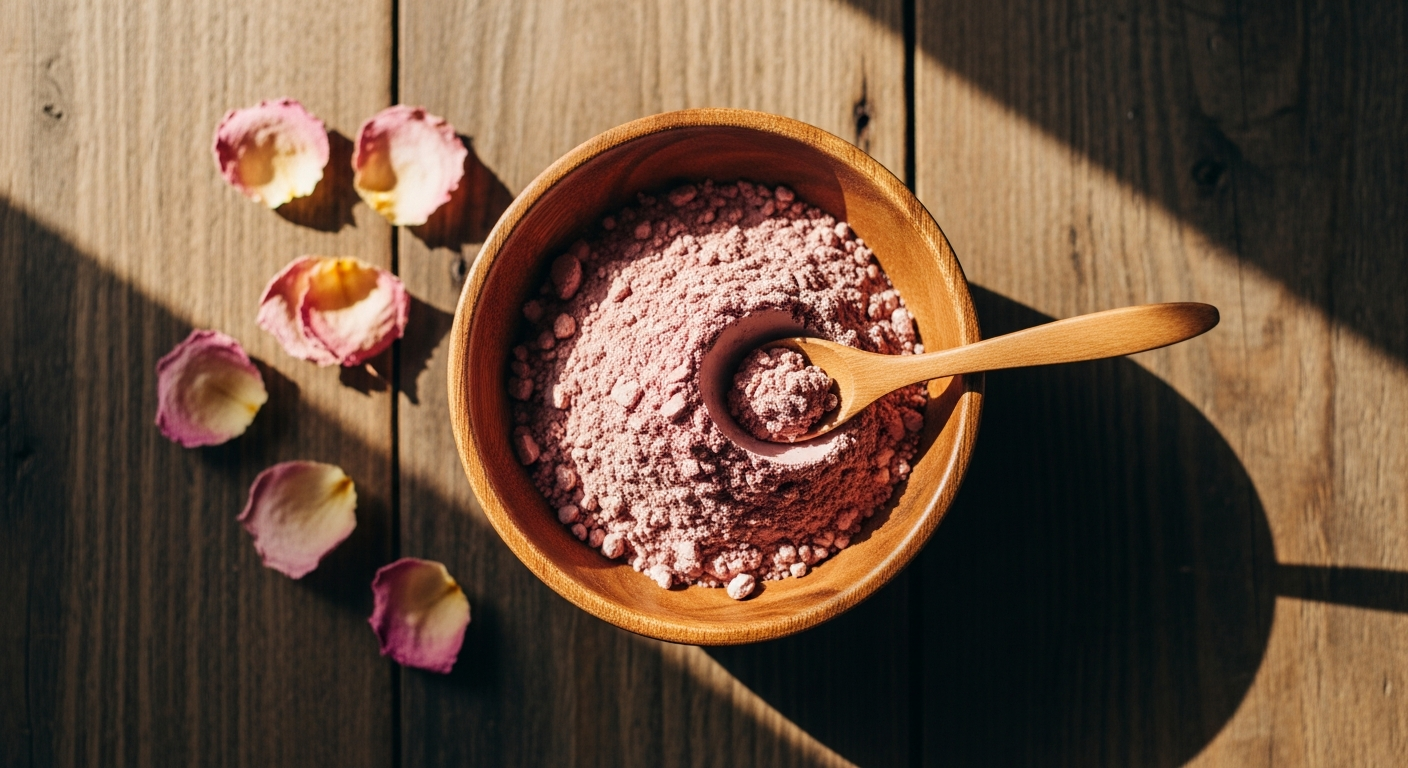
Pink clay is a naturally occurring mineral clay with a soft blush color. It forms when red and white clay deposits mix underground — the pink color comes from trace amounts of iron oxide in the clay, the same thing that makes red clay red. No dye or artificial color is added. It's genuinely pink right out of the ground.
The naming confusion is real, but it's actually pretty simple once you understand it. French pink clay comes from specific geological regions in France and is technically a blend of Kaolin and Illite clays. Brazilian pink clay comes from Brazil and is also a natural blend of red and white clays. Both are very similar in texture and skin benefits — the difference is mainly where they were sourced. The names "rose clay" and "rose kaolin clay" are just supplier-specific terms for the same type of ingredient. If you see any of these names on a product label, you're looking at the same basic thing.
When you're shopping, "cosmetic grade" is the term to look for regardless of which name is on the bag — that tells you it's been processed for skin use and not for pottery or industrial applications.
Pink Clay Benefits for Your Skin
Pink clay does a few things really well, and none of them are complicated.
1. Gently cleanses without stripping. It pulls impurities and surface debris out of pores without aggressively absorbing moisture from your skin the way stronger clays like bentonite do. You clean your face without that tight, dried-out feeling afterward.
2. Mild exfoliation. The fine powder texture sloughs off dead skin cells when you rinse the mask off. It's subtle — you'll notice your skin feels smoother, not raw or irritated.
3. Improves circulation and natural glow. The minerals in pink clay stimulate circulation to the skin's surface while the mask is on. After rinsing, your skin often looks a little more awake and even-toned than it did before.
4. Absorbs just enough oil. Pink clay is absorbent, but not aggressively so. It takes the edge off oiliness for combination or slightly oily skin without leaving dry skin feeling worse.
5. Natural colorant for homemade soap. This one's less of a "skin benefit" and more of a practical bonus: pink clay creates a beautiful, soft natural pink color in cold process and melt-and-pour soap without any artificial dye.
Is Pink Clay Safe for Sensitive Skin and Rosacea?
Yes — pink clay is genuinely one of the best options for sensitive skin and rosacea-prone skin. Because it has the lowest absorption rate of all cosmetic clays, it won't strip away moisture or leave reactive skin feeling irritated. If your skin is very reactive or easily flushed, keep the mask on for only 5–7 minutes instead of the full ten, and rinse with cool (not hot) water. It's not a treatment for rosacea, but it's a gentle skincare step that won't make it worse — which is more than can be said for most clays.
How to Make a Pink Clay Face Mask (Beginner Recipe)
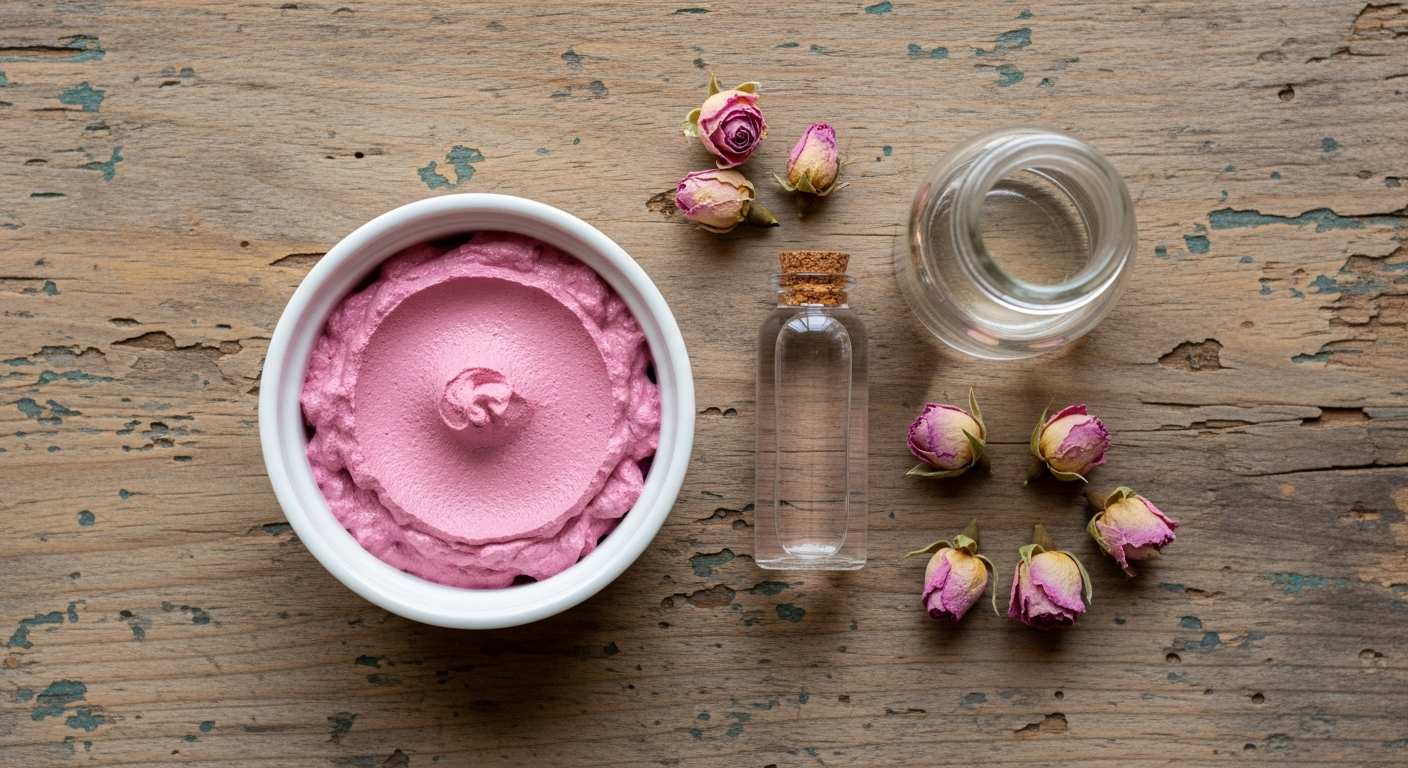
This is genuinely the simplest face mask I make. Two ingredients, one bowl, ten minutes.
What you need:
- 1 tablespoon pink clay powder (cosmetic grade rose kaolin clay — I find it on Amazon for around $10–15 per pound)
- 1–2 tablespoons water or rose water
Steps:
- Add the clay to a small glass or ceramic bowl. (Avoid metal bowls — clay can react with metal over time and the bowl can leach into your mix.)
- Add 1 tablespoon of water first and stir until you get a paste. Add a little more water if it's too thick — you want it spreadable but not runny.
- Apply to clean, dry skin using your fingers or a soft brush. Avoid the eye area.
- Leave on for 10 minutes. Check in after 8 minutes — if your skin feels tight or uncomfortable, rinse now.
- Rinse thoroughly with warm water and pat dry.
Important tip: Don't let the clay dry completely on your face. A fully dried clay mask can be too stripping. You want it to feel tacky and slightly damp when you rinse it off — not cracked and flaking.
How often: once or twice a week is plenty. More than that and you risk over-cleansing, especially if you have dry skin.
Pink Clay Mask Variations for Different Skin Types
The basic water version works great. If you want to customize:
For dry or sensitive skin: Swap the water for aloe vera juice. Aloe is more soothing and won't pull moisture the way plain water can. This is what I use — I have dry skin and it makes a noticeable difference.
For rosacea-prone skin: Use cooled chamomile tea as the liquid. Chamomile has natural anti-inflammatory properties and helps calm redness while the clay does its thing.
For dull or uneven skin tone: Add ½ teaspoon of raw honey and a tiny pinch of turmeric to the basic recipe. The honey adds moisture, and the turmeric has a natural brightening effect. Just be aware the turmeric can temporarily stain light surfaces (and light skin, very slightly) — rinse well.
4 More Ways to Use Pink Clay at Home
Face masks are just the beginning. I keep pink clay stocked in my pantry pretty much year-round because it shows up in a lot of different projects.
1. Pink Clay Soap
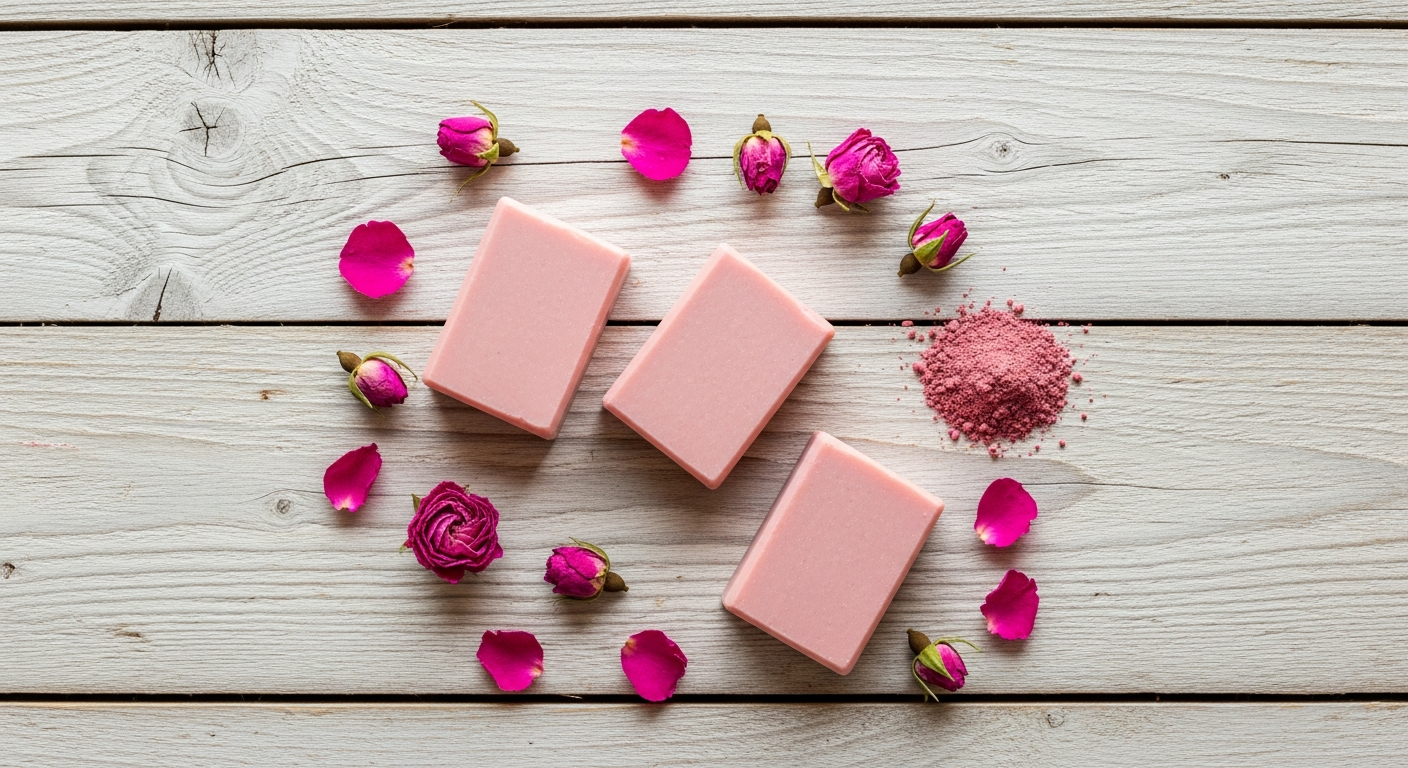
Pink clay makes a beautiful natural colorant in cold process and melt-and-pour soap. Use 1 tablespoon per pound of soap batter, added at trace for cold process. It creates a soft, dusty rose color that doesn't bleed or fade the way some natural colorants do. It also improves the texture of the soap slightly — adds a bit of slip. If you're new to soap making, check out my [melt and pour soap recipes] for an easy starting point that doesn't require lye.
2. Mineral Bath Soak
Add 2–3 tablespoons of pink clay to a warm bath. Stir it into a cup of warm water first so it disperses, then add that to the tub — otherwise you get clumps. It makes the water feel silkier and gives your skin a gentle mineral treatment while you soak. Simple and inexpensive.
3. Body Wrap
Mix the clay into a thicker paste using less water than you would for a face mask. Apply to your shoulders, upper back, or legs and leave on for 15 minutes. This is a legitimate spa treatment you can do at home for basically nothing. Rinse in the shower.
4. Homemade Body Powder
Combine equal parts pink clay and arrowroot powder. The result is a silky, very lightly pink-tinted body powder. It absorbs moisture without the talc in conventional powder and has a smooth, non-chalky feel. Good for under-breast areas or anywhere you tend to get skin irritation from friction.
Pink Clay vs. Other Clays — Quick Comparison
If you're wondering whether pink clay is the right choice or if you should use something else, here's how it compares:
| Clay Type | Best For | How Drying | Skin Types |
|---|---|---|---|
| Pink clay | Sensitive skin, gentle cleansing, soap coloring | Mild | All, especially sensitive and dry |
| White kaolin | Very delicate skin, baby care | Very mild | Very sensitive, extremely dry |
| Green French clay | Deep cleansing, oily or acne-prone skin | Moderate | Oily, combination |
| Bentonite | Detox, drawing out impurities, heavy-duty acne | Strong | Oily, NOT sensitive |
When in doubt, start with pink. It's the most forgiving clay — if you're new to clay skincare and not sure how your skin will react, pink is the one to test first. You can always work up to stronger clays once you know what you're working with.
Where to Buy Pink Clay
Amazon is the easiest place to find it. Search "cosmetic grade rose kaolin clay" — you'll find several options in the $10–18 range for a one-pound bag, which is a lot more clay than you'd think. Look for: fine powder texture, labeled "cosmetic grade," no added fragrance or colorants.
For soap makers who need larger quantities, Bulk Apothecary and New Directions Aromatics both carry it in 5-lb and larger sizes at better per-pound pricing.
Storage: Keep it in an airtight container in a dry location. Shelf life is about two years when stored properly. Moisture is the enemy — even a slightly humid bathroom cabinet can cause clumping over time.
Frequently Asked Questions
What is pink clay good for?
Pink clay is most commonly used for face masks, soap making, mineral bath soaks, and body wraps. It gently cleanses and exfoliates without stripping moisture, making it especially useful for sensitive, dry, and mature skin types.
What is pink clay made of?
Pink clay is a natural blend of red and white mineral clays. French pink clay specifically contains Kaolin and Illite minerals, and the characteristic pink color comes from trace iron oxide. It forms naturally where red and white clay deposits meet in the earth — no artificial color is added.
Which clay is best for rosacea?
Pink clay is widely considered the best choice for rosacea-prone skin. It has the lowest absorption rate of any cosmetic clay, so it cleanses without over-drying or irritating reactive skin. Keep the mask time shorter (5–7 minutes instead of 10) if your skin is very sensitive.
Is there natural pink clay?
Yes — pink clay is completely natural. It forms geologically when red and white clay deposits mix underground, primarily in France and Brazil. The pink color is entirely from the mineral content of the clay, specifically trace iron oxide.
Is pink clay the same as rose clay?
Yes. "Pink clay," "rose clay," "rose kaolin clay," and "French pink clay" are all names for the same type of cosmetic ingredient. The name varies by supplier and region of origin. Brazilian pink clay is a close equivalent sourced from Brazil — the properties are nearly identical to French pink clay.