Are Sunflower Petals Edible? Yes — Here's What to Do With Them
Last updated March 14, 2026
Quick Snapshot
Are petals edible? Yes — raw, dried, or cooked Flavor Mildly bitter and slightly nutty raw; sweeter and milder when dried Best source Garden-grown Helianthus annuus Avoid Florist/store-bought sunflowers (pesticide risk) Harvest Pull outer ray petals at peak bloom Uses Salads, tea, garnishes, infused oil, bath tea Shelf life dried Up to 1 year
I grew sunflowers for years before it occurred to me that I could eat them. I'd been harvesting the seeds at the end of the season and leaving everything else for the birds, not realizing the petals, young leaves, and even the flower buds were all perfectly edible and sitting there waiting to be used.
Turns out, the common sunflower is remarkably useful as a food and herbal plant — not just the seeds. Here's what you need to know about eating sunflower petals and what to do with them once you have a handful.
Yes, Sunflower Petals Are Edible — With One Important Caveat
Yes — the yellow or orange ray petals of common garden sunflowers (Helianthus annuus) are edible. So are the seeds, the young flower buds before they open, and the tender young leaves. The sunflower is a surprisingly complete plant for the homestead pantry.
Any garden-grown Helianthus annuus is safe to eat, including ornamental and multi-petaled cultivars. The variety matters far less than the source.
Here's the caveat: Sunflowers from a florist, grocery store display, or roadside stand are almost certainly treated with pesticides that are not approved for food use. Those are for looking at, not eating. If you grew your sunflowers yourself, or sourced them from a certified organic farm, you're in the clear.
What do sunflower petals taste like? Raw petals are mildly bitter with a slight nuttiness — a bit like a very mild chicory or the outermost petals of a daisy. When dried, the flavor mellows into something softer, slightly sweeter, and more floral. Steeped as tea, they produce a gentle, earthy infusion with a warm golden color. The flavor is pleasant but subtle — this isn't a bold culinary statement, it's a quiet garden bonus.
Beyond the petals: young flower buds, harvested before they open, can be cooked much like artichoke hearts. The tender top 6-12 inches of stem yield a mild edible "marrow." Young leaves work in salads and sautés. The whole plant is worth exploring once you start looking at it as food.
Are Sunflower Petals Good for You?
Sunflower petals contain carotenoids — the same compounds responsible for their yellow-orange color — which have antioxidant and anti-inflammatory properties. They've been used in traditional herbal medicine for gentle skin support and mild respiratory care.
Honest framing: a handful of petals in a salad isn't a medicinal dose. You're not going to treat inflammation by eating a flower garnish. But sunflower petals genuinely contain beneficial plant compounds, and adding them to meals is a nutritious choice — not just decorative.
Allergy note: Sunflowers are in the Asteraceae plant family — the same family as ragweed, daisies, chamomile, and chrysanthemums. If you have a known ragweed allergy or sensitivity to other Asteraceae plants, introduce sunflower petals carefully and in small amounts first. Cross-reactions within this plant family are possible, and it's worth checking your tolerance before eating them regularly.
How to Harvest and Dry Sunflower Petals
When to harvest: At peak bloom — when the outer petals are fully extended and bright in color, and the central disc is still fresh and firm. Petals nearest the center of the flower can be slightly more bitter; the outermost ones are the sweetest and most tender.
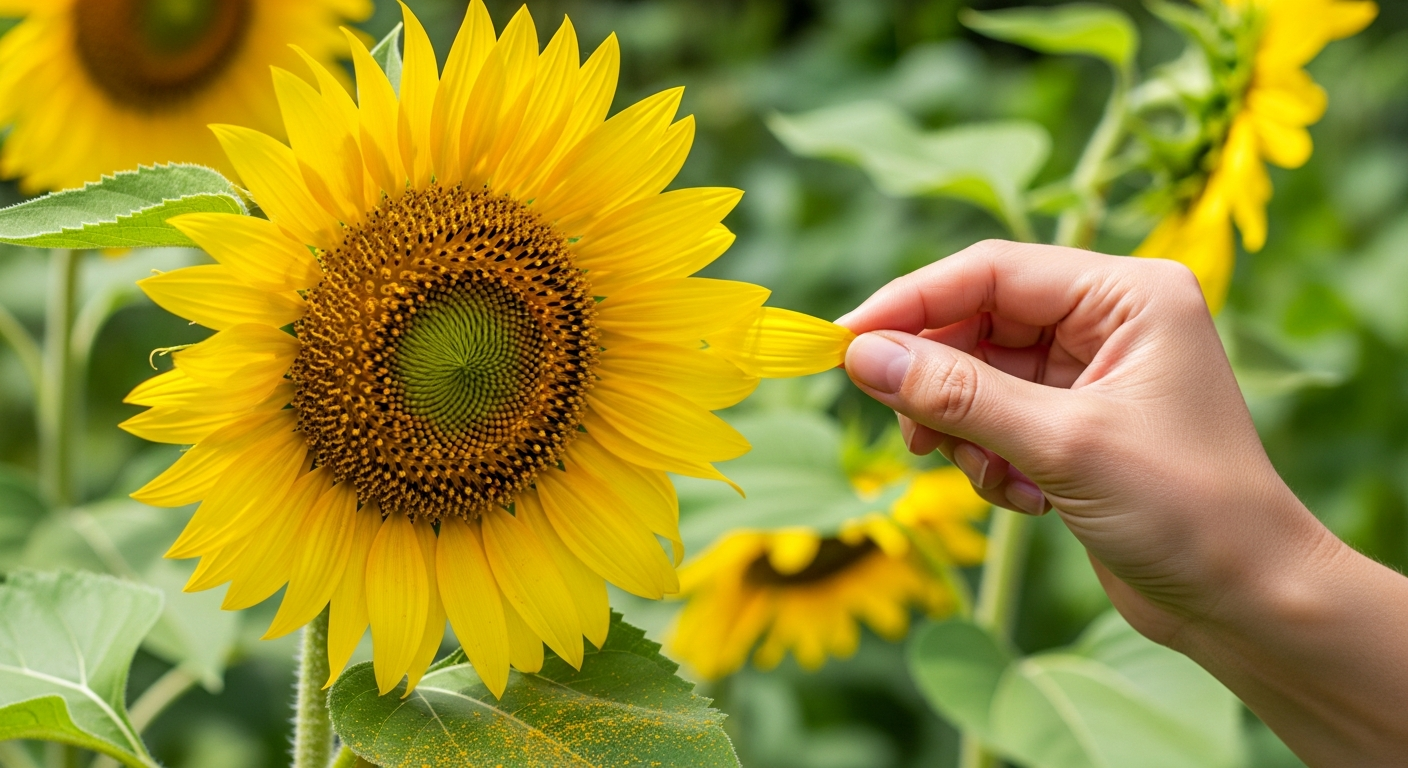
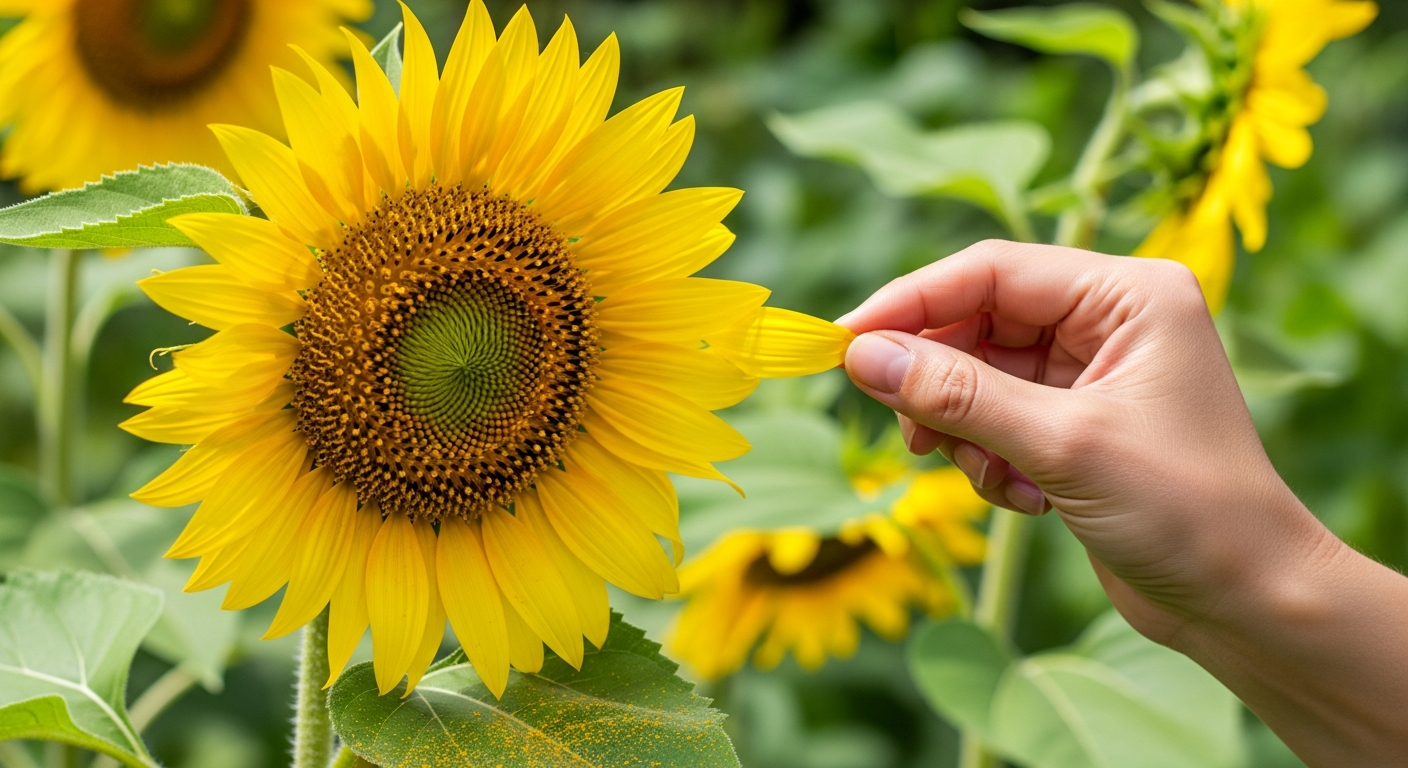
How to harvest: Simply pull individual petals away from the flower head — they come off easily with a gentle outward tug. You don't have to take the whole flower. Pull the petals you want, and the flower head can continue to mature and set seed for the birds.
Drying:
- Air dry: Spread petals in a single layer on a screen or paper towels in a warm, well-ventilated spot, out of direct sun. 3–5 days.
- Dehydrator: 95–100°F for 2–3 hours.
- Ready when they feel dry and crinkle slightly but aren't brittle.
Storage: A paper bag or loosely covered glass jar in a cool, dark location. Up to 1 year.
Ways to Use Sunflower Petals
In the Kitchen
Fresh petals and dried petals both have a place in the kitchen — fresh for color and freshness, dried for tea, baking, and longer-shelf-life uses.
Fresh on salads — Scatter a handful of fresh petals over a green salad or grain bowl. They're especially nice with goat cheese, honey vinaigrette, or citrus dressing. The slight bitterness plays well with rich or sweet flavors.
As a garnish — Drop a few petals onto soup, pasta, or a summer cheese board. The effect is genuinely beautiful with almost no effort.
In compound butter — Chop fresh petals finely and fold into softened butter with a pinch of lemon zest and salt. Press into a log and refrigerate. The result is stunning on warm bread at a dinner party, and nobody expects it from a garden flower.
Baked in — Fold dried petals into muffin, scone, or shortbread batter for a subtle floral flavor and lovely yellow flecks.
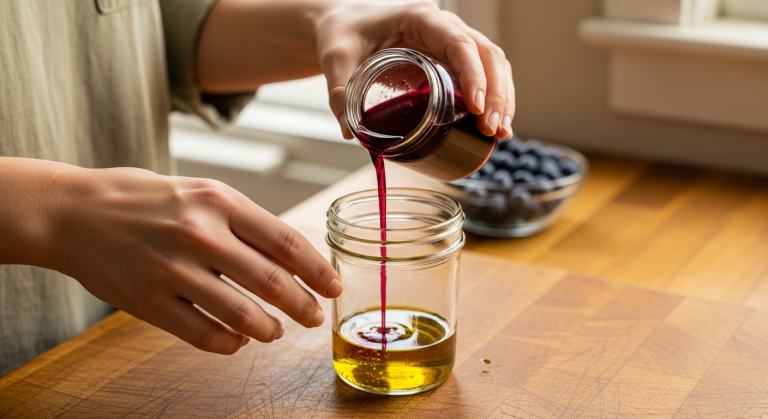
Petal vinegar — Pack a small jar with fresh petals and cover with apple cider vinegar. Steep 2 weeks at room temperature, strain, and use in salad dressings. The vinegar turns a gorgeous golden color and has a gentle floral note.
Sunflower Petal Tea
This is probably the most popular way to use dried petals, and it's one of the cleanest SERP gaps I've noticed — lots of people search for it, and very few recipes exist.
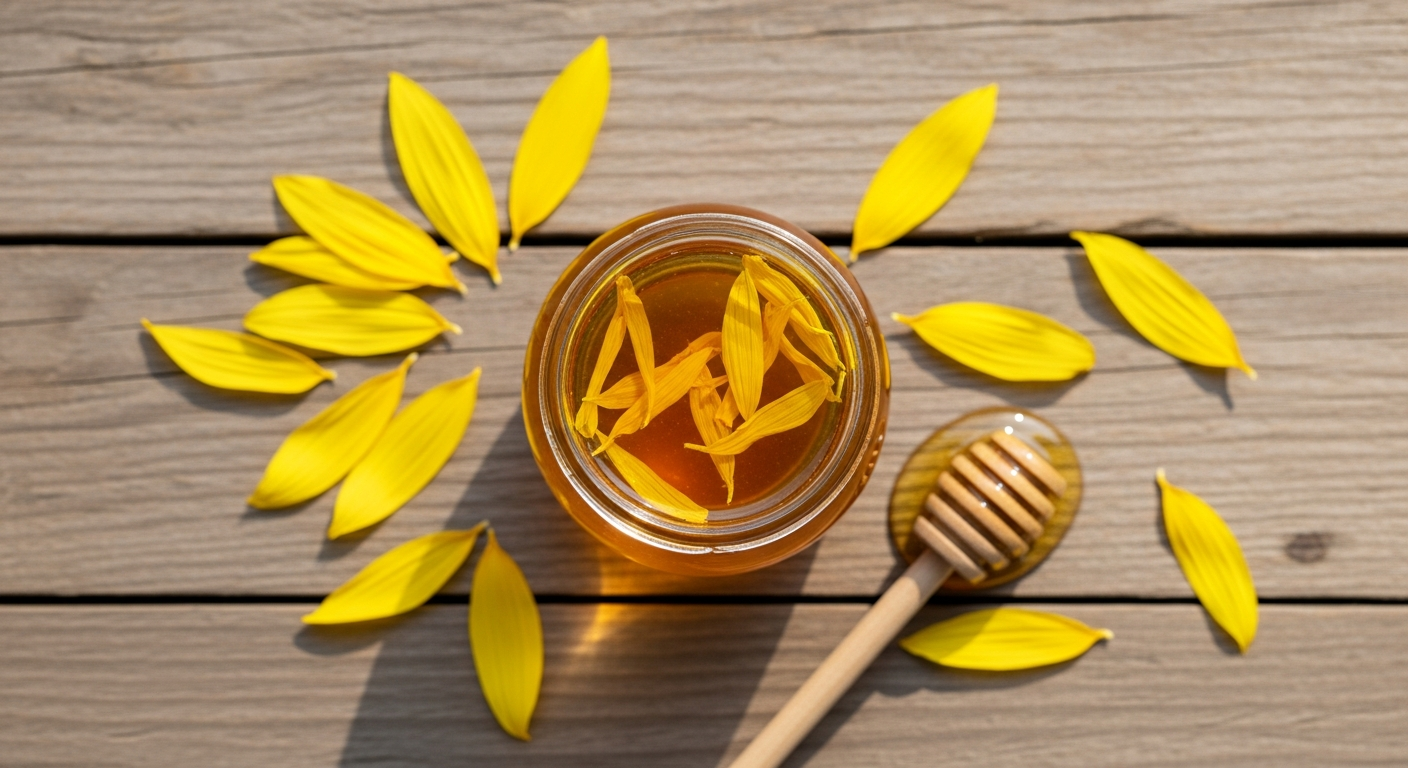
Recipe: 1 tablespoon dried sunflower petals per 8 oz hot water (just off the boil, not a hard rolling boil). Steep 5–7 minutes. Strain. Sweeten with honey if you'd like.
The tea has a soft golden color and a mild, gentle, slightly floral flavor — not as sweet as chamomile, slightly more grassy. It's a calming evening tea that benefits from the blend:
- With chamomile: sweeter and more floral, great for sleep
- With lemon balm: bright and refreshing
- With dried mint: perks it up, nice for afternoons
Fresh petals work too — use 2 tablespoons fresh in place of 1 tablespoon dried.
In the Garden Apothecary
Petal-infused oil — Cold steep dried petals in olive oil or jojoba oil for 4–6 weeks (or use the quick double-boiler method: 2–3 hours on lowest heat). The resulting oil is anti-inflammatory and gentle, especially nice as a body oil for dry or sensitive skin, or as the base for a simple salve or lip balm.
Petal bath tea — Tie a generous handful of dried petals in a cloth sachet or an old piece of muslin. Drop it in a warm bath. Softening, soothing, and a bit indulgent.
Skin care — Sunflower petals have documented antioxidant compounds. The infused oil is a lovely ingredient in homemade lotion, salve, or face oil for dry or sensitive skin.
Are Sunflower Leaves Edible Too?
Yes — young, tender sunflower leaves are edible. Raw, they taste mildly bitter with a slightly rough texture, similar to young dandelion greens or spinach. They work in salads, smoothies, or as a cooking green.
Mature leaves become considerably tougher and more bitter. Blanching or sautéing with garlic and olive oil makes them much more palatable — treat them like any strong cooking green (kale, chard).
Harvest the lowest, youngest leaves from the stem early in the season, before the plant flowers.
Frequently Asked Questions
Are all sunflower petals edible? All common garden sunflowers (Helianthus annuus) have edible petals — the variety matters much less than how they were grown. Sunflowers from florists, grocery stores, or garden centers are almost certainly treated with pesticides not intended for consumption. Stick to homegrown or certified organic sunflowers.
Are sunflower petals good for you? Yes — they contain carotenoids, anti-inflammatory compounds, and antioxidants. Traditional herbal use includes gentle skin support and mild respiratory care. The amounts in food won't be therapeutic doses, but sunflower petals are a genuinely nutritious addition to meals.
Are sunflower leaves edible? Yes. Young, tender leaves are edible raw and mildly bitter, similar to young dandelion greens. Mature leaves are better cooked — blanched or sautéed. Harvest young leaves from the lower stem before the plant flowers for the mildest flavor.
Can you eat sunflowers raw? Yes — fresh petals can be eaten raw directly in salads or as garnishes. The flavor is mild and mildly bitter. If you prefer something sweeter, dried petals are gentler and work well in tea or baked goods.
What do you do with sunflower petals? The most useful things: scatter fresh petals over salads and grain bowls; dry them for sunflower petal tea; steep in oil for a skin-care base; fold into compound butter; infuse in apple cider vinegar for salad dressing. They dry well and keep for up to a year, so a summer harvest stretches through fall and winter.
Can you make tea from sunflower petals? Yes — use 1 tablespoon of dried petals per 8 oz of hot water, steep 5–7 minutes, and strain. Add honey to taste. The tea has a gentle golden color and a mild, slightly floral and earthy flavor. Blending with chamomile or lemon balm gives a sweeter, more layered result.