Curly Dock Recipes for Beginners: 4 Ways to Cook This Backyard Weed (2026)
Last updated March 13, 2026
You've probably walked right past curly dock a hundred times. It grows along fence lines, at the edges of garden beds, in vacant lots, in the cracked dirt beside driveways — it's everywhere once you start looking for it. The long leaves with wavy, ruffled edges are one of the first greens to push up in early spring, and they taste better than you'd ever expect from a weed. I finally tried cooking with it last spring, and I'm honestly a little annoyed I waited so long.
Quick Snapshot
| Edible parts | Young spring leaves, stems; dried summer seeds |
| Taste | Tangy, lemony — like spinach crossed with sorrel |
| Harvest window | Leaves: early spring. Seeds: midsummer to fall |
| Best beginner recipe | Sautéed dock with garlic and butter (5 minutes) |
| Safety note | Fine for most people; contains oxalic acid like spinach |
Full recipes are below — if you're new to foraging, read the quick ID notes first.
What Curly Dock Looks Like (And How to Know You've Got the Right Plant)
How to Identify Curly Dock
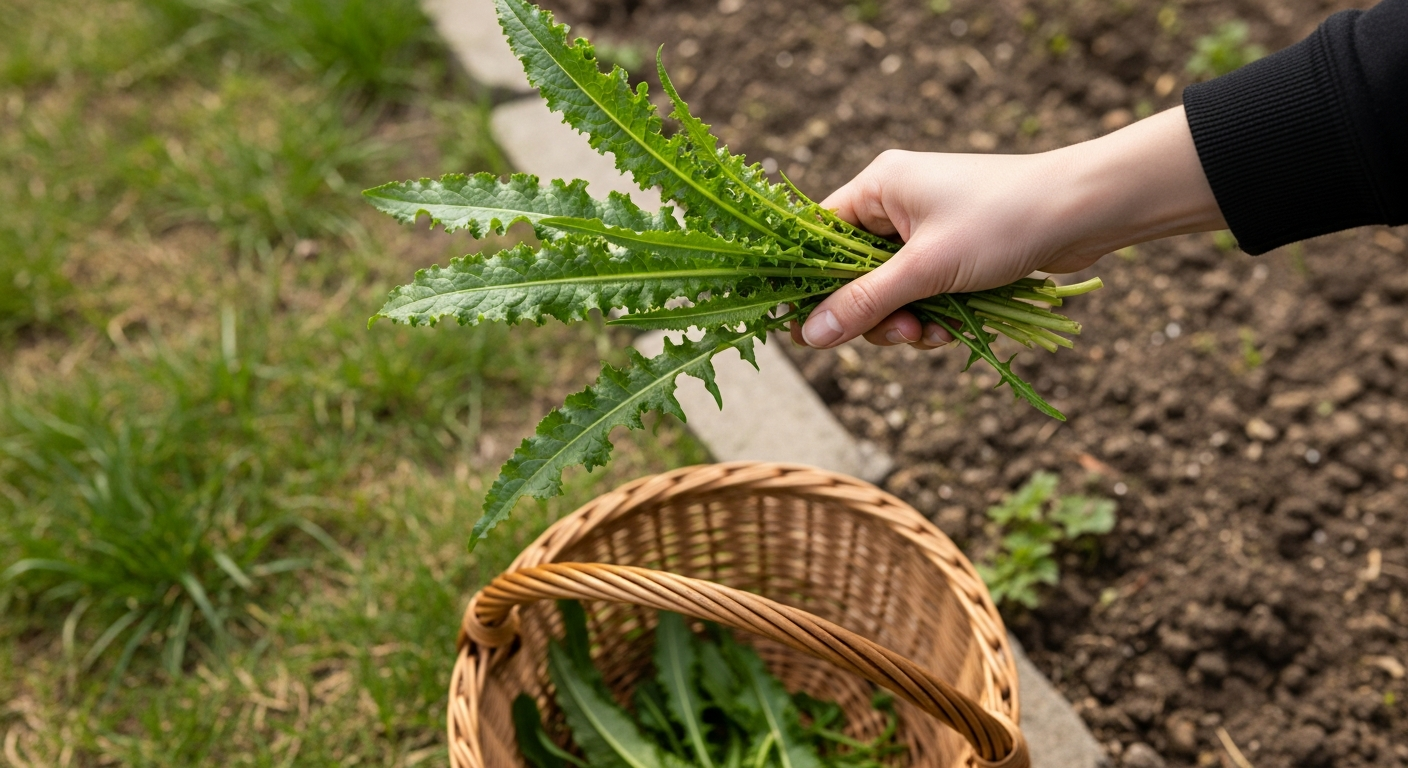
The name tells you everything: curly dock has wavy, ruffled edges along its leaves. That's the most distinctive feature and the easiest thing to look for. The leaves are long and lance-shaped, smooth on the surface — if you feel fuzz or bristles, it's not dock.
Look for it growing in a rosette of leaves flat against the ground. Stems can take on a reddish tinge in cool weather, which is another useful marker. Curly dock loves disturbed soil: garden borders, roadsides, vacant lots, property fencerows, and the edges of fields. All winter long, the dead flower stalks persist as tall, rusty-brown wands — spotting those in fall or winter tells you where to find fresh growth next spring.
One more thing worth knowing: curly dock and yellow dock are the same plant. Both names refer to Rumex crispus. "Curly" describes the leaf edges; "yellow" describes the root. You'll see both names in foraging literature, and they're interchangeable.
Is Curly Dock Safe to Eat?
Curly dock contains oxalic acid — the same compound found in spinach, Swiss chard, beet greens, and rhubarb. For most of us, that's a complete non-issue. Every spinach salad you've ever eaten had oxalic acid in it.
The one caution worth knowing: people with kidney stones or kidney disease are sometimes advised to limit high-oxalate foods. If that applies to you, treat dock the way you'd treat spinach — enjoy it in normal amounts but don't eat it by the pound. For everyone else, it's a nutritious wild green with nothing to worry about.
Young spring leaves have the lowest oxalic acid content and can be eaten raw in small amounts. Older leaves are better cooked — and cooking reduces oxalic acid significantly. If you pick a leaf that's tough and very bitter, a quick boil with one water change mellows it out considerably.
When to Harvest Curly Dock (Spring Leaves vs. Summer Seeds)
Spring is when you want to be paying attention. As soon as the ground thaws and temperatures start climbing, curly dock sends up new growth from the center of each rosette. These tightly rolled, emerging leaves are what you want — they're the most tender, the mildest in flavor, and the best for every recipe in this article.
Look for leaves that are still partially curled, slightly glossy, and almost a little sticky to the touch. Once a leaf has fully unfurled and spread out flat, it's still edible but getting more fibrous and bitter. The outer leaves of the rosette — older and larger — work fine for soup or chips but aren't ideal raw. Skip any leaf that has reddish blotching, which signals age and bitterness.
For seeds, your window is midsummer through early fall — July to September in most regions. Wait until the flower stalk has turned fully brown and papery. The seeds strip off easily: just run your fingers down the stalk over a bowl or bag. Toast them in a dry skillet before eating or grinding them into flour.
A practical note: curly dock grows in such abundance that one plant gives you more than you'll need in a sitting. Pick from several plants rather than stripping one, and leave plenty of growth behind.
What Does Curly Dock Taste Like?
I expected weedy and weird. What I got was something I'd happily pay for at a farmers market.
Young curly dock leaves are tangy and slightly sour, with a distinct lemony quality — it's actually quite similar to sorrel, which is a cultivated herb that chefs use in French cuisine. If you've ever cooked with sorrel or had a lemony spinach, you've got a good sense of what fresh dock tastes like. The tartness mellows significantly with heat, leaving behind a pleasant, slightly earthy green flavor that works beautifully with butter, garlic, cream, and cheese.
Older cooked leaves are more assertive and can lean bitter, which is why rich ingredients are your friend. A splash of cream in a soup or a generous knob of butter in a skillet softens everything out. Toasted seeds are a different experience entirely — nutty and slightly tart, like buckwheat or rye with a hint of citrus. They're surprisingly good.
Beyond flavor, curly dock is genuinely nutritious. It's high in iron, Vitamin C, and beta-carotene (a precursor to Vitamin A) — a solid nutritional profile for something that's growing for free in your yard.
4 Curly Dock Recipes to Make This Spring
These are real recipes — ingredient lists, numbered steps, the whole thing. Start with the sautéed dock if you've never cooked with it before. It takes five minutes and it'll convert you.
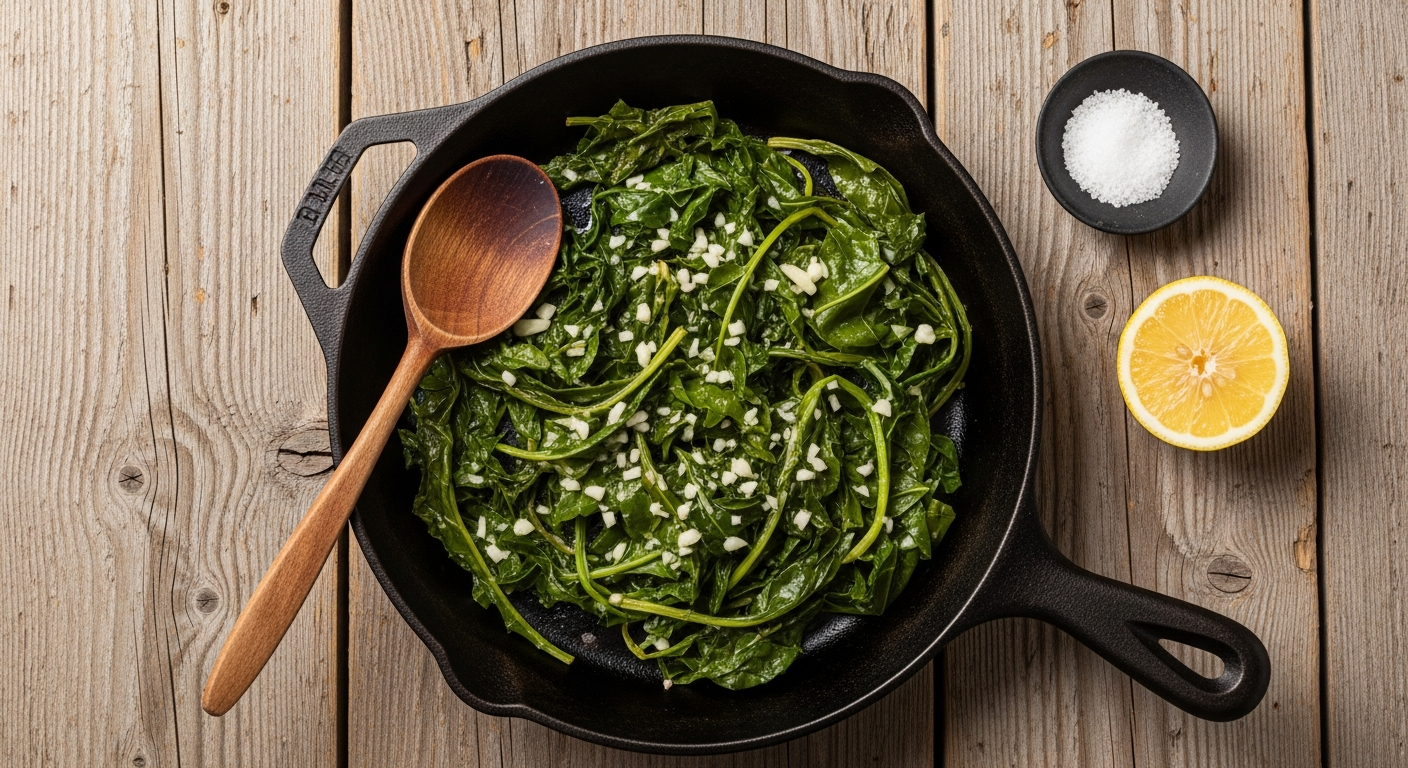
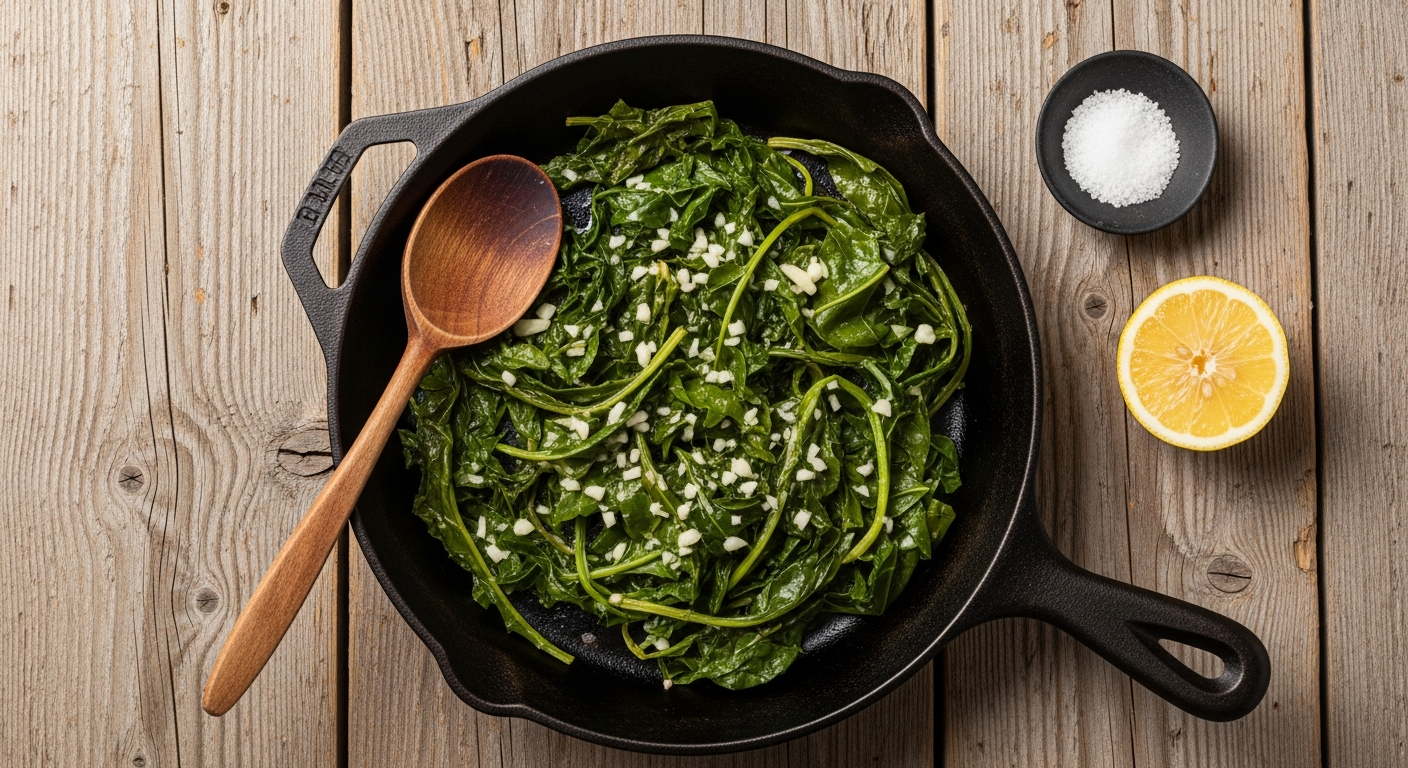
Sautéed Curly Dock with Garlic and Butter
This is where I started, and it's still my go-to. It's identical to cooking spinach — if you can make a pan of wilted greens, you can make this.
Ingredients:
- 2 cups young curly dock leaves, rinsed and roughly chopped
- 1 tablespoon butter (or olive oil)
- 2 garlic cloves, minced
- Salt to taste
- Squeeze of fresh lemon juice (optional)
Instructions:
- Rinse the dock leaves and roughly chop them. They'll wilt down to about half the volume, so don't be alarmed by how much you start with.
- Melt butter in a skillet over medium heat.
- Add garlic and stir for about 30 seconds until fragrant.
- Add the dock leaves and toss to coat in the butter.
- Cook 2–3 minutes, stirring occasionally, until wilted. Season with salt. Add a squeeze of lemon if you'd like to brighten the flavor.
Serves 2 as a side. Serve alongside eggs, on a piece of toast, or stirred into pasta. Use whatever fat you have on hand — butter is great, olive oil works fine, and bacon grease is honestly the best option of all three.
Curly Dock and Potato Soup
This is the recipe that made my husband stop side-eyeing the dock in our yard. It's creamy, hearty, and the lemony tang of the dock plays beautifully against the potato and cream. It also works for a bigger harvest — when you have more dock than you can sauté, this soup uses it up.
Ingredients:
- 3 cups curly dock leaves, rinsed and shredded
- 2 medium potatoes, diced
- 1 medium onion, diced
- 2 garlic cloves, minced
- 4 cups chicken broth (or vegetable broth for vegetarian)
- ½ cup cream or whole milk
- 2 tablespoons butter
- Salt and pepper to taste
Instructions:
- Melt butter in a pot over medium heat. Add the onion and cook until softened, about 5 minutes.
- Add garlic and cook 1 minute more.
- Add the diced potatoes and broth. Bring to a simmer and cook 10–12 minutes until the potatoes are tender.
- Add the shredded dock leaves and cook 2–3 minutes until wilted.
- Stir in the cream. Season with salt and pepper. Serve hot.
Serves 4. This works well even with older, more bitter dock leaves — the cream and potato base absorb any sharpness nicely.
Crispy Curly Dock Chips
My kids thought these were a terrible idea. Then they ate most of them before I got a picture. Use your larger, tougher dock leaves for this — the ones that have passed their prime for sautéing are perfect here.
Ingredients:
- Large curly dock leaves
- Olive oil (just a thin coating)
- Salt
- Optional: garlic powder, smoked paprika
Instructions:
- Preheat your oven to 300°F.
- Wash the leaves and dry them completely — this is the most important step. Wet leaves steam instead of crisp. Pat dry with a towel and let them air for a few minutes if needed.
- Toss the dry leaves in a very light coating of olive oil. You don't need much.
- Spread in a single layer on a baking sheet. Season with salt and any optional spices.
- Bake 10–15 minutes, checking at the 10-minute mark. You want them crisp but not browned — browning brings out bitterness. Pull them as soon as they're dry and crunchy.
These are a good conversation-starter snack for anyone curious about foraging. They taste like kale chips with a lemony edge.
Dock Seed Pancakes (Summer Bonus)
Once you've made the spring leaf recipes, come back to this one in midsummer when the seed stalks turn brown. Dock seeds have a nutty, slightly tart flavor that's genuinely good in baked things — think buckwheat or rye with a hint of citrus.
To prepare: toast fresh-harvested seeds 4–5 minutes in a dry skillet, stirring frequently. Let cool, then grind in a coffee grinder. Substitute 1 part dock seed flour for every 4 parts regular flour or boxed pancake mix. The pancakes come out with a nutty flavor and a slightly denser texture — excellent with butter and maple syrup.
Frequently Asked Questions
What can you do with curly dock?
Quite a lot, once you start experimenting. The most common uses are sautéing the young spring leaves like spinach, adding them to soups, and baking the larger leaves into crispy chips. The summer seeds can be toasted and ground into flour for pancakes or crackers. Young leaves can also be eaten raw in small amounts — added to a salad or a sandwich. And for more adventurous cooks, dock works as a direct substitute for sorrel in French-style sauces and purees.
What part of curly dock is edible?
The young spring leaves are the best and most versatile part. Older leaves are edible but more bitter — they're best used in cooked applications like soup or chips rather than sautéed on their own. The seeds are edible when fully dried in midsummer through fall; they're best toasted before eating or grinding into flour. The taproot has a long history of medicinal use, but it's not commonly eaten as food.
What are the health benefits of curly dock?
Curly dock is a good source of iron, Vitamin C, and beta-carotene, which the body converts to Vitamin A. It's worth noting that it also contains oxalic acid — the same compound found in spinach and Swiss chard — which in very large amounts can interfere with calcium absorption. For most people eating it in normal food quantities, this isn't a concern. People with kidney stones or kidney disease may want to limit high-oxalate foods and should make their own call on frequency.
Is curly dock the same as yellow dock?
Yes. Curly dock and yellow dock both refer to the same plant: Rumex crispus. "Curly" describes the wavy edges of the leaves; "yellow" describes the yellowish taproot. The two names are completely interchangeable, and you'll see them used that way in foraging books, herbal medicine literature, and recipes. Same plant, same uses.