Honeysuckle Tea Benefits: How to Make It and Why It's Worth Trying
Last updated March 11, 2026
At a Glance: Honeysuckle tea is made from the flowers of the Lonicera japonica plant — a wild, often invasive vine that's been used in Traditional Chinese Medicine for over a thousand years. The three biggest benefits: it's anti-inflammatory, it supports the immune system during cold and flu season, and it helps soothe the respiratory tract. One important thing most recipes don't tell you: hot water makes bitter tea. Cold brew is almost always better.
The Flower You've Been Walking Past All Summer
I had honeysuckle climbing along my back fence for three years before it ever occurred to me to do anything with it. I was pulling it off the wood slats every spring like clockwork — it's invasive, it spreads fast, and I had enough things to manage on the property without letting a vine take over.
Then I stumbled across something about making tea from it, and I thought: that can't be right. That's the flower you sucked the nectar out of as a kid. The one that smells like summer. You don't make medicine out of something like that.
Turns out — you absolutely do. Japanese honeysuckle has been a cornerstone herb in Traditional Chinese Medicine for over a thousand years. People have been brewing it into tea to fight fevers, soothe sore throats, and reduce inflammation long before I was yanking it off my fence. It grows wild across most of the Midwest and South, which means there's a good chance you already have it in your yard — or you've walked past it a hundred times without realizing it.
Here's what it's good for, how to make it so it actually tastes good, and how to find and harvest it yourself.
7 Benefits of Honeysuckle Tea Worth Knowing
1. Anti-inflammatory
This is honeysuckle's most well-documented traditional use. The plant contains luteolin, a compound that researchers have studied for its ability to suppress inflammatory pathways in the body. Traditional Chinese medicine practitioners have reached for it for thousands of years when inflammation was the issue — joint pain, swelling, general body aches. You don't need to understand the biochemistry to appreciate that this plant has a long track record.
2. Immune support
Honeysuckle has broad-spectrum antibacterial properties — studies have shown activity against strep, staph, salmonella, and more. Researchers have also looked at a specific microRNA in honeysuckle called MIR2911, which showed activity against influenza A viruses in early lab studies. This is preliminary research, not a cure claim, but it lines up with why traditional herbalists have been reaching for honeysuckle at the start of cold and flu season for centuries.
3. Respiratory support
In TCM, honeysuckle is associated with the lung meridian, and it's traditionally used for upper respiratory infections — sore throat, cough, nasal congestion, and the general misery of a head cold. Even setting aside the herbalism, there's something genuinely comforting about sipping warm floral tea when your throat hurts. That's not nothing.
4. Digestive soothing
Honeysuckle is also associated with the stomach meridian in TCM, and it's traditionally used for nausea, upset stomach, and digestive inflammation. This is a secondary benefit — not the reason most people make the tea — but worth knowing if you're dealing with gut discomfort alongside other symptoms.
5. Antioxidant-rich
Honeysuckle contains quercetin, luteolin, and other flavonoids — antioxidants that help neutralize free radicals in the body. It's in the same general category as green tea and elderberry when it comes to what it does for your body's defense systems. It's also said to be a decent source of Vitamin C, which doesn't hurt.
6. Fever and cooling support
In TCM, honeysuckle falls into the category of "heat-clearing" herbs — it's been used to help cool the body and support the immune response during fever. The simplest way to think about it: it has a traditionally cooling, detoxifying effect. This is a traditional framework, not a medical treatment, but it's part of why honeysuckle tea has been the go-to for people who run hot or feel feverish.
7. Blood pressure support
Traditional Chinese herbal formulas often pair honeysuckle with chrysanthemum for cardiovascular support, particularly around blood pressure. I'll mention this pairing again in the recipe section because it's worth knowing — not as a treatment claim, but as a reason that combination shows up again and again in Eastern herbalism.
What Does Honeysuckle Tea Taste Like?
Milder than you'd expect — that was my first impression. I went in anticipating something intensely floral, like lavender or rose, and instead got something light and gently sweet. The flavor is delicate. There's a soft floral note and a natural sweetness that comes from the flower itself, but it doesn't taste like you're drinking perfume.
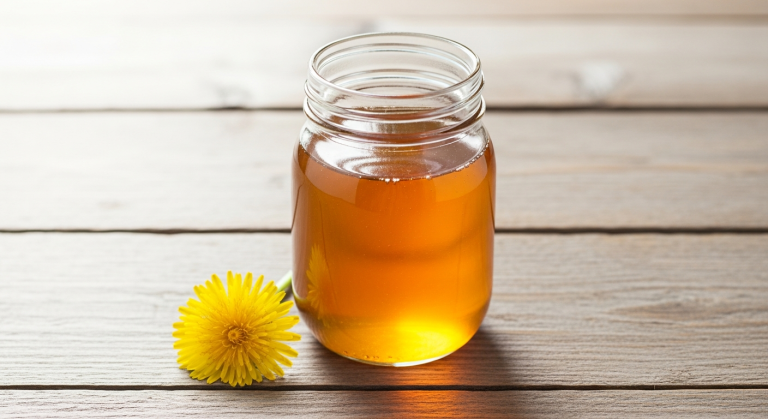
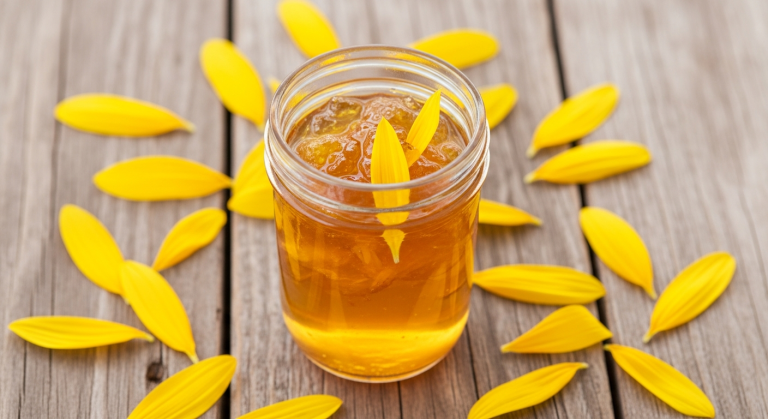
The color is part of the experience — a pale golden yellow when brewed cold, sometimes with a slight green tint. When the sun tea method works right, you end up with this beautiful amber-gold liquid that looks like something you'd pay too much for at a café.
Fresh flowers have a more fragrant, more delicate flavor than dried. Dried honeysuckle is slightly more concentrated — a bit stronger, a touch earthier. Both are good; they're just a little different. Add a drizzle of honey and the sweetness deepens without competing with the floral notes. That's how I prefer it.
How to Make Honeysuckle Tea (3 Methods — Plus the Bitterness Fix)
Here's the thing nobody tells you: if your honeysuckle tea tastes bitter, it's not the flowers — it's the water temperature. Honeysuckle petals are delicate, and boiling water pulls bitter compounds out of them fast. Most tea recipes just say "add boiling water and steep" without realizing they're guaranteeing a bad first experience.
The fix is simple: don't use boiling water. Cold brew gives you the best flavor. Sun tea is a close second. Hot tea is absolutely doable for sick days — you just need to control the temperature and steep time.
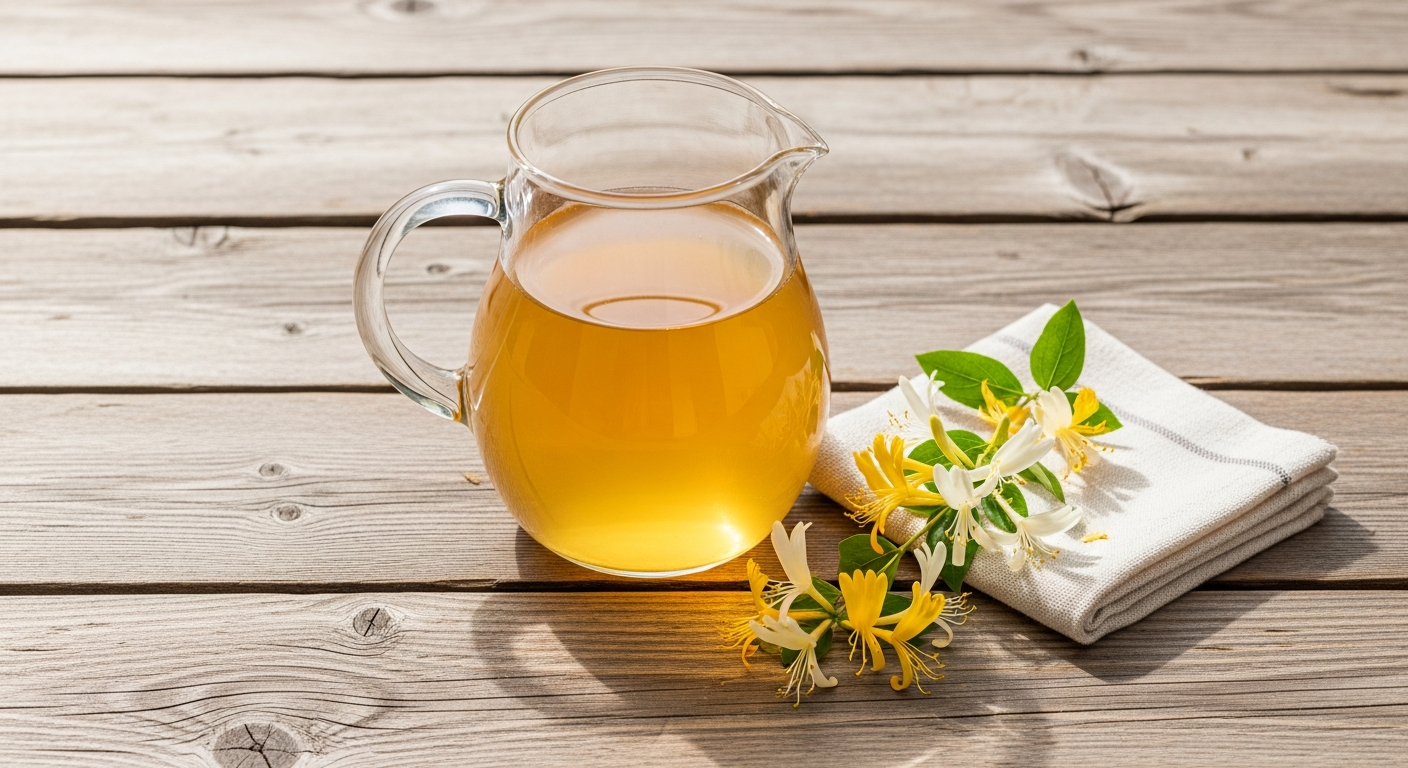
Method 1: Cold Brew (Best for Flavor)
This is the method I come back to every time. Zero skill required — you just need patience and a jar.
You'll need:
- 1 cup fresh honeysuckle flowers (or 2–3 tablespoons dried)
- 2 cups cold filtered water
- Honey to taste (optional)
- A jar or pitcher and a fine mesh strainer
Steps:
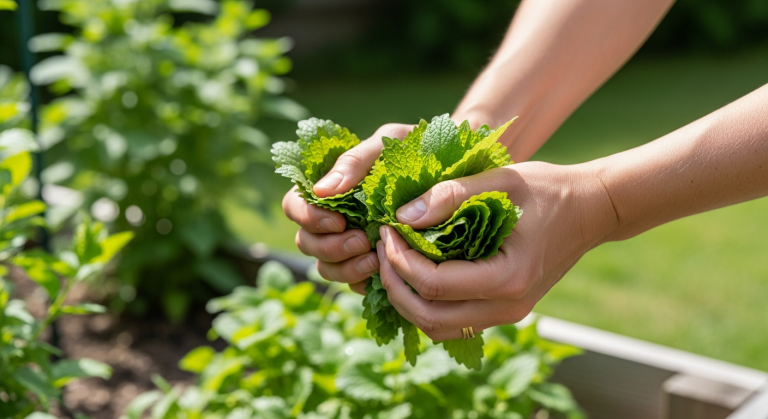
- Gently crush or bruise the flowers between your palms — this helps release the flavor
- Add flowers to a jar or pitcher
- Pour cold water over them
- Cover and refrigerate for 8–15 hours (overnight is perfect)
- Strain through a fine mesh strainer
- Serve over ice, sweeten with honey if you like
The longer it steeps, the deeper the golden color gets. You can push it to 24 hours for a stronger brew without any bitterness.
Method 2: Sun Tea (My Summer Favorite)
There's something satisfying about setting a jar in the sun in the morning and coming back to golden tea by afternoon. The gentle heat coaxes out the flavor without pulling any bitterness.
Same ratio as cold brew. Add bruised flowers to a glass pitcher or large mason jar, fill with cold water, cover loosely with cheesecloth or plastic wrap, and set in full sun for 3–4 hours. Watch for the water to turn golden — that's your signal. Bring it inside, strain it, and refrigerate to chill before serving.
Don't leave it in the sun longer than 4 hours, and refrigerate it promptly after — same common-sense rules as any sun tea.
Method 3: Hot Tea (For Sick Days)
When your throat hurts and you need something now, this is the method. Accept that it won't taste as sweet as the cold brew — a little bitterness is almost unavoidable — but honey and lemon handle that well.
The key: use water that's off the boil. Let boiling water sit for 2–3 minutes before pouring, bringing the temperature down to around 170–180°F. Pour over 1–2 tablespoons of dried flowers (or a small handful of fresh), steep for 3–5 minutes only, then strain and drink.
Don't steep longer than 5 minutes. The longer hot water sits on the flowers, the more bitter it gets.
Try the chrysanthemum pairing. Add 1 tablespoon of dried chrysanthemum flowers to your cold brew along with the honeysuckle. It's a traditional Chinese pairing — honeysuckle for its antibacterial and antiviral properties, chrysanthemum for a gentle floral depth and mild natural sweetness. The combination is excellent during cold and flu season, and it's one of the most common honeysuckle pairings in TCM formulas. Both flowers are easy to find dried if you don't grow your own.
Fresh vs. Dried Honeysuckle: What You Need to Know
Fresh flowers are available late spring through early summer — roughly May through June across most of the U.S. They're more fragrant, more delicate in flavor, and more rewarding to work with if you have access to them. Use them the same day you pick them, or dry them for storage.
Dried flowers are available year-round and easier to measure consistently. They're slightly more concentrated and a touch less aromatic than fresh, but the difference is subtle. When shopping, look for "Jin Yin Hua" (the Chinese name for dried honeysuckle flower) or "dried honeysuckle flowers Lonicera japonica" — those search terms pull up the right product. The flowers should smell fragrant, not musty.
The practical rule: if honeysuckle is blooming in your yard right now, use fresh. Any other time of year, dried works great and you won't notice the difference much.
How to Find and Harvest Honeysuckle in Your Yard
Japanese honeysuckle (Lonicera japonica) grows wild across most of the eastern and southern United States. It's invasive — which means if you're in a rural or suburban area with any green space nearby, there's a decent chance it's already on or near your property.
How to identify it: Look for a twining vine with oval, opposite leaves and slender trumpet-shaped flowers about an inch long. Here's the signature: the flowers open white and age to yellow, which means you'll almost always see both colors on the same vine at the same time. If you're questioning whether it's honeysuckle, smell it — the fragrance is unmistakable. Sweet, warm, and distinctly floral.
When to harvest: Late spring to early summer, when the buds are just beginning to open. Newly opened or still-opening buds have the best flavor and the most medicinal potency. Fully open flowers that have already started turning yellow are fine to use too, but try to catch them while they still have some white.
What to pick: Flowers and fresh buds only. Do not use the berries — they're mildly toxic and not appropriate for tea. Stick to the flowers.
Drying for storage: Spread harvested flowers in a single layer on a clean dish towel or a mesh drying rack. Set in a warm, dry spot out of direct sunlight and let them dry completely — usually 1 to 3 days depending on humidity. Once dry, store in a sealed glass jar. They'll keep for 6 to 12 months.
I used to yank honeysuckle off my fence every spring without thinking twice. Now I leave a small patch along the back fence line just for this. It's one of the better shifts I've made on this property — treating something I once fought as a resource instead.
Is Honeysuckle Tea Safe? What to Know Before You Try It
Honeysuckle tea is generally safe for most healthy adults when consumed in moderate amounts as a tea. The most common complaint — bitterness — is a flavor issue, not a health concern. Serious side effects are rare, but there are a few situations where you should be cautious.
Pregnant women should avoid honeysuckle tea. Both Traditional Chinese Medicine and medical sources caution against it during pregnancy — the plant's cooling nature and medicinal compounds make it a better-safe-than-sorry situation.
People on blood-thinning medications should check with their doctor before drinking it regularly. Honeysuckle may slow blood clotting, which creates a potential interaction with warfarin, aspirin therapy, and similar medications. This is the one caution that most articles skip, but it's real and worth knowing.
Before surgery: stop using honeysuckle at least two weeks prior to any scheduled procedure, for the same blood-clotting reason.
Children: there's no established safe dosing for kids. If you want to give honeysuckle tea to a child, keep quantities small and duration brief, and check with a healthcare provider first.
I drink this tea regularly and have had no issues with it. But as with any new herb, if you have a health condition or take medication — run it by your doctor first. That's just good sense.
Frequently Asked Questions
What are the benefits of drinking honeysuckle tea?
Honeysuckle tea is best known for its anti-inflammatory and immune-supporting properties. It contains quercetin, luteolin, and other antioxidants, and it's been used in Traditional Chinese Medicine for over a thousand years for fevers, upper respiratory infections, and digestive issues. Early research has also looked at an antiviral microRNA in the plant (MIR2911) that showed activity against influenza A viruses in lab settings.
Does honeysuckle tea have caffeine?
No — honeysuckle is an herbal tea and is naturally caffeine-free. That makes it a good choice for evening use or for anyone who's sensitive to caffeine.
Can I use the honeysuckle growing in my yard?
Yes, if you have Japanese honeysuckle (Lonicera japonica). Harvest the flowers and fresh buds in late spring when they're just beginning to open. Only use the flowers — not the berries, which are mildly toxic. The vine is invasive across much of the U.S., so there's a good chance you already have some nearby.
Why does my honeysuckle tea taste bitter?
Hot or boiling water pulls bitter compounds out of the delicate petals. For a smooth, naturally sweet cup, use the cold brew method — steep flowers in cold water in the refrigerator overnight. If you prefer hot tea, use water that's around 170–180°F (not boiling) and steep for no more than 3–5 minutes.
What are the side effects of honeysuckle?
Honeysuckle tea is generally safe for healthy adults in moderate amounts. Pregnant women should avoid it. People on blood-thinning medications should be cautious, as honeysuckle may slow blood clotting. Stop use at least two weeks before any scheduled surgery.