How to Make Blueberry Vinegar (Easy 7-Day Recipe)
Last updated March 13, 2026
Quick Snapshot
Here's the short version before we dive in:
- This is an infused blueberry vinegar — not fermented. No special equipment, no yeast, no waiting weeks.
- Active time is about 10 minutes. The jar does the rest over 7 days.
- You only need 3 ingredients: blueberries, vinegar, and a little sugar.
- Use it for salad dressings, marinades, drinking shrubs, BBQ glazes, and gifting.
- Difficulty level: beginner-friendly. If you've ever made a cup of tea, you can make this.
What Is Blueberry Vinegar?
Blueberry vinegar is vinegar that's been infused with fresh or frozen blueberries — giving it a tart, fruity flavor that works beautifully in dressings, marinades, and even drinks. It's different from the $13–$19 bottles you'll find at specialty shops, which are typically fermented or co-fermented with blueberries over weeks or months.
I started making this a few years ago when I had more blueberries than I knew what to do with. Jam felt like a lot of work. Freezing them was fine, but I wanted something a little more interesting in my pantry. This vinegar takes almost no effort, and now I make a batch every summer without thinking twice about it.
What You Need
Ingredients
- 1 pint (2 cups) fresh or frozen blueberries
- 2 cups white wine vinegar or distilled white vinegar
- 2 tablespoons sugar (optional — adjust to taste or leave it out entirely)
Equipment
- Wide-mouth quart mason jar (Ball wide-mouth jars work perfectly — linked below)
- Fine mesh strainer and cheesecloth (cheesecloth gives you the clearest vinegar)
- Swing-top glass bottle or clean jar for storing the finished vinegar
- Potato masher or large spoon
Which Vinegar Should I Use?
White wine vinegar gives you the most delicate flavor — it lets the blueberries shine without competing. Distilled white vinegar is sharper but is the most shelf-stable, which makes it ideal if you're planning to give bottles as gifts or store them at room temperature. Apple cider vinegar works too, and it adds its own mild flavor along with the health associations people already love ACV for.
My recommendation: white wine vinegar if you're making this to use in your own kitchen. Distilled white if you're making it for gifts or long storage.
How to Make Blueberry Vinegar: Step-by-Step
-
Wash your blueberries. Rinse them under cool running water. If you're using conventional store-bought berries, a quick 2–3 minute soak in cold water is all you need before making vinegar.
-
Crush the blueberries in your jar. Add them to your wide-mouth quart jar and use a potato masher or the back of a large spoon to crush them until you see purple juice running. You don't need them pulverized — just broken open.
-
Heat the vinegar and dissolve the sugar. Bring your vinegar to a gentle simmer in a small saucepan. Add the sugar and stir until fully dissolved. Don't boil it hard — just enough heat to melt the sugar.
-
Pour the hot vinegar over the crushed blueberries. Give it a gentle stir to combine. It'll look wonderfully purple immediately.
-
Let it cool, then cover. Allow the jar to cool to room temperature before covering. If you're using a standard lid, leave it slightly loose for the first day — any residual warmth can create pressure as it cools.
-
Steep for 7 days. Leave the jar at room temperature, out of direct sunlight. Give it a shake or a quick stir once a day. You'll notice the color deepening and the smell getting more complex by day 3 or 4.
-
Strain through cheesecloth. Set a fine mesh strainer lined with cheesecloth over a bowl and pour the mixture through it, pressing gently to extract as much liquid as possible. Cheesecloth works best here — I keep a pack in my pantry year-round, linked below. The result should be a clear, deep ruby vinegar.
-
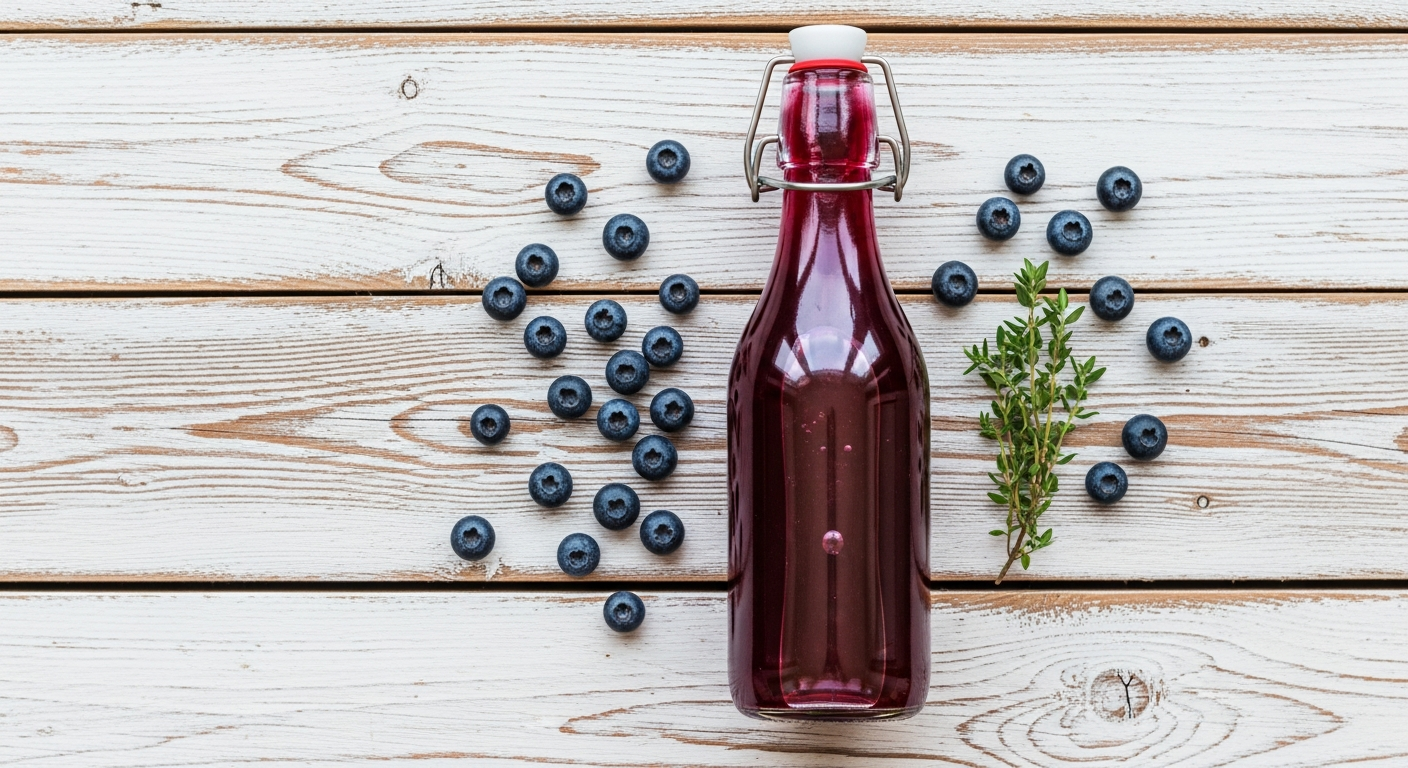
Bottle and label. Pour the finished vinegar into a clean swing-top bottle or mason jar. Add a label with the date. Done.
Can I Use Frozen Blueberries?
Yes, and honestly they might work even better. Freezing breaks down the cell walls, so frozen berries release their color and flavor more readily. Thaw them first if you want to mash them easily, or just add them frozen directly to the hot vinegar — they'll thaw and soften in seconds. No adjustments to the recipe needed either way.
6 Ways to Use Blueberry Vinegar
This is the part most recipes skip, and it's really the whole point of making it. Here's what I actually do with mine:
-
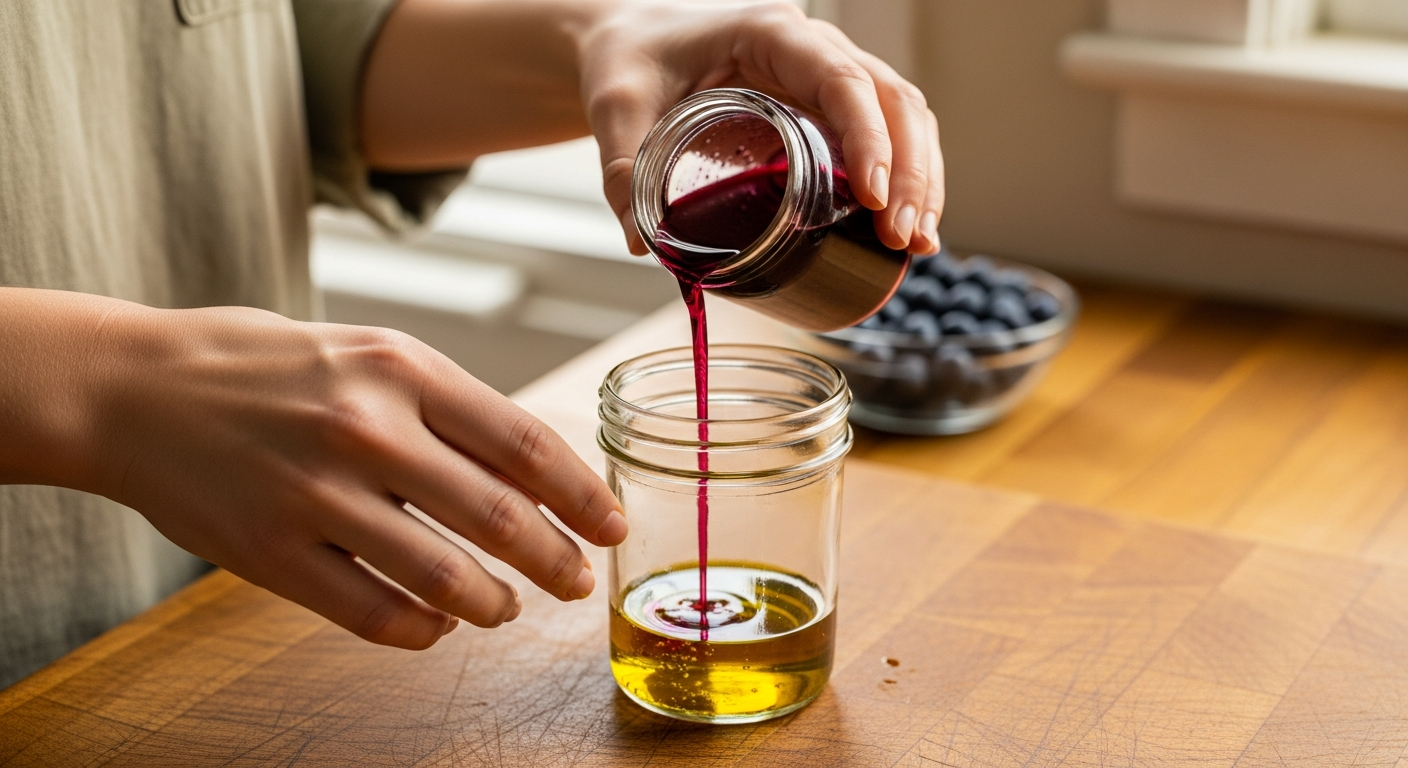
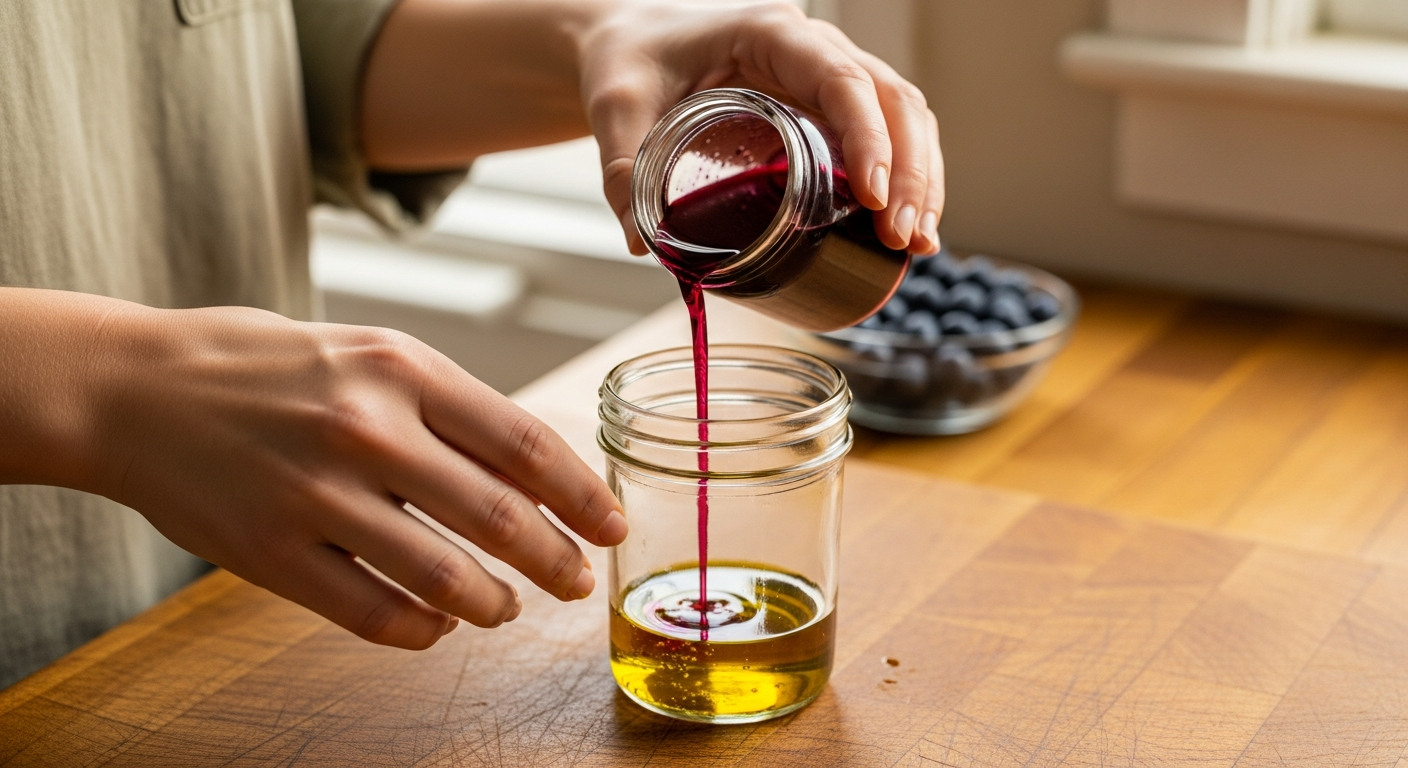
Blueberry vinaigrette. Whisk 1 part blueberry vinegar with 2–3 parts olive oil, a pinch of salt, and a drizzle of honey. It's especially good on spinach with goat cheese and candied walnuts — the tartness cuts through the richness perfectly.
-
Marinade for chicken or pork. Combine 2 tablespoons blueberry vinegar with 3 tablespoons olive oil, a minced garlic clove, and a few sprigs of fresh thyme. Marinate chicken thighs or pork chops for 30 minutes to 2 hours before grilling or pan-searing.
-
Drinking shrub (switchel). Stir 1 tablespoon blueberry vinegar into a glass of sparkling water and add a small drizzle of honey. Shrubs — drinking vinegars mixed with water or soda — are a traditional homestead beverage, and blueberry is one of the most crowd-pleasing flavors.
-
BBQ glaze. Add a splash to the pan drippings after cooking pork or chicken for a quick fruit-forward pan sauce. Or just stir a tablespoon into your favorite store-bought BBQ sauce — it adds a brightness that's hard to put your finger on.
-
Dessert drizzle. A spoonful over vanilla ice cream, a cheesecake slice, or Greek yogurt is surprisingly good. The tartness is a nice counterpoint to anything sweet and creamy.
-
Homemade gift. Pour the finished vinegar into a swing-top glass bottle, tie on a handwritten label, and pair it with a wedge of sharp cheddar and crackers. It looks like something from a specialty shop — and costs you about $2 to make.
Storage + Shelf Life
| Storage Method | Shelf Life |
|---|---|
| Room temperature (sealed) | Up to 3 months |
| Refrigerated | Up to 6 months |
| Frozen | 1 year+ |
Vinegar is naturally self-preserving — its high acidity makes spoilage genuinely rare. You might notice the color shifting over time (it can fade slightly), but that doesn't affect safety or flavor. If you ever notice a truly off smell or an unusual texture, trust your instincts and discard it. That said, I've never had a batch go bad.
Want to Try Fermented Blueberry Vinegar?
The vinegar you're making in this article is infused — which means it's quick, easy, and beginner-friendly. True fermented blueberry vinegar is a different project: it involves wild yeast, Brix measurements, and a process that takes weeks or months. It's genuinely interesting if you're already comfortable with fermentation, and the flavor is more complex and layered. But it's a separate skill set.
I stick with the infused method for everyday pantry batches. If you're curious about fermentation, it's a great rabbit hole to fall into once you've got the basics down.
FAQ
What is blueberry vinegar good for? Blueberry vinegar is a versatile pantry ingredient — use it in salad dressings, marinades for meat, BBQ glazes, drinking shrubs, and as a dessert drizzle. It brings tart, fruity brightness wherever you'd normally use plain vinegar or a squeeze of lemon.
Does blueberry vinegar go bad? Properly sealed, homemade blueberry vinegar keeps up to 3 months at room temperature and up to 6 months in the refrigerator. Vinegar is naturally high in acidity, which makes bacterial growth extremely unlikely. Some color fading is normal and harmless.
Can I substitute blueberry vinegar for balsamic vinegar? Yes, in most recipes. Use it in a 1:1 ratio. Blueberry vinegar is lighter and fruitier than balsamic, so it won't have the same thick, syrupy quality — but the flavor works beautifully in dressings, glazes, and drizzles.
Can I make blueberry vinegar without sugar? Absolutely. The sugar softens the tartness and rounds out the flavor, but the recipe works without it. Try it unsweetened first and add sugar after straining if you want it milder — a teaspoon at a time until it tastes right to you.
How do I wash blueberries to remove pesticides before making vinegar? A thorough rinse under cool running water and a 2–3 minute soak in cold water handles most surface residue. The high acidity of the vinegar itself takes care of the rest once the blueberries begin steeping.