The Best Cast Iron Bread Pan (And How to Actually Use It) — 2026 Guide
Last updated March 11, 2026
Cast iron can look more complicated than it is. I've heard it from so many new bakers — "I want to try it but I'm afraid I'll ruin the pan, or ruin the bread, or both." I get it. But I've been baking in my Lodge cast iron loaf pan almost every week for two years now, and I can tell you: it's genuinely easy once you know a few basics.
This guide covers what to look for, which pan I recommend, and — most importantly — how to actually use it so your first loaf comes out great.
Quick Snapshot:
- Best pick: Lodge Cast Iron Standard Loaf Pan (~$20)
- Best for: Sandwich bread, sourdough loaves, banana bread, quick breads
- Use caution with: High-sugar sweet breads (they can over-brown on the bottom)
- The honest trade-off: Heavier than aluminum and needs a little more care — but zero synthetic coatings and a crust you can't get any other way
Is a Cast Iron Bread Pan Worth It?
Yes — and I'll tell you exactly why.
Cast iron holds and distributes heat more evenly than aluminum or glass. That even heat is what gives bread a properly developed crust all the way around, not just on top. If you've ever pulled a sandwich loaf out of a light-colored aluminum pan and found the sides pale and soft while the top was browned, that's the difference cast iron makes.
The other thing that matters to me — and probably to you if you're on a homesteading journey — is what the pan isn't made of. Cast iron has no PFAS, no PFOA, no PTFE. None of the synthetic nonstick coatings that chip and flake over time. It's just iron and a layer of seasoning oil. That's it.
The pros, plain and simple:
- Even heat = better crust development on all sides
- No synthetic coatings — completely food-safe
- Lasts forever — cast iron is an heirloom, not a disposable tool
The honest downsides:
- It's heavy. A standard Lodge loaf pan weighs about 3.68 lbs — roughly the weight of a full quart jar. That's more than most loaf pans.
- The rough interior surface needs to be greased before every bake (more on that below)
- It's not dishwasher safe and doesn't like sitting in water
If you bake bread regularly — even once or twice a month — it's worth it. If you mostly buy bread and bake a loaf a few times a year, a lighter aluminum pan might serve you better.
Seasoned vs. Enameled vs. Uncoated: Which Type Should You Buy?
There are three types of cast iron bread pans out there, and they're not all the same:
| Type | Price Range | Maintenance | Best For |
|---|---|---|---|
| Pre-seasoned (Lodge style) | $20–$35 | Low — re-season occasionally | Most home bakers |
| Enameled cast iron | $75–$150 | Very low — near-zero upkeep | Gift buyers, low-maintenance seekers |
| Uncoated bare cast iron | $15–$25 | High — must fully season before use | Cast iron enthusiasts |
For most home bakers, pre-seasoned is the right choice. It's affordable, ready to use right away, and easy to maintain. The enameled versions (like what you'd find at Williams Sonoma) are beautiful and nearly maintenance-free, but they cost three to four times as much. And bare uncoated pans require a full seasoning process before first use — skip that extra step if you're just getting started.
The Best Cast Iron Bread Pan — My Pick
My recommendation: Lodge Cast Iron Standard Loaf Pan
Lodge makes the best cast iron bread pan for home bakers, and it's not really close. Here's what you get:
- Size: 8.5 × 4.5 inches
- Capacity: 6 cups
- Weight: 3.68 lbs
- Price: Around $20
- Made in USA, pre-seasoned with 100% vegetable oil, dual handles for easy maneuvering, no PFAS
Lodge has been making cast iron in Tennessee since 1896. The pans are consistent, well-priced, and get better with every use as the seasoning builds up.
Standard vs. Large — which size do you need?
| Standard (8.5 × 4.5 in) | Large (10 × 5 in) | |
|---|---|---|
| Capacity | 6 cups | ~8 cups |
| Weight | 3.68 lbs | ~4.5 lbs |
| Price | ~$20 | ~$30 |
| Best for | Most recipes, everyday baking | Bigger sourdough loaves, artisan breads |
For most people, the standard size is the right call. It fits virtually every standard loaf recipe and is a little lighter to handle. If you regularly bake oversized sourdough loaves or large sandwich loaves, the larger size is worth the extra $10.
What about Bayou Classic? They make a cast iron bread pan too, around $39. It's a solid pan, but at twice the price of Lodge with no real advantage for home baking, it's hard to recommend.
How to Use a Cast Iron Bread Pan for the First Time
This is the section I wish existed when I bought my first cast iron loaf pan. No one tells you the basic prep steps, and then people are surprised when their first loaf sticks or something goes wrong. Here's exactly what to do.
Step-by-Step: Before Your First Bake
If you have a new Lodge pan (pre-seasoned from the factory), the process is simple:
- Wash it once with warm soapy water — this is the only time you'll use soap on it
- Dry it completely — a minute on the stovetop over low heat works better than a towel
- You're ready to bake
If you have a bare/uncoated pan, add these steps before you start:
- After washing and drying, rub a thin coat of flaxseed oil or vegetable oil over all surfaces — inside, outside, everywhere
- Place it upside down in a 375°F oven for one hour (put a sheet of foil on the rack below to catch drips)
- Let it cool completely inside the oven
That's the full seasoning process. I keep a small bottle of cast iron seasoning oil in my pantry just for this — a little goes a long way.
How to Prevent Sticking Every Time
The question I get most from new cast iron bakers: how do I keep the bread from sticking? Here are my three go-to techniques:
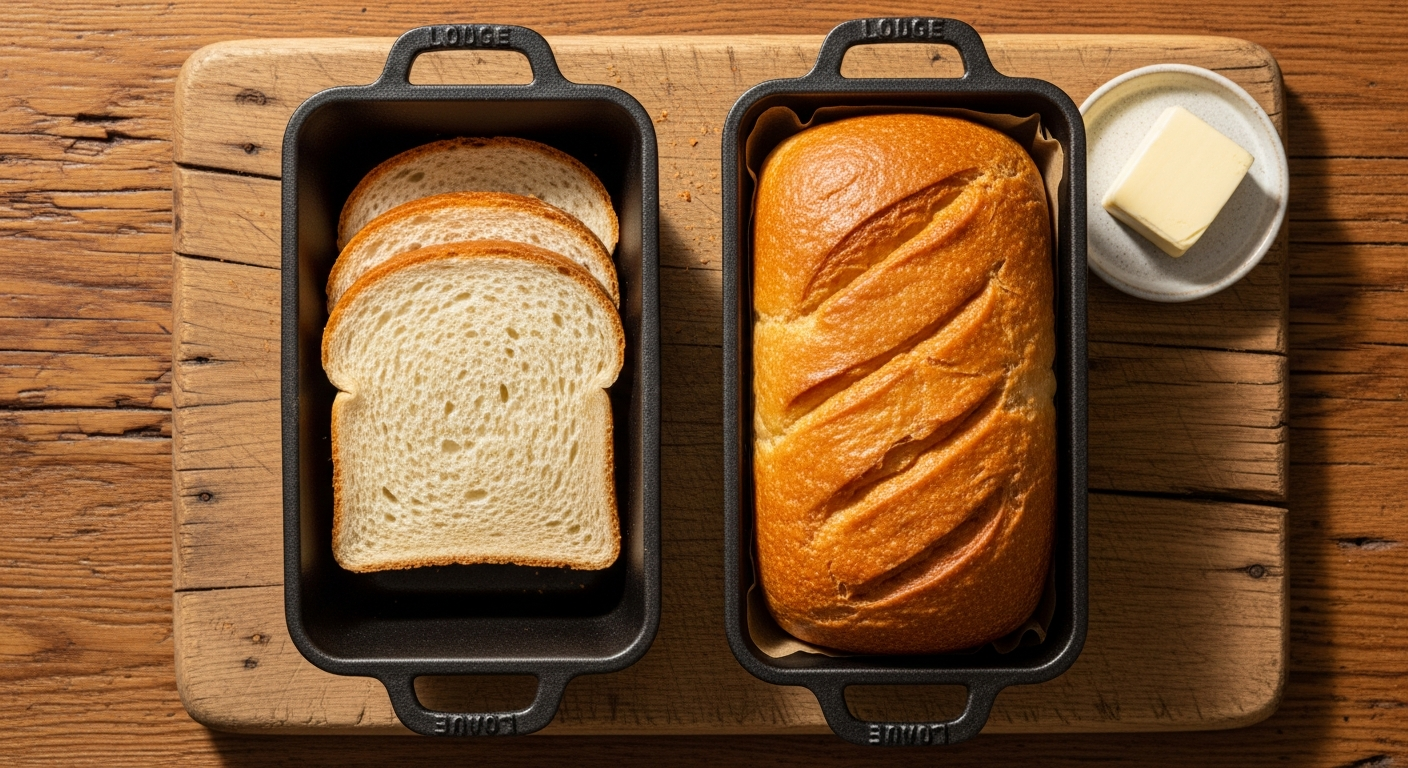
The Parchment Sling Method (My Favorite) Cut a strip of parchment paper long enough to extend 3–4 inches over each side of the pan. Grease the pan first, then lay the parchment in. When your loaf comes out of the oven, just grab those overhanging edges and lift the bread out cleanly. No struggling, no tipping the pan over. This works every single time.
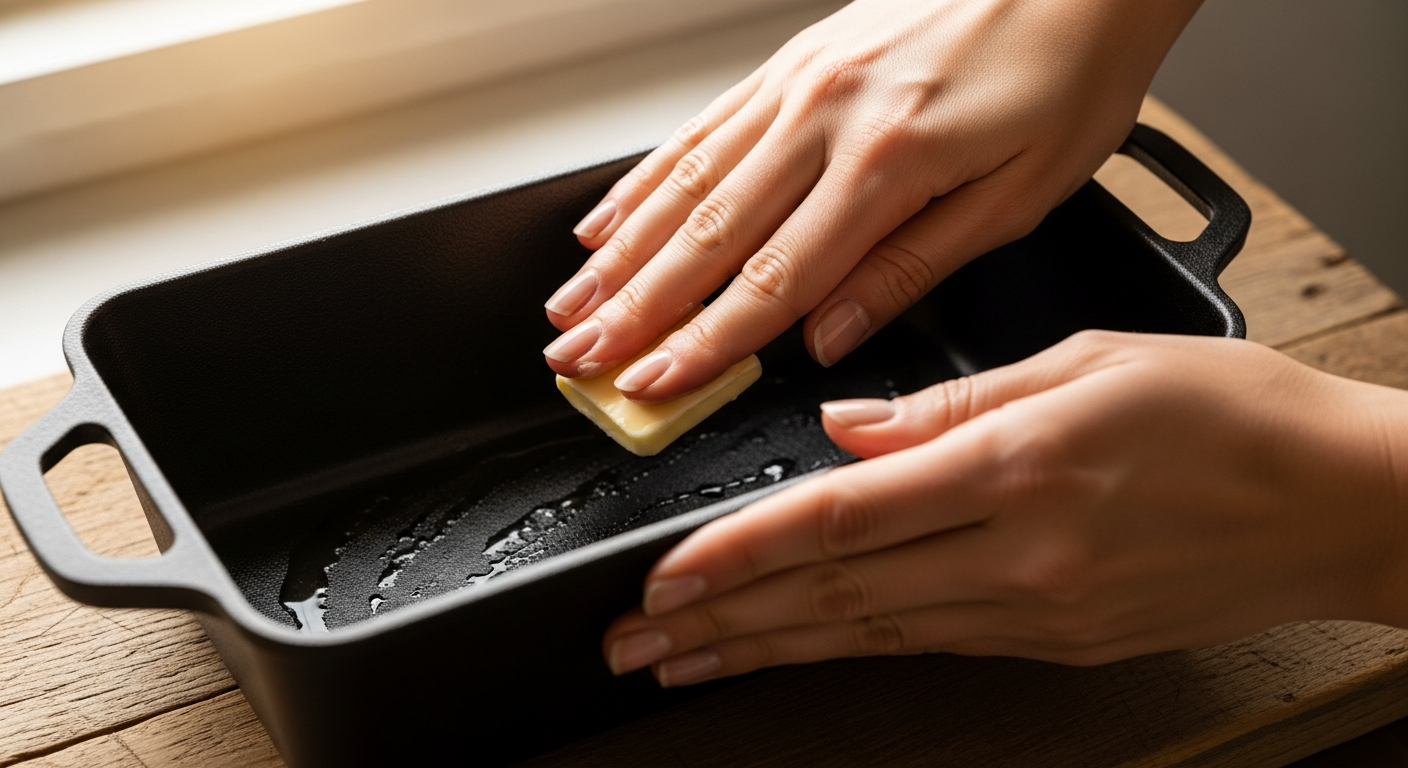
- Grease generously before every bake. Butter or lard works better than cooking spray on raw cast iron — cooking spray can build up a sticky residue over time. I use butter and I've never had a loaf stick.
- Let bread cool in the pan for 10 minutes before removing. The crust firms as it cools and releases from the surface much more cleanly than it does straight from the oven.
What to Bake in a Cast Iron Bread Pan
Cast iron is excellent for most everyday bread — but there are a few types where you need to adjust your expectations (or your oven temperature).
✅ Best results:
- Classic sandwich bread
- Sourdough loaves
- Banana bread and zucchini bread
- Dense whole wheat or multigrain loaves
- Quick breads (beer bread, soda bread)
⚠️ Use with care:
- High-sugar breads (honey-heavy loaves, brioche, sweet enriched doughs) — the dark iron surface retains heat and can over-brown the bottom crust. If you're baking anything with a lot of sugar, reduce your oven temperature by 25°F and check the bottom of the loaf before pulling it out.
❌ Skip it for:
- Delicate cakes that require a non-stick surface
- Anything baked in a Bundt or tube pan shape
Not sure what to bake first? Start with a simple sandwich bread recipe — it's the most forgiving and gives you a real feel for how your cast iron performs. [If you're already baking sourdough, a cast iron loaf pan is a great alternative to a Dutch oven for pan loaves.]

Caring for Your Cast Iron Bread Pan
The care routine intimidates people more than it should. Here's the honest truth: it's three steps.
- Clean while still warm — use a stiff brush and hot water. No soap. Scrub off any bits that are stuck.
- Dry immediately — put it on the stovetop over low heat for a minute or two until all the moisture is gone.
- Rub a thin film of oil on the interior while it's still warm — just a quick wipe with a paper towel and vegetable oil.
That's it. The whole process takes maybe three minutes.
A few hard rules:
- Never soak it in water
- Never put it in the dishwasher
- Don't use steel wool (a stiff brush or coarse salt scrub is enough)
Got a rust spot? Don't panic — this happens when a pan sits wet. Scrub the rust off with coarse salt and a little oil, rinse, dry completely on the stovetop, and re-season at 375°F for an hour. Five minutes of active work and it's back to perfect.
Frequently Asked Questions
Are cast iron pans good for baking bread? Yes. Cast iron's heat retention creates even, well-developed crust that's hard to achieve with lighter aluminum pans. The dark surface helps with browning while the thick walls prevent hot spots.
Is a cast iron bread pan worth it? Yes, for regular bread bakers. The initial learning curve is small, the pan lasts decades, and there are no synthetic coatings to worry about. At $20 for a Lodge, it's one of the most cost-effective kitchen investments you can make.
What size cast iron loaf pan should I get? The standard 8.5 × 4.5 inch pan fits most bread recipes and is a good starting point. Only go larger if you regularly bake oversized loaves or want extra room for sourdough.
Do you need to season a cast iron bread pan before using it? New Lodge pans come pre-seasoned — just a quick wash and dry before first use. Bare uncoated pans need a full seasoning process (described above) before they're ready.
How do you keep bread from sticking in a cast iron loaf pan? Grease it generously with butter or lard before each bake, and use a parchment paper sling for foolproof release. Let the bread cool in the pan for 10 minutes before removing.
Can you make sourdough in a cast iron loaf pan? Yes — cast iron is excellent for sourdough pan loaves. The heat retention helps develop that chewy, well-caramelized bottom crust sourdough bakers love.