Oatmeal and Honey Soap Benefits (and Why I Make My Own for Just $2 a Bar)
Last updated March 11, 2026
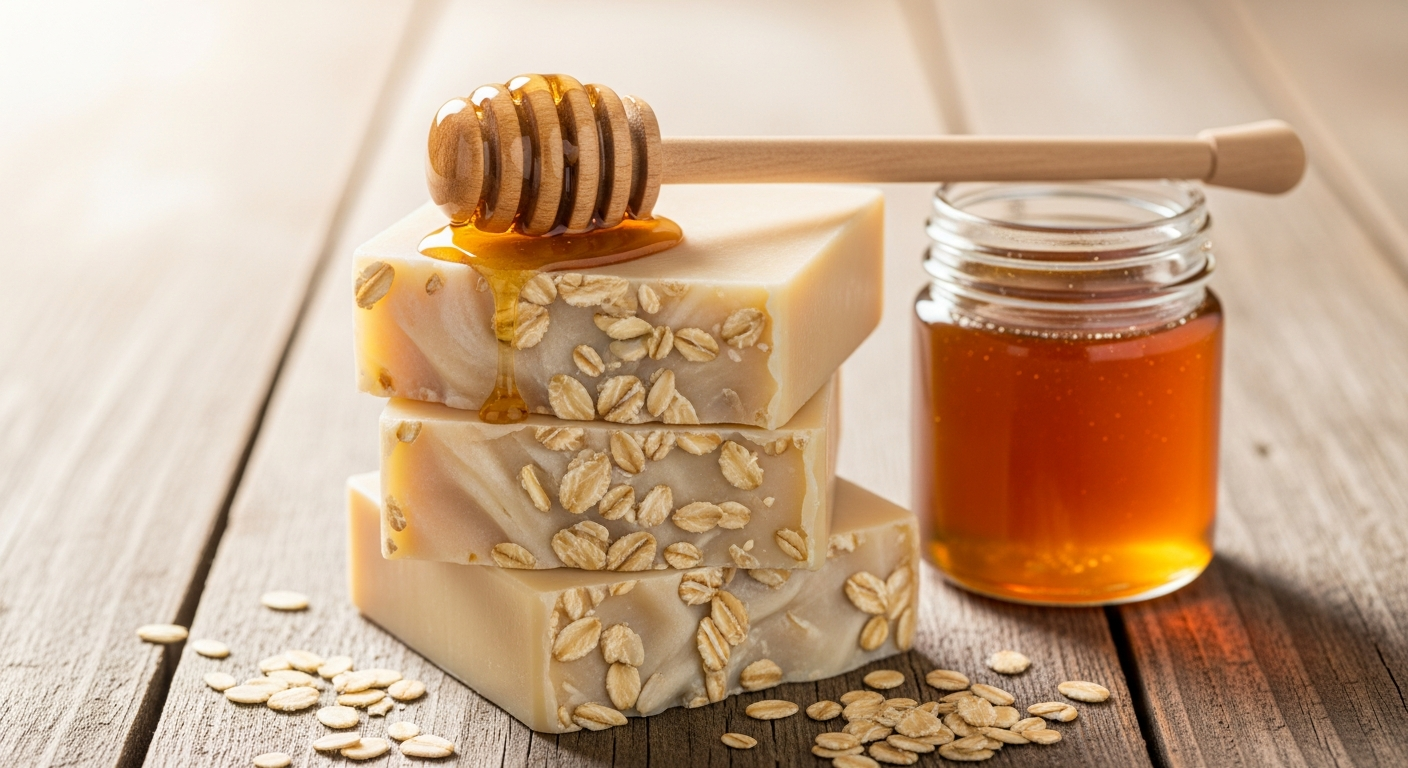
I started making my own oatmeal honey soap after I noticed what it was doing for my daughter's eczema-prone skin — and then did the math on what I'd been spending on fancy natural soap bars. A 2-pound block of goat milk soap base makes ten bars for about the same price as buying two bars at the farmers market. We've been using it ever since.
But before I get to the recipe, here's what this combination of ingredients actually does — because the skin benefits are real, and they're worth understanding before you decide to buy or make your own.
At a Glance: What Oatmeal and Honey Do for Your Skin
| What It Does | |
|---|---|
| Oatmeal | Gently exfoliates, calms inflammation, repairs the skin barrier |
| Honey | Locks in moisture, fights bacteria, protects with antioxidants |
| Together | Cleanses without stripping — gentle enough for eczema, sensitive skin, and daily face use |
| Make it yourself | ~$2 per bar with a melt-and-pour base. No lye required. |
What Each Ingredient Actually Does for Your Skin
These two ingredients show up together so often in natural skincare that it's easy to assume it's just marketing. It isn't. They each do something specific and measurable.
Oatmeal — The Soother and Gentle Scrubber
Oatmeal contains a compound called beta-glucan that forms a protective film over skin, holding in moisture and calming redness. It also contains avenanthramides — anti-inflammatory compounds that are unique to oats and are why an oatmeal bath relieves chicken pox, sunburn, and itchy skin flares so effectively. And the natural lipids in oats help repair the skin's moisture barrier over time, not just in the short term.
The form of oatmeal matters. Colloidal oatmeal — oats ground into a very fine powder — is the most effective in soap because the tiny particles stay in contact with skin longer and rinse clean without leaving a gritty residue. The FDA actually recognizes colloidal oatmeal as an over-the-counter skin protectant for relieving minor skin irritation and itching. That's a regulatory designation, not a marketing claim.
Honey — The Moisture Magnet and Protector
Honey is a natural humectant, which means it draws moisture from the air and holds it against your skin. Think of it as a moisture magnet — it works with your skin's environment rather than just coating the surface. This is why skin feels genuinely soft after washing with honey soap, not just temporarily smooth.
Honey also has natural antibacterial properties because of how glucose oxidase enzymes in honey produce small amounts of hydrogen peroxide. That's why it's been used for wound care for centuries and why it helps calm acne-prone skin without the harshness of conventional acne cleansers. And raw honey is packed with phenolic antioxidants that protect skin from environmental damage over time.
One distinction worth knowing: raw honey retains its active enzymes. Heavily processed honey may not. In soap, raw honey also contributes to a silky, conditioning lather.
Why Oatmeal AND Honey Together Works Better Than Either Alone
These two ingredients don't double up on the same job — they complement each other. Oatmeal exfoliates gently and calms inflammation. Honey replenishes the moisture that any cleansing removes, and adds antibacterial protection on top. Oatmeal draws out impurities; honey seals in hydration.
You end up with a bar that's doing four things at once: calming, cleansing, nourishing, and protecting. Neither ingredient alone gives you all four. That's the case for using them together rather than separately.
Who Benefits Most — A Quick Skin Type Guide
| Skin Type | How Oatmeal + Honey Helps |
|---|---|
| Dry skin | Honey draws and locks in moisture; oatmeal repairs the lipid barrier |
| Sensitive skin | Oatmeal's anti-inflammatory action; no sulfates or synthetic fragrance needed |
| Eczema-prone | FDA-recognized colloidal oatmeal for skin protection; honey soothes flares |
| Acne-prone | Honey's natural antibacterial properties; gentle oatmeal exfoliation without abrasive scrubbing |
| Aging skin | Honey antioxidants + oatmeal exfoliation support cell turnover |
One brief caution: if you have a bee allergy, patch test any honey-containing product on a small area of skin before using it on your face or body.
Can You Use It Every Day? (And on Your Face?)
Yes on both counts, for most people.
Oatmeal honey soap is far gentler than conventional bar soap, which typically contains sulfates that strip the skin's natural oils. The oatmeal granules in a well-made bar are fine enough for daily facial use — unlike walnut shell or apricot scrubs, which can cause micro-tears in skin with repeated use. Rinse with lukewarm water rather than hot, since hot water strips natural oils regardless of which soap you use.
If your skin feels tight after washing, follow up with a light moisturizer. That's true with any cleanser, but it's especially worth noting for very dry skin types.
Is It Safe for Babies and Kids?
Yes — with one qualifier: it needs to be unscented. Essential oils and synthetic fragrances are the most common skin irritants for babies, not the oatmeal or honey themselves. An unscented oatmeal honey soap bar is gentle enough for babies six months and older.
This is one of the things I like best about making my own — I control what goes in. My homemade version has no added fragrance, which means it's gentle enough for my kids and gentle enough for my own sensitive skin. One bar for the whole family simplifies everything.
How to Make Oatmeal Honey Soap at Home (No Lye, 15 Minutes)
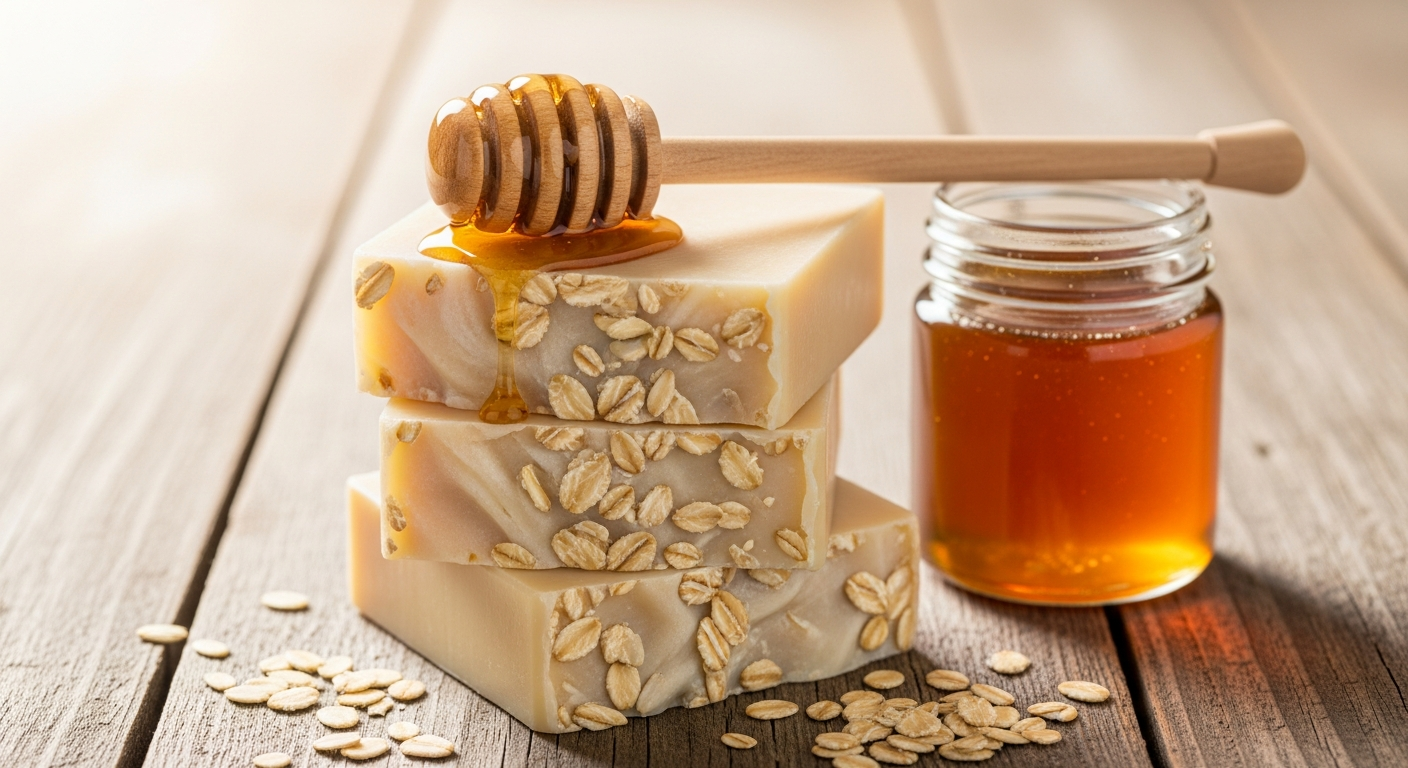
If you've tried the lavender melt-and-pour soap recipe on this site, this uses the exact same method — just different additions. If you haven't made melt-and-pour soap before, that guide walks you through the basics first.
You'll need:
- 2 lb goat milk melt-and-pour soap base
- 2 tablespoons colloidal oatmeal (finely ground rolled oats work too — just pulse them in a blender for 30 seconds first)
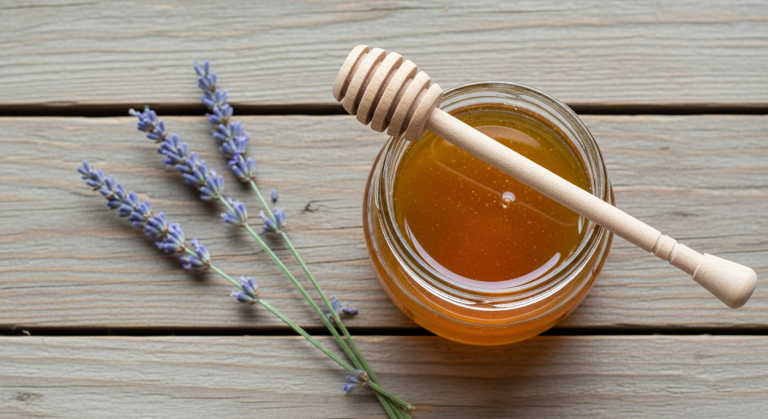
- 1 tablespoon raw honey
- Soap mold (loaf mold or silicone muffin tin)
- Microwave-safe bowl
Steps:
- Cut the soap base into 1-inch cubes and place them in a microwave-safe bowl. Microwave in 30-second intervals, stirring between each, until fully melted.
- Remove from the microwave and let cool for 1–2 minutes. This step matters — if you add honey to soap that's too hot, it sinks to the bottom of the mold.
- Stir in the colloidal oatmeal and raw honey until evenly mixed through.
- Pour into your soap mold. Tap the mold gently on the counter a couple of times to release any air bubbles.
- Let set at room temperature for 4–6 hours until fully hardened.
- Unmold and cut into bars. Let them sit on a rack for 24 hours before using.
Yield: 8–10 bars (approximately 4 oz each) Cost: About $1.50–2.00 per bar
Should You Buy or Make Your Own?
Honestly, both are good options. If you want to try oatmeal honey soap without committing to a batch, a quality bar from a natural soap maker runs about $5–8 and is worth the money. Farmers markets and natural soap companies like Bend Soap or Earthley are solid options.
If you want to make your own, the math is pretty compelling: a 2-pound batch costs about $18–20 in supplies and makes 8–10 bars. That's roughly $2 a bar versus $6–8 a bar for store-bought. One batch also gives you control over every ingredient, which matters if you're making it for sensitive or eczema-prone skin.
I make my own because I like knowing exactly what's in it and because my kids can use the same bar I use. But buying a quality bar is a completely reasonable choice if you just want to try it first.
Frequently Asked Questions
What does oatmeal and honey do for your skin? Oatmeal gently exfoliates, calms inflammation, and repairs the moisture barrier. Honey draws in and locks moisture, fights bacteria, and provides antioxidant protection. Together they cleanse without stripping, leaving skin soft, soothed, and hydrated.
Can I use oatmeal soap on my face every day? Yes — colloidal oatmeal is gentle enough for daily facial use. Rinse with lukewarm water and follow with a light moisturizer if your skin tends to feel dry after washing.
Can I use an oatmeal and honey soap bar every day? Yes, for most skin types. It's far gentler than conventional bar soap. If your skin feels tight after washing, add a light moisturizer to your routine.
Is oatmeal honey soap good for eczema? Colloidal oatmeal is FDA-recognized for relieving eczema symptoms, and honey has natural anti-inflammatory and soothing properties. Many people with eczema find this combination much gentler than commercial soap — it was the reason I started making my own.
Can I make oatmeal honey soap at home? Yes, easily — with a melt-and-pour base and no lye required. The recipe above takes about 15 minutes and makes 8–10 bars for around $15–20 in supplies.