Homemade Lotion Recipe: Easy 3-Ingredient Body Butter (or True Lotion When You're Ready)
Last updated March 10, 2026
The first time I tried making homemade lotion, I followed a popular recipe I found online, melted a bunch of things together, and ended up with a hard, waxy blob that sat on top of my skin no matter how much I rubbed it in. I figured I'd done something wrong.
I hadn't. That recipe was technically body butter — not lotion. And here's the thing: most "homemade lotion recipes" on the internet are actually body butter. Which isn't bad at all — body butter is wonderful stuff. But it's different from lotion, and knowing that difference before you start will save you a lot of frustration.
In this guide, I'll walk you through both options: a simple 3-ingredient body butter that anyone can make in about 20 minutes, and a true water-based lotion for when you're ready to level up. I'll also cover the most common things that go wrong — and exactly how to fix them.
Body Butter vs. Lotion — What's Actually the Difference?
The short answer: lotion contains water, body butter doesn't. That one difference changes everything — the texture, the shelf life, the ingredients you need, and whether you need a preservative.
| Body Butter | True Lotion | |
|---|---|---|
| Contains water? | No | Yes |
| Needs preservative? | No | Yes |
| Ingredients needed | 2–3 | 4–6 |
| Shelf life | 6–12 months | 3–6 months |
| Texture | Rich, thick | Light, absorbs fast |
| Best for beginners? | ✅ Yes | ⚠️ After you've tried body butter |
If this is your first time making anything like this, start with body butter. It's harder to mess up, no preservative required, and the results are genuinely great — especially for dry skin. Once you've made it a couple of times and you're comfortable, the true lotion recipe is the next natural step.

What You'll Need to Make Homemade Lotion
Good news: the ingredient lists for both recipes are short, and most of what you need is available on Amazon. Your first batch will run you around $20–30 in supplies — and most of those ingredients will stretch through many more batches after that.
Ingredients for Easy Body Butter (Beginner)
- 1 cup (225g) shea butter
- 2–4 tbsp carrier oil (sweet almond oil, jojoba oil, or fractionated coconut oil)
- 10–20 drops essential oil (optional — lavender is a great starting point)
Tools: Hand mixer or stand mixer, glass jar for storage
Ingredients for True Homemade Lotion (Advanced)
- Distilled water (70% of batch weight)
- Emulsifying wax (6% of batch weight — BTMS-50 or Polawax are both beginner-friendly)
- Carrier oil (22% of batch weight)
- Preservative (1% of batch weight — Optiphen, Phenonip, or Leucidal Liquid are common options)
- Optional: vegetable glycerin (1%, for extra moisture), vitamin E oil (antioxidant)
Tools: Two heatproof bowls, digital kitchen thermometer, immersion blender or milk frother, sterilized pump dispensers or glass bottles
A quick note on preservatives: if your lotion contains water, it needs a preservative. Water creates the right environment for bacteria and mold to grow — a good preservative keeps your batch safe for months. It's not optional for water-based formulas.
Which Oil Should You Use? (Skin Type Guide)
This is one of the most common questions in every homemade lotion comment section, and almost no one answers it directly. Different carrier oils really do behave differently on different skin types — here's a simple breakdown.
| Skin Type | Best Oil | Why It Works |
|---|---|---|
| Dry / very dry | Shea butter + sweet almond oil | Rich, nourishing, the classic combination |
| Normal / combination | Jojoba oil | Most similar to skin's own natural sebum |
| Oily / acne-prone | Grapeseed oil | Very lightweight, non-comedogenic |
| Sensitive | Sunflower seed oil | Gentle, mild, rarely irritating |
| Mature / aging skin | Avocado oil + vitamin E | Deeply moisturizing with antioxidant benefits |
My everyday go-to is sweet almond oil — it's light, absorbs quickly, and works well for most skin types. Jojoba oil is my second choice, especially in summer when I want something even lighter.
3-Ingredient Body Butter Recipe (Simple, No-Fuss, Beginner-Friendly)
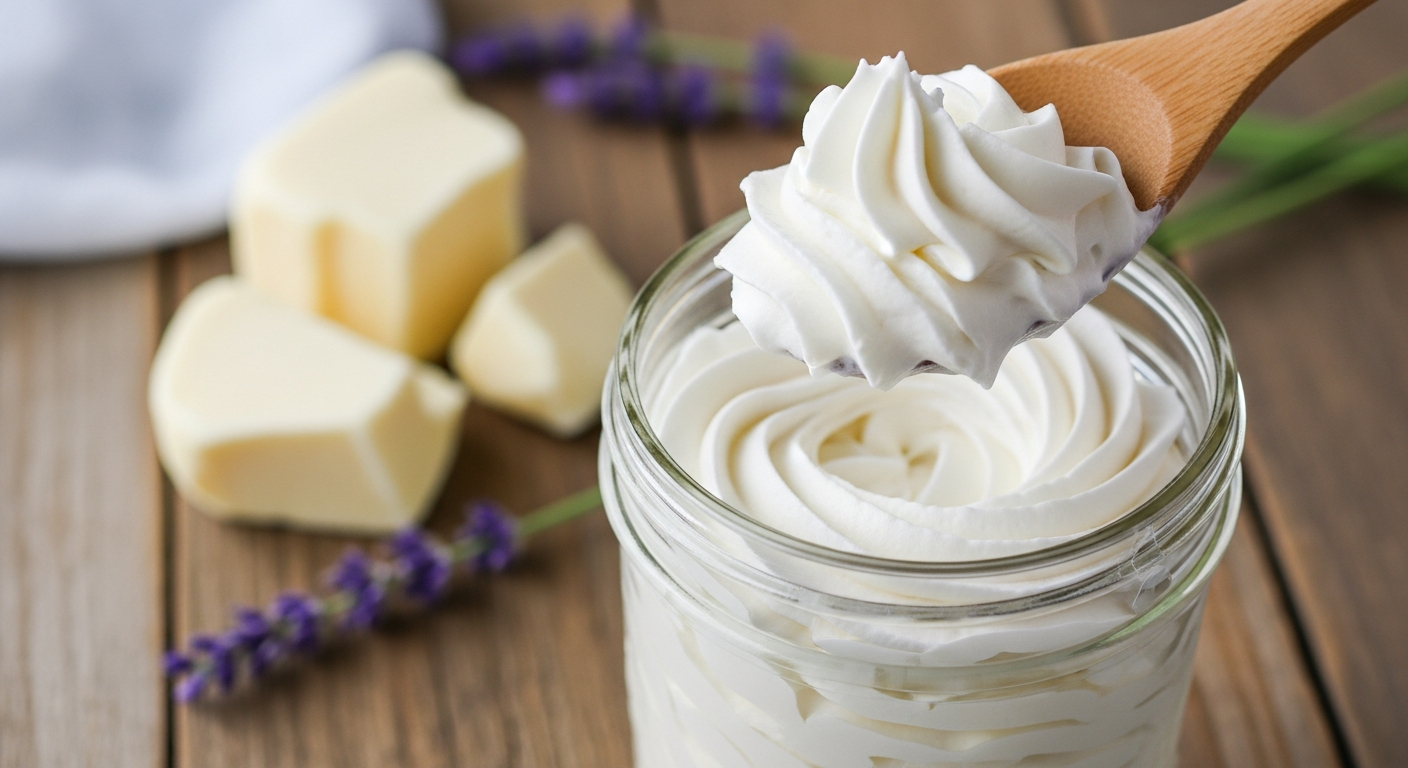
This is the recipe I'd hand to my neighbor who's never made anything like this before. Three ingredients, one bowl, no special equipment beyond a hand mixer. The whole thing takes about 20 minutes, and most of that is waiting for the shea butter to cool.
Ingredients:
- 1 cup (225g) shea butter
- 2–4 tbsp sweet almond oil or jojoba oil
- 10–20 drops essential oil of your choice (optional)
- Optional: 1 tsp arrowroot starch (reduces greasiness — highly recommended)
Instructions:
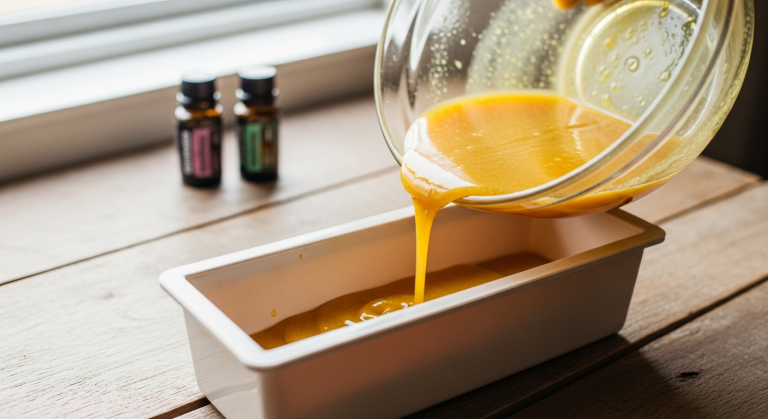
- Melt the shea butter gently. Use a double boiler over low heat, or microwave in 30-second intervals, stirring between each. You want it just melted — don't let it get too hot.
- Stir in your carrier oil and the arrowroot starch (if using). Mix until fully combined.
- Let the mixture cool at room temperature until it starts to look opaque and solid around the edges — about 20–30 minutes. Don't rush this by putting it in the fridge.
- Add your essential oils once the mixture has cooled significantly (you don't want to cook off the scent).
- Whip with a hand mixer on medium-high speed for 3–5 minutes until the mixture turns light, fluffy, and pale — like whipped cream.
- Spoon into a clean glass jar. It's ready to use immediately.
Total time: ~25 minutes (mostly cooling)
Yield: Approximately 8 oz
Variations: For a lavender vanilla blend, use 15 drops lavender + 10 drops vanilla fragrance oil. For a citrus blend, try orange + lemon essential oils. For sensitive skin or babies, skip the essential oils entirely.
True Water-Based Lotion Recipe (Step-by-Step Guide for When You're Ready to Level Up)
This is real lotion — the kind that feels like what you'd buy at the store. It's light, fast-absorbing, and actually pourable. The key difference from body butter is the emulsification process: you're combining a water phase and an oil phase at the same temperature, then blending them together until they bind.
Before we get to the recipe, a quick word on preservatives: you must use one here. This recipe contains water, and water-based products are hospitable to bacteria and mold. A proper cosmetic preservative keeps your batch safe for months at room temperature. Skip it, and you're looking at a week or two in the fridge before it's no longer safe to use on your skin. I use Optiphen, but Leucidal Liquid and Phenonip are both widely available and work well.
Ingredients (by weight — a kitchen scale makes this much easier):
- 140g distilled water (70%)
- 44g carrier oil (22%)
- 12g emulsifying wax (6%)
- 2g preservative (1%)
- Optional: 2g vegetable glycerin (1%), a few drops of vitamin E oil
Total batch size: ~200g (approximately 7 oz)
Instructions:
- Sterilize all your equipment. Wipe bowls, blender, and dispensers with rubbing alcohol and let dry.
- Combine the emulsifying wax and carrier oil in a heatproof bowl. Heat over a double boiler until the wax melts completely. This is your oil phase.
- Heat the distilled water in a separate heatproof bowl over the double boiler. Both phases need to reach 160–170°F before you combine them — this is the step where most beginners go wrong. Use a thermometer.
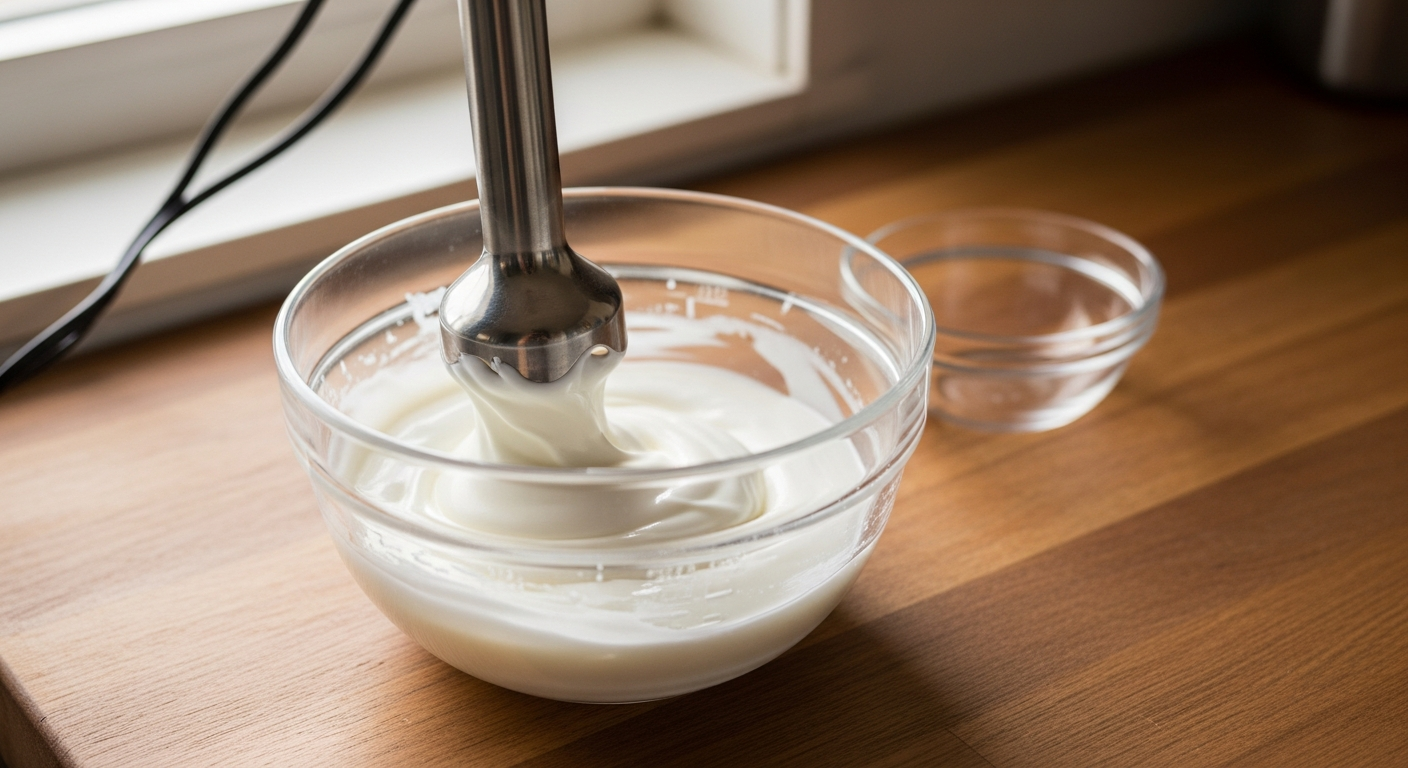
- Once both phases are at the same temperature, slowly pour the water phase into the oil phase while blending continuously with an immersion blender (a milk frother also works).
- Blend for 3–5 minutes. The mixture will turn white and start to thicken as it cools — this is emulsification happening. It should look like thin lotion by the time it drops below 140°F.
- Below 140°F: Add your preservative. Stir well.
- Below 110°F: Add any essential oils. Stir until fully incorporated.
- Continue stirring occasionally as it cools to room temperature — it will thicken a bit more as it cools.
- Transfer to sterilized pump dispensers. Label with the date.
Total time: ~45 minutes
Yield: ~7 oz
Homemade Lotion Troubleshooting Guide
I've had all three of these happen to me, so let me save you the frustration.
My Lotion Is Too Greasy
Problem: The lotion feels heavy and doesn't absorb — it sits on top of your skin.
Cause: Too much oil relative to other ingredients, or the wrong oil choice. Coconut oil is the most common culprit — it's heavy and tends to leave a greasy residue.
Fix: For body butter, add 1 tsp arrowroot starch before whipping and reduce the carrier oil by a tablespoon. Swap coconut oil for jojoba or sweet almond oil. For true lotion, reduce your oil phase percentage by 3–5%.
My Lotion Won't Thicken / It's Too Watery
Problem: The lotion stays thin or liquid after fully cooling.
Cause: The most common reason is that the water and oil phases were different temperatures when you combined them — so emulsification didn't happen properly. The second cause is not enough emulsifying wax.
Fix: If your batch is still warm, gently reheat both phases to 160°F and re-blend. For future batches, make sure both phases hit the same temperature before combining, and increase emulsifying wax by 1–2%.
My Lotion Is Grainy or Has Lumps (Shea Butter Issue)
Problem: The body butter or lotion has a gritty, sandy texture — especially noticeable after it's been at room temperature for a day or two.
Cause: This is almost always shea butter crystallization from temperature shock. Cooling too quickly (especially in the refrigerator) causes shea butter to form large crystals instead of a smooth texture.
Fix: Re-melt the batch gently over a double boiler, stirring continuously. Then allow it to cool slowly at room temperature — don't speed up the process with the fridge or freezer.
Is Making Your Own Lotion Worth It? (With Real Numbers)
A 16-oz batch of homemade lotion costs about $2–4 to make. The closest store-bought equivalent? $8–25.
Here's a rough breakdown: a pound of raw shea butter runs around $10–14 on Amazon and makes several batches of body butter. A bottle of sweet almond oil is about $10 and lasts even longer. The first time you buy ingredients, you'll spend $25–40 setting yourself up — but those supplies stretch through 8–12 batches easily. By the third batch, your per-unit cost drops to well under $3.
For comparison: CeraVe Moisturizing Cream (16 oz) runs about $14. Aveeno Daily Moisturizing Lotion (18 oz) is around $12. If you're buying premium natural brands — Burt's Bees, Weleda, or similar — you're looking at $18–35 for a comparable size. Switch to homemade body butter and you'll save $100 or more per year if you go through a bottle a month.
The honest time math: your first batch of body butter will take about 30 minutes including cleanup. By your third or fourth batch, you'll have it down to 15. True lotion takes closer to 45 minutes the first few times. The first batch is a wash on time versus money. By batch five, you're winning on both.
Storage & Shelf Life
| Type | Shelf Life | Storage |
|---|---|---|
| Body butter (water-free) | 6–12 months | Room temp, out of direct sunlight |
| True lotion with preservative | 3–6 months | Room temp in sealed pump dispenser |
| True lotion without preservative | Up to 2 weeks | Refrigerated — not recommended |
For body butter, glass mason jars work beautifully and look great on a bathroom shelf. For true lotion, pump dispensers are the better choice — scooping with your fingers introduces bacteria into water-based formulas and shortens the shelf life.
How to tell if a batch has gone bad: trust your nose first. A sour or off smell is the clearest sign. Visible mold (often near the lid or rim), color change, or a separated or watery texture are other signs it's time to toss it.
Frequently Asked Questions
Does homemade lotion need a preservative?
Body butter doesn't — because it contains no water, bacteria can't grow in it. True lotion absolutely does. Any recipe that combines water and oils needs a cosmetic preservative to prevent bacterial and mold growth. This isn't optional.
Can I make lotion without coconut oil?
Yes — and honestly, I prefer it that way. Sweet almond oil and jojoba oil are both excellent alternatives that absorb better and feel less heavy on the skin. Most people find coconut oil makes their homemade lotion greasier than they'd like.
Can I use homemade lotion on my face?
Body butter is usually too rich for most faces — it tends to feel heavy and can clog pores. True lotion made with jojoba oil is a much better fit for facial skin. Either way, patch test first, especially if you have sensitive skin. If you want to take your skincare a step further, pink clay is a gentle ingredient worth adding to your routine.
What essential oils are safe in lotion?
The safe dilution rate for body products is 1–2% — roughly 6–12 drops of essential oil per ounce of finished product. Lavender, frankincense, and chamomile are universally gentle choices. Avoid citrus essential oils (lemon, orange, bergamot) in products that will be used before sun exposure, as they can cause photosensitivity.
How do I make lotion for dry skin?
Use shea butter as your base with a nourishing carrier oil like sweet almond or avocado oil. The body butter recipe in this post is designed specifically for dry skin — it's rich without being greasy if you use the right oil ratio and the arrowroot starch trick.
Why is my shea butter grainy after I melt it?
Temperature shock. Shea butter forms large crystals when it cools too fast — a common problem if you put it in the fridge to speed things up. See the troubleshooting section above for the fix.
Can I give homemade lotion as a gift?
Body butter travels well and makes a beautiful gift in a small glass jar with a label. True lotion is also a great gift, but use pump dispensers rather than open jars for anything you're giving away — they're more sanitary and easier to use.
How much does it cost to make homemade lotion?
About $2–4 for a 16-oz batch once your initial ingredients are stocked. Your first purchase run will be higher as you build your supplies, but those ingredients carry through many batches.