Soap Aloe Plant Care Guide: How to Grow Aloe maculata (2026)
Last updated March 10, 2026
When I first picked up a soap aloe at the nursery, I assumed it was some kind of aloe vera variant — turns out, not even close. Soap aloe is its own plant entirely, with spotted leaves and a fascinating name that has nothing to do with soap-making and everything to do with the sap itself. If you found this while searching for soap recipes, I've been there — but stick around, because this plant is worth knowing. Even if you're in Ohio or Illinois like I am, you can grow soap aloe as a container plant and bring it in before frost. It's genuinely one of the most forgiving succulents I've ever kept.
What Is Soap Aloe? (And Why Is It Called That?)
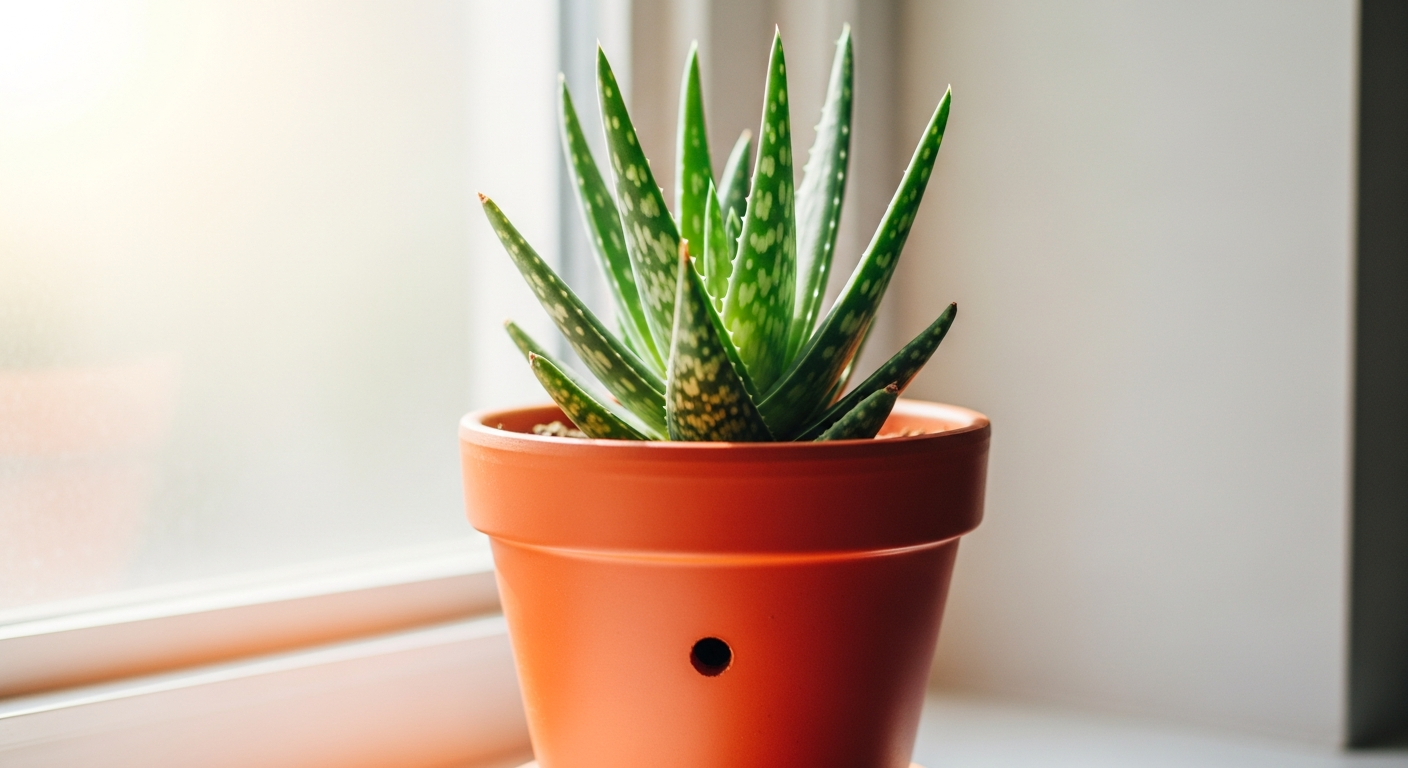
Soap aloe — botanical name Aloe maculata, also called zebra aloe — is a succulent native to Southern Africa. It grows as a flat rosette of thick, fleshy leaves that are green with distinctive white or cream spots and speckled markings, which is where "zebra aloe" comes in. Come spring and summer, it sends up tall stalks topped with tubular orange-red flowers that hummingbirds, bees, and butterflies absolutely love.
The "soap" part of the name comes from saponins — natural compounds in the plant's sap that create a soapy lather when the gel is rubbed with water. Traditional communities in Southern Africa have used the plant for centuries as a cleaning agent. It's not something I'd put in a bar of soap (that would be a different article entirely), but it's a neat piece of botanical history that makes this plant a genuine conversation starter.

Soap Aloe vs. Aloe Vera — What's the Difference?
This is the question everyone has, and it's a fair one. They look vaguely similar and they're both drought-tolerant succulents — but they're not the same plant, and they're not interchangeable.
| Feature | Soap Aloe (A. maculata) | Aloe Vera (A. barbadensis) |
|---|---|---|
| Leaf appearance | Spotted/mottled green-white | Solid green, sometimes faint spots |
| Primary use | Ornamental; traditional soap/washing | Medicinal gel (burns, skin care) |
| Bloom color | Orange-red tubular flowers | Yellow-green tubular flowers |
| Mature rosette size | 12–18 inches wide | 24–36 inches wide |
| Cold hardiness | Zone 8–11 | Zone 9–11 |
| Toxicity if ingested | ⚠️ Toxic to pets and humans | ⚠️ Toxic to pets |
The short version: aloe vera is your medicine-cabinet plant. Soap aloe is your garden ornamental. Both are easy to grow and drought-tolerant, but soap aloe is actually more cold-hardy and a better fit for pollinators. For skincare and burn relief, aloe vera wins — for a striking, low-maintenance plant that fills a dry corner of the garden or porch, soap aloe is the one I'd reach for.
Soap Aloe at a Glance
| Spec | Detail |
|---|---|
| Botanical name | Aloe maculata (syn. Aloe saponaria) |
| Common names | Soap aloe, zebra aloe |
| Hardiness zones | USDA Zones 8–11 |
| Mature size | 12–18 in wide rosette; flower stalks to 2–3 ft |
| Light | Full sun to partial shade |
| Water | Low — drought tolerant |
| Soil | Well-draining cactus/succulent mix |
| Bloom season | Spring–summer (sometimes year-round in mild climates) |
| Toxicity | ⚠️ Toxic to dogs, cats, and humans if ingested |
| Growth rate | Slow |
How to Grow Soap Aloe: Care Guide
Soap aloe is one of the most forgiving succulents you can grow — the main thing you need to get right is watering. Get that one thing under control and the rest practically takes care of itself.
Sunlight Needs
Outdoors, soap aloe does best in full sun — at least 6 hours a day. In very hot climates, some afternoon shade actually helps: it tends to look fuller and greener when it gets a break from the hottest midday sun. Indoors, put it in your brightest window. South-facing or west-facing works best.
The most common indoor problem is not enough light. When soap aloe doesn't get sufficient light, it starts stretching — the leaves get longer, the rosette loosens, and the whole plant looks floppy and pale. If that's happening, move it closer to a window or supplement with a grow light through the winter months.
How Often to Water Soap Aloe
The soak-and-dry method is what works here. Water deeply — until water runs through the drainage holes — then let the soil dry out completely before you water again. In the growing season, that's roughly every 1–2 weeks outdoors. In winter when the plant is dormant, once every 3–4 weeks is plenty.
Overwatering is, by a wide margin, the number one killer of soap aloe. A plant that's been overwatered will show yellowing leaves, a soft or mushy base, and sometimes a slightly rotten smell from the soil. If you're unsure whether to water, wait another week — this plant would much rather be too dry than too wet.
Best Soil for Soap Aloe
You need a fast-draining mix. Regular potting soil holds too much moisture and will cause root rot faster than you'd expect. A bagged cactus and succulent potting mix is the easiest solution. If you want to save a little money, mix regular potting soil 50/50 with perlite or coarse sand — that DIY version works just as well and uses stuff you probably already have.
Soil pH should be around 6.0–7.0, neutral to slightly acidic. And drainage needs to be excellent regardless of which mix you use — which is why your pot choice matters too.
Terracotta pots are my preference for succulents. They're heavier (which helps ground the plant), they're breathable, and they dry out faster than plastic — which is exactly what you want with a drought-tolerant plant.
Temperature and Hardiness Zones
Soap aloe is rated for USDA Zones 8–11. In those zones, it'll live happily outdoors year-round. It can survive a brief dip to around 25°F — the foliage may die back in a hard freeze, but the roots are usually fine and the plant comes back.
If you're in Zone 7 or colder — which is most of the Midwest — you'll want to grow it in a container and bring it indoors before the first frost. I keep mine in a terracotta pot on the porch from May through October, then bring it inside to a south-facing window for the winter. It's genuinely easy to manage this way. The ideal indoor temperature range is 55–80°F.
Fertilizing (Optional)
Soap aloe doesn't need much. If you want to give it a boost, a balanced water-soluble succulent fertilizer once in spring works fine — you don't need to fertilize in fall or winter when the plant is resting. If you're using granular fertilizer, flush the soil with plain water occasionally to prevent salt buildup, which can damage the roots over time.
Honestly, I've gone entire seasons without fertilizing mine and it did fine. It's not a heavy feeder.
Can You Grow Soap Aloe Indoors? (Yes — Here's How)
Yes, absolutely. Soap aloe makes a great houseplant, and it's one of the better options for cold-climate homesteaders who can't grow it outdoors year-round.
The most important thing for indoor growing is the pot. Use terracotta (not plastic), make sure it has a drainage hole, and don't go too big — a 4–6 inch pot is the right size for a single plant. Terracotta is heavier and breathes better, which makes overwatering much harder to do accidentally.
For light, put it in your sunniest window. South-facing is ideal; west-facing works. In the darkest months of winter, a grow light on a timer can make a real difference if the plant starts looking stretched or pale. A basic LED grow light for a few hours a day will keep it happy until spring.
If you can, move the pot outdoors when nighttime temperatures are consistently above 50°F. Start it in a shaded spot for a couple of weeks before moving it into full sun — going straight from a winter window into direct summer sunlight will cause sunburn on the leaves. A happy indoor soap aloe will have firm, upright leaves with good color. If it's pale, soft, or reaching toward the window, adjust light or water accordingly.
Plan to repot every 2–3 years, or sooner if the pups start crowding the pot.
How to Propagate Soap Aloe from Pups (The Easy Way)
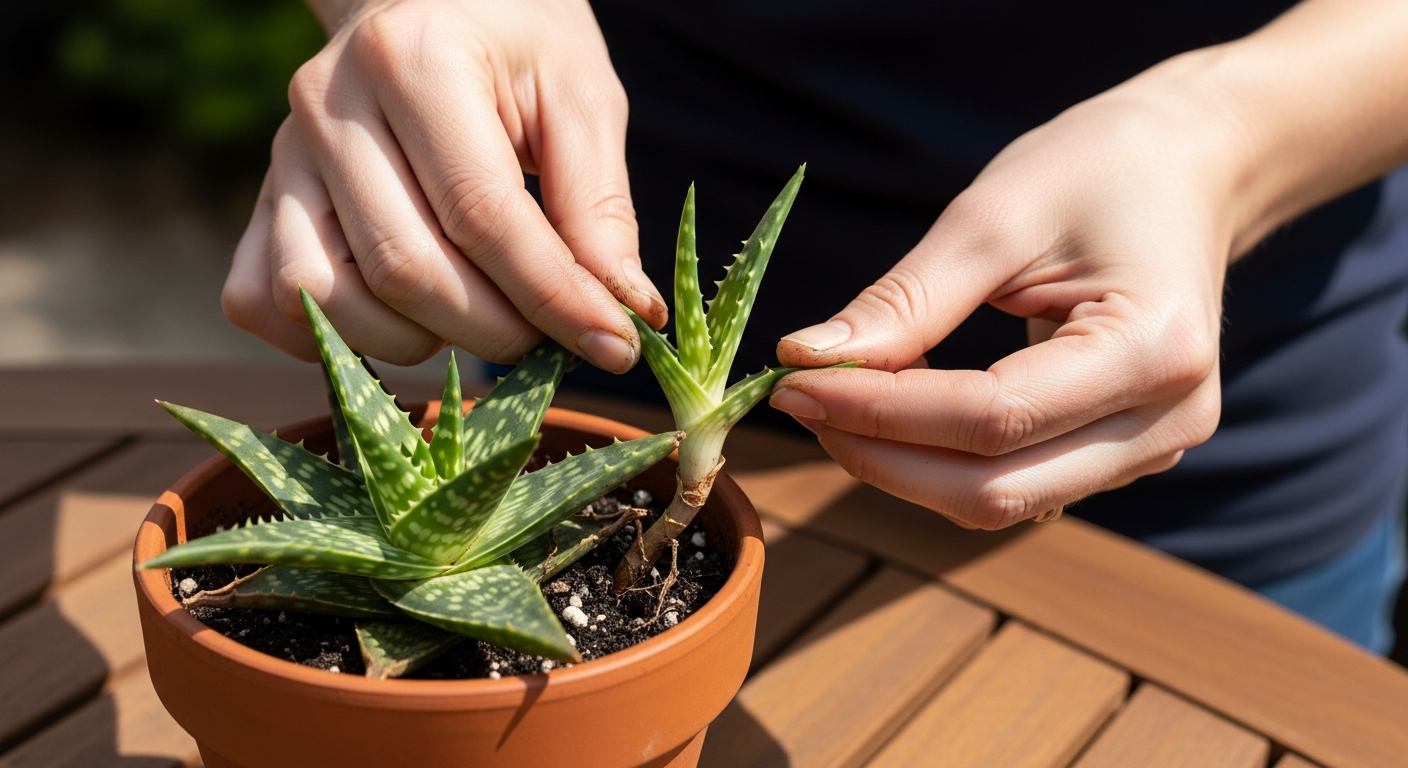
Soap aloe produces pups — little offset plants that grow at the base of the mother plant — freely and without any effort on your part. This is genuinely the easiest way to get more plants, and it's basically free. I've given pups to neighbors, friends, and my mom.
Step 1: Wait until the pup has at least 3–4 leaves of its own and is at least 2 inches tall. Separating pups before they're big enough can stress both the pup and the mother plant.
Step 2: Use clean, sharp scissors or a knife. Cut at the base of the pup, as close to the mother plant as possible. Try to include a bit of root if you can see any.
Step 3: Set the pup on a dry surface — a piece of paper towel or a tray works — for 1–2 days. This lets the cut end callous over. Don't skip this step. A fresh cut planted straight into soil is an open invitation for rot.
Step 4: Plant the calloused pup in a small pot with dry cactus/succulent mix. Don't water yet.
Step 5: After one week, give it a light watering and place it in bright indirect light for the first 2–3 weeks while it establishes roots. Direct sun too soon can stress a newly transplanted pup.
The most common propagation mistake is watering immediately after planting. Patience with that callous step makes all the difference between a thriving new plant and a rotted one.
Soap Aloe Problems: What's Wrong and How to Fix It
These are all fixable — none of them mean you've killed the plant.
Mushy base or root rot: Almost always from overwatering. Unpot the plant, trim any black or mushy roots with clean scissors, and let the plant sit out of soil for a day or two. Replant in fresh dry mix and hold off watering for 1–2 weeks.
Mealybugs: Look for tiny white cotton-like clusters, especially where leaves meet the stem. Dab with a cotton swab dipped in rubbing alcohol, or spray with a diluted neem oil solution. Repeat weekly until they're gone. This is most common on indoor plants.
Brown or yellow patches on leaves: Usually sunburn from being moved too quickly from low light to intense direct sun. Move it to partial shade and let new growth come in — the existing damaged leaves won't recover, but the plant will be fine.
Stretched, floppy growth (etiolation): Classic sign of insufficient light. Move it to a brighter window, add a grow light, or move it outside for the summer. This is the most common problem I see with indoor soap aloe.
Soap Aloe Uses: More Than Just a Pretty Plant
Soap aloe isn't just about looking good in a pot. The saponins in the sap that give the plant its name do create a mild lather — traditional communities in Southern Africa have used the plant for washing for centuries. The gel can also be applied topically to soothe minor skin irritation, though it's not as concentrated for skincare as aloe vera gel. Do a patch test first, and I'd steer clear of any medical claims here — it's a helpful supplemental plant, not a remedy.
The pollinators are the real star in my garden, though. Soap aloe's tubular orange flowers are incredibly attractive to hummingbirds, and bees and butterflies work them hard during the bloom season. If you're in Zone 8+ and looking for something that fills a dry, difficult corner of the garden while also bringing in wildlife, soap aloe is an excellent choice. It spreads over time into dramatic clumps and asks very little in return.
One important note: do not ingest any part of this plant. Soap aloe is toxic to pets and humans if eaten. Keep it out of reach of curious kids and animals.
Frequently Asked Questions
Is soap aloe the same as aloe vera? No. Soap aloe is Aloe maculata, a different species from aloe vera (A. barbadensis). Aloe vera has solid green leaves and is used for medicinal gel. Soap aloe has spotted, mottled leaves and is primarily ornamental. Both are drought-tolerant succulents, but they're not interchangeable.
Why is it called soap aloe? The sap contains saponins — natural compounds that create a soapy lather when rubbed with water. Traditional communities in Southern Africa used it as a washing agent for centuries. That's where the name comes from, not any connection to soap-making.
How big does soap aloe get? The rosette typically reaches 12–18 inches wide at maturity. Flower stalks can grow 2–3 feet tall during bloom season (spring through summer, and sometimes year-round in mild climates).
Can soap aloe survive a freeze? It tolerates brief dips to around 25°F. The foliage may die back in a hard freeze, but the plant usually recovers from its roots. In Zone 7 and colder, grow it in containers and bring it inside before the first frost.
Is soap aloe toxic to cats, dogs, or children? Yes — all parts of the plant are toxic if ingested, for both pets and humans. External skin contact with the gel is generally fine, but keep the plant out of reach of children and animals who might chew on it.
Can I grow soap aloe indoors? Absolutely. It's a great houseplant for cold-climate growers. Give it the brightest window you have (south-facing is ideal), plant it in a terracotta pot with well-draining cactus mix, and supplement with a grow light in winter if the light is thin.
Is soap aloe edible? No. Despite its traditional use as a cleaning agent, soap aloe is toxic if ingested. Do not eat any part of this plant.
Where can I buy soap aloe? Local nurseries in Zone 8+ states often carry it, especially in the Southwest and Southeast. Online succulent shops and Etsy sellers ship nationwide. Prices typically run $8–$20 for a 4-inch to 1-gallon plant.