What to Do with Dried Lavender: 20 Uses Organized from Easiest to Most Creative
Last updated March 10, 2026
I planted my first lavender with low expectations — a single plant tucked into a corner of the garden that I figured might smell nice. Two years later I have five plants, and every summer I end up with far more dried lavender than I know what to do with. Bundles hanging from the kitchen ceiling, a bag in the pantry, another on the counter. If you've found yourself in the same situation, this is for you.
The good news is that dried lavender is one of the most versatile things you can grow. If you want to take your lavender use even further, a lavender tincture is one of the most versatile herbal preparations you can make from those same dried buds. There are uses for every skill level and every time budget — from two-minute wins that require nothing more than a clean sock, to small-batch recipes that make your home smell like the best bed and breakfast you've ever stayed in.
The uses below are organized from the simplest (grab your lavender and do it right now) to the more creative (a few extra ingredients, totally worth it).
| Category | Examples |
|---|---|
| Quick & Easy (no supplies needed) | Sleep sachet, carpet freshener, simmer pot |
| Home & Fragrance | Drawer sachets, dryer bags, cleaning spray |
| Bath & Body | Bath salts, infused oil, foot scrub |
| Kitchen & Cooking | Simple syrup, infused honey, lavender sugar |
| Gifts & Crafts | Gift bath salts, lavender wand, sachet bundles |
5 Ways to Use Dried Lavender Right Now (No Special Supplies)
You don't need anything special to get started — just the lavender you already have. These five uses require nothing you don't already own, and most of them take under five minutes.
Put Dried Lavender in a Vase
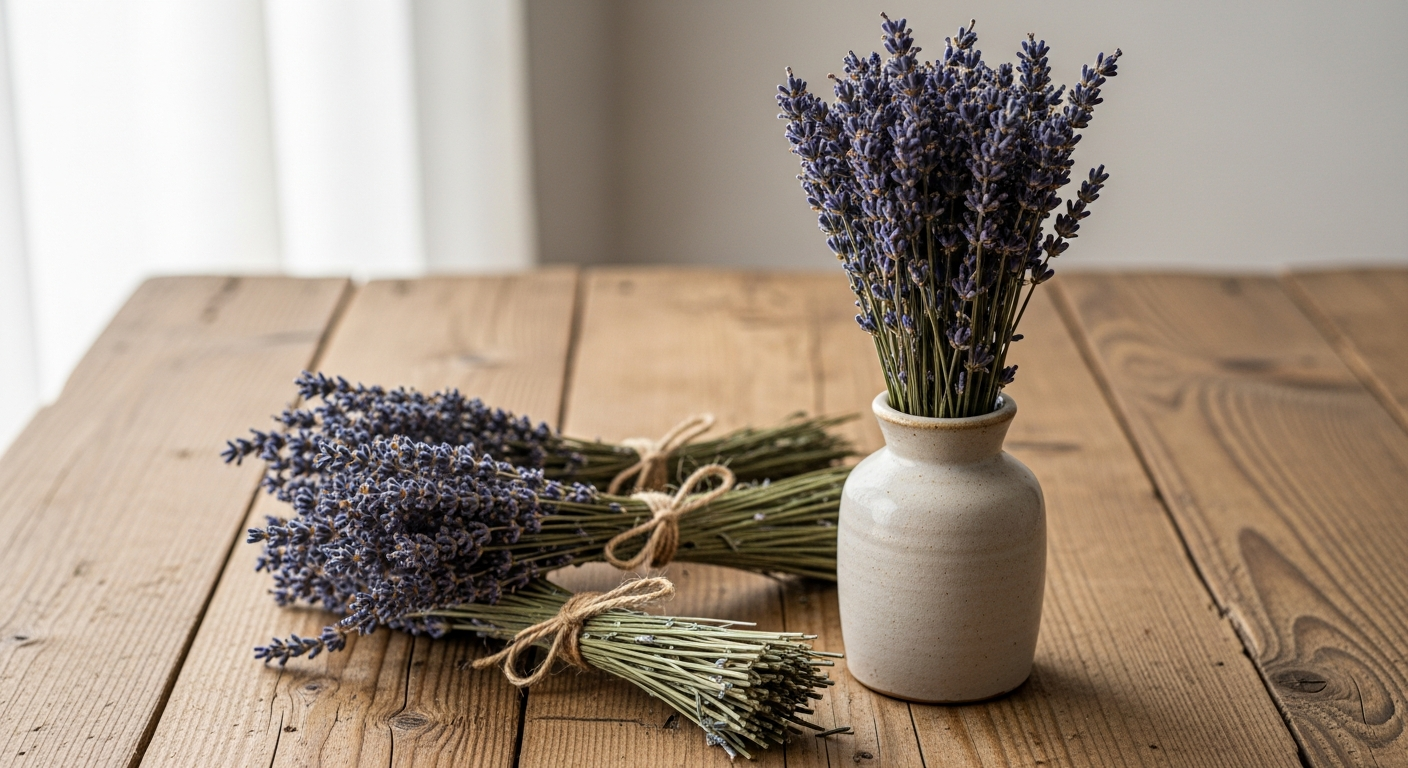
The single easiest thing you can do with a bundle of dried lavender is stand it in a vase. Skip the water — dried lavender will go moldy in water and you'll make a mess. Set a bundle in a dry vase in your bedroom, bathroom, or entryway and it will stay fragrant and pretty for months, sometimes longer depending on your variety. Squeeze the stems occasionally to release a fresh burst of scent.
Sprinkle on Carpets Before Vacuuming
This is one of those things that sounds too simple to work, and yet it genuinely does. Sprinkle a small handful of dried lavender buds on your carpet, let them sit for 5–10 minutes, then vacuum them up. The buds release their scent as the vacuum pulls them up, and both the room and the vacuum bag smell noticeably fresher. It works just as well on rugs.
Tuck a Bundle in a Dresser Drawer
This was actually my first lavender use — I had a whole extra bunch and just tossed it in my t-shirt drawer with stems and all, no bag needed. Tie a small bundle loosely with twine and tuck it in a corner of any drawer. The stems smell more faintly than the buds, but they're enough to make your clothes smell faintly of summer every time you open the drawer. Replace every few months when the scent fades.
Make a Sleep Sachet from a Sock
Fill a clean sock with 2–3 tablespoons of dried lavender buds, tie it off with a rubber band or hair tie, and tuck it under your pillow or next to your nightstand. That's the whole project. Studies have shown lavender aromatherapy may help reduce anxiety and improve sleep quality, and this is the no-cost way to put it to work. If you want to make a neater version later, small organza bags work perfectly and are exactly the right size for a pillow sachet.
Simmer Pot Aromatherapy
Fill a small pot with water and add a generous handful of dried lavender buds. If you have citrus peels or a rosemary sprig, throw those in too. Bring it to a gentle simmer over low heat and let it do its thing. Check every 30 minutes and add water as needed — don't let it boil dry. It makes the whole house smell like something is baking when nothing actually is, which is perfect before guests arrive.
Dried Lavender for Your Home: Sachets, Dryer Bags & Cleaning Spray
These take about 5 minutes to set up and the payoff lasts for months. You'll need a few basic supplies — a jar, some vinegar, maybe a muslin bag — but nothing specialty or hard to find.
Drawer & Closet Sachets
Fill a small organza or muslin bag with 2–3 tablespoons of dried lavender buds and tie it closed. Tuck one in each dresser drawer, your linen closet shelf, or between hanging clothes. As a bonus, moths don't like the smell of lavender, so these double as a natural pest deterrent — no chemical cedar blocks needed. Refresh the scent by squeezing the bag whenever you open the drawer, and replace the lavender every 6 months or so when the scent fades.
Dryer Sachets (Natural Laundry Freshener)
Fill a muslin bag with 2–3 tablespoons of dried lavender buds, tie it tightly so nothing escapes, and toss it in the dryer with a load of laundry. Each bag lasts about 10 loads before the scent fades enough to replace. Once I switched to these I stopped buying dryer sheets entirely — no synthetic fragrance, no single-use waste, and the laundry comes out smelling genuinely clean rather than "fresh breeze" artificial.
Lavender Infused Vinegar Cleaning Spray
Fill a glass jar about halfway with dried lavender buds. Pour white vinegar over the buds until they're submerged, then seal the jar and tuck it in a dark cabinet for 10 days. Strain out the lavender and dilute the infused vinegar with water at a 1:2 ratio (1 part vinegar, 2 parts water) in a spray bottle. You can add 10 drops of lavender essential oil if you want a stronger scent. Use it on counters, bathroom surfaces, and anywhere you'd use a regular cleaner. One note: don't use it on granite or marble — vinegar can etch natural stone.
Lavender Potpourri
This is the mix I keep in a small bowl in my bathroom, and it works better than any store-bought option I've tried. Combine 1 cup dried lavender, 1/2 cup dried rose petals or dried orange peels, and 1/4 cup dried rosemary in a bowl or open jar. Add 10 drops of lavender essential oil and stir to distribute. Set it out and it will scent the room gently for weeks. Refresh every few weeks by stirring the mix and adding a few more drops of essential oil when the scent starts to fade.
Lavender Bath Salts, Infused Oil & More: DIY Bath & Body Recipes
New to this? Start with the bath salts — 3 ingredients, 5 minutes. Already comfortable with simple DIY projects? The infused oil and foot scrub are your next level.
Lavender Bath Salts (The Easy 3-Ingredient Recipe)
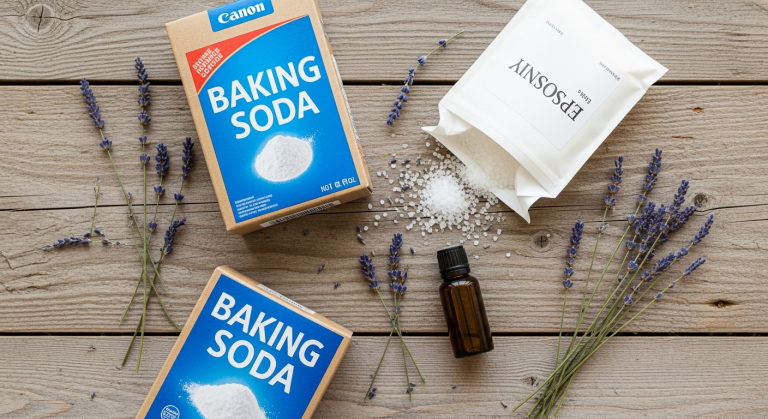
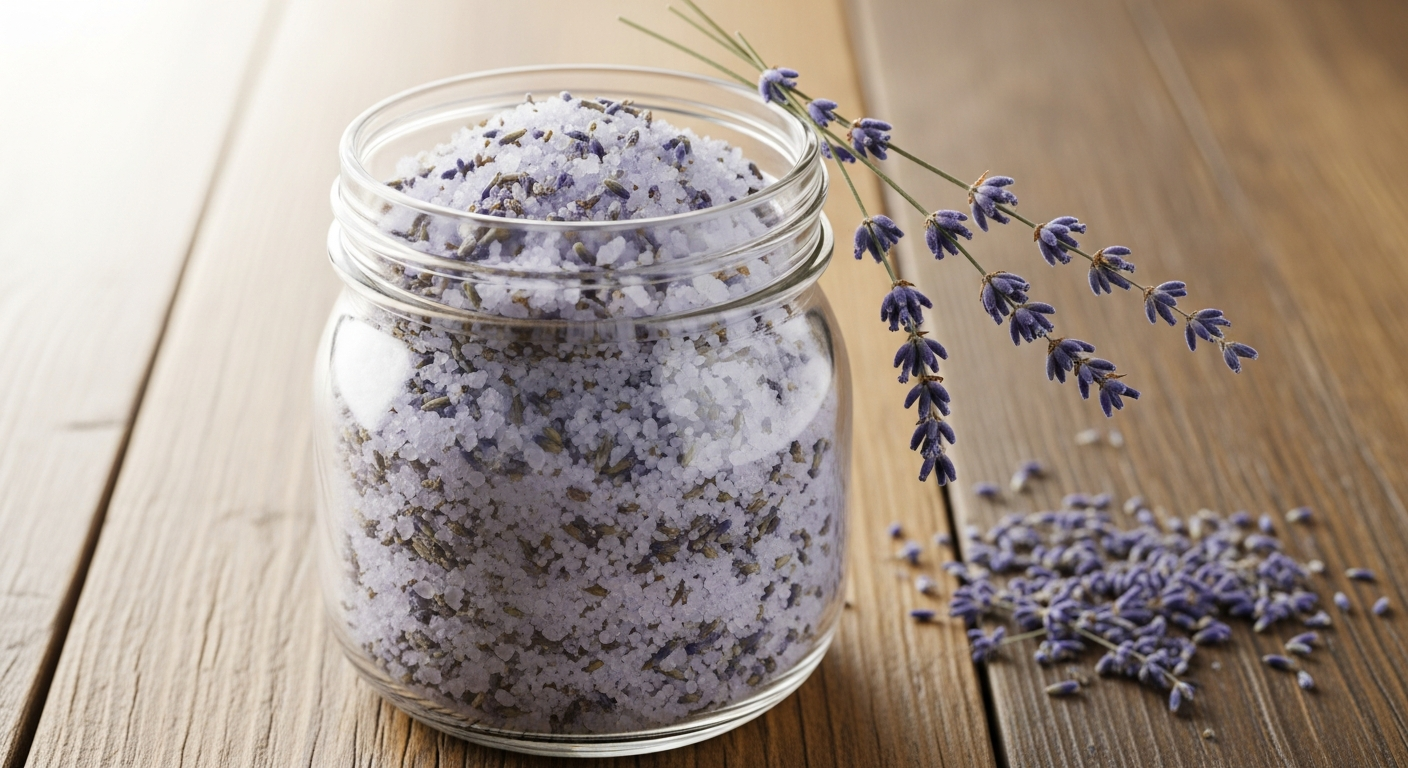
This is the recipe I come back to every year, partly because it's genuinely relaxing and partly because it makes a great last-minute gift. Combine these in a bowl and stir well:
- 1 cup Epsom salt
- 1/4 cup coarse sea salt (or just use more Epsom salt if that's all you have)
- 1/4 cup dried lavender buds
- Optional: 10–15 drops lavender essential oil
Store the finished salts in a glass jar with a tight lid. To use, scoop a portion into a muslin bag or an old clean sock, tie it shut, and drop the whole thing in the tub as it fills — this keeps loose lavender buds out of your drain. Or you can pour the salts directly into the bath if you don't mind a few buds floating around. Shelf life is 6–9 months or until the lavender color starts to fade.
How to Make Lavender Infused Oil
One quick clarification before we get into this: infused oil and essential oil are not the same thing. Essential oil is made through steam distillation of fresh plant material and requires professional equipment — it's not realistic to make at home. Lavender infused oil is simply dried lavender steeped in a carrier oil until the oil-soluble compounds transfer into the oil. It won't be as concentrated as essential oil, but it smells lovely and works well for the uses below.
Slow method (recommended): Fill a glass jar about halfway with dried lavender buds. Pour your carrier oil over the lavender until the jar is full — sweet almond, jojoba, or olive oil all work well. Cap the jar and store it in a cabinet for 4–6 weeks, shaking it every few days when you think of it. Strain through cheesecloth when the time is up. Shelf life is about 9–12 months.
Quick method: Place the jar of lavender and oil in a small saucepan with 2 inches of water. Heat over low for 2–3 hours, keeping the water at a gentle simmer (not a boil). Remove from heat and strain when cool.
Uses: massage on sore muscles, dab on bug bites and itchy spots, rub into dry skin patches, or use as an ingredient in the bath salts and foot scrub below. You can also use it to make a lotion bar if you want to take things a step further — I have a recipe for that here.
Lavender Foot Scrub
This is the project I make when I have extra infused oil on hand, and it costs about $2 in supplies. Mix everything together in a bowl:
- 1 cup Epsom salt
- 1 cup coarse sugar
- 1/2 cup sweet almond oil (or melted coconut oil works too)
- 4 tablespoons dried lavender buds
- 20–30 drops lavender essential oil
Store in a jar with a lid. To use: scoop a small amount and scrub your feet, elbows, or knees in the shower. Rinse well — the oil makes the shower floor slippery, so go carefully. Shelf life is about 3–4 months. Pour it into a small mason jar and tie a tag on it and you have a genuinely nice homemade gift.
Does Lavender Really Help with Sleep and Stress?
I'm not a doctor, and this isn't medical advice — but there's a real reason lavender has been used as a calming herb for centuries. Some studies have shown lavender aromatherapy may help reduce cortisol levels and ease anxiety; inhaling lavender scent from a sachet, diffuser, or bath appears to have a measurable calming effect for many people. The pillow sachet is worth trying if you have trouble winding down at night. Lavender is also incredible in natural wax melts — they fill a whole room with scent and are so easy to make.
On the acne question that comes up often: lavender does have documented antibacterial and anti-inflammatory properties. Some people find that dabbing diluted lavender infused oil on blemishes helps. Results vary, and it's not a proven treatment — but it's a gentle enough approach that it's worth trying if you're curious. Do a patch test on your inner arm first if you have sensitive skin.
Cooking with Dried Lavender: Simple Syrup, Honey & More
Before you add lavender to anything you're going to eat, one quick note: not all lavender tastes the same, and not all of it is safe. The variety to look for is Lavandula angustifolia — also called English lavender or true lavender. It's the mildest and most pleasant for cooking. Other varieties like Lavandin (L. x intermedia) are more pungent and can turn baked goods unpleasantly soapy. If you grew your lavender from a nursery plant, check the label for the variety before cooking with it. Ornamental lavender sold for landscaping may also have been treated with pesticides, so when in doubt, buy culinary-grade dried lavender sold specifically for food use.
And regardless of variety: start with less than you think. Dried lavender is strong — 1 teaspoon goes a long way, and it's easy to overdo it the first time.
Lavender Simple Syrup (For Lemonade, Coffee, Cocktails & Desserts)
This is the one I make every summer. Once you have a jar of lavender simple syrup in the fridge you'll find yourself adding it to everything — lemonade, iced coffee, pancakes, cocktails, vanilla ice cream. The recipe takes about 15 minutes and keeps for up to two weeks.
Combine in a small saucepan:
- 1 cup water
- 1 cup white sugar (or cane sugar)
- 4 tablespoons dried culinary lavender
Bring to a boil, stirring to dissolve the sugar. Reduce heat and simmer for 5 minutes. Remove from heat and let the lavender steep for 10 minutes — the longer you leave it, the stronger the lavender flavor will be. Strain out the lavender, let the syrup cool, and transfer it to a glass jar. Store in the refrigerator for up to 2 weeks.
Lavender Infused Honey
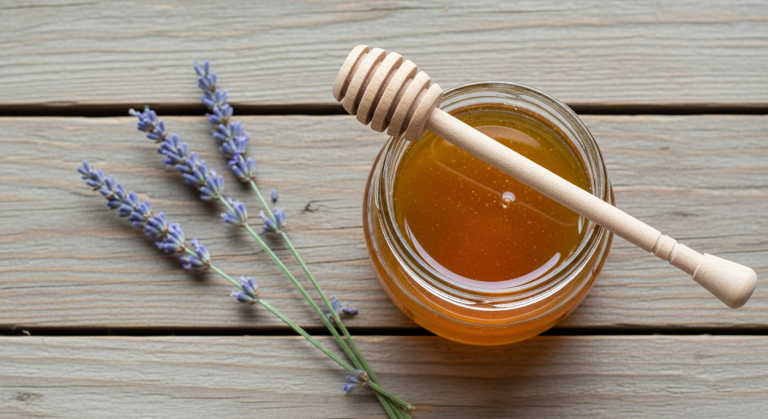
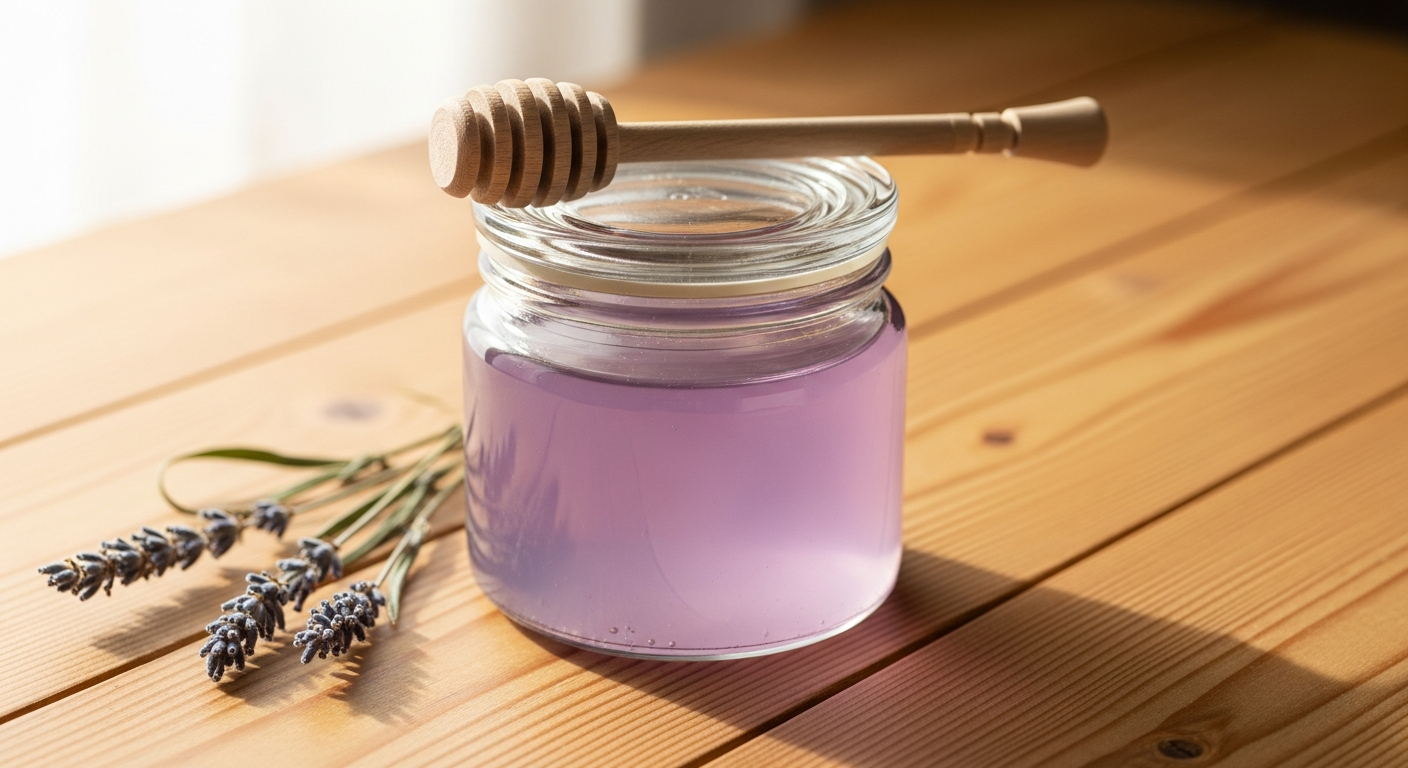
Lavender honey has a soft floral flavor that's especially nice stirred into herbal tea or drizzled on yogurt, and it's a surprisingly elegant homemade gift. Warm 1 cup of raw honey in a small saucepan over very low heat — just until it becomes pourable. Don't boil it; high heat damages honey's flavor and natural properties. Stir in 1 tablespoon of dried culinary lavender, remove from heat, and cover the pot. Let it steep for 24 hours.
The next day, warm it again on low just enough to make it pourable, then pour it through a fine mesh strainer to remove the lavender buds. Transfer to a jar and store at room temperature. It'll keep for several months.
Lavender Sugar
This is how I started cooking with lavender, and it's still my favorite entry point because there's absolutely no equipment involved and nothing can go wrong. Combine 1 cup of granulated sugar with 1 tablespoon of dried culinary lavender in a jar. Seal it. Let it sit for 5–7 days so the lavender scent infuses the sugar. You can strain out the buds afterward, or leave them in for a pretty look when you serve it.
Use lavender sugar anywhere you'd use regular sugar — shortbread cookies, whipped cream, pound cake, or stirred into tea. It made my shortbread taste like something from a bakery the first time I tried it, and I've been making it every lavender season since.
Using Dried Lavender in Baked Goods
The single most important rule for baking with lavender: use less than you think you need. Start with 1 teaspoon of dried lavender per batch of cookies, scones, or cake. Too much lavender turns baked goods soapy and perfume-like, and there's no recovering from it once it's in there. I've ruined a batch of cookies by being heavy-handed — start with 1 teaspoon and taste before adding more next time. Classic pairings include lavender lemon shortbread, lavender scones, and lavender pound cake. The simple syrup from above works beautifully stirred into frosting or drizzled over a warm cake.
Easy Dried Lavender Gifts to Make (Sachets, Wands & Gift Bath Salts)
Dried lavender makes some of the prettiest low-cost homemade gifts. Here are three that look like you spent hours, even when you didn't.
Stems vs. Buds: What Can You Use?
Before we get into the gift projects, a quick note about the different parts of the lavender plant — because a lot of people wonder whether they can use the stems and leaves or just the buds.
Buds: The most potent part. Use in sachets, recipes, bath salts, cleaning spray, cooking, and infused oil.
Stems: Less fragrant than the buds, but still beautiful. Bundle them into decor wands, smudge bundles, or dried flower arrangements, or use them as aromatic kindling.
Leaves: Mildly fragrant. Add them to a simmer pot, toss into infused oil, or include in soap recipes.
So if you're wondering what to do with the whole stem and not just the buds — you're in exactly the right place.
Gift Bath Salts in a Mason Jar
The bath salts recipe from the section above is also one of the easiest gifts I make all year. Fill 4-oz mason jars with the finished salts, tie them with twine or ribbon, and add a small handwritten tag that says something like "Lavender Bath Salts — pour into a muslin bag and add to your bath." Total cost per jar runs about $1–2 in supplies when you buy the ingredients in bulk.
I made 12 of these as Christmas gifts one year and people still ask me to make them. They look like something from a boutique shop. If you want to get fancy, add a small sprig of dried lavender on top before sealing the bag around the jar.
Lavender Sachets for Gifting
Fill small organza bags with 2–3 tablespoons of dried lavender buds, tie with a ribbon, and add a small tag. That's all there is to it. You can make 5–6 in under 10 minutes, and they work as hostess gifts, teacher appreciation gifts, stocking stuffers, or Mother's Day additions. Tuck one in a birthday card envelope for a little extra something.
Dried Lavender Bundle Wand (for Stems)
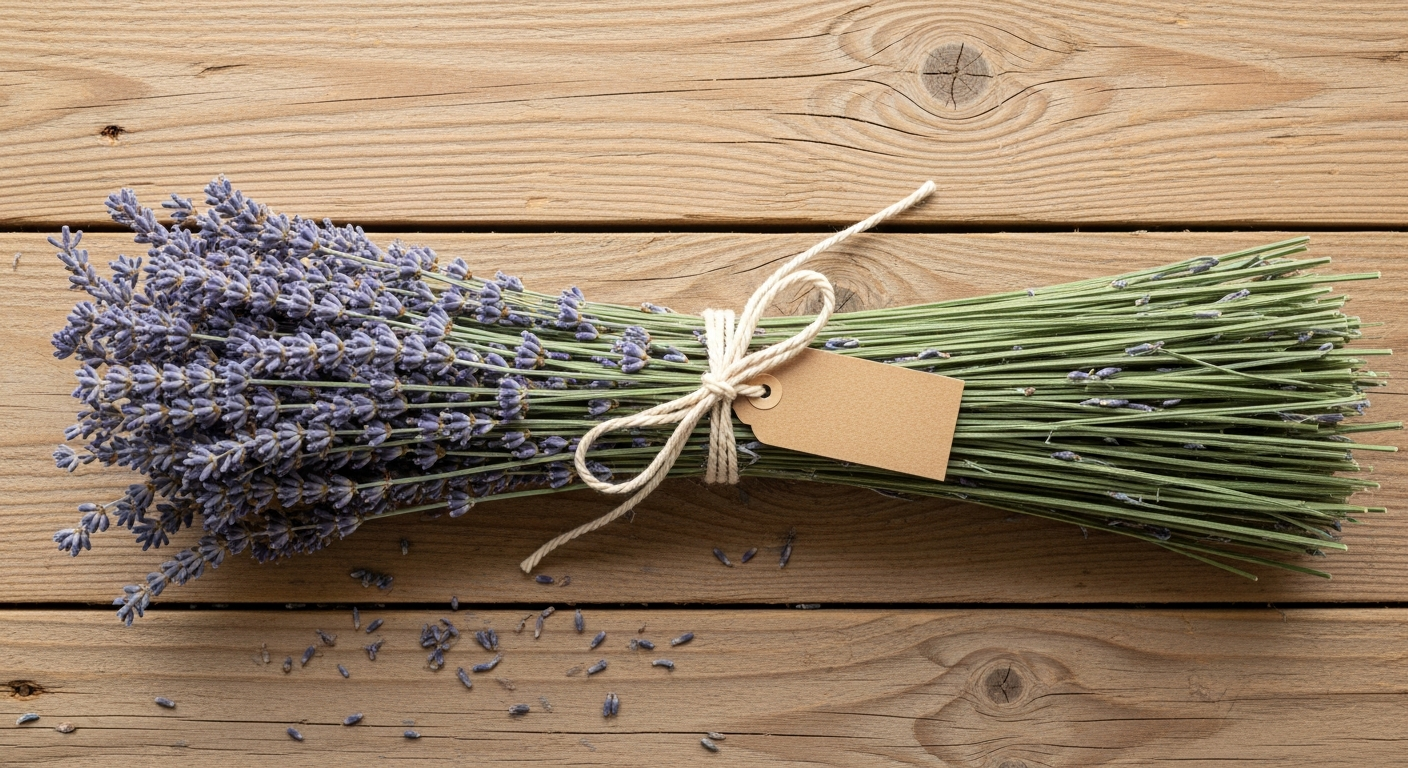
This is my favorite thing to do with the stems I'd otherwise compost. Five minutes, zero waste. Gather 20–30 lavender stems — with or without buds, either works. Strip the lower 3–4 inches of leaves from each stem. Bundle them together, tamp the ends even against a flat surface, and tie tightly with garden twine or raffia ribbon about 1 inch from the bottom. Fan the tops slightly to display the buds or flower heads. Finish with a loop of twine at the top for hanging.
These are genuinely useful: hang one in a farmhouse kitchen, stand it in a guest room vase, tuck a whole bundle in a dresser drawer, or wrap it as a hostess gift. It answers the question of what to do with all those stems that don't fit neatly into sachet bags.
How to Store Dried Lavender (And Why It Might Not Smell as Strong)
The best place to store dried lavender is an airtight container — a glass jar with a tight lid or a resealable bag — kept in a cool, dark cabinet or pantry shelf. Away from direct sunlight, heat, and humidity. Stored this way, dried lavender can last 1–3 years, though the scent will gradually fade over time.
All dried herbs lose potency as their volatile compounds slowly evaporate. Lavender's scent fades faster in a warm, sunny windowsill than it does tucked in a dark cabinet. This is completely normal — it doesn't mean something went wrong.
If your dried lavender has lost most of its scent, try squeezing or gently crushing the buds between your fingers. This releases whatever remains of the fragrance. You can also refresh faded sachets and bath salts by adding a few drops of lavender essential oil directly to the container. If the lavender has turned brown or smells musty or sour rather than floral, it's time to compost it and start fresh.
One thing worth knowing: some lavender varieties are simply more fragrant than others. Lavandula angustifolia (English lavender) has the most classic, sweet floral scent and is generally considered the best for both fragrance and cooking. Lavandin hybrids — often the type sold in large commercial bundles — have a sharper, more camphor-like scent. If your dried lavender smells medicinal or overpowering rather than gently floral, that's likely a variety difference rather than a storage problem.
Frequently Asked Questions About Dried Lavender
What can you do with lavender once it's dried?
There are dozens of uses depending on your interest and how much time you have. Quick options that need no special supplies: put it in a vase, make a sleep sachet from a sock, or sprinkle it on carpets before vacuuming. With a few basic supplies you can make bath salts, infused oil, lavender simple syrup, a natural cleaning spray, and more. This article walks through 20 uses organized from easiest to most creative.
Can lavender help lower cortisol?
Some research suggests lavender aromatherapy may help reduce cortisol levels and ease feelings of stress and anxiety. Studies have found that inhaling lavender scent — from a sachet, a bath, or a diffuser — can produce a measurable calming effect in many people. It's not a substitute for medical care, but there's real science behind the "lavender is calming" reputation.
Can lavender treat acne?
Lavender has documented antibacterial and anti-inflammatory properties, and some people find that dabbing diluted lavender infused oil on blemishes is helpful. It's not a proven clinical treatment, and results vary from person to person. If you have sensitive skin, do a patch test on your inner arm first before applying anything to your face.
What can I do with dried lavender stems (not just the buds)?
Stems are less fragrant than buds but still genuinely useful. Bundle them into dried flower wands or decorative smudge bundles for home fragrance and decor. Tuck a whole stem bundle in a drawer or stand it in a vase. The leaves can go into a simmer pot or infused oil. Nothing from a lavender plant needs to be wasted.
How long does dried lavender last, and how do I store it?
Stored in an airtight container in a cool, dark place, dried lavender can last 1–3 years. It will slowly lose its scent over time. To refresh faded lavender, squeeze the buds between your fingers or add a few drops of lavender essential oil to sachets and bath salts.
Is all dried lavender safe to use in cooking?
No — only food-grade culinary lavender should be used in recipes. Look for Lavandula angustifolia (English lavender), which has the mildest, most pleasant flavor for cooking. Ornamental lavender sold for landscaping may have been treated with pesticides and should not be eaten. When in doubt, buy culinary-grade dried lavender specifically sold for food use.