How to Remove Rust from a Cast Iron Skillet (Simple Methods That Actually Work)
Last updated April 8, 2026
I’ve been there. You pull your cast iron skillet out of the cabinet and find that telltale orange film — rust. It can feel like a disaster, especially if the pan has sentimental value or you just brought it home from a thrift store. But here’s what I want you to know before you do anything else: your pan is not ruined. Rust on cast iron looks bad, but it’s completely fixable. I’ve restored skillets that were sitting in a barn for years, and this one is going to be fine.
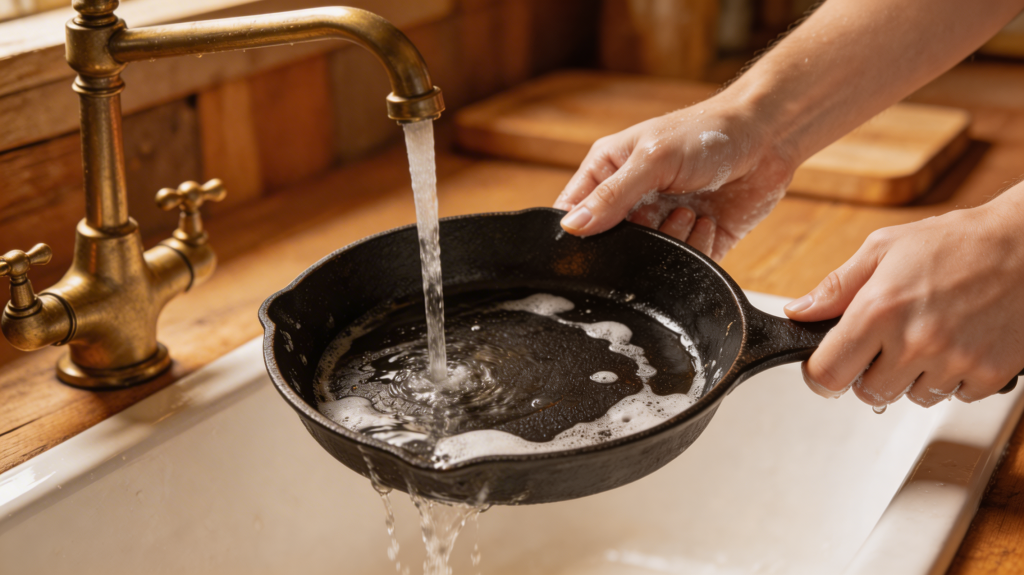
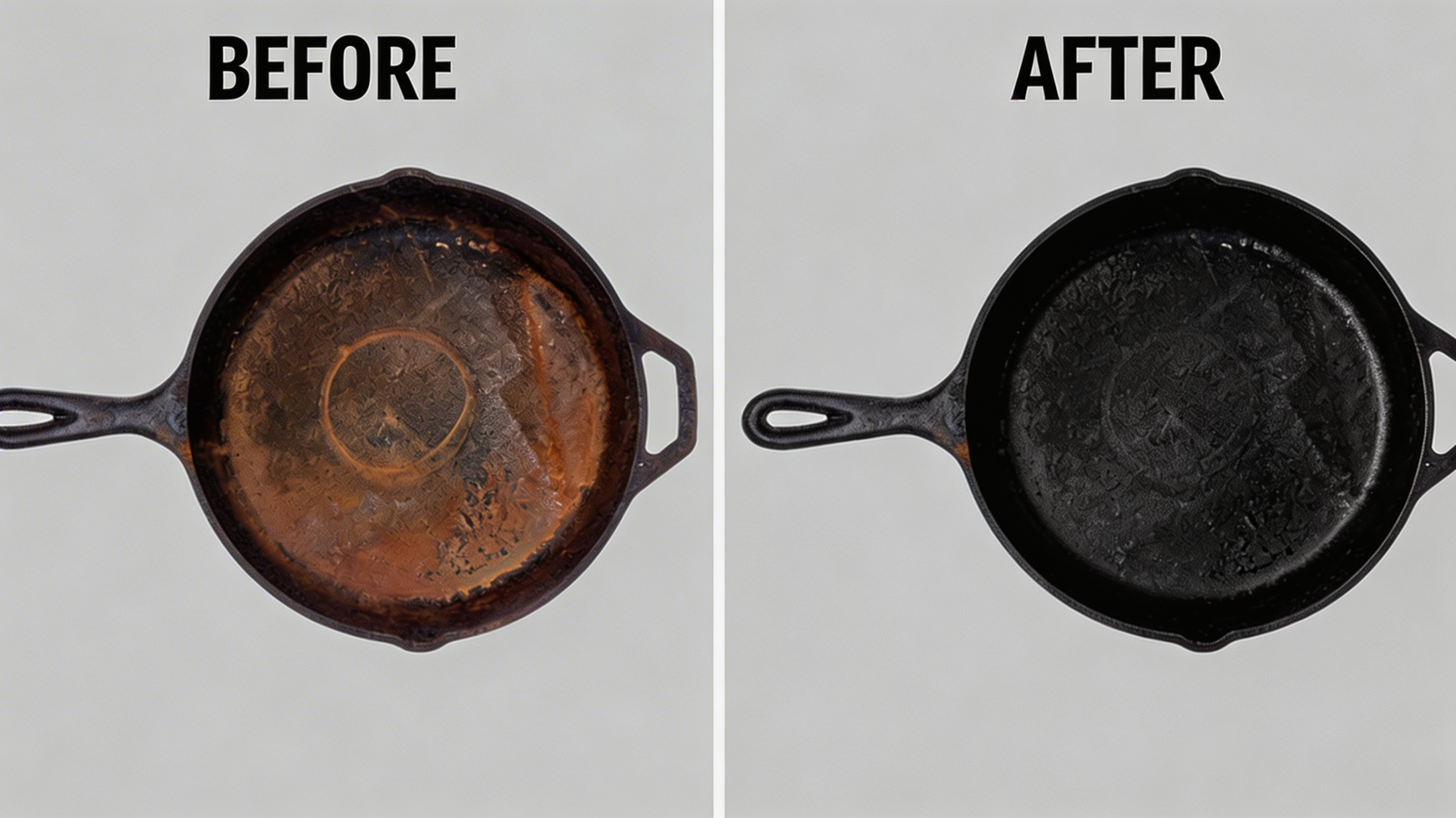
Your pan is NOT ruined. Rust on cast iron looks scary, but it’s completely fixable in about an hour.
Choose your method:
- Steel wool or Rust Eraser → fastest, works on any level of rust
- White vinegar soak → great for heavier rust (important: see the 8-hour time limit below)
- Baking soda paste → gentle, best for light surface rust
- Salt + oil scrub → works well if you have coarse salt on hand
After removing rust: You’ll re-season the pan in the oven. Total time: 15–30 minutes active work + 1 hour in the oven.
First — Is Rust on Cast Iron Dangerous?
Short answer: yes, technically — the USDA classifies rust as not food-safe, which means you shouldn’t cook on a pan with active rust on the cooking surface. But here’s the important part: removing the rust makes the pan completely safe again. Nothing about past rust makes your previous meals unsafe, and you’re about to fix the problem entirely. There’s no reason to panic — your pan just needs a little attention.
Why Does Cast Iron Rust? (And Why It Happens to Everyone)
Cast iron rusts when its protective oil seasoning breaks down and bare metal is exposed to moisture. The most common culprits are soaking it in water, running it through the dishwasher, letting it air-dry without oiling it, or storing it somewhere with regular humidity. I’ve made most of these mistakes myself — left my skillet in the dish drainer overnight more times than I’d like to admit.
The good news is that this happens to everyone, even experienced cast iron cooks. Lodge, the company that’s been making cast iron for over a century, openly acknowledges that even a well-seasoned pan can rust. It’s not a sign that you failed; it’s just a sign that cast iron needs slightly more care than a regular frying pan. Once you know the habits that prevent it, it rarely happens again — and I’ll cover those at the end of this article.
How to Remove Rust from a Cast Iron Skillet — Pick Your Method
All four methods below will get your pan clean and rust-free. Which one you choose depends on what you have at home and how heavy the rust is. Every method ends at the same place: a clean, bare pan that you’ll re-season in the oven. There’s no wrong choice here.
Method 1 — Steel Wool or Rust Eraser (Fastest, Works on Any Rust)
This is the most straightforward method and works on any level of rust — from a light surface film to deeper orange patches.
What you’ll need:
- Steel wool scrubbing pad or Lodge Rust Eraser
- Dish soap (Dawn or similar)
- Paper towels or a clean cloth
- Cooking oil (vegetable, canola, or shortening)
Steps:
- Wet the pan with warm water.
- Scrub the rusty areas with steel wool or a Rust Eraser until all the orange rust is gone. Don’t worry about scrubbing off some of the existing seasoning — that’s completely expected and easy to fix with the re-seasoning step.
- Wash the pan with warm soapy water. Yes, soap is fine at this stage — you’re about to re-season anyway, so getting the pan clean matters more right now.
- Dry the pan immediately with a paper towel.
- Set the pan on a burner over low heat for 1–2 minutes to evaporate any remaining moisture. This is the most important step — any water left on bare cast iron will start the rusting process again almost immediately.
- Proceed to the re-seasoning section below.
When you’re done scrubbing, the pan should look dull gray — that’s exactly what bare cast iron looks like, and it’s exactly where you want to be before re-seasoning.
Method 2 — White Vinegar Soak (For Stubborn or Heavy Rust)
If the rust is widespread or the steel wool method isn’t making much progress, a vinegar soak helps loosen the rust before scrubbing.
What you’ll need:
- Distilled white vinegar
- Water
- A container large enough to submerge the pan
- Steel wool scrubbing pad
⚠️ Important: Do NOT leave your pan in vinegar longer than 8 hours — and never overnight. Vinegar is acidic, and if left too long, it will permanently pit and erode the cast iron surface. Set a timer and check the pan every 30 minutes.
Steps:
- Mix equal parts white vinegar and water in a container large enough to fully submerge the skillet.
- Submerge the pan and soak for 30 minutes to 8 hours maximum, checking every 30 minutes. The rust should start to look loosened or flaky.
- Remove the pan from the soak.
- While the pan is still wet, scrub with steel wool to remove the loosened rust. It should come off much more easily than dry scrubbing.
- Wash with warm soapy water, dry immediately with a paper towel, then heat on the stovetop over low heat for 1–2 minutes to evaporate all moisture.
- Proceed to the re-seasoning section below.
Method 3 — Baking Soda Paste (Gentle on Light Rust)
This is the most pantry-friendly option and great for light surface rust. You probably already have everything you need.
What you’ll need:
- Baking soda
- Water
- Cloth or scrubbing pad
Steps:
- Mix baking soda with just enough water to form a thick paste.
- Apply the paste directly to the rusty areas.
- Let it sit for 15–20 minutes.
- Scrub with a cloth or scrubber — the mild abrasive action lifts light rust without being too aggressive on the surface.
- Rinse thoroughly with warm water, dry immediately with a paper towel, then heat on the stovetop for 1–2 minutes to evaporate any remaining moisture.
- Proceed to the re-seasoning section below.
Note: This method works best on light surface rust — a thin orange film from air-drying or humidity. If you’re dealing with significant rust covering large areas of the pan, go with Method 1 or Method 2 instead.
Method 4 — Salt + Oil Scrub (If You Have Coarse Salt on Hand)
This is my favorite “I don’t want to run to the store” option. The salt acts as a mild abrasive, and the oil conditions the pan while you work — so you’re doing two jobs at once.
What you’ll need:
- Coarse salt (kosher salt or sea salt)
- Cooking oil
- Cloth or paper towels
Steps:
- Pour a generous amount of coarse salt directly into the rusty pan.
- Add a small pour of cooking oil over the salt.
- Scrub the salt and oil mixture over the rusty areas with a cloth or paper towel. The salt grinds against the rust while the oil protects the metal beneath.
- Discard the salt-and-rust mixture.
- Rinse, dry immediately with a paper towel, then heat on the stovetop over low heat for 1–2 minutes.
- Proceed to the re-seasoning section below.
The oil component makes this a gentler method — better suited for light to moderate rust. For deep or heavy rust, go with Method 1 or 2 first.
How Do I Know When All the Rust Is Gone?
Rust is orange or reddish-brown. Bare cast iron is dark gray. When you see no more orange on the surface and it feels smooth — not gritty — under your fingertip, you’re done. Most people are surprised by how quickly this goes, especially with steel wool or the vinegar method. Run your finger lightly across the surface; if it catches on anything rough or textured, keep scrubbing.
How to Re-Season Your Cast Iron After Removing Rust
Re-seasoning is required after any of the four methods — bare cast iron will rust again within hours if you skip this step. The good news is it’s simple, and once you’ve done it, you’ll never be intimidated by a rusty pan again.

Steps:
- Apply a very thin layer of cooking oil (vegetable, canola, or flaxseed oil all work well) to the entire surface of the pan — inside, outside, and the handle.
- Use a paper towel to buff off as much oil as possible. The pan should look almost dry when you’re done — not glossy or greasy. This is the step most people get wrong. Too much oil equals a sticky, gummy pan, so less is genuinely more here.
- Place the pan upside down in a 450–500°F oven with aluminum foil on the rack below to catch any drips.
- Bake for 1 hour.
- Turn the oven off and let the pan cool completely inside the oven — about 30–60 minutes.
- Repeat steps 1–5 two to three more times for best results. Each round builds up a stronger protective layer.
What If My Pan Feels Sticky After Seasoning?
Too much oil — it happens to everyone, and I’ve done it myself more than once. The fix is simple: put the pan back in the oven at the same temperature (450–500°F) for another 30–60 minutes. The excess oil will bake off and the stickiness will go away. To prevent it next time, remember the rule: buff the oil off until the pan looks almost dry before it goes into the oven.
How to Keep Your Cast Iron from Rusting Again
Once your pan is restored and re-seasoned, keeping it rust-free is mostly about building a few simple habits. None of these are complicated.
- Dry it immediately after washing. Don’t let water sit on the surface. Dry with a paper towel right away, then set it on a burner over low heat for 1–2 minutes to make sure every bit of moisture is gone.
- Apply a barely-there oil wipe before storing. After drying, give the inside a quick wipe with a paper towel that has just a tiny bit of oil on it. You’re not re-seasoning — you’re just protecting the surface while it sits in the cabinet.
- Never soak it in water or put it in the dishwasher. These are the two biggest causes of cast iron rust. A quick scrub under running water is all it needs after most meals.
- Store it in a dry place. Avoid storing it near the sink or anywhere with regular steam and humidity. A cabinet away from the stove’s steam vent is ideal.
- If you stack your pans, place a paper towel between them. The towel absorbs ambient moisture and keeps the surfaces from trapping humidity against each other during storage.
- FAQ
Can you burn rust off cast iron? Technically yes — high heat will burn off some rust — but it’s not a reliable method and isn’t recommended. High heat alone won’t fully clean the surface, and it can damage the existing seasoning further. One of the four scrubbing methods above will give you a much cleaner, safer result.
Does WD-40 remove rust from cast iron? No, and don’t try it. WD-40 is a lubricant, not a food-safe cleaning agent, and it has no place on cookware. Use steel wool, vinegar, baking soda, or salt instead — all of these are safe and effective.
Is rust on cast iron dangerous to cook on? The USDA classifies rust as not food-safe, so you shouldn’t cook on a pan with active rust on the cooking surface. That said, removing the rust with any of the methods above makes the pan completely safe to use again. There’s no lasting contamination issue from rust that’s been properly removed.
How long should I soak cast iron in vinegar? Between 30 minutes and 8 hours maximum. Check the pan every 30 minutes and remove it when the rust looks loosened and ready to scrub off. Never soak overnight — the acidity will permanently pit and damage the cast iron if left too long.
Will steel wool scratch my cast iron? Steel wool is safe to use on cast iron when you’re removing rust. You’re working on a surface that you’re about to re-season anyway, so scratching the existing seasoning layer doesn’t matter. The re-seasoning step restores everything.
How do I know when all the rust is removed? Rust is orange or reddish-brown; bare cast iron is dark gray. When no orange remains and the surface feels smooth — not gritty — under your finger, you’re done. It usually happens faster than people expect.
Can I season with any cooking oil? Most cooking oils work well — vegetable oil, canola oil, and shortening are all solid choices. Avoid olive oil (low smoke point and goes rancid) and butter (dairy doesn’t polymerize properly for seasoning). Flaxseed oil is popular for building a very hard initial seasoning layer.
What if my cast iron has really heavy rust — is it still saveable? Almost certainly yes. Even a pan that looks completely rusted over can usually be fully restored. Use the vinegar soak (Method 2) for 6–8 hours, scrub thoroughly with steel wool, then re-season the pan two to three times in a row. Cast iron is remarkably durable — heavy surface rust is almost never a death sentence for a good pan.