How Long Can Eggs Survive in an Incubator Without Power? (2026)
Last updated March 12, 2026
The short answer: Most eggs can survive up to 12 hours without power at normal room temperature — but how far along they are makes a big difference.
What to do right now: Keep the incubator lid ON. Do NOT wrap it in a blanket. Move to the warmest room you have.
After power restores: Let it reheat for 30–60 minutes before opening. Wait 24 hours, then candle to check for development.
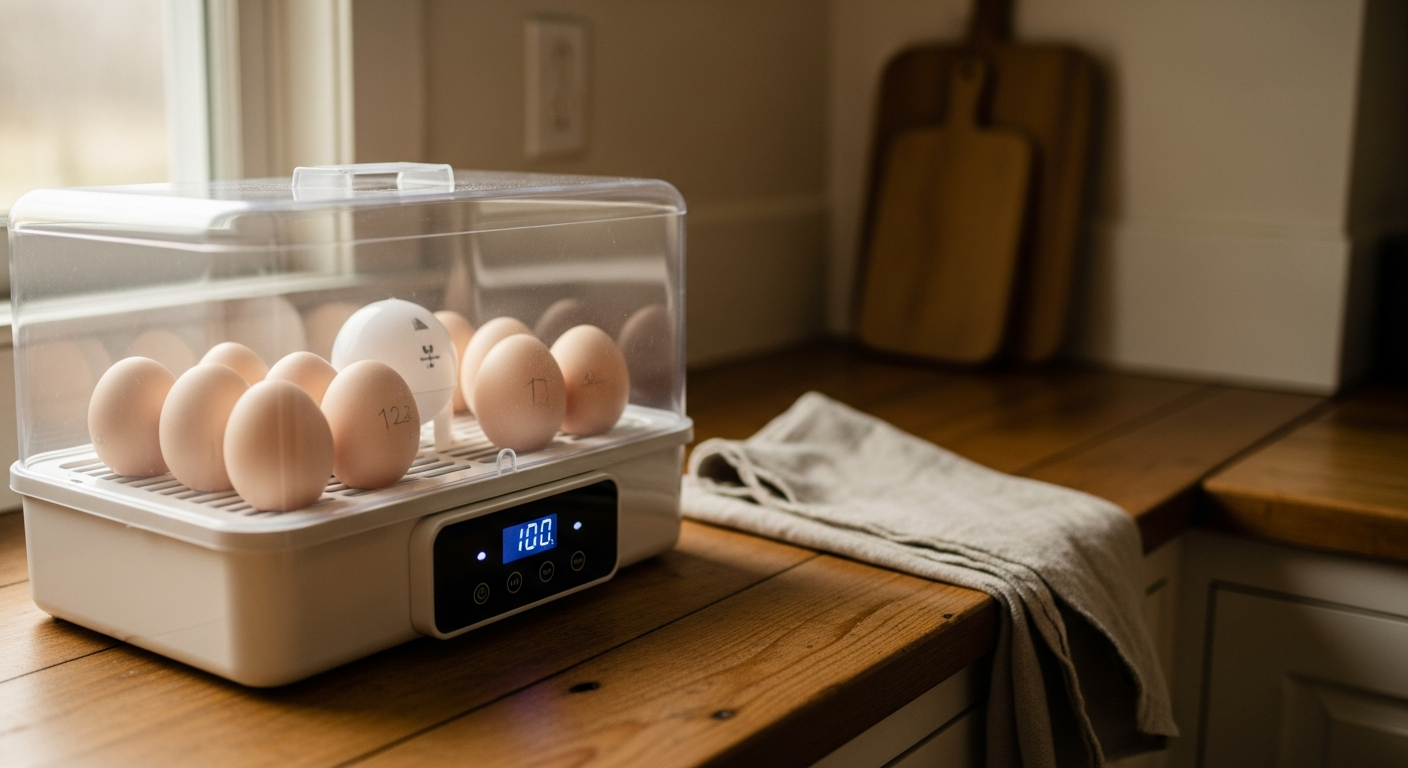
The Short Answer: How Long Can Incubated Eggs Survive Without Power?
If your power just went out and your heart is pounding — take a breath. Eggs are more resilient than most first-time hatchers expect. The general guideline is that most eggs can survive up to about 12 hours without power at normal room temperature, and that's not a worst-case ceiling. Experienced hatchers in the BackYardChickens community regularly report eggs surviving outages well beyond that — some as long as 14 hours or more.
That said, 12 hours isn't a guarantee for every situation, and a few factors push that number up or down significantly. Stage of incubation and room temperature are the two biggest variables, and both work in your favor more often than you'd think. I'll break both of those down below, but if you need the bottom line right now: don't panic, keep that lid on, and work on getting backup power running. Your eggs are likely okay.
Early Incubation vs. Late Incubation — Why Stage Matters
Think of it this way: a freshly set egg on Day 2 is essentially on its own when the power goes out — that embryo is tiny and completely dependent on the incubator for warmth. But an egg on Day 18, two days from hatching? That chick is big enough to generate its own body heat. The further along your eggs are, the better they can handle a disruption.
Here's the rough breakdown by week:
- Days 1–14 (early to mid incubation): Most vulnerable. The embryo is small and generates little to no heat of its own. A power outage during this window isn't a death sentence, but it's where you need to act fastest.
- Days 15–21 (late incubation): The developing chick is large enough to contribute real metabolic heat. These eggs can often handle longer outages because they're actively keeping themselves warmer.
If your eggs are past Day 14, you're in a much better position than you might think. Keep that in mind as you work through the next steps.
Does Room Temperature Matter?
It does, and it can make a significant difference. A power outage in a 72°F house means your incubator cools slowly — the air inside drops gradually, and your eggs lose heat at a pace that gives you more time to work with. A drafty garage in early spring sitting at 50°F is a different situation; the temperature drop is faster and more pronounced.
One thing that surprises a lot of people: overheating is actually more dangerous to eggs than cooling. Eggs that cool gradually to room temperature can often recover when heat returns. Eggs that hit 104°F or above — for example, from a panicked attempt to warm them up too quickly with a heat lamp pointed directly at the incubator — are in serious trouble. The damage from overheating is much harder to reverse. If the power goes out, let the incubator cool naturally. Don't try to rush the warmth back in with external heat sources you can't control.
What to Do Right Now — Step-by-Step When the Power Goes Out
Here's exactly what to do, in order. If you're reading this in the middle of an outage, go down this list:
- Note the time. Write down exactly when the power went out. This matters for tracking how long the incubator has been without heat.
- Keep the lid ON. Do not open the incubator. Every time you open it, you release the warm air that's still inside. The lid was designed to hold heat — trust it.
- Do NOT wrap the incubator in a blanket. I know it feels like the right thing to do, but it's not. See the section below for why this matters.
- Move to the warmest room in your house if it's practical and safe to do so. Even a few degrees of ambient warmth buys you time.
- Check your backup power options. A UPS, a power inverter, a battery station — if you have any of these, now is when you use them. More on each option in the prevention section below.
- When power restores: do not open the lid immediately. Let the incubator heat back up and restabilize for at least 30–60 minutes. Resist the urge to check. A quick temperature swing from opening too soon does more harm than the outage itself.

Wait — Don't Wrap Your Incubator in a Blanket
I know — it feels right. You want to trap the heat, keep it warm, do something. But wrapping your incubator tightly in a blanket is one of the most well-meaning mistakes you can make, and it circulates constantly in homesteading Facebook groups as if it's good advice.
Here's why it's a problem: developing embryos exchange oxygen through their shells. A tightly sealed, blanket-wrapped incubator can deprive them of the air circulation they need. The lid was engineered to hold heat while still allowing enough air exchange — that balance matters. The lid is sufficient. Trust what the incubator was designed to do.
If you're worried about heat loss, moving the incubator to a warmer room is the right call — not insulating it in a way that blocks airflow. Keep the lid on. That's it.
How to Tell If Your Eggs Are Still Alive After the Outage
Once the power is back and the incubator has had time to restabilize, the question becomes: are your eggs okay? The answer is: probably, but you need to wait before you'll know for certain.
Don't candle right after the power comes back. Give the incubator a full 24 hours to return to stable temperature and humidity before you open it to check anything. A rush candle when the internal temperature is still fluctuating will stress the eggs and give you an unreliable picture.
After 24 hours, candle normally and compare to what you saw at your last check:
- Early-stage eggs (Days 7–14): Look for continued veining. If you saw a web of red lines before the outage and still see them now, development is continuing.
- Late-stage eggs (Days 15–21): Look for movement. At this stage you can often see the chick shifting inside the egg when you hold it over a bright light.
- Signs an egg didn't make it: A blood ring (a red circle with no further development), a foul smell, or visible dark fluid inside the egg when candled.
If you candle at 24 hours and you're not sure — wait another 48 to 72 hours and check again. Don't cull eggs that you're uncertain about. Eggs are tougher than they look, and many hatchers have been surprised by chicks that made it through a long outage they assumed was fatal.
How to Prevent This Next Time — Backup Power Options
Once this hatch is behind you, let's make sure you never have to go through that panic again. The good news is that most backyard incubators draw very little wattage — typically 20 to 50 watts, about the same as a large light bulb. That means even a modest backup power solution can keep your incubator running for hours during an outage, and you don't need to spend a lot to protect your hatch.
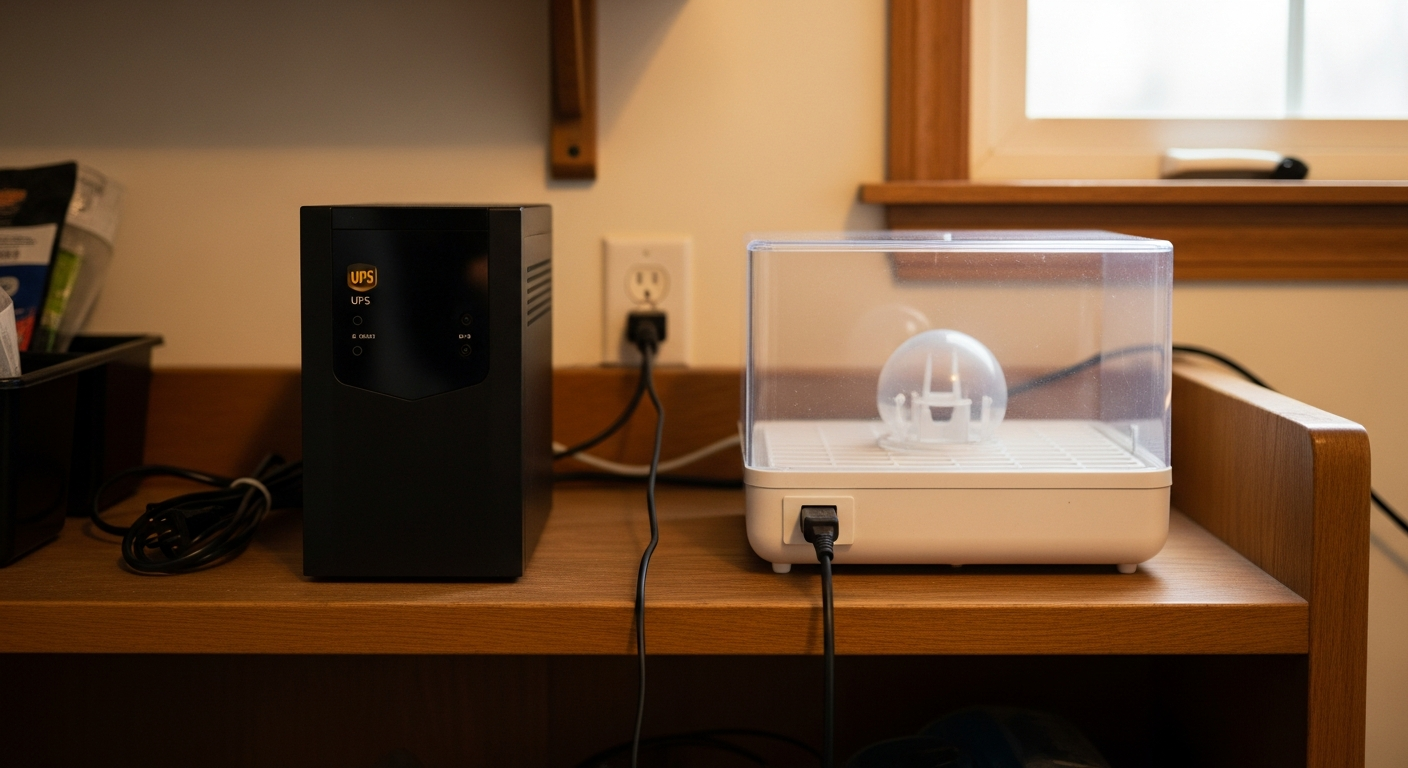
Option 1 — UPS Battery Backup (Best for Most Beginners)
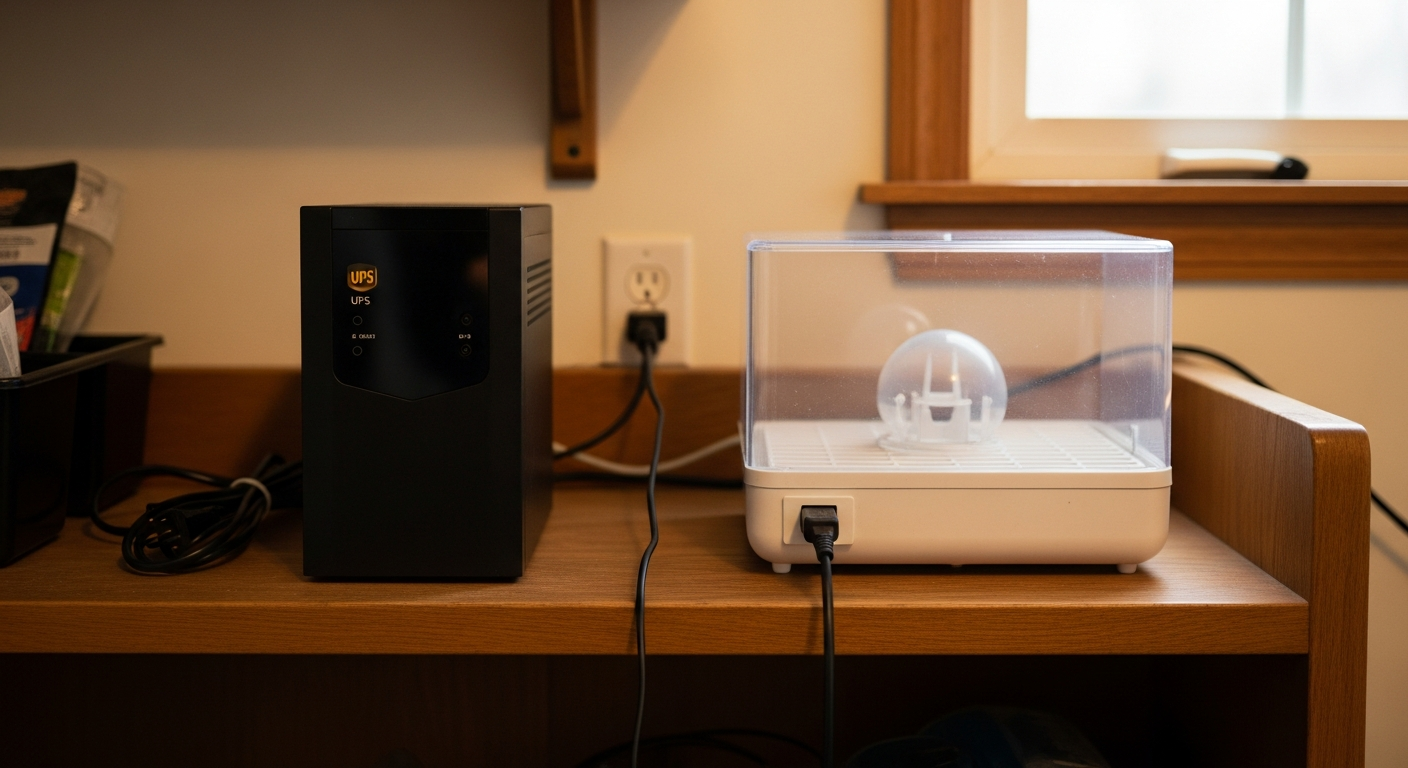
A UPS (uninterruptible power supply) is the most beginner-friendly option by far, and it's what I'd recommend to most people hatching their first or second batch. You plug it into the wall, plug your incubator into it, and that's it. If the power drops, the UPS switches to battery power automatically and instantly — your incubator never knows anything happened.
A basic UPS in the $50–$80 range provides more than enough capacity for most incubators. Because incubators draw so little wattage, even a small UPS can give you two to four hours of runtime. There's also a useful trick for extending that: if the UPS is getting low during a prolonged outage, you can turn it off for a few minutes to let the battery "reset," then turn it back on. Experienced hatchers report this can extend your total runtime to five or six hours from a single charge.
Option 2 — Portable Battery Station (Most Versatile)
Portable battery stations — brands like Jackery, Anker, and EcoFlow — have come down dramatically in price over the last few years, and they've become a genuinely practical option for homesteaders. A starter model in the $100–$150 range can run an incubator for six to twelve hours or more, and you can use it for other things around the property: charging phones during a storm, running a small fan, or even powering a heat lamp for young chicks.
If you're looking for a backup power solution that does more than just protect your incubator, this is the one I'd consider. It's more versatile than a UPS and more capable for longer outages. The tradeoff is cost — it's roughly double what a basic UPS runs — but the added flexibility makes it worthwhile if your homestead regularly deals with power interruptions.
Option 3 — Power Inverter + Car Battery (Budget Option)
If you need a backup solution right now and you're watching your spending, a power inverter is the cheapest option on the list. A 12V inverter runs about $25–$40 and plugs into your car's cigarette lighter or clamps directly to the battery. Run an extension cord from your car to the incubator, and you're set.
It's not elegant — you'll either be running a cord from the garage or moving the incubator closer to the car — but it works reliably. If you already own a car and want to spend as little as possible, this gets the job done.
One More Easy One — Surge Protector
This one takes five minutes and costs about $15, and every incubator should already be on one. A surge protector won't keep your incubator running during a power outage, but it protects the thermostat and electronics from the power surge that often happens when electricity comes back on. That surge can fry the control board of an incubator — which is a much more expensive problem than the outage itself.
If your incubator is currently plugged directly into a wall outlet, a surge protector is the first upgrade to make.
Special Situation — What If Power Goes Out During Lockdown?
Lockdown is Days 18 through 21 for chickens — the final stretch before hatch. The chicks are positioned with their heads near the air cell, humidity is high, and you're supposed to keep the lid completely closed. A power outage at this stage feels especially scary because you can't do much without risking the hatch.
Here's the reassuring part: late-stage embryos are generating significant body heat at this point. The eggs themselves are helping to keep the inside of the incubator warm. Combined with the high humidity that retains heat longer than dry air, your lockdown eggs are actually more resilient to a power outage than early-stage eggs are.
The rules during a lockdown outage:
- Keep the lid completely closed — more critical now than ever. Humidity loss during lockdown is the primary danger because chicks need moisture to pip and hatch safely. Every second the lid is open, that humidity escapes.
- Get backup power running as quickly as possible — but if you can't, don't force-open the incubator to check. The eggs' own metabolic heat is working for you.
- Don't be alarmed if chicks hatch a little early or a little late after a power disruption. A brief temperature change can shift hatch timing slightly in either direction, but it doesn't mean the hatch has failed.
You've made it 18 days. Trust the process, keep that lid closed, and work on restoring power.
FAQ
How long can incubated eggs be without power?
Most eggs can survive up to approximately 12 hours at normal room temperature, though this varies depending on how far along they are in development. Late-stage eggs (Days 15–21) can often tolerate longer outages because the developing chick generates its own heat.
Can eggs survive if the power was off overnight?
It's possible — especially if the eggs are past Day 14 and the room stayed reasonably warm. Don't assume the worst. Give the incubator 24 hours after power restores to stabilize, then candle and look for signs of continued development before giving up on the hatch.
Is it safe to wrap an incubator in a blanket during a power outage?
No. Developing embryos need oxygen exchange through their shells, and wrapping a running or recently-stopped incubator in a tight blanket can restrict airflow. Keep the lid on — that's sufficient. Moving the incubator to a warmer room is a better option if you're concerned about heat loss.
Can I use hand warmers to keep incubator eggs warm?
Only with extreme caution. Chemical hand warmers can reach 130–140°F — far too hot for direct contact with eggs. If you use them, they need to be placed several inches away from the shell with a buffer material in between, and you'll need to monitor the temperature constantly. They're not a reliable or safe first choice.
What temperature is too cold for incubator eggs?
There's no single answer because it depends on the stage and the duration of the cold. Early-stage eggs (Days 1–7) are most sensitive. A brief drop to room temperature (65–70°F) may be survivable; prolonged exposure below that for early-stage eggs is risky. Late-stage eggs handle cooler temperatures better because they're generating some heat themselves.
What's the best backup power for an egg incubator?
For most beginners, a UPS battery backup is the most practical choice — it switches automatically when power drops, requires no action on your part, and a basic model is enough for most incubators. A portable battery station is a good alternative if you want something that can also power other things around the homestead.
How do I tell if an unhatched egg is still alive after a power outage?
Wait 24 hours after power restores for the incubator to fully restabilize before you candle. Then check for developmental progress compared to your last candle — continued veining in earlier-stage eggs, visible movement in late-stage eggs. If you're uncertain, wait another 48–72 hours before making a decision. More eggs survive outages than hatchers expect.
What should I do when the power comes back on?
Don't open the lid. Let the incubator heat back up and restabilize for at least 30–60 minutes first. Resist the urge to check immediately — the temperature fluctuation from opening too soon can cause more stress to the eggs than the outage itself did.