Lavender Butter Recipe (Plus a Honey Version You'll Want on Everything)
Last updated March 13, 2026
Quick Snapshot
What it is Compound butter infused with culinary lavender Base recipe ½ cup butter + 1 tsp dried culinary lavender Honey version Add 1–2 tbsp honey + optional lemon zest Prep time 5 minutes + 1 hour chill Best on Warm scones, biscuits, waffles, grilled chicken Shelf life 2–3 weeks fridge; 3 months frozen
What Is Lavender Butter?
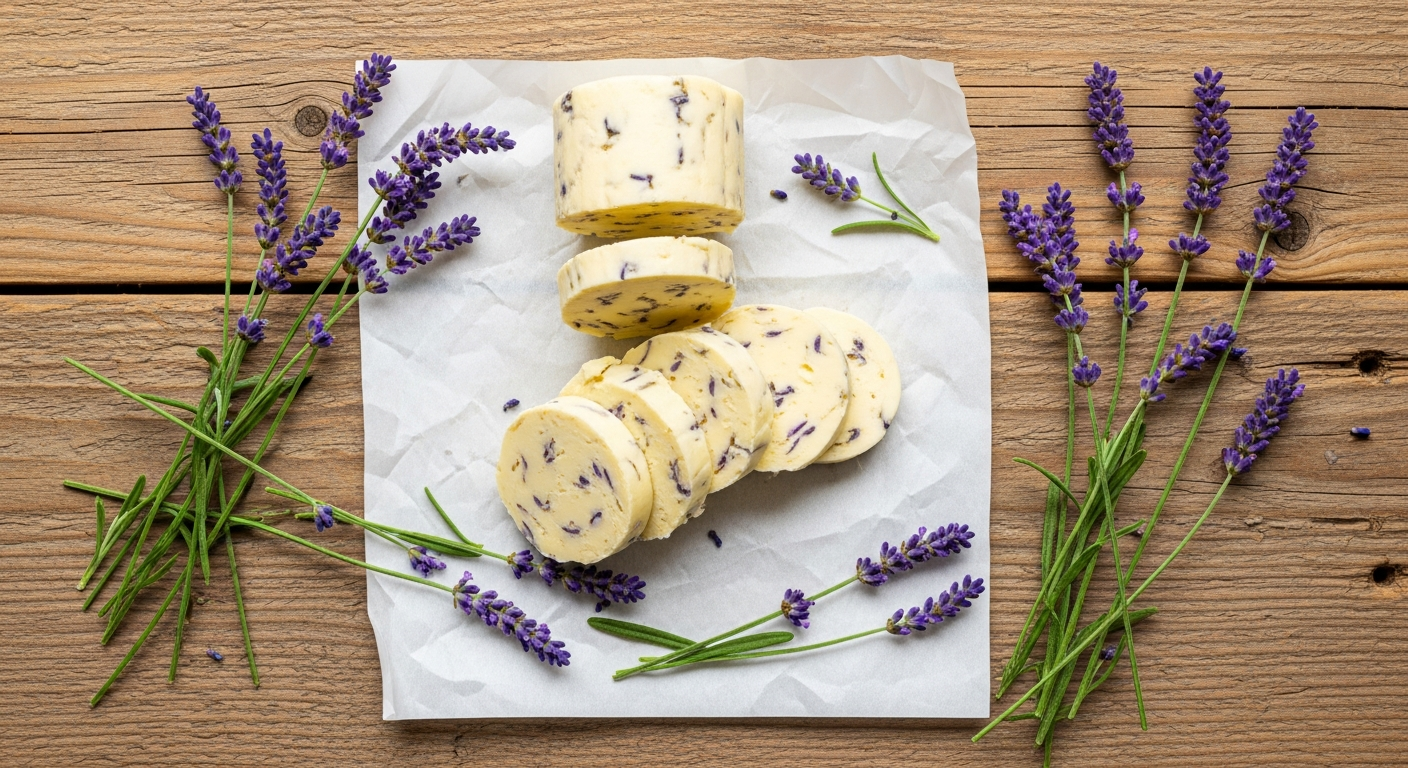
Compound butter is just softened butter mixed with flavoring — herbs, citrus, honey, or in this case, lavender. It sounds fancier than it is. You're done in five minutes and the result is this beautiful, purple-flecked butter that looks like you spent the morning in the kitchen.
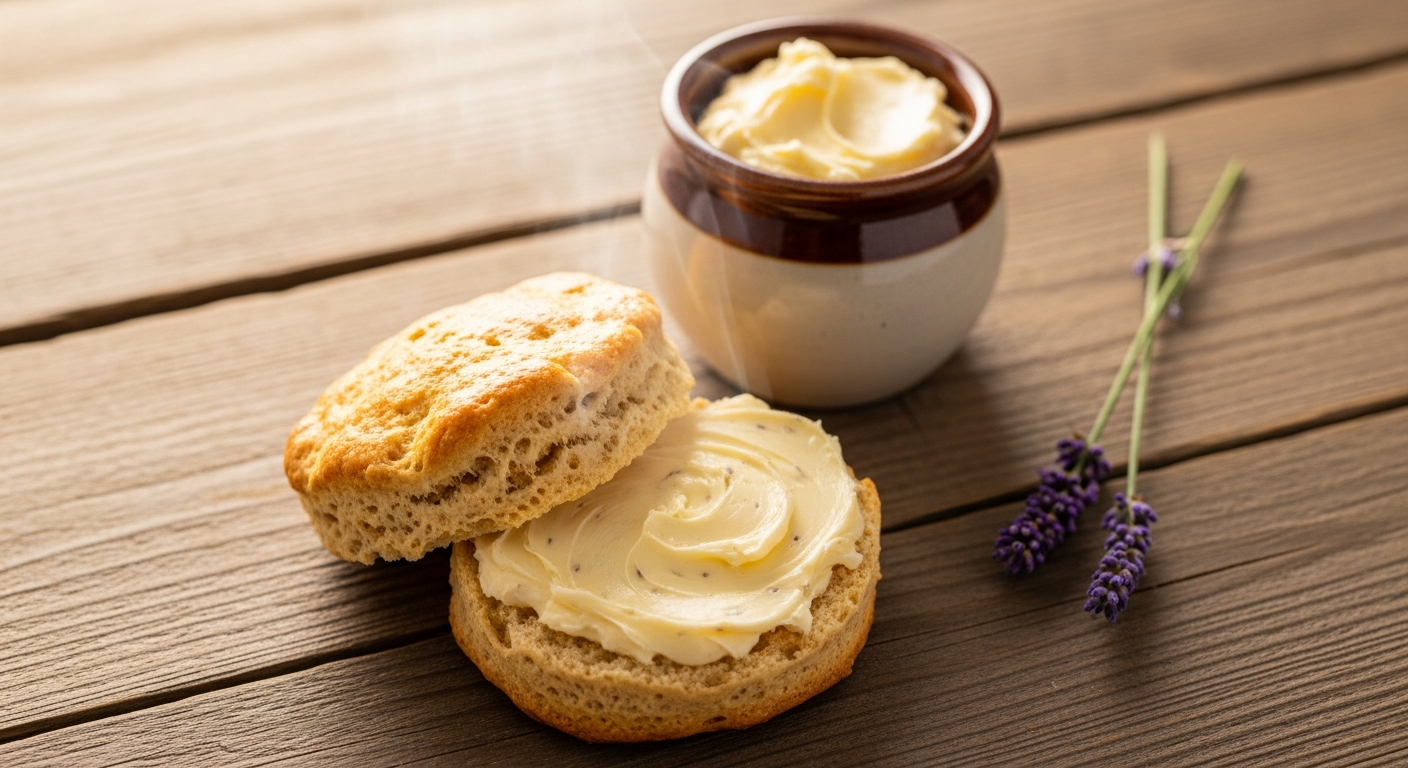
I make a batch of this every June when I trim my lavender back. It goes on warm biscuits straight from the oven, gets stirred into roasted carrots at dinner, and occasionally ends up gift-wrapped in parchment for a neighbor. Once you have it in the fridge, you'll find yourself reaching for it constantly.
One quick note if you landed here while searching for lavender butter for skin or soapmaking: that's a different product entirely — a cosmetic butter made from hydrogenated sweet almond oil and lavender extract, used in DIY soap and lotion. This article is about the edible kind. If that's what you need, check your soapmaking supplier.
Use Culinary Lavender — Not Just Any Lavender
This is the one thing I want you to know before you start: not all lavender tastes good in food.
English lavender (Lavandula angustifolia) is the culinary variety. It has a mild, sweet, slightly floral flavor that works beautifully in food. The French and Spanish lavender you see at garden centers — the big ornamental varieties with wide flower clusters — have a much sharper, more medicinal flavor. In butter, they taste soapy. It's the most common reason people try lavender butter once and swear off it.
If you grow lavender: Check what variety you have. English lavender is the shorter plant with narrow, elongated flower spikes. If it's Lavandula angustifolia and it hasn't been treated with pesticides, your garden lavender is perfect for this. Harvest the buds just as the flowers begin to open — that's when the flavor is strongest and sweetest.
If you're buying it: Look for "culinary lavender" on the label, or check that it says Lavandula angustifolia. You can find it at specialty grocery stores, spice shops, or on Amazon for a few dollars. That's what I keep in my pantry for the months between harvests.
Fresh vs. Dried Lavender
You can use either one — here's the ratio: 1 tsp dried culinary lavender = 2 tsp fresh lavender (using the leaves, not the flowers or stems).
Fresh lavender leaves carry the most concentrated flavor. The flowers are beautiful as garnish, but the flavor lives in the leaves. If you're using dried buds, a quick pulse in a spice grinder (2–3 pulses, not more) breaks them down and distributes the flavor more evenly through the butter. Leave them whole if you like visible purple specks.
Lavender Butter Recipe
Simple Lavender Butter (2 Ingredients)
Ingredients:
- ½ cup (1 stick / 113g) unsalted butter, softened to room temperature
- 1 tsp dried culinary lavender buds (or 2 tsp fresh lavender leaves, minced)
Instructions:
- Let the butter come to room temperature — about 60–90 minutes on the counter. It should be soft enough to press with your finger but not melted. If you're impatient, microwave in 10-second bursts until pliable.
- If using dried lavender, pulse 2–3 times in a spice grinder or mini food processor. Skip this if you want whole buds in the finished butter.
- Add the lavender to the softened butter and mix until evenly combined. You can use a fork, a hand mixer on low, or just stir with a spatula.
- Taste it. The flavor should be floral and present but not overwhelming. Lavender varies in intensity — add a pinch more if you want stronger flavor, or add a tiny bit more plain butter if you went too far.
- Scrape the butter onto a piece of parchment paper. Form it into a rough log shape, roll the parchment around it, and twist the ends like a candy wrapper.
- Refrigerate for at least 1 hour. Overnight is better — the flavor deepens significantly after the butter rests.
Yield: 8 tablespoons (8 servings)
Lavender Honey Butter (The Version Everyone Loves)
This is my favorite version, and once you make it, it's the one that disappears fastest. Honey and lavender are one of those pairings that just work — sweet, floral, slightly warm.
Add to the base recipe:
- 1–2 tablespoons honey
- Optional: 1 tsp fresh lemon zest (adds brightness, cuts the richness)
Use a light-colored honey — clover, alfalfa, or mild wildflower. Dark, strong honeys like buckwheat overpower the lavender and you lose that delicate flavor entirely. If you're using honey from your own hives, go with a mild harvest.
Mix the honey (and lemon zest if using) into the softened butter along with the lavender. The method is the same as above — roll in parchment, refrigerate until firm. Note that this version is slightly softer than plain lavender butter because of the honey; if it's too soft to shape, refrigerate for 15 minutes first, then roll it.
What to Put Lavender Butter On
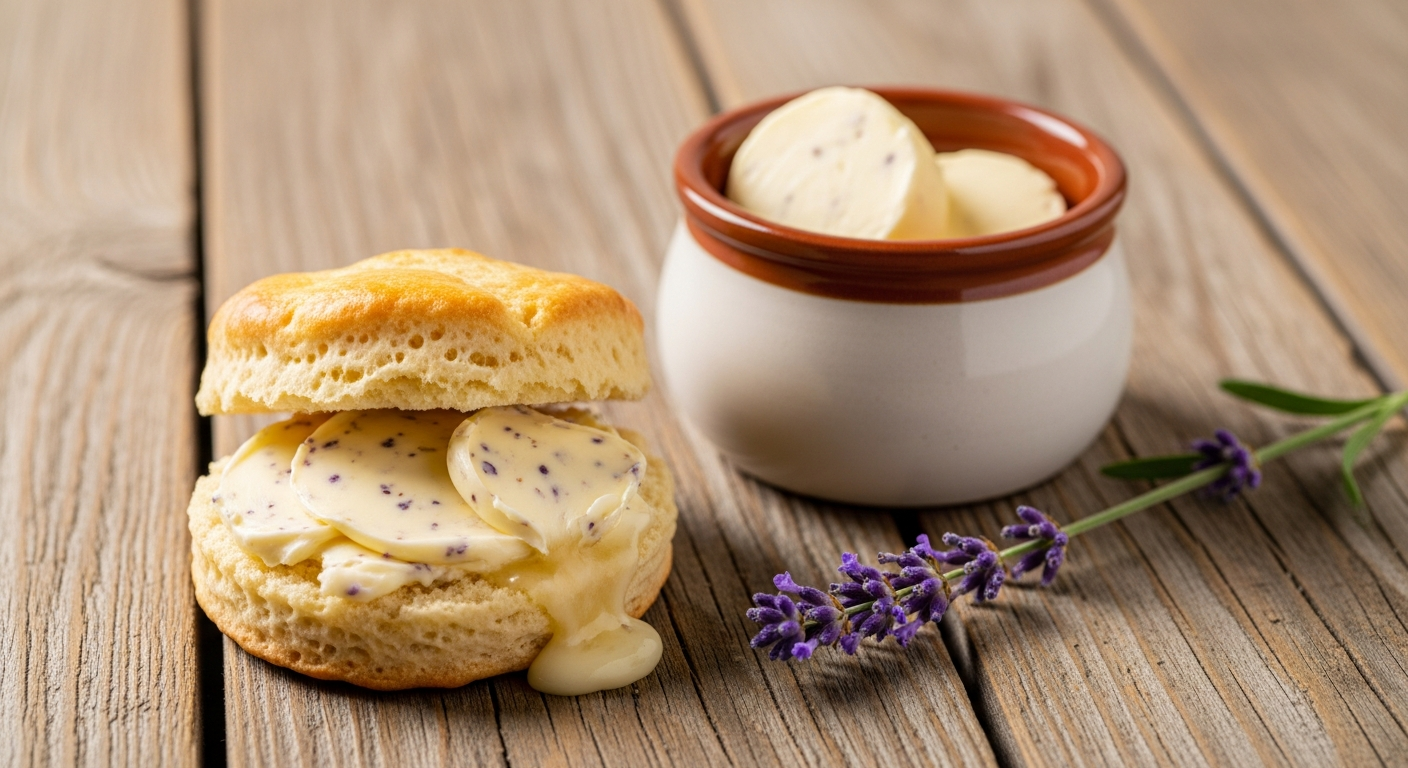
Lavender butter is good for spreading on warm bread, melting over grilled meats and vegetables, and adding a subtle floral note to any dish where plain butter would work.
Savory Uses
Most people think of lavender as a sweet thing, but it shines in savory cooking too:
- Grilled chicken or salmon — melt a round over the top right when it comes off the heat
- Roasted carrots, parsnips, or sweet potatoes — toss the hot vegetables with a tablespoon while they're still in the pan
- Corn on the cob — lavender honey butter on fresh sweet corn in late summer is one of those combinations you don't forget
- Warm cornbread — spread it on thick before it cools
- Stirred into hot rice or couscous — one tablespoon and it's a completely different side dish
Sweet and Brunch Uses
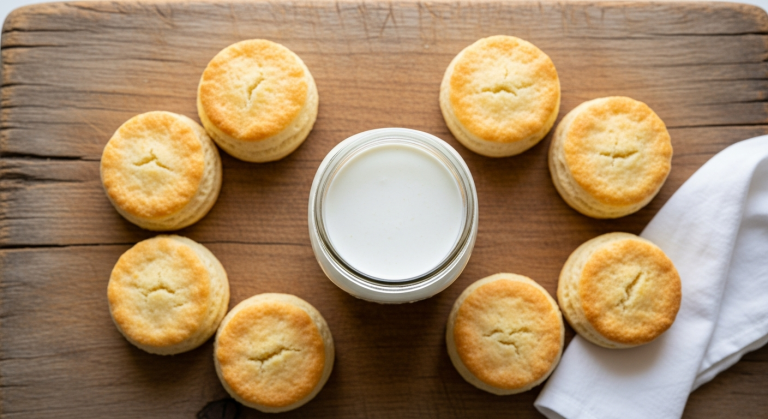
- Warm homemade biscuits or scones (the classic pairing — nothing better)
- Toast or fresh bread from the oven
- Waffles and pancakes (the honey version here, please)
- Muffins, banana bread, or coffee cake
- On a brunch board: slice two butter logs into rounds and fan them on a wooden board with fresh lavender sprigs — it looks impressive and takes five minutes
How to Store Lavender Butter
Fridge: Wrapped tightly in parchment and stored in an airtight container, lavender butter keeps for 2–3 weeks. The flavor actually improves over the first few days as the lavender infuses deeper into the butter.
Freezer: Wrap the parchment log in foil or slide it into a freezer bag. It keeps for up to 3 months. The best part: you can slice off rounds directly from frozen and put them on hot food without any thawing. They melt beautifully.
My favorite trick: make a double batch in June when lavender is blooming. Freeze half, forget about it, then pull it out in December and give it as a holiday gift wrapped in parchment and tied with twine. Nobody needs to know it took you ten minutes.
Frequently Asked Questions
What is lavender butter good for? Lavender butter is good for spreading on warm bread, scones, and pastries, and also works as a finishing butter for grilled meats, roasted vegetables, and corn on the cob. The honey lavender version is especially good on pancakes and waffles. Use it anywhere you'd use plain butter when you want a subtle floral, slightly sweet flavor.
How do you infuse butter with lavender? Soften butter to room temperature, then mix in dried culinary lavender until evenly distributed. For the smoothest flavor, pulse the dried lavender 2–3 times in a spice grinder before mixing. Let the butter rest in the refrigerator for at least 1 hour — overnight is better — so the lavender has time to fully infuse.
Does lavender help with bloating? Lavender has traditionally been used in herbal medicine for digestive support, and some people find it calming for mild digestive discomfort. But in the small amount used in lavender butter, the effect is minimal. For any meaningful digestive benefit, you'd need a medicinal-strength preparation like lavender tea or a supplement formulated for that purpose. Lavender butter is delicious — just don't expect it to do the work of a remedy.
When should you not use lavender? In cooking, avoid lavender if you're using a decorative variety — French or Spanish ornamental lavender tastes soapy and bitter in food, and may have been treated with pesticides. For general use, lavender is considered very safe, but it has documented interactions with sedative medications (it can enhance sedative effects), so use concentrated lavender with caution if you take those. Culinary amounts in food are fine for most people.
Can I use fresh lavender instead of dried? Yes — fresh lavender works well. Use the leaves rather than the flowers or stems; the leaves carry the most pleasant, concentrated flavor. Use about twice as much fresh as dried (2 tsp fresh leaves for every 1 tsp dried). Fresh lavender butter has a shorter shelf life — use it within a week.
What kind of lavender do I use for lavender butter? Culinary lavender — specifically English lavender (Lavandula angustifolia). It has a mild, sweet flavor that works in food. French and Spanish lavender varieties have a sharper, more medicinal flavor that tastes unpleasant when cooked. Look for "culinary lavender" or Lavandula angustifolia on the label, or harvest your own English lavender just as the buds begin to open.
Why does lavender butter taste like soap? Two reasons: too much lavender, or the wrong variety. Start with 1 tsp per ½ cup butter and taste before adding more. And make sure you're using English culinary lavender, not a decorative French or Spanish variety — those are the culprits behind the soapy flavor almost every time.
Is lavender butter the same as lavender body butter? No. Culinary lavender butter (this recipe) is a compound butter you eat. Lavender body butter is a completely different product — a cosmetic made from hydrogenated oils and lavender extract, used on skin in DIY soap and lotion making. They're not interchangeable.