How to Make Jewelweed Salve: Easy Recipe for Poison Ivy, Bug Bites + More (2026)
Last updated March 10, 2026
At a Glance:
- ⏱ Total time: ~30 minutes active + 4–6 hours infusion
- 💰 Cost: ~$3–5 DIY (vs. $15–25 to buy)
- 🌿 Best time to forage: July–September
- 🎯 Best for: Poison ivy, bug bites, eczema, stinging nettle
- ✅ Skill level: Beginner-friendly
What Is Jewelweed Salve (and Why Does It Work)?
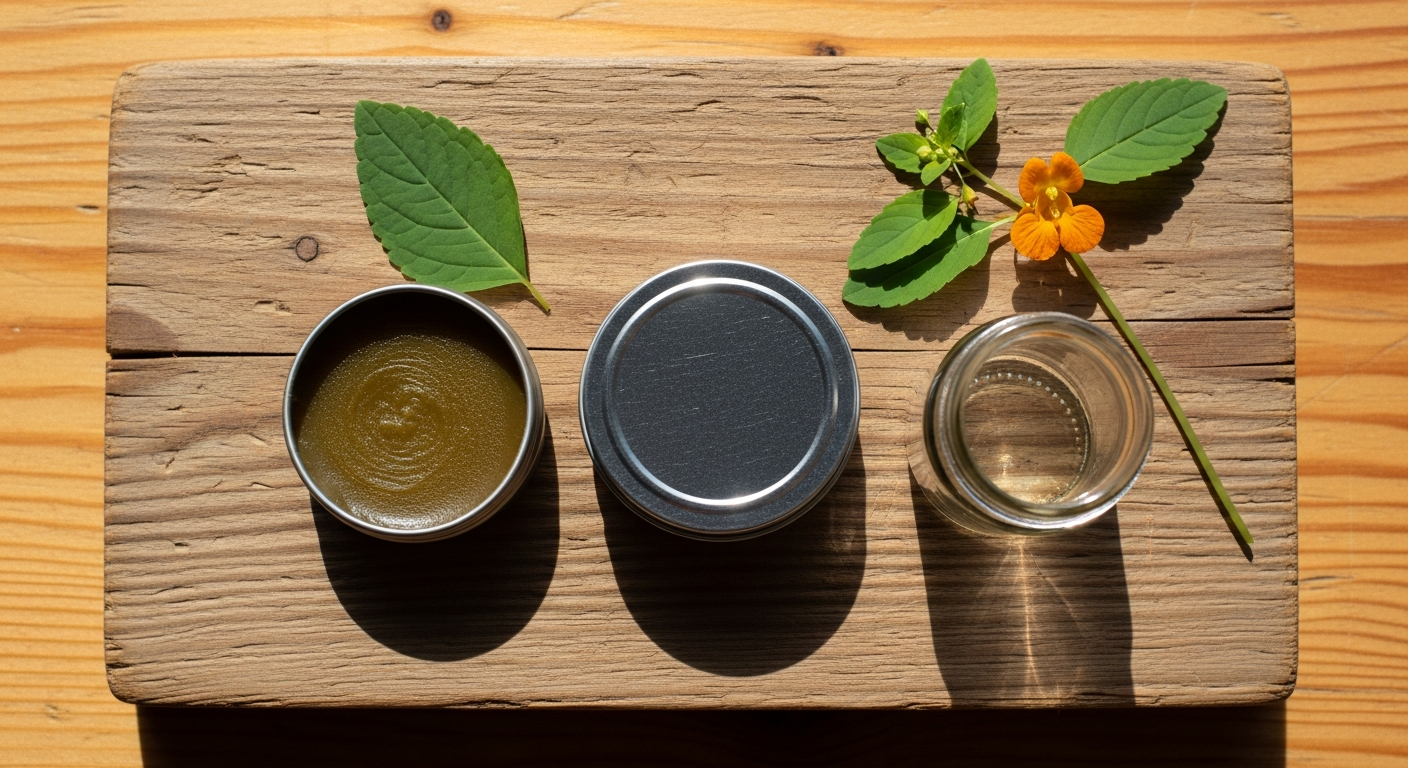
You've probably walked past this plant a hundred times without knowing what it was. Jewelweed — also called touch-me-not — is a native wildflower that grows in damp, shaded spots all over the Midwest and Eastern US, and it's been used as a skin remedy for generations. My grandmother knew about it. Her grandmother probably did too. There's a reason this knowledge keeps getting passed down.
What makes it work is a natural anti-inflammatory and antifungal compound found in the plant's sap. One particularly interesting note: jewelweed contains the same active compound used in Preparation H. If it works on hemorrhoidal tissue, it's no surprise it does something for inflamed, itchy skin rashes. The science backs up what people have known intuitively for centuries — this plant is genuinely useful.
Making a salve from it is really just a way to preserve that usefulness. You infuse the plant material in oil to extract the active compounds, then combine the infused oil with beeswax so it holds together and stays on your skin. The whole process takes a few hours, costs a few dollars, and once you've done it once, you'll do it every summer.
What Is Jewelweed Salve Good For?
Jewelweed salve is used for minor skin irritations — here's how it helps with each of the most common ones:
Poison ivy and poison oak. This is the use case most people know. Jewelweed contains compounds that work against urushiol, the oil in poison ivy that causes the allergic reaction. It reduces itching and inflammation and can help the rash clear faster, especially when applied early. I keep a tin in my first aid kit from June through September.
Mosquito bites and bug bites. The anti-inflammatory and antihistamine properties make it effective on bites too. Several readers have told me their mosquito bites dry up noticeably faster when they use this salve — within a day or two instead of dragging on for a week of itching.
Stinging nettle. If you've ever brushed up against stinging nettle, you know how immediately miserable that is. Jewelweed is a traditional folk remedy for nettle stings, and it provides almost immediate relief when rubbed on the affected area.
Eczema and general skin irritation. This one is more anecdotal, but I hear from enough readers about it that I'd be doing you a disservice not to mention it. The anti-inflammatory properties can help calm itchy, irritated patches. I can't promise it'll be a cure for your eczema, but it's gentle enough to try, and many people find real relief from it.
These statements haven't been evaluated by the FDA. Jewelweed salve is meant for minor skin irritation — if symptoms are severe or worsening, see a doctor.
How to Identify Jewelweed (and Where to Find It)
What Does Jewelweed Look Like?
Here's the most memorable identifier: find a plant with ripe seed pods and squeeze one. It explodes and shoots tiny seeds everywhere. That's how jewelweed got its nickname "touch-me-not" — and once you've seen it do that, you'll never mistake the plant for anything else.
Beyond the seed pods, here's what to look for:
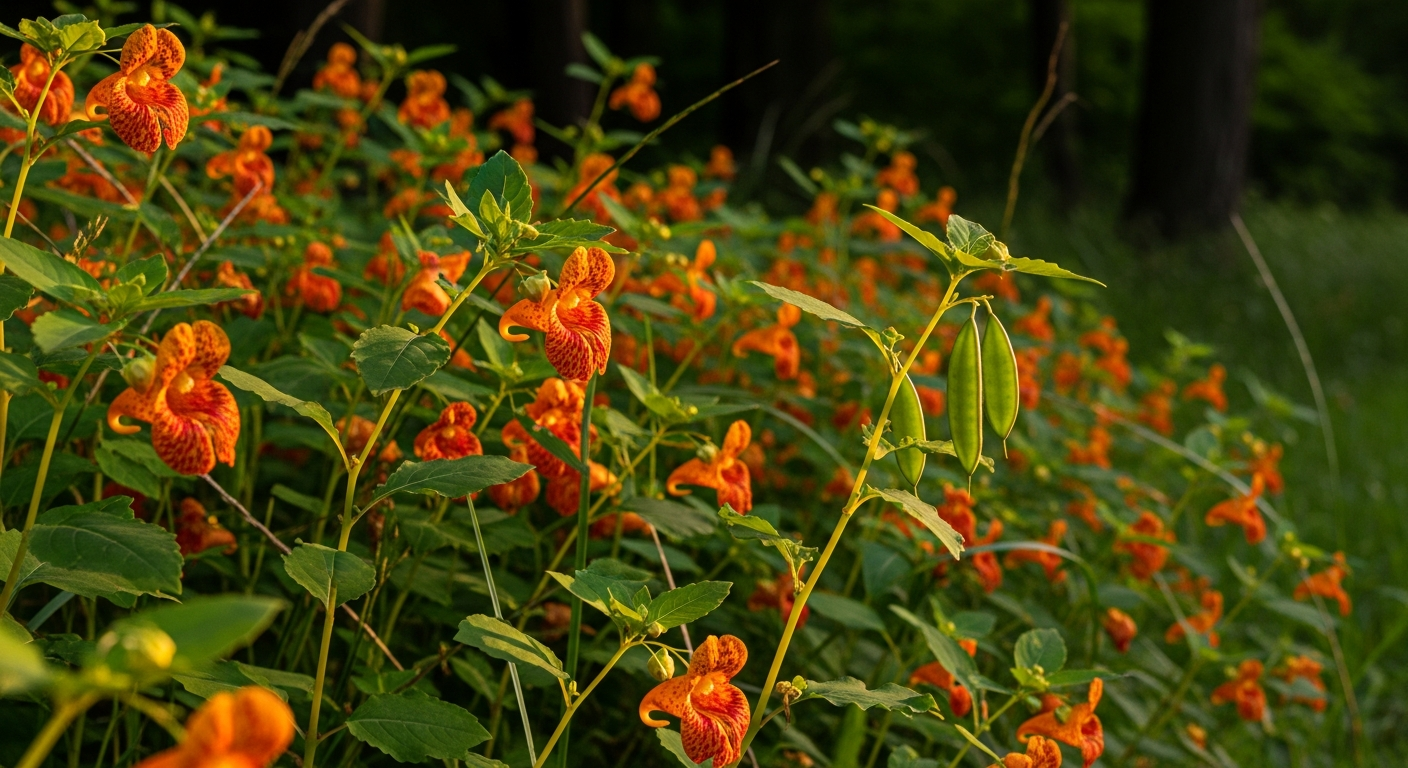
- Orange spotted, trumpet-shaped flowers — the most common variety is Impatiens capensis, with orange flowers dotted with reddish-brown spots. There's also a yellow version (Impatiens pallida) that works just as well for salve.
- Hollow, watery stems — if you snap one, it's almost translucent, like a straw filled with water. No other plant growing in the same shaded wet spots looks quite like this.
- Large patches — jewelweed doesn't grow alone. Once you find it, you'll find a lot of it.
- Height — typically 2 to 5 feet tall at peak season.
Where to Find Jewelweed (and Foraging Safety)
Jewelweed grows in damp, shaded areas — creek banks, woodland edges, wet ditches, shaded disturbed ground near water. If you're out hiking and you see a dense patch of tall plants with orange flowers growing near a stream, there's a good chance you've found it.
One thing worth knowing: jewelweed frequently grows right next to poison ivy. Whether that's nature being helpful or just ironic, I'm not entirely sure — but it's a useful detail. If you're scrambling to treat a rash and you're near woods, look for water and shade, and you might find your remedy growing right next to the cause of your problem.
A few foraging safety notes: avoid harvesting along roadsides or near agricultural areas where pesticides or road runoff are likely. Give the plants a good rinse before you use them. And if you can't process the fresh plant right away, it'll keep in the refrigerator for a day or two.
Seasonal timing: Jewelweed blooms mid-July through September across most of the Midwest and Eastern US — which happens to be exactly when poison ivy season peaks. Harvest when the flowers are open and the plants are at their largest for the highest potency.
What You Need to Make Jewelweed Salve
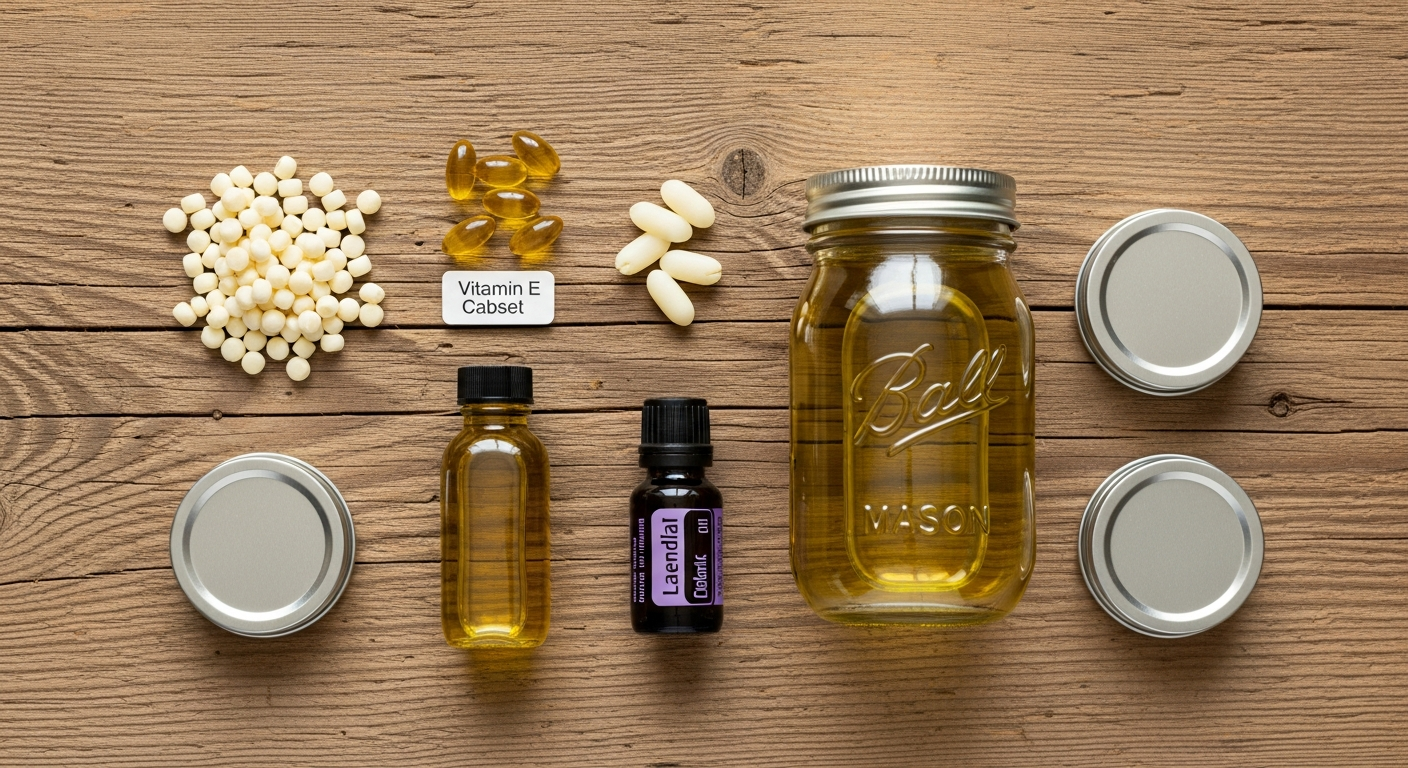
Here's what you'll need for one basic batch — enough to fill about 3–4 small tins:
- Fresh jewelweed — enough to pack a quart mason jar (leaves, stems, and flowers all work)
- ½ cup carrier oil — olive oil is the easiest starting point; see the comparison below
- 2 tablespoons beeswax pellets — pellets are much easier to measure than blocks
- 2 vitamin E capsules (180mg each) — poke a hole with a pin and squeeze out the oil; these act as a natural preservative
- 10–15 drops essential oil (optional) — lavender or tea tree; lavender is my preference for skin applications
- Small containers — metal tins, lip balm tubes, or small mason jars all work
Which carrier oil should you use? This question comes up constantly, so here's a quick breakdown:
| Oil | Shelf Life | Skin Feel | Notes |
|---|---|---|---|
| Olive oil | ~12 months (with vitamin E) | Rich, slightly heavy | Most common; use what you have |
| Sweet almond oil | ~12 months | Light, absorbs well | Great beginner-friendly choice |
| Grapeseed oil | ~6 months | Very light | Shorter shelf life; make small batches |
| Coconut oil | 18+ months | Firms up in cold temps | Good for longer storage; salve will be firmer |
For your first batch, just use olive oil. It's affordable, it works, and you probably already have it in your kitchen.
Warm vs. Cold Infusion: Which Should You Use?
If you've read other jewelweed salve articles, you may have seen some say to do a cold infusion (leaving the plant in oil for weeks) and others recommend a warm method (a few hours in a crockpot). Both work. For your first batch, use the warm method — I've made both and honestly can't tell the difference in the finished salve.
| Method | Time | What You Need | Best For |
|---|---|---|---|
| Warm infusion | 4–6 hours | Crockpot or double boiler | Beginners; same-day salve |
| Cold infusion | 4–6 weeks | Mason jar, a cool dark spot | If you want to work ahead; preserves more delicate compounds |
One practical note if you go with the warm method: make sure the plant material is completely strained out of the oil before you finish the salve. Moisture from fresh plant material can cause the finished salve to mold if any gets left in. Strain it well, and you won't have a problem.
How to Make Jewelweed Salve (Step-by-Step Recipe)
Heads up before you start: Heating fresh plant material in oil does not smell pleasant. It smells like cooked swamp grass — kind of earthy and strong. The first time I made this, I moved the crockpot out to the porch and left it there for the afternoon. The finished salve doesn't smell like that at all, especially once you add essential oils. Just set up near an open window or outside if the weather cooperates, and you'll be fine.
Jewelweed Salve Recipe
- Prep: 10 minutes
- Infusion: 4–6 hours
- Active finishing time: 20 minutes
- Yield: ~3–4 small tins
- Cost: ~$3–5
Instructions:
-
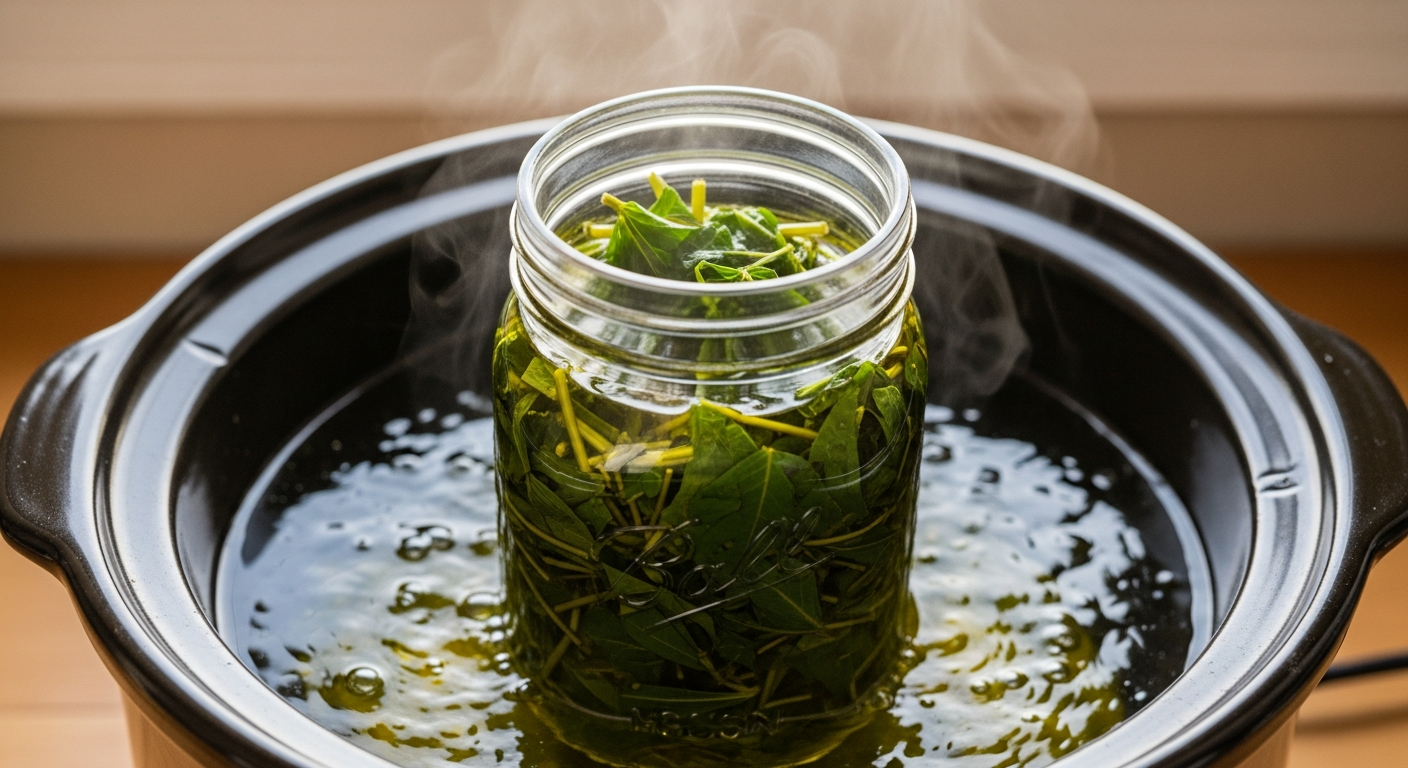
Wash fresh jewelweed thoroughly, then chop or tear into pieces. Pack the plant material into a quart mason jar — stems, leaves, and flowers all go in.
-
Pour your carrier oil over the plant material to nearly cover it. Press the plant material down a little if needed.
-
Set a tea towel in the bottom of your crockpot, place the jar inside, and add about 4 inches of water around the jar. Heat on LOW for 4–6 hours. You can also leave it on overnight on the lowest setting.
-
Strain the oil through cheesecloth into a clean bowl. Squeeze out as much oil as you can from the plant material, then discard the solids. You don't want any plant bits left in the oil — moisture from the plant can cause the salve to spoil.
-
Measure ½ cup of the strained, infused oil into a heat-safe glass jar.
-
Add 2 tablespoons of beeswax pellets to the jar.
-
Set the jar in a pot of simmering water — essentially a DIY double boiler. Heat until the beeswax is completely melted.
-
Remove from heat and let cool for about 5 minutes.
-
Squeeze the oil from your vitamin E capsules directly into the jar. Add your essential oil if using. Stir gently to combine.
-
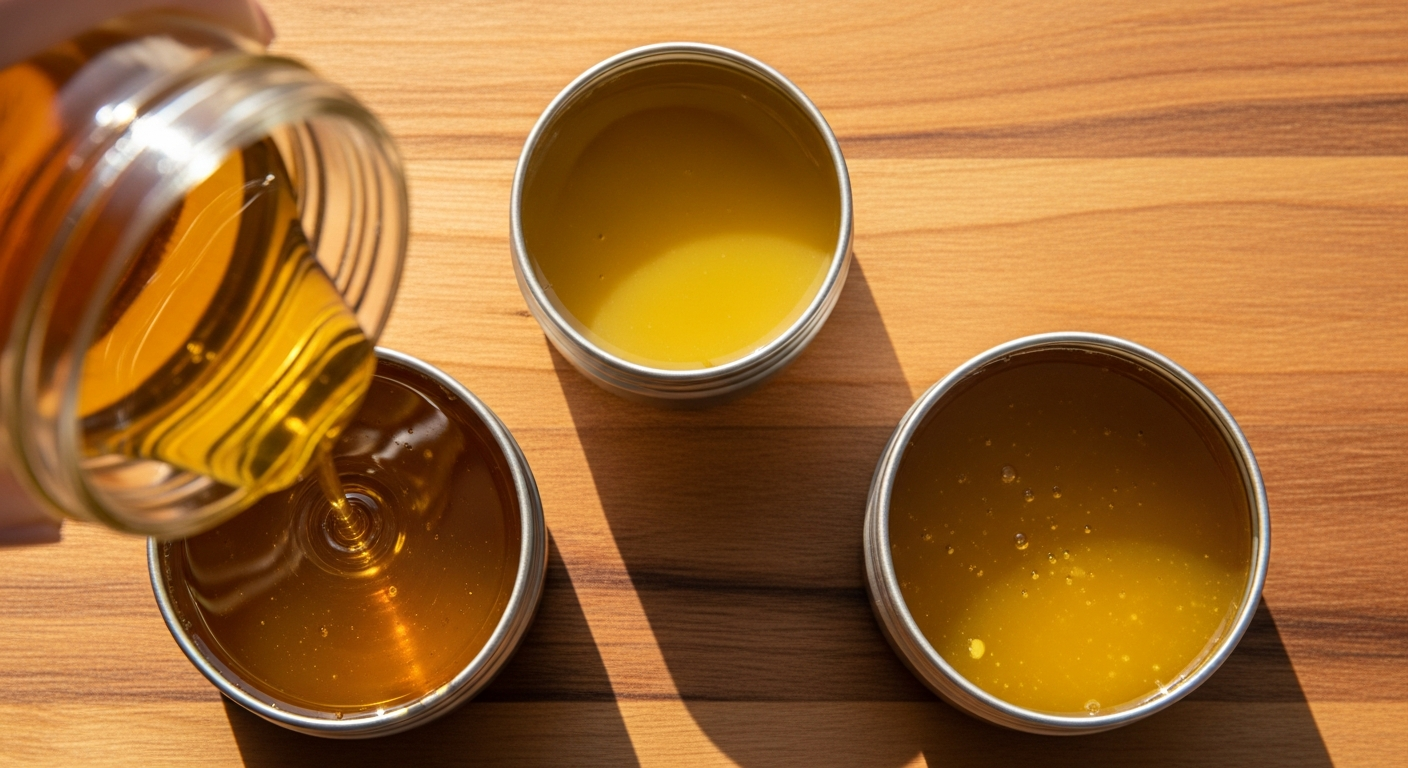
Pour the liquid salve into your containers while it's still liquid. Set them somewhere flat and don't disturb them for 2–4 hours while they cool and firm up. Cap them only after they're fully set.
Consistency tip: If your finished salve is too firm, use a little less beeswax next time. Too soft? Add a bit more. For lip balm tubes, I use about 3 tablespoons of beeswax per ½ cup of oil to get a firmer result.
First-time maker note: If this sounds like a lot of steps, I promise it's easier than it reads. The hardest part is genuinely just waiting. Once you've made one batch, you'll do it again without thinking twice.
How Long Does Jewelweed Salve Last? (Storage Guide)
Homemade jewelweed salve lasts 6–12 months when stored in a cool, dark place. With vitamin E added as a preservative, you can count on closer to 12 months. Without it, plan to use it up within 6 months.
How to know if it's gone bad: The smell test is your best tool. Rancid oil has a distinct off, sour smell that you'll recognize immediately. If it smells wrong, toss it and make a fresh batch. Don't use salve that's gone rancid on your skin.
Storing the infused oil: If you make a larger batch of infused oil than you need for one round of salve, store the extra oil in the refrigerator for up to 6 months. You can also freeze it and pull out small amounts to finish into salve throughout the season. This is actually my preferred approach — forage once in July, make infused oil in a big batch, then make small batches of salve as needed.
One simple rule that's served me well: make small batches and use them up. Three or four tins made in July will be gone well before they could ever go bad.
What If You Can't Find Jewelweed Near You?
Not everyone has foraging access, and that's okay. If jewelweed doesn't grow in your area or you need something right now before you can get out and harvest, a few commercial options are worth knowing about.
The one I hear the most about is the GOAT Balm with Jewelweed from Goat Milk Stuff — it has well over 300 verified reviews and is made on a family farm with wild-harvested jewelweed. If you're looking for a ready-made version, that's the one I'd point you toward.
That said, once you've made your own and realized how straightforward it is — and how much cheaper it is — you'll likely make it every summer going forward. A batch costs $3–5 once you have the beeswax and oil on hand, compared to $15–25 for commercial versions.
Jewelweed Salve FAQ
What are the side effects of using jewelweed?
Topical use is generally considered safe for most people. Some individuals with very sensitive skin may notice mild irritation — if that happens, discontinue use. Jewelweed salve is for external use only. For severe or worsening skin reactions, see a doctor. This product has not been evaluated by the FDA.
Can I use dried jewelweed instead of fresh?
Fresh is strongly preferred. The active compounds in jewelweed are most potent in the fresh plant — drying it significantly reduces that potency. If you dried your own recently and want to use it, increase the infusion time to compensate. Commercially dried jewelweed is variable in quality and generally not what I'd recommend.
Does jewelweed salve actually work for eczema?
Anecdotally, yes — many people with eczema report that it helps calm itchy, irritated patches, likely due to the anti-inflammatory properties. It's not a medical treatment, and results will vary. It's gentle enough to try, though — do a patch test first if your skin is on the sensitive side.
Is it safe for kids?
For older children, topical jewelweed salve is generally fine. Do a patch test on a small area first, keep it away from eyes and broken skin, and for very young children or infants, check with your pediatrician before using any herbal preparation.
Can I grow my own jewelweed?
Yes — it's a native annual that grows readily in moist, shaded soil. Plant it once near a fence line, the edge of a shaded garden bed, or anywhere with consistent moisture, and it'll self-seed and come back every year. Hummingbirds love the flowers, which is a nice bonus. Once it's established in the right spot, you'll have a reliable supply every summer without doing anything at all.