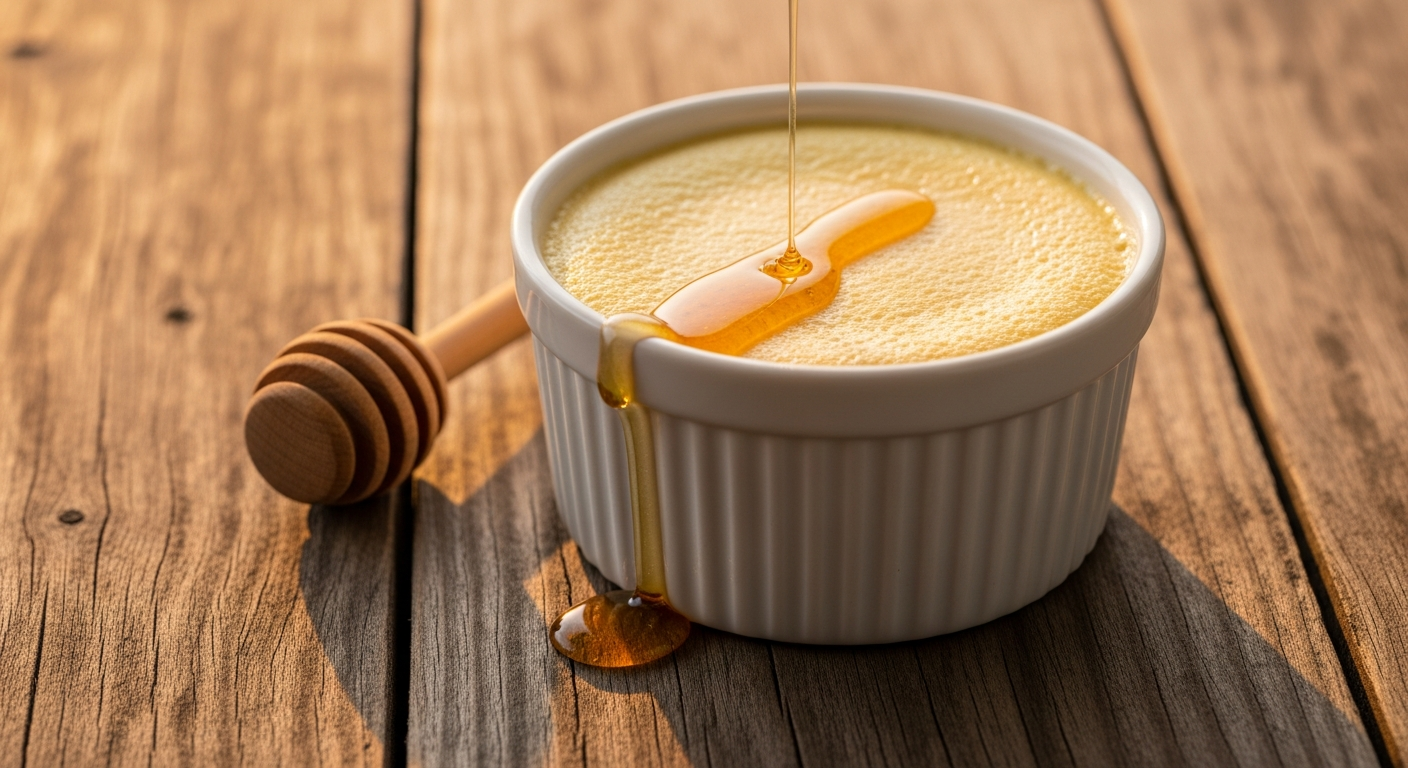
Easy Honey Custard Recipe (Baked or Stovetop) — Old-Fashioned Comfort Dessert
Last updated March 11, 2026
Yes — honey makes a wonderful custard. It adds natural sweetness and a subtle floral flavor that white sugar just can't match. I started making this recipe when I had more eggs than I knew what to do with and a fresh jar of raw honey sitting on my counter. It looks impressive. It tastes like something your grandmother would have made. And it uses three ingredients you probably already have: eggs, whole milk, and honey.
| Prep time | 10 minutes |
| Cook time | 40–45 minutes |
| Total time | ~55 min (plus 2 hours chilling) |
| Yield | 4–6 ramekins |
| Method | Baked (stovetop variation included) |
| Skill level | Beginner |
| Key ingredients | Eggs, whole milk, honey |
Why Honey Works in Custard (And Is It Better for Diabetics?)
Custard sets because eggs coagulate gently when heated — that's the whole science of it. Mix eggs with warm milk, bake them low and slow, and you get that silky, jiggly texture that's been on farmhouse tables for centuries.
Honey works as a sweetener here because it does something sugar can't: it adds flavor, not just sweetness. Honey is also sweeter than sugar cup for cup, so you actually use less of it. That means a lighter result with a more interesting taste.
As for the diabetic question — people ask me this a lot, and I want to be honest. Honey has a slightly lower glycemic index than refined white sugar and is less processed, which is why some people prefer it. But it's still a sweetener. If you're actively managing blood sugar, a small serving of honey custard can absolutely fit into a balanced approach for many people — but check with your doctor, not a homesteading blog. What I can say is that if you're trying to move away from refined sugar in your baking, honey is a genuinely good swap here.
Which Honey Should You Use?
The honey you use changes the flavor of your custard more than you'd expect. A mild clover honey will give you a subtly sweet result where the egg-and-milk flavor comes through most. A bold buckwheat honey will make the whole thing taste unmistakably of honey. Neither is wrong — it just depends on what you have and what you want.
| Honey Type | Flavor Profile | Best For |
|---|---|---|
| Clover | Mild, neutral | Beginners; subtle custard |
| Wildflower / Local raw | Floral, slightly complex | Homesteader's choice — what's on your counter |
| Orange blossom | Citrusy, bright | Light, spring-style custard |
| Buckwheat | Bold, almost molasses-like | When you want honey to be the star |
A couple of practical notes: use liquid honey, not crystallized. If yours has crystallized, set the jar in a bowl of hot water for a few minutes and it'll loosen right up. Raw honey is fine to bake with — the heat neutralizes most of the active enzymes, but the flavor comes through beautifully.
My personal recommendation: I use whatever local raw wildflower honey I have on hand. It gives the custard that unmistakably honey flavor in the best way — floral, warm, and a little bit wild.
Honey Custard Recipe
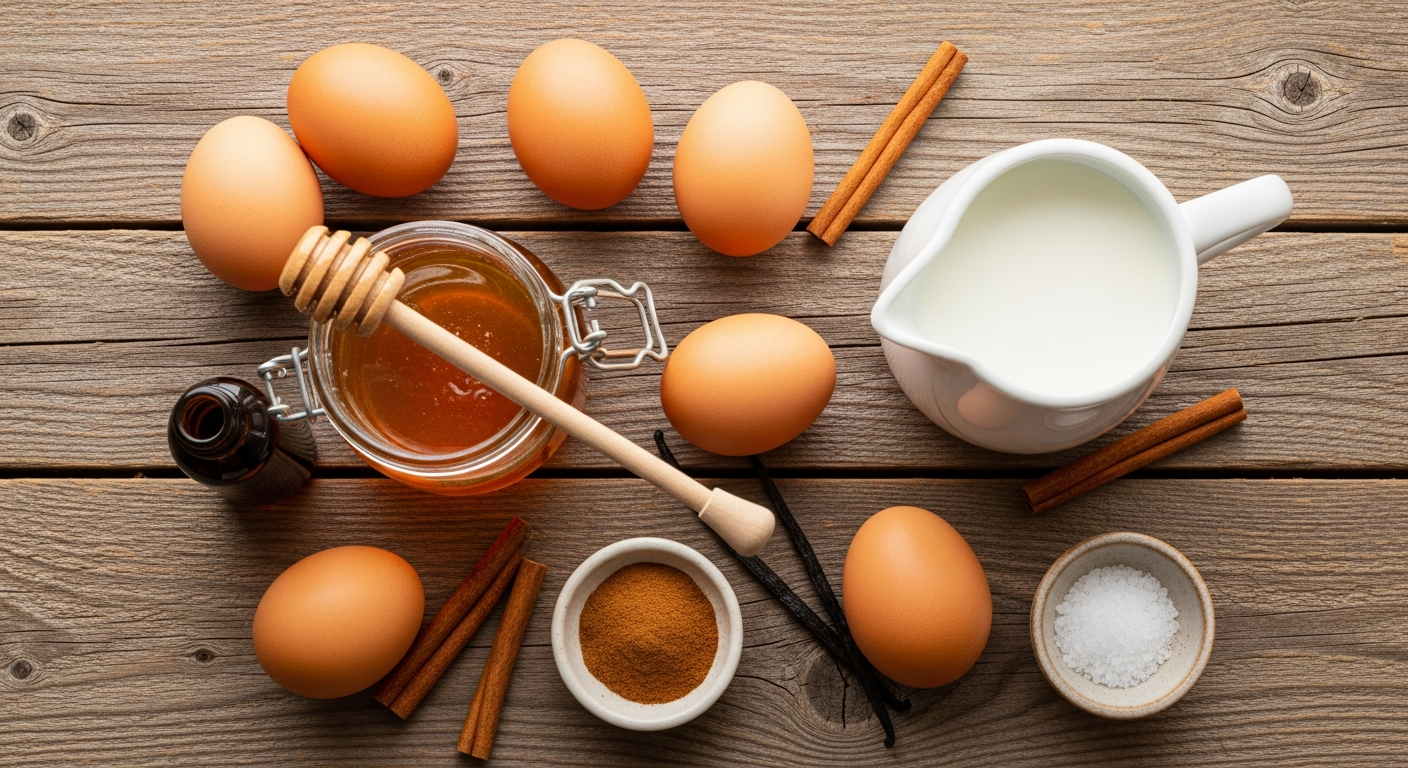
Ingredients
- 3 large eggs
- ¼ cup honey (see guide above — mild or local raw)
- 2 cups whole milk
- ½ tsp vanilla extract
- ¼ tsp cinnamon (optional, but traditional)
- Pinch of salt
A note on the milk: Whole milk gives you the best texture — creamy and set. Two percent works in a pinch. Skip skim; it produces a thinner, less satisfying custard.
Equipment You'll Need
- 4–6 oven-safe ramekins (4–6 oz size)
- 9×13 baking dish
- Kettle or small saucepan for hot water
- Fine-mesh sieve (optional, but it catches any bits of cooked egg)
I use basic ceramic ramekins — the inexpensive kind you can find at most kitchen stores or online — and they work perfectly. Don't have ramekins? Any oven-safe cup will do. You can also bake the entire custard in a small baking dish and scoop it out to serve, like a pudding.
Step-by-Step Instructions
-
Preheat your oven to 325°F. Boil a full kettle of water — you'll need it for the water bath.
-
Scald the milk. Pour milk into a small saucepan and heat over medium, stirring occasionally, until you see steam rising and small bubbles forming around the edge. Don't let it boil. Remove from heat.
-
Mix the egg base. Crack eggs into a bowl and whisk until smooth. Add honey, vanilla, salt, and cinnamon (if using). Whisk to combine.
-
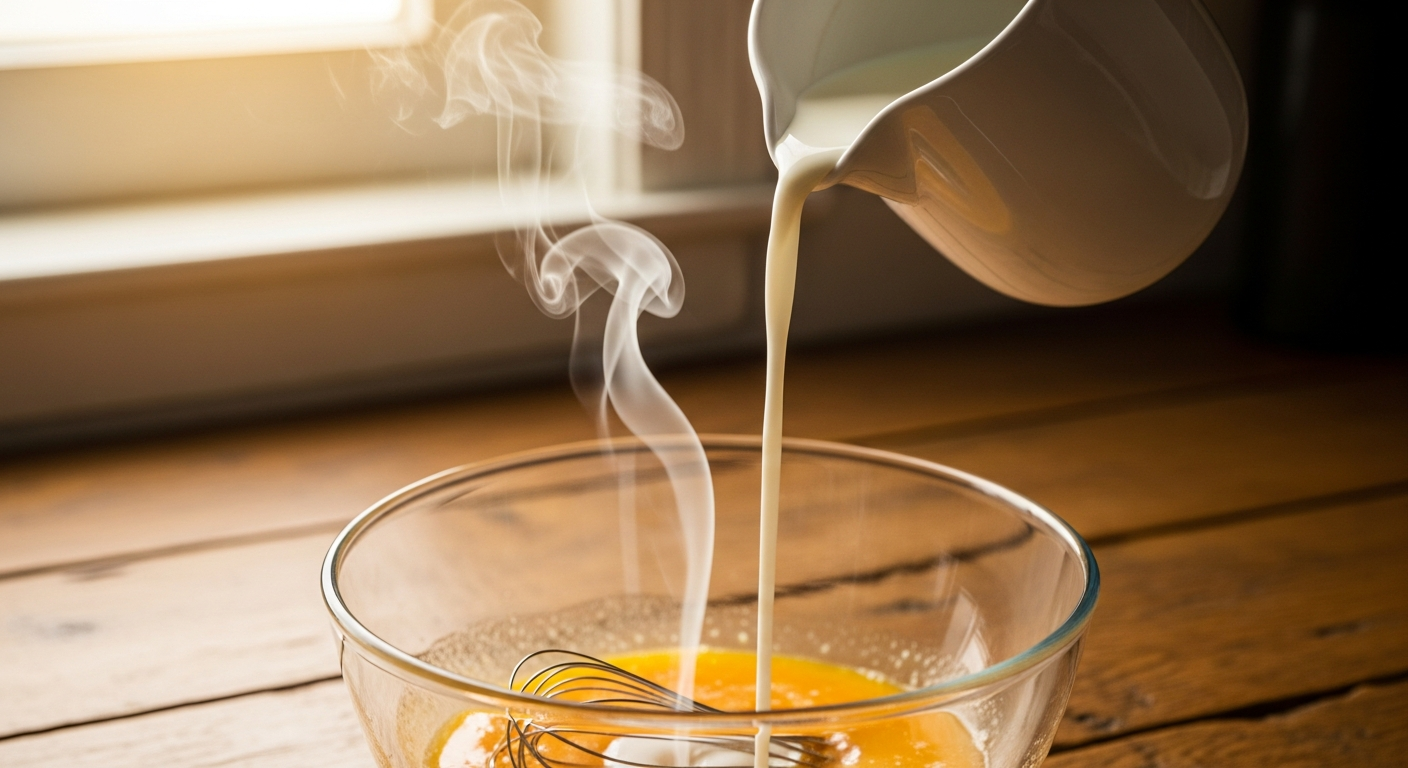
Temper the eggs. This is the most important step — don't rush it. Ladle about ¼ cup of the hot milk into your egg mixture while whisking constantly. Then slowly pour in the remaining milk in a steady stream, whisking the whole time. If you dump all the hot milk in at once, you'll scramble the eggs. Slow and steady.
-
Strain and pour. Pour the mixture through a fine-mesh sieve into a measuring cup with a spout (this makes pouring into ramekins much cleaner). Divide evenly among your ramekins.
-
Set up the water bath. Place ramekins in your 9×13 baking dish. Pour your hot water into the dish around the ramekins until it comes about halfway up their sides.
-
Bake for 40–45 minutes. Check at 40 minutes using the jiggle test (see below).
-
Cool and chill. Remove the baking dish from the oven carefully. Let custards cool in the water bath for 10 minutes, then lift them out, cover with plastic wrap, and refrigerate for at least 2 hours before serving.
Stovetop Honey Custard (No Oven Required)
Don't have ramekins, or just don't want to heat up the oven? This version comes together in about 20 minutes on the stovetop and has a thicker, pudding-like consistency. It's not quite as delicate as the baked version, but it's just as satisfying and a lot more forgiving.
Additional ingredient: 2 tablespoons cornstarch (whisked into the egg mixture before adding milk)
Steps:
- Whisk eggs, honey, salt, vanilla, and cornstarch in a medium saucepan until smooth.
- Slowly whisk in milk, starting cold.
- Place over medium-low heat and stir constantly with a wooden spoon or heatproof spatula.
- Keep stirring as the mixture heats. It will start to thicken after 10–12 minutes.
- Remove from heat when it coats the back of a spoon and holds a clear line when you run your finger through it.
- Pour into bowls or ramekins. Serve warm or refrigerate until chilled.
| Baked | Stovetop | |
|---|---|---|
| Texture | Silky, delicate, jiggly | Thick, pudding-like |
| Equipment | Ramekins + oven | Just a saucepan |
| Time | 55 min + chilling | 20 min total |
| Best for | Impressive dessert | Quick weeknight treat |
| Make-ahead? | Yes (great overnight) | Yes (chill in bowl) |
How to Tell When Honey Custard Is Done
The jiggle test: Gently shake the baking dish. The edges of each custard should be firm and set, but the center — roughly the size of a quarter — should still wobble like Jell-O. That wobble is exactly what you want. The custard will continue to set as it cools, so if there's absolutely no movement at all, it's already a bit overdone.
The knife test is a good backup: insert a knife about halfway between the center and the edge of the ramekin. It should come out mostly clean, with just a small amount of liquid custard near the center.
If you're new to custard, err on the side of pulling it at the first sign of jiggle rather than waiting. A slightly underbaked custard chills up beautifully. An overbaked one is rubbery and can't be saved.
Honey Custard Troubleshooting
Every recipe has a learning curve. Here's what usually goes wrong with custard and how to fix it next time.
| Problem | Why It Happens | Fix It |
|---|---|---|
| Rubbery texture | Overbaked or oven temperature too high | Lower temp to 300°F; check at 35 min next time |
| Watery / won't set | Underbaked | Another 5–10 minutes; retest the jiggle |
| Bubbles on surface | Eggs overwhisked, or air worked into the batter | Whisk gently; strain through a fine sieve before pouring |
| Curdled / grainy texture | Added hot milk too fast, scrambled the eggs | Pour milk slowly in a thin stream while whisking |
| Too sweet | Too much honey for your taste | Reduce to 3 tablespoons next batch |
Serving Ideas for Honey Custard
This custard is good on its own, straight from the fridge with a spoon. But if you want to dress it up:
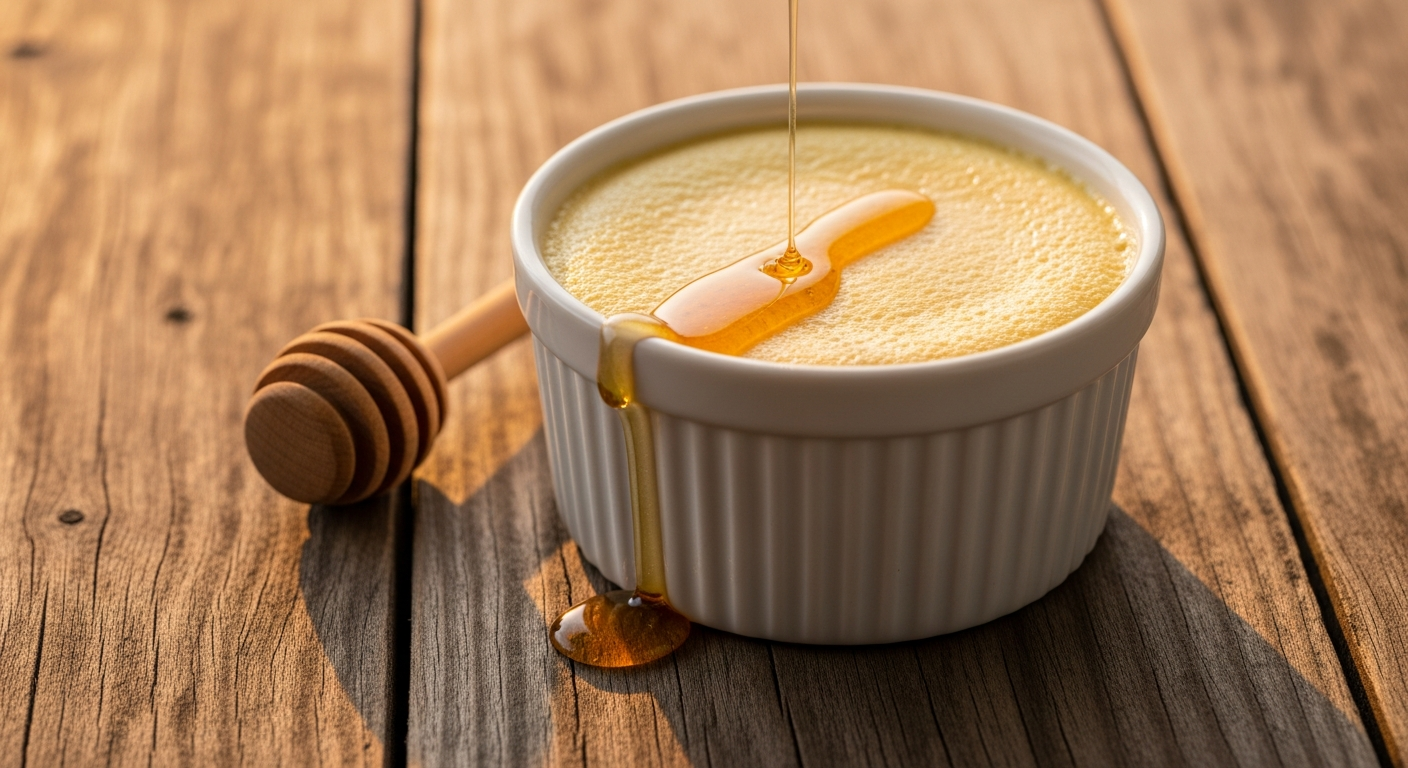
- A drizzle of honey — keeps it simple and beautiful
- Fresh berries — blueberries, strawberries, or raspberries
- Caramelized apples — slice, cook in butter and honey until soft. A perfect fall version.
- Whipped cream — just a dollop is enough
- Toasted slivered almonds — adds texture
- Jam or preserved fruit — a spoonful of raspberry jam or cherry preserves works wonderfully
My personal favorite: a handful of fresh blueberries and a tiny extra drizzle of honey. It's almost embarrassingly simple, but it's exactly right.
How to Store Honey Custard
- Refrigerator: Cover each ramekin with plastic wrap and store up to 4 days. They're honestly better on day two than day one.
- Freezer: Skip it. Dairy custard separates when frozen and thawed, and the texture suffers significantly.
- Make-ahead: This recipe was made for making ahead. Prep it the night before, refrigerate overnight, and serve cold or at room temperature the next day.
FAQ
Can custard be made with honey? Yes — honey makes an excellent custard. It provides both sweetness and flavor, and it works in any standard custard recipe as a one-to-one swap for sugar (or slightly less, since honey is sweeter).
Is honey custard good for diabetics? Honey has a slightly lower glycemic index than refined white sugar and is less processed, so some people prefer it as a substitute. That said, honey is still a sugar and will raise blood sugar. If you're managing diabetes, talk to your doctor — small portions may be fine depending on your situation.
Can I use raw honey in baked custard? Yes. Baking at 325°F neutralizes most of the active enzymes in raw honey without destroying the flavor. The custard will taste beautifully of whatever honey you use.
What's the best honey for baking custard? A mild to medium honey — clover, wildflower, or local raw — works best for most people. If you want a strong honey flavor, buckwheat is wonderful. Avoid crystallized honey unless you warm it first.
Why is my honey custard rubbery? Almost always means it was overbaked or the oven was too hot. The jiggle test is your best tool — pull it when the center still wobbles. A slightly underbaked custard will set up in the fridge; a rubbery one is already too far gone.
Can I make honey custard without ramekins? Absolutely. Bake the whole recipe in a small 8×8 baking dish (using the same water bath method) and scoop to serve. Or skip the oven entirely and make the stovetop version.
How long does honey custard last? Up to 4 days in the refrigerator, covered. It actually improves overnight as the flavors settle.