How to Get Grease Stains Out of Clothes — Fresh, Old, and Already Dried (2025)
Last updated March 12, 2026
Grease stains aren't permanent — not even the old ones, and not even the ones that went through the dryer before you noticed them. I've gotten bacon grease out of shirts I'd already washed twice, and cooking oil off aprons I thought were ruined for good. The trick is dish soap, the right water temperature, and never the dryer until you're sure it's gone.
| Situation | What Works |
|---|---|
| Fresh stain | Blot → dish soap → warm rinse → air dry |
| Old or dried stain | Baking soda soak (24 hrs) → dish soap → warm wash → air dry |
| Already through the dryer | WD-40 → dish soap → repeat warm wash → air dry |
| White clothes | Baking soda paste or OxiClean soak |
| Delicates (wool, linen) | Mild dish soap, cool water, hand wash |
| Aprons and kitchen towels | Dish soap + baking soda paste, hot wash |
Why Grease Is So Hard to Wash Out (And What Actually Works)
Grease is a lipid — it's hydrophobic, meaning it actively repels water. When grease hits fabric, it clings to the fibers and refuses to rinse away. That's why running a stained shirt through a normal wash cycle usually just redistributes the grease rather than removing it. You need a surfactant — something that acts as a bridge between grease and water — to actually lift it out. Dish soap is a surfactant. Laundry detergent is too, though dish soap is more concentrated for grease specifically.
Water temperature matters, but not how most people think. A quick cold rinse right after a fresh spill can help prevent the stain from spreading before you get soap on it. But once you've applied dish soap or detergent, warm water is what you want — it helps the soap do its job and rinses the loosened grease away more effectively. Hot water is fine if your fabric care label allows it, but warm is safe for almost everything and works just as well.
The other thing that matters — and this is the rule that saves more clothes than any product — is the dryer. More on that in a moment.
How to Remove a Fresh Grease Stain (Works on Bacon, Butter, and Cooking Oil)
This is the method I use every time I splash myself at the stove, which happens more than I'd like to admit. The faster you treat a fresh grease stain, the better your odds — but don't panic if you don't catch it immediately.
- Blot the stain with a paper towel or clean cloth to remove as much excess grease as possible. Do NOT rub — rubbing pushes the grease deeper into the fabric fibers.
- Place cardboard or a folded towel behind the stain before you start treating it. This prevents grease from seeping through to the other side of the garment.
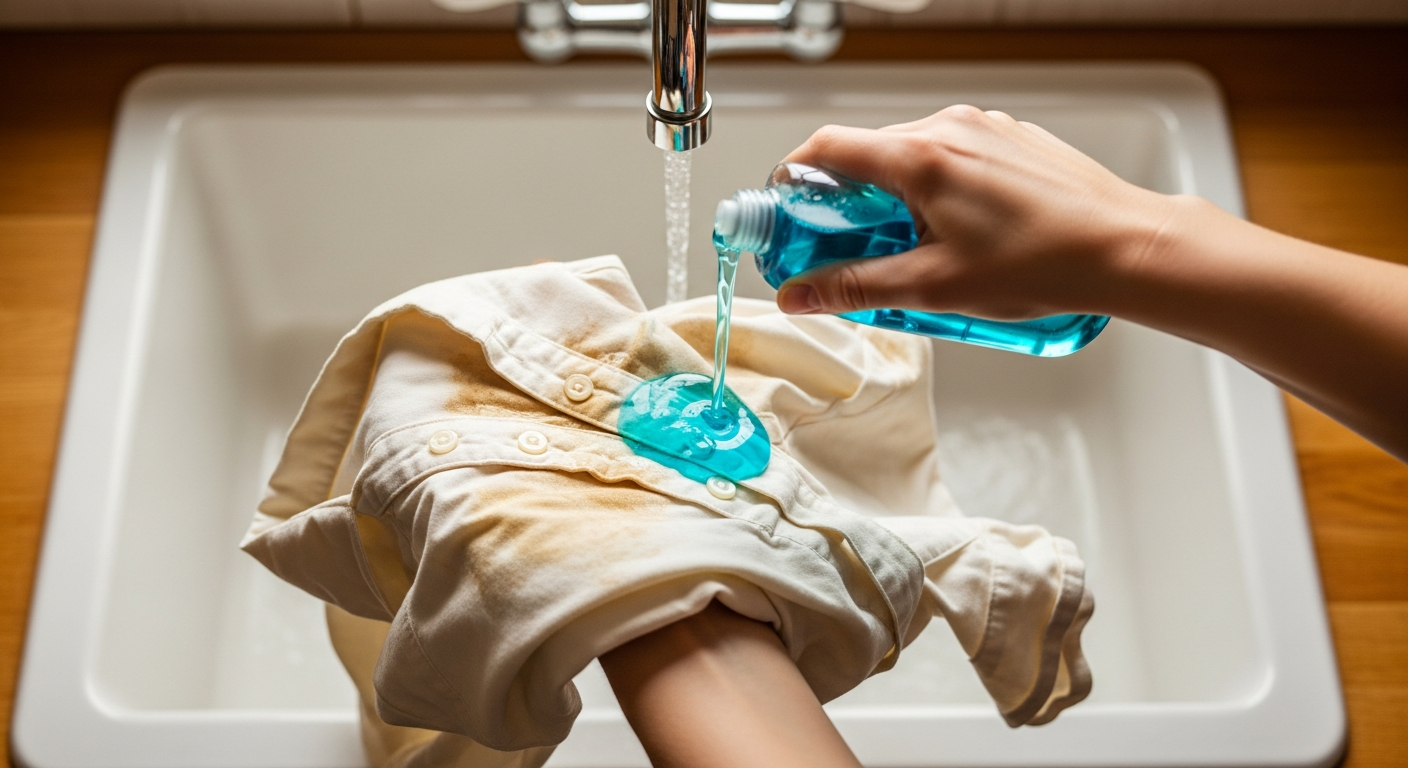
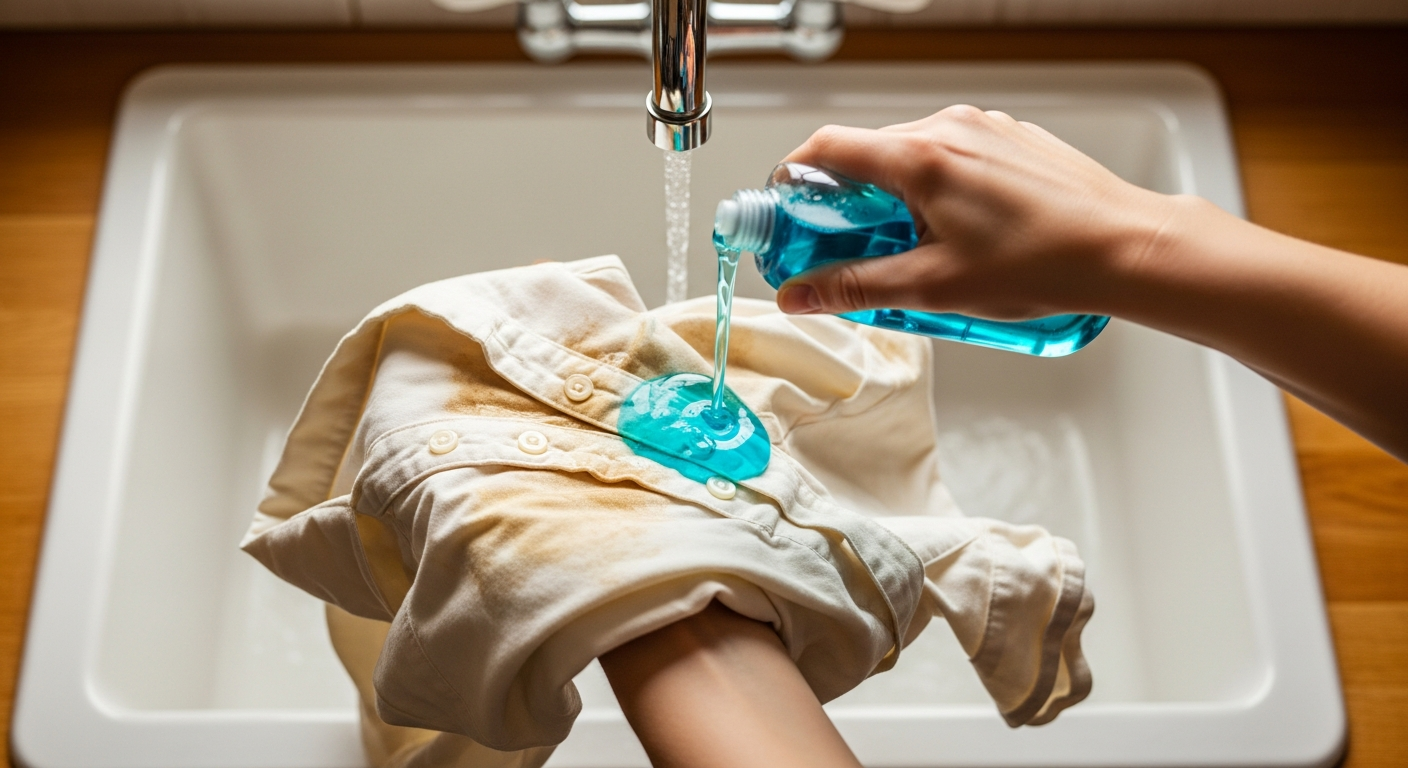
- Apply a dime-sized amount of dish soap directly to the stain. I use Dawn — it's designed to cut through grease, which is exactly what you need here, and there's almost always a bottle within reach in any kitchen.
- Work it in gently with clean fingers for about 30 seconds.
- Let it sit for 5–10 minutes. Longer for a bigger or heavier stain.
- Rinse with warm water.
- Check the stain before washing. If it's still visible, repeat the soap step before putting it in the machine.
- Wash on the warmest cycle the fabric allows.
- Air dry only. Do not put it in the dryer until you've confirmed the stain is completely gone.
The cardboard trick: Slip a folded piece of cardboard inside the garment under the stain before you start treating it. It stops grease from soaking through to the other side. It's a small step, but it makes a real difference — especially on thicker fabric like aprons or denim.
⚠️ The Rule You Cannot Break: Never Put Grease-Stained Clothes in the Dryer
This is the single most important thing in this entire article. Heat from the dryer sets grease stains into the fabric permanently. Once that heat gets applied, you've made the stain significantly harder — sometimes impossible — to remove. Worse, grease is potentially flammable in a hot dryer if the item is heavily saturated.
Always air dry or line dry any garment that has had grease on it until you're 100% certain the stain is gone. Check it in good light before you ever let it near heat. If the stain is still there, treat it again and repeat the wash cycle. Patience here saves clothes. The dryer doesn't.
How to Get Old or Set-In Grease Stains Out (Even If They've Sat for Weeks)
This is the section for when you pull something out of the laundry pile and realize there's a stain you missed. Old grease stains take more work, but they're usually not permanent. The key is giving baking soda time to do its job.
Baking soda method:
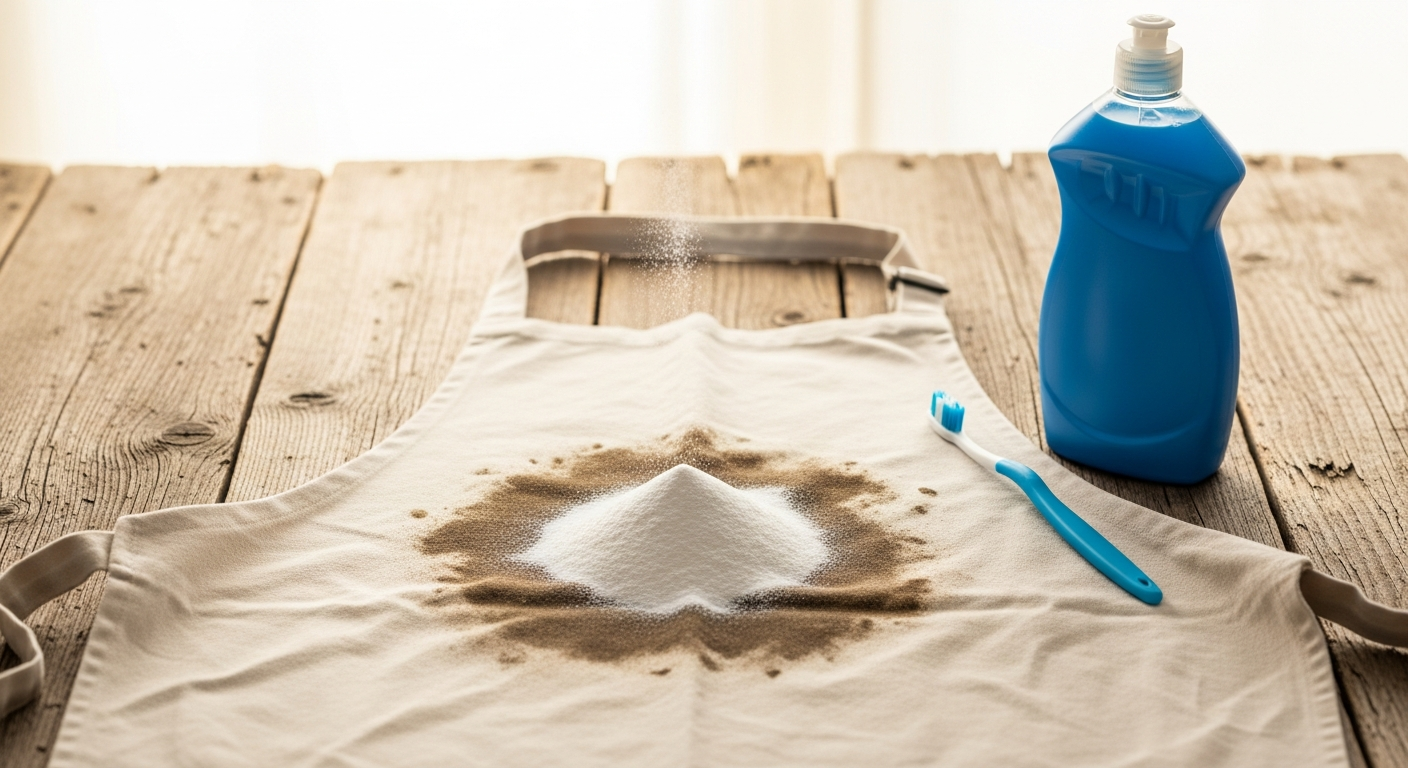
- Sprinkle baking soda generously over the stain — you want it to completely cover the affected area.
- Let it sit for at least 24 hours. 48 hours is better for really old stains. Baking soda absorbs grease out of the fabric fibers, which makes the dish soap more effective in the next step.
- Brush off the baking soda with a dry brush or old toothbrush.
- Apply dish soap directly to the remaining stain.
- Scrub gently with the toothbrush to work the soap in.
- Rinse with warm water.
- Wash on the warmest cycle safe for the fabric.
- Air dry — check the stain before drying. Repeat the whole process if it's still visible.
Faster option — baking soda + dish soap paste: Mix 1 tablespoon of baking soda with 1 tablespoon of dish soap into a paste. Apply directly to the stain and let it sit for 30 minutes, then scrub and rinse. This won't pull as much grease out of deep fibers as the 24-hour soak, but it's a good option when you need results faster.
For really stubborn set-in stains, Fels-Naptha laundry bar soap is the old-school heavy-hitter. Wet the bar, rub it directly on the stain, let it sit for 30 minutes, scrub with a brush, and wash warm. It's about $2 and one bar lasts a long time. Old-fashioned, but it works on things that dish soap alone can't touch.
How to Remove Grease Stains That Have Already Been Through the Dryer
This is the hardest scenario — but it's not hopeless. When heat has started to set a grease stain into the fabric, the WD-40 method is your best option.
WD-40 is petroleum-based, which means it can dissolve petroleum-based grease that has bonded into fabric fibers. It's counterintuitive — putting oil on an oil stain — but it actually works.
- Test WD-40 on an inconspicuous area of the fabric first. Most cotton and polyester fabrics handle it fine, but it's worth a quick check before you treat the visible stain.
- Apply WD-40 directly to the set stain — enough to saturate the area.
- Let it sit for 15–20 minutes.
- Blot off excess WD-40 with a paper towel.
- Apply dish soap generously over the WD-40 area. This step is non-negotiable — the dish soap breaks down and removes the WD-40 residue as well as the original grease.
- Work the soap in and let it sit for 10 minutes.
- Rinse with warm water.
- Wash on the warmest cycle safe for the fabric.
- Air dry only. Check carefully. This often takes 2–3 full repetitions.
I'll be honest: very old stains that have been through the dryer multiple times may not come fully out. But most things you'd describe as "ruined" respond to this method on the first or second try. It's worth attempting before you give up on a garment.
How to Get Grease Stains Out of Aprons and Kitchen Towels
If you cook from scratch regularly, your aprons and dish towels are probably the most stained items you own — not your dress shirts. These heavy-use cotton items can handle more aggressive treatment than a favorite blouse.
For aprons and kitchen towels: apply the baking soda + dish soap paste, then scrub with a stiff brush (not a soft toothbrush — something with real bristles). Let it soak in a bucket of hot water with a tablespoon of dish soap for 30–60 minutes before washing on a hot cycle. Heavy cotton can handle hot water, and the extended soak makes a real difference on built-up grease.
If you cook with lard or tallow regularly, a monthly hot-water soak for your aprons will prevent grease from accumulating in layers over time. A tablespoon of dish soap in a bucket of hot water, 30-minute soak, then wash as usual. It keeps them actually clean instead of just surface-clean.
Note: if you have a linen apron or anything with a delicate fabric label, follow the delicates approach below — cold water, mild dish soap, gentle handling.
Every Grease Stain Method Compared
| Method | Best For | Household Item? | Effort | Success Rate |
|---|---|---|---|---|
| Dish soap alone | Fresh stains | ✅ | Low | High |
| Baking soda + dish soap | Old/set-in | ✅ | Medium | High |
| Baking soda paste (1:1 mix) | Quick pre-treat | ✅ | Low | Medium |
| WD-40 + dish soap | Dryer-set stains | ✅ | Medium | Medium-High |
| Fels-Naptha bar | Heavy/work items | ~$2 | Medium | Very High |
| OxiClean Max Force | Deep-set / whites | ~$8 | Low | High |
For most everyday grease stains, dish soap is all you need. For old stains, start with baking soda first. For dryer-set stains, reach for the WD-40. And for aprons and work clothes that see heavy use, Fels-Naptha is worth keeping on hand — it punches well above its price.
Frequently Asked Questions
Are grease stains permanent? No — grease stains are rarely permanent with the right treatment. Even old stains and ones that have gone through the dryer can often be removed with dish soap, baking soda, or the WD-40 method. The key is using a surfactant to lift the grease and always air drying until you're sure the stain is gone.
Will OxiClean remove old grease stains? Yes — OxiClean works well on grease, particularly on white fabrics or as a soak for set-in stains. Use OxiClean Max Force spray directly on the stain and let it sit overnight before washing, or soak in a solution of OxiClean Versatile and warm water for several hours before washing. It's a reliable escalation option when dish soap and baking soda haven't finished the job.
Can you remove grease stains after the clothes have been in the dryer? Often yes, though it takes more effort. Apply WD-40 to the set stain, let it sit, blot, then apply dish soap over it and scrub. Wash in warm water and air dry. Most dryer-set grease stains respond to 1–2 repetitions of this method — it takes patience, but it's worth trying before giving up on the garment.
Does hot or cold water work better on grease stains? A quick cold rinse helps prevent a fresh stain from spreading if you don't have soap handy yet. Once dish soap or detergent is applied, warm water is best for rinsing and washing. Hot water works too if your fabric allows it, but warm is safer for most fabrics and just as effective.
Does baking soda remove grease stains? Baking soda works as an absorbent — it draws grease out of fabric fibers so dish soap can lift it more easily. For old or set-in stains, apply it generously, leave for at least 24 hours, brush off, then follow with dish soap. For a faster option, mix baking soda and dish soap into a paste and let it sit for 30 minutes before scrubbing.
What is the best homemade grease stain remover? Dish soap handles most fresh grease stains on its own — it's designed to cut through fat. For older or more stubborn stains, a 1:1 paste of baking soda and dish soap is the best DIY option. Apply it directly, let it sit 30 minutes, scrub with an old toothbrush, rinse with warm water, and air dry. It works surprisingly well even on stains that have sat for a while.