Epsom Salt and Baking Soda Bath: Benefits, Easy Recipe, and What It's Good For (2026)
Last updated: March 10, 2026
| What it is | A warm soak combining Epsom salt (magnesium sulfate) and baking soda (sodium bicarbonate) |
| Basic recipe | 1–2 cups Epsom salt + ½ cup baking soda in a full tub of warm water |
| Soak time | 20–40 minutes |
| Best for | Itch relief, sore muscles, stress and sleep, dry or irritated skin |
| Cost | ~$2–3 per bath |
What Does an Epsom Salt and Baking Soda Bath Do?
It was a rough evening in late February — the kind where everything ached from a week of hauling firewood and I was too tired to do anything useful but too wound up to actually rest. I poured two cups of Epsom salt into a warm tub, grabbed the baking soda from the kitchen cupboard, and just sat there for half an hour. I came out feeling like someone had wrung the tension right out of me. I've been drawing this bath regularly ever since.
Here's what's actually happening when you combine these two ingredients: Epsom salt handles the mineral and muscle side of things, while baking soda handles the skin and itch side. Together, they cover a lot of ground. The science behind each is worth knowing — not because you need a biology degree to take a bath, but because understanding what each ingredient does helps you adjust the recipe for what your body needs on a given day. I'll be honest that some of the wellness claims around these baths are more tradition than hard science, but the practical results for most people are real.
What Epsom Salt Does
Epsom salt isn't actually a salt the way table salt is. It's magnesium sulfate — a naturally occurring mineral compound that's been used for centuries to ease aches, calm inflammation, and support relaxation. When you dissolve it in warm water, some of the magnesium and sulfate may be absorbed through your skin — though I want to be upfront that the research on transdermal magnesium absorption is genuinely mixed. Some studies support it; others say the skin barrier makes it hard to absorb enough to matter.
What we do know: magnesium plays a role in muscle function, stress regulation, and sleep quality — and most Americans don't get enough of it in their diet. Whether you're getting meaningful amounts through your skin or not, soaking in warm water by itself has measurable benefits. It relaxes muscles, dilates blood vessels, and activates the parasympathetic nervous system. Those effects are real regardless of the Epsom salt. The magnesium is likely a bonus. If you prefer a shower over a bath, you can get the same aromatherapy experience with my homemade shower steamers recipe.
The most honest answer to "Does Epsom salt draw out toxins?" is this: not exactly. Your liver and kidneys handle actual toxin removal every day. What Epsom salt may do is support your body's natural recovery processes — reducing muscle soreness, calming inflammation, and helping you absorb a bit more magnesium. That's still worth 30 minutes in the tub.
Common uses for Epsom salt baths:
- Sore muscles after physical work or exercise
- General stress relief and tension
- Skin conditions like eczema and psoriasis
- Improved sleep (especially when combined with lavender)
- Foot and joint soreness
What Baking Soda Does
This is the part most articles skip over — and it's a shame, because baking soda is doing real work in this bath. Baking soda is sodium bicarbonate, and it's naturally alkaline with a pH around 8.3. When you add it to bath water, it shifts the water's pH slightly, and that shift is surprisingly good for your skin.
Yes, a baking soda bath can help stop itching. The alkaline environment calms the histamine response on skin — which is why it works for eczema flares, bug bites, poison ivy rash, chickenpox, and general dry-skin itch. The same alkaline action has antifungal properties, which makes it helpful for athlete's foot and other fungal conditions. It also softens skin noticeably — leaving it silky in a way that feels more like a spa treatment than a pantry ingredient.
The frugal homesteader reality: a box of baking soda costs around $1.50. You probably have one in your kitchen right now. It's one of the cheapest skin-softening ingredients that actually works.
What baking soda does in the bath:
- Softens skin and leaves it silky
- Relieves itching from eczema, bug bites, and rashes
- Has mild antifungal properties
- Alkalizes the bath water slightly, which soothes irritated skin
- Detoxifies mildly through its alkalizing effect
Basic Epsom Salt and Baking Soda Bath Recipe
This recipe uses two ingredients you probably already have. A 5-pound bag of Epsom salt runs about $7 at most grocery stores and lasts for months. Baking soda is even cheaper — maybe 50 cents per bath, if that.

Ingredients:
- 1–2 cups Epsom salt
- ½ cup baking soda
- 5–10 drops essential oil (optional — lavender, eucalyptus, or frankincense all work well)
- A full tub of warm water
Instructions:
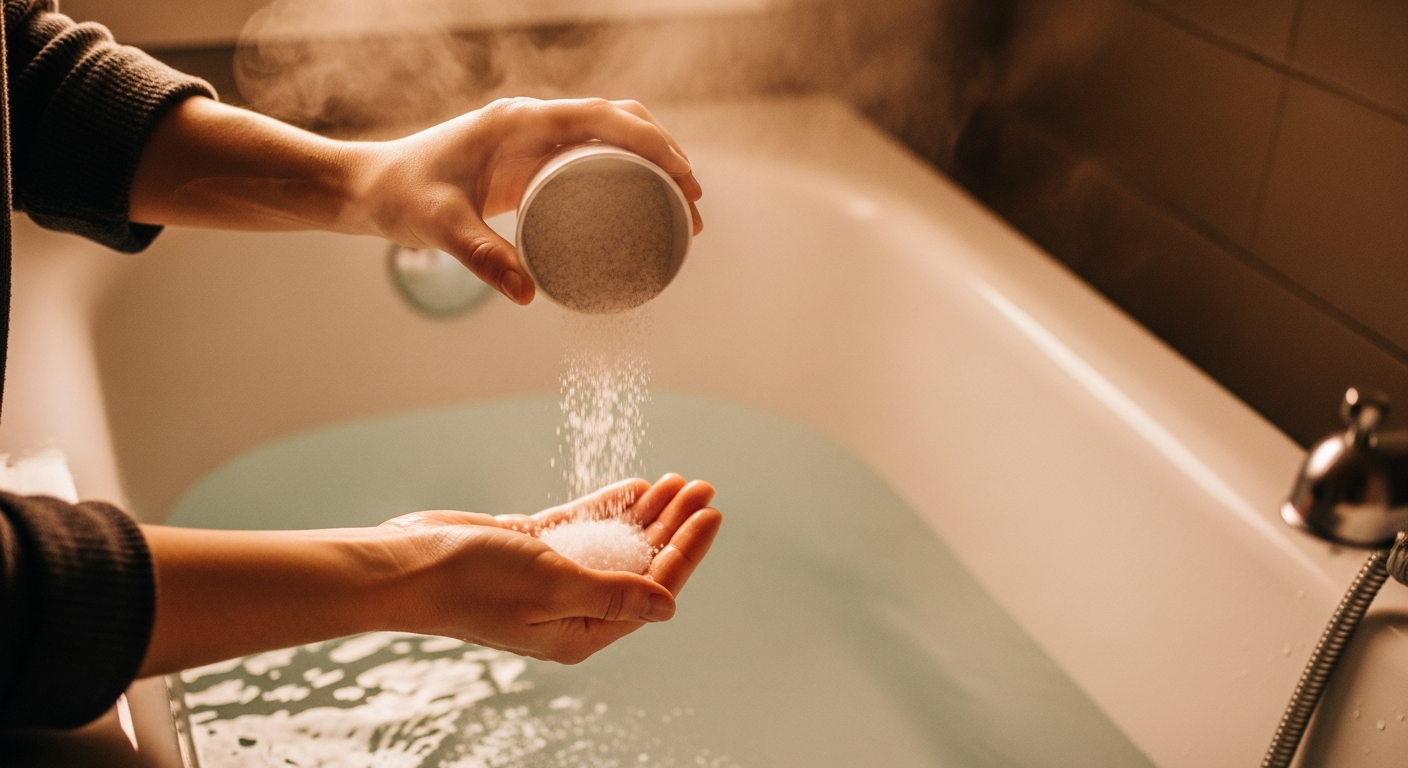
- Fill your bathtub with warm water — comfortable to the touch, around 90–100°F if you want to get specific. Avoid scalding; hot water makes you lightheaded faster.
- Add the Epsom salt while the water is still running so it dissolves completely.
- Add the baking soda and swirl the water around to distribute it.
- Add essential oils if you're using them — drop them in and give the water another swirl.
- Soak for 20–40 minutes. I usually aim for 20–30 minutes — long enough to actually relax, short enough that I don't fall asleep in the tub.
- Rinse off with a quick shower afterward if you have sensitive skin. Otherwise, pat dry and let the minerals do their work.
That's it. Two ingredients, a warm tub, and half an hour.
Customize Your Bath for What Your Body Needs
Here's where things get interesting. Once you know what each ingredient does, you can adjust the recipe based on what's going on with your body that day. These aren't complicated changes — just small tweaks in ratio and add-ins.
For Itch Relief and Skin Conditions
When my skin starts flaring up in dry winter air or after a run-in with something in the garden, this is the first thing I reach for.
Recipe: 1 cup Epsom salt + ¾–1 cup baking soda + warm water
Optional: ¼ cup finely ground colloidal oatmeal (excellent for eczema or very irritated skin)
Soak time: 20 minutes
The higher baking soda ratio increases the alkalinity of the water, which has a noticeable calming effect on itchy, irritated skin. This works well for eczema flares, bug bites, poison ivy, hives, or the itching that comes with chickenpox (it's gentle enough for kids — just use half the quantities). The colloidal oatmeal takes it up another notch if you have it on hand.
For Sore Muscles and Post-Work Recovery
After a long day hauling in the garden or any kind of heavy physical work, this is the version I make.
Recipe: 2 cups Epsom salt + ½ cup baking soda + warm water
Optional: 5 drops eucalyptus + 5 drops peppermint essential oil
Soak time: 30–40 minutes
The higher Epsom salt ratio leans into the muscle relaxation side. The eucalyptus and peppermint add a pleasant cooling sensation and are both associated with pain relief and reduced inflammation. Soak for the full 30–40 minutes if you can — this one benefits from time.
For Stress Relief and Better Sleep
This is my winter evening ritual, and honestly the one I rely on most. I come out feeling like someone hit a reset button.
Recipe: 1 cup Epsom salt + ½ cup baking soda + 8–10 drops lavender essential oil + warm water
Soak time: 20–30 minutes before bed
You're working three angles at once here: magnesium (supports stress regulation and relaxation), warm water (activates the parasympathetic nervous system and lowers cortisol), and lavender aromatherapy (well-studied for its calming effect on the nervous system). It's a lot of effort for one bath — but it's really just mixing three things in a tub.
For Skin Softening and Dry Skin
If you've been battling dry, rough skin, especially in winter, flip the ratio.
Recipe: ½ cup Epsom salt + 1 cup baking soda + 2 tablespoons coconut or jojoba oil + warm water
Soak time: 20 minutes
Baking soda is doing most of the work here — and the results are noticeably silky. You genuinely feel like you used an expensive spa product. The oil adds another layer of moisture, though it makes the tub slippery — use a non-slip bath mat and be careful getting in and out. If that feels risky, skip the oil in the tub and apply it to your skin immediately after you get out instead.
For a Quick Foot Soak (No Tub Needed)
I do this at the kitchen table with a good book. It couldn't be easier.
Recipe: ½ cup Epsom salt + 2 tablespoons baking soda in a basin of warm water
Soak time: 15–20 minutes
This works beautifully for tired, aching feet after a day of standing or working outside. The baking soda's antifungal properties make it especially good for athlete's foot or any fungal foot issues. If you don't have a bathtub, or just don't want to commit to a full soak tonight, this is the move.
Want all five recipes on one card? [Grab the free printable bath soak recipe card →]
Is It Safe? What You Need to Know Before You Get In
Good news: for most healthy adults and kids, this is one of the safest things you can do for yourself. The ingredients are inexpensive, non-toxic, and well-tolerated. But a few groups should take precautions.
Talk to your doctor first if you have:
- Open wounds, burns, or infected skin — soaking in mineral water can irritate these
- High blood pressure that is not well-controlled
- Diabetes with nerve damage or poor circulation in your feet or legs
- A severe skin condition that reacts unpredictably to new products (patch test first)
Practical precautions for everyone:
- Keep the water comfortable, not scalding. Hot water — above about 104–105°F — raises your core temperature quickly and can make you lightheaded when you stand up. Get out slowly and have something nearby to hold.
- Drink a glass of water before and after. Warm water makes you sweat and you can get dehydrated without realizing it.
- If you're pregnant, short soaks in comfortably warm (not hot) water are generally considered safe, but check with your OB/GYN first.
- For kids, Epsom salt and baking soda baths are fine — use half the adult quantities. They work especially well for chickenpox itch.
One important note: Epsom salt dissolved in water for drinking is a laxative — that's completely different from bathing in it. Don't drink the bath water and don't confuse the two uses.
Does This Bath Actually Detox Your Body? (Honest Answer)
I'll be straight with you: the science on detox baths is genuinely mixed. Some wellness sources claim that soaking in Epsom salt pulls toxins out through your skin — and while I understand the appeal of that idea, it's not really how it works.
Your liver and kidneys handle actual detoxification every day. They convert and remove waste products from your bloodstream, and a bath doesn't replace or accelerate that process in any meaningful way. When articles claim that soaking in Epsom salt "flushes toxins," the evidence for that specific claim is weak.
Here's what IS real: warm water opens your pores and promotes sweating, which does eliminate some substances through the skin. The magnesium in Epsom salt may be absorbed transdermally in small amounts, supporting your body's natural processes. And 30 minutes of lying in warm water measurably lowers cortisol — the stress hormone that accumulates when you're constantly pushing through a hard week.
Even if you're skeptical about the detox framing, what you absolutely get is 30 minutes of real rest for under $3. That's worth it on its own terms.
Add-Ins That Make It Even Better
The basic recipe stands on its own, but if you want to customize further, here's what I reach for.
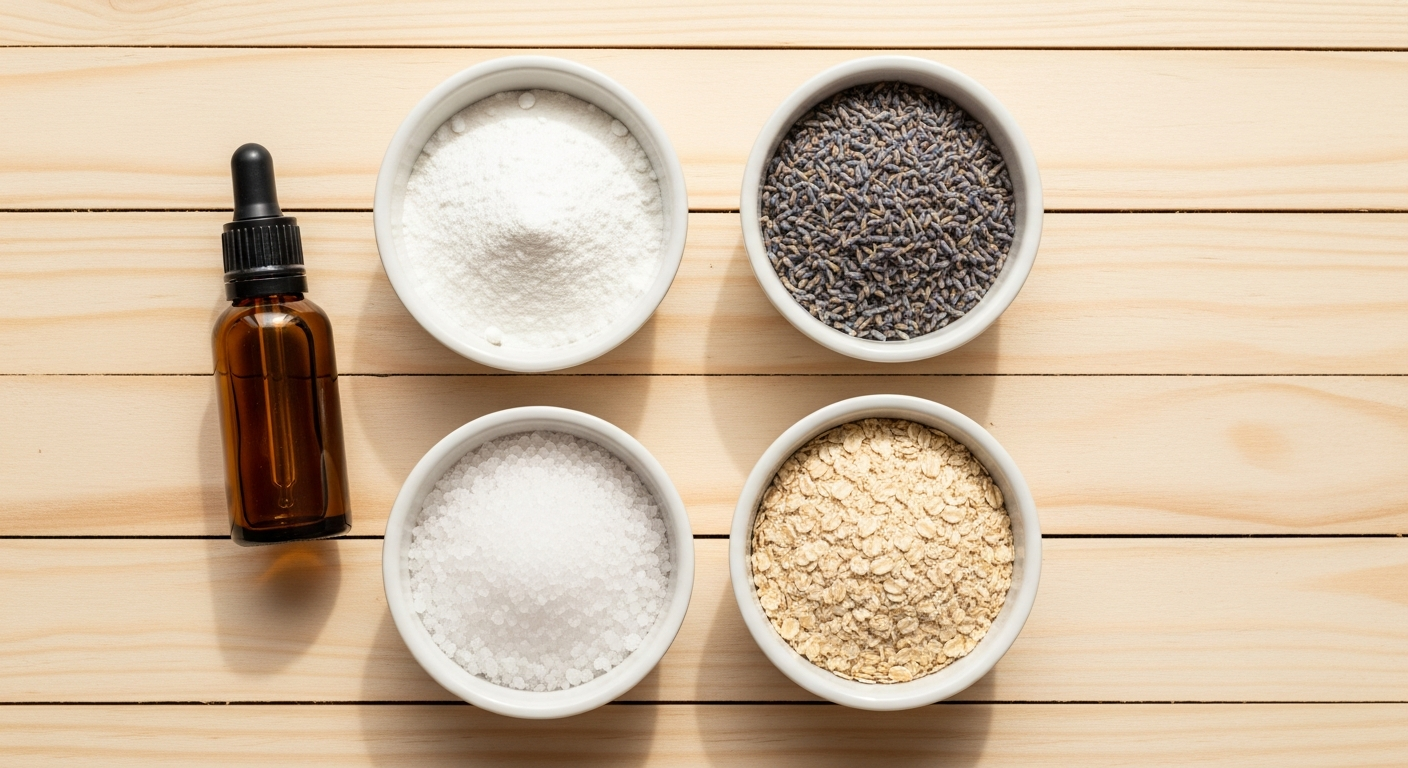
Essential oils — Add 5–10 drops after the tub is full. A few I use regularly:
- Lavender: Sleep, stress relief, and general calming. I reach for lavender essential oil almost every time.
- Eucalyptus: Great when you're congested, or for sore muscles. Also smells incredible in a warm bath.
- Frankincense: Mood-lifting and anti-inflammatory. More subtle than the others.
- Peppermint: Cooling and energizing — good for an evening when you need to relax but not knock yourself out.
Colloidal oatmeal — ¼ cup of finely ground oats added to the water significantly boosts the itch-relief effect for eczema or rashes. Worth keeping in the cabinet.
Apple cider vinegar — ¼ cup added to the bath can help with yeast-related conditions or stubborn itchiness. It pairs well with the baking soda's alkaline effect.
A note on oils: Coconut oil, jojoba, and similar moisturizing oils are wonderful for skin but make tubs very slippery. Use a non-slip mat if you add them to the water, or simply apply the oil to your skin after the bath instead — just as effective and much safer.
FAQ
What does soaking in Epsom salt and baking soda do for you?
Soaking in an Epsom salt and baking soda bath can relax sore muscles, relieve itchy or irritated skin, reduce stress, and soften dry skin. Epsom salt provides magnesium sulfate, which may support muscle relaxation and stress response. Baking soda raises the water's pH slightly, which calms itching and leaves skin noticeably silky.
Will a baking soda bath stop itching?
Yes — baking soda's alkaline properties can calm itchy skin from eczema, bug bites, poison ivy, hives, and chickenpox. To maximize the itch-relief effect, increase baking soda to ¾–1 cup and add colloidal oatmeal if you have it. Soak for 20 minutes.
Does Epsom salt draw out toxins?
Not exactly. Your liver and kidneys handle actual detoxification. What Epsom salt may do is support your body's natural recovery — reducing muscle tension, delivering trace magnesium transdermally, and promoting relaxation. Warm water itself lowers cortisol and promotes sweating. It's genuinely restorative, even if "toxin removal" is an oversimplification.
How much Epsom salt and baking soda should I put in a bath?
A good baseline is 1–2 cups Epsom salt and ½ cup baking soda in a standard-sized bathtub. Adjust based on your goal: more baking soda for itch relief and skin softening; more Epsom salt for sore muscle recovery.
Is a baking soda bath safe every day?
For most people, 2–3 times a week is a comfortable frequency. Daily soaks can dry out skin over time, particularly for people who already have dry or sensitive skin. If you notice your skin getting drier, reduce frequency or follow up with a moisturizer.
Can I use this as a foot soak instead of a full bath?
Absolutely — use ½ cup Epsom salt and 2 tablespoons baking soda in a basin of warm water. Soak for 15–20 minutes. It works well for tired feet, athlete's foot, and general foot soreness, even without a bathtub.
How often can I take an Epsom salt and baking soda bath?
Two to three times a week is a reasonable frequency for most people. If you're targeting something specific like muscle recovery, nightly baths for a few days are generally fine. Just follow up with a moisturizer if your skin starts to feel dry.
Can kids take an Epsom salt and baking soda bath?
Yes — use half the adult quantities (½ cup Epsom salt + ¼ cup baking soda). These baths are commonly recommended for chickenpox itch in children and are well-tolerated. Keep the water comfortably warm, not hot, and supervise younger children in the tub.