The Best Mason Jar Vacuum Sealers in 2026 (Honest Review + Comparison)
Last updated March 11, 2026
Quick Look: Mason Jar Vacuum Sealers
What it is: A handheld electric device that pulls air out of mason jars and creates an airtight seal using a standard flat canning lid — no plastic bags, no waste. Cost range: $20–$60 depending on brand Best budget pick: Love Moment (
$23) Best premium pick: Everjar ($57) Electric vs. manual: Electric is easier and more consistent — that's what most homesteaders use Can it replace canning? No. This tool is for dried goods and short-term fresh storage only — not a substitute for water bath or pressure canning. Bottom line: If you already have mason jars on your pantry shelves (and I'm guessing you do), this is a $20–$25 upgrade that earns its drawer space.
What Is a Mason Jar Vacuum Sealer — And Is It Actually Worth It?
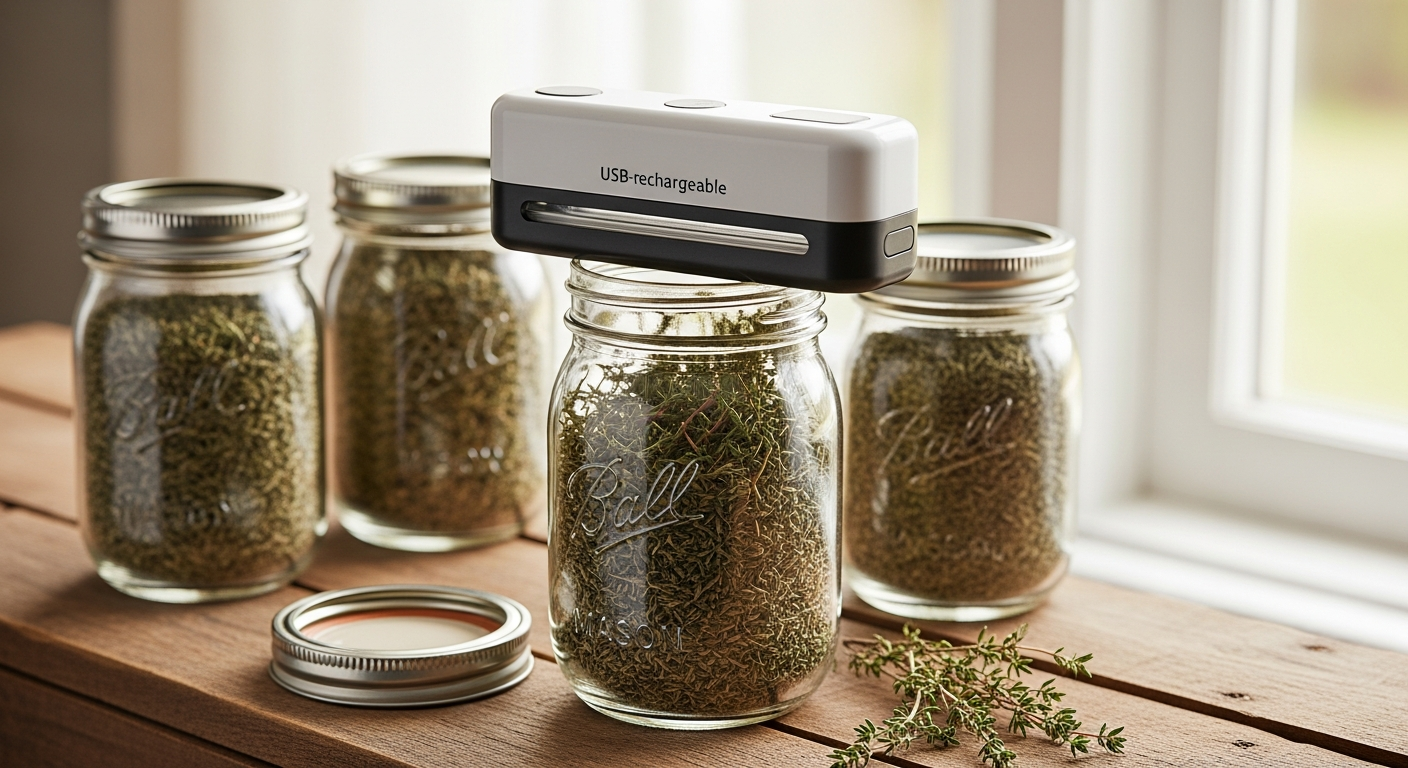
A mason jar vacuum sealer is a small handheld device — usually rechargeable via USB — that sucks the oxygen out of a sealed mason jar and creates an airtight seal using a standard flat canning lid. That's really all it does. And it turns out, that's enough to make a real difference in how long your food stays fresh.
Here's the simple reason it works: oxygen is what causes food to go stale, oxidize, and spoil faster. Remove the oxygen, and you significantly slow that process. Herbs that would lose their potency in six months can last two to three years. Granola that goes stale in a few weeks can stay crisp for months. Dried beans and rice that might last a year in a regular jar can hold quality for several years when vacuum sealed.
Is it worth buying? If you already use mason jars for food storage — and most homesteaders do — then yes, without hesitation. You're not investing in a whole new system. You're spending about $20–$25 to upgrade the one you already have. There's nothing to learn, no special supplies required beyond the flat canning lids you probably already keep on hand, and the first time you use it you'll immediately understand why people like me reach for it regularly.
The Best Mason Jar Vacuum Sealers (2026 Picks)
I've used the Love Moment and researched the top brands currently available. Here's how the main options compare, from the budget-friendly pick that most homesteaders start with to the premium upgrade for those who seal in bulk.
Best Budget Pick — Love Moment Electric Mason Jar Vacuum Sealer (~$23)
This is the one I use, and after several months I have zero complaints. The Love Moment comes with adapters for both wide-mouth and regular-mouth mason jars, a USB charging cable, and a charging speed that I'd describe as fast. The battery life is genuinely impressive — each seal uses roughly 2% of the battery, which means you'll get around 50 seals on a single charge. For most homesteaders, that's weeks of use between charges.
The build is basic — this isn't a premium product, and it doesn't try to be. But it does exactly what it promises: press the seal button, wait about 40 seconds, and you're done. There's no learning curve. I had a good seal on my very first jar and haven't had trouble since. At around $23, it's the kind of tool you can try without second-guessing yourself, and it delivers real results.
Best Premium Pick — Everjar (~$57)
The Everjar is the brand that most people mention when they're looking for a step up, and it typically runs around $57. It's USB rechargeable with a similar set of adapters for wide-mouth and regular-mouth jars. The build quality feels more substantial than the budget options, and it comes with a stronger warranty.
That said, I want to be honest here: if you're new to vacuum sealing and not sure how often you'll use it, I'd start with the Love Moment. The difference between these two comes down to build quality and durability under heavy use. The Everjar makes more sense if you're sealing large batches every week during harvest season and want something built to take that kind of regular use.
Electric vs. Manual Mason Jar Vacuum Sealers — Which Should You Get?
Manual mason jar vacuum sealers exist — they're older-style hand-pump designs that cost a bit less upfront. They work, but they require more physical effort and tend to produce less consistent suction than electric models.
For most homesteaders, electric is the right call. It's push-button simple, rechargeable, and gives you the same reliable result every time without any technique involved. The price difference between a basic electric model and a manual one isn't significant enough to make manual worth the trade-off. If you can spend $20–$25, get the electric.
Brand Comparison at a Glance
| Brand | Price | Mouth Sizes | Battery | Best For |
|---|---|---|---|---|
| Love Moment | ~$23 | Wide + Regular | USB, ~50 seals/charge | Budget-conscious homesteaders — our top pick |
| Everjar | ~$57 | Wide + Regular | USB rechargeable | High-volume sealing, want a more durable build |
| Koni | Check Amazon | Wide + Regular | USB rechargeable | Mid-range alternative worth comparing |
| InstaSeal | Check Amazon | Wide + Regular | USB rechargeable | Another option appearing in recent searches |
Prices and availability change — verify on Amazon before purchasing.
What Can You Vacuum Seal in Mason Jars? (Homestead Use Cases)
If you're growing your own herbs, dehydrating produce from the garden, or stocking up on bulk pantry staples, this is where a mason jar vacuum sealer really earns its keep every single day. The generic lists you'll find elsewhere cover things like cereal and dry snacks — and yes, those work — but here's what it actually looks like to use one on a working homestead.
Works great:
- Dried herbs from the garden — lavender, thyme, rosemary, oregano, chamomile. This is where I get the most use out of mine.
- Dehydrated vegetables — zucchini chips, dried tomatoes, sweet peppers from the garden dehydrator
- Bulk dried beans, lentils, split peas, and rice — especially when you're buying in quantity to save money
- Dried fruit and fruit leather
- Homemade granola and trail mix — keeps it crisp for months instead of weeks
- Bulk spices, garlic powder, onion powder — anything you make or buy in quantity
- Seeds saved for next season's garden — keeps germination rates higher
- Coffee beans — extends freshness noticeably compared to an open bag
Skip it:
- Hot foods — always cool completely before sealing
- Wet or fresh produce for long-term storage — vacuum sealing can extend refrigerator life by a few extra days, but it does not make fresh produce shelf-stable
- Raw or cooked meat — vacuum sealing alone does not make meat safe to store at room temperature
How Long Does Vacuum Sealed Food Last in Mason Jars?
This is the question I never found a clear answer to when I was first looking into these sealers, so here's a practical reference:
| Food | Without Vacuum Seal | With Vacuum Seal |
|---|---|---|
| Dried herbs (homegrown) | 6–12 months | 2–3 years |
| Dehydrated vegetables | 6–12 months | 2–4 years |
| Dried beans and rice | 1–2 years | 4–6 years |
| Coffee beans | 1–2 months | 6–9 months |
| Homemade granola | 2–4 weeks | 3–6 months |
| Dried fruit | 6–12 months | 1–2 years |
These are quality estimates, not safety guarantees. The goal is keeping food at its best — flavor, potency, texture. Store your jars in a cool, dark pantry for the best results.
What a Mason Jar Vacuum Sealer Can't Do (Food Safety — Read This)
I want to be really clear about this because I've seen some confusion online, and when it comes to food safety there's no room for vague.
A mason jar vacuum sealer removes oxygen from the jar. That's it. It does not produce heat, and heat is what kills the bacteria that can make food unsafe. Water bath canning and pressure canning both reach temperatures that destroy harmful bacteria — that's what makes canned goods shelf-stable for months or years at room temperature. Vacuum sealing doesn't come close to doing that.
This means you cannot use a vacuum sealer as a substitute for canning. Not for tomatoes, not for green beans, not for salsa. If a food needs to be canned to be safe, it needs to be canned. Vacuum sealing is wonderful for dried goods and short-term refrigerator extension of fresh food — and it genuinely excels at both. Just don't cross those lines.
How to Use a Mason Jar Vacuum Sealer (Step-by-Step)
It's genuinely as easy as it looks — here's the whole process from start to finish:
- Fill your mason jar with the food you want to seal. Leave about half an inch of headspace at the top.
- Wipe the rim of the jar with a clean, dry cloth to remove any debris or moisture — this helps ensure a good seal.
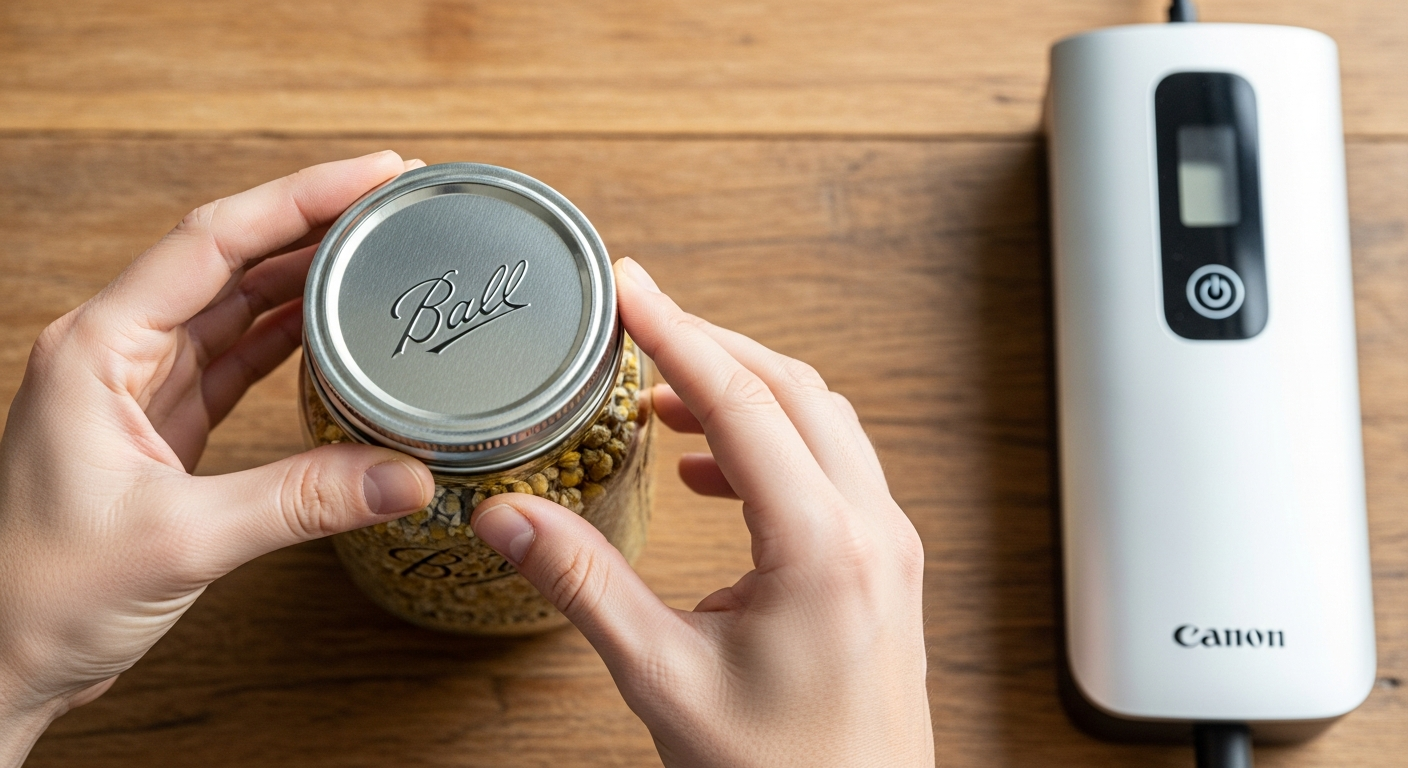
- Place a standard flat canning lid on the jar. You do not need the screw band — just the flat inner disc.
- Attach the correct adapter to your sealer: wide-mouth for wide-mouth jars, regular for regular jars.
- Press the sealer firmly down on top of the lid so it's centered and making full contact.
- Press the power or seal button and wait for the cycle to complete — usually 30 to 40 seconds.
- Press power again to release, then lift the sealer straight off.
- Test the seal: pick up the jar by holding just the sides of the flat lid. If the seal holds and the center of the lid has a slight downward curve (concave), you're done.
Steps may vary slightly depending on your specific brand, so check the instructions that come with your unit. But the process above reflects how most electric models work, and it really is that simple.
Which Mason Jars Work With a Mason Jar Vacuum Sealer?
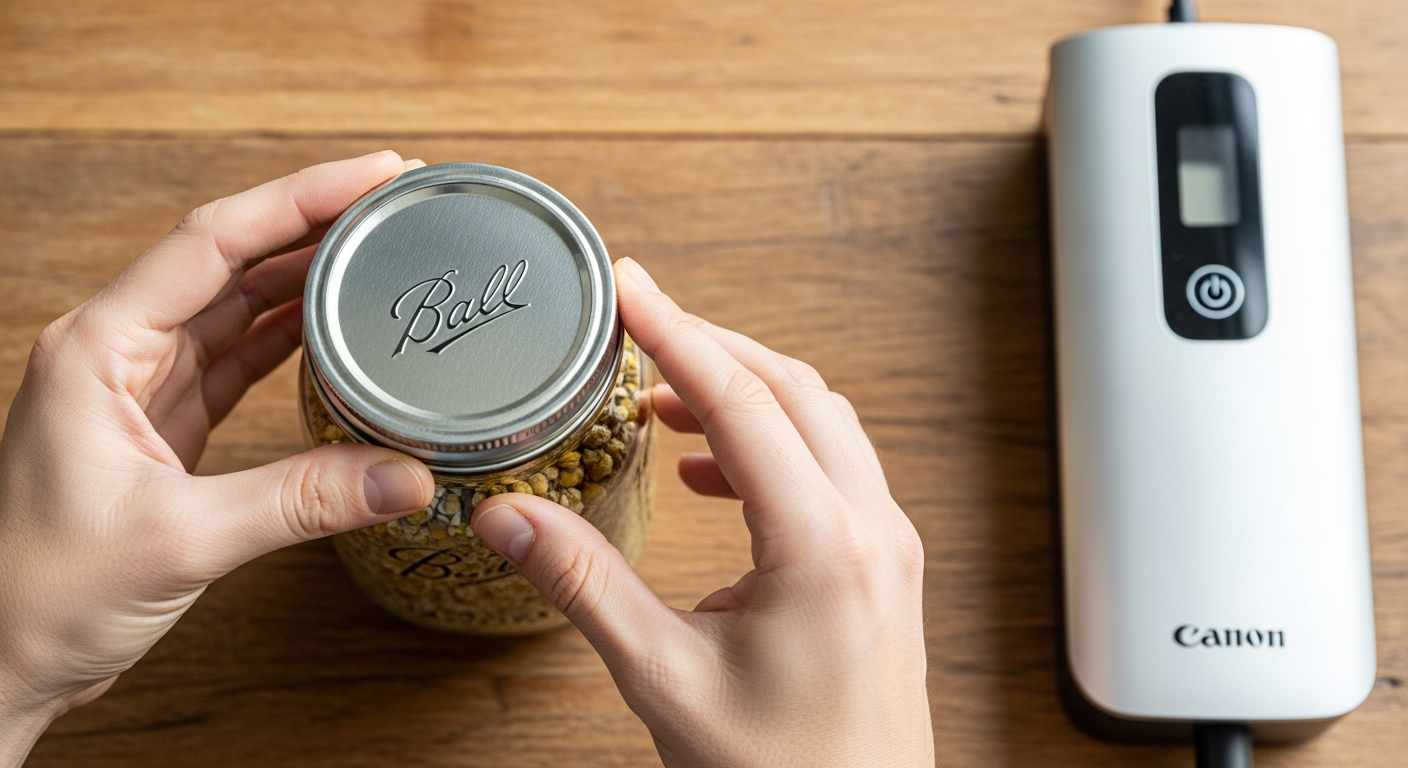
Both wide-mouth and regular-mouth mason jars work — any Ball, Kerr, or equivalent brand with standard canning lid sizing. That covers the vast majority of mason jars you're likely to already have on your shelves.
What won't work: random commercial jars like old pickle jars or pasta sauce jars that don't fit a standard flat canning lid, Weck jars (which use an entirely different lid system), and most upcycled condiment jars. If the lid isn't a standard Ball or Kerr flat canning disc, the sealer won't be able to create a proper vacuum.
One thing worth noting: you only use the flat inner lid — no screw ring. The ring can interfere with the suction, so leave it off entirely during sealing. You can add it back afterward for storage if you prefer, but it's not necessary.
Frequently Asked Questions About Mason Jar Vacuum Sealers
Do mason jar vacuum sealers really work?
Yes — they work by removing oxygen from the jar and creating an airtight seal using a standard flat canning lid. That oxygen removal meaningfully extends how long food stays fresh, especially for dried goods and pantry staples. They're not magic, and they're not a substitute for canning, but for what they do, they do it well.
Can you vacuum seal fresh vegetables in mason jars?
For short-term refrigerator storage only. Vacuum sealing can give you a few extra days before fresh produce starts to deteriorate, but it does not make vegetables shelf-stable. Fresh produce still needs cold storage — the sealer just slows the clock a little.
Do I need special lids for a mason jar vacuum sealer?
No. Standard Ball or Kerr flat canning lids — the inner disc only, without the screw band — work perfectly. These are the same lids you'd use for water bath or pressure canning.
Is an electric mason jar vacuum sealer better than a manual one?
For most homesteaders, yes. Electric models are push-button, USB rechargeable, and produce consistent suction every time without any effort. Manual models exist and work, but they require more physical pumping and tend to give less reliable results. The price difference is small enough that electric is worth it.
How do I know if the vacuum seal worked?
Pick up the jar by holding just the sides of the flat lid. If the seal holds and the center of the lid is slightly concave (curved inward), you have a good seal. If the lid feels loose or flexes when you press the center, try sealing again.
Can I use a mason jar vacuum sealer for canning?
No — and this matters. Vacuum sealing removes oxygen but does not use heat, and heat is what's required to kill dangerous bacteria in canned foods. A vacuum sealer is not a substitute for water bath or pressure canning. For any food that requires canning to be shelf-stable, use the proper canning method.