Best Baby Carriers for 2026: Honest Picks for Every Budget (Including Farm and Chore Use)
Last updated: March 13, 2026
| Category | Top Pick | Price Range | Best For |
|---|---|---|---|
| Best Overall | Ergobaby Omni 360 | ~$130–$180 | Versatility, all ages, machine washable |
| Best for Newborns | Baby K'tan Original | ~$55–$65 | No learning curve, first carrier |
| Best for Chores/Farm Use | Baby Tula Free-to-Grow | ~$139–$179 | Back carry, extended outdoor wear |
| Best Budget Structured | Momcozy Baby Carrier | ~$60–$70 | Budget-friendly, grows to 44 lbs |
| Best Budget Wrap | Boba Wrap | ~$45 | Affordable, machine wash+dry |
| Best Ring Sling | Nalakai Ring Sling | ~$90 | Quick carry, easy adjustment |
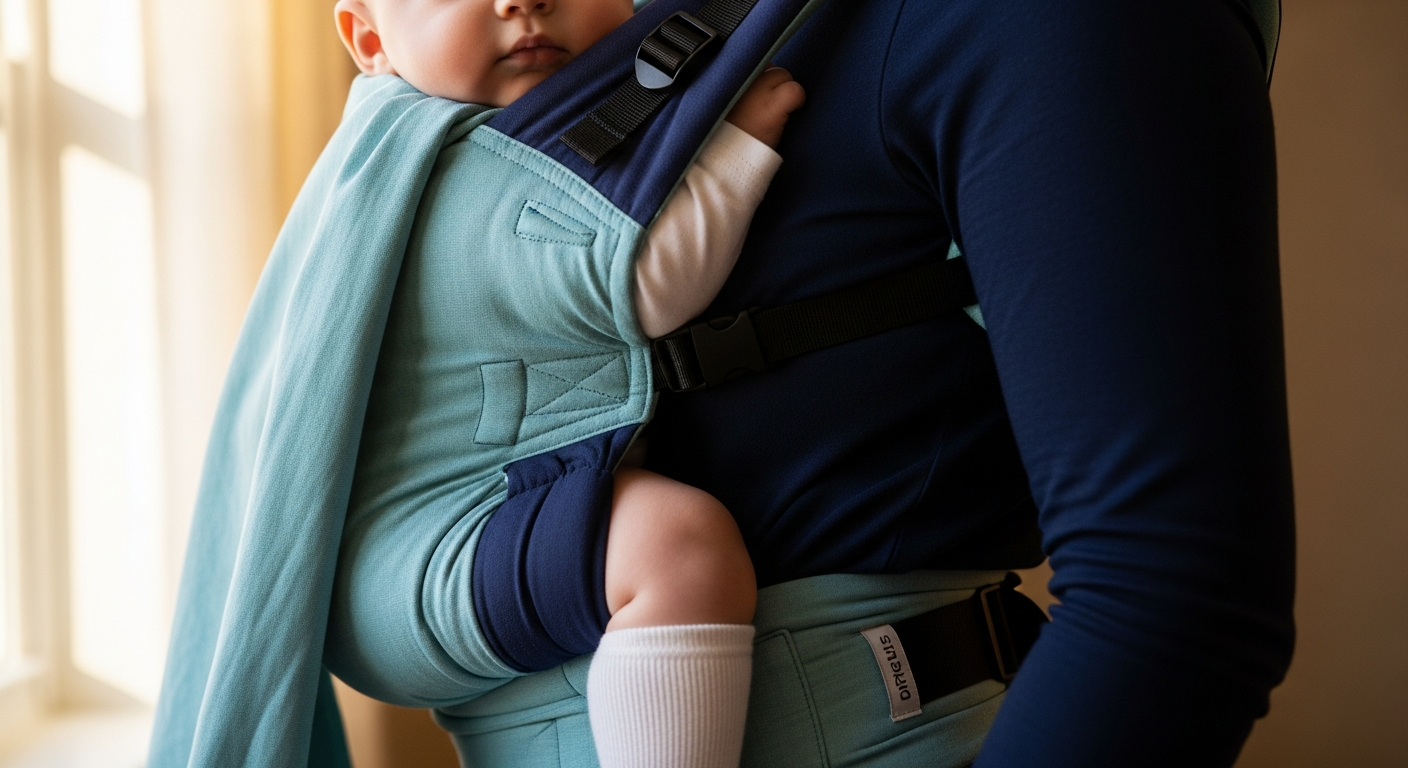
There's something I didn't expect about babywearing: I use it most when I'm doing chores. Not walking through a farmers market or strolling downtown — but collecting eggs with my hands full, weeding the garden while my baby fusses, standing over a hot stove while she absolutely refuses to be put down. That's when a good carrier earns its keep.
The baby carrier market is genuinely confusing, and the price range doesn't help. You'll see $45 wraps sitting next to $200 structured carriers, with an $800 luxury brand thrown in just to make your head spin. I've done a lot of research so you don't have to. Whether you're buying your first carrier or upgrading from a newborn wrap, this guide will give you a clear starting point. We'll cover the different types first — read that section before looking at specific brands — then get into picks by use case so you can go straight to what fits your situation.
Types of Baby Carriers (Start Here If You're Overwhelmed)
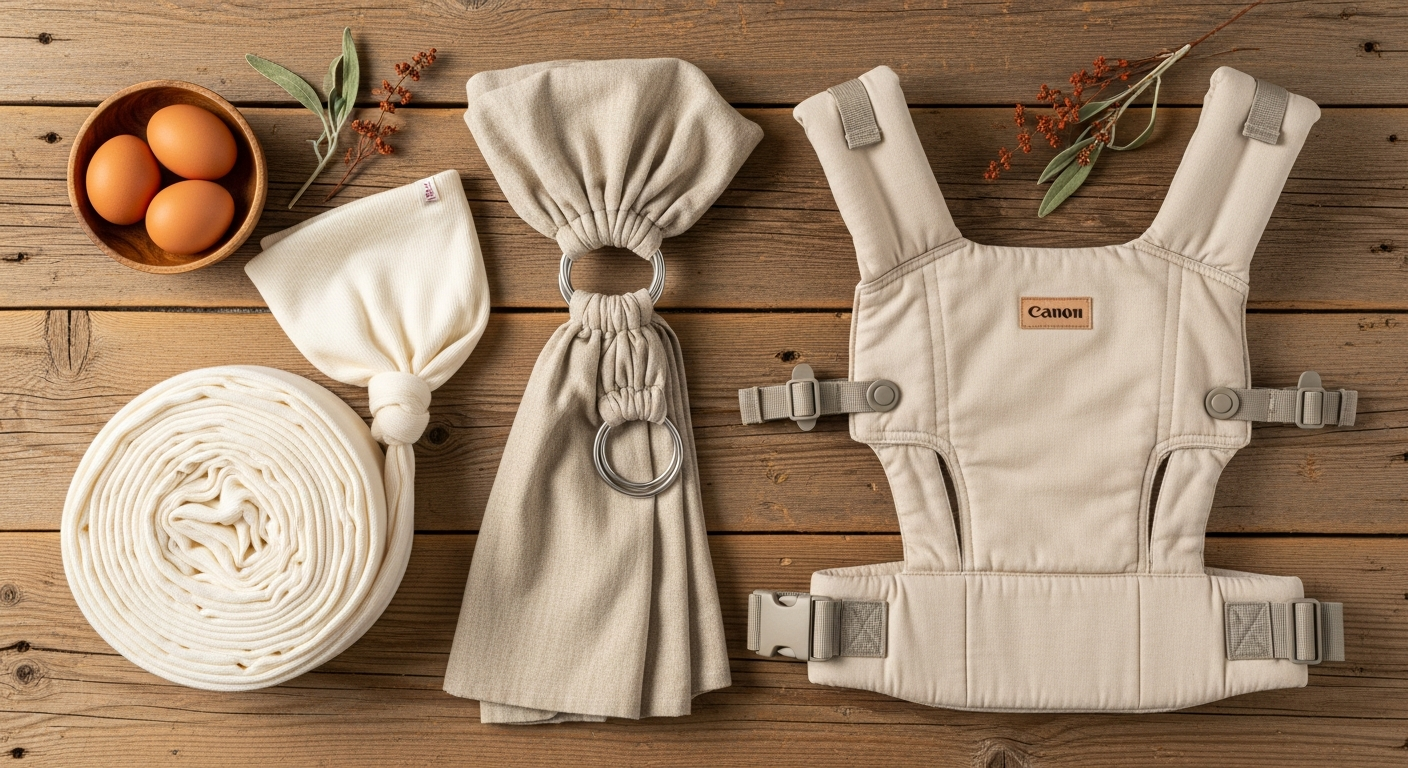
Here's the thing no one tells you upfront: there isn't one "best" baby carrier type. There are four main categories, and they serve different stages and lifestyles. Most committed babywearers end up with two carriers over the years — one for the newborn phase and one for when the baby gets bigger and more active. Knowing the types first will save you from buying something that doesn't fit your actual life.
| Type | Best Stage | Skill Level | Price Range | Dryer-Safe? |
|---|---|---|---|---|
| Stretchy Wrap | Newborn–4 mo | Medium | $45–$75 | Most are ✓ |
| Ring Sling | All ages (quick trips) | Medium | $75–$120 | Line dry |
| Soft-Structured (SSC) | 3 mo–toddler | Easy | $60–$200 | Most are ✓ |
| Meh Dai | 4 mo–toddler | Medium | $80–$120 | Varies |
Stretchy Wraps
A stretchy wrap is essentially a long piece of fabric — around 5 to 6 yards — that you wrap around your body and tie to create a snug pocket for the baby. It sounds more complicated than it is, and most people have the technique down in 10 minutes with a YouTube video. Stretchy wraps are best for newborns because they create a close, womb-like hold that is remarkably calming. They're warm (which matters in winter and works against you in August), and most are 100% cotton and machine washable. The main limitation is longevity — as babies get bigger and more squirmy, wraps become less practical, so most moms use them for the first 3 to 4 months. The Sollybaby Wrap and the Baby K'tan Original are both solid options at this stage; the K'tan simplifies the process even further by replacing the wrap technique with pre-formed loops.
Ring Slings
A ring sling is a single length of fabric threaded through two rings worn on one shoulder. The ring adjustment makes it easy to tighten and loosen with the baby in it — quick on and off, very practical for short carries and hip carrying as babies get bigger. The trade-off is that one-shoulder design isn't ideal for long periods of wear, especially if you're bending and reaching. Ring slings line-dry rather than going in the dryer, which matters if you're choosing your primary carrier. The Nalakai Ring Sling is our top pick in this category — more on that in the picks section.
Soft-Structured Carriers (SSC)
This is the workhorse. A soft-structured carrier is what most people picture when they think "baby carrier" — a structured panel, padded shoulder straps, and a waistband that buckles on like a backpack, distributing the baby's weight across your hips and shoulders. SSCs are easiest to use solo, support the ergonomic M position for baby's hips, and the best ones allow back carry, which completely frees your front body for tasks. Most SSCs fit babies from around 7 lbs up to 44 or 45 lbs, meaning they last from the early months through toddlerhood. This is the category I recommend most for active moms — BabyBjorn, Ergobaby, Baby Tula, and Momcozy are the main brands worth knowing.
Meh Dai
The meh dai is a traditional Asian-style carrier that falls between a wrap and a structured carrier — it has a structured panel but ties rather than buckles. It's less common in U.S. stores but worth mentioning, particularly for moms who find structured waistbands uncomfortable or who want more customizability in fit. Hope and Plum makes a popular version. If you're new to babywearing, I'd start with a wrap or an SSC and come back to this category once you know what you like.
What to Look for in a Baby Carrier (Especially If You're Active)
Most carrier guides focus on city walkers and stroller-alternative parents. If that's you, great — but if you're going to be doing real work with a baby on your body, here's what actually matters:
- Solo use. Can you get it on by yourself without a second pair of hands? Wraps require pre-tying, which helps, but structured carriers win here — you put one on like a backpack. If you're the only adult around most mornings, this matters.
- Back carry capability. This is the one I wish someone had emphasized to me earlier. Front carry is fine for short periods, but for chores — bending, reaching, carrying things — back carry puts the weight behind you and frees your entire front body. Not every carrier supports back carry; look for one that explicitly lists it.
- Machine washable (ideally dryer-safe). Babies are messy and farm life is messier. A carrier you have to hand-wash or line-dry will sit in a pile while you figure out when you'll get to it. Machine wash and dryer-safe is the practical choice.
- Weight range. Cheap carriers sometimes max out at 25 or 33 lbs, which means you're buying again in a year. Look for carriers rated to 44 or 45 lbs if you want one that lasts through toddlerhood.
- M position support. Baby's legs should spread wide with knees higher than the bottom — this protects hip development. Modern carriers from reputable brands are designed for this, but it's worth checking.
Is the price difference worth it? For most homestead moms, $60–$140 is the sweet spot. A $200 carrier won't do more chores than a $70 one, and a $45 wrap is a perfectly reasonable starting point if you're not sure babywearing is for you. Spending more is justified if you plan to babywear past 18 months and want a carrier rated to 45 lbs — the Baby Tula Free-to-Grow and Ergobaby Omni 360 are worth the investment for long-term use. The $800 Artipoppe? Aesthetics only.
Our Top Picks: Best Baby Carriers in 2026

Best Overall — Ergobaby Omni 360
The Ergobaby Omni 360 earned the highest test score (90/100) across independent testing at KidTravel, and it's easy to see why — it's one of the most versatile structured carriers available. It supports four carry positions: inward facing, outward facing, hip carry, and back carry, fitting babies from 7 to 45 lbs. The seat adjusts as the baby grows using color-coded tabs, and the padded lumbar support waistband fits adult sizes from 25.5 to 55.25 inches around. Testers specifically noted how well it supports the ergonomic M position for baby's legs — one of the best performers in that category of all carriers tested.
The main honest trade-off is that the shoulder straps clip behind your shoulder blades after the baby is in, which takes a bit of practice to do solo with a wiggly baby. It's also on the bulkier side and less breathable than mesh-panel alternatives. For dads or partners who want to share the carrier: the Omni 360's adjustability makes it one of the most "fits different bodies" options on the market, which makes it a good choice if more than one person will be using it. Around $130–$180 on Amazon.
Best for Newborns — Baby K'tan Original
The Baby K'tan Original is the no-excuses starting carrier. It looks like a wrap, but instead of a long continuous piece of fabric you have to pre-tie, the K'tan is two pre-formed loops linked together — you slip it on like a shirt and load the baby in with one motion. There's no wrapping technique to learn. It's 100% cotton, holds babies from 8 to 35 lbs, and it earned a 9.0 out of 10 for ease of cleaning in BabyGearLab testing — one of the highest cleaning scores of any carrier tested, because it's machine washable and dryer-safe.
The honest limitation is that the K'tan is sized by parent size rather than having adjustable straps, so it won't work well if you and your partner are very different builds. If you're the primary wearer and want to try babywearing before committing to a $150+ structured carrier, the K'tan is the lowest-risk starting point I can recommend. Around $55–$65 on Amazon.
Best for Active Moms and Chores — Baby Tula Free-to-Grow
If you're collecting eggs, weeding a raised bed, or doing any task where you're bending and reaching, back carry in a structured carrier is the answer. The Baby Tula Free-to-Grow is our top recommendation for homestead moms specifically because of how it handles extended wear. Certified babywearing consultant and blogger Ayelet at Home and on the Way calls it her go-to everyday carrier — and she specifically calls out that the shoulder straps don't fall off her shoulders during use, which is a complaint she has about Ergobaby. The linen fabric is durable and breathable for outdoor use, the waistband distributes weight comfortably, and a small front pocket holds keys or a phone.
The Tula Free-to-Grow fits babies from 7 to 45 lbs and supports front inward-facing and back carry — no forward-facing out position, which isn't a limitation for chore use but is worth knowing if that position matters to you. It's machine washable and dryer-safe. The price (~$139–$179) is higher than the budget picks, but this is the carrier you'll use every day for years, which changes the math. If I were starting over, this is the one I'd buy first.
Best Budget Structured — Momcozy Baby Carrier
The Momcozy earned the "Best Value" recognition from BabyGearLab, and it's a fair designation. It's a straightforward, no-fuss structured carrier with padded crisscross shoulder straps, an adjustable waistband, and a seat that grows with the baby from 7 to 44 lbs. The 100% cotton fabric starts a little stiff — one tester noted you won't love it until you've washed it a few times, and then it softens considerably. Machine washable and easy to care for.
The main limitation to know: the Momcozy is a front-inward-only carrier. There's no back carry option, which means it's not the right choice if outdoor chore use is your priority. But if you want a reliable, uncomplicated carrier that won't dent your budget, this is genuinely a good option at around $60–$70 on Amazon.
Best Budget Wrap — Boba Wrap
At around $45, the Boba Wrap is the most affordable legitimate option on this list, and the feature that sets it apart from other budget wraps is that it's machine washable and dryer-safe — which is rarer than you'd think in the wrap category. The fabric is 95% cotton with 5% spandex, comfortable for both the wearer and the baby, and it fits babies from 7 to 35 lbs.
The honest trade-off compared to the Baby K'tan: the Boba involves more fabric and a learning curve. You're working with a longer piece of fabric and a wrapping technique rather than pre-formed loops. It's not hard, but it takes a few tries to feel confident. And like all wraps, it's a front-carry option only — not suitable for back carry. If budget is the primary driver and you're patient with a short learning curve, the Boba is the place to start.
Best Ring Sling — Nalakai Ring Sling
The Nalakai earned the highest overall score in BabyGearLab's entire testing pool — 87 out of 100 — beating out the more expensive structured carriers on a composite of parent comfort, ease of use, child comfort, and cleaning. The bamboo and linen blend is naturally cool and has quick-drying properties. It's genuinely easy to put on and adjust with the baby already in it, which is the whole point of a ring sling — you're reaching to adjust a ring, not fumbling with multiple buckles.
The Nalakai is best used as a complement carrier rather than a primary all-day option. One-shoulder design means it's not ideal for hours of continuous wear or active chore use — that's what your structured carrier is for. As a grab-and-go carrier for short trips, quick soothing carries, and hip carry as the baby gets bigger, it's excellent. Line-dry only (not dryer). Around $90.
Is Babywearing Safe? The TICKS Checklist
Yes, babywearing is safe when you follow a few basic principles. Modern carriers from reputable brands are designed with these principles in mind, but it helps to know what to check when you're getting started.
The TICKS acronym is the standard safety reference in the babywearing community:
- T — Tight. The carrier should be snug against your body. A loose carrier doesn't support the baby properly and strains your back.
- I — In view at all times. You should be able to see your baby's face at any moment without moving the fabric.
- C — Close enough to kiss. Your baby's head should be close enough that you can tip your chin down and kiss the top of it.
- K — Keep chin off chest. Check that there's at least two fingers of space between baby's chin and their chest. Chin-to-chest can restrict the airway.
- S — Supported back. Baby's back should be supported in a natural curve, not slumped or hunched.
On positioning: baby's legs should be in what's called the M position — spread wide with knees higher than the bottom, like a frog. This supports healthy hip development. The International Hip Dysplasia Institute (IHDI) maintains a list of approved carriers on their website if you want to verify a specific brand before buying.
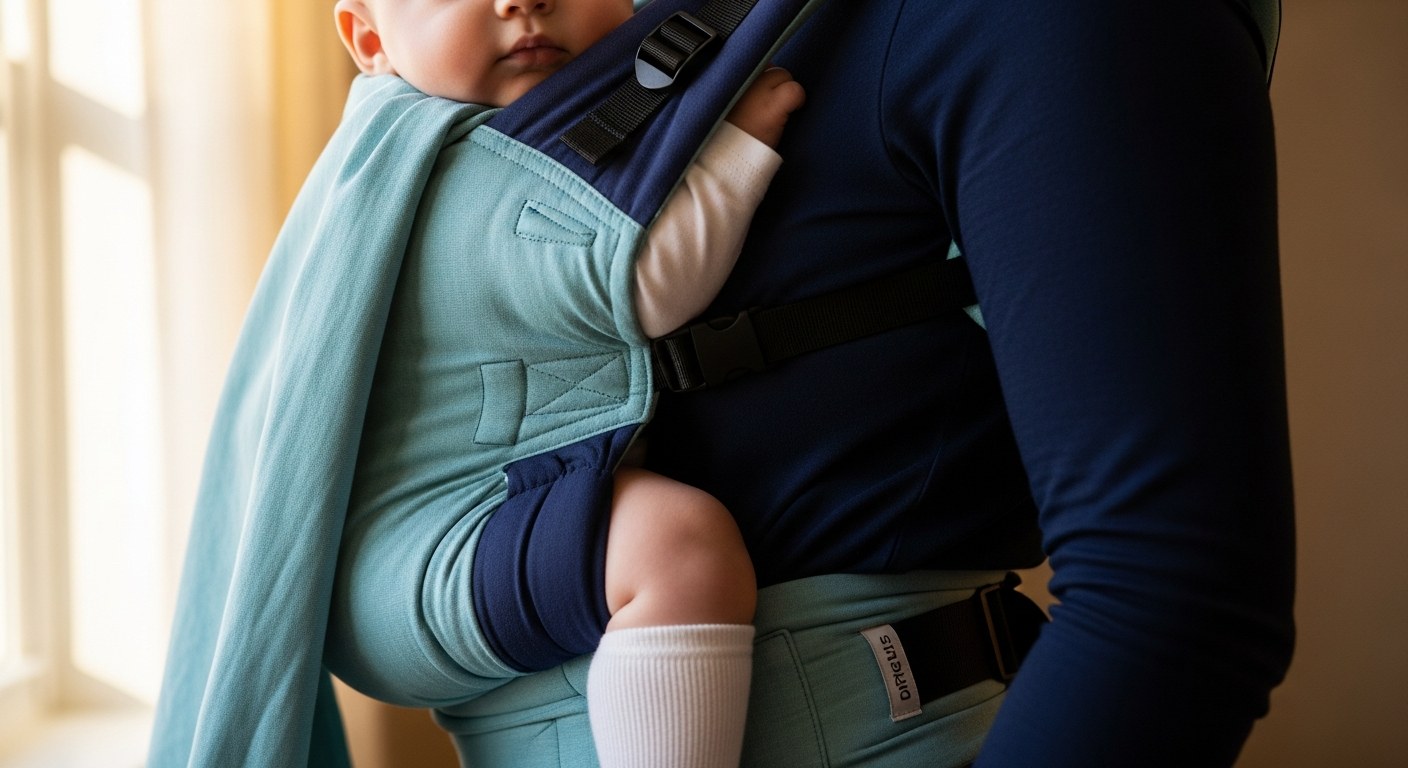
One more resource worth knowing: babywearing consultants and lending libraries exist in many areas, and some ship nationally (Carrier Connection is one). If you're unsure about fit or want to try before you buy, finding a local babywearing educator is genuinely worth the effort.
Frequently Asked Questions
What is the most recommended baby carrier?
The Ergobaby Omni 360 consistently earns the highest overall scores across independent testing, with a 90/100 from KidTravel and strong reviews across the babywearing community. For budget-conscious shoppers, the Momcozy Baby Carrier offers the best value in a structured carrier. For newborns specifically, the Baby K'tan is widely recommended for its ease of use and no-wrap-technique design.
What is the $800 baby carrier?
The $800 carrier most people are referring to is the Artipoppe Zeitgeist, a luxury German brand known for high-end fabrics and designer aesthetics. It has a following in certain babywearing communities as a status item. There's no meaningful functional advantage over well-rated carriers in the $100–$180 range for everyday or farm use — the Ergobaby Omni 360 outscored it in independent lab testing at a fraction of the price.
What baby carrier do pediatricians recommend?
Pediatricians generally recommend carriers that support the ergonomic M position for baby's hips — legs spread wide with knees higher than the bottom. The Ergobaby line and Baby Tula are commonly cited by name. BabyGearLab's carrier roundup is contributed to by a practicing pediatrician (Juliet Spurrier, MD). The International Hip Dysplasia Institute maintains an approved carrier list on their website that's worth bookmarking.
What's the best baby carrier for doing chores around the house?
A soft-structured carrier with back carry capability is the best option for chores and outdoor work. The Baby Tula Free-to-Grow and the Ergobaby Omni 360 both support comfortable back carry, which frees your entire front body for tasks like cooking, weeding, collecting eggs, or carrying supplies. Avoid wraps and ring slings for active tasks — they don't distribute weight as well over extended periods, and front carry limits what you can do while bending and reaching.