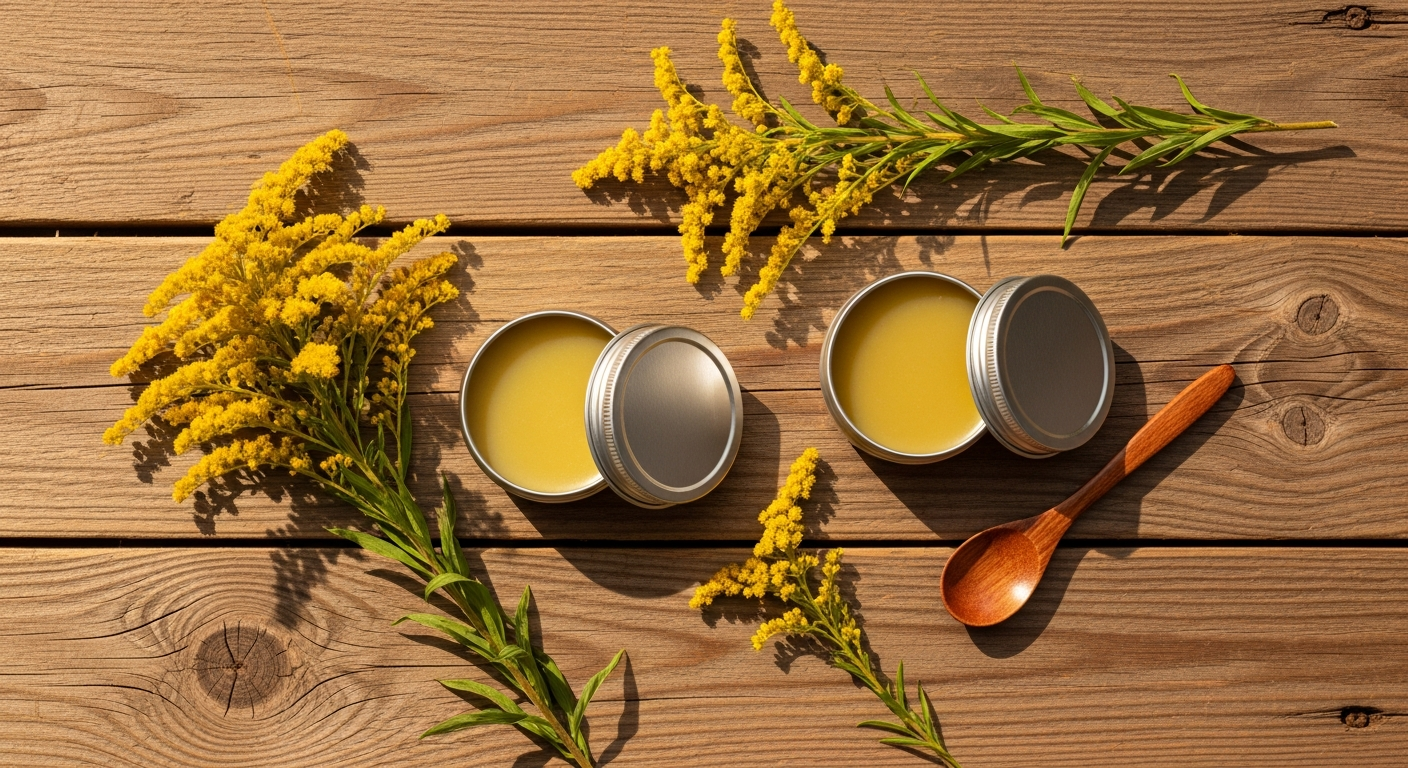
Goldenrod Salve Recipe: How to Make It at Home (Step by Step)
Last updated March 13, 2026
If you've got goldenrod growing along your fence line or in a nearby field, you've been walking past a really useful medicinal plant. I used to ignore it completely — partly because I assumed it was ragweed, and partly because I just didn't know what to do with it. Once I learned the difference (more on that in a second) and made my first batch of goldenrod salve, it became one of the regular staples I keep stocked in my medicine cabinet. It's gentle, it's versatile, and if you can forage your own, it costs almost nothing to make.
This guide walks you through the whole process: how to harvest and dry goldenrod, how to make the infused oil, and how to turn that into a finished salve you'll actually use.
| Main uses | Sore muscles, joint pain, dry skin, minor cuts and bruises |
| Key ingredient | Dried goldenrod flowers and leaves |
| Infusion time | 4–6 weeks cold method (or 2–3 hours with heat) |
| Salve ratio | 1 cup infused oil + 2 TBSP beeswax (by weight: 3.5 oz oil + 0.5 oz beeswax) |
| Shelf life | Up to 1–2 years with vitamin E added |
| Allergy note | Goldenrod does NOT cause hay fever — that's ragweed |
What Is Goldenrod (And Why Is It Worth Making Into a Salve)?
Goldenrod is one of those plants that blooms right when fall allergies hit their peak — which is exactly why it gets blamed for something it didn't do. Here's the thing: goldenrod pollen is heavy and sticky, carried by bees and other insects from flower to flower. It physically can't travel through the air in large quantities. The real culprit is ragweed, which blooms at the same time and produces light, wind-carried pollen. They get confused constantly, but they're completely different plants.
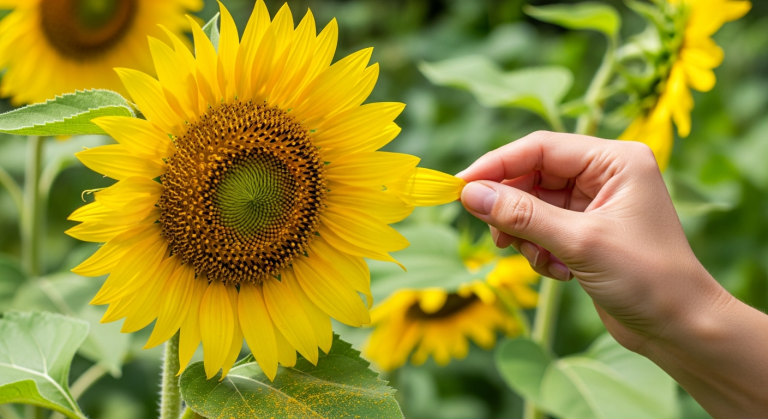
Once you know that, goldenrod starts to look a lot more interesting. It's a native North American wildflower that blooms from late summer through early fall, producing those bright yellow plumes you see in fields, along roadsides, and at the edges of meadows. All the above-ground parts — flowers, flower buds, and leaves — are medicinal. Goldenrod has a long history of use in both Native American and European folk medicine, primarily for its anti-inflammatory and skin-healing properties.
Made into a salve, it's useful for sore muscles and achy joints, dry and irritated skin, minor cuts and scrapes, insect bites, and inflammatory skin conditions like eczema. It's become my go-to for end-of-day muscle soreness and the kind of dry, cracked hands that come with fall garden work.
Does Goldenrod Salve Help With Arthritis?
Goldenrod salve may help relieve arthritis discomfort — the plant contains anti-inflammatory compounds that have been used for centuries in traditional medicine specifically for joint pain and sore muscles. Native American tribes used goldenrod extensively as a topical remedy, and European herbal traditions record similar applications going back hundreds of years.
As a salve, it works best when massaged directly into sore joints — many people find it takes the edge off, especially when used consistently before bed or after activity. It's a supportive remedy, not a cure, and it works best alongside other management strategies for arthritis. But if you're already reaching for a muscle rub or anti-inflammatory balm on hard days, goldenrod salve is a solid natural alternative worth trying.
When and How to Harvest Goldenrod
The best time to harvest goldenrod is when the flowers are just beginning to open — not fully bloomed, not gone to seed yet. That's when the plant's potency is at its peak. In most of the Midwest and South, that window falls somewhere in August through September, though it varies by location and season.
Harvest the flowers, flower buds, and leaves — all three are used. Gather only from areas you're confident haven't been treated with pesticides or herbicides, which rules out most roadsides along treated fields or lawns. Your own property, a friend's pasture, or a wild meadow are your best bets.
Quick harvesting checklist:
- Only harvest from pesticide/herbicide-free areas
- Avoid plants with white powdery mildew on the leaves — that's a sign of stress and disease
- Harvest in dry weather; wet plant material molds faster
- Confirm your plant ID — goldenrod is distinctive but there are lookalikes in some regions
Can't forage your own? You can buy quality dried goldenrod from herbal suppliers — it works just as well for the salve, and it means you can make this recipe any time of year.
How to Dry Goldenrod
Getting the goldenrod completely dry before you infuse it is the most important step in the whole process. Any moisture in the plant material can introduce water into the oil, which causes mold. Don't rush this.
Method 1 — Air dry (best for larger harvests): Bundle the stems together, tie with twine, and hang upside down in a well-ventilated spot out of direct sunlight. Takes 1-2 weeks depending on humidity.
Method 2 — Screen or tray dry (faster): Break the goldenrod into smaller sections and spread in a single layer on a clean screen or paper towels. Flip daily. More surface area means faster drying — usually ready in a week or less.
How to tell it's done: The stems snap cleanly when you bend them, rather than bending pliably. The flowers crumble when you press them between your fingers. If you squeeze a handful, you shouldn't feel any coolness or moisture. When you get all three of those signals, it's ready.
How to Make Goldenrod-Infused Oil
The infused oil is the foundation of your salve — you're slowly drawing goldenrod's medicinal compounds out of the plant material and into the carrier oil. This step takes some patience, but it's almost entirely hands-off.
Ingredients:
- ½ cup dried goldenrod flowers and leaves
- 1 cup carrier oil
For the carrier oil, olive oil is the traditional choice and what I usually use — it has its own skin-soothing properties and a long shelf life. Sweet almond oil is a lighter option that absorbs quickly if you prefer something less greasy. Avocado oil is rich and nourishing, great if you're making this specifically for very dry skin. All three work well; use what you have.
Method 1 — Cold Infusion (4–6 weeks, best potency)
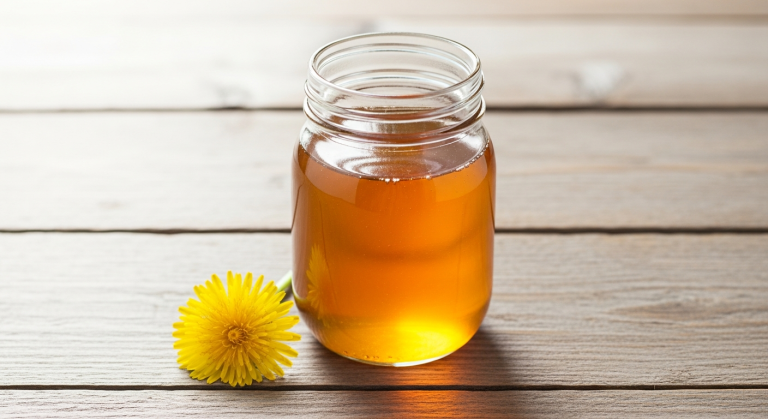
Fill a clean glass jar with your dried goldenrod. Pour oil over the herbs until everything is completely submerged with about an inch of oil above the plant material. Cap the jar, store it in a dark cabinet, and shake it every few days. Strain after 4–6 weeks. The longer you wait, the more potent the oil.
Method 2 — Solar Infusion (1–2 weeks, no equipment needed)
Same setup as above, but instead of a lid, cover the jar with a piece of cheesecloth secured with a rubber band. Set the jar in a sunny window. The gentle heat from the sun speeds up the infusion without any electricity or monitoring. This is my favorite method in summer when the windows get full afternoon sun.
Method 3 — Speedy Double Boiler (2–3 hours)
Place your jar of goldenrod and oil inside a saucepan with a few inches of water. Heat over low — you want the water to barely simmer, never fully boil. Keep the temperature below 200°F. After 2–3 hours, the oil will be golden yellow and fragrant. Strain and use right away.
One important tip: after the first 24 hours in the jar, dried herbs absorb a significant amount of oil. Check the jar and top it up with more oil if the plant material is no longer fully submerged — you want the ratio to stay more oil than herb.
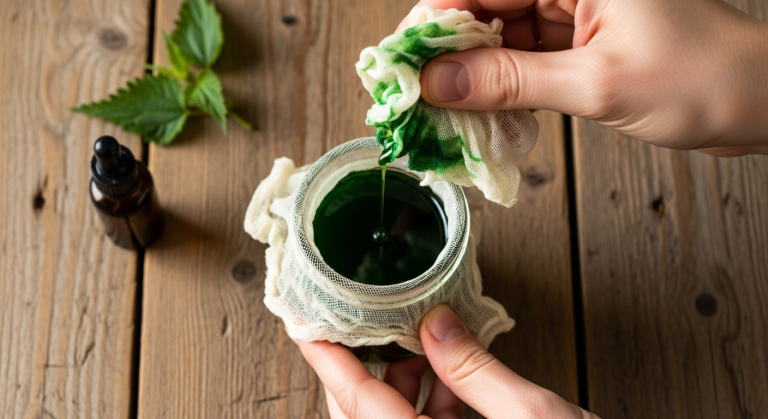
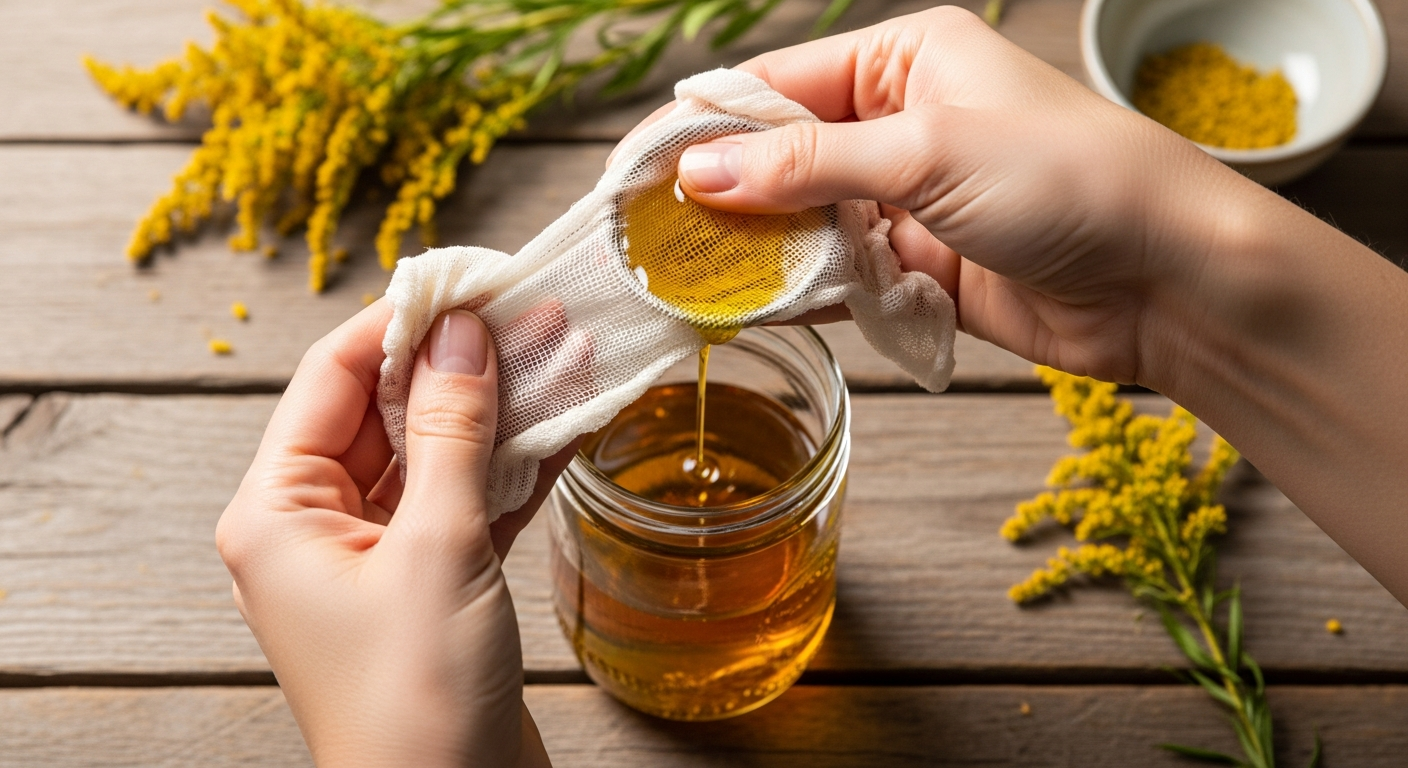
Straining: line a fine-mesh strainer with cheesecloth and pour the oil through into a clean bowl. Press or squeeze the spent herbs firmly to extract every last bit of oil, then discard the plant material. The finished oil should be a warm golden yellow with a pleasant herbal scent.
Optional: stir 1 teaspoon of vitamin E oil into the strained oil before using it in your salve. It extends shelf life and adds antioxidant properties to the finished product.
Goldenrod Salve Recipe (Step by Step)
Once you have your infused oil, making the salve takes about 15 minutes.
Ingredients:
- 1 cup (3.5 oz / 100g) goldenrod-infused oil
- 2 tablespoons (0.5 oz / 14g) beeswax pellets — pellets melt more evenly than grating a block
- Optional: 1 teaspoon vitamin E oil
- Optional: 10–15 drops lavender or lemon essential oil (lavender is calming; lemon adds a mild antibacterial effect)
Equipment: small mason jar or double boiler top; glass jars or metal tins for storage; spoon for stirring
Instructions:
- Combine the infused oil and beeswax pellets in a heat-safe jar or the top of a double boiler.
- Heat over medium-low, stirring occasionally, until the beeswax is completely melted and the mixture is clear.
- Remove from heat. If you're adding vitamin E oil or essential oils, wait 1–2 minutes for the mixture to cool slightly, then stir them in.
- Have your containers ready before you start — the salve begins to set within 2–3 minutes of leaving the heat, and you want to pour before it thickens.
- Pour into clean, dry jars or tins and leave undisturbed until fully set — about 30–60 minutes.
- Cap, label with the date, and store in a cool dark place.
The Spoon Test: Before pouring all the salve into containers, drop a small amount onto a cold metal spoon. Wait 30 seconds and check the texture. If it's too soft or greasy, return to heat and stir in a bit more beeswax, about ½ teaspoon at a time. If it's too hard and waxy, add a small splash more oil and reheat briefly. Getting the ratio right means the salve will glide on easily without melting in your hand.
Hot climate note: If you live somewhere warm where salve tends to soften on the counter, use 3 tablespoons of beeswax instead of 2.
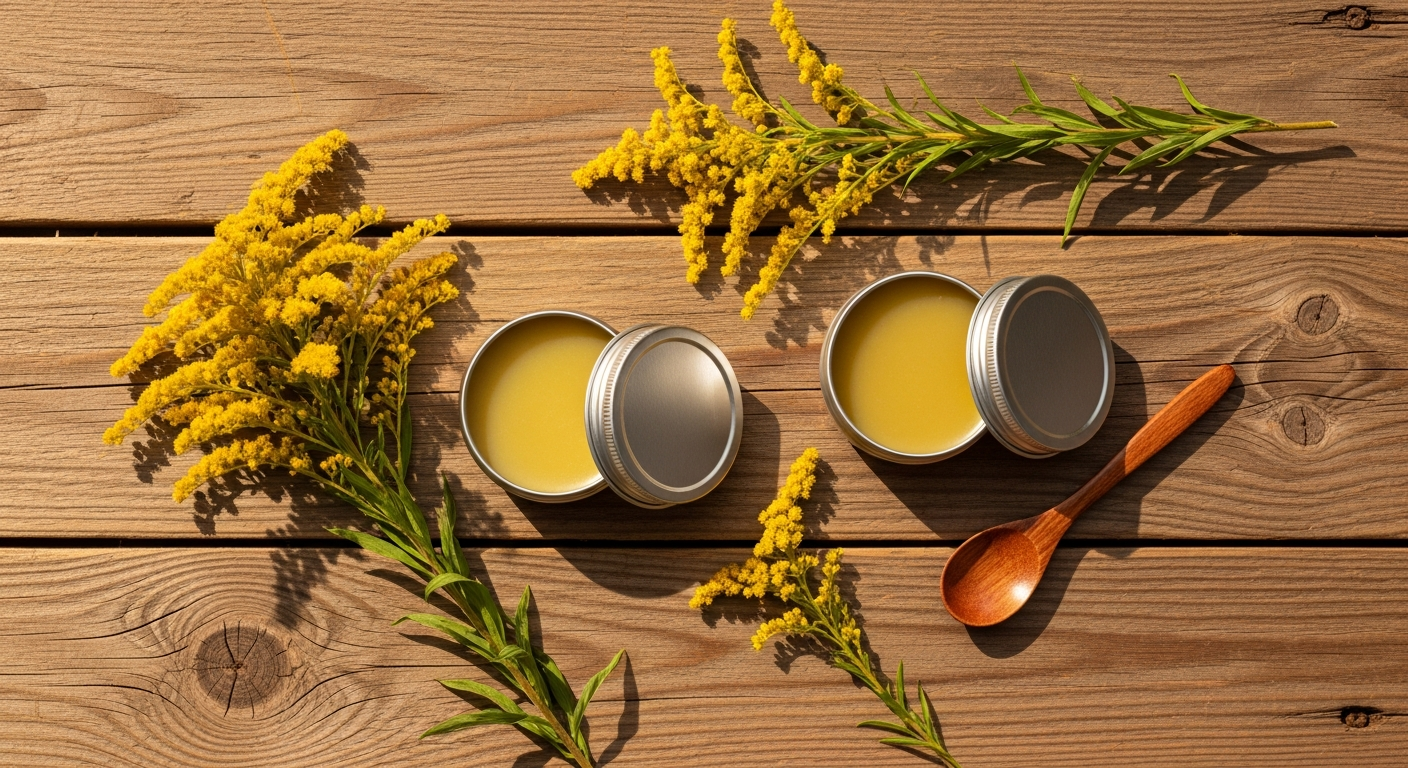
Yield: approximately 8 oz — fills four 2-oz metal tins or two 4-oz glass jars.
How to Use Goldenrod Salve
- Sore muscles and joint pain: massage a generous amount into the area after activity or before bed
- Dry, cracked skin: use as a daily moisturizer on hands, heels, and elbows
- Minor cuts and scrapes: apply a thin layer to clean skin to protect and help the area heal
- Insect bites and stings: apply to calm itching and reduce swelling
- Chapped lips: apply a very thin layer — this is a richer salve, so use sparingly
- Eczema and skin irritations: apply to calm redness and reduce inflammation
Storage and shelf life: Store in a cool, dark cabinet — not the bathroom (too much humidity) and not a sunny windowsill. With an olive oil base and no preservatives, the salve typically lasts 6–12 months. Add vitamin E oil at either the infusion stage or directly to the finished salve, and it extends to 1–2 years. If your salve starts smelling rancid — like old cooking oil — it's time to make a fresh batch.
Frequently Asked Questions About Goldenrod Salve
Does goldenrod help with arthritis?
Goldenrod has anti-inflammatory properties that have been used traditionally for joint pain and sore muscles for centuries. As a topical salve, many people find it helpful for temporary relief of arthritic aches — particularly when massaged into sore joints before bed or after activity. It's a supportive remedy, not a cure, but it's been used for exactly this purpose for a very long time.
How do you use goldenrod for skin?
Apply goldenrod salve directly to dry, irritated, or inflamed skin and massage in gently. It works well on eczema-prone areas, minor cuts and scrapes, insect bites, and generally dry or chapped skin. A thin layer is usually enough for most applications.
What part of goldenrod is medicinal?
All above-ground parts of the goldenrod plant are considered medicinal — the flowers, flower buds, and leaves. The flowers are the most concentrated and most commonly used, but including some leaf material in your infusion adds to the potency. The roots are not typically used in topical preparations.
Can I use fresh goldenrod instead of dried?
You can, but dried is strongly preferred for making infused oil. Fresh goldenrod contains moisture that can introduce water into the oil and cause mold over time. If you want to use fresh goldenrod, spread it on a clean towel out of direct sunlight for 24–48 hours first to wilt and drive off the surface moisture before adding it to oil.
Is goldenrod the same as ragweed? Will it make my allergies worse?
No — goldenrod and ragweed are completely different plants that just happen to bloom at the same time. Ragweed produces light, wind-carried pollen that triggers hay fever. Goldenrod pollen is heavy and carried by insects, so it can't travel through the air in meaningful quantities. Goldenrod isn't a typical allergy trigger and is completely different from the plant causing your symptoms.
How long does goldenrod salve last?
With an olive oil base and no preservatives, goldenrod salve typically lasts 6–12 months stored in a cool, dark place. Adding 1 teaspoon of vitamin E oil — either to the infused oil or to the finished salve — can extend shelf life to 1–2 years. Always trust your nose: if it smells rancid, it's time to make a fresh batch.