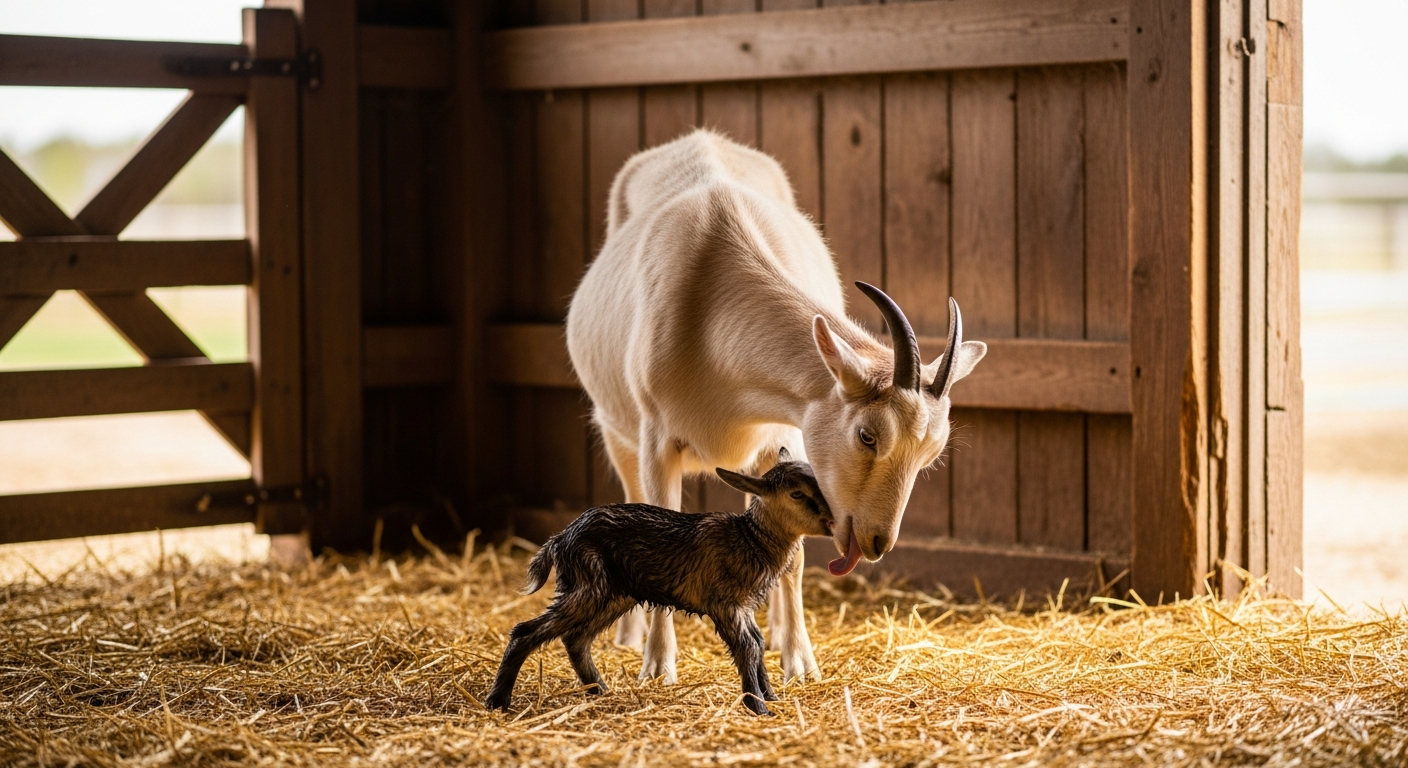
Signs a Goat Is About to Give Birth (What to Watch For in the Days and Hours Before)
Last updated March 12, 2026
My first kidding season, I checked on our doe about forty times a day. I had no idea what I was actually looking for. Her sides looked the same to me. Her udder looked the same. And then one morning I walked out to find two kids on the ground, already cleaned and nursing, while I was still inside making coffee.
I wasn't there for a single minute of it. She did great — goats almost always do — but I spent weeks wishing someone had told me exactly what to watch for and what it all meant. So if you're heading into your first kidding season and feeling a little nervous, this guide is what I wish I'd had.
Quick Reference: Signs a Goat Is Close to Giving Birth
Here's a quick overview, then I'll walk you through each one in detail below.
| Sign | How Close? |
|---|---|
| Baby "drops," sides look sunken | 3–7 days before |
| Udder fills and gets tight/shiny | 12–48 hours before |
| Tail ligaments go soft | 12–24 hours before |
| Tail ligaments disappear completely | 0–12 hours before |
| Vulva swells and loosens | 12–24 hours before |
| Discharge changes (clear → white) | Days to hours before |
| Thick mucous plug appears | Birth is very soon |
| Pawing, nesting, can't get comfortable | Within hours |
| She separates from the herd | Within hours |
How to Tell If Your Goat Is Getting Close (8 Signs to Check)
1. Check Her Tail Ligaments First (This Is the Most Reliable Sign)
The tail ligaments are the single most reliable sign that birth is close, and once you know how to find them, you'll check them every time you walk past your doe in the final weeks. To find them, stand beside your doe and run your thumb and index finger along each side of her spine, starting a few inches above the base of her tail. You're feeling for two cord-like structures — one on each side. Normally, they feel firm and distinct, about the width of a pencil.
As kidding time approaches, those ligaments start to soften. When they feel squishy — like a wet noodle instead of a pencil — birth is typically within 24 hours. When they've completely disappeared and you can almost pinch your fingers together around the base of her tail, you're usually looking at birth within 12 hours or less, often much sooner. I recommend starting to check daily about four weeks before her due date so you know what her "normal" feels like.
One note for Nigerian Dwarf owners: your girl's ligaments tend to go extra-squishy when they soften, and they can be harder to feel than in a full-sized dairy doe. Practice finding them early so the change is obvious to you when it happens.
2. Her Udder Will Suddenly "Pop" Overnight
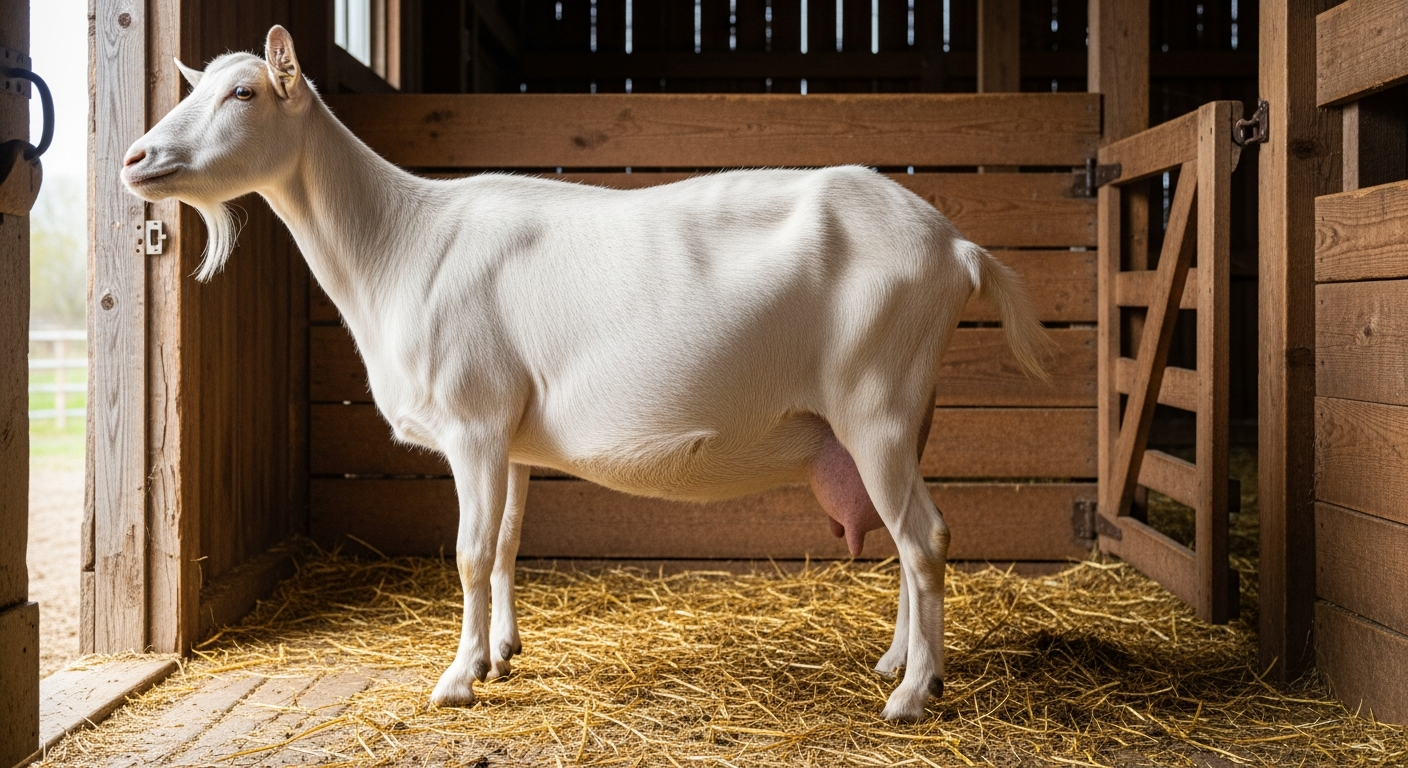
"Bagging up" is the term for when your doe's udder fills with colostrum — that first milk — in preparation for birth. For most of the pregnancy, her udder will be partially filled but soft and pliable. Then, usually in the 12–48 hours before she kids, something changes. The udder gets round, full, tight, and almost shiny-looking. It's a noticeable difference.
First-time does often bag up later than experienced ones — sometimes not until 12–24 hours before birth. Experienced does may start filling a few days out. One trick that's helped me: take a photo of your doe's udder from the same angle every day starting a week before her due date. When you can't see the change because you're staring at her every single day, a side-by-side comparison makes the "pop" obvious.
3. Her Vulva Swells and Looks Different
As birth approaches, your doe's vulva will become swollen, softer, and more relaxed-looking. It may look puffy or slightly wet under her tail. This is normal — her pelvic ligaments are loosening to make room for delivery.
Here's something I'd tell every first-time goat owner: check under your doe's tail now, while she's nowhere near kidding. Know what normal looks like for her. The change is noticeable, but only if you have a baseline.
4. Her Sides Look Sunken (the Baby Has "Dropped")
For most of her pregnancy, she'll carry the kids high and wide — her sides will look round and full. In the last week before birth, the kids shift lower and get into position, and the upper part of her sides will look hollowed out or concave. It's a bit like someone let the air out of her upper sides. This usually happens about 3–7 days before she gives birth, and once you see it, you'll know kidding is coming soon.
5. Watch How the Discharge Changes
Discharge is one of the signs that confuses first-timers the most, mostly because not all discharge means the same thing. Here's how to read it in order:
- Small amounts of clear or white discharge — This is normal late-pregnancy cervical softening. Not a labor sign. Don't panic.
- Thin white or yellowish discharge — Still normal. Her cervix is continuing to dilate. Not active labor yet.
- Long, thick, stringy discharge (the mucous plug) — This is the real signal. It means birth is happening within hours. Get your supplies out now.
The mucous plug may be tinged with a little blood — that's completely normal. It's the final sign before active labor begins.
6. She's Restless: Pawing, Nesting, Can't Get Comfortable
When active labor is approaching, your doe will start acting like she can't find a comfortable spot. She'll paw at the ground, rearrange the bedding with her nose, lie down, and then immediately get back up. She's doing what feels instinctually right — finding and preparing her spot. Once you start seeing this behavior, you're usually within a few hours of pushing.
7. She Goes Off by Herself
Goats are herd animals, so when your doe starts pulling away from the others and seeking out a quiet corner, that's a meaningful sign. It's instinctual — she's looking for a safe, calm place to deliver. This is your cue to move her to a kidding stall if you have one available. A simple temporary pen works fine — a cattle panel bent into a U-shape against a wall gives her a private space without any fancy setup required.
8. Her Personality Completely Changes (The "Pregnancy Trance")
This one is harder to describe but easy to recognize once you've seen it. A doe that's close to giving birth often gets a glazed, faraway look — like she's somewhere else entirely. She may move more slowly, stand still when she'd normally be pushing for grain, or stare off at nothing. It's sometimes called the "pregnancy trance," and it's a sign her body is shifting into labor mode.
The personality change goes both ways: a usually-standoffish doe may suddenly want to be close to you, while a social doe may want space. If your gut says something is different about her today, trust it. You know your animal.
One habit I'd recommend starting now: keep a kidding journal. Write down what each doe does before labor every season. After a couple of years, you'll have a personal playbook for each goat — and that's worth more than any general guide.
The 3 Stages of Goat Labor (So You Know What's Normal)
Stage 1 — Early Labor: This is when contractions begin, but your doe isn't pushing yet. She'll be restless, raise and lower her tail frequently, and may paw or circle. Her sides might ripple slightly with contractions. This stage can last 2–6 hours in a first-time doe, sometimes shorter in an experienced one. Let her be — she's working through it.
Stage 2 — Active Labor and Delivery: Pushing begins, and things tend to move quickly from here. You'll see the amniotic sac — the "bubble" — appear. What you want to see inside it is two front hooves and a nose, what's called the diving position. Most goats deliver on their own without any help from you. If your doe is pushing productively and you can see progress, stay back. If she's pushing hard and you want to help a little, you can gently pull downward on the front hooves during contractions only, never between them. Most does deliver twins, so once the first kid arrives, keep watching — another may follow in 15–30 minutes.
Stage 3 — Placenta Delivery: After the last kid is born, your doe will deliver the placenta, usually within 1–4 hours. She may eat it, which is natural and instinctual — let her if she wants to. Do not pull on the placenta or on the membranes hanging from her. The weight of the fluid-filled sac helps ensure it's delivered completely. If the placenta hasn't passed within 12–24 hours, or if she develops a fever or goes off feed, call your vet.
When to Call the Vet
Have your vet's number saved before kidding season starts, not when things go wrong. Call if:
- She's been pushing hard for 30 minutes or more with no kid appearing
- You can see the bubble but no hooves or nose after 30 minutes of pushing
- A kid's head is out but the body isn't coming
- She seems exhausted and stops pushing entirely
- The placenta hasn't been delivered within 12–24 hours after birth
- In the days after birth, she develops a fever, goes off feed, or has foul-smelling discharge
Most kiddings go smoothly without any intervention. But when something is wrong, it can go wrong fast — so don't wait to see if it resolves on its own.
What If You Missed the Birth? (What to Check in the First 30 Minutes)
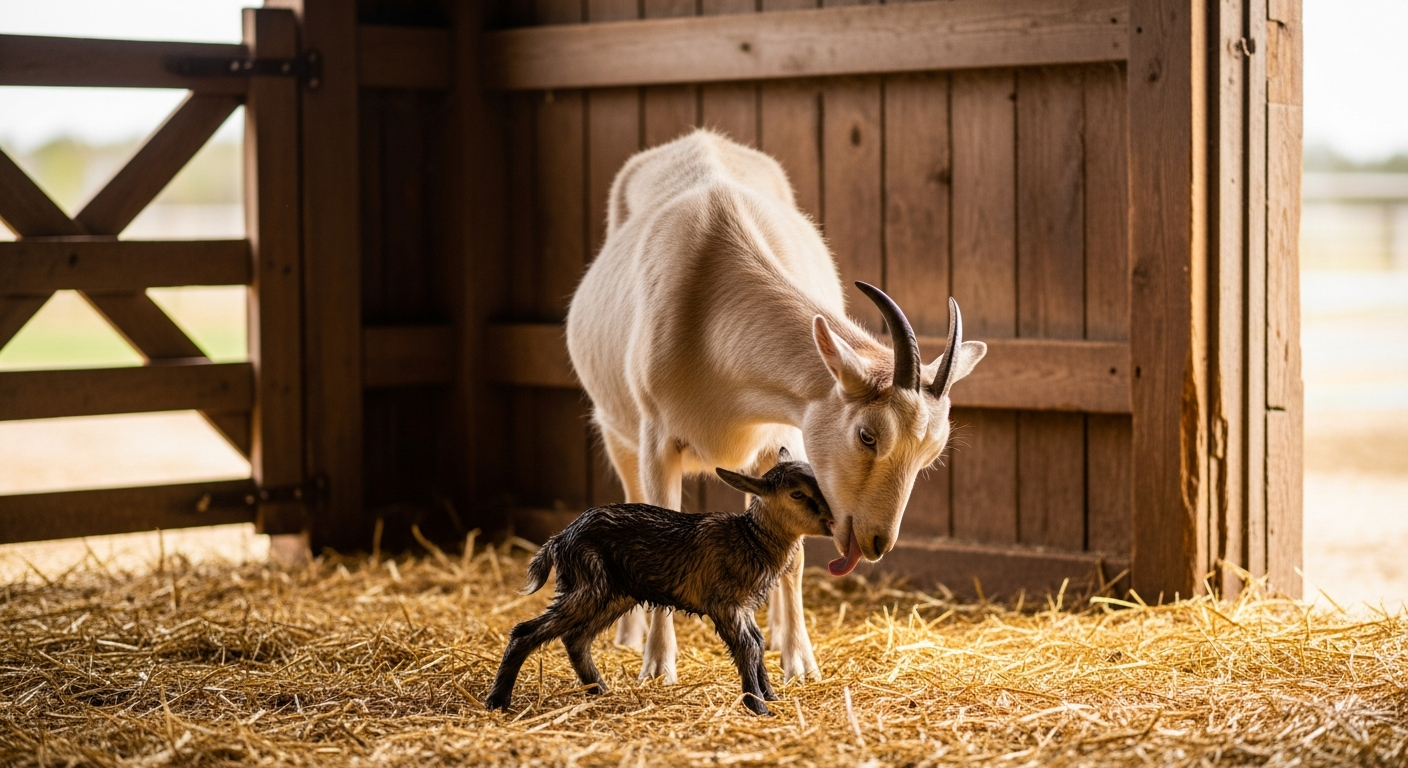
You walk out to the barn and there are kids on the ground, already cleaned and nursing. It happens to almost every goat owner at some point. Goats have been giving birth on their own for thousands of years, and your doe almost certainly did just fine. Take a breath, then run through this quick check:
- Are the kids breathing, moving, and attempting to stand? Healthy newborns should be trying to get up within 30–60 minutes.
- Is the doe licking and bonding with each kid? She should be talking to them softly and cleaning them attentively.
- Have the kids nursed, or are they actively trying to nurse? Colostrum — that first milk — in the first hour is critical for the kids' immune systems.
- Check the umbilical cords. Dip each cord in 7% iodine solution to prevent bacteria from entering. A small cup of 7% iodine is one of the most important things in your kidding kit — repeat the dip twice in the first 24 hours.
- Count the kids. If you knew she was carrying multiples, make sure they're all accounted for.
- Look for the placenta. If it's on the ground, that's good — she delivered it. If membranes are still hanging, check back in a couple of hours.
What to Have Ready Before She Kids
I keep these things in a small bin in the barn starting two weeks before any doe's due date:
- Clean dry towels — a few of them, for drying kids if needed
- Nitrile gloves — in case you need to assist
- 7% iodine + a small cup for dipping umbilical cords
- Bulb syringe — to clear a kid's airway if she's slow to breathe
- Dental floss — to tie off an umbilical cord that's unusually long
- Warm water with a splash of molasses — for the doe right after birth; it rehydrates her and gives her a boost of energy
- Baby monitor or an old phone set up in the barn — kidding season is one of the few times I actually use a baby monitor in the barn. The cheap ones work fine, and they save you from making a dozen trips out at midnight.
None of this is expensive, and you probably have most of it already.
FAQ — Your Goat Labor Questions Answered
What does a goat look like before kidding?
In the days before kidding, her sides will look sunken as the kids drop into position, her udder will fill and become tight and shiny, and her vulva will swell. She may also act restless, separate herself from the herd, and show a glazed, faraway look in the hours before labor begins.
What time of day do goats usually give birth?
Goats don't have a reliable birth time preference, though many homesteaders report more births during the day or early evening. A few does seem to prefer the quiet of the early morning hours. There's no way to predict it — set up a baby monitor and check regularly in the final days before her due date.
What is Stage 1 labor in goats?
Stage 1 labor is when contractions begin but active pushing hasn't started yet. Your doe will act restless, paw at the ground, raise her tail frequently, and may separate herself from the herd. This stage can last 2–6 hours in first-time does and sometimes less in experienced ones.
What does a goat do before giving birth?
In the days before birth, she'll bag up (her udder fills with colostrum), her sides will hollow out as the kids drop, and her tail ligaments will soften. In the hours before birth, she'll likely paw and nest, separate herself from the herd, and pass a thick mucous plug. Her tail will raise and lower with each contraction.
How do you check goat tail ligaments?
Stand beside your doe and run your thumb and index finger along the sides of her spine, just above the base of her tail. The ligaments feel like firm cords in a non-laboring doe. When they go soft — like wet noodles — or disappear entirely, birth is within 24 hours, often sooner.
How long after ligaments disappear do goats give birth?
Once the tail ligaments completely disappear, most does kid within 12 hours — sometimes much sooner. If they're just soft but not fully gone, you likely have 12–24 hours. Checking ligaments daily starting 4 weeks before the due date is one of the most reliable ways to track where she is.