Chocolate Chip Cookies with Honey Instead of Sugar (Soft, Chewy, and Actually NOT Cakey)
Last updated: March 12, 2026
I had a big jar of raw honey from our local beekeeper and a family that wanted chocolate chip cookies, so I did what seemed obvious — I just swapped the sugar for honey. The cookies came out puffy, dense, and borderline cake-like. My husband ate them anyway, but I knew they weren't right. It took a few more test batches before I figured out what actually makes honey behave in cookie dough, and once I did, these became the cookies we make now. Here's what actually works.
Quick Snapshot: Honey-for-Sugar Cookie Cheat Sheet
| Change | Rule |
|---|---|
| Amount of honey | Use ¾ cup honey per 1 cup sugar |
| Reduce liquids | Cut other liquids by ¼ cup per cup of honey used |
| Oven temperature | Lower by 25°F (honey browns faster than sugar) |
| Honey type | Raw honey only — store brands with additives won't behave the same |
| Dough prep | Chill 20-30 minutes — don't skip this |
| Doneness cue | Pull when centers look underdone — they set as they cool |
Why I Started Baking with Honey Instead of Sugar
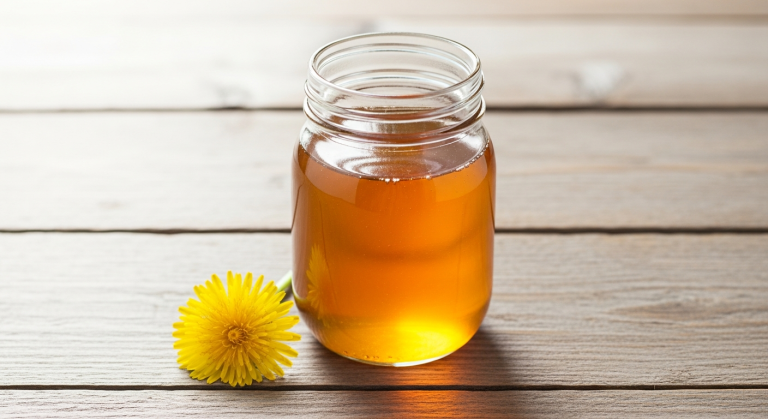
We keep raw honey on hand almost year-round. We get it from a local beekeeper a few miles away, and when we run low, I pick up a bulk jar from the farmers market. At some point I started looking at all the sugar in my regular recipes and wondering whether I could just use the honey instead — not because I was on a health kick, but because it felt wasteful to have a pantry full of honey and still be buying bags of refined sugar.
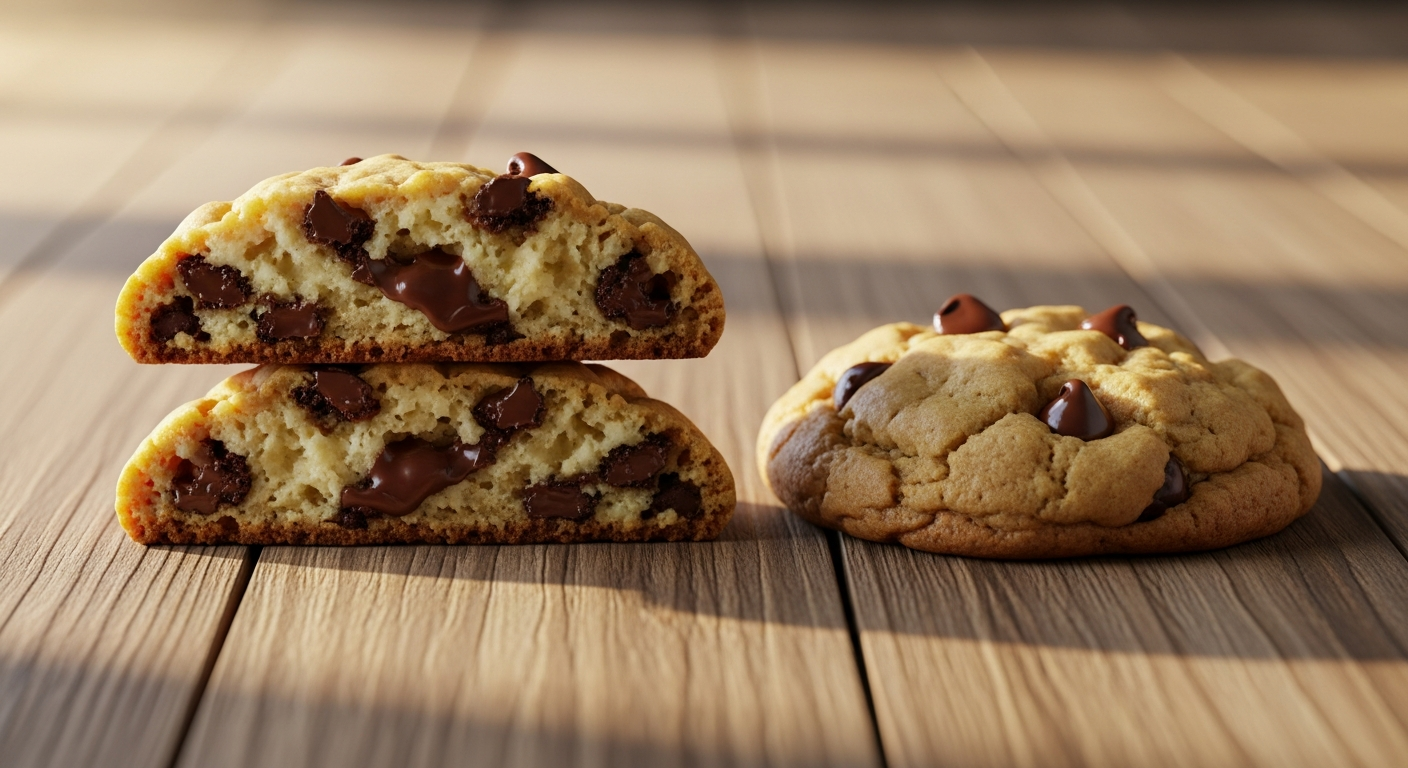
The first time I tried swapping honey into my regular chocolate chip cookie recipe, I replaced the sugar cup-for-cup and didn't change anything else. The dough was stickier than usual, the cookies puffed up like little muffin tops, and the texture was more cake than cookie. Not bad, exactly, but not what anyone was hoping for.
After doing some reading and running a few more batches, I figured out that honey and sugar don't behave the same way in dough — and the fix isn't complicated once you know why the problem happens. The recipe below is the one I've landed on after testing, and it's what I make every time now.
Honey Chocolate Chip Cookies Recipe (No Refined Sugar)
After several test batches, this is the version my family actually asks for. Standard pantry ingredients — no specialty flour, no mixer upgrade required.
Yield: ~36 cookies | Prep: 15 min + 20 min chill | Cook: 11 min | Total: ~45 min
Ingredients
- 1 cup (2 sticks / 227g) unsalted butter, room temperature
- ¾ cup (255g) raw honey
- 2 large eggs, room temperature
- 2 tsp pure vanilla extract
- 2¾ cups (345g) all-purpose flour (see notes for elevation)
- 1 tsp baking soda
- ½ tsp salt
- 1½ cups semi-sweet chocolate chips
Instructions
- Preheat oven to 350°F (176°C). Line two baking sheets with parchment paper and set aside.
- In a stand mixer or with a hand mixer, beat butter on medium speed until creamy, about 1 minute. Add honey and beat for 2 minutes until the mixture lightens slightly and becomes fluffy.
- Add eggs one at a time, beating well after each addition. Mix in vanilla.
- In a separate bowl, whisk together flour, baking soda, and salt. Add to the wet ingredients and mix on low until just combined — stop as soon as the flour disappears. Overmixing makes tough cookies.
- Fold in chocolate chips.
- Cover the dough and refrigerate for 20–30 minutes. Don't skip this step — it prevents excessive spreading and the cakey texture that honey dough is prone to.
- Scoop rounded 1.5-tablespoon portions onto the prepared baking sheets, spaced about 2 inches apart.
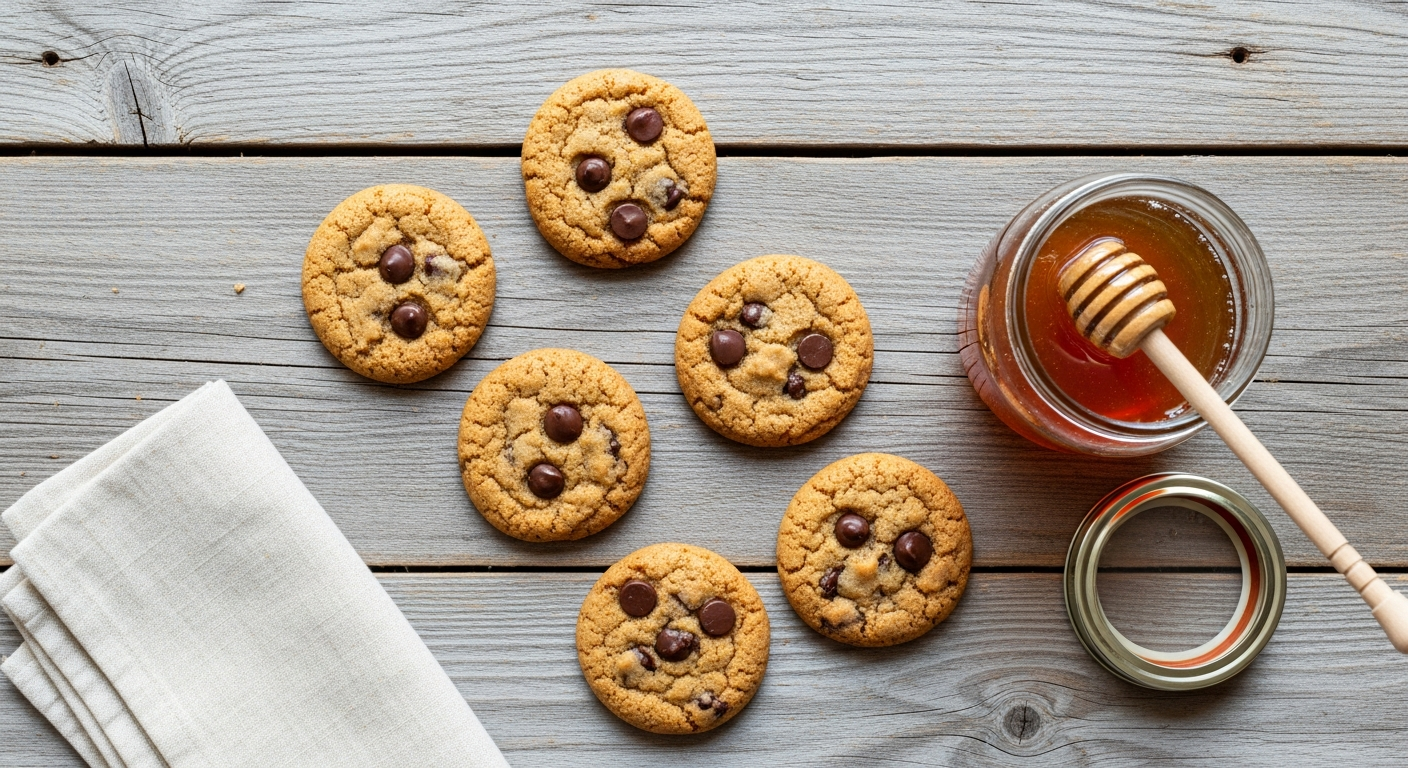
- Bake 9–11 minutes, until edges are set and just turning golden but the centers still look slightly underdone.
- Remove from oven and let cookies rest on the pan for 5 minutes before transferring to a wire rack. They'll finish setting as they cool.
Recipe Notes
Honey: Use raw honey — ideally from a local beekeeper or a source you trust. Store-brand honey can be watered down or mixed with corn syrup, and that changes the dough texture noticeably. If your cookies spread too thin or come out flat, the quality of the honey is usually the first thing to check.
Elevation: This recipe was developed at around 1,000 feet. If you're baking at 4,000 feet or higher, add up to ¼ cup more flour. If you're at or very near sea level, start with 2½ cups flour and test one cookie before baking the whole sheet.
Cookie scoop: A 1.5-tablespoon cookie scoop is the easiest way to get consistent portions — every cookie is the same size, so they all finish at the same time. It's a small thing that makes a real difference.
Make-ahead: The chilled dough keeps in the refrigerator for up to 3 days. When baking from cold, add 1–2 minutes to the bake time.
Why Honey Cookies Come Out Cakey — And Exactly How to Prevent It
Honey is about 17% water. When it bakes, that extra moisture turns to steam and puffs the cookie up from the inside — which is how you end up with a cakey texture instead of a chewy one. Sugar doesn't have this problem because it's dry, so most standard cookie recipes aren't built to compensate for the liquid honey adds.
Here are the four things that actually fix it:
-
Chill the dough (20–30 minutes minimum). Cold dough is firmer, so it spreads more slowly in the oven instead of puffing straight up. This single step makes the biggest structural difference in the final cookie.
-
Lower your oven temp to 350°F. Most standard chocolate chip cookie recipes run at 375°F. Honey's natural sugars caramelize and brown faster than refined sugar, so dropping the temperature gives the cookies time to spread before the outside sets.
-
Pull them before they look done. Take the cookies out when the centers still look slightly underbaked and soft. The pan is still hot when you pull it, and the residual heat will finish cooking the centers as the cookies rest — without drying out the edges.
-
Use raw honey. This is the variable that catches a lot of people off guard. Raw honey is thicker and denser than processed store honey, which often has added water or corn syrup mixed in. A thinner honey means more free liquid in the dough, which means more steam during baking, which means more cakey cookies. The recipe's behavior changes more with honey quality than almost anything else.
These cookies won't be identical to a classic butter-sugar cookie — they're slightly softer with a more tender crumb. Once you stop expecting them to be exactly the same, you'll probably decide you actually prefer them.
What Kind of Honey Should You Use?
Raw vs. Store-Bought
Raw honey hasn't been heated above about 95°F or heavily filtered, which means it keeps its natural enzymes, thicker consistency, and more complex flavor. That thickness is what matters most for baking — raw honey has less free water in it, which gives you more predictable dough texture.
Here's the thing that surprises a lot of people: honey labeled "100% pure honey" at a regular grocery store can still legally contain added water or corn syrup. Manufacturers can add these things and still call it pure honey on the label. This is why multiple bakers who try this recipe with store honey end up with flat, runny dough — and why the same recipe works fine with raw honey from a beekeeper. The opaque or slightly cloudy appearance of real raw honey is actually a good sign.
Which Variety to Use
Clover honey is the most common raw honey and gives the mildest result in baking — a subtle sweetness that most people wouldn't identify as specifically "honey." If you're making these for the first time or baking for picky kids, clover is the safest choice.
Wildflower honey is more complex and slightly earthy. You'll taste it in the cookie, which is a feature if you want the honey flavor to come through and a drawback if you don't.
Buckwheat honey is dark, strong, and almost molasses-like. It will dominate the flavor of these cookies and isn't what I'd recommend for a classic chocolate chip recipe.
Where to Source It
First choice is always a local beekeeper or farmers market — the honey is most likely to be genuinely raw, and buying directly often gets you a better price per ounce than retail. Check for opacity (raw honey is usually cloudy or solid, not crystal-clear) and a simple ingredient list with nothing but honey.
If you can't find local raw honey, look for it at a natural grocery store — Whole Foods, co-ops, and health food stores typically carry it. For bulk buying online, I've used YS Eco Bee Farms raw honey when I can't get to my beekeeper — it's consistently thick, genuinely raw, and the price per ounce is much better than small grocery store jars.
Will My Family Actually Like These?
Honestly, yes — but it helps to set the right expectations going in. These are softer cookies. The edges don't get that satisfying crisp that a classic thin butter-sugar cookie has. If your family likes those crispy-edged, lacey cookies, there will be a small adjustment period. If they tend to reach for the soft, bakery-style cookies, they'll probably love these from the first batch.
With clover honey, they don't taste noticeably like honey — just a pleasant, slightly richer sweetness that most people can't place specifically. The chocolate chips do most of the flavor work anyway. I made a batch once without telling my husband I'd changed anything, and he just said they were good cookies.
My kids go through these just as fast as the regular version. The texture is different enough that they notice, but "softer" isn't something children tend to complain about. The batch never lasts long either way.
Honey-to-Sugar Substitution Guide (For Any Cookie Recipe)
If you want to adapt your own favorite cookie recipe instead of using mine, here's the formula.
| What to Change | The Rule | Why |
|---|---|---|
| Sweetener amount | ¾ cup honey per 1 cup sugar | Honey is sweeter — less is more |
| Liquids | Reduce other liquids by ¼ cup | Honey adds moisture; compensate elsewhere |
| Oven temp | Lower by 25°F | Honey's fructose caramelizes and browns faster |
| Baking time | Check 2-3 minutes early | Honey cookies can go from golden to dark quickly |
| Dough prep | Chill 15-30 min if sticky | Honey makes dough stickier; chilling firms it up |
Maple syrup follows the same substitution ratio: ¾ cup maple syrup per 1 cup sugar, reduce other liquids by ¼ cup. The flavor will be subtly maple rather than honey, which works well in fall baking especially. This formula works reliably for most standard drop cookie recipes — if you're working with something heavily leavened like snickerdoodles or puffed molasses cookies, you may need to experiment a bit more with the flour ratio.
Storing Honey Chocolate Chip Cookies
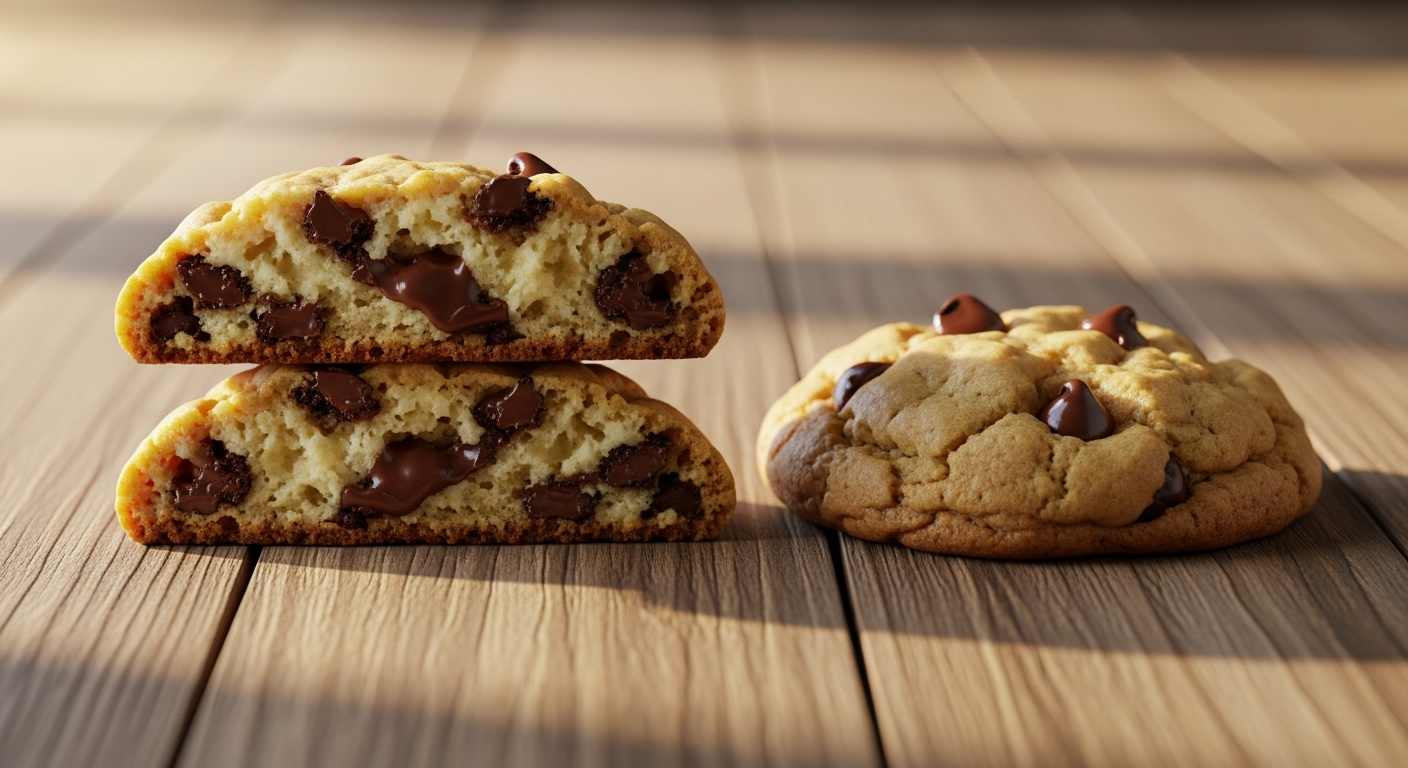
Room temperature: Store in an airtight container for up to 5 days. One advantage of baking with honey is that it's a natural humectant — it holds onto moisture — which actually keeps these cookies softer longer than standard sugar cookies. By day 3, a regular CCC is often stale; these are still soft.
Refrigerator: Up to 1 week in an airtight container. Let them come to room temperature before serving, or give them a quick 10-second zap in the microwave to revive that just-baked softness.
Freezer (baked cookies): These freeze beautifully for up to 3 months. Freeze in a single layer on a baking sheet first, then transfer to a freezer-safe bag once solid. Thaw at room temperature for 30–45 minutes.
Freezer (unbaked dough): Scoop dough balls onto a baking sheet and freeze until solid, about 2–3 hours. Transfer to a labeled freezer-safe bag. Bake straight from frozen — just add 2–3 minutes to the bake time. This is a great option during the holidays when you want cookies on demand without mixing a fresh batch every time.
Bonus tip: Place a slice of sandwich bread in the container with your stored cookies. The cookies absorb just enough moisture from the bread to stay perfectly soft — it's an old baker's trick that works especially well with honey-based cookies.
Frequently Asked Questions
Can I use honey as a 1:1 replacement for sugar in chocolate chip cookies?
Not quite 1:1 — use ¾ cup honey for every 1 cup of sugar. You'll also need to reduce other liquids in the recipe by ¼ cup and lower your oven temperature by 25°F. Those three adjustments together are what make the difference between a great batch and a failed one.
How much honey do I use to replace 1 cup of sugar?
¾ cup of raw honey. Honey is sweeter than sugar, so you need less of it. Using a full cup adds more sweetness than most recipes need and more liquid than the dough can handle without getting sticky and cakey.
Why do my honey chocolate chip cookies come out cakey?
Honey contains about 17% water, which turns to steam during baking and puffs the cookies up from the inside instead of letting them spread out flat. The fix: chill the dough for 20–30 minutes before baking, lower the oven temp to 350°F, and pull the cookies when the centers still look slightly underdone.
Does it matter what type of honey I use?
Yes, significantly. Raw honey gives the most consistent results because it's thicker and contains less free water than processed honey. Store-brand honey labeled "100% pure" can still legally contain added water or corn syrup, which will change how the dough behaves. For flavor, clover honey is the mildest and blends into the cookie; wildflower is more noticeable; buckwheat is very strong and not recommended for a classic CCC.
Will my chocolate chip cookies taste like honey?
With clover honey, barely — a subtle, slightly floral sweetness that most people don't identify as honey specifically. The chocolate chips tend to dominate the overall flavor. If you use wildflower or buckwheat honey, the honey flavor will come through more clearly.
Are chocolate chip cookies made with honey healthier than regular ones?
They skip refined sugar, which is a meaningful change. Honey also contains trace minerals, antioxidants, and enzymes that refined white sugar doesn't have. That said, these are still cookies made with butter, flour, and chocolate — think of the swap as worthwhile rather than transformative.
Can I freeze honey chocolate chip cookies?
Yes, and they do it well. Baked cookies keep up to 3 months in a freezer-safe bag. You can also freeze raw dough balls and bake them straight from frozen — just add 2–3 minutes to the bake time.
Can I use maple syrup instead of honey in this recipe?
Yes. Use the same ratio: ¾ cup maple syrup per 1 cup sugar, and reduce other liquids by ¼ cup. The cookies will have a subtle maple flavor instead of honey — genuinely delicious, especially in the fall.