How Long Can Cow's Milk Sit Out? (Pasteurized vs. Raw, Plus What to Do Next)
Last updated March 12, 2026
The quick answer: pasteurized milk is safe out of the fridge for up to 2 hours. But if you've got raw milk from your own cow — or you're wondering whether that jug on the counter since this morning is still usable — there's a little more to it than that.
| Milk Type | Safe Time at Room Temp | Safe Time at 90°F+ |
|---|---|---|
| Pasteurized (grocery store) | Up to 2 hours | Up to 1 hour |
| Raw cow's milk | Begins to culture/sour | Use within 1–2 hours if drinking |
| Baby formula (mixed) | Up to 2 hours | Up to 1 hour |
| UHT / shelf-stable (sealed) | Safe unrefrigerated until opened | Refrigerate after opening |
If your situation is a little more complicated — raw milk, a baby bottle, milk that's been out overnight — read on. The nuances are worth knowing, especially if you're handling fresh milk from your own cow.
How Long Is Cow's Milk Good Out of the Fridge?
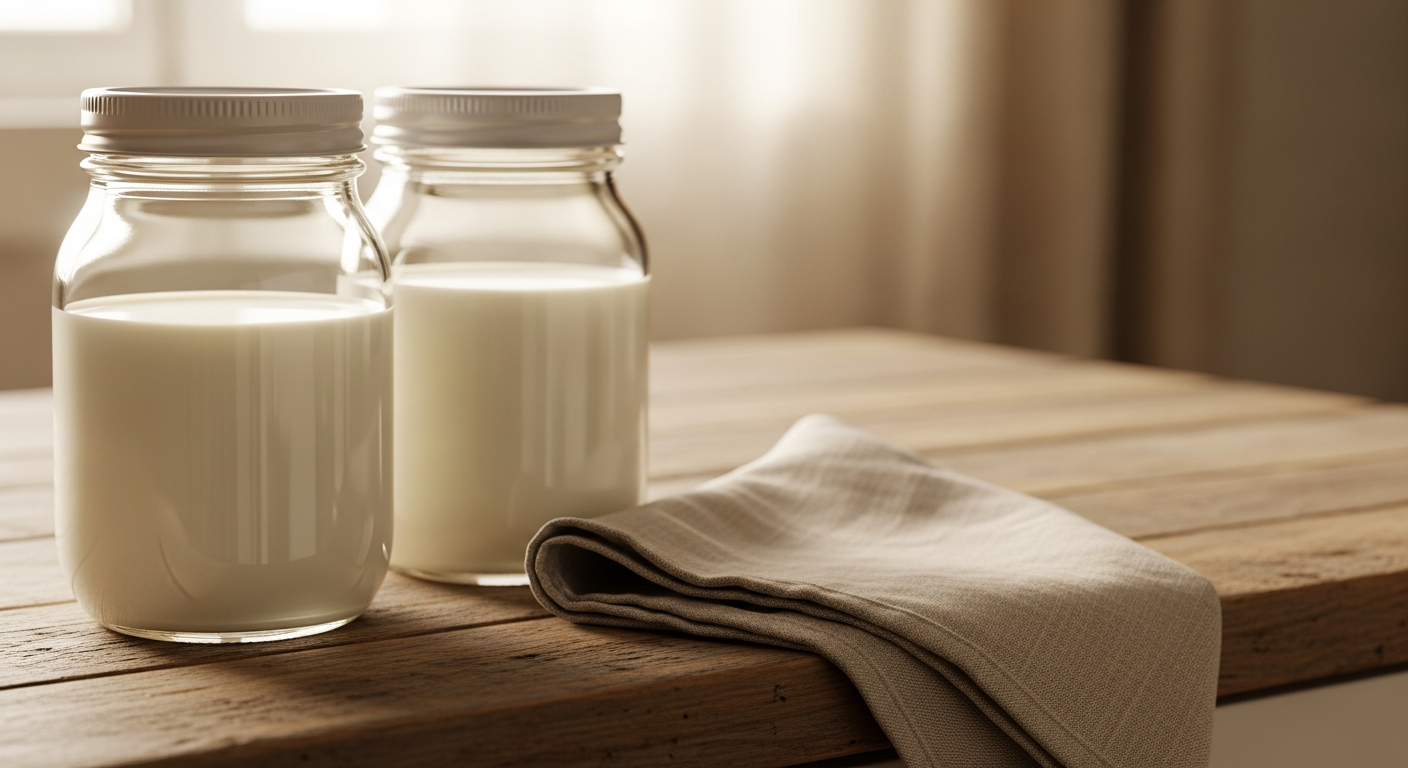
The FDA and CDC both land on the same answer: 2 hours. Once pasteurized milk hits room temperature, bacteria that survived the pasteurization process — plus any new ones that found their way in — start multiplying fast. That happens in what food safety folks call the "danger zone," roughly 40°F to 140°F. At those temperatures, bacteria can double every 20 minutes. Two hours is about as long as you want to let that clock run.
That rule applies whether the container is opened or still sealed, and whether it's whole milk, 2%, or skim. The 2-hour clock starts the moment the milk leaves the refrigerator.
One exception: if the temperature in your kitchen is above 90°F — a hot summer day, or a kitchen in the middle of a big canning session — that window shrinks to 1 hour. Heat accelerates everything.
Milk Left Out Too Long? Here's What to Do
First, don't throw it out immediately. Check it.
- Does it smell sour or off? If the smell hits you before you even look at it, trust that. Sour or rancid-smelling milk isn't safe to drink — but if it's only mildly sour, you may still be able to use it for baking (more on that below).
- Is it curdled, clumpy, or thick? If you see lumps, separation, or a texture that wasn't there before — discard it. That's too far gone for any use.
- Does it look and smell completely normal? If it's been out less than 2 hours and passes the smell test, it's almost certainly fine.
Signs pasteurized milk has gone bad:
- Sour or rancid smell
- Curdled, lumpy, or thick consistency
- Yellowed color
- Off or sour taste when tested
Can you bake with milk that sat out? Yes — if it smells only mildly sour and hasn't curdled or turned rancid. Slightly sour milk works beautifully in pancakes, quick breads, biscuits, and muffins. The acidity reacts with baking soda the same way buttermilk does. If it smells truly rotten or is visibly curdled, that's a different story.
I've made pancakes more times than I can count with milk that was just starting to turn. Waste not, want not. But if it smells like the bottom of a forgotten gym bag, that's a hard no from me.
Does Room Temperature Matter? (Hot Kitchens vs. Cool Pantries)
Temperature makes a real difference — not just whether you're above or below 90°F, but across the full range of what a typical home looks and feels like throughout the year.
- Hot summer kitchen (85°F+): Treat it like the 1-hour rule. Bacteria move fast in the heat, and milk will warm up quickly in a hot room.
- Warm spring or fall kitchen (70–75°F): The standard 2-hour rule applies. This is your average room temperature scenario.
- Cool basement or winter pantry (around 60°F): The milk is on the safer end of the 2-hour window, but don't push past 2 hours just because the room feels cool. The danger zone starts at 40°F — even a cool room is still inside it.
- Left out overnight (8+ hours at any temperature): Discard it, no exceptions for pasteurized milk. It doesn't matter how it looks or smells — the bacterial load at that point isn't worth the risk.
One practical note: smaller containers warm faster than larger ones. A quart of milk sitting out in August will hit unsafe temperatures faster than a full gallon. Keep that in mind during the summer months.
Raw Cow's Milk Is Different — Here's Why
Pasteurized milk has had its natural bacterial ecosystem destroyed by the heating process. The good bacteria go along with the bad, which means when harmful bacteria do start to grow — and they will, given enough time and warmth — there's nothing to compete with them. That's why pasteurized milk can become unsafe quickly and without much warning.
Raw milk still has its full bacterial ecosystem intact. The beneficial bacteria in fresh raw milk outcompete harmful ones, and when raw milk is left out, it doesn't rot the same way pasteurized milk does — it ferments. First it sours, and eventually it turns into what's called clabber — a thick, yogurt-like consistency that has been used in traditional cooking for centuries. It's genuinely different from spoiled pasteurized milk.
What that means practically:
- Fresh raw milk left out 2–4 hours: Likely still fine, may have just started to sour.
- Raw milk left out overnight: It's soured or beginning to clabber — not fresh drinking milk anymore, but still usable for baking or as a treat for your chickens. Don't throw it out before considering those uses.
There's one important caveat: this natural protection only works if the milk was handled cleanly from the start. Milk from a sick animal, or milk collected with dirty equipment, can still harbor harmful pathogens that the beneficial bacteria can't fully manage. Clean handling is non-negotiable.
Just Milked Your Cow? This Is the Step Most People Skip
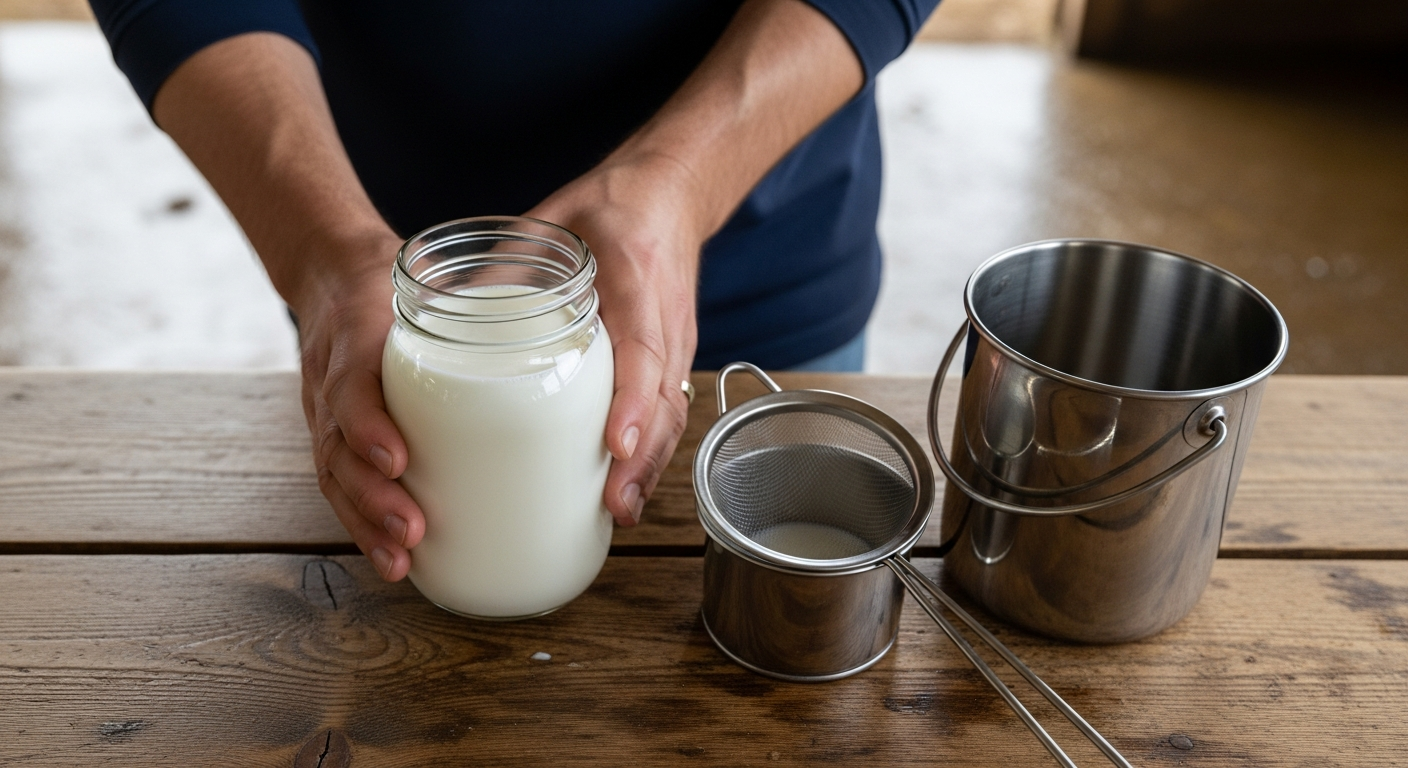
Fresh milk comes off the cow at close to 100°F. That's already in the danger zone — the bacterial clock starts the moment the milk leaves the animal, not when it hits your kitchen.
The biggest mistake I see new dairy cow owners make is letting that warm milk sit in the pail for 30–45 minutes while they finish up barn chores. Those minutes matter.
Here's the process to follow every single time:
- Filter immediately — remove any debris, dust, or hair right at the milk stand
- Get it into clean, closed containers — glass mason jars work perfectly
- Chill as fast as possible — ice bath in the sink, or straight into the coldest part of the refrigerator
- Goal: below 40°F as quickly as you can manage it
The faster you cool it down, the longer it stays sweet and fresh. Milk that's chilled quickly right after milking can stay good for 7 days or more. Milk that sat warm in the pail for an hour before going in the fridge might only last 3–4 days — and it'll taste off sooner than you'd like.
How Long Can Milk Sit Out for Babies and Toddlers?
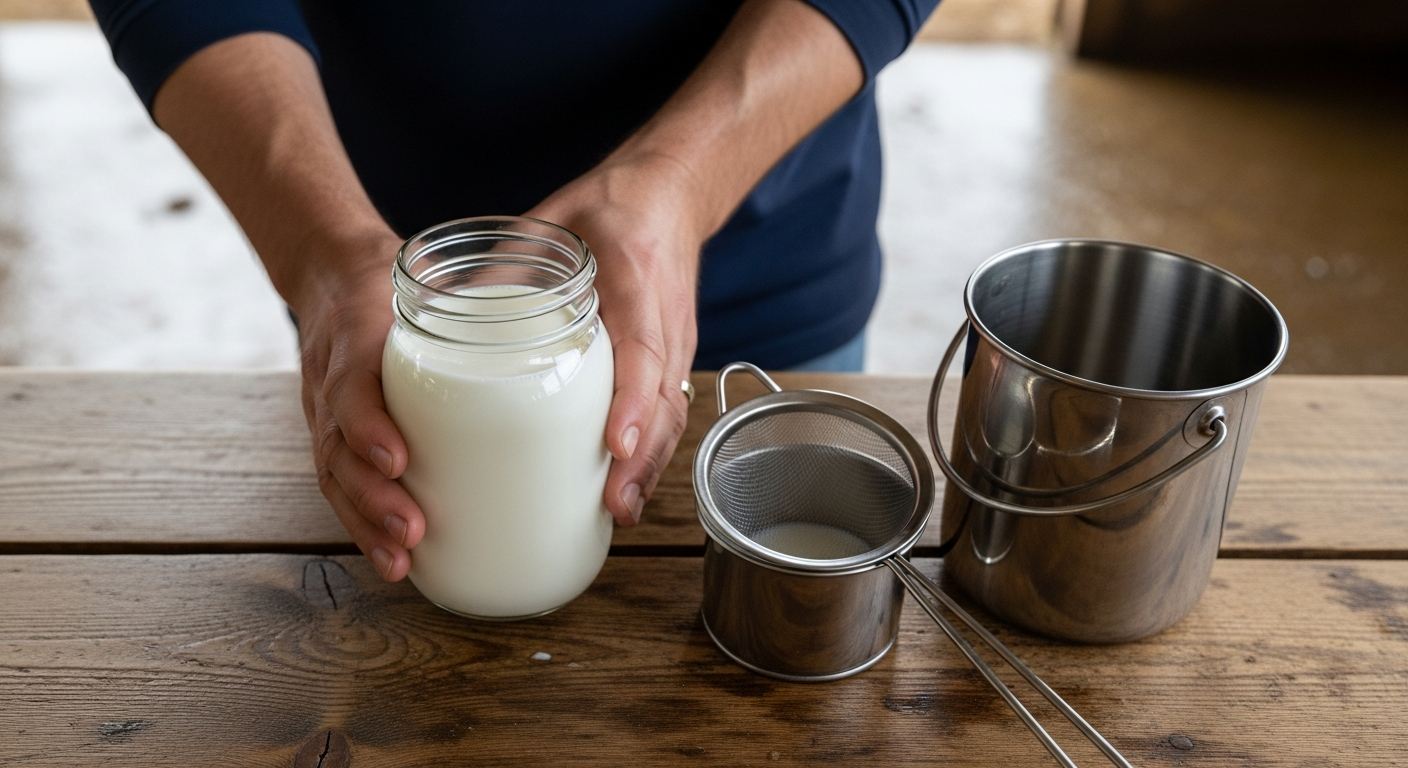
The same 2-hour rule applies to cow's milk in a bottle or sippy cup. If it's been sitting out for 2 hours or longer and your toddler hasn't finished it — toss it.
There's one additional rule that catches a lot of parents off guard: once your baby has fed from a bottle, their saliva has introduced bacteria into the milk. From that point, the remaining milk should be discarded within 1 hour — even if you refrigerate it between feedings. The same applies to formula.
Found a sippy cup of milk in the playroom that's been there since this morning? Toss it. It costs way less than a sick toddler.
Children's immune systems are still developing, so this is one place where I'd say be stricter than you think you need to be. The 2-hour rule is the baseline — once a child has been drinking from a cup or bottle, that window runs faster.
Why Doesn't Europe Refrigerate Milk? (It's Not What You Think)
The short answer: most European countries use a different pasteurization method called UHT — Ultra High Temperature. Instead of the standard U.S. method, which heats milk to 161°F for 15 seconds, UHT milk is heated to around 280°F for just 1–2 seconds. That extreme heat destroys not just pathogens but all microorganisms, including the heat-resistant spores that standard pasteurization leaves behind. The result is milk that's completely shelf-stable — it can sit at room temperature for months in a sealed package.
In the U.S., most milk is processed with HTST (High Temperature Short Time) pasteurization. It kills pathogens, but spoilage bacteria can survive. That's why American milk needs continuous refrigeration from the processing plant to your fridge.
Neither method is inherently better. U.S. HTST milk is just as safe — it just needs to stay cold. And once any milk is opened, regardless of how it was processed, the 2-hour rule applies the same way.
The Right Way to Store Cow's Milk (For Store-Bought and Fresh)
For store-bought pasteurized milk:
- Keep it in the back or middle of the refrigerator, not the door. The door is the warmest spot — temperature fluctuates every time you open it, which shortens shelf life faster than most people realize.
- Aim for a fridge temperature of 36–38°F for the best milk longevity.
- Don't drink directly from the container. Every sip introduces bacteria from your mouth back into the jug.
For fresh raw milk from your cow:
- Store in clean glass jars, filled close to the top to reduce air exposure.
- Chill rapidly after milking — the faster you get it cold, the sweeter it stays.
- Well-handled raw milk from a healthy cow can stay fresh for 5–7 days. Some homesteaders report up to 10 days when it's chilled immediately and stored cleanly.
Frequently Asked Questions
How long can cow's milk sit out? Pasteurized cow's milk can safely sit out for up to 2 hours at standard room temperature. If the temperature is above 90°F, that window shrinks to 1 hour. When in doubt, smell it — if it smells sour or off, don't drink it.
What happens if you drink milk that sat out too long? Drinking milk that's been out too long can cause nausea, vomiting, and digestive upset due to bacterial growth. Most cases are mild, but for young children, pregnant women, and people with compromised immune systems, it's not worth the risk.
Can you use milk that sat out for baking? Yes — if the milk smells only mildly sour and hasn't curdled or turned rancid, it can still be used in baking. Slightly sour milk works beautifully in pancakes, quick breads, and biscuits — the acidity reacts with baking soda just like buttermilk. If it smells truly bad or is visibly curdled, discard it.
How long can cow's milk sit out overnight? Overnight is too long for pasteurized milk, period. Eight or more hours at room temperature allows bacteria to multiply to unsafe levels regardless of how it looks or smells. Discard it and don't taste-test it.
Does raw milk go bad if left out? Raw milk doesn't spoil the same way pasteurized milk does. The natural beneficial bacteria in raw milk cause it to sour and eventually turn into clabber — a fermented, yogurt-like product — rather than rot. Fresh raw milk left out a few hours is often still usable; left out overnight, it may be suitable for baking or animal feed but not as drinking milk.
How long can whole milk sit out for a 1-year-old? The same 2-hour rule applies. Once your toddler has been drinking from a sippy cup or bottle, the milk inside should be discarded within 1 hour — their saliva introduces bacteria that accelerate spoilage. Young children's immune systems are still developing, so it's worth being strict about this one.
Will milk go bad at 45 degrees? At 45°F, milk is above the 40°F threshold where bacterial growth begins — just more slowly than at room temperature. Milk stored at 45°F will spoil faster than milk kept at 36–38°F. Keep your fridge as cold as it can go without freezing to maximize shelf life.