What Is Magnesium Hydroxide in Deodorant — And Does It Actually Work? (2026)
Last updated March 11, 2026
If you've been reading natural deodorant labels lately, you've probably noticed magnesium hydroxide showing up everywhere. It's being marketed as the gentler, safer alternative to baking soda — but is that actually true, or is it just another ingredient swap with a good PR team? I dug into the research, read the skeptical takes alongside the enthusiastic ones, and I'm going to give you the honest answer. Plus a simple DIY recipe if you want to try it yourself.
Magnesium Hydroxide at a Glance
- It works for odor — not by masking smell, but by raising skin pH so bacteria can't thrive
- It does NOT stop sweating — that requires aluminum (an antiperspirant); MgOH is a deodorant only
- It's the same compound as Milk of Magnesia, just in powder form
- For most people who've had baking soda rashes, it's worth trying — but it's not magic for everyone
- EWG rates it a 1 — the lowest possible concern level for a cosmetic ingredient
| Magnesium Hydroxide | Baking Soda | Aluminum | |
|---|---|---|---|
| Stops odor? | ✅ Yes | ✅ Yes | ✅ Yes |
| Stops sweating? | ❌ No | ❌ No | ✅ Yes |
| Generally gentler? | ✅ Usually | ⚠️ Can irritate | ✅ Yes |
| Absorbs through skin? | ❌ Rarely | ❌ Rarely | ⚠️ Trace amounts |
| Natural? | ✅ Yes | ✅ Yes | ❌ Synthetic |
What Is Magnesium Hydroxide? (It's Simpler Than It Sounds)
If you've ever taken Milk of Magnesia for heartburn, you've already used magnesium hydroxide. Same compound, different form. In its liquid version it's the pink stuff in the medicine cabinet; in deodorant, it shows up as a fine white powder. Magnesium hydroxide is a naturally occurring mineral compound — it's found in nature as a mineral called brucite — and it's been FDA-recognized as generally safe (GRAS) for use in food and supplements for decades. That safety record is part of why it started making its way into personal care products.
It ended up in natural deodorant partly because of a strange viral moment in 2013, when people started applying liquid Milk of Magnesia directly to their armpits and reporting that it worked. Companies noticed. A few small makers started experimenting with the powder form in stick and cream formulas, and from there it spread to major natural brands. Now it's in everything from Native to Schmidt's to Dr. Squatch.
How It Actually Controls Body Odor
Here's the thing most people don't know: sweat itself doesn't smell. Your sweat is basically just water and salt. What causes body odor is bacteria on your skin breaking down that sweat into compounds like ammonia and fatty acids — that's the smell.
Magnesium hydroxide has a high pH (around 9–10.5), which makes your armpit environment more alkaline. Bacteria prefer a neutral to slightly acidic environment, so when you raise that pH, you're making it harder for them to thrive. Less bacterial activity means less breakdown of sweat — which means less odor. It's not covering up the smell; it's addressing the cause.
Is Magnesium Hydroxide Actually Gentler Than Baking Soda? (Here's the Science)
This is the question I kept running into when I was researching this ingredient, because the answer is more complicated than the marketing suggests. I want to be honest with you about it.
The argument that baking soda (sodium bicarbonate) is harsh and magnesium hydroxide is gentle usually goes something like this: baking soda is alkaline and disrupts your skin's natural pH balance, causing irritation and rashes. Magnesium hydroxide, by contrast, is derived from a mineral and works more gently with your skin.
Here's where it gets interesting, though. Magnesium hydroxide actually has a higher pH than baking soda — somewhere between 9 and 10.5 in solution, compared to baking soda's 8.3 to 9. If alkalinity alone were the problem, magnesium hydroxide should be more irritating, not less. This is the point that skeptics of the "sensitive skin" marketing make, and they're not wrong about the pH numbers.
So why does magnesium hydroxide work better for so many people who've reacted to baking soda? The answer comes down to solubility. Magnesium hydroxide is much less soluble than baking soda — meaning it dissolves slowly in sweat rather than all at once. Baking soda dissolves quickly, causing a sharp, rapid pH spike at the skin surface, which is where the irritation comes from. Magnesium hydroxide dissolves slowly and gradually, so the pH rises more steadily and the skin has time to adjust. It's not gentler because it's less alkaline — it's gentler because it's slower.
For most people who've had a baking soda rash, this distinction actually matters. The gradual pH change is much less likely to trigger the redness, itching, or darkening that baking soda sometimes causes. That said, some people react to both, and no ingredient is universally safe for every person. If you have extremely reactive skin, the patch test advice below applies to magnesium hydroxide just as much as anything else.
What About the "Skin Sensitizer" Concern?
There's one more thing worth addressing honestly, because you'll see it come up if you go down the research rabbit hole. A report from the Cosmetic Ingredient Review (CIR) flagged magnesium hydroxide as a potential "skin sensitizer." That sounds alarming, but here's what it actually means in plain language.
A skin sensitizer is an ingredient that could, over time, cause your skin to gradually develop an intolerance — not an immediate allergic reaction, but a slow sensitization that builds with repeated exposure. The CIR flagged this possibility based on studies using high concentrations; the amounts used in deodorant formulas are much lower, and real-world reports of sensitization from deodorant use are uncommon.
The practical advice: patch test before committing. Apply a small amount to your inner arm and wait 24 hours. If you see redness, itching, or any reaction, magnesium hydroxide isn't for you. If you switch to a magnesium hydroxide deodorant and notice increasing irritation over the first two to three weeks, stop using it. For most people this doesn't happen — but it's worth knowing it's possible.
Does It Actually Work? What to Expect When You Switch
The short answer is yes — magnesium hydroxide deodorant works for most people. It's a real odor-control ingredient that addresses the actual cause of body odor, not just the symptom. In my experience, and from what I've read from others who've made the switch, it handles regular daily activities well. Low-to-moderate activity days, running errands, office work, casual walks — it does its job.
What it does not do is stop sweating. You will sweat. That's not a failure of the deodorant — that's just biology. Only aluminum-based antiperspirants are FDA-approved to actually reduce perspiration, and they do it by temporarily blocking your sweat glands. Magnesium hydroxide leaves your sweat glands completely alone, which is part of why a lot of people prefer it. If you need to stay completely dry, you're in antiperspirant territory, and natural deodorant of any kind won't get you there on a hot summer day or at the gym.
The part nobody really talks about, though, is the transition period. This is important if you're switching from a conventional aluminum antiperspirant, because the first few weeks can be rough — and people who don't know this is coming often quit too soon.
When you've been using an aluminum antiperspirant for years, your sweat glands have been partially blocked. When you stop using it, they need time to normalize. Your skin microbiome is also rebalancing — the bacterial population in your armpit shifts when the pH environment changes. During this adjustment period, which typically lasts one to three weeks, you may actually smell more than you did before. This is completely normal and temporary.
This is why natural deodorant reviews are so mixed. A lot of the "it doesn't work" reviews come from people who tried it for a week, experienced the transition period, and gave up. If you can push through to week three, you'll get a much more accurate read on whether it actually works for your body chemistry. Tips that help: dry your armpits thoroughly after showering before applying, always apply to clean skin, and reapply if you're going to be active or outdoors in heat.
Is Magnesium Hydroxide Deodorant Safe? (Including During Pregnancy)
The safety profile for magnesium hydroxide is genuinely reassuring, and I think it's worth going through the specifics because the Natural Wellness Seeker in all of us deserves more than a vague "it's natural so it's safe."
General safety: Magnesium hydroxide has GRAS (generally recognized as safe) status from the FDA for food use — it's used as a pH control agent in food and in magnesium supplements. The Environmental Working Group (EWG) rates it a 1 on their Skin Deep scale, the lowest possible concern rating for a cosmetic ingredient.
Skin absorption: Unlike aluminum — which does appear to be absorbed through skin in small amounts, based on research using radioactive tracers — magnesium hydroxide does not appear to significantly absorb through the skin. It works on the surface, which is part of why its safety profile looks clean.
Pregnancy: This is the question I wish more articles answered, because if you're pregnant you deserve a straight answer. Magnesium hydroxide is the same compound as Milk of Magnesia, which is commonly recommended as a safe antacid during pregnancy. As a topical deodorant, your exposure is even lower than drinking it. There are no known risks. That said, every pregnancy is different, and I'm not your OB — always run any ingredient change by your doctor if you have specific concerns.
Kidney disease: If you have kidney disease or have been told to limit your magnesium intake for any reason, check with your doctor before using magnesium-containing deodorants. Topical use is much lower exposure than oral supplements, but it's worth the conversation.
Magnesium Hydroxide vs. Magnesium Oxide vs. Magnesium Carbonate — What's on Your Label?
If you're the kind of person who reads ingredient labels (and if you're here, you probably are), you might have noticed that not all magnesium-based deodorants list exactly the same form of magnesium. Here's what the differences actually mean.
"Magnesium" alone on a label almost always refers to magnesium hydroxide — it's the most common active deodorant form and what this article is about. But you might also see magnesium oxide or magnesium carbonate hydroxide listed, and they're not quite the same thing.
| Form | What It Is | Seen In | Notes |
|---|---|---|---|
| Magnesium hydroxide (Mg(OH)₂) | The active deodorant form | Most natural deodorants | Most common; what this article covers |
| Magnesium oxide (MgO) | Less soluble precursor form | Some supplements, cosmetics | Less common in deodorant; less effective in this application |
| Magnesium carbonate hydroxide | Variant from Dead Sea mineral sources | Each & Every and similar brands | Same deodorant function; different mineral source |
The most important takeaway: magnesium carbonate hydroxide works the same way as magnesium hydroxide — it's just sourced differently. The oxide form is less commonly used in deodorant and less effective. If your label says "magnesium" without the rest of the name, you're likely looking at magnesium hydroxide.
Can You Use Milk of Magnesia as Deodorant?
Yes — and this is one of those things that sounds like it shouldn't work but genuinely does. Liquid Milk of Magnesia is magnesium hydroxide in water suspension. The deodorant mechanism is exactly the same as the powder form in a stick; it raises your armpit pH and inhibits bacterial growth.
The viral 2013 trend that kicked off the whole magnesium hydroxide-in-deodorant movement involved people applying a thin coat of liquid MoM directly to their armpits, letting it dry for a minute or two, and then dressing. A lot of people swore by it. It's still a popular option if you want to try the ingredient before committing to a full DIY batch or buying a commercial product.
Here's the practical breakdown:
- Pros: It costs $3–5 at any pharmacy, requires zero recipe, uses a single ingredient, and you've probably already got some
- Cons: You have to wait 1–2 minutes for it to dry before getting dressed, the bottle isn't great for travel, and you have less control over the formula than you would with a powder-based stick
The bottom line is that liquid MoM works. The powder form in a stick or jar is just more convenient for everyday use.
Simple Magnesium Hydroxide Deodorant Recipe (15 Minutes, 6 Ingredients)
I was honestly a little intimidated by the idea of making my own deodorant the first time I thought about it — it sounds more complicated than it is. But it's basically just melting some oils together and stirring in a powder. If you've ever made a lotion bar or body butter, this is the same level of difficulty.
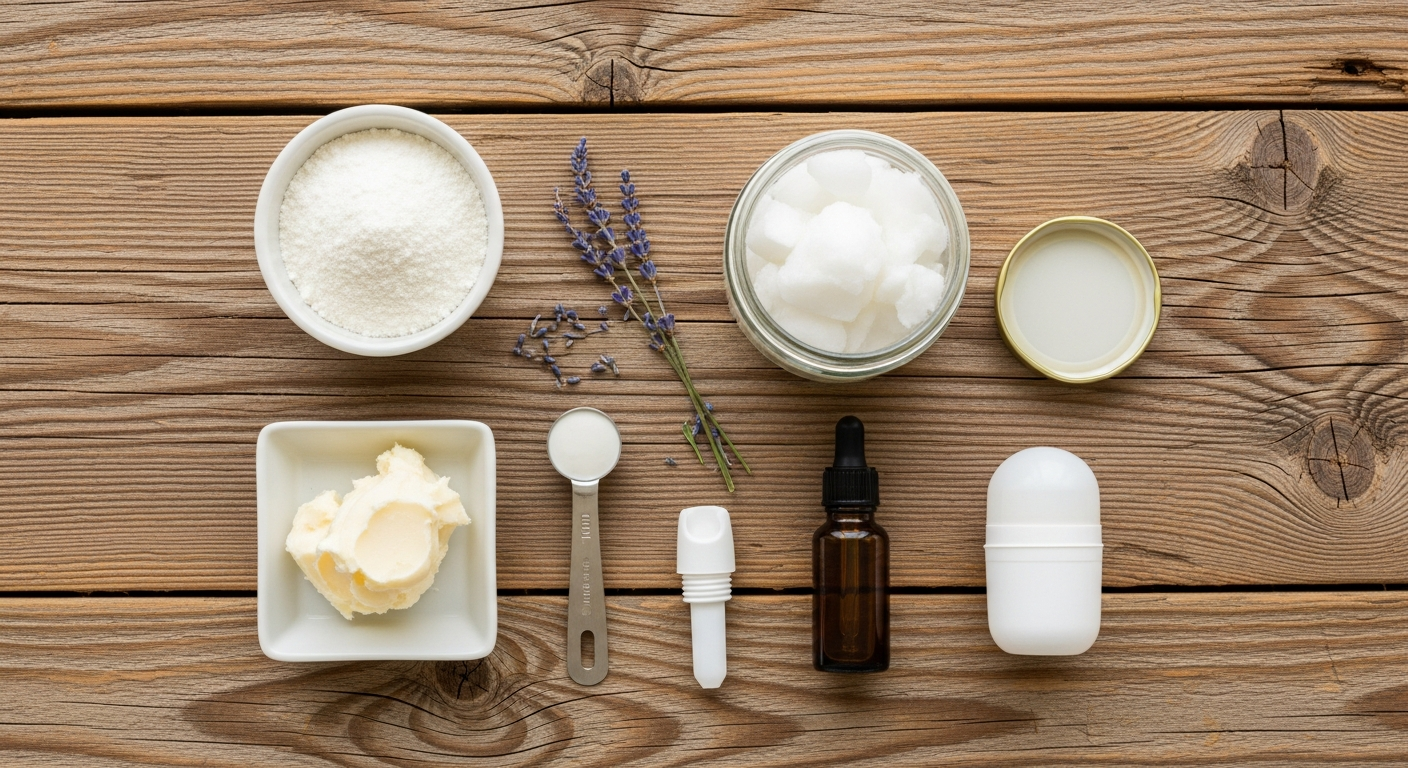
Ingredients:
- 3 tablespoons magnesium hydroxide powder
- 3 tablespoons coconut oil
- 2 tablespoons shea butter
- 1 tablespoon arrowroot powder (or cornstarch)
- 10 drops lavender or tea tree essential oil (optional)
- 1 teaspoon vitamin E oil (optional — extends shelf life to 6+ months)
Tools: A double boiler (or heatproof bowl set over a pot of simmering water), a mixing spoon, a small whisk, and deodorant tubes or small glass jars for storage
Instructions:
- Melt the coconut oil and shea butter together in your double boiler over low heat, stirring occasionally, until just melted. Don't let it get too hot.
- Remove from heat. Add the magnesium hydroxide powder and arrowroot and stir until completely smooth — take your time here to work out any lumps.
- If you're using essential oil and vitamin E, add them now and stir to combine.
- Let the mixture cool for about 10 minutes, until it's thickened but still pourable. Give it a quick whisk for a creamier texture.
- Pour into your deodorant tubes or small glass jars. Let set at room temperature for 2 hours, or pop them in the fridge for 30 minutes to speed things up.
Troubleshooting tip: If your stick is coming out too soft or mushy — which can happen especially in warm weather — add 1 teaspoon of beeswax to the recipe next time and reduce the coconut oil slightly. It firms things up. In summer, store your finished sticks in the fridge.
Storage: Keep in an airtight container in a cool, dry place. Shelf life is around 6 months. If you used vitamin E oil, you might get closer to 9 months.
How Much Magnesium Hydroxide Should You Use in Deodorant?
The standard amount is 2–3 tablespoons per batch — that's roughly 10–30% of the recipe by weight. Start at 2 tablespoons. If you're not seeing results after two weeks, bump it up to 3. If you want to be more precise about it, weigh your total recipe and aim for magnesium hydroxide to make up 10–30% of the total weight — different bodies respond to different concentrations, so there's some personal calibration involved.
Best Natural Deodorants with Magnesium Hydroxide (If You'd Rather Buy Than Make)
Making your own isn't for everyone, and that's completely fine. If you'd rather grab something off a shelf — or off Amazon — here are the brands I'd check out first. All of these have been rated by EWG, and magnesium hydroxide earns a score of 1 (the lowest possible concern level), so you're working with a well-vetted ingredient regardless of which brand you choose.
- Native — The most widely available option; you'll find it at Target and Walmart. They have 90+ formulas using magnesium hydroxide and consistently good reviews for actual odor control.
- Schmidt's — Strong variety of scents; they have a dedicated sensitive skin line specifically formulated without baking soda, which is a good signal for people who've had reactions.
- Hello — Budget-friendly and easy to find at any drugstore. A solid first choice if you're just testing the waters with natural deodorant.
- Dr. Squatch — Marketed more toward guys, with a strong scent lineup, but honestly anyone can use it.
If your concern is ingredient safety, the EWG Skin Deep database lists all four brands with scores in the low-concern range. That's independent validation worth having.
Frequently Asked Questions
Is magnesium hydroxide safe as deodorant?
Yes, for most people. Magnesium hydroxide has GRAS status (FDA-recognized as generally safe) and an EWG Skin Deep score of 1 — the lowest concern rating. It doesn't appear to absorb significantly through the skin, unlike aluminum. A small subset of people may develop sensitization with repeated use, so patch testing before committing is a good idea.
What are the risks of magnesium hydroxide?
The main risks are rare and manageable: potential skin sensitization over time (meaning gradual intolerance, not an immediate allergic reaction), and soft or mushy texture if you're making your own stick formula without enough arrowroot or beeswax. It's not known to absorb through skin in meaningful amounts, and it doesn't block sweat glands. If you notice increasing irritation over the first few weeks of use, discontinue and try a different ingredient.
Does magnesium hydroxide deodorant stop sweating?
No. Magnesium hydroxide is a deodorant — it controls odor — but it is not an antiperspirant. You will still sweat normally. Only aluminum-based compounds are FDA-approved to reduce perspiration by temporarily plugging sweat glands. If staying dry is your priority, you're looking for an antiperspirant, not a natural deodorant.
Is magnesium hydroxide better than baking soda for sensitive skin?
For most people with baking soda sensitivity, yes. The reason has to do with solubility: magnesium hydroxide dissolves much more slowly in sweat than baking soda does. Baking soda causes a rapid pH spike that can irritate skin; magnesium hydroxide raises pH gradually, which most people's skin handles better. That said, some people react to both — no ingredient is universal.
How much magnesium hydroxide should I use in homemade deodorant?
Start with 2 tablespoons per batch, which works out to roughly 10–15% by weight of a standard recipe. If you're not seeing odor control after two weeks, increase to 3 tablespoons (closer to 20–25% by weight). The typical effective range in DIY recipes is 10–30% — most people find their sweet spot somewhere in that window.
Is milk of magnesia the same as magnesium hydroxide?
Yes. Milk of Magnesia is magnesium hydroxide in liquid suspension — the same active compound, just in a different form. You can use it directly as a deodorant by applying a thin layer to clean, dry armpits and waiting for it to dry before dressing. The powder form used in stick and jar deodorant recipes is more convenient for daily use, but the liquid version works the same way.
Is magnesium hydroxide deodorant safe during pregnancy?
There are no known risks. Milk of Magnesia — the same compound — is commonly recommended by OBs as a safe antacid during pregnancy. As a topical deodorant, your exposure is even lower than drinking it. That said, pregnancy decisions are personal and I'm not a doctor — check with your OB before changing anything in your routine, even something that seems minor.