How to Make Rose Petal Oil at Home (Easy Method for 2026)
Last updated March 10, 2026
Every summer, my rose bushes get completely out of hand. I deadhead them, cut bunches for the kitchen table, drop petals in the bath — and I still end up with more roses than I know what to do with. A few years ago, I started making rose petal infused oil, and honestly, it's become one of my favorite things I make all year. It feels fancy, it smells like an actual garden, and it's one of the simplest homestead projects I've done. If you’re looking for a loyal working dog for your homestead, my guide to the English Shepherd breed covers what makes them such a dependable farm companion.
Just one thing to clear up right away: this is not rose essential oil. Rose essential oil is made through industrial steam distillation — it takes somewhere around 4 to 5 tons of rose petals to produce a single liter, which is why it costs hundreds of dollars for a tiny bottle. What you're making here is rose petal infused oil, also called macerated rose oil. Rose petals steeped in a carrier oil until the oil absorbs their scent and phytochemicals. Completely doable at home. Completely worth making.
And yes — I'll answer the "will it actually smell like roses?" question before we're done.
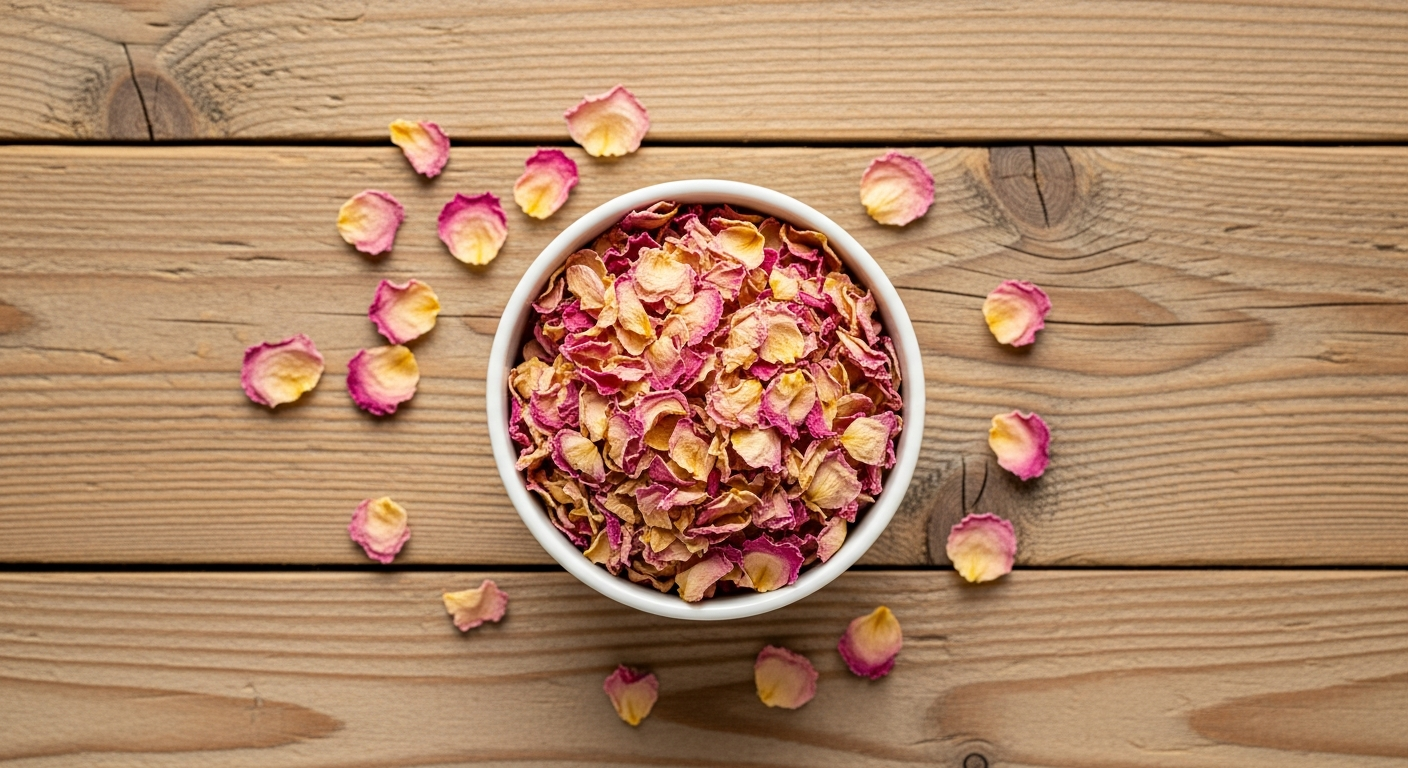
| What it is | Rose petals infused in a carrier oil (maceration) |
| Time | 4–6 weeks (cold) or 4–8 hours (warm method) |
| Difficulty | Easy — beginner-friendly |
| Equipment | Glass jar, cheesecloth, carrier oil |
| Scent | Subtle and delicate — not like rose perfume |
| Uses | Facial oil, body moisturizer, bath oil, hair treatment, DIY skincare ingredient |
Rose Petal Oil vs. Rose Essential Oil — What's the Difference?
This is the question that trips most people up, and it's worth getting clear on before you start.
Rose essential oil is extracted through steam distillation of enormous quantities of fresh rose petals — roughly 4 to 5 tons of petals to produce a single liter of oil. That's why a small bottle of rose essential oil can cost $50 to $200 or more, and why it's absolutely not a home project. Rose petal infused oil — also called macerated rose oil — is completely different. You're soaking dried rose petals in a carrier oil (like sweet almond or jojoba) for several weeks until the oil absorbs their scent and beneficial compounds. No special equipment, no industrial process, no enormous petal harvest.
| Rose Petal Infused Oil | Rose Essential Oil | |
|---|---|---|
| Method | Maceration in carrier oil | Steam distillation |
| Made at home? | Yes — beginner-easy | No — industrial process |
| Petals needed | 1–2 cups | 4–5 tons per liter |
| Scent | Subtle, delicate | Very strong, concentrated |
| Use on skin? | Directly — no dilution needed | Must always dilute in carrier oil |
| DIY cost | $5–$15 | Not feasible at home |
For the rest of this article, when I say "rose petal oil," I mean the infused version — the one you can actually make at home with roses from your garden.
What You Need to Make Rose Petal Oil
The Best Roses to Use
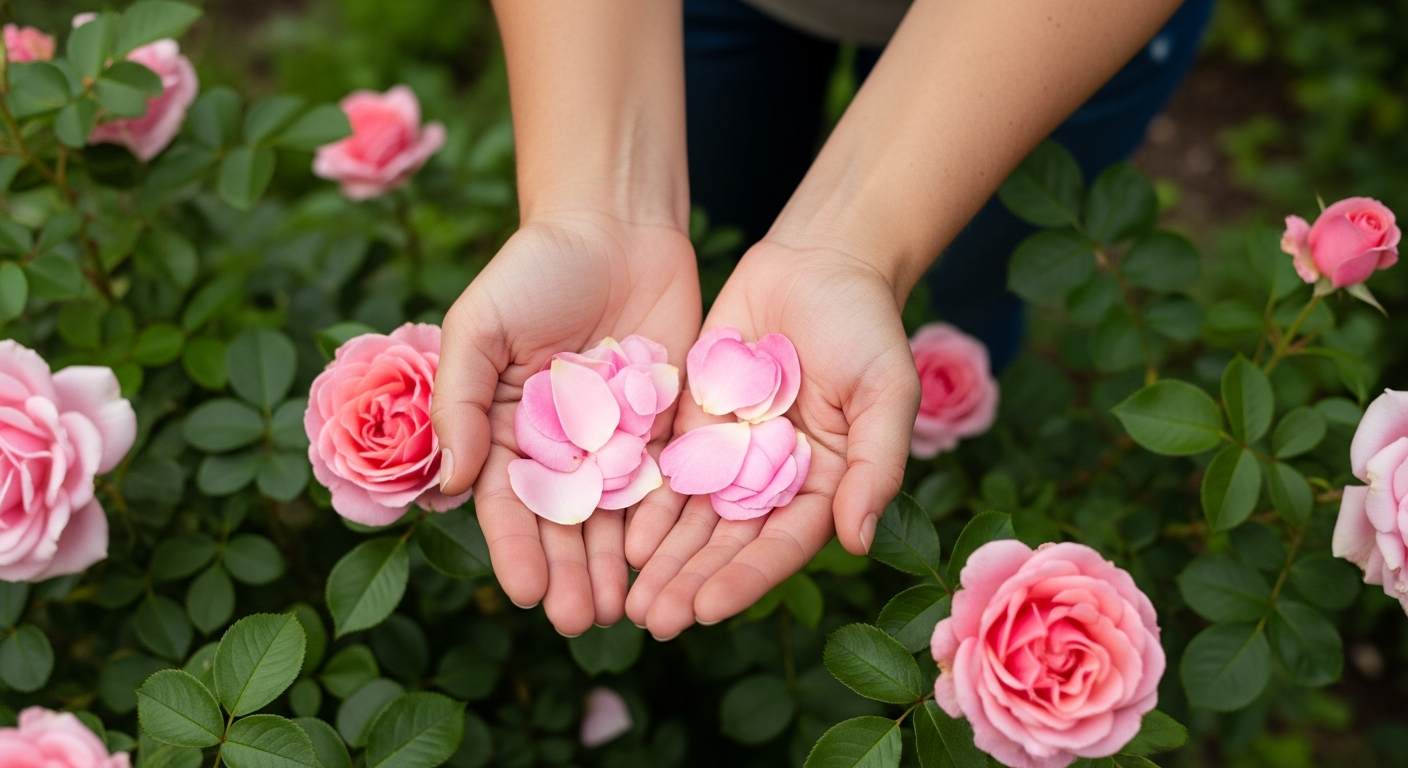
The most important thing to know about making rose petal oil: your roses have to be fragrant. Not all roses smell like roses anymore. Hybrid tea roses — the classic long-stem variety you see at the grocery store — are often bred for perfect form and long vase life, which means growers traded away the scent. Many of them have almost no smell at all, and infusing scentless petals in oil will give you a beautiful-looking oil that smells like… carrier oil.
If your roses smell amazing when you bury your nose in them, those are the ones to use. Old-fashioned, heirloom, and wild rose varieties are typically the most fragrant — Rosa damascena (Damask rose), Rosa centifolia (cabbage rose), old English garden roses, and wild roses (Rosa canina) are all excellent for infusion.
One more rule: chemical-free only. Roses grown for cut flowers are heavily sprayed with pesticides — do not use florist roses for anything you're putting on your skin. If your garden roses have been sprayed with pesticides this season, skip them too. For a different way to celebrate these beautiful blooms, read about the rose and honeysuckle pairing and how to use both flowers together. If you don't grow your own fragrant roses, look for organic dried rose petals online — culinary or cosmetic grade works beautifully and is a great option for getting started without waiting for rose season.
Which Carrier Oil Is Best?
The carrier oil is the base your rose petals will infuse into, so it matters — but not in a complicated way. You want an oil that's light, relatively neutral in scent, and suits your skin type. A strongly-scented carrier oil (like unrefined coconut or olive oil) will compete with the delicate rose scent and overpower it completely.
For most people, sweet almond oil or jojoba oil is the easiest place to start. Jojoba technically isn't an oil — it's a liquid wax — which means it has an extremely long shelf life and won't go rancid on you. Sweet almond is affordable, widely available, and works well for most skin types. Either one makes a gorgeous infused oil.
| Carrier Oil | Best For | Feel | Shelf Life | Notes |
|---|---|---|---|---|
| Sweet almond oil | Normal/dry/sensitive skin | Medium | ~12 months | Best all-rounder; affordable; classic choice |
| Jojoba oil | All skin types | Light, silky | Very long (~2 yrs) | Technically a liquid wax; extremely stable |
| Apricot kernel oil | Mature/dry/sensitive skin | Light | ~12 months | Absorbs easily; excellent for a face oil |
| Fractionated coconut oil | All skin types | Light, dry | Long | Always stays liquid; neutral scent |
| Rosehip seed oil | Aging/hyperpigmentation skin | Medium | Short (~6 months) | Best blended 50/50 with jojoba for stability |
Equipment
You probably already have most of what you need:
- Wide-mouth glass jar with a lid (a Mason jar is perfect)
- Cheesecloth or a fine mesh strainer
- Dark amber glass bottle for storage (a dropper bottle makes it easy to use)
- A marker and label — always date your batches
- Small funnel for transferring to storage bottle (optional but helpful)
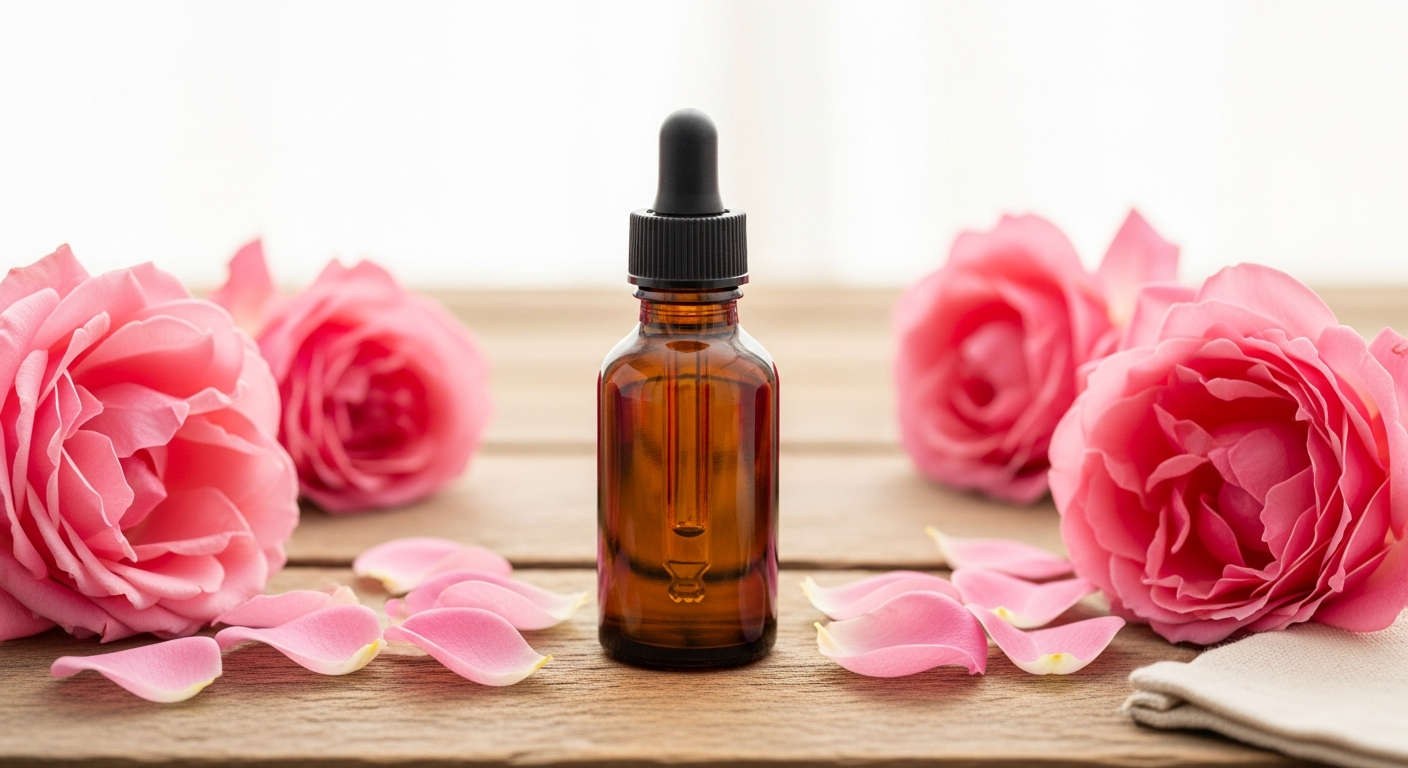
The one thing worth buying if you don't have it is a small dark glass dropper bottle for storage. Light degrades infused oils over time, and a dark bottle protects what you've spent weeks making.
How to Make Rose Petal Oil — Step by Step
Step 1: Harvest and Dry Your Petals (Don't Skip This Part)
Pick your roses in the morning, after the dew has dried but before the heat of the day — that's when the fragrance is strongest. Pull the petals off and spread them in a single layer on a tray or a piece of screen, somewhere with good airflow and away from direct sunlight. Leave them to dry for 1 to 3 days until they feel papery and crinkle when you touch them — like tissue paper, not like a soft petal.
⚠️ The #1 Mistake: Wet Petals
Any moisture left in your petals will cause the oil to go rancid — sometimes within just a few days. I know the drying step feels like extra work, but it's the single most important thing you can do to make sure your oil actually lasts. Once your petals are papery-dry, you're past the hardest part.
If you're in a hurry, you can dry petals in your oven on the lowest setting with the door cracked, or in a food dehydrator at very low temperature. Keep a close eye on them either way — you want dry, not crispy.
Step 2: Pack Your Jar
Fill your glass jar fairly full of dried petals — don't crush them down hard, but don't be stingy either. More petals mean more scent transfer. Pour your carrier oil slowly over the petals until they're completely submerged with no petals poking above the surface. Check back after a few hours: petals absorb oil and will sink down, so you may need to top it up to keep everything covered. Leave as little air space at the top as possible.
Step 3: Choose Your Infusion Method
Here's where you get to choose based on how much time you have. All three methods produce a beautiful infused oil — pick the one that fits your life right now.
| Method | Process | Time | Scent | Best For |
|---|---|---|---|---|
| Cold infusion | Room temp, dark cupboard, shake daily | 4–6 weeks | Subtle, delicate | Traditional method; best scent preservation |
| Warm infusion | Double boiler or crockpot on "warm" (~100°F) | 4–8 hours | Slightly stronger | First-timers who don't want to wait |
| Solar infusion | Sunny windowsill (not direct blazing sun), shake daily | 2–4 weeks | Medium | Low-effort; lovely in summer |
For your first batch, the warm method is a great way to see results quickly without the long wait. The cold method is traditional and produces a beautifully delicate oil — it just takes patience. The solar method is lovely in the summer when you have a good warm spot available.
Step 4: Strain Your Oil
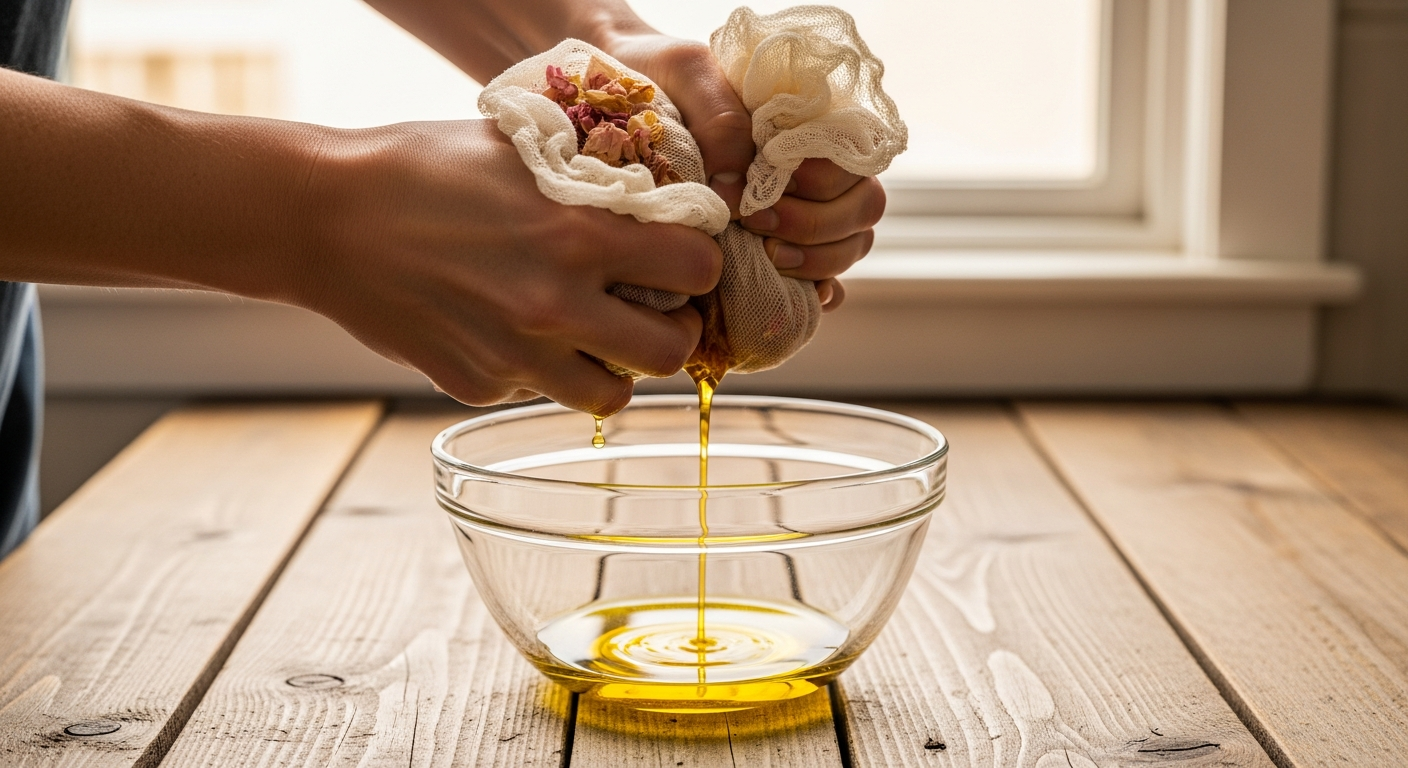
Line a strainer or colander with cheesecloth and set it over a clean bowl. Pour the infused oil through, then gather the edges of the cheesecloth and squeeze the spent petals firmly to get every last drop. This is the satisfying part — watching the rosy-golden oil collect in the bowl makes the whole process feel worth it.
If you want extra-clear oil, strain a second time through a coffee filter. This is purely aesthetic — the oil is just as good either way. Transfer your strained oil to a dark glass storage bottle using a small funnel.
Step 5: Preserve and Store
Before you seal your bottle, consider adding vitamin E oil — about 3 to 5 drops per ounce of finished oil. Vitamin E acts as a natural antioxidant and can extend your oil's shelf life by 2 to 3 months. It's a small step that a lot of guides leave out, and it makes a real difference.
Label your bottle with the contents, the carrier oil you used, and the date you made it. Store in a cool, dark place — a medicine cabinet or cupboard works great. Avoid keeping it near a window or on a sunny counter.
Shelf life: Cold-infused rose petal oil lasts 6 to 12 months properly stored. Warm-infused oil typically lasts 3 to 6 months. Your shelf life will also depend on which carrier oil you used — jojoba lasts the longest, rosehip seed oil the shortest.
The Skin Benefits of Rose Petal Oil
Rose petal infused oil delivers benefits from both the carrier oil base and from the phytochemicals — flavonoids, vitamin C compounds, and tannins — that transfer from the petals during the infusion process.
The most immediate benefit is moisture. Your carrier oil provides direct emollient action, while the rose compounds help your skin retain that moisture longer. Rose petals also have mild anti-inflammatory properties, which makes this oil particularly soothing for sensitive, reactive, or dry skin that tends to get tight and irritated. And it's gentle enough for facial use — I've used it as a facial oil for months and my skin genuinely feels calmer and softer.
A few things to keep in mind: these benefits come from the infused oil, not from rose essential oil, so you don't need to buy an expensive bottle to get them. And as with any new skincare product, do a patch test on your inner wrist before using it on your face — rose petals are well-tolerated by most skin types, but individual responses vary.
Does Rose Petal Oil Smell Like Roses? (What to Expect)
Yes — but not like rose perfume. Not like commercial rose essential oil, either. Your homemade rose petal oil will smell the way actual roses smell: fresh, delicate, and real. There's a subtle floral quality to it that's genuinely lovely, and it gets a little stronger every time you open the bottle and warm it between your hands.
The best analogy I can think of is a garden tomato versus a hothouse tomato. Both are tomatoes. But one tastes like something you grew yourself — more genuine, more present — and the other is engineered to be consistent. Your rose oil is the garden tomato version, and that's worth appreciating.
If you want a stronger scent, here are four things you can do:
- Use the most fragrant roses you can find — variety matters more than anything else here. The scent in the finished oil can only be as strong as the scent in your petals.
- Pack the jar as full of petals as possible — more petals mean more scent compounds transferred to the oil.
- Try double-maceration — once your first batch is strained, add a fresh batch of dried petals to the same oil and infuse again for another 4 to 6 weeks. This concentrates the scent significantly.
- Optional: add rose essential oil at bottling — if you want a noticeably stronger rose scent, you can add 2 to 3 drops of real rose essential oil to your finished infused oil. This is completely optional, and it's an enhancement, not a fix for a failed infusion.
How to Use Rose Petal Oil
Once you have your finished oil, here's how to put it to work:
- Facial oil — Apply 2 to 3 drops to clean, slightly damp skin and press gently with your palms. Great for dry and mature skin, morning or evening. Damp skin absorbs the oil better than dry skin does.
- Body moisturizer — Apply to damp skin right after a shower. It sinks in quickly and leaves your skin feeling soft without being greasy.
- Bath oil — Add 1 to 2 tablespoons to a warm bath while the water is running. It distributes better that way and creates a beautifully scented soak.
- Hair oil — A few drops smoothed over dry ends helps calm frizz. You can also massage a small amount into your scalp before washing — just rinse thoroughly.
- Massage oil — Use it on its own or blend with a few drops of lavender essential oil for a relaxing bedtime massage.
- Lip treatment — Dab a tiny amount on your lips before bed. It's gentle enough for this and works beautifully as an overnight treatment.
- DIY skincare ingredient — Use your rose petal oil as the oil phase in homemade lotions, body butters, or salves. It pairs especially well with beeswax-based salves — the same basic technique I use for my calendula salve and dandelion salve.
Gift idea: Decant a small amount into an amber dropper bottle with a handwritten label — the date, the carrier oil, and where the roses came from if you grew them yourself. It makes one of the most thoughtful handmade gifts you can give. Pair it with a bar of homemade soap for a complete natural skincare set.
Troubleshooting Rose Petal Oil
I've made every one of these mistakes at least once. Here's what to do if things go sideways.
| Problem | Why It Happened | Fix |
|---|---|---|
| Oil smells rancid or "off" | Petals weren't fully dried; moisture in the jar | Discard and start fresh; dry petals for 2–3 full days before infusing |
| Little to no rose scent | Roses weren't fragrant; infusion time too short | Use more fragrant varieties; extend time; try double-maceration |
| Oil looks cloudy | Moisture or water contamination | Strain through a coffee filter; if the smell is off, discard |
| Petals turned brown or moldy | Moisture in the jar | Discard; restart with bone-dry petals |
| Oil didn't change color | Normal and expected | Color is not the measure — smell is. Light-colored oil is completely fine. |
Rose Petal Oil FAQ
What is the difference between rose petal oil and rose essential oil?
Rose petal infused oil is made by soaking dried rose petals in a carrier oil for several weeks — a process called maceration. Rose essential oil is produced through steam distillation of enormous quantities of fresh petals (around 4 to 5 tons of petals per liter). You can make infused oil at home; rose essential oil is an industrial product. Both are valuable, but they're completely different things.
Can I use fresh rose petals instead of dried?
Fresh petals contain moisture, which can cause your oil to go rancid within days. Always dry your petals first until they feel papery and crinkle when touched — at minimum 24 to 48 hours, ideally 2 to 3 full days. It's an extra step, but skipping it is the most common reason homemade rose oil fails.
Which roses are best for making rose petal oil?
Old-fashioned, heirloom, and wild roses are typically the most fragrant and work best. Varieties like Rosa damascena (Damask rose), old English garden roses, and wild roses (Rosa canina) are excellent choices. Hybrid tea roses — the classic florist variety — are often bred for appearance rather than scent and may have little to no fragrance. Smell your roses before you infuse them. If they don't smell strongly, your oil won't either.
How long does it take to make rose petal oil?
The cold infusion method takes 4 to 6 weeks. The warm infusion method takes 4 to 8 hours. The solar infusion method takes 2 to 4 weeks. All three produce a beautiful oil — choose based on how much time you have.
Why doesn't my homemade rose oil smell strongly of roses?
Rose petal infused oil has a subtle, delicate scent by nature — not the strong fragrance of perfume or commercial rose essential oil. This is normal and expected. For a stronger scent, try double-maceration: once your first batch is strained, add a fresh batch of dried petals and infuse again. You can also add 2 to 3 drops of rose essential oil at bottling if you want a noticeably stronger rose aroma.
Is rose petal oil good for your face?
Yes — rose petal infused oil is gentle enough for facial use and is particularly good for dry, sensitive, and mature skin. The carrier oil provides deep moisture while rose compounds offer mild soothing and antioxidant benefits. Always do a patch test on your inner wrist before applying anything new to your face.
How long does homemade rose petal oil last?
Cold-infused rose petal oil lasts 6 to 12 months when stored in a dark glass bottle in a cool, dark place. Warm-infused oil typically lasts 3 to 6 months. Adding a few drops of vitamin E oil at bottling can extend shelf life by 2 to 3 months. If the oil smells rancid or off, discard it.
Can I use roses from a florist to make rose petal oil?
It's not recommended. Most commercially grown cut flowers are treated with pesticides and other chemicals — you don't want those on your skin. If you don't have access to garden roses, look for certified organic dried rose petals in culinary or cosmetic grade. They're widely available online and work beautifully for infusing.