How to Make Dandelion Salve (Easy Recipe for Sore Muscles, Dry Skin & More)
Last updated March 9, 2026
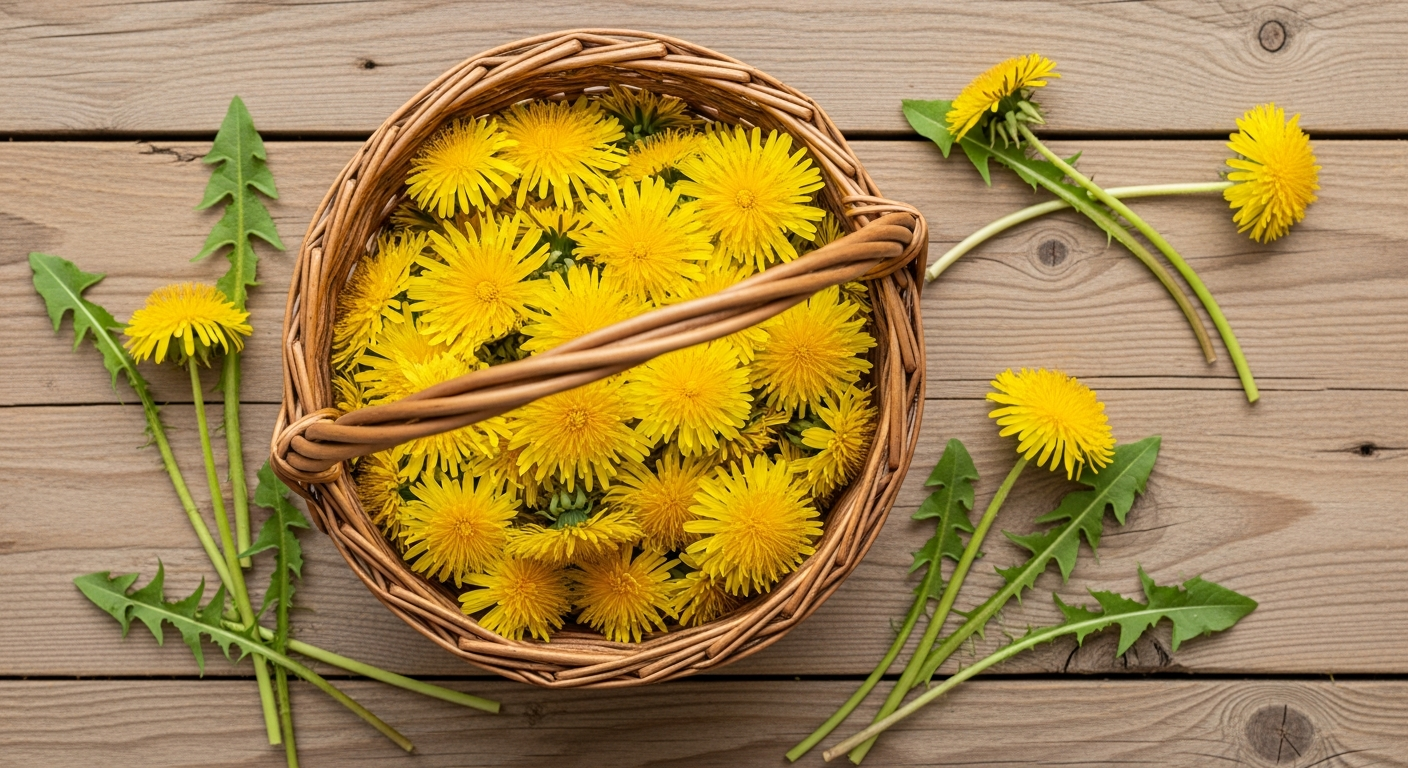
I was already headed toward the shed to grab the mower when I stopped at the edge of our back yard. The whole lower corner was covered in dandelions — hundreds of them, open and yellow, right at their peak. I almost mowed straight through. But I had an empty salve tin sitting on the kitchen counter and a jar of olive oil I wasn't using. So I went and got a basket instead. If you've got dandelions right now, the window is short — but so is the recipe.
| Main uses | Sore muscles, achy joints, dry/cracked skin, minor cuts |
| Yield | ~10–12 oz (about six 2-oz tins) |
| Active time | ~20 minutes |
| Infusion time | 1–6 weeks (or same-day quick method) |
| Shelf life | 9–12 months |
| Skill level | Beginner |
| Cost to make | ~$10–20 for a full batch |
| Gift-friendly? | Yes — makes a lovely handmade gift |
Why This Weed Is Worth Keeping
Dandelion flowers have been studied for their anti-inflammatory compounds and antioxidants — and when infused into oil and applied to skin, those properties transfer. Research published in peer-reviewed journals has confirmed that dandelion flower extracts can help reduce inflammation and protect skin cells from oxidative stress. In plain terms: this salve soothes sore muscles after a long day of yard work, helps soften dry and cracked skin, and may ease the discomfort of achy, arthritic joints when massaged in regularly.
The other reason to make it? The main ingredient is free. Dandelion flowers grow in most yards across the country without any planting, tending, or watering on your part. A full batch of salve costs $10–20 total — mostly for the beeswax and tins — and yields about six 2-oz containers. That's a season's worth of salve for less than one bottle of most store-bought muscle rubs. One honest note on timing: dandelion flowers peak in early to mid spring, and that window moves faster than you'd think. If yours are open right now, pick them before they go to seed.
What You'll Need
Ingredients
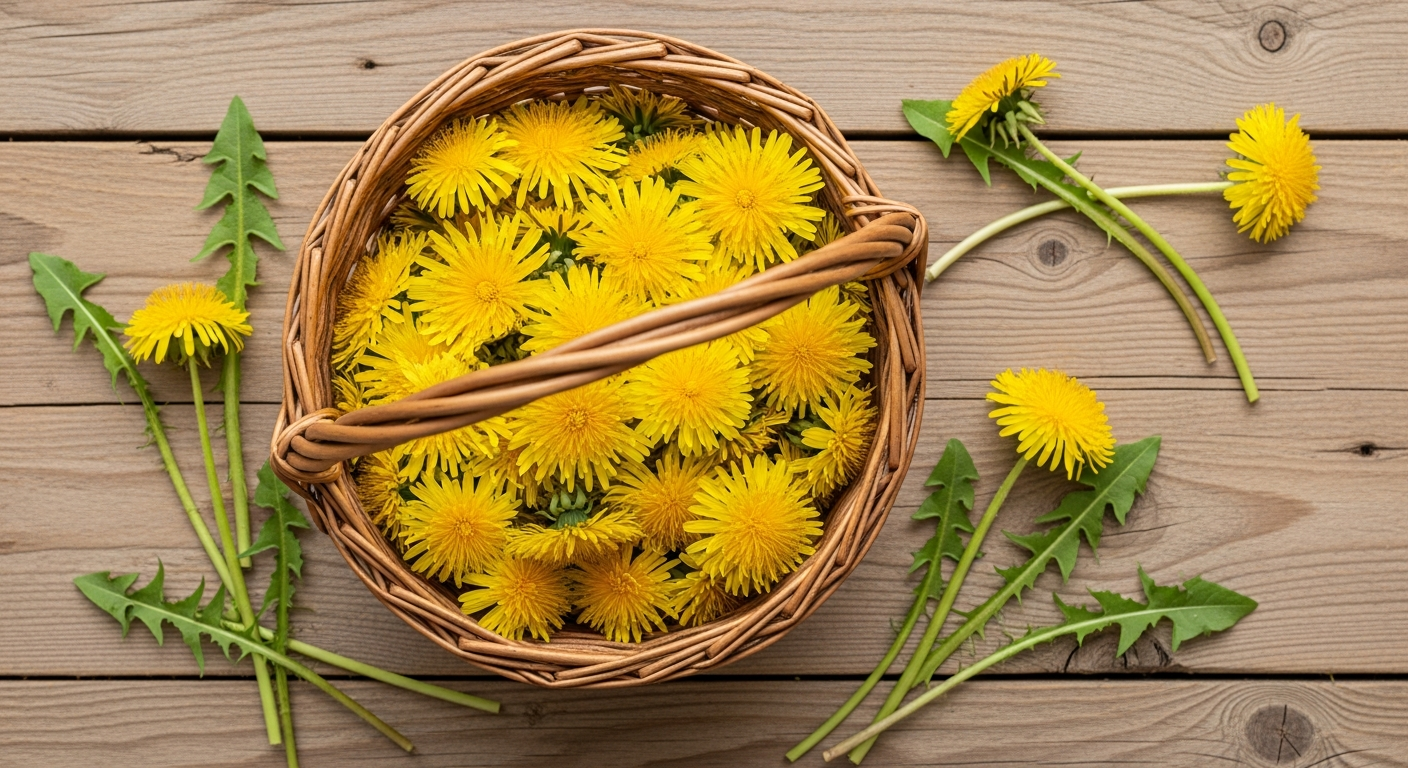
- Dandelion flowers (fresh-picked, then wilted/dried 1–2 days)
- 1–1.5 cups carrier oil (olive, coconut, sunflower, or sweet almond — see comparison table below)
- 1 oz beeswax pastilles (or grated beeswax block)
- Optional: 1 oz shea butter (adds skin-softening properties)
- Optional: 15–30 drops essential oil (lavender, tea tree, or frankincense)
The dandelions are free. If you cook with olive oil, you already own the most common carrier oil. The two things you'll likely need to buy are beeswax and tins. I always use beeswax pastilles rather than a block — they melt faster and you don't have to grate anything. For the containers, I pour mine into 2-oz metal salve tins — they're easy to label and they make really nice handmade gifts.
Equipment
- Pint-size mason jar (for infusing)
- Fine mesh sieve + cheesecloth (for straining)
- Double boiler — or a makeshift version (a heat-proof glass measuring cup set in a pot with an inch of simmering water works perfectly)
- Salve tins or small glass jars for pouring
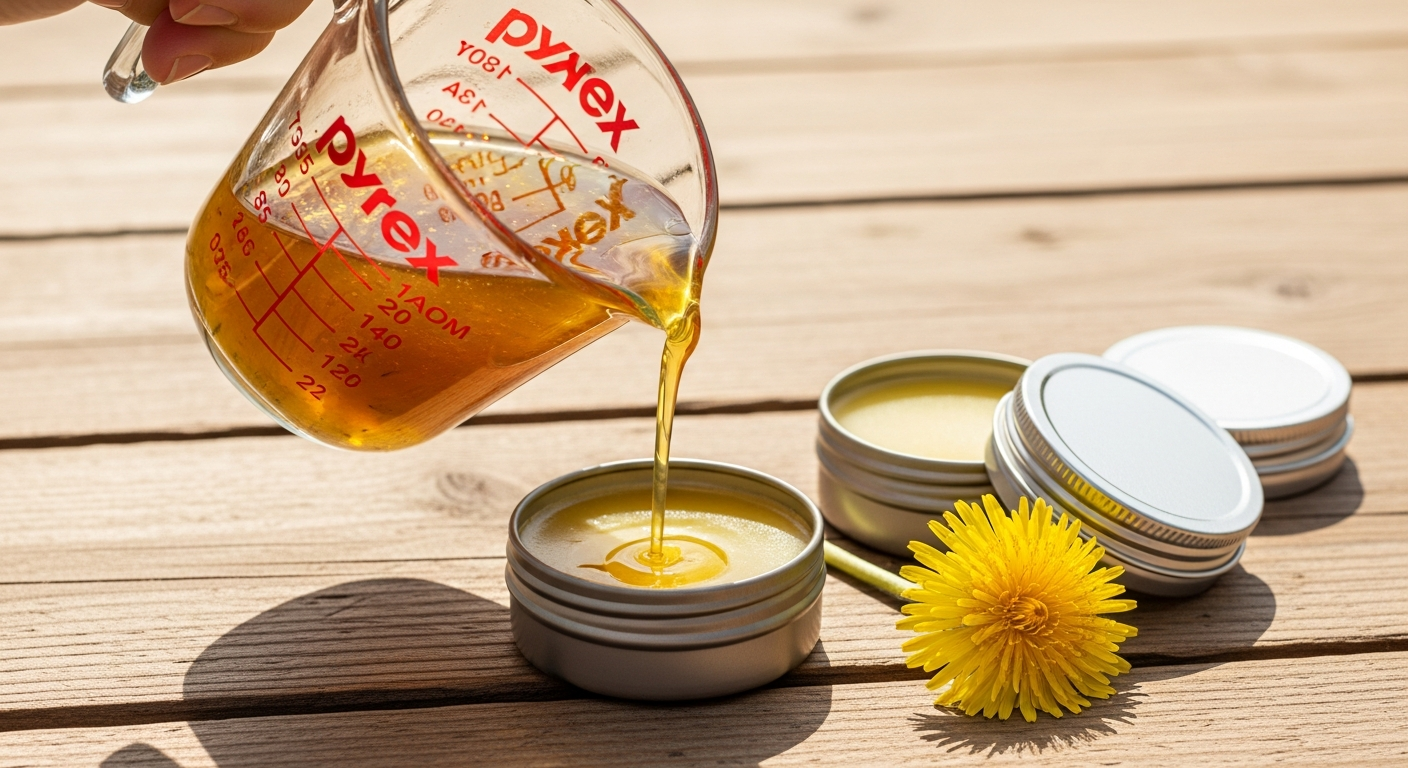
You don't need any specialty equipment here. A Pyrex measuring cup and a regular pot are all you need to create a functioning double boiler — no expensive setup required.
Choosing Your Carrier Oil
The carrier oil is the base of your infusion — it draws the dandelion's beneficial compounds out of the flowers and into the oil, which then carries them onto your skin. Any of the oils below will work; the difference is mostly feel and what you already have on hand.
| Oil | Texture | Skin feel | Notes |
|---|---|---|---|
| Olive oil | Liquid | Rich, slightly heavy | Pantry staple; great all-purpose choice |
| Coconut oil | Solid at room temp | Absorbs well | Melt before infusing; makes salve firmer |
| Sunflower oil | Liquid | Light, fast-absorbing | Good for sensitive skin |
| Sweet almond oil | Liquid | Silky, skin-softening | Best for dry or delicate skin |
I almost always reach for olive oil first — it's already in my kitchen and it works beautifully for everything from sore muscle rubs to cracked heels. If I'm making a batch for dry or sensitive skin — or something I plan to use on my face — sweet almond is my preference. It has a silkier feel and absorbs a little faster. I'll link the one I use below.
Step 1 — Make Dandelion Infused Oil
Why You Must Dry the Flowers First
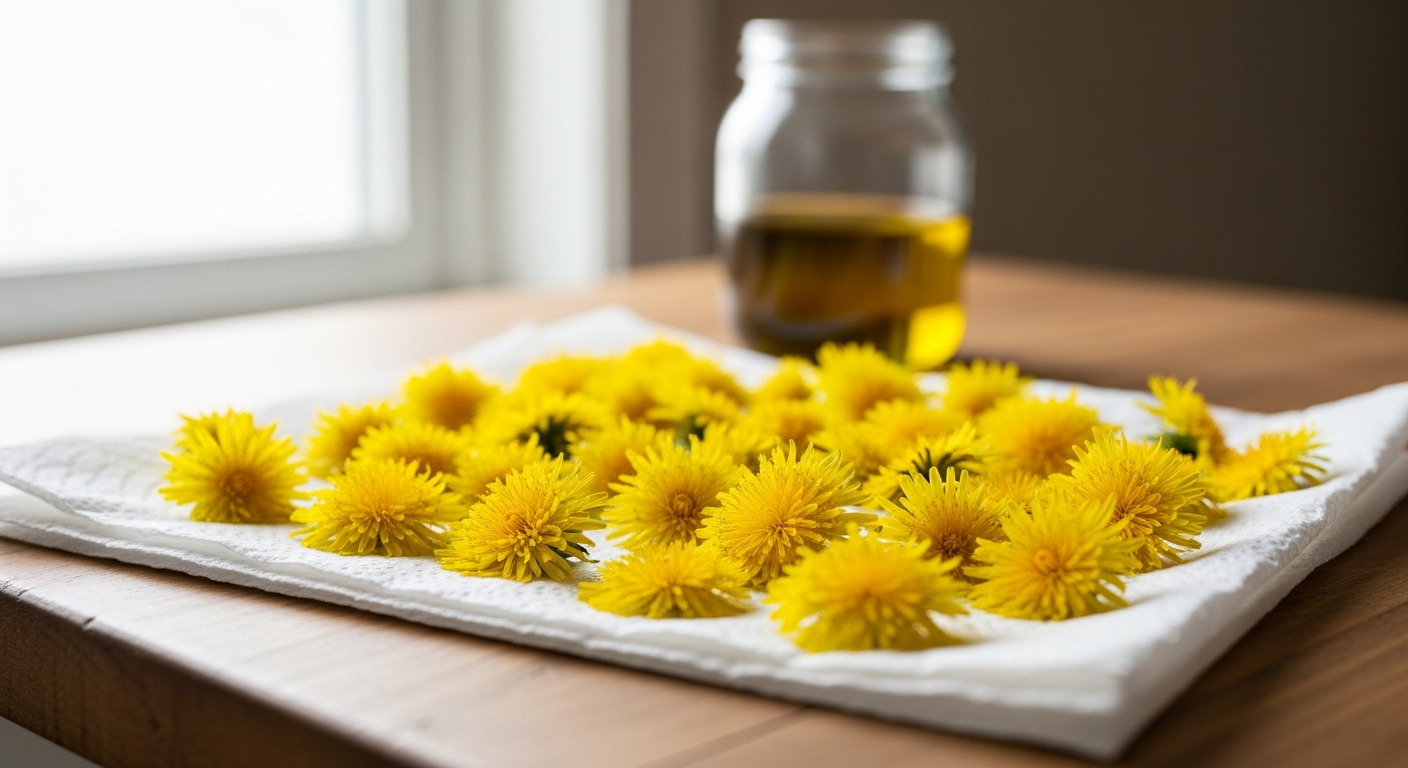
Fresh dandelion flowers hold a surprising amount of water, and water in oil is exactly what causes mold. Even a small amount of moisture from undried flowers can spoil an entire jar of infusing oil within a week. To prevent it, spread your flowers in a single layer on a paper towel or clean cloth and let them sit for 24–48 hours before infusing. You're not trying to make them bone-dry and papery — you want them slightly shrunken, soft, and wilted, with the bulk of the moisture gone. Don't rinse them with water to clean them; just shake them gently to dislodge any bugs before bringing them inside.
Three Ways to Infuse (Choose Your Timeline)
Pick the method that fits your schedule — all three produce good results when you start with properly dried flowers.
| Method | How | Time | Best when |
|---|---|---|---|
| Slow (classic) | Fill jar with dried flowers, cover with oil, loosely cap, dark cabinet, shake weekly | 4–6 weeks | Best potency; my default |
| Quick (double boiler) | Jar in water bath over low heat, 2–3 hours | Same day | You want it today |
| Sunny window | Jar on warm windowsill 1 week, then dark spot 1 more week | ~2 weeks | Easy middle ground |
Here's the single most important tip I can give you — and no, it's not something most recipes mention: whichever method you choose, leave the jar lid slightly loose during infusion, or cover the top with cheesecloth secured with a rubber band instead of using a solid cap. This lets any remaining moisture escape rather than trapping it inside the jar. It's the actual prevention mechanism for mold, and it makes a real difference.
How to Strain the Oil
Line a fine mesh sieve with cheesecloth and set it over a bowl or large measuring cup. Pour in your infused oil and flowers, then gather the cheesecloth into a bundle and squeeze it firmly — you'll get more oil out than you'd expect. The finished oil should be a rich, deep yellow; that color is a good visual sign that your batch infused well.
Step 2 — Make the Salve
Dandelion Salve Recipe
Ingredients:
- 1 cup dandelion infused oil
- 1 oz beeswax pastilles (~3 Tbsp)
- Optional: 1 oz shea butter
- Optional: 15–30 drops essential oil (lavender, tea tree, or frankincense)
Steps:
- Combine the infused oil and beeswax in your double boiler over low heat.
- Stir gently until the beeswax fully melts into the oil — low and slow is the right approach here, don't rush it.
- If you're adding shea butter, stir it in now and continue until fully melted.
- Remove from heat and let it cool for 3–5 minutes. Add your essential oil drops and stir gently. I add about 15 drops of lavender essential oil right before pouring — it smells beautiful, and lavender brings its own calming, anti-inflammatory properties to the salve.
- Consistency test: Drop a small amount onto a cold plate. After 30 seconds, it should be soft and glossy, not runny. If it's still too liquid, return the pot to low heat, add ½ tsp more beeswax, let it melt, and test again.
- Pour carefully into your tins or small jars. Leave them uncapped until fully cooled — about 30–60 minutes. Capping too early can trap condensation. For everyday moisturizing (not just sore muscles), a lotion bar is a quick project with similar ingredients.
How to Use Dandelion Salve (+ Gifting Ideas)
Once you've got a batch ready, here's how to put it to work:
- Sore muscles and joints: Rub a small amount into the affected area and massage it in. It's especially nice after gardening or a long day of physical work.
- Dry, cracked hands and feet: Apply generously at bedtime and let it absorb overnight. A classic use that's been around for generations.
- Minor cuts and scrapes: A thin layer over clean skin — the anti-inflammatory and mildly antimicrobial properties make it useful here.
- Dry skin in general: Elbows, knees, cuticles, lips. For lip balm, use a slightly higher beeswax ratio (about 1.5 oz per cup of oil) to get a firmer texture.
A few tins also make a really lovely handmade gift — I've given these to my mom and my sister-in-law for Mother's Day and for birthdays. Wrap a tin with a bit of twine and a handwritten label and you've got something people actually use and appreciate.
Dandelion Salve Troubleshooting
This is the section I wish every dandelion salve recipe had. Every question below comes straight from what real people run into — and none of them are hard to fix once you know what's going on.
My Oil Is Growing Mold
The culprit is almost always moisture — usually from flowers that weren't dried long enough before infusing. Prevention: dry your flowers a full 24–48 hours and always leave the lid slightly loose during infusion so any residual moisture can escape. If you spot mold in your infusing oil, discard the entire batch and start over with freshly dried flowers. Skimming the mold off won't save it — once mold is present, it's already spread through the oil. A batch that smells musty even before you've added beeswax is also a discard.
My Salve Is Too Soft
Reheat the salve over low heat and add ½ tsp of beeswax at a time, letting it melt fully before adding more. After each addition, do the cold plate test: a small drop should hold its shape within 30 seconds. Adding a small amount of refined coconut oil to your original recipe (1–2 Tbsp per cup of carrier oil) also helps produce a firmer texture, which is especially useful in warm climates where salves tend to soften more easily.
My Salve Is Too Hard
Reheat and add more carrier oil, 1 Tbsp at a time. Test on a cold plate after each addition — the goal is a texture that glides across skin without effort or drag. Too hard a salve won't spread well and can feel waxy rather than soothing.
My Coconut Oil Solidified During Infusion
This is completely normal — coconut oil solidifies below 76°F, so if your house is on the cooler side, the oil in your infusion jar will solidify too. It hasn't gone bad and it's not ruined. Move the jar to a warmer spot (a sunny windowsill or a spot near the stove works well), or switch to the quick double boiler method for coconut oil infusions, which keeps the temperature consistent throughout the process.
I Want a Vegan Version (No Beeswax)
Candelilla wax is the most reliable beeswax substitute for skin products — use half the amount called for (0.5 oz instead of 1 oz) because it's more potent and will produce an equivalent texture at that ratio. Carnauba wax also works at a similar half-ratio. Avoid soy wax — it's formulated for candles and doesn't behave the same way on skin. Both candelilla and carnauba are widely available on Amazon.
Shelf Life, Storage, and How to Know When It's Done
Stored in a cool, dark spot, dandelion salve lasts 9–12 months — sometimes longer if you added essential oils or stirred in a few drops of vitamin E oil before pouring (both extend shelf life naturally). If your salve starts to smell like old cooking oil, rancid and a little off, that's your sign to make a fresh batch. Always label your tins with the date so you're not guessing later. Stored in the refrigerator, it will keep even longer — though the texture may be firmer until it warms up.
Dandelion Salve FAQ
What is dandelion salve good for?
Dandelion salve is used for sore muscles, achy joints (including arthritis-related discomfort), dry and cracked skin, minor cuts and scrapes, and general skin moisturizing. The dandelion flowers infused into the carrier oil contain anti-inflammatory compounds and antioxidants that have been studied for both pain relief and skin protection when applied topically.
Who should not use dandelion salve?
People who are allergic to plants in the Asteraceae family — which includes ragweed, marigolds, and chrysanthemums — may have a reaction to dandelion and should do a small patch test before using it widely. If you're pregnant or nursing, check with your healthcare provider before using topical herbal preparations regularly. Most people use dandelion salve without any issues.
Can you put dandelions on your skin?
Yes — dandelion flowers infused into oil have well-documented anti-inflammatory and antioxidant properties when applied topically. Published research has confirmed skin-protective benefits from dandelion flower preparations. Dandelion salve has a long track record of safe use as a traditional topical remedy.
How do you make dandelion salve at home?
Start by making dandelion infused oil: dry fresh flower heads for 1–2 days, cover with your carrier oil in a jar, and infuse for 4–6 weeks (or use the quick heat method for same-day results). Then melt 1 oz of beeswax pastilles into 1 cup of the finished infused oil over a double boiler, stir in any optional essential oils, test the consistency on a cold plate, and pour into small tins. Full step-by-step instructions are above.