Purple Brazilian Clay: Benefits, Uses, and Where to Buy the Real Thing (2025)
Last updated March 13, 2026
I'll be honest — I spent way too long buying "purple Brazilian clay" off Amazon before I figured out that half of what I ordered wasn't actually Brazilian clay at all. Once I learned what the real thing looks like and where to actually get it, I understood why it's become one of my favorite clays to keep on hand. It's gentler than bentonite, works for every skin type, and does double duty in both face masks and handmade soap.
This guide covers everything: what purple Brazilian clay actually is, what it does for your skin and hair, how to use it at home, and — most importantly — how to avoid wasting money on a fake product.
| Clay type | Kaolin-based, naturally purple |
| Origin | Amazon region, Brazil |
| Best for | All skin types, especially sensitive |
| Key uses | Face mask, hair mask, soap making |
| Watch out | Most Amazon listings are fake — not real Brazilian clay |
What Is Purple Brazilian Clay?
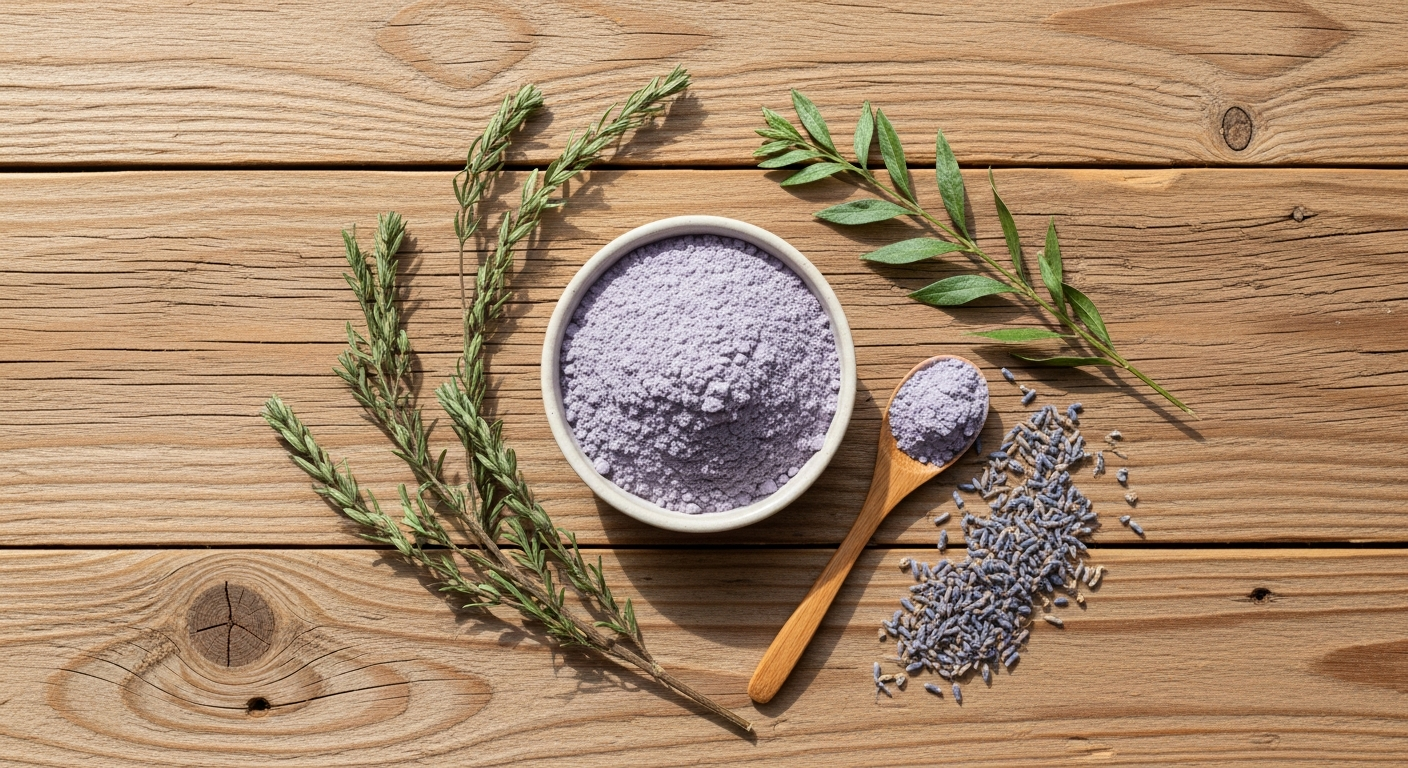
Purple Brazilian clay is a naturally purple kaolin clay mined in Brazil that's gentler on skin than most other cosmetic clays, making it a favorite for face masks, hair treatments, and handmade soap.
It comes from the Amazon region of Brazil, where it's been used for centuries in traditional skin and body care. The purple color isn't a dye — it occurs naturally from the clay's high magnesium content and unique mineral composition. That matters, because it means the color is a signal of mineral richness, not marketing. The pH sits around 4-5, which is mildly acidic and close to your skin's own pH. That's meaningfully gentler than clays like bentonite, which sit around pH 8-9.
If you've ever found that bentonite or French green clay left your skin feeling tight and irritated, purple Brazilian clay is worth trying instead. It delivers real benefits without the drying effect.
How Purple Brazilian Clay Compares to Other Clays
Not all cosmetic clays are interchangeable. Here's how purple Brazilian clay sits alongside the ones you're most likely to encounter:
| Clay | pH | How Drying | Best For |
|---|---|---|---|
| Purple Brazilian | 4–5 | Gentle | All skin types, especially sensitive |
| Kaolin (white/pink) | 4–5 | Very gentle | Sensitive, dry skin |
| Bentonite | 8–9 | Strong | Oily, acne-prone skin |
| French Green / Illite | 7–8 | Medium | Oily/normal skin |
Purple Brazilian clay shares kaolin's gentle pH but brings a richer mineral profile to the table — which is why it's become a popular upgrade from standard white kaolin, especially for anti-aging and skin-tone benefits.
Purple Brazilian Clay Benefits for Skin
What makes purple Brazilian clay work isn't magic — it's minerals. The clay contains magnesium, iron, titanium, and silica, along with a unique profile of omega 3, 6, and 9 fatty acids that most other cosmetic clays don't have. Those fatty acids are what give it a hydrating quality that straight kaolin lacks.
Here's what that translates to in practice:
Anti-aging and collagen support. The magnesium content plays a role in collagen production, which is why you'll see purple Brazilian clay featured in anti-aging formulas. With regular use, many people notice reduced appearance of fine lines and improved firmness — not overnight, but over time.
Deep cleansing without stripping. Like all clays, it draws impurities and excess oil out of pores. The difference from bentonite is that it does this without disrupting your skin barrier. You get the cleansing benefit without the tight, parched feeling afterward.
Brightening and even skin tone. This is one of the more underappreciated benefits. Purple Brazilian clay can fade the appearance of age spots and hyperpigmentation with consistent use — it's gentle enough for regular masks without over-sensitizing skin.
Soothing and anti-inflammatory. The clay has natural anti-inflammatory properties, which is why it's often recommended for people dealing with rosacea, spider veins, and reactive skin. It calms rather than aggravates, which is exactly what sensitive skin needs.
Hydrating and nourishing. Those omega fatty acids I mentioned aren't just a footnote. They give this clay a nourishing quality that makes it feel more like a treatment than a standard mask. Your skin typically feels soft after rinsing, not depleted.
Is It Safe for Sensitive Skin? (Including Rosacea)
Yes — purple Brazilian clay is one of the safest cosmetic clays for sensitive skin, largely because of its kaolin base and skin-compatible pH of 4–5. It won't strip your acid mantle or trigger the kind of irritation that stronger clays can.
For anyone dealing with rosacea or spider veins, this is specifically worth knowing. The anti-inflammatory properties make it a better fit than most clays, which can worsen redness with repeated use. If bentonite or French green clay has left your skin angry in the past, purple Brazilian clay is the one to try instead — just keep your mask time on the shorter side (5–10 minutes) when you first start.
Is Purple Brazilian Clay Good for Hair?
Yes — purple Brazilian clay absorbs excess oil from the scalp, reduces dandruff, and deposits minerals into the hair and scalp with each use.
For people dealing with oily roots or scalp flaking, a weekly clay mask can make a real difference. The minerals absorb the oils without completely stripping the scalp, so you don't end up with the overcorrection problem (scalp overproduces oil after being dried out). Use it once a week at most — more often than that can over-dry even a healthy scalp.
How to Use Purple Brazilian Clay — Face Mask
This is probably why you're here, so let's get into it. Here's the straightforward method that works:
- Start with freshly cleansed, damp skin.
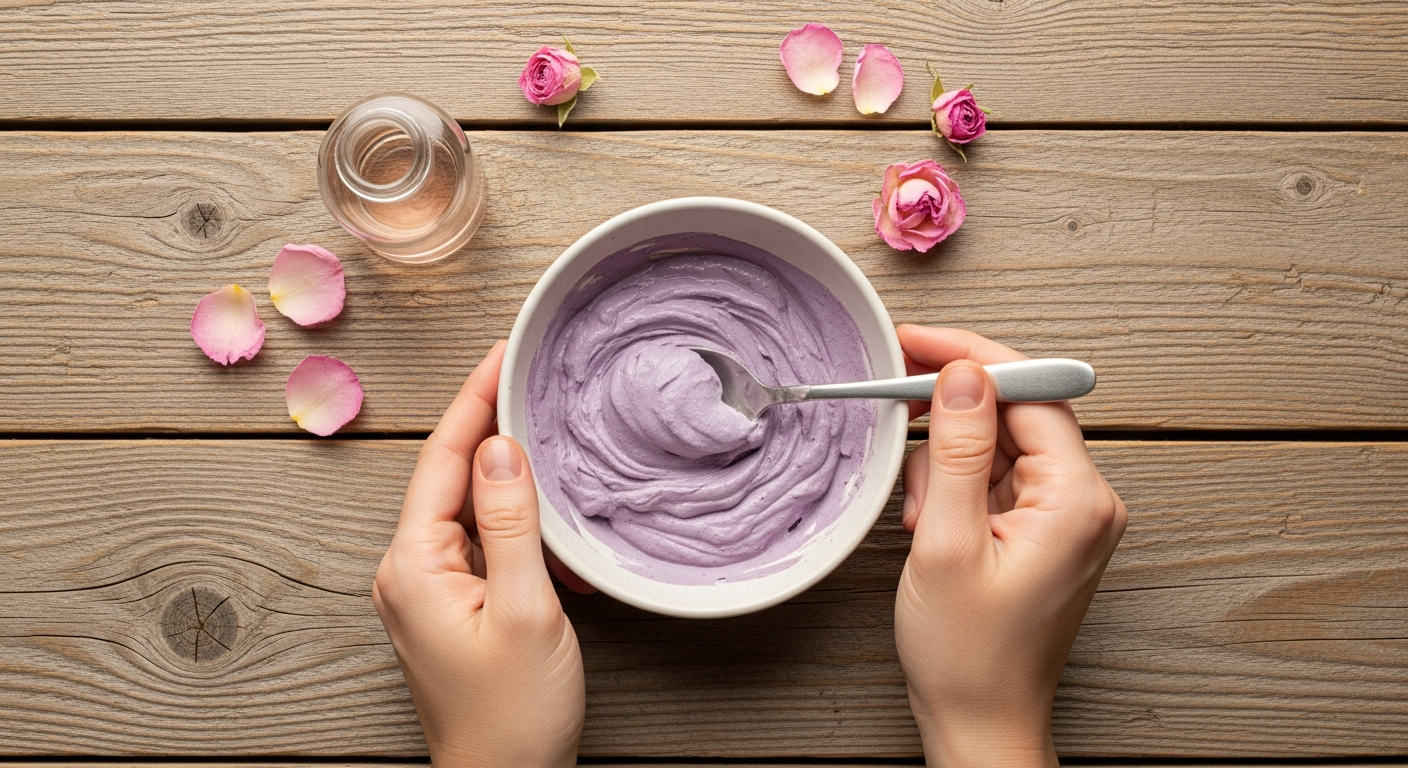
- Measure 1–2 teaspoons of purple Brazilian clay into a non-metal bowl — metal can interact with the clay's charge and reduce its effectiveness, so use ceramic, glass, or wood.
- Add rose water (or plain water) gradually and stir until you have a smooth paste — aim for the consistency of thick yogurt, not a runny liquid.
- Apply to your face with clean fingers or a mask brush, avoiding the eye area.
- Leave on for 10–15 minutes — if you have sensitive or dry skin, pull it off closer to 5–10 minutes.
- Rinse with warm water, pat dry, and follow immediately with your usual moisturizer.
A slight tightening sensation as the mask dries is completely normal. If you feel any burning or significant irritation, rinse it off — that's your skin telling you to shorten the time or dilute the clay more.
How often: 2–3 times per week works well for oily or combination skin. Once a week is plenty if your skin is sensitive or dry. Don't use it daily — even gentle clays need a break.
DIY Purple Brazilian Clay Hair Mask
This is simple and effective for anyone dealing with an oily or flaky scalp:
Ingredients:
- 1 tablespoon purple Brazilian clay
- 2 tablespoons plain conditioner or yogurt
- Optional: 3–5 drops rosemary essential oil (for extra scalp stimulation)
Instructions:
- Mix everything together in a small bowl until smooth.
- Apply to damp hair, focusing on the scalp — work it into the roots and through the mid-lengths.
- Leave on for 15–20 minutes, then rinse thoroughly.
One tip: lean your head forward when rinsing. Clay can feel heavy in hair and wants to clump if you let water run straight down onto it — rinsing face-down moves the water through the hair more effectively.
Using Purple Brazilian Clay in Soap Making
Soap makers love purple Brazilian clay for two reasons: it gives a beautiful natural purple color to cold-process and melt-and-pour bars, and it brings skin benefits to every wash. One ingredient does the job of two.
Here's the dosing guide for different applications:
| Product | Use Level |
|---|---|
| Emulsions (lotion, cream) | 1–10% |
| Bar soap (commercial/batch) | 5–15% |
| Face or body mask products | 20–60% |
| Melt-and-pour (home use) | 1 tsp per pound of soap base |
| Cold process (home use) | 1–2 tsp per pound of oils |
For cold process soap, the most important technique tip is to mix the clay into your hot lye solution rather than stirring it into the oils. This gives you much more even color distribution throughout the bar. Start with 1 tsp per pound of oils for a soft purple tone — push to 2 tsp if you want a deeper, richer color. Going through gel phase will also intensify the color naturally.
New to soap making? Start with melt-and-pour — you skip the lye entirely. Mix 1 tsp of clay into 1 tablespoon of 99% isopropyl alcohol first, then stir that mixture into your melted soap base. You'll get beautiful purple color without the learning curve of cold process.
Where to Buy Real Purple Brazilian Clay (And How to Spot Fakes)
Here's the thing I wish someone had told me earlier: a lot of "purple Brazilian clay" sold on Amazon isn't actually Brazilian clay. It's standard white clay or kaolin with synthetic purple mica blended in to create the color. It looks right, but it has none of the mineral content that makes real Brazilian clay worth using. You're essentially paying for dyed white clay.
How to identify real purple Brazilian clay on a label:
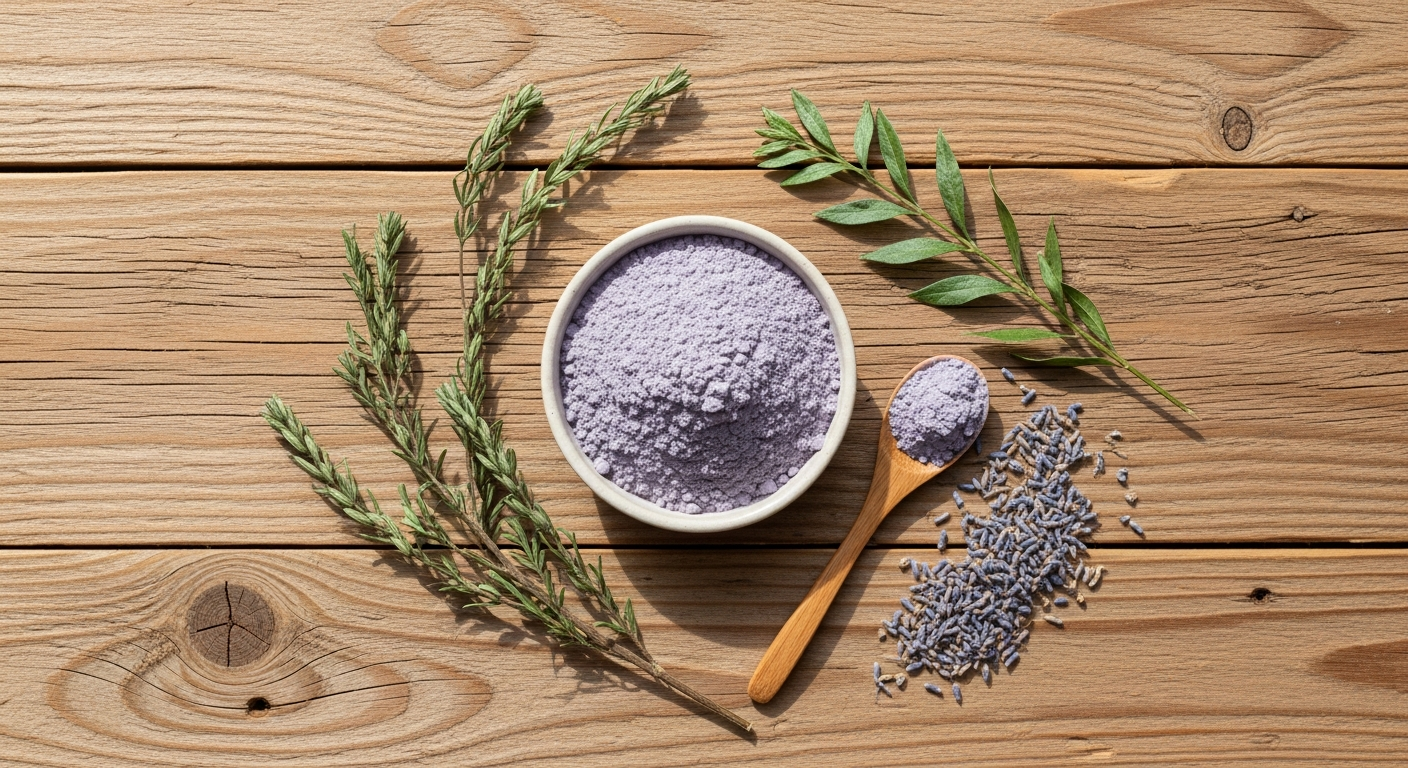
- Look for: "Argila Roxa" (that's Portuguese for purple clay) or "kaolin (purple)" in the ingredient list
- Country of origin should state Brazil
- Avoid: any listing where the colorant is listed as "mica," "ultramarines," or any FD&C color code blended with white clay — those are dyed fakes
Where to buy reliably: For soap making, Bramble Berry and Rainforest Chica are both trustworthy sources that clearly label their clay. For skincare use, cosmetic clay suppliers are a safer bet than general marketplace listings. Look for organic and fair trade certifications where available — the fair trade market for Brazilian clays is real, and it matters for sourcing quality.
Frequently Asked Questions About Purple Brazilian Clay
What is purple Brazilian clay good for?
It's primarily used for skin care — deep cleansing, anti-aging (collagen support and fine lines), brightening age spots and uneven tone, and soothing reactive skin including rosacea. It also works in hair care for absorbing excess scalp oil and reducing dandruff. Soap makers use it as a natural purple colorant with added skin benefits in the finished bar.
Is Brazilian purple clay good for hair?
Yes. It absorbs excess oil from the scalp, which reduces oiliness and dandruff over time, while also depositing minerals to the scalp. Use it as a weekly hair mask mixed with conditioner or plain yogurt. More than once a week can over-dry even a healthy scalp.
What is special about purple clay?
Two things set it apart. First, its mineral profile: magnesium, iron, titanium, silica, and omega 3/6/9 fatty acids are all present, which is unusually rich for a cosmetic clay. Second, its gentleness. Most clays are either very gentle but low-impact (white kaolin) or very effective but drying (bentonite). Purple Brazilian clay sits in between — meaningful benefits with a skin-friendly pH of 4–5. And the purple color is completely natural, not added.
How often should I use purple Brazilian clay on my face?
Oily or combination skin: 2–3 times per week. Sensitive or dry skin: once per week. Daily use isn't recommended — even gentle clays need time between sessions.
Does purple Brazilian clay stain fabric?
It can. Rinse thoroughly after use and keep clay away from clothing and light-colored towels. Using an old washcloth or dark towel for face masks is a good habit.
Is purple Brazilian clay the same as kaolin clay?
It's kaolin-based but not the same as standard white kaolin. Purple Brazilian clay has a distinct mineral profile — higher magnesium, iron, titanium, and silica, plus naturally occurring omega fatty acids — along with its characteristic purple color, which white kaolin doesn't have. Think of it as a mineral-enriched version of kaolin with additional skin benefits.
Can I use purple Brazilian clay if I have rosacea?
Generally yes — it's considered one of the safer clay options for rosacea-prone skin because of its kaolin base and low pH (4–5). Always patch test first and keep your mask time shorter (5–10 minutes) until you know how your skin responds. Avoid bentonite and illite clays if your skin is reactive, since their higher pH is significantly more irritating for sensitive or inflamed skin.