Do Skunks Eat Chickens? What They're Really After (and How to Protect Your Flock)
Last updated March 11, 2026
| Question | Quick Answer |
|---|---|
| Do skunks eat chickens? | Yes — but eggs and chicks are the primary target |
| Do skunks attack adult hens? | Sometimes — when hungry or cornered |
| When do skunks attack? | Almost always at night |
| How do they get in? | Dig under fences or squeeze through small gaps |
| What's the biggest risk? | Stolen eggs, killed chicks, occasional adult losses |
| Best prevention | Close coop nightly, bury hardware cloth, contain feed |
Yes, skunks will eat chickens — but what they're really after is your eggs. An adult hen can put up a real fight, and skunks know it. What they want is the easy meal: the eggs you didn't collect and the chicks in the brooder. That said, once a skunk gets inside your coop, nothing in there is completely safe. The good news is that keeping skunks out is straightforward once you know what you're dealing with.
Do Skunks Really Eat Chickens? (The Full Picture)
Skunks are omnivores and opportunists — they eat whatever is easiest to get. In the wild, that's mostly insects, grubs, small rodents, berries, and bird eggs. When a skunk discovers a chicken coop, it's found a jackpot: chicken feed on the ground, eggs in the nesting boxes, and baby chicks in the brooder. The coop isn't attracting skunks because skunks are out hunting chickens — it's attracting them because it smells like food from fifty yards away.
The risk to your flock breaks down into three tiers. Eggs are the primary target — always. Baby chicks are secondary and highly vulnerable. Adult chickens are the third priority, and adult hens can and do fight back. That nuance matters because it shapes which prevention steps give you the most protection.
Will a Skunk Kill Adult Chickens?
Yes, a skunk can kill an adult chicken, and it has happened to plenty of backyard flock owners. People have woken up at dawn to find a skunk still inside the coop in the middle of a kill — it does happen. When skunks do attack adult birds, they go for the head and neck. That's where the animal is most vulnerable, and skunks use their sharp claws and teeth to target that area directly.
One thing many chicken keepers don't know: a skunk may spray inside the coop before attacking. The spray causes the chicken's eyes to water and sting, which disoriates the bird and makes the attack easier. And here's the part that catches people off guard — skunks don't always spray when they're hunting. If you lost a bird and there's no skunk smell, don't automatically rule out a skunk. I've read accounts from chicken keepers who found a dead bird with no odor at all and eventually confirmed via game camera that a skunk was the culprit.
Do Skunks Eat Chicks and Eggs?
This is where the real risk is. Baby chicks are easy prey — small, slow, and completely defenseless. If you're brooding chicks in the coop during spring, they need additional protection beyond what's in place for the adult flock. Skunks locate nests by smell (their eyesight is poor, but their nose is excellent), poke a hole in the shell, and lick out the contents. If you're finding eggs with small puncture holes and the contents gone, a skunk is the most likely suspect.
Daily egg collection is one of the most effective things you can do to reduce skunk visits. Remove the primary attractant and you remove most of the motivation for a skunk to bother with your coop at all.
Signs a Skunk Got Into Your Coop (How to Tell It Apart from Other Predators)
Most of the time, you won't see the predator — you'll find the aftermath in the morning. Knowing what to look for helps you identify who's responsible so you can solve the right problem.
Signs that point to a skunk:
- Licked-out eggs — small puncture hole, contents gone, shell mostly intact
- Feathers pulled from the head and neck area of dead or injured birds
- Small entry point — skunks fit through gaps smaller than you'd expect, roughly the size of an adult fist
- Faint musk smell — even without a direct spray, skunks carry their odor with them
- Missing chicks with little other disturbance in the coop
No skunk smell is not proof it wasn't a skunk. Keep that in mind before you rule them out.
| Evidence | Most Likely Predator |
|---|---|
| Eggs licked out, small hole poked | Skunk |
| Feathers from head/neck, minor carcass | Skunk or weasel |
| Bird pulled through wire mesh | Raccoon |
| Whole bird taken, no feathers | Fox or coyote |
| Many birds killed, little eaten | Weasel or mink |
| Daylight attack, bird taken from open area | Hawk or owl |
| Multiple birds killed, feathers everywhere | Dog |
The fastest way to confirm which predator you're dealing with is a game camera. A basic trail cam pointed at the coop will tell you exactly what's visiting and when. Once you know, you can fix the right problem instead of guessing. I've known chicken keepers who spent money hardening their coop against raccoons only to eventually discover it was a weasel the whole time.
When Are Skunks Most Active?
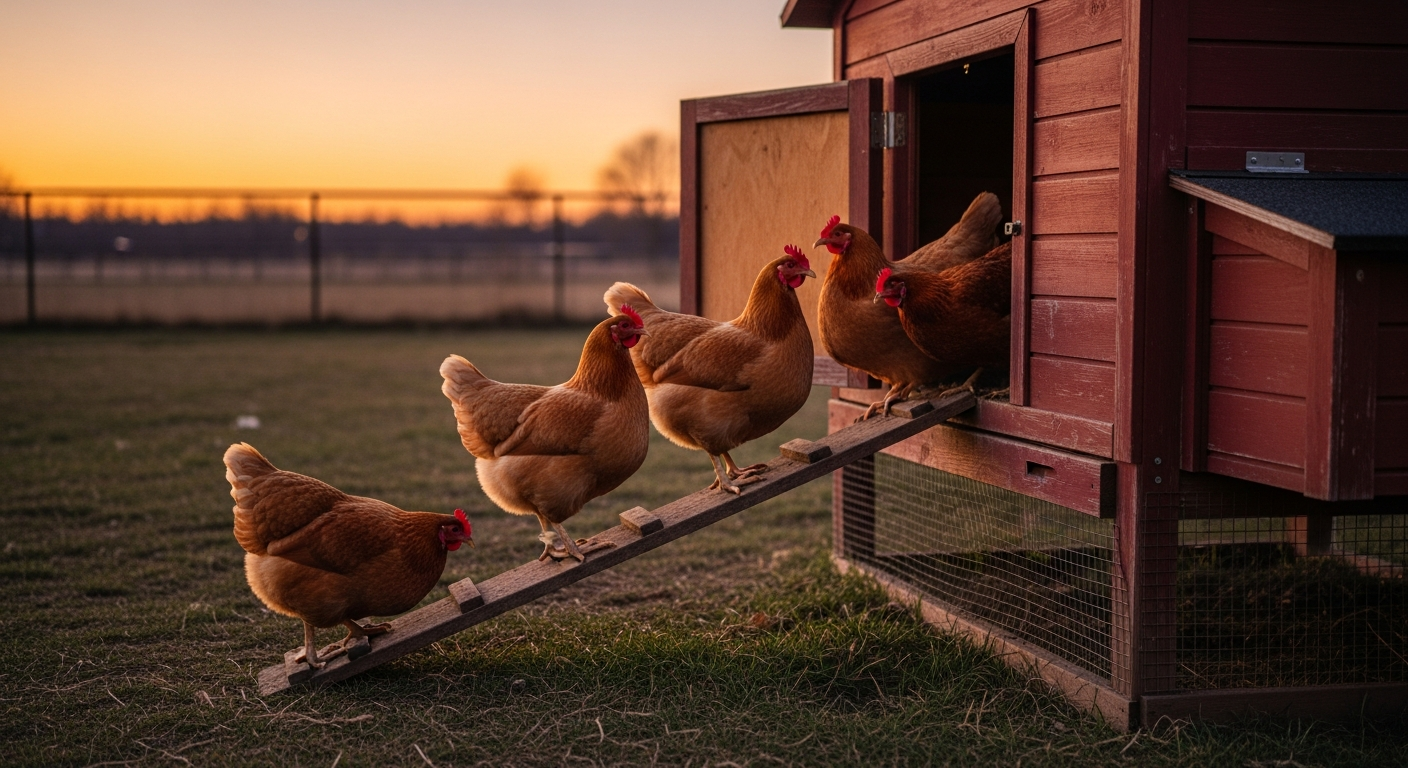
Skunks are almost exclusively nocturnal. If your birds are locked up before dark, you've already eliminated the primary attack window. The season with the highest skunk activity is late winter through summer — February and March are skunk mating season, which means skunks are wandering further than usual in search of mates. That's often when a skunk discovers a coop for the first time. Spring also happens to be when chicks are most likely to be in the brooder, which makes it the highest-risk period all around.
Skunks don't fully hibernate in winter. They enter a state called torpor — a deep sleep, but not a true hibernation. If temperatures climb above 30°F, a skunk may leave its den to look for food. They're less active in winter, but they're not gone.
⚠️ A skunk that is active during the day is a red flag. Skunks are the third most common rabies carrier in the United States. If you see one moving around in daylight, acting disoriented, or behaving strangely, don't approach it — call animal control.
How to Keep Skunks Away from Your Chickens
1. Lock Up Every Night (or Get an Automatic Door)
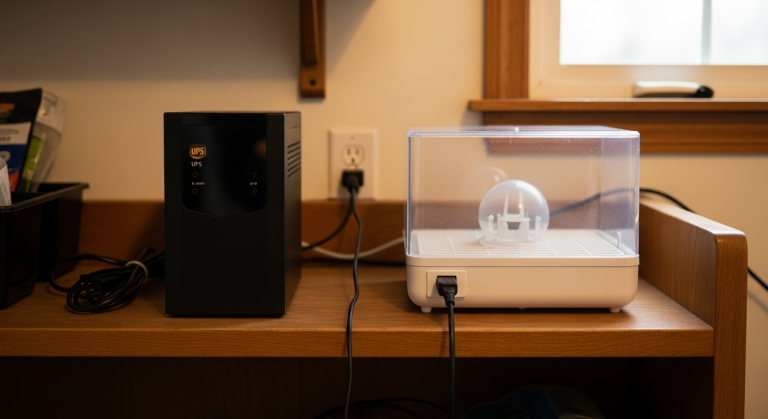
This is the single most important step. Skunks are nocturnal — a locked, secure coop at night eliminates most of the risk. If you're consistent about closing up your birds before dark, skunks will move on to easier opportunities. If evenings get away from you or you're not always home before dusk, an automatic chicken door is worth every penny. It closes at a set time or when light levels drop, so your flock is protected even when you're not around to close up yourself.
2. Bury Hardware Cloth Around the Coop Base
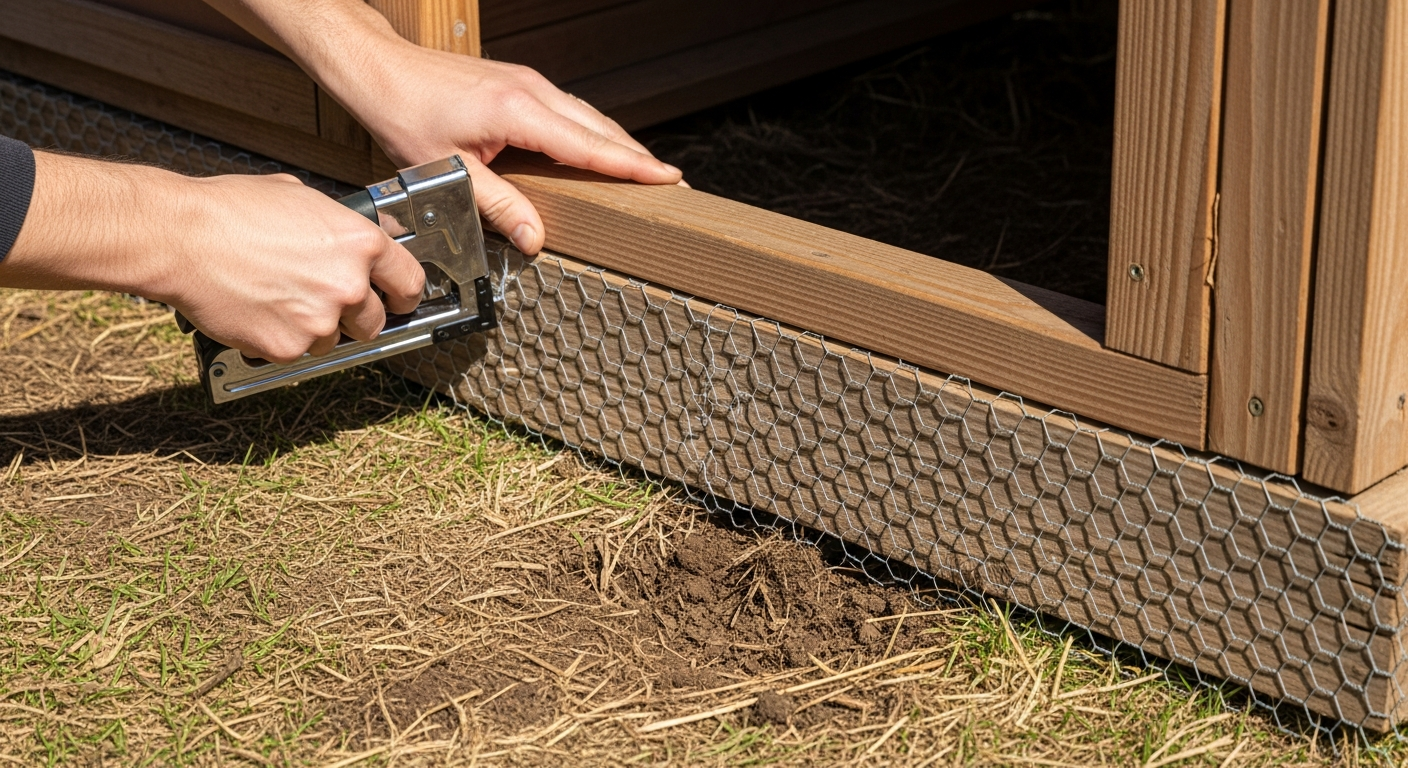
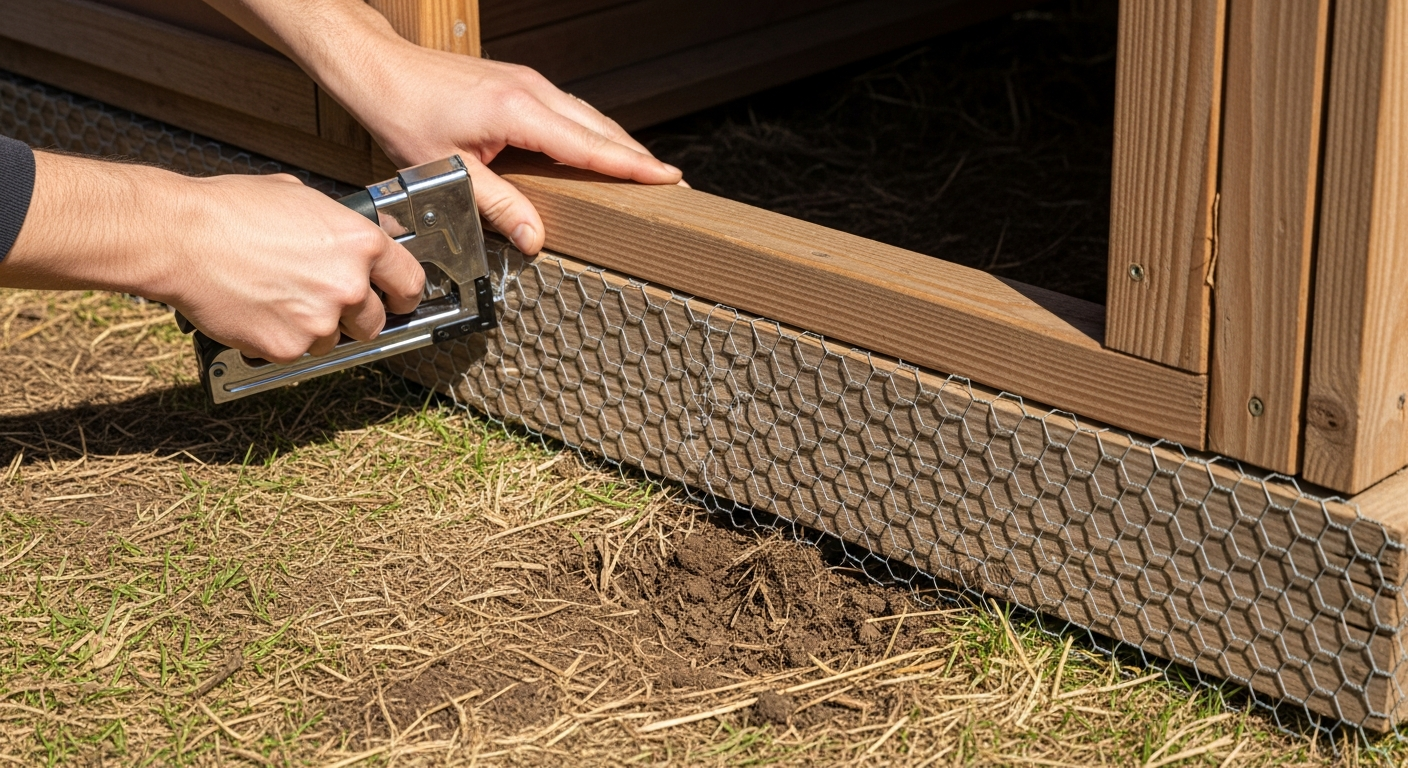
Skunks dig. Standard chicken wire won't stop them — the wire is too thin and the gaps are large enough that a skunk can push through it. What you want is 1/2-inch galvanized hardware cloth, buried 12–18 inches underground around the full perimeter of the coop, with the bottom edge angled outward. When a skunk tries to dig along the base of the coop, it hits the wire instead of soft soil. This same barrier stops raccoons, weasels, and foxes too, so it's one of the best all-around investments you can make for coop security.
3. Contain Feed and Collect Eggs Daily
Chicken feed scattered on the coop floor or in open containers is often more attractive to skunks than the chickens themselves. Store all feed in sealed metal containers — a basic galvanized trash can with a locking lid works well and costs very little. Collect eggs every day so there's nothing in the nesting boxes to find overnight. Also take a look at what else is near the coop: pet food left outside, a bird feeder, fallen fruit from a nearby tree, or an open compost bin can all draw skunks onto your property in the first place.
4. Check for and Seal Entry Points
Walk your coop and chicken run with fresh eyes and look for gaps. Skunks fit through openings smaller than you'd expect — about the size of an adult fist or slightly smaller. Check the base of the walls, any gaps between boards, loose wire panels, and the area under the door. Fill openings with hardware cloth secured with staples or screws, or patch with boards where appropriate. A gap that looks too small is often still big enough.
What to Do if a Skunk Is Already Visiting
First: don't panic. One skunk visit doesn't mean your flock is doomed or that you have a major infestation to deal with. Start by removing whatever attracted it — usually feed, eggs left overnight, or another food source nearby. If you eliminate the attractant, there's a good chance the skunk moves on without any further intervention.
If it keeps coming back, a live trap is your most practical option. A Havahart-style live trap (a wire cage trap with a pressure-activated door) works well for skunks. Bait it with moistened dry cat food — that works better than most commercial lure products. Place the trap along whatever path the skunk appears to be using, and check it early in the morning before the heat of the day. Cover the trap with a tarp when you approach it to reduce the chance of getting sprayed; move slowly and keep the trap level.
Before you relocate, check your state's regulations. Most states allow trapping and relocating skunks, but the rules vary. When you do relocate, take the skunk at least 10 miles away — closer than that and they tend to find their way back. If you suspect the skunk may be sick or rabid based on its behavior, don't try to handle it yourself. Call your local animal control instead.
Frequently Asked Questions
Do skunks eat chicken eggs? Yes — eggs are actually the main reason skunks visit chicken coops. They locate nests by smell, poke a small hole in the shell, and lick out the contents. Daily egg collection and a locked coop at night are your two most effective defenses.
Will a skunk kill adult chickens? Yes, a skunk can kill an adult chicken, but it's not their first choice. Adult hens fight back with beaks and claws, and skunks prefer easier meals like eggs and chicks. A hungry skunk in your coop is still a genuine threat to adult birds — don't underestimate it just because the primary target is the eggs.
What is eating my chickens at night? The most common nighttime predators are raccoons, foxes, opossums, weasels, and skunks. Skunk signs include: licked-out eggs with a small puncture hole, feathers pulled from the head and neck, faint musk odor, and small entry points. A game camera pointed at the coop is the fastest way to confirm which predator you're dealing with.
What keeps skunks away from chickens? Lock your coop every night, bury 1/2-inch galvanized hardware cloth 12–18 inches underground around the coop perimeter, store chicken feed in sealed metal containers, collect eggs daily, and remove outdoor food sources like pet food and fallen fruit from the area around the coop.
Why do skunks eat chicken heads? Skunks attack at the head and neck — the most vulnerable area. They may kill a bird without eating much of the body. This head and neck attack pattern is also common with weasels and minks, so if you find a bird with injuries concentrated there, consider all three as suspects and look for other clues like entry point size and whether any eggs are missing.
Can skunks give diseases to my chickens? The main concern is rabies. Skunks are the third most common rabies carrier in the United States. A skunk that is active during the day or behaving strangely should be reported to animal control rather than handled yourself. Chickens are less susceptible to rabies than mammals, but if you have reason to believe your birds were bitten, contact your vet or local agricultural extension office.