How to Make Turmeric Soap at Home (Easy Recipe — No Lye Required!)
Last updated: March 11, 2026
Turmeric soap is one of those DIY projects I wish I'd discovered sooner. It looks stunning, smells warm and citrusy, and it's genuinely good for your skin — not just in a vague "natural is better" way, but because turmeric has real anti-inflammatory and brightening properties that show up in how your skin feels after a few weeks of regular use. I started making it because I wanted a natural bar that was actually doing something, and now I keep a batch going pretty much year-round.
Here's the thing I love most about this recipe: you don't have to work with lye to make it. I'm going to show you two ways — a melt-and-pour version that takes about 30 minutes and requires zero chemistry knowledge, and a cold process version for those of you who want to make soap completely from scratch. Start with whichever feels right. The melt-and-pour bars are beautiful, gift-worthy, and ready to use the same day. The cold process bars have a longer cure time but give you complete control over every ingredient.
Which Method Is Right for You?
| Melt and Pour | Cold Process | |
|---|---|---|
| Time | ~30 minutes active | ~1 hour active + 4–6 weeks cure |
| Lye required? | No | Yes |
| Difficulty | Beginner | Intermediate |
| Customization | Moderate | High |
| Best for | First batch, gifts, quick results | Full control, natural from scratch |
The Skin Benefits of Turmeric Soap
Turmeric has been used in skincare for centuries — and it's earned the attention. The active compound, curcumin, is what gives turmeric its deep golden color and most of its skin benefits. Here's what it actually does:
- Anti-inflammatory: Curcumin helps calm redness and irritation, which is why turmeric soap is popular for sensitive or reactive skin.
- Brightening: Regular use may help even out skin tone and reduce the appearance of dark spots over time.
- Antibacterial: Turmeric has natural antibacterial properties that can help with acne-prone skin without being harsh.
- Antioxidant: It helps protect skin cells from free radical damage — the same reason it's used in so many natural skincare products.
I started using turmeric soap for my combination skin and noticed my complexion looked more even after a few weeks. It's not a miracle treatment, but it's a genuinely useful ingredient — not just a pretty color.
What Color Does Turmeric Soap Turn Out? (Honest Answer)
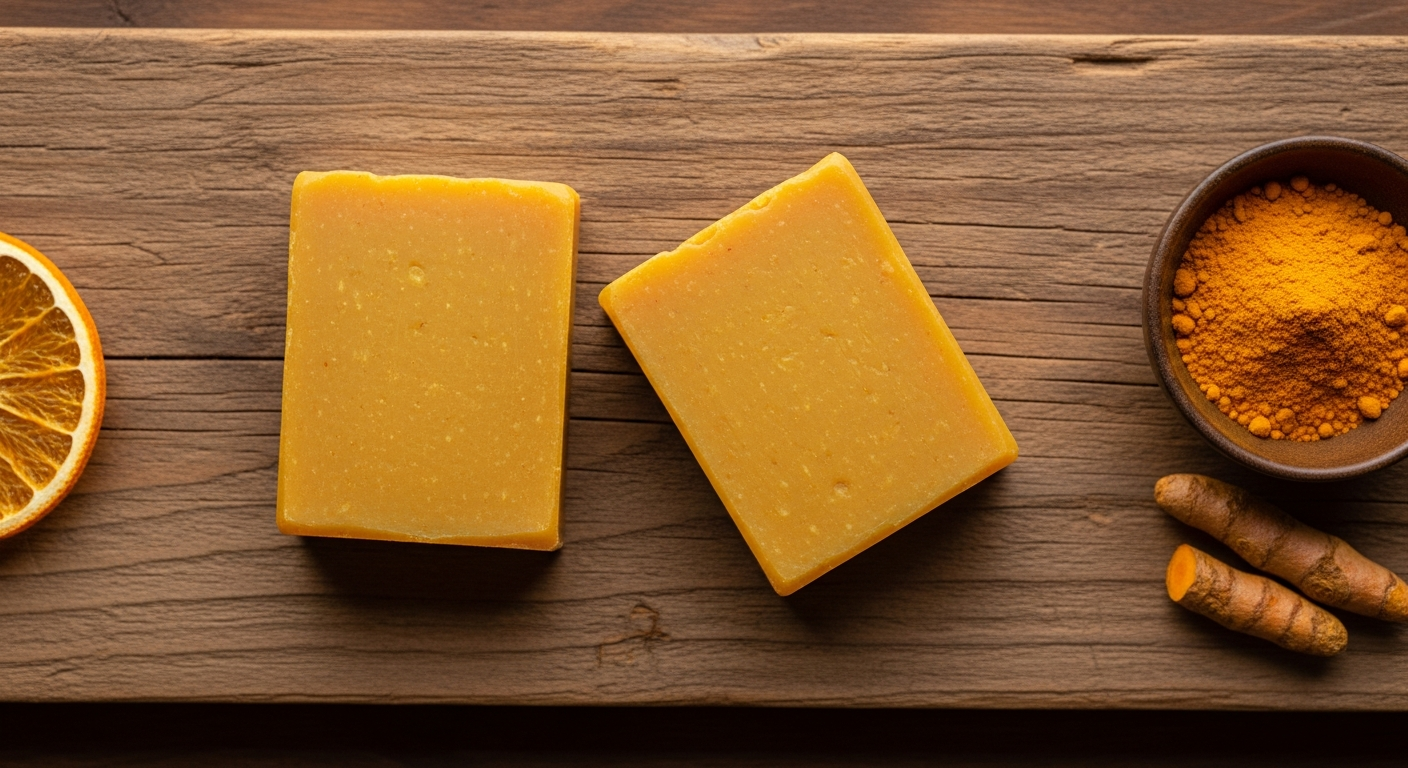
Natural turmeric soap comes out a warm golden amber — not bright orange. If you've seen vivid orange turmeric soap photos online, that color comes from mica powder or synthetic dye, not from turmeric itself. Real turmeric produces a subtle, warm golden hue that's beautiful in its own right.
The color may also fade slightly during the cure process for cold process soap — this is completely normal. Think of it less like an orange crayon and more like raw honey. That golden warmth is what you're going for, and it's genuinely lovely on a rustic wood surface or wrapped in kraft paper as a gift.
Will Turmeric Soap Stain My Skin?
No — turmeric soap will not stain your skin. Used as a rinse-off product, the concentration of turmeric is low enough that it washes off cleanly with water. The concern about turmeric staining usually comes from using fresh turmeric root directly on skin, which does stain. Dried powder in a finished soap bar is a different situation entirely.
One small caveat: very fresh melt-and-pour bars have a slightly higher risk of light staining on white towels or washcloths. Rinse off completely before reaching for your good white linens, and you won't have any issues.
What You'll Need
Here's what each method requires. You probably already have most of the equipment on hand.
For Melt-and-Pour Turmeric Soap
Ingredients:
- 60 oz. melt-and-pour soap base (goat milk recommended — see below)
- 2 tsp. turmeric powder (food-grade or cosmetic grade)
- 0.8 oz. Orange 10X essential oil (or any citrus essential oil)
- 2 tbsp. 99% isopropyl alcohol
Equipment:
- Microwave-safe glass bowl
- Digital kitchen scale
- Rubber spatula
- Silicone soap mold (12-cavity individual bars or loaf mold)
- Small spray bottle for the alcohol
For Cold Process Turmeric Soap
All measurements must be weighed on a kitchen scale — volume measurements don't work reliably in cold process soapmaking. And a note before you start: you'll be working with lye (sodium hydroxide), which requires proper safety gear. Gloves, goggles, and long sleeves are non-negotiable.
Ingredients:
- 235g olive oil
- 135g coconut oil
- 30g castor oil
- 50g shea butter
- 64.5g lye (sodium hydroxide)
- 129g distilled water
- 4 tsp. turmeric powder
- 15g orange 10X essential oil (or an orange + eucalyptus blend)
Equipment:
- Digital kitchen scale (essential)
- 2 heatproof glass or stainless steel bowls
- Stick/immersion blender
- Silicone loaf mold
- Gloves, goggles, long sleeves
- Laser thermometer (optional but helpful)
Which Soap Base Is Best for Turmeric Soap?
If you're making melt-and-pour turmeric soap, your choice of base matters. Here are the most common options:
- Goat milk base: Gentle, creamy lather, and great for sensitive skin. This is the most popular choice for turmeric soap and what this recipe uses.
- Shea butter base: The most moisturizing option — ideal if you have very dry skin.
- White glycerin base: The most translucent, which means the turmeric color shows through more vividly. Good if you want the deepest golden color.
My recommendation: start with goat milk. It's beginner-friendly, universally flattering, and pairs beautifully with turmeric. You can find it at most craft stores or order it online.

Easy Turmeric Soap Recipe Without Lye (Melt and Pour, 30 Minutes)
This is the version I recommend if you've never made soap before — or if you just want bars ready to use today. No lye, no special equipment, no chemistry. Thirty minutes from start to finish, and you'll end up with 12 beautiful bars.
Ingredients
- 60 oz. goat milk melt-and-pour soap base
- 2 tsp. turmeric powder
- 0.8 oz. Orange 10X essential oil
- 2 tbsp. 99% isopropyl alcohol (in a spray bottle)
Instructions
- Chop your soap base into roughly 1-inch cubes and place them in a microwave-safe glass bowl.
- Melt in 60-second microwave bursts, stirring between each round, until the base is fully liquid. This usually takes 3–4 minutes total for 60 oz.
- While the soap melts: Mix your 2 tsp. of turmeric powder into the 2 tbsp. of isopropyl alcohol in a small cup and stir until the powder is fully suspended. This step matters — adding turmeric directly to the melted base will leave orange clumps in your finished bars.
- Measure out your essential oil in a separate small glass container.
- Once the soap is fully melted, stir in the turmeric-alcohol mixture and the essential oil. Mix thoroughly with your spatula until the color and scent are evenly distributed.
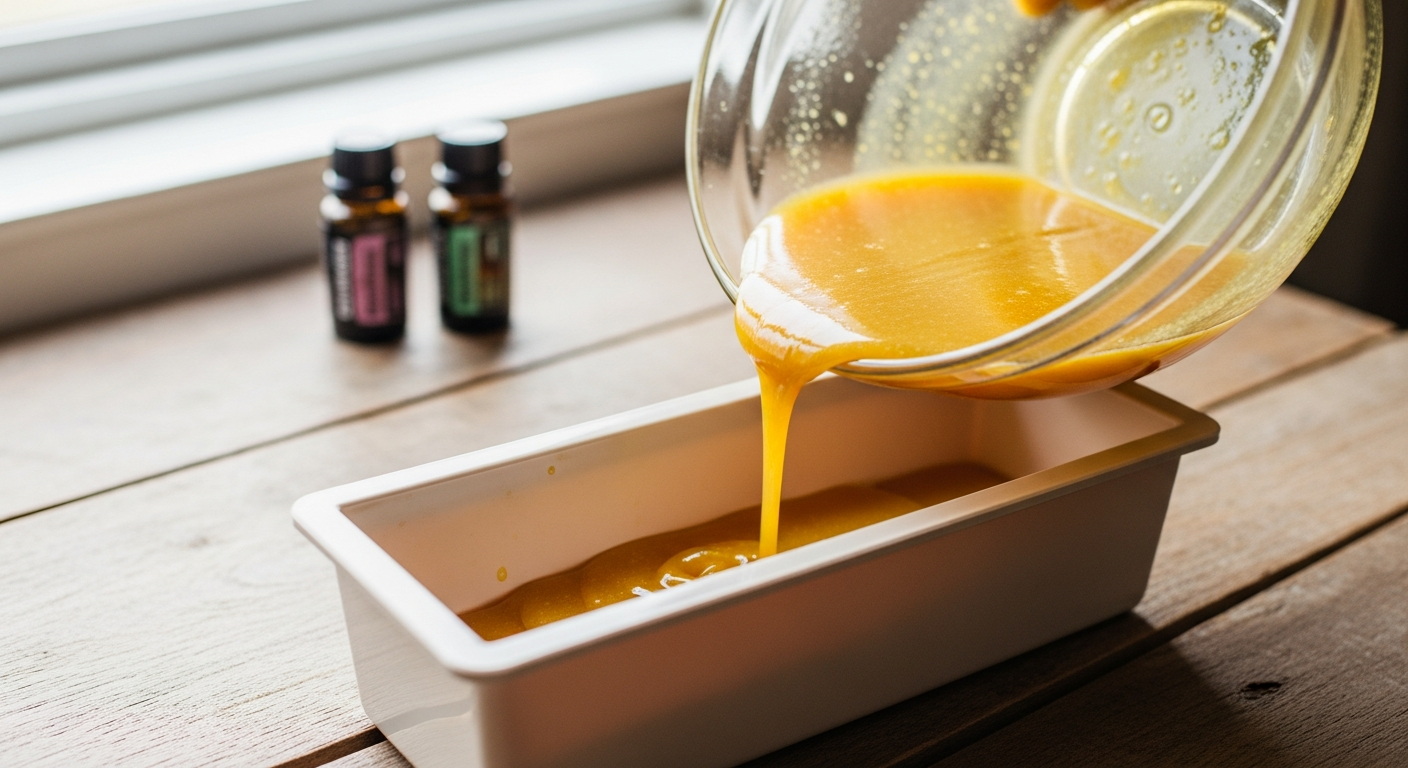
- Pour the soap into your mold. After each cavity is filled, spritz the top lightly with isopropyl alcohol to pop any surface bubbles — this gives you a smooth, professional-looking finish.
- Allow the bars to cool and harden completely at room temperature — 12 to 24 hours. Don't put them in the fridge or freezer.
- Pop the bars out of the mold. They're ready to use immediately. If you're storing or gifting them, wrap in plastic wrap or wax paper to prevent glycerin dew from forming on the surface.
Yield: ~12 bars | Active time: 30 minutes
Turmeric Soap from Scratch: The Cold Process Recipe
If you want to make soap entirely from scratch — choosing every oil, controlling every ingredient — cold process is the method you're looking for. It's more involved than melt-and-pour, and it requires working with lye, but it's not as scary as it sounds. After years of making cold process soap at home, I've never had a problem — as long as you follow the safety steps and take your time. (And if you want to understand more about the chemistry of why soap works the way it does, I covered that in detail in my post on whether soap is a base.)
Ingredients
- 235g olive oil
- 135g coconut oil
- 30g castor oil
- 50g shea butter
- 64.5g lye (sodium hydroxide)
- 129g distilled water
- 4 tsp. turmeric powder
- 15g orange 10X essential oil
Instructions
- Get set up safely first. Put on your gloves, goggles, and long sleeves before you handle anything. Make your soap in a well-ventilated space — open a window or run a fan. Keep kids and pets out of the kitchen while you work.
- Make your lye solution. Measure your distilled water into a heat-safe plastic pitcher. Slowly add the lye crystals to the water — never pour water into the lye, always lye into water. Stir until dissolved. The solution will heat up quickly — this is normal. Set it aside somewhere safe to cool to 100–130°F.
- Melt your oils. Combine the coconut oil and shea butter in a heatproof bowl and melt in 30-second microwave bursts until liquid. Add the olive oil and castor oil, stir to combine, and set aside to cool to 100–130°F.
- Add turmeric to your oils. While the oils cool, stir in your 4 tsp. of turmeric powder. Use your stick blender to fully incorporate it — this prevents the spotting you sometimes see in finished turmeric soap.
- Check temperatures. Both your lye solution and your oil mixture should be between 100–130°F. They don't need to match exactly, but shouldn't differ by more than 10°F.
- Combine. Slowly pour the lye solution into the oil-turmeric mixture, stirring as you pour. Never pour the oils into the lye.
- Blend to trace. Use your stick blender in short pulses to bring the mixture to a light trace — when you drizzle some from the blender and it briefly sits on the surface before sinking, like thin pudding. That's where you want to be.
- Add essential oils. Get your mold set up and ready before this step, because essential oils can thicken the batter quickly. Stir them in and mix thoroughly.
- Pour into your mold. Work quickly. Tap the mold on the counter a few times to release air bubbles, then smooth the top with your spatula.
- Insulate and rest. Cover the mold with a piece of cardboard and drape an old towel over it to keep the soap warm. Leave it completely undisturbed for 24–48 hours while saponification does its work.
- Unmold and cut. Once the soap is firm and the sides pull cleanly away from the mold, you can unmold it. Cut into bars with a sharp knife — you should get about 5 bars from this batch.
- Cure for 4–6 weeks. Stand the bars on their sides in a cool, dry spot with good air circulation. The cure time is important — don't skip it. The soap continues to harden and mellow during this period.
Yield: ~5 bars | Active time: ~1 hour | Cure: 4–6 weeks

5 Mistakes People Make When Making Turmeric Soap
Learning from someone else's mistakes saves a lot of wasted soap. Here's what to watch out for:
- Adding turmeric straight to melted M&P soap. The powder won't incorporate properly — you'll end up with orange chunks suspended in your bars. Always disperse it in isopropyl alcohol first, then add the mixture to your melted base.
- Using fresh turmeric root instead of powder. Fresh turmeric has too much moisture and can introduce bacteria into cold process soap. It also behaves unpredictably in M&P. Stick to dried, ground powder.
- Expecting vibrant orange color. Natural turmeric soap is golden amber, not bright orange. If your bars turn out that warm golden hue, you did it right. Bright orange means artificial dye.
- Skipping the cure time for cold process. Fresh cold process soap is still caustic — it needs those 4–6 weeks to finish saponifying. Using it too early can irritate skin. The wait is worth it.
- Adding more turmeric to get a deeper color. It doesn't work that way. More turmeric means spotty, uneven color — not brighter. Stick to the amounts in the recipe.
How to Store Homemade Turmeric Soap (So It Lasts)
Proper storage makes a real difference in how long your bars stay fresh.
- Melt-and-pour bars: Wrap in plastic wrap or wax paper to prevent glycerin dew — that's the moisture M&P soap pulls from the air. Kept dry, M&P bars will last up to 2 years.
- Cold process bars: Never store in plastic wrap — CP soap needs to breathe. Use kraft paper, a paper soap sleeve, or simply set the bars on a breathable rack.
- Both methods: Keep bars out of direct sunlight and away from heat. A cool, dry spot — a linen closet, a bathroom shelf away from the shower — works great.
- Shelf life: Cold process bars last 1+ year if stored properly. The natural oils can eventually go rancid, so make batches you'll use within the year.
- For gifting: Wrap CP bars in a kraft paper sleeve — it looks beautiful and keeps them from sweating. Never wrap CP bars in plastic for long-term storage.
Frequently Asked Questions About Turmeric Soap
Does turmeric soap heal eczema?
Turmeric's anti-inflammatory properties may help soothe irritated or eczema-prone skin, but it's not a medical treatment and won't cure eczema on its own. It's a gentle, natural option that some people find helpful as part of their skincare routine — especially if you have reactive or sensitive skin. If you're managing eczema, you might also want to look at my recipe for homemade eczema cream, which uses a combination of soothing ingredients specifically formulated for dry, irritated skin.
Can turmeric soap help with acne scars?
Turmeric has brightening properties that may help fade dark spots and hyperpigmentation over time — which is why it's been used in South Asian skincare traditions for centuries. It's not a quick fix, but consistent, daily use of turmeric soap may visibly improve skin tone. Be patient and give it at least a few weeks to see results.
Will turmeric soap stain my skin or towels?
No, turmeric soap won't stain your skin — it's a rinse-off product at low concentration. For towels, the risk is minimal, but if you're using very fresh melt-and-pour bars, rinse thoroughly before grabbing a white towel just to be safe.
How much turmeric should I add to soap?
For melt-and-pour: 2 tsp. per 60 oz. of soap base. For cold process: 4 tsp. per ~500g of oils. These amounts give you good color and even distribution. Adding more won't make the color brighter — it'll just make it spotty and harder to distribute.
Can I use fresh turmeric root instead of powder?
I don't recommend it. Fresh turmeric root has a high moisture content that can introduce bacteria into cold process soap and causes unpredictable results in melt-and-pour. Dried, ground turmeric powder is what you want — food-grade from your grocery store works perfectly fine.