How to Make Breast Milk Soap (Easy Melt and Pour Method — No Lye Needed)
Last updated: March 10, 2026
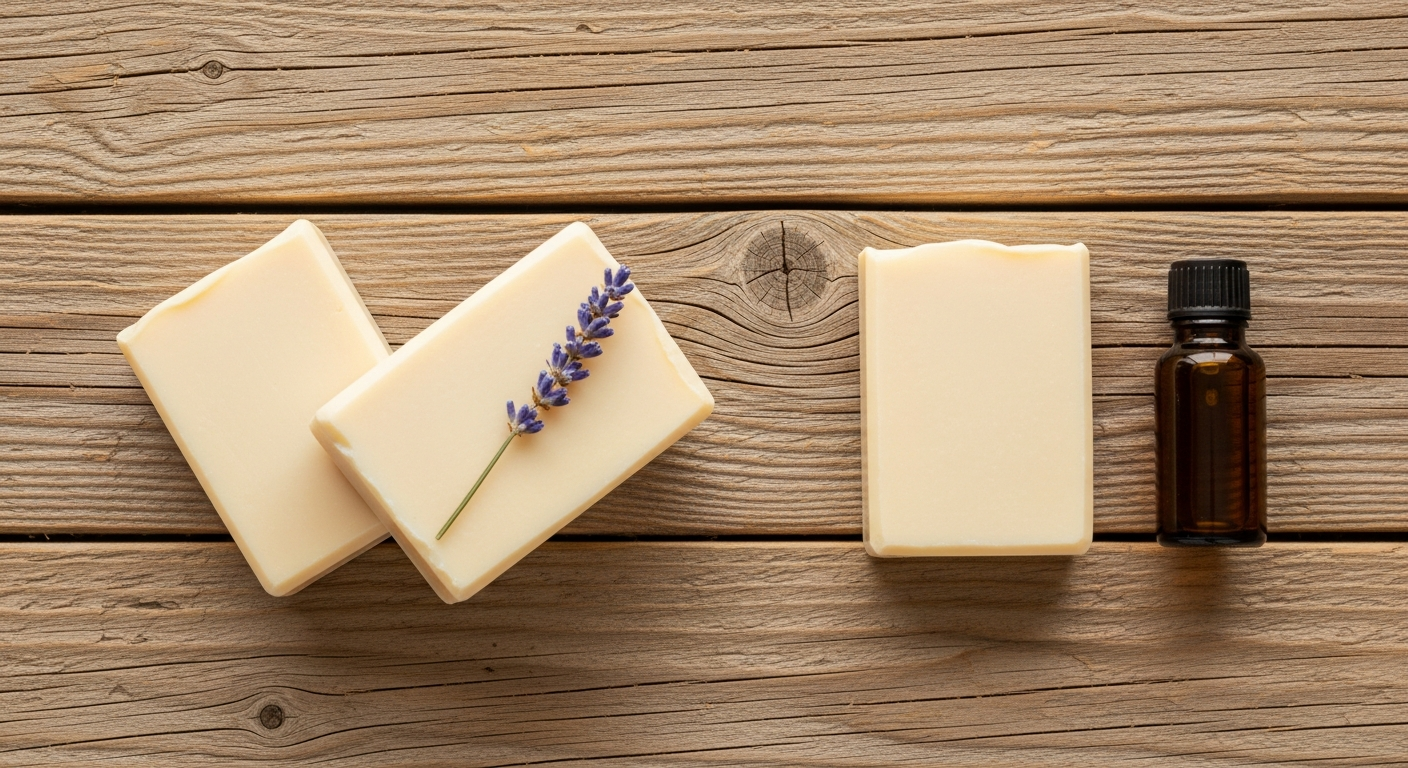
| Method | Melt and pour (no lye required) |
| Key ingredients | 8 oz melt and pour soap base + 4–5 oz breast milk |
| Active time | ~20 minutes |
| Set time | 2–3 hours in the fridge |
| Yield | 4–6 bars (depending on mold size) |
| Shelf life | 3–6 months (fridge); up to 1 year (freezer) |
Why Moms Make Breast Milk Soap (And Why It's Worth It)
A friend of mine mentioned once, almost offhand, that she had 200 ounces of breast milk in her freezer about to expire and she didn't know what to do with it. She'd worked so hard to build that stash — every early morning pumping session, every ounce saved — and now her baby was weaning and the clock was ticking. Someone in her mom group suggested breast milk soap, and she asked me if I knew how to make it.
I didn't at the time, but I figured it out fast. And now it's one of my favorite things to recommend to any breastfeeding mom who's sitting on extra milk. Breast milk really is liquid gold, and this is one of the most beautiful ways to use milk that's too old to feed your baby but too precious to throw away.
Beyond the sentimental value, breast milk is genuinely good for skin. It contains antibodies, fatty acids, lactic acid (a gentle natural exfoliant), and anti-inflammatory proteins — all of which are beneficial when applied topically. It's gentle enough for newborn skin and soothing for conditions like eczema and dry, irritated patches. Breast milk soap is good for adults too — the whole family can use it. I've seen moms save a labeled bar or two as a keepsake from their breastfeeding journey, and it also makes one of the most meaningful baby shower gifts I can think of.
What You'll Need
Ingredients
- 8 oz melt and pour soap base — goat milk, shea butter, or clear base. I prefer goat milk because it adds extra fatty acids on top of the breast milk's natural goodness; shea butter is a close second for moisturizing; clear base works but produces paler bars. Note for metric users: 8 oz ≈ 225g.
- 4–5 oz breast milk (room temperature or freshly thawed)
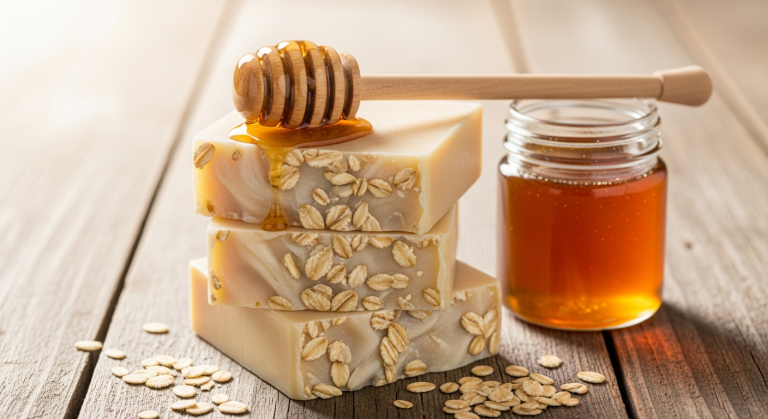
- ½ teaspoon honey (optional)
- 1 tablespoon colloidal oatmeal (optional — great for eczema-prone skin; this is finely ground oatmeal, not regular rolled oats)
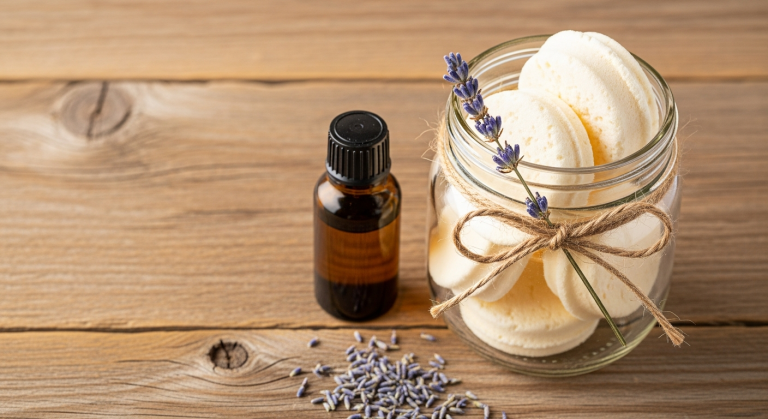
- 10–15 drops baby-safe essential oil (optional) — lavender and chamomile are the best choices; skip EOs entirely for babies under 3 months
Equipment
- Microwave-safe glass measuring cup or heat-safe bowl
- Knife and cutting board
- Whisk or spatula
- Silicone soap mold — smaller cavities (around 2 oz each) are better for breast milk soap so bars get used up before they can spoil
- Digital kitchen scale (optional but helpful for accuracy)
- Rubbing alcohol in a small spray bottle (optional — helps pop surface bubbles)
Can I Use Frozen Breast Milk? (And What About Milk That's About to Expire?)
Yes — frozen breast milk works perfectly for making soap and is actually the preferred option for many soap makers. Cold milk prevents scorching when it contacts the warm soap base, which is one of the most common mistakes beginners make.
Here's a quick guide to what you can use:
- Fresh milk (pumped within 24 hours): Ideal. Bring to room temperature before adding.
- Refrigerated milk (up to 4 days): Fine. Bring to room temp first.
- Previously frozen and thawed: Fine. Use within 24 hours of thawing.
- Still frozen solid: Works. You can thaw it first or let it melt into the warm soap base in small chunks.
- Sour or rancid-smelling milk: Do not use. The soap will smell off and may irritate skin.
If your milk is technically past its safe window for feeding your baby, it can still be beautiful in soap as long as it smells fresh and not sour. That slight "off" smell breastfeeding moms sometimes notice from high-lipase milk is fine — it's the unmistakably rancid smell you want to avoid.
How to Make Breast Milk Soap (Step-by-Step)
Before we start: I'm teaching the melt and pour method here — no lye, no curing time, and it works in about 20 minutes. If you're an experienced soap maker and want to try cold process breast milk soap (a more advanced project with a 4–6 week curing time), I'll link to that at the bottom. For most people reading this, melt and pour is the right choice.
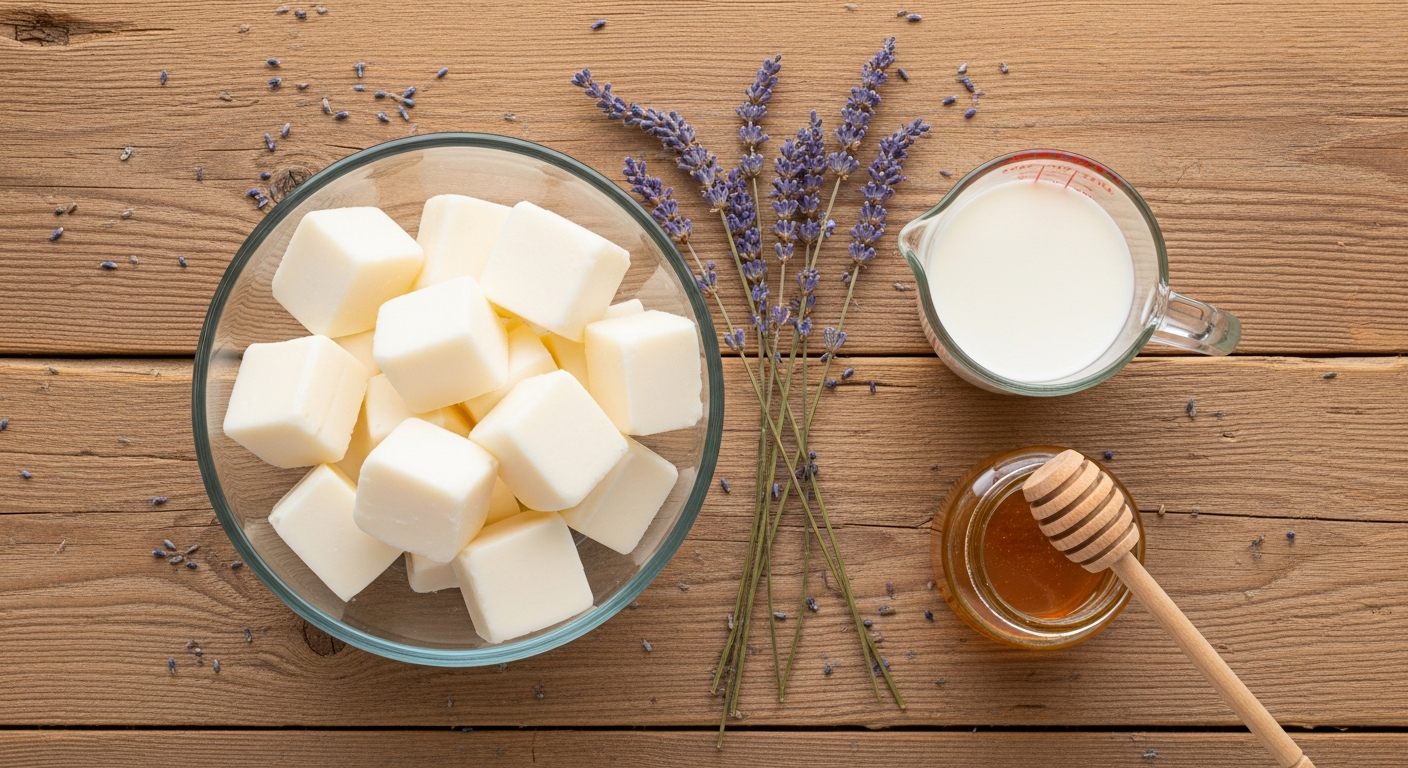
Ingredients:
- 8 oz melt and pour soap base
- 4–5 oz breast milk (room temperature)
- ½ tsp honey (optional)
- 1 tbsp colloidal oatmeal (optional)
- 10–15 drops lavender or chamomile EO (optional)
Instructions:
- Gather all your supplies. Make sure your breast milk is at room temperature or fully thawed.
- Cut the soap base into small chunks — about 1-inch cubes work well. If using a standard 2 lb pack, you'll use roughly a quarter of it.
- Melt the soap base in the microwave in 20-second intervals, stirring between each burst; OR use a double boiler on medium-low heat. Stop when it's fully melted and smooth.
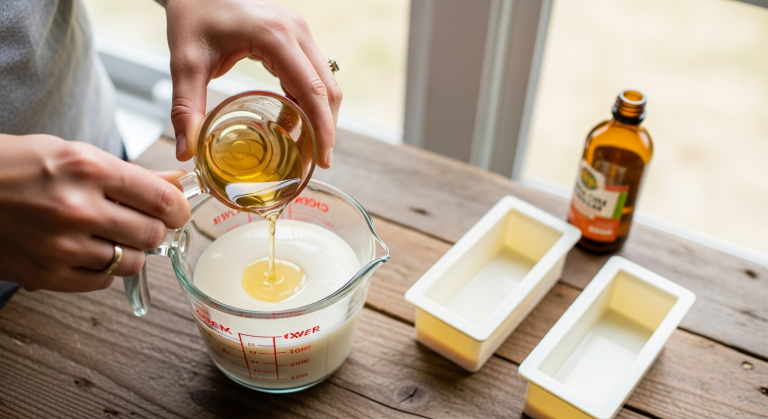
- Let the soap base cool slightly before adding milk. This is the most important step. If the soap is too hot when you add the milk, it will scorch the milk proteins and turn the batch yellow or orange with a strange smell. Wait until it's warm and pourable but not steaming.
- Add the breast milk and stir gently until fully combined.
- Add honey, oatmeal, and essential oil if using. Stir until smooth.
- Place your silicone mold on a flat cutting board (so you can move it to the fridge without spilling).
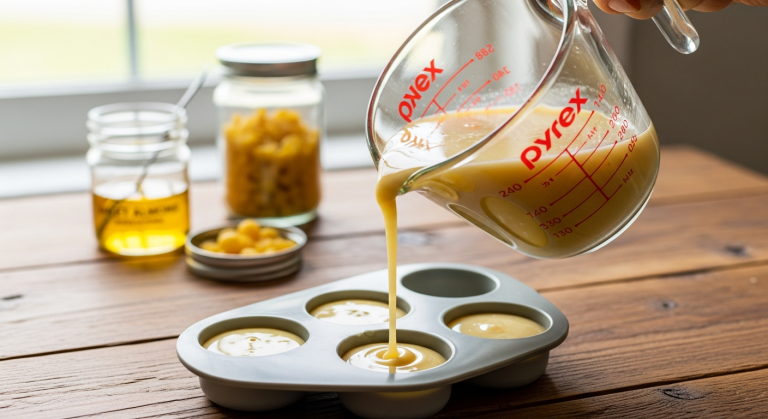
- Pour the soap mixture into the mold cavities.
- Optional: Lightly spritz the surface with rubbing alcohol to pop any air bubbles.
- Refrigerate until firm, about 2–3 hours. Or leave at room temperature overnight.
- Pop the bars out of the mold. Store in a zip-lock bag in the fridge until ready to use.
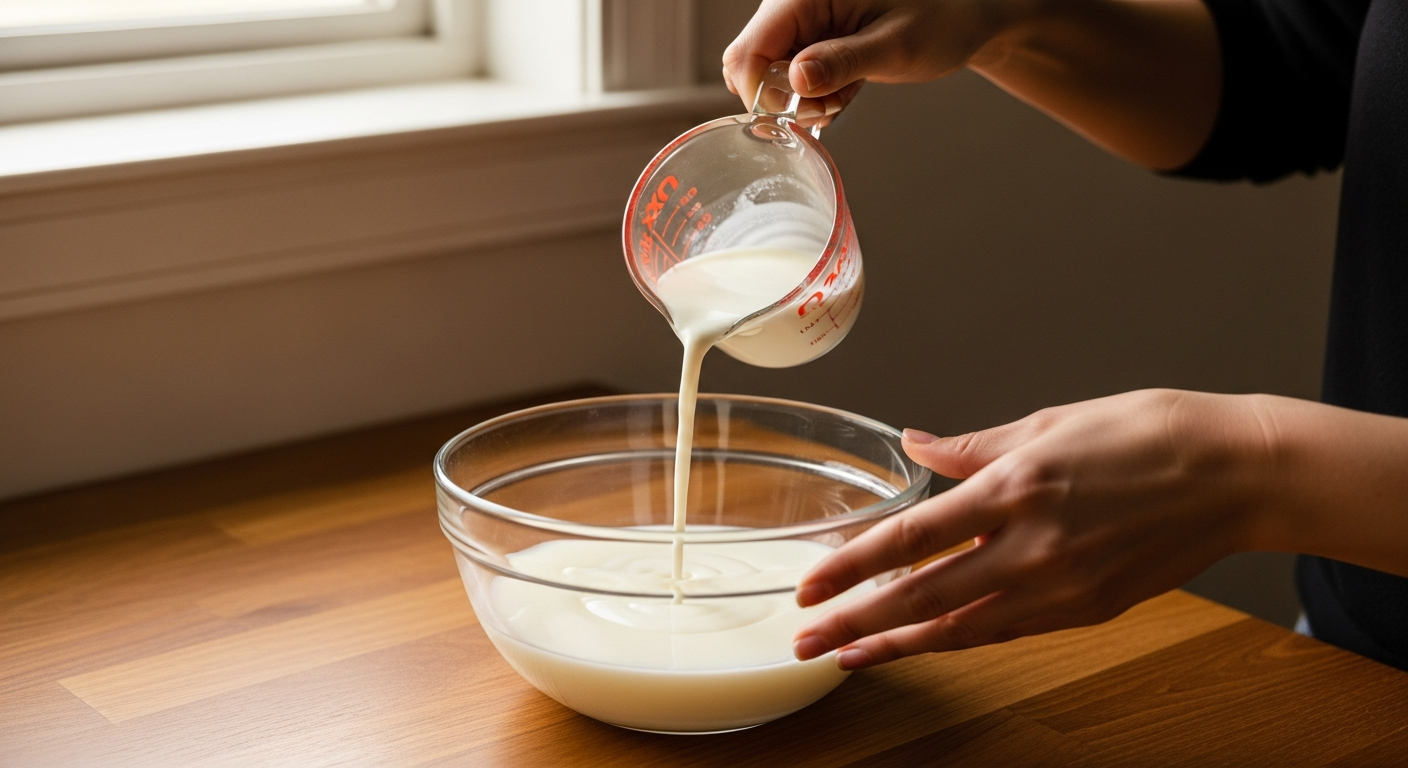
Why the Milk-to-Soap Ratio Matters
The most common question I see in every comment section about this recipe is: why so little milk? Some recipes online call for a full cup of breast milk — why are we only using 4–5 oz?
Here's why: melt and pour soap base isn't designed to handle significant liquid additions. The more liquid you add, the softer and less stable the final bar. Too much liquid and it won't firm up properly, even in the fridge. The ratio below is what controls how hard or soft your finished bars will be:
| Milk | Soap Base | Result |
|---|---|---|
| 4 oz | 8 oz | Firm bar, longer shelf life |
| 5 oz | 8 oz | Slightly softer — the sweet spot |
| 6–8 oz | 8 oz | Very soft bar; refrigerate longer; use quickly |
I stick to 5 oz because I get a firm-enough bar that's still loaded with breast milk. If your bars come out soft and sticky after 3 hours in the fridge, that's your sign to reduce the milk next time.
For full water-replacement with breast milk, that's a cold process technique — a different recipe entirely, and worth exploring once you're comfortable with soap making basics.
Troubleshooting: When Something Goes Wrong
My soap won't firm up. You likely added too much milk. Refrigerate for a few more hours. If it still won't set after 6 hours, it probably won't — next batch, reduce the milk by an ounce. Even soft soap is still usable; just handle it gently.
My soap turned yellow or orange and smells weird. The soap base was still too hot when you added the milk. High heat scorches the milk proteins and sugars. The soap is technically still usable but won't smell great. Next time, let the base cool for 3–5 minutes after melting before adding the milk.
My soap has ice crystals after freezing. Wrap each bar individually in plastic wrap as airtight as possible before placing in the freezer. The ice crystals form when moisture from the soap makes contact with freezer air.
My soap smells off after a few weeks. It's beginning to spoil. Milk-based soaps have a shorter shelf life than standard soap — that's the tradeoff for using a real food ingredient. Always refrigerate unused bars, and return a bar that's in use to the fridge if you can. Discard any bar with an obviously rancid smell.
The bars won't release from the mold. Pop the mold in the freezer for 15 minutes, then try again. Silicone molds usually release easily once the soap is cold enough.
The soap doesn't lather much. Normal. Melt and pour soaps naturally lather less than cold process soaps, and adding a liquid like breast milk reduces lather further. It's still doing its job — cleaning and moisturizing your skin.
How to Store Breast Milk Soap
Unused bars should be stored in a zip-lock bag in the refrigerator for up to 3–6 months. For longer storage, wrap each bar in plastic wrap and freeze — properly wrapped, they'll last up to a year.
Bars that are in active use should dry completely between uses. Set them on a well-draining soap dish and let them air dry; a wet soap bar sitting in a dish will mold faster. Return the bar to the fridge between uses if you want to extend its life.
Signs a bar has gone bad: Dark discoloration, orange spots (called dreaded orange spots or DOS), or a rancid, sour smell. Discard it and make a new batch.
If you're gifting a bar, include a little card noting that it should be refrigerated and used within 3 months.
Add-Ins and Variations
The basic recipe above is wonderful on its own, but here are some ways to customize it:
- Colloidal oatmeal (1 tbsp) — gentle exfoliation and additional itch relief; great for eczema
- Honey (½ tsp) — antibacterial and humectant; adds a very light golden color
- Lavender essential oil (10–15 drops) — calming and gentle on skin; my default choice for lavender EO
- Chamomile essential oil (10–15 drops) — soothing for sensitive or reactive skin
- Dried calendula petals (1 tsp) — beautiful flecks of golden color; anti-inflammatory
- Coconut oil (1 tbsp) — extra moisture; adds softness
For eczema-prone skin: Skip the honey (can be irritating for some skin types). Use shea butter soap base + 1 tbsp colloidal oatmeal + 5 drops chamomile essential oil. No added fragrance. This is the gentlest version and the one I'd recommend for babies with sensitive skin.
FAQ
What are the benefits of breast milk soap?
Breast milk soap is gentle, moisturizing, and nourishing for skin. Breast milk contains antibodies, healthy fatty acids, lactic acid (a mild natural exfoliant), and anti-inflammatory proteins — all of which benefit skin when applied topically. It's especially gentle for baby skin and may help soothe conditions like eczema, diaper rash, and dry patches.
How long does homemade breast milk soap last?
Properly stored in the fridge, homemade breast milk soap lasts 3–6 months. In the freezer (individually wrapped), it can last up to a year. Because breast milk is a perishable ingredient, this soap has a shorter shelf life than regular soap — always store unused bars in the fridge.
Is breast milk soap good for adults?
Yes — the whole family can use breast milk soap. The skin benefits (moisture, antibodies, fatty acids) apply to adult skin just as much as baby skin. Many adults with dry, eczema-prone, or sensitive skin find it particularly soothing.
What makes breast milk smell like soap?
The melt and pour soap base itself has a mild soap scent. Added essential oils (lavender, chamomile) contribute fragrance. Breast milk itself is nearly odorless in fresh soap. If your soap smells strongly odd or rancid, it's a sign the milk was scorched during making or the soap is beginning to spoil.
Can I make breast milk soap without lye?
Yes — the melt and pour method requires no lye at all. You simply melt a pre-made soap base (which has already gone through the lye process at the factory), add your breast milk and any optional add-ins, pour into molds, and let it set. No lye, no protective gear, no curing time.
How much breast milk do I put in soap?
For an 8 oz melt and pour soap base, use 4–5 oz of breast milk. More milk makes a softer bar — up to 8 oz is possible, but bars will be very soft and need longer refrigeration. The 4–5 oz range gives you a firm bar loaded with breast milk's skin benefits.
Can I use expired breast milk to make soap?
You can use milk that is past its safe feeding window as long as it still smells fresh (not sour or rancid). Milk that smells slightly "off" due to high lipase is generally still fine in soap. Milk that smells truly rancid should be discarded — it will give your soap an unpleasant smell and may irritate skin.
Is breast milk soap good for eczema?
Yes — breast milk has anti-inflammatory properties and has been used topically to soothe eczema in babies and adults. For eczema-prone skin, make the gentlest version: shea butter soap base + colloidal oatmeal + chamomile essential oil + no honey or fragrance.