Homemade Scouring Powder Recipe (Non-Toxic & Way Cheaper Than Comet)
Last updated March 10, 2026
I picked up the green can of Comet one afternoon and actually stopped to look it up on EWG. I don't know what I expected — it's been under my sink for years — but an "F" rating wasn't it. The Environmental Working Group found that the product emits 146 chemicals when used, including formaldehyde, benzene, chloroform, and toluene. None of those are listed on the label.
That was the last time I used it.
The good news is that making a replacement takes about five minutes, costs roughly $0.50 per batch, and uses ingredients you most likely already have in your pantry. Three ingredients. No special equipment. Just baking soda, washing soda, and a jar — and you're done.
Why Comet Got an "F" (And What You Should Use Instead)
When the Environmental Working Group analyzed Comet Disinfectant Cleanser Powder with Bleach, they found it emitted 146 different chemicals during normal use — including formaldehyde, benzene, chloroform, and toluene. Those are serious compounds, linked to cancer, asthma, and reproductive issues. Not one of them is listed on the label. The overall safety grade: F.
I'm not sharing that to scare you. I'm sharing it because that information is what pushed me to actually do something about what I'd been using to clean my family's bathroom for years. Once you know, it's hard to go back.
That said, if you want a store-bought option rather than making your own, Bon Ami is genuinely worth considering. It earns an EWG "A" rating, contains no chlorine, bleach, or artificial fragrances, and it works. Our grandparents used it. I keep a backup container on hand for when I run out of my homemade batch. But this recipe costs a fraction of even Bon Ami, and it takes less time to make than a trip to the store.
Homemade Scouring Powder Ingredients (What Each One Does)
Before we get to the recipe, it helps to understand what each ingredient actually does — that way you know what's essential, what you can skip, and what you might want to add based on what you have on hand.
Baking Soda (The Base — Non-Negotiable)
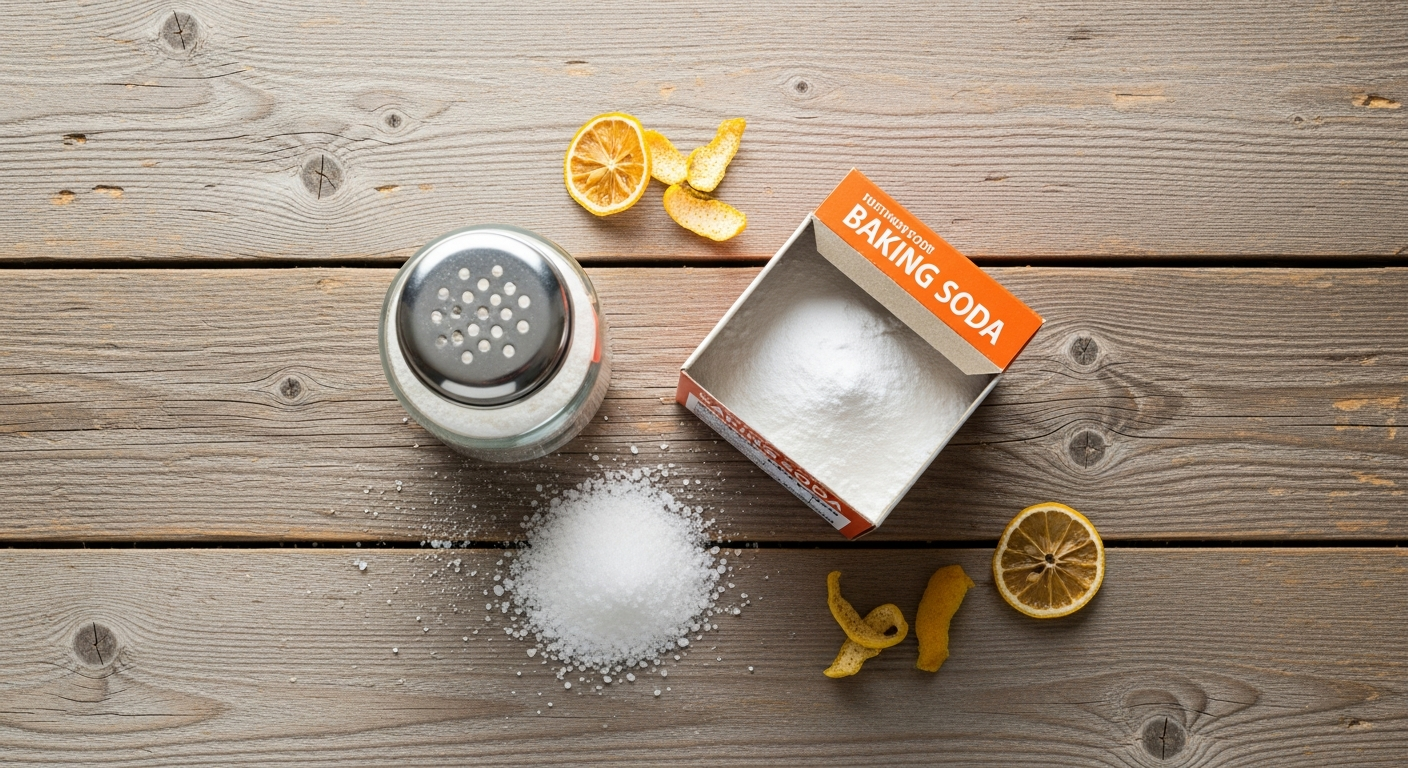
Baking soda is the foundation of this recipe and the reason it's safe on most surfaces. It acts as a gentle abrasive — it has enough grit to physically scrub away soap scum, stains, and mineral deposits without scratching the surfaces underneath. It's also a natural deodorizer, which is a nice bonus when you're scrubbing out a sink or tub. Every homemade scouring powder recipe uses baking soda as the base, and for good reason: you probably already have a box in your pantry right now. Baking soda works just as well in your bathroom — try my DIY toothpaste for a simple non-toxic swap.
Washing Soda (The Muscle — Highly Recommended)
Washing soda is sodium carbonate — think of it as the stronger sibling of baking soda (sodium bicarbonate). It's more alkaline, which means it breaks down grease, soap scum, and mineral buildup that baking soda alone can't fully tackle. The Environmental Working Group gives washing soda an "A" rating — it's considered safe for household use. You can usually find it at the grocery store near the laundry detergent (look for Arm & Hammer Super Washing Soda), or order it online. One thing to know: washing soda absorbs humidity, which is why this recipe can clump if stored somewhere damp. We'll cover storage in a minute. If you can't find washing soda at your store, you can actually convert baking soda to washing soda by spreading it on a baking sheet and heating it in the oven at 400°F for about an hour.
Optional Add-Ins Worth Considering
The base recipe — just baking soda and washing soda — works well on its own. These additions are genuinely useful but completely optional:
- Lemon essential oil (10–15 drops): Acts as a natural degreaser and gives the powder a clean, fresh scent. This is the one add-in I use most often.
- Cream of tartar (1–2 tsp): A natural bleaching and stain-lifting agent. Useful for discolored grout or tub stains that need a little extra help.
- Non-iodized salt (2–4 tbsp): Adds extra scrubbing grit for really stubborn spots. Do a patch test first on softer surfaces — salt can scratch.
- Diatomaceous earth (1–2 tbsp): Food-grade DE gives this recipe a polishing quality. It turns brown when wet, which looks alarming but is harmless — it rinses clean.
- Ground dried herbs (2–3 tbsp): Ground lavender, rosemary, or dried lemon peel adds a lovely scent and makes the powder look beautiful in a jar. Purely aesthetic, but worth it for gift batches.
Is Borax Safe to Use in Scouring Powder?
If you've looked at other homemade scouring powder recipes, you've probably noticed some include borax and some don't — and there's often a note explaining why it was removed. So let's actually talk through it.
Borax is sodium borate, a naturally occurring mineral compound. It is not the same thing as boric acid, which is the compound that showed toxicity in animal studies at high doses. The EWG gives borax a "D" rating, which is based on a precautionary principle given the contested data — not on clear evidence of harm at normal household use levels. Wellness Mama updated her popular recipe to remove it when the controversy peaked. Fire Lake Soapery still includes it in their commercial product. The actual science at cleaning use levels is genuinely debated.
Here's where I land: this recipe works just as well without borax. Baking soda and washing soda together give you all the cleaning power you need. There's no meaningful trade-off to leaving borax out — the recipe isn't weaker without it. Since the safety question isn't fully settled, I'd rather keep it simple and skip it entirely. That's what this recipe does.
If you have a bottle of borax on hand and want to include it, that's your call. I'm not going to tell you it's definitely dangerous at the amounts used in cleaning. But I don't need it, so I don't use it.
Homemade Scouring Powder Recipe
This is the recipe I've been making for a while now. It's as straightforward as it gets.
Yield: About 1 pint (fills 2 standard spice shakers)
Prep time: 5 minutes
Cost: ~$0.50 per batch
Ingredients:
- 1 cup baking soda
- ½ cup washing soda
- 10–15 drops lemon essential oil (optional, but recommended)
Instructions:
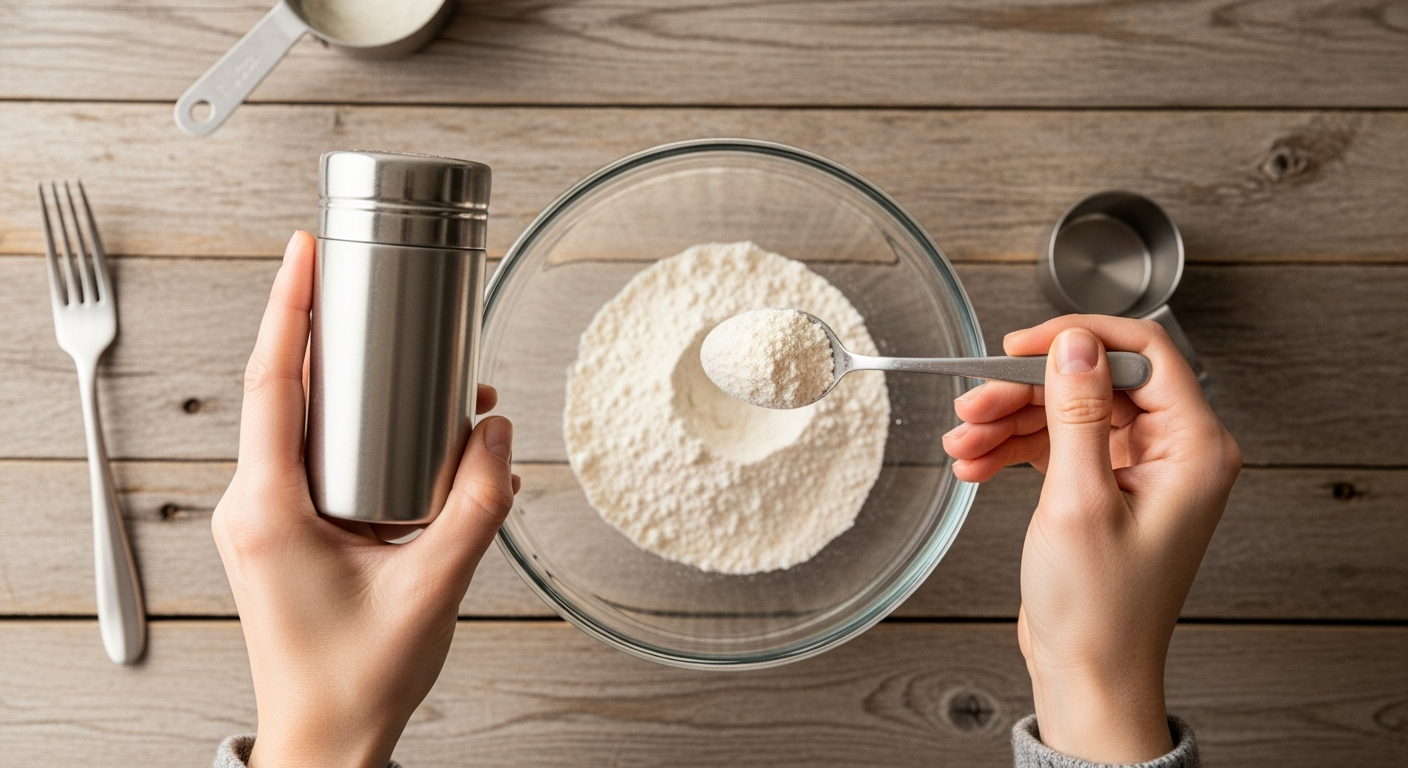
- Combine the baking soda and washing soda in a bowl and stir until evenly mixed. The two powders look similar but will blend together into a uniform mixture.
- Add the lemon essential oil, if using, and stir again to distribute it throughout.
- Transfer to a pint mason jar with holes poked in the lid, or a stainless steel spice shaker. Either works well — a spice shaker makes it easier to shake directly onto surfaces without overapplying.
- Label and store in a cool, dry place away from humidity. The pantry or a cabinet shelf works well. Avoid storing under the sink.
To double the batch for a longer supply, simply use 2 cups of baking soda and 1 cup of washing soda. Stored dry, it keeps for two months or longer.
Recipe Variations: Customize Your Batch
Once you've made the base recipe a few times, here are two easy ways to customize it for specific needs.
Herbal Gift Batch (Lavender, Rosemary, or Lemon Peel)
Add 2–3 tablespoons of finely ground dried herbs to the base recipe before transferring to the jar. Lavender gives it a soft, calming scent. Rosemary smells clean and fresh. Ground dried lemon peel brings a bright citrus note. Grind the herbs first in a coffee grinder before mixing them in — you want a fine powder, not chunky pieces. This version looks beautiful in a mason jar with a simple label and makes a genuinely useful housewarming or holiday gift. I make a batch of this every December and give it with a bottle of all-purpose spray — my friends actually use it.
Scouring Powder Paste (For Stubborn Messes and Vertical Surfaces)
Add 2 tablespoons of liquid castile soap to the dry recipe and cut it in with a fork until it reaches a paste-like consistency — similar to the texture of soft scrub. This version works better on vertical surfaces like tub walls and tile grout, where a dry powder tends to fall off before you can scrub it in. It also lathers, which makes it feel more satisfying to use. The tradeoff: the paste version doesn't keep as long as the dry powder. Make it in small batches and use within 2–3 weeks.
Where to Use Homemade Scouring Powder (And What to Avoid)
One of the most common questions I see about homemade scouring powder is: can I use this on my [insert surface here]? The short answer is that baking soda and washing soda are safe on most hard, non-porous surfaces — but there are a few important exceptions.
Safe to use:
- Porcelain tubs, sinks, and toilets
- Stainless steel sinks and cookware
- Ceramic and porcelain tile (floors and walls)
- Grout lines (this is one of the best uses for it)
- Enamel cookware
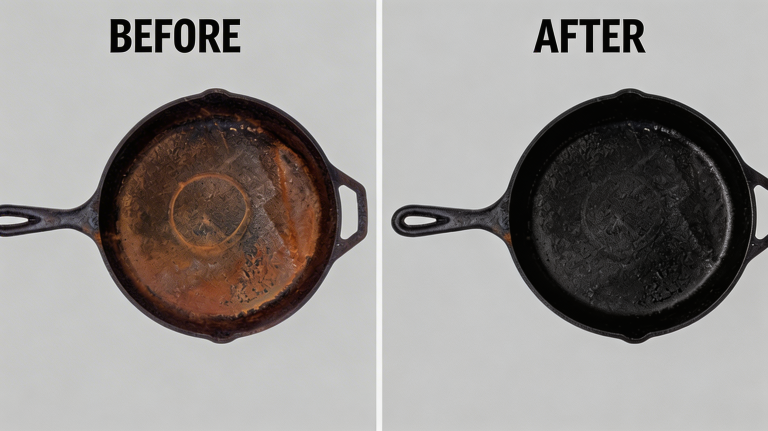
- Cast iron (dry application only — sprinkle, scrub, rinse immediately, and dry thoroughly)
- Pots and pans (stainless steel and enamel)
Use with caution:
- Fiberglass tubs: do a patch test in an inconspicuous spot first
- Colored grout: washing soda can lighten grout over repeated, heavy use
- Aluminum: may discolor with extended contact
Avoid:
- Natural stone (marble, granite, travertine, slate): washing soda is too alkaline and will etch the surface over time
- Glass cooktops: the abrasive will scratch
- Unsealed or waxed wood: moisture damage
- High-gloss painted surfaces
- Chrome fixtures: can dull the finish
The two to keep in mind are marble and glass cooktops — those are the ones where it'll cause real damage. Everything else on the safe list is fair game.
How to Use Homemade Scouring Powder
Using this recipe is about as simple as it sounds, but there's one step most people skip that makes a real difference.
- Lightly wet the surface with water. For heavy buildup or soap scum, use white vinegar instead — it helps loosen mineral deposits before you even start scrubbing.
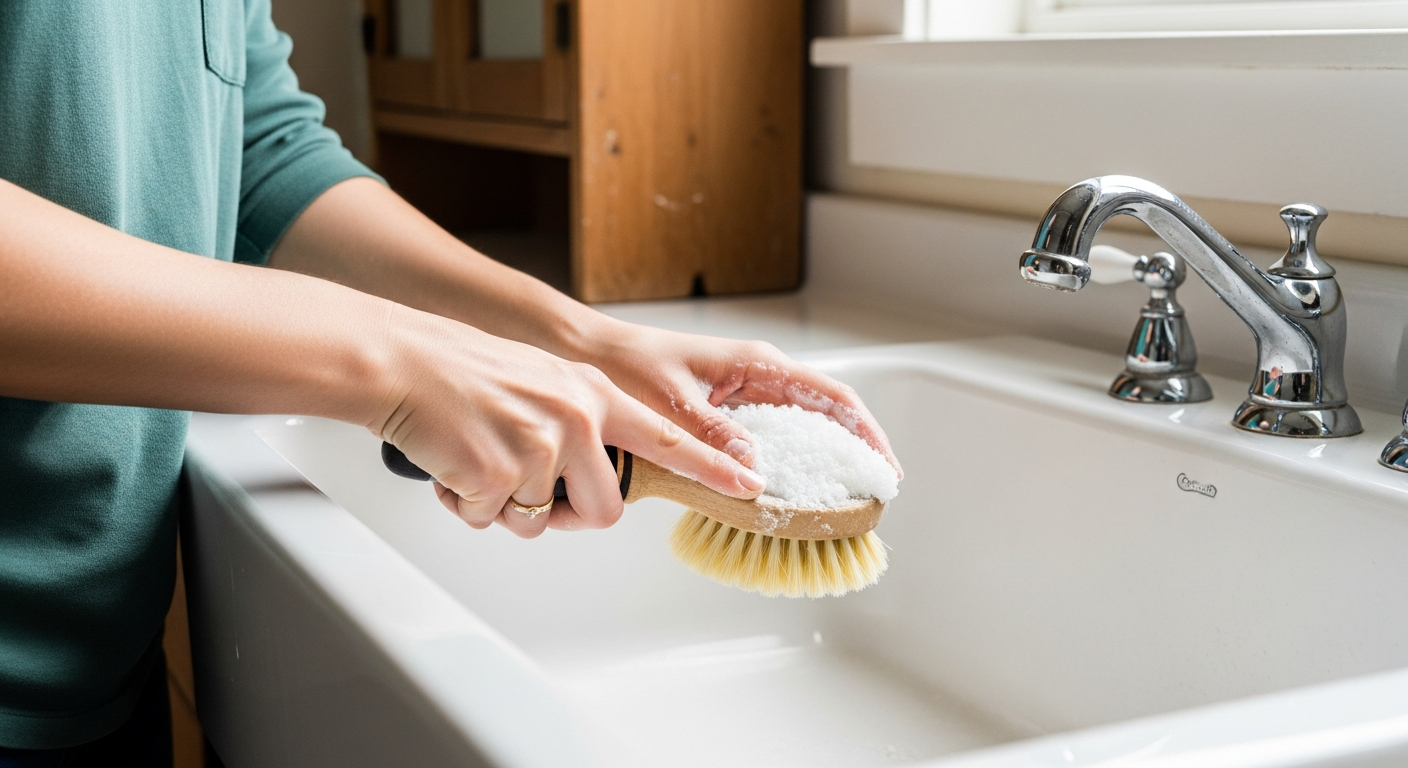
- Sprinkle a light layer of scouring powder directly onto the wet surface.
- Let it sit for 2–5 minutes. This is the step people skip, and it matters. The longer the powder sits, the more the washing soda has time to work on the grime before you start scrubbing.
- Scrub with a damp brush or sponge in circular motions. A stiff brush works better than a sponge for grout lines and tile joints — the bristles push the abrasive into the surface.
- Rinse thoroughly with water. If you see a white film left on the surface, that's washing soda residue — rinse again and you're done.
I used to sprinkle and scrub immediately and wonder why it wasn't working as well as I hoped. Letting it sit for even two minutes changes the result significantly.
How to Store Homemade Scouring Powder (Anti-Clumping Tips)
The most common complaint about homemade scouring powder is clumping, and the culprit is almost always humidity. Washing soda is hygroscopic — it naturally absorbs moisture from the air — which is why where you store this matters more than you'd think.
- Store in an airtight container between uses, away from moisture — a pantry shelf or a dry cabinet works well
- Avoid storing under the sink, where humidity from pipes and temperature changes causes clumping quickly
- A stainless steel spice shaker works beautifully as both a storage and dispensing container
- If your powder clumps into a solid block: break it up with a fork — it still works perfectly fine
- Dry batch lifespan: 6–8 weeks for consistent quality, though it'll technically keep longer
- If you make the paste version, store it in a small airtight container and use within 2–3 weeks
Making smaller batches more often is better than making a large batch that sits and absorbs humidity. The recipe takes five minutes, so there's no real reason to make more than a month's supply at a time.
Homemade Scouring Powder vs. Store-Bought: Is It Worth Making?
I think it is, but here are the actual numbers so you can decide for yourself.
| Homemade | Bon Ami | Bar Keepers Friend | |
|---|---|---|---|
| Cost per batch | ~$0.50 | ~$2.29 / 14 oz | ~$3.49 / 21 oz |
| EWG safety rating | A (both ingredients) | A | Not rated |
| Contains bleach | No | No | No |
| Best for | General cleaning | General cleaning | Rust stains, metal, hard water |
| Customizable | Yes | No | No |
| Time required | 5 minutes | 0 minutes | 0 minutes |
Homemade wins on cost and customization. Bon Ami wins on convenience — if you don't want to make anything, it's the best store-bought option and I'd genuinely recommend it over Comet or Ajax. Bar Keepers Friend is a different tool entirely; it uses oxalic acid rather than an alkaline base, which makes it excellent for rust and hard water stains on metal but less versatile for general bathroom cleaning. All three are better choices than Comet.
Troubleshooting Homemade Scouring Powder
| Problem | Why It Happens | Fix |
|---|---|---|
| Clumped into a solid block | Humidity absorbed by washing soda | Break up with a fork; move storage to a drier location |
| White film left on surface | Washing soda residue from insufficient rinsing | Rinse more thoroughly; use less powder next time |
| Doesn't lather | It's a dry powder — normal | Add 2 tbsp castile soap for the paste version if lather matters |
| Not cutting through the grime | Needs more contact time | Let it sit 5–10 minutes; try the paste version; add cream of tartar for staining |
| Smells musty after a few weeks | Old baking soda absorbing ambient odors | Add a few fresh drops of essential oil; or replace the batch |
Frequently Asked Questions
What does scouring powder do?
Scouring powder cleans hard surfaces by combining a gentle abrasive with an alkaline cleaner. The abrasive (baking soda) physically scrubs away dirt; the alkaline base (washing soda) dissolves grease, soap scum, and mineral deposits. Together, they work on most bathroom and kitchen surfaces without harsh chemicals.
Is baking soda a scouring powder?
Baking soda alone can function as a very mild scouring powder, but it lacks the cleaning power needed for heavy grime. Combining baking soda with washing soda makes a much more effective homemade scouring powder — the washing soda is what tackles soap scum, mineral buildup, and grease that baking soda on its own can't fully address.
Can you still buy scouring powder?
Yes — Bon Ami, Comet, Bar Keepers Friend, and Ajax are all available at most grocery and hardware stores. Bon Ami is the safest store-bought option with an EWG "A" rating. Comet with bleach received an EWG "F" rating for emitting harmful chemicals during use.
Is scouring powder safe to use?
Homemade scouring powder made from baking soda and washing soda is considered safe for household use — both ingredients have EWG "A" safety ratings. Commercial options vary: Bon Ami is safe (EWG "A"), while Comet with bleach received an "F" rating from the Environmental Working Group for emitting formaldehyde and other concerning chemicals.
What surfaces can you use scouring powder on?
Safe surfaces include porcelain, stainless steel, ceramic tile, enamel cookware, and grout. Avoid natural stone (marble, granite), glass cooktops, aluminum, and high-gloss painted surfaces — the abrasive can scratch or the alkaline base can etch these materials.
What's the difference between scouring powder and baking soda?
Baking soda is one ingredient. Scouring powder is a combination of baking soda (the abrasive) plus washing soda (the alkaline cleaner) and sometimes a detergent or essential oil. The washing soda is what makes homemade scouring powder effective on grease and soap scum — baking soda alone is too mild for heavy cleaning jobs.
Can you make homemade scouring powder without borax?
Yes — and this recipe does exactly that. Baking soda and washing soda together provide all the cleaning power you need. The borax controversy is real enough that I've left it out entirely, and the recipe performs just as well without it.
How long does homemade scouring powder last?
Stored dry in an airtight container away from humidity, homemade scouring powder keeps for 2–3 months. The biggest enemy is moisture — avoid storing under the sink. If it clumps, break it up with a fork and keep using it.