

Can a Chicken's Broken Leg Heal? What to Do Right Now
Last updated: March 12, 2026
Yes — most broken chicken legs can heal, and with the right care, you can treat this at home. Chickens are more resilient than people expect, and a properly splinted leg can heal fully in two to four weeks.
Take a breath. Here's what to do.
Right Now: Your First 5 Steps
- Separate her from the flock immediately. An injured chicken will be pecked — get her somewhere quiet right now.
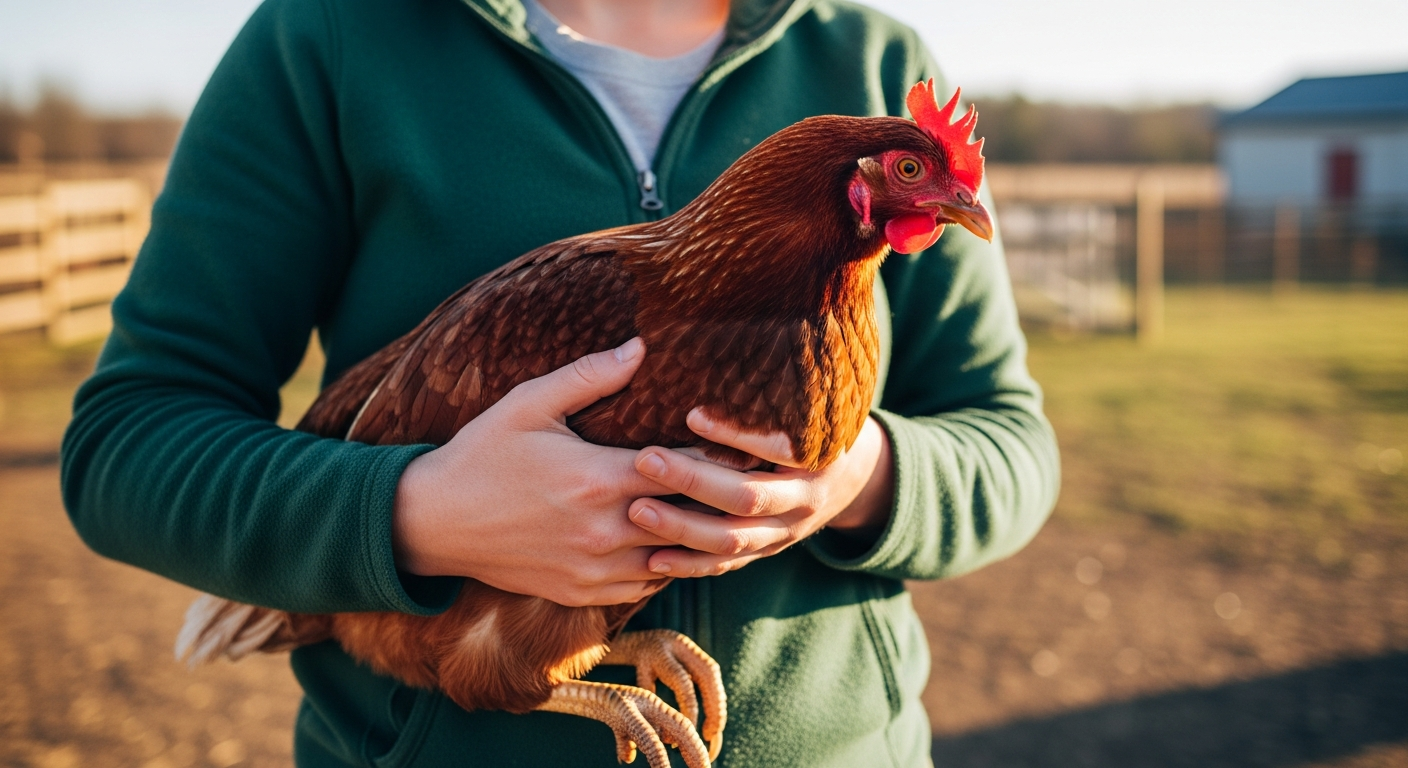
- Handle her carefully. Support her full body weight. If she's flapping, wrap her gently in a towel.
- Assess the leg. Is the skin intact? Is bone visible? Is the leg hanging at a clearly wrong angle?
- Provide water and warmth. Put her in a box or crate in a warm, quiet spot with easy access to water.
- Gather your supplies. You'll need vet wrap, a small splint (popsicle stick or toothpick), and scissors.
How to Tell If Your Chicken's Leg Is Broken
Before you start treating, take a minute to assess what you're dealing with.
Signs of a break:
- Leg hanging at an unnatural angle
- Not bearing any weight on the leg — hopping on one leg or lying down entirely
- Visible swelling or bruising around the injury site
- Dragging the leg when she moves
- The leg feels loose or moves in a direction it shouldn't
Break vs. sprain vs. dislocation: A sprain usually allows some weight bearing — the bird walks awkwardly but can still stand. A break typically takes weight off the leg entirely. A hip or hock dislocation often shows the leg rotated outward at a wrong angle at the joint.
If you're not sure whether it's a break or a sprain, treat it like a break. A splint won't hurt a sprain, but leaving a break unsupported will make things worse.
One important note: Marek's disease can cause sudden leg paralysis that looks a lot like injury. If both legs are affected, the bird was never injured, or several birds in your flock are showing the same symptoms, Marek's is worth considering.
What Causes Broken Legs in Chickens
Understanding why it happened helps you prevent the next one.
The most common cause is falling from a high roost — especially with heavy breeds like Buff Orpingtons, Brahmas, or Jersey Giants. These birds are not built for high perches, and a missed landing can easily snap a leg bone. Low roosts (12-18 inches for heavy breeds) solve this.
Other common causes: getting caught in wire fencing or hardware cloth, near-miss predator attacks that result in twisting injuries, slippery coop floors with no grip, calcium deficiency in actively laying hens (calcium goes to eggshells, leaving bones weaker), and rooster-related injuries during mating.
If this is the second or third time you've had this problem, look at your coop setup first.
What You'll Need to Treat a Broken Chicken Leg at Home
You don't need much, and most of it you probably already have.
- Vet wrap (self-adhesive bandage) — this is the key supply. It doesn't stick to feathers, it stays in place, and it's easy to work with. A roll is about $5 at your feed store or on Amazon. Get several rolls in different widths.
- A small splint: a popsicle stick for an adult hen, a toothpick or section of drinking straw for a chick
- Scissors
- Clean cloth or paper towels for the work surface
- An isolation space: a cardboard box, dog crate, or small separate pen works fine
- Fresh water and regular feed — keep nutrition up during healing
How to Splint a Chicken's Broken Leg (Step by Step)
This is the most important part. Work slowly and stay calm — a calm handler means a calmer bird.
1. Calm the chicken first. Wrap her in a towel to prevent flapping and keep her still. Work on a stable surface — a table or your lap. Have someone help if you can.
2. Gently feel the leg to locate the break. You're looking for the approximate location — lower leg (the scaly part below the hock), upper leg (the feathered part above), or a toe. Lower leg breaks are by far the easiest to treat at home. Upper leg (femur) breaks are difficult and may need a vet.
3. Position the splint. Place a popsicle stick alongside the lower leg, parallel to the bone. It should run from just below the hock joint to just above the toes — you want to support the break without fully immobilizing both joints if possible.
4. Wrap with vet wrap. Starting at one end, wrap the vet wrap snugly around the leg and splint — firm enough to hold the splint in place, but not so tight it cuts off circulation. The wrap should be snug, not constricting. You should be able to slide a fingernail underneath it without forcing it.
5. Check circulation. After wrapping, press gently on the foot. It should feel warm. The toes should be responsive. If they're cold or pale, the wrap is too tight — remove it and rewrap with less tension.
6. Keep the bandage clean and dry. Check it daily. Replace it if it gets wet, soiled, or slips out of place. Plan on keeping the splint on for 2-4 weeks.
Don't be frustrated if it takes you two or three tries to get a good wrap. That's normal.
How to Care for Your Chicken During Recovery
Isolation is non-negotiable for the entire recovery period. The flock will peck at the bandage and at the injured bird — instinct, not meanness. Keep her in a separate, quiet, clean space until she's healed and bearing weight normally.
Bedding: Use deep, soft bedding — straw or shredded paper work well. This reduces pressure on the injury and gives her good footing. Keep it clean and dry to prevent infection.
Food and water: Position both at her level and within easy reach. She may not be able to hop or stretch to a hanging feeder. A slightly elevated dish she can reach while lying down is helpful in the first few days.
What to expect during healing:
- First week: She'll be quiet, eating little, resting a lot. This is normal.
- By week 2, she should start showing interest in food and becoming more alert.
- By week 3-4, she may start testing the leg and bearing some weight on it.
- Once the bandage comes off and she's walking reasonably well, you can begin a slow reintroduction to the flock — over several days with supervision, not all at once.
Signs of complications: Increased swelling, the leg or toes becoming cold, an open wound developing, or the bird becoming completely unresponsive and refusing all food. If you see these, get a vet involved.
When the Injury Is Too Severe: Knowing When to Let Go
This is the part nobody wants to write, but you need to hear it.
Some injuries are beyond what home care can fix — and attempting to treat them anyway just prolongs suffering. Signs the injury may be too severe:
- Compound fracture — the bone has broken through the skin. Open fractures are serious infection risks and typically need professional treatment.
- Femur break — the upper thigh bone is nearly impossible to splint effectively at home. The bird is in significant pain and mobility will be permanently compromised.
- Signs of shock — pale comb, labored breathing, completely unresponsive to handling. This indicates systemic distress beyond the leg injury.
- Severe crushing injury — if the leg was badly mauled by a predator, the soft tissue damage may be too extensive to heal well.
If the bird is in ongoing severe pain with no reasonable chance of meaningful recovery, the most merciful choice is a humane death — and that's a decision made out of love, not failure. A vet can euthanize quickly and humanely. If you're not sure whether the injury is treatable, a vet visit for an assessment is worth it.
This is one of the harder parts of keeping a backyard flock. I've been there, and it never gets fully comfortable. But a quick end is genuinely kinder than weeks of pain with no hope of healing.
A Note on Baby Chicks with Broken or Injured Legs
Chicks heal faster than adults — often in one to two weeks — but they also need different-sized materials. A toothpick works as a splint for a very young chick; a thin popsicle stick for an older one. The splinting technique is the same: parallel support + snug vet wrap + daily checks.
One important distinction: splay leg (also called spraddle leg) is a common condition in chicks where the legs slip out to the sides. It looks alarming but it's not a break — it's a developmental issue, often caused by slippery brooder flooring. Splay leg is treated with a hobble (a small piece of vet wrap connecting the two legs at normal width), not a splint. If both legs are splaying outward from the start with no injury event, that's almost certainly splay leg.
Frequently Asked Questions
Can a chicken survive with a broken leg?
Yes, most chickens can survive and fully recover from a broken leg. Lower leg fractures treated promptly with a home splint typically heal in two to four weeks, and the bird can return to normal flock life. Upper leg fractures are more serious and may require veterinary care.
How long does it take for a chicken's broken leg to heal?
Most lower leg fractures in adult hens heal in two to four weeks with a proper splint and good supportive care. Chicks heal faster, often in one to two weeks. Upper leg (femur) fractures take longer and are harder to treat successfully at home.
Should I separate a chicken with a broken leg from the flock?
Yes — right away. Other chickens will peck at the bandage and at the injured bird. Keep her in a quiet, separate space for the entire recovery period, and reintroduce her slowly once she's healed and bearing weight.
Can I give my chicken pain relief?
Baby aspirin dissolved in water is sometimes used for pain management in backyard chickens — approximately one 81mg aspirin per gallon of drinking water. Do not use ibuprofen or acetaminophen, which are toxic to chickens. If the bird is in severe pain, a vet visit is worthwhile.
What causes broken legs in chickens?
The most common causes are falling from high roosts (especially in heavy breeds), getting caught in fencing or wire, predator attack injuries, slippery coop floors, calcium deficiency in laying hens, and rough handling or rooster injuries. Marek's disease can also cause leg paralysis that looks like an injury — if multiple birds are affected with no trauma, consider this possibility.


