English Shepherd Dog Breed Guide: The Original American Homestead Dog (2026)
Last updated March 12, 2026
| Origin | United States |
| Size | 40–65 lbs, 18–23 inches |
| Lifespan | 12–15 years |
| Energy level | High |
| Good with kids | Yes |
| Good with chickens/livestock | Yes |
| Grooming | Moderate — seasonal shedder |
| Training difficulty | Moderate — smart but independent |
| AKC recognized | No |
| UKC recognized | Since 1927 |
| Other names | Farm Collie, Farm Shepherd, Old Style Collie |
What Is an English Shepherd?
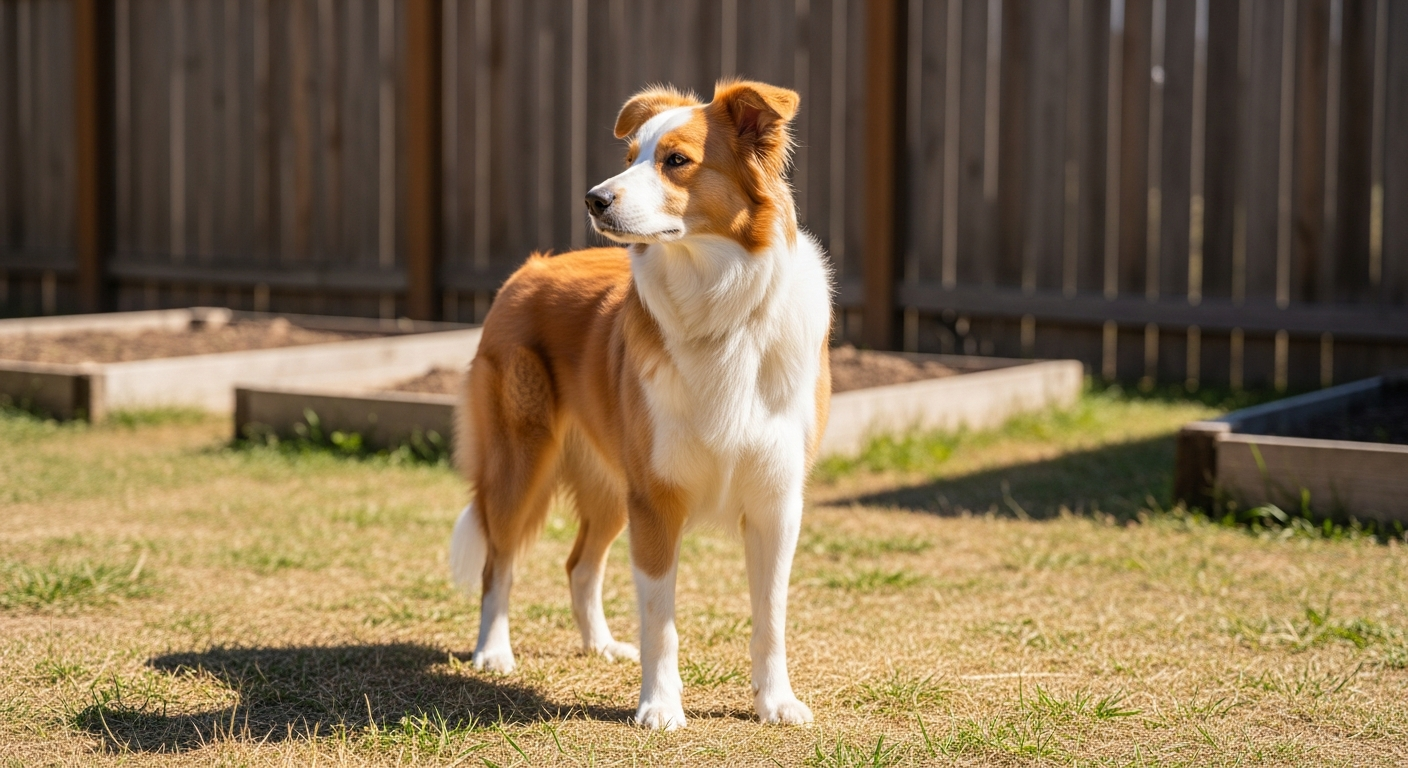
The English Shepherd is an American breed — despite the name. I know, it's confusing. I'd never heard of this breed either until someone in my homesteading Facebook group mentioned them, and my first thought was "is that like an Old English Sheepdog?" It's not. The English Shepherd is its own thing entirely, and once you learn the history, the name starts to make sense.
The ancestors of the English Shepherd were collie-type dogs that British and Irish settlers brought to North America in the 1600s and 1700s. Those dogs were bred to work American farms — herding cattle, sheep, and hogs, hunting rats, guarding property, and keeping an eye on the kids. They became so common that by the 19th century, they were arguably the most popular dog in America. Then farming industrialized, families moved to cities, and this breed quietly faded into the background. The United Kennel Club has been registering them since 1927 — originally under the name American Farm Shepherd, renamed English Shepherd in 2003. They are not recognized by the AKC, and the breed community considers that a feature rather than a flaw: English Shepherds have been bred for working ability, not show ring appearance.
You may have also seen them called Farm Collie, Farm Shepherd, Old Farm Collie, or Old Style Collie. If you have a homestead, this dog was literally bred for your life.
English Shepherd vs. Border Collie vs. Australian Shepherd
Here's the honest breakdown, since everyone asks.
| Trait | English Shepherd | Border Collie | Australian Shepherd |
|---|---|---|---|
| Energy level | High | Extreme | High |
| Herding style | Loose-eyed (adaptable) | Eye (intense, specialist) | Loose-eyed |
| Good with kids | ✅ Excellent | ⚠️ Can herd kids | ✅ Good |
| Good with poultry/livestock | ✅ Yes | ✅ Best for sheep | ✅ Yes |
| Apartment-suitable | ❌ No | ❌ No | ❌ No |
| AKC recognized | ❌ No | ✅ Yes | ✅ Yes |
| Velcro/"shadow" dog | ✅ Extremely | ❌ Not really | ⚠️ Sometimes |
| Intensity | Moderate | Extreme | High |
| Grooming | Moderate | Moderate | High |
| Best for | Small farms, families | Dedicated handlers | Active families, agility |
If you want one dog that can herd your chickens, watch your kids, patrol the property, and curl up at your feet in the evening — that's the English Shepherd. The Border Collie is a phenomenal working dog, but it's a specialist bred for extreme herding intensity. Without actual sheep to obsess over, many Border Collies will redirect that drive toward your children, your cats, or your sanity. The Australian Shepherd is wonderful for active families and excels in dog sports, but it needs constant mental stimulation and tends to be higher maintenance on the grooming front.
The English Shepherd sits in a sweet spot: less intense than a Border Collie, more adaptable and family-oriented than both. For a small homestead with kids and mixed livestock, it's hard to beat.
English Shepherd Temperament and Personality
Intelligent — And That's a Double-Edged Sword
English Shepherds are genuinely smart dogs — the kind of smart where they learn a new command in two repetitions and remember it forever. That sounds like a dream, and it mostly is. The catch is what happens when that intelligence doesn't have a constructive outlet.
A bored English Shepherd will invent a job for itself, and you probably won't like the job it picks. They've been known to figure out gate latches, systematically dismantle porch railings, and reorganize the contents of your compost bin. Give an English Shepherd something to do and that intelligence becomes an incredible asset — it's what makes them natural problem-solvers on a working farm. On a homestead where there's always another chore to supervise, this dog thrives.
The "English Shadow" — What Devotion Really Looks Like
English Shepherd owners have a nickname for their dogs: English Shadows. If you're in the barn, they're in the barn. If you're typing at your desk, they're under your desk. If you're in the bathroom, they're lying on the bathroom floor waiting. This isn't neediness in the anxious sense — it's partnership. This is a breed that wants to be genuinely involved in your daily life, not just present in your house.
That devotion is one of the breed's best qualities for homestead families. If you want a dog that's a real working partner — not just a pet that waits by the door — the English Shepherd delivers. That said, it's not a dog that tolerates being left alone for long stretches without a plan. If you're gone ten hours a day, make sure there's another animal, a dog walker, or at minimum an enrichment strategy in place.
Reserved With Strangers (This Is Not Shyness)
English Shepherds tend to hold back around people they don't know. They'll watch a newcomer, take their time sizing them up, and withhold judgment until they've made up their mind. Once they've decided someone is okay, they're devoted. But that initial reserve can look like shyness to people who aren't familiar with the breed, and it isn't — it's caution, which is very different.
Early socialization is essential. Get your puppy into new environments, meeting new people and animals, before 16 weeks old. A well-socialized English Shepherd learns to evaluate situations appropriately rather than default to avoidance. A poorly socialized one may become anxious or reactive. One honest note: your UPS driver is probably going to have strong opinions about your dog.
The Bossy Streak — And Why It's Actually Useful
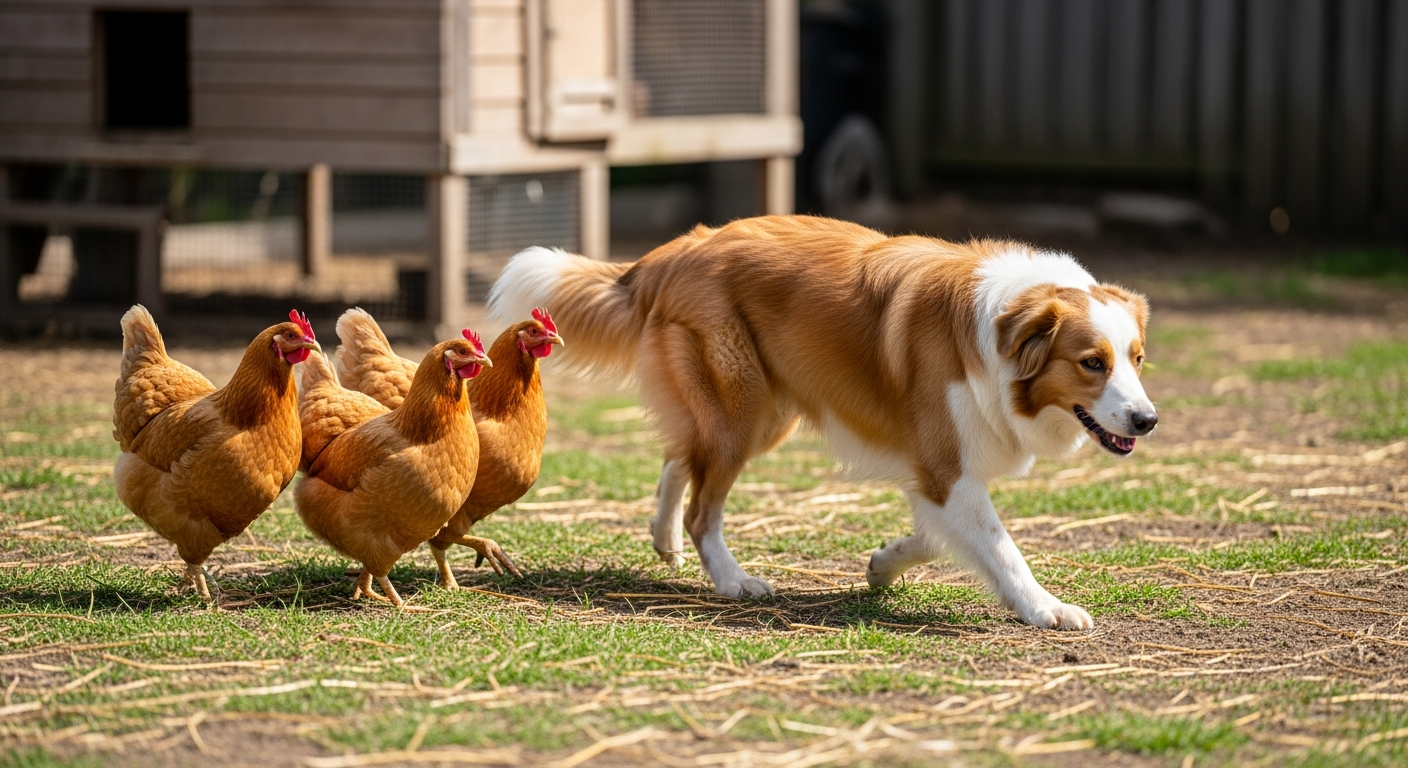
English Shepherds have what breed enthusiasts politely call a "bossy streak." They keep order. In a dog park, they'll referee other dogs' play, stepping in when things get too rough. On a homestead, they'll manage the kids — steering little ones away from the road, rounding up wandering chickens before you've even noticed them, keeping track of where everyone is at all times.
This isn't aggression, and it isn't dominance in the traditional sense. It's a working instinct — an internal sense of how things should be ordered, and a strong drive to maintain that order. Call it bossy if you want. I call it a co-manager. That instinct is exactly what drove this breed to be indispensable on American farms for two centuries, and it's still there.
English Shepherd Size, Coat, and Colors
How Big Do English Shepherds Get?
English Shepherds are medium-sized dogs — sturdy and athletic, built for work rather than the show ring. Males typically run 45–65 pounds and stand 19–23 inches at the shoulder. Females are a bit smaller at 40–50 pounds and 18–22 inches. They're slightly longer than they are tall, which gives them a different silhouette than the more square-looking Australian Shepherd.
These aren't delicate dogs. They're built to cover ground, move livestock, and keep up with an active family all day.
Coat and Grooming (Easier Than You Think)
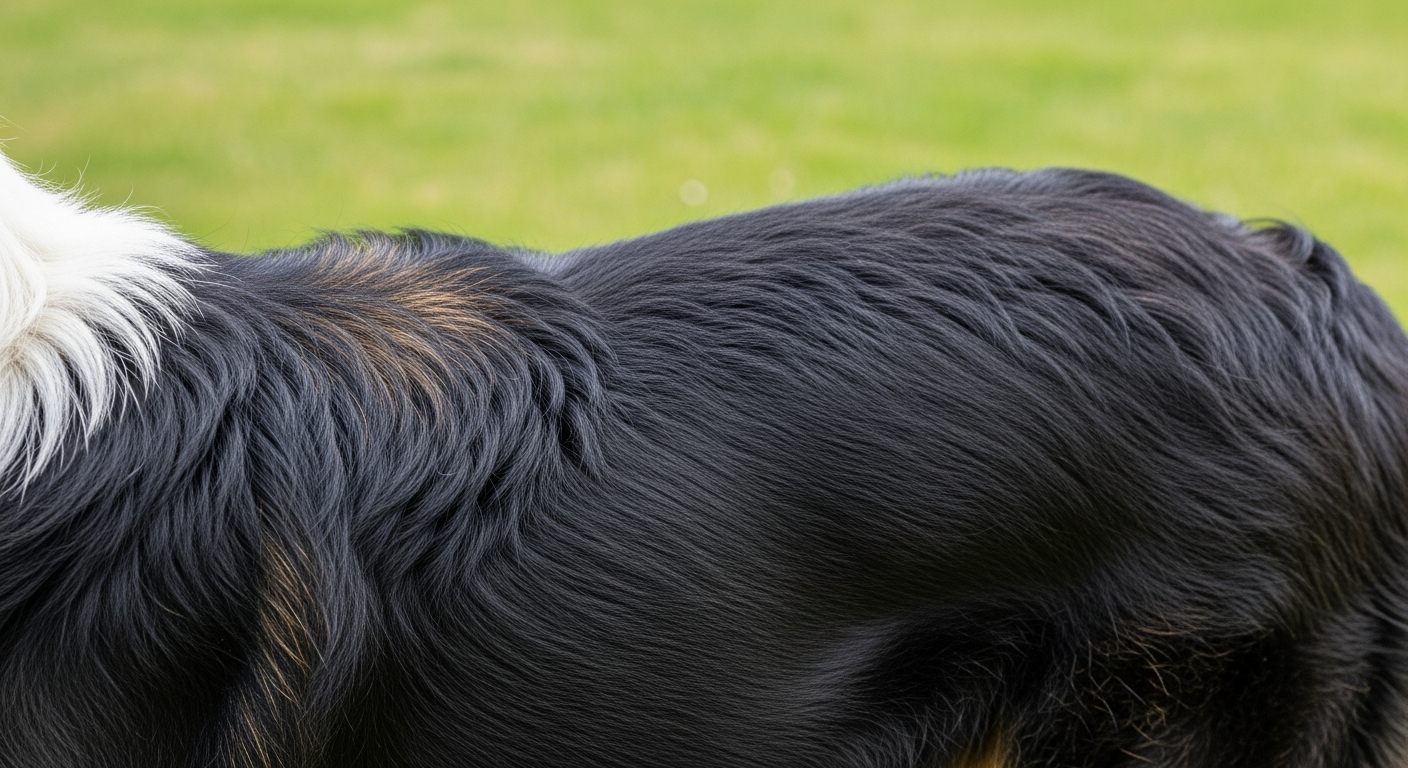
The English Shepherd has a double coat — a soft, dense undercoat with a silky outer coat on top. What makes it particularly manageable is something the breed community calls its "teflon quality": dirt tends to fall out on its own, mats are uncommon, and the coat doesn't trap debris the way some long-coated breeds do. Day-to-day maintenance is genuinely minimal — brush occasionally, bathe when needed.
The caveat is seasonal shedding. Twice a year (typically spring and fall), English Shepherds blow their undercoat, and during those two or three weeks you'll want to brush daily or your furniture will start to look like it belongs to a sheep. Outside of those blowout seasons, this is one of the easier long-coated breeds to maintain.
Color Patterns
English Shepherds come in five color patterns according to the UKC breed standard: Black & White, Black & Tan, Black/White/Tan (tricolor), Sable & White, and Tan & White. They do not come in merle — if you've seen herding dogs with the speckled blue or red merle pattern, those are Australian Shepherds or Border Collies. English Shepherds don't carry that gene. Color has no bearing on temperament.
English Shepherd Health — What Every New Owner Needs to Know
English Shepherds are generally a healthy, hardy breed — they were selected for working ability over generations, which tends to produce sound, functional dogs. That said, there are a few health considerations every new owner should understand before bringing one home.
Hip Dysplasia and Joint Health
Hip dysplasia — where the hip joint doesn't develop properly — occurs in English Shepherds as it does in most medium-to-large herding breeds. When you're choosing a breeder, ask whether both parents have been evaluated for hip and elbow health through OFA (Orthopedic Foundation for Animals) or PennHIP certification. A reputable breeder will have this documentation and share it freely.
On your end, don't over-exercise your puppy on hard surfaces or let them do a lot of stair climbing before 12–16 months — joints are still developing during that window. Signs of hip trouble in an adult dog include limping, reluctance to get up from lying down, or a bunny-hopping gait in the rear.
MDR1 Drug Sensitivity — The One Thing Every New Owner Must Know
This is the most important health topic in this entire article, and I wish someone had told me about it before I brought home a herding breed for the first time.
MDR1 stands for Multi-Drug Resistance 1, and it refers to a genetic mutation found in some herding dogs — including English Shepherds. In a healthy dog, a protein acts as a pump that keeps certain drugs out of the brain. In an MDR1-affected dog, that pump doesn't work properly, which means specific medications can accumulate in the nervous system at toxic levels.
For most dog owners, the practical risk is manageable. But for homesteaders, there's an exposure route that most breed guides don't mention: ivermectin. Ivermectin is one of the most commonly used dewormers for cattle, sheep, and goats. If an MDR1-positive dog eats manure from a recently dewormed animal, or is accidentally given a livestock dose of ivermectin, it can be fatal. This is not a hypothetical — it has happened on farms where owners didn't know their dog carried the mutation.
Other medications that can be dangerous in MDR1-positive dogs include certain anesthetics, acepromazine (a common sedative used in veterinary procedures), loperamide (the active ingredient in Imodium — which some people keep in their dog's first aid kit), and some chemotherapy drugs. The list is longer than most people expect.
What to do: get your dog DNA tested before any vet procedure or before you start a deworming program on your property. Print the MDR1-affected drug list from the Washington State University Veterinary Clinical Pharmacology Lab and hand it to your vet on your first visit. The good news is that most English Shepherds are not MDR1-positive — but you want to know before there's an emergency, not during one.
Eye Conditions
Two eye conditions appear in the breed: Collie Eye Anomaly (CEA) and Progressive Retinal Atrophy (prcd-PRA). CEA is present at birth and ranges from mild to moderate in severity — many affected dogs live normal lives with minimal vision impact. PRA is a progressive condition that eventually leads to blindness. Both are detectable through genetic testing, and responsible breeders test for them. Ask your breeder whether both parents have been CAER (Canine Eye Registry Foundation) certified within the past year.
How Long Do English Shepherds Live?
Sources vary slightly — Wisdom Panel and Embark list a range of 10–14 years, while some working-dog sources cite up to 15. For a healthy, well-cared-for English Shepherd, 12–15 years is a realistic expectation. These are not fragile dogs, and when they come from health-tested lines with appropriate nutrition and exercise, they tend to hold up well.
Exercise and Mental Stimulation
English Shepherds are high-energy dogs that need real exercise — not a gentle stroll around the block. The minimum baseline is about an hour of vigorous activity per day, and that needs to include mental work, not just physical movement. A dog that's tired in the body but still sharp in the mind will find its own entertainment, and you won't enjoy the results.
Here's the good news for homestead families: if you have a working property, the farm provides the exercise. An English Shepherd that spends the day following you through chores, patrolling the property, moving chickens, and supervising the kids is getting exactly the physical and mental workout it needs. The homestead is genuinely the ideal environment for this breed.
For suburban or non-farm families, you'll need to substitute intentionally. Running, fetch, agility classes, scent work, and regular training sessions all count. Puzzle toys can help on slow days. If you have a working homestead, this dog will tire itself out doing the job it was bred for. If you don't, budget serious time and energy for exercise.
Training an English Shepherd — What Actually Works
English Shepherds are fast learners, but they're not push-button dogs. The key thing to understand is that they want to know why they're being asked to do something. Repeating a command over and over while expecting blind compliance will frustrate both of you. Instead, work with their intelligence — make it clear why the behavior matters, reward it generously, and keep training sessions short and varied so they don't lose interest.
Positive reinforcement is the right approach. These dogs respond well to a calm, confident handler who gives clear expectations and consistent feedback. They'll push back against an uncertain or anxious owner — not out of aggression, but because someone has to be in charge, and if you're not sure who it is, they'll decide. Firm and consistent doesn't mean harsh; it means clear.
Early socialization is non-negotiable. Enroll in a puppy class before 16 weeks and expose your dog to as many people, animals, environments, and sounds as possible during that window. The reserved-with-strangers trait can become problematic if it isn't shaped early — a well-socialized English Shepherd learns to evaluate situations calmly; an under-socialized one may become reactive. They won't blindly obey every command without question — and after a while, you'll appreciate that quality in a working dog.
English Shepherds on the Homestead
If you want to understand the English Shepherd, you have to understand its history. For most of American history — from the colonial era through the early 20th century — this dog was everywhere. Walk onto almost any American farm in 1880 and you'd find one. They herded cattle, sheep, hogs, and poultry. They hunted rats and mice. They guarded the property. They watched the children. One dog, doing all of it.
Then industrialization happened. Large-scale agriculture replaced small family farms. Families moved to cities. Specialist breeds with specific functions — the Border Collie for sheep, the German Shepherd for police work — rose to prominence. The English Shepherd faded, kept alive by a community of working-dog enthusiasts who valued function over fashion.
On a small homestead today, this dog is exactly as useful as it was two hundred years ago:
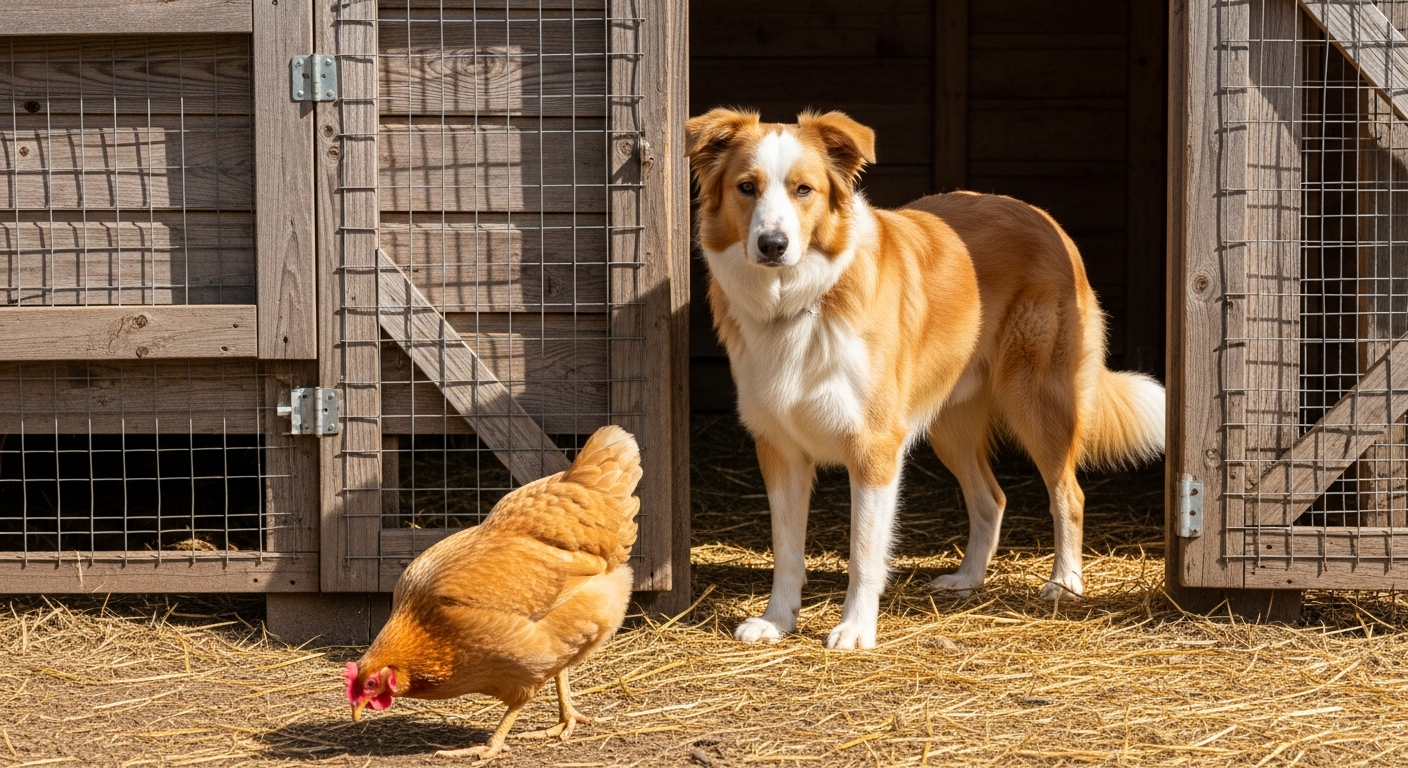
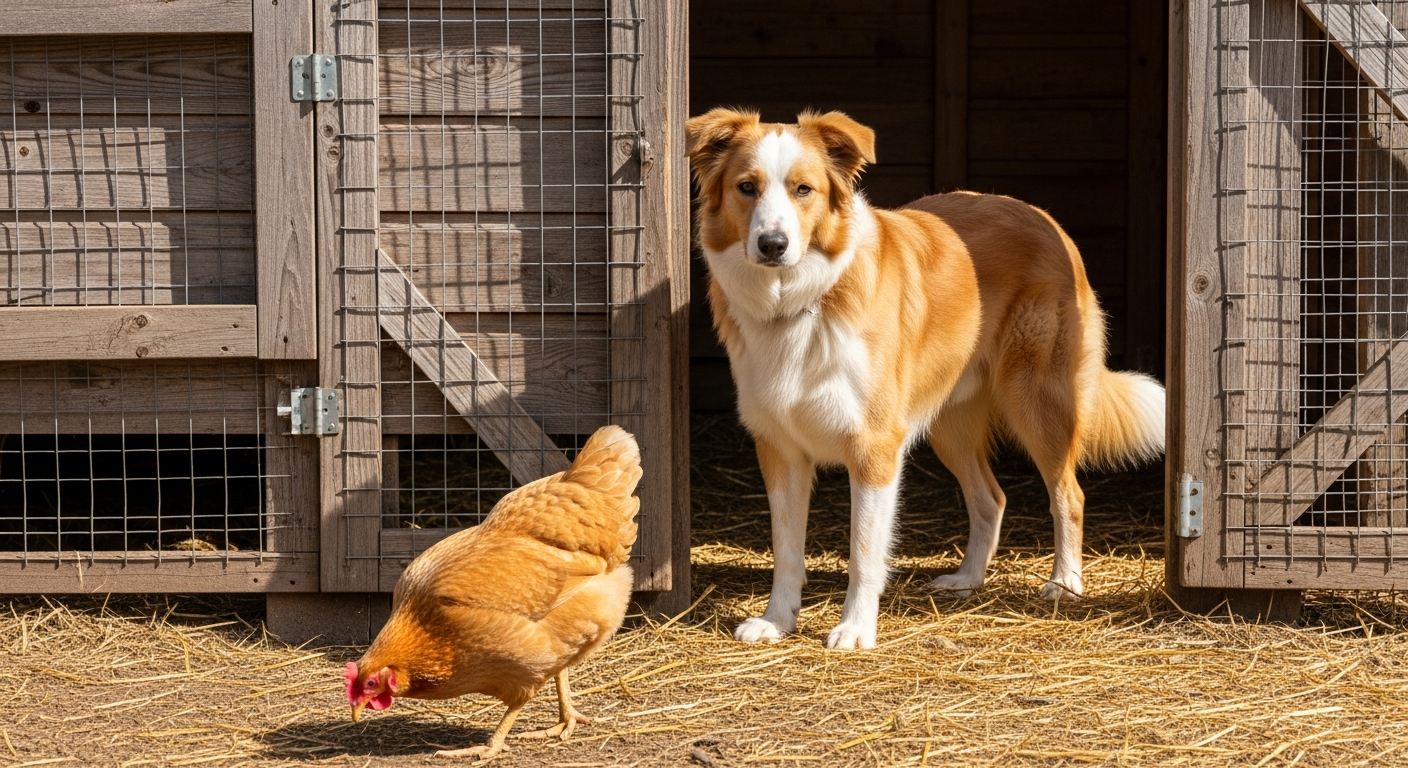
Poultry herding. English Shepherds were bred to work poultry, and most take to it naturally. They'll move chickens from the coop to the run, steer ducks away from trouble, and keep the flock organized without much instruction. Supervise initial introductions — some individual dogs have stronger prey drive than others — and if possible, work with a breeder whose dogs have been raised around birds.
Perimeter patrol. Their territorial instinct makes them natural predator alarms. A fox at the fence line, a raccoon nosing around the coop, a stray dog in the yard — your English Shepherd will know before you do and will let you know.
Child supervision. That bossy streak I mentioned? It means they keep track of where the kids are. They'll steer a wandering toddler back toward the house. They'll place themselves between a child and a perceived threat. This isn't training — it's instinct.
Vermin control. English Shepherds were ratters long before they were pets. Barn mice, rats in the compost, something living under the garden shed — this is a dog that takes the job seriously.
A typical day with a homestead English Shepherd goes something like this: out with you at 6 AM for morning chicken chores, patrolling the perimeter while you fill feeders. Under your work table by 9 AM while you transplant seedlings. Stationed near the garden fence at 1 PM while the kids play, making sure no one wanders past the gate. Back at your heels for evening chores at 4 PM. Lying at your feet by 8 PM while you plan tomorrow's work.
One honest note on small animals: English Shepherds have a high prey drive with rodents, and some individuals have difficulty distinguishing between a barn rat and a pet guinea pig. If you keep rabbits or small rodents as pets, introduce them carefully and never leave them unsupervised together.
Is an English Shepherd Right for You?
I want you to get the right dog — not just this dog. So here's an honest look at who this breed is and isn't a good fit for.
A great fit if:
- ✅ You have a yard, acreage, or small farm with space to run
- ✅ You have kids who spend time outside and could use a second set of eyes on them
- ✅ You have chickens, ducks, or small livestock
- ✅ You want a dog that bonds deeply and works as a genuine partner
- ✅ You have time for daily vigorous exercise and mental engagement
- ✅ You're patient with an independent thinker who will occasionally question your decisions
- ✅ You want a working companion, not just a family pet
Think twice if:
- ❌ You live in an apartment or have very limited outdoor space
- ❌ You're gone 10+ hours a day with no plan for the dog
- ❌ You want a dog that warms up to strangers immediately
- ❌ You keep rodents or rabbits as pets — the prey drive is real
- ❌ You don't have the time or energy to commit to daily physical and mental exercise
If you've been going back and forth between an Aussie and an English Shepherd and you have a homestead with kids, I'd lean toward the English Shepherd every single time. Less intense, more adaptable, and that devotion to family is something you really have to experience to understand.
How to Find an English Shepherd
Rescue — The National English Shepherd Rescue
The National English Shepherd Rescue (NESR, at nesr.info) is the dedicated rescue organization for this breed. They work to place English Shepherds who need new homes and can help with identification — which matters, because English Shepherds frequently end up in shelters misidentified as Australian Shepherd mixes or Border Collie mixes. If you're open to an adult dog, check your local shelters too, because there may be an English Shepherd sitting there under a different name.
Adopting an adult dog through rescue has real advantages with this breed. You'll skip the most exhausting puppy phases, you'll often get a dog that's already house-trained, and NESR does careful matching to make sure the dog fits your household. Adoption is a genuinely great option here.
Finding a Reputable Breeder
If you're going the breeder route, know what to ask. A reputable English Shepherd breeder should be able to provide OFA or PennHIP hip evaluation results for both parents, MDR1 test results for both parents, and CAER eye exam certification. They should offer a health guarantee and a clear return policy — a good breeder wants the dog back if things don't work out, rather than leaving you without options. Ask whether they breed working lines, companion lines, or both, and whether their dogs have been raised around livestock or poultry.
Red flags: breeders who can't produce health testing documentation, who won't let you meet at least one parent, or who push for a deposit before you've had a real conversation. Expect to wait — this is not a mass-produced breed. Good English Shepherd breeders often have waitlists, and that's a sign the community is doing things right. The UKC breeder finder is a reasonable starting point for your search.
Before you bring your English Shepherd home, grab our free homestead-ready checklist — everything you need to set up your space for an active working dog. [Join our newsletter to download it.]
Frequently Asked Questions
Are English Shepherds good family dogs?
Yes. English Shepherds are excellent family dogs for active families with outdoor space and children. They bond deeply, naturally supervise kids, and adapt well to family life — but need daily exercise and mental engagement to stay happy.
What is the difference between an English Shepherd and a Border Collie?
English Shepherds are less intense and more adaptable than Border Collies. Border Collies are specialist herders bred for extreme drive and the "eye" — they can be obsessive. English Shepherds are loose-eyed herders that adapt to whatever farm job needs doing and make better all-around family companions.
Do English Shepherds shed a lot?
They shed moderately year-round and heavily twice a year during seasonal coat blows. Outside of those two shedding seasons, their coat is low-maintenance — it naturally resists matting and dirt falls out without frequent bathing.
Are English Shepherds good with chickens?
Yes, with proper introduction. English Shepherds were bred to herd poultry and most adapt naturally. Individual prey drive varies — supervise early introductions and work with a breeder who raises working-line dogs around poultry.
Are English Shepherds rare?
Relatively. They're not AKC recognized, which keeps them outside mainstream pet culture. This is considered a feature by enthusiasts — the breed has been maintained for working ability over show standards, keeping it consistent and healthy.
What is MDR1 drug sensitivity in English Shepherds?
MDR1 is a genetic mutation found in some herding breeds that makes affected dogs hypersensitive to certain medications, including ivermectin. Homesteaders should be aware that ivermectin is used to deworm livestock — accidental exposure can be fatal in an MDR1-positive dog. DNA test your English Shepherd before any vet procedure or deworming on your property.