How to Make Essential Oil Soap at Home: A Beginner's Guide (2026)
Last updated March 11, 2026
Essential oil soap is soap scented and enriched with pure, plant-derived essential oils — like lavender, tea tree, or peppermint — instead of synthetic fragrance oils. It's typically made using the cold process or melt-and-pour method, and unlike commercial bar soap, it retains glycerine, a natural moisturizer that keeps skin soft rather than dry. Beginners can make it at home with minimal equipment in about 30 minutes using the melt-and-pour method.
I had no idea how easy it was to make essential oil soap until I actually tried it. I'd been buying expensive bars from farmer's markets for years, not realizing I could make the same thing — with the same real essential oils — right in my kitchen for a fraction of the cost.
Spring is actually a great time to start making soap. Essential oils like lavender and rosemary are at their freshest, and the weather is cool enough that your bars will set nicely without needing the refrigerator.
In this guide, you'll learn:
- What essential oil soap is and why it's better for your skin than store-bought
- The 5 best essential oils to start with (and which ones to skip as a beginner)
- Which oils work best for your specific skin type
- A simple beginner recipe you can make in about 30 minutes
- How to blend essential oils for beautiful-smelling bars
- Why homemade soap sometimes loses its scent — and how to prevent it
What Is Essential Oil Soap (And Why It's So Much Better for Your Skin)?
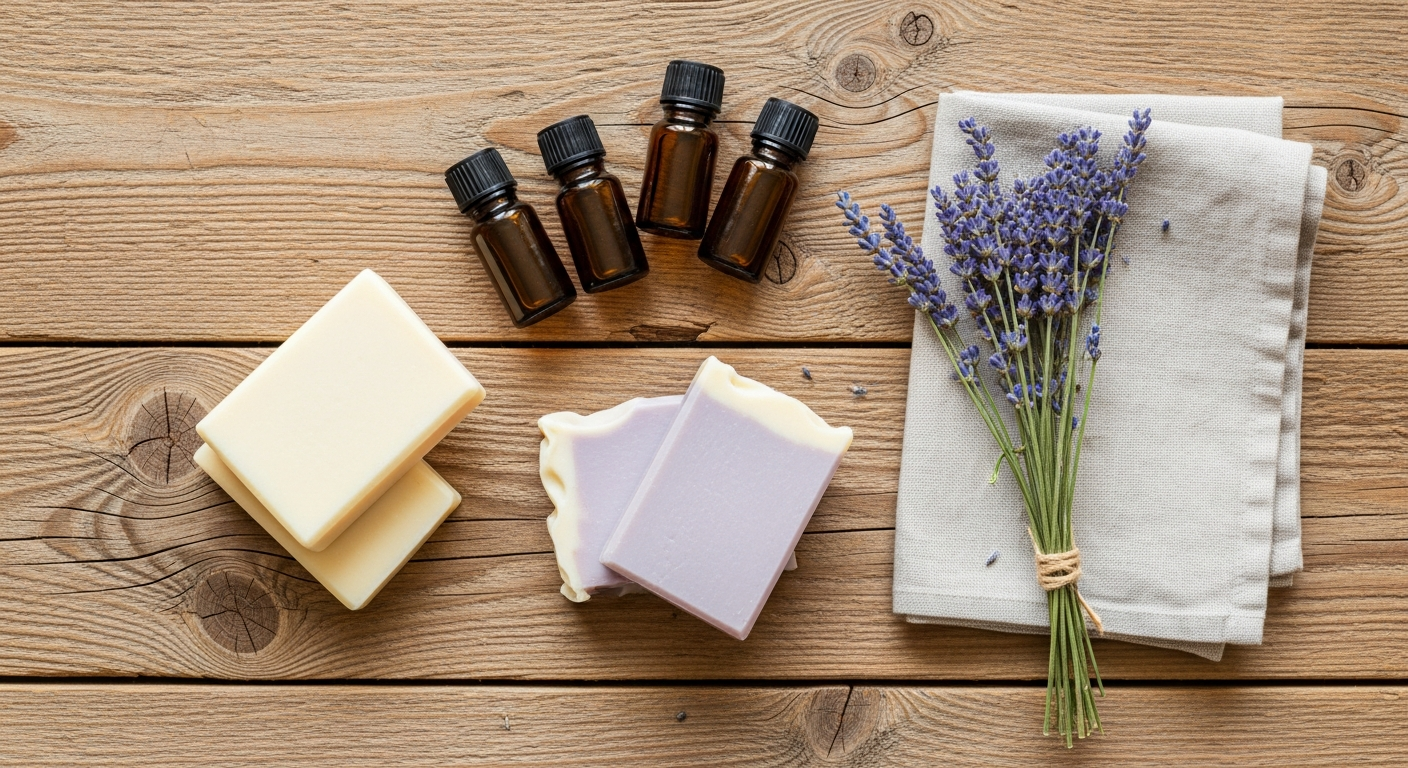
Have you ever noticed that your skin feels dry and tight after using a regular bar of drugstore soap? There's a reason for that. When commercial soap manufacturers make soap, they remove the glycerine — a naturally occurring moisturizer that forms during the soapmaking process — and sell it separately for use in lotions and cosmetics. What you're left with is a bar that cleans your skin but strips away the very thing that would have kept it soft.
Handmade essential oil soap keeps the glycerine right where it belongs. That's why your skin feels genuinely nourished after using it, not just clean.
The other difference is the scent. Real essential oil soap uses pure oils distilled directly from plants — lavender flowers, peppermint leaves, eucalyptus bark. Commercial "scented" soaps almost always use synthetic fragrance oils, which are lab-created compounds that may contain phthalates and other synthetic chemicals. If you're trying to reduce the number of mystery ingredients going onto your skin (and your kids' skin) every day, this distinction matters.
Essential Oils vs. Fragrance Oils — What's the Difference?
Essential oils come from real plants — they're extracted through steam distillation or cold pressing, which concentrates the plant's natural aromatic compounds into a pure oil. Fragrance oils are manufactured in a lab and designed to mimic a scent. They can smell great, and they hold their scent much better than essential oils do, but they don't offer any of the plant-based properties that make essential oils worth using in the first place. I'm not anti-everything-synthetic, but for something you're lathering on your skin every day, I'd rather know exactly what's in it.
5 Essential Oils Every Beginner Soap Maker Needs to Start
This is the list I wish someone had handed me when I first got started. Not every essential oil behaves well in soap — some fade quickly, some can irritate skin if you use too much, and some are just not worth the price when you're learning. These five are forgiving, widely available, and genuinely useful.
Lavender is the most beginner-friendly essential oil you can buy. It has a soft, floral scent that appeals to almost everyone, it's gentle enough for sensitive skin, and it holds up reasonably well in homemade soap. It's also incredibly versatile — it blends beautifully with almost every other oil on this list. If you only buy one essential oil to start, make it lavender.
Tea tree has a clean, medicinal scent that I personally love in a morning shower. It's known for its antimicrobial properties, which makes it a good fit for oily or acne-prone skin. Start with a small amount — a little goes a long way, and too much can make the bar feel sharp rather than fresh.
Peppermint gives your soap that cool, invigorating tingle that makes you feel awake at 6 a.m. It blends well with lavender and eucalyptus, and it holds its scent decently in melt-and-pour soap. One note: keep peppermint soap away from children under 10 — the menthol can be too intense for young skin, especially around the face. Having the right tool makes all the difference — see my guide to the best stick blender for soap making so your batches come together smoothly every time.
Eucalyptus is what I think of as a spa oil. It smells clean and slightly medicinal, like a good steam room, and it pairs beautifully with peppermint and lavender. It's also one of the more affordable oils, which makes it perfect for experimenting.
Lemon is bright and uplifting, and it's my favorite choice for a morning kitchen soap. The honest caveat: citrus oils are "top notes," which means they evaporate faster than heavier oils. Your bar might smell strongly of lemon right after you make it, but that scent can fade during cure. Pair it with a base note (like cedarwood) to anchor it, or just plan to use it within a few months for the best scent experience.
| Essential Oil | Scent Profile | Best For | Beginner Rating |
|---|---|---|---|
| Lavender | Floral, soft, calming | All skin types, sensitive skin | ⭐⭐⭐⭐⭐ |
| Tea Tree | Fresh, clean, medicinal | Oily and acne-prone skin | ⭐⭐⭐⭐⭐ |
| Peppermint | Cool, minty, invigorating | Refreshing shower bars | ⭐⭐⭐⭐ |
| Eucalyptus | Clean, herbal, spa-like | Cleansing, congestion | ⭐⭐⭐⭐ |
| Lemon | Bright, citrusy, fresh | Kitchen soap, uplift blends | ⭐⭐⭐ (fades faster) |
If you're just getting started, a starter set with these basics is the most affordable way to try several at once — you can find 6-packs on Amazon for less than the price of two bars from a specialty soap shop.
The Best Essential Oils for Your Skin Type (Dry, Oily, Sensitive & More)
One thing that makes homemade essential oil soap so useful is that you can actually customize it for your skin. Once you understand which oils do what, you can make bars that are genuinely better for your specific skin needs.
Dry skin benefits most from richer, more nourishing essential oils. I have dry skin myself, and my go-to combination is lavender and frankincense. Lavender is gentle and calming, and frankincense has a warm, resinous scent that I find grounding. Rosehip oil (technically a carrier oil, not an essential oil) is another excellent add-in for dry skin soap bases.
Oily and acne-prone skin responds well to essential oils with cleansing and clarifying properties. Tea tree is the standout here — it's been studied for its antimicrobial properties, and it works beautifully in a daily bar. Rosemary is astringent and helps control excess oil without stripping the skin. Lemon adds brightness and has a light clarifying effect.
Sensitive skin — including most kids' skin — needs the gentlest oils. Lavender is always the safest choice. Roman chamomile is wonderfully calming and has a light apple-like scent. Cedarwood is also gentle and has a warm, woodsy smell that makes it a good option if you want something more gender-neutral.
General or all skin types: When in doubt, lavender. It's always safe to recommend, and it genuinely works well for almost everyone.
A Quick Note on Essential Oil Safety
Essential oils are powerful plant concentrates, and a little knowledge about usage goes a long way toward making soap that's both effective and safe for your family.
The most important thing to know is that usage rate matters. Just because something is natural doesn't mean more is better — some essential oils can irritate skin at high concentrations, even the "gentle" ones. Oils like cinnamon, clove, and oregano are particularly prone to causing skin irritation, so if you use them at all, keep them well under 0.5% of your soap base weight. For a 1-lb soap base, that's about 2–3 drops total — enough for a hint of scent, not enough to cause problems.
Citrus oils like bergamot and cold-pressed lime and lemon can be phototoxic on skin — meaning if you use soap containing them and then go out in the sun, you may experience increased skin sensitivity. The easy fix is to use steam-distilled versions of these oils, which are available on Amazon and clearly labeled. For peppermint and eucalyptus, I keep these out of any soap my younger kids use — menthol can be too intense for children under 10, especially around the face. Lavender is always a safe choice for the whole family.
How to Make Essential Oil Soap at Home: The Easiest Beginner Recipe
If you've never made soap before, start here — with the melt-and-pour method. There's no lye to measure, no thermometer required, and you can have finished bars in about 30 minutes. I made my first batch on a Tuesday afternoon during nap time, and it worked on the first try.
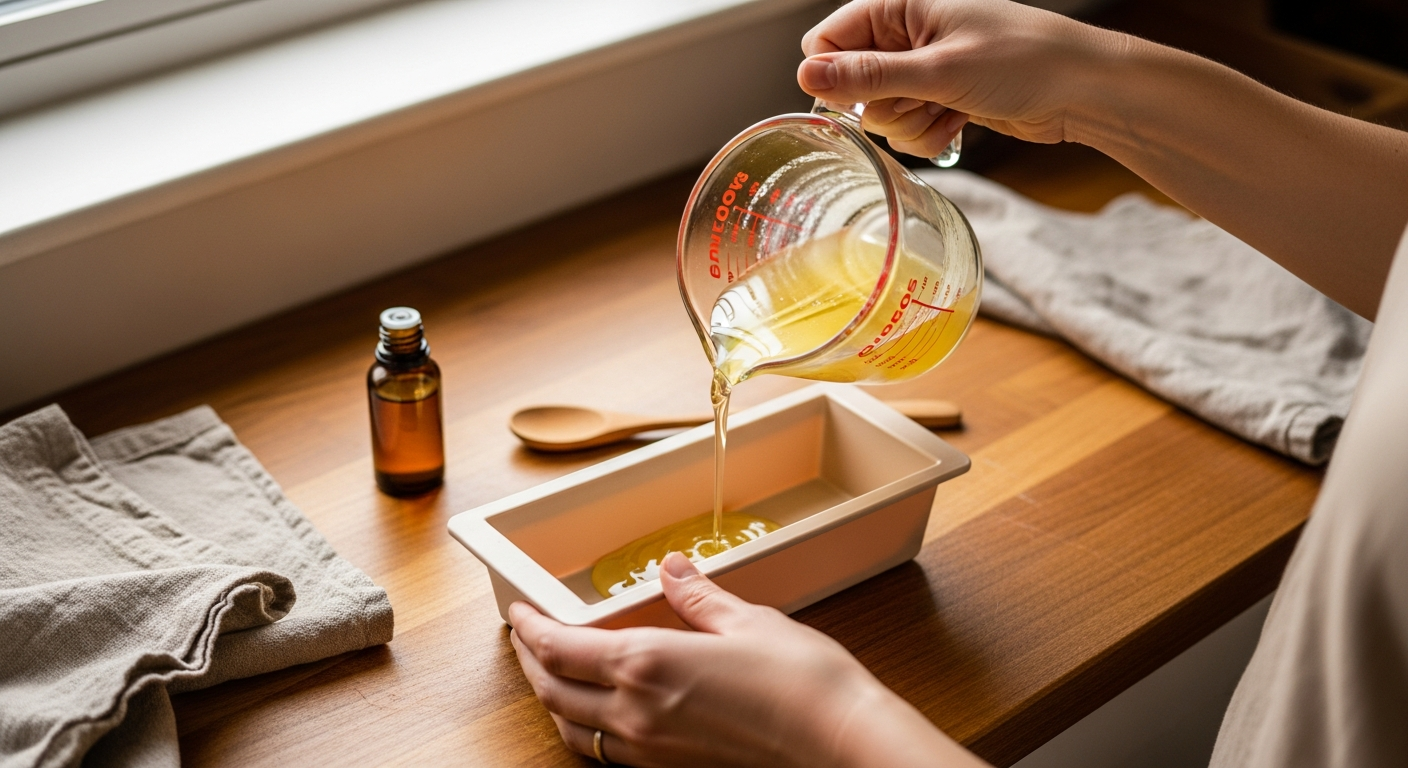
What is melt-and-pour soap? It's a pre-made soap base — already through the lye process — that you simply melt down, customize with essential oils and any add-ins, and pour into molds. It's the soap equivalent of using a pie crust from the store instead of making it from scratch. The end result is a real bar of soap, scented with whatever you choose, and genuinely good for your skin. Curious about the chemistry behind what makes soap work? My post on is soap a base breaks it down in plain terms.
What You'll Need
- 1 lb melt-and-pour soap base (shea butter or goat milk base are my favorites — both leave skin soft and work well for beginners)
- 20–30 drops total essential oils (see blending section below for specific combinations)
- Silicone soap mold — a standard 1-lb loaf mold makes 4–6 bars that you can slice yourself; individual cavity molds also work great
- Microwave-safe measuring cup or pouring pitcher — you probably already have one
- Stirring spoon or spatula
- Optional: dried lavender buds, oatmeal, or a pinch of cosmetic-grade mica powder for color
Step-by-Step Instructions
- Cut your soap base into 1-inch cubes. Smaller pieces melt more evenly and faster in the microwave.
- Melt in the microwave in 30-second increments, stirring between each burst. Most 1-lb bases take 2–3 minutes total. Don't overheat — you want it fully liquid but not boiling.
- Let the melted base cool slightly before adding your essential oils. Aim for below 140°F — if you have a thermometer, use it; if not, the base should look clear and still liquid but not steaming heavily. Adding EOs to extremely hot soap causes them to evaporate before the bar even sets.
- Add your essential oils and any optional add-ins (dried herbs, oatmeal, etc.). Stir gently — you don't want to whip in bubbles.
- Pour slowly into your mold to minimize surface bubbles. If bubbles appear, spritz lightly with rubbing alcohol to pop them.
- Let cool at room temperature for 2–4 hours. Don't put it in the refrigerator — temperature changes can cause sweating.
- Unmold your soap. With a silicone mold, it should pop right out. If you used a loaf mold, slice it into individual bars.
- Let cure for 24–48 hours before using — melt-and-pour soap is ready much faster than cold process.
That's it. You just made soap.
A note on cold process: Once you've made a few melt-and-pour batches and want more control over your ingredients, cold process is the natural next step. It gives you the ability to customize your oil base entirely — but it involves working with lye, which requires some preparation and safety gear. That's a full tutorial on its own, and worth the learning curve once you're ready.
3 Essential Oil Blends That Smell Amazing in Homemade Soap
Before I give you the blends, here's a quick concept that makes a big difference: essential oils are classified into "notes" based on how quickly they evaporate. Top notes hit you first but fade fastest (citrus, peppermint). Base notes are slower to register but last much longer (cedarwood, patchouli, frankincense). The best-smelling soaps usually have a top note for first impression, a middle note for body, and a base note to anchor the scent over time.
You don't need to get complicated about this. Here are three combinations that work beautifully together — use these as your starting point and experiment from there.
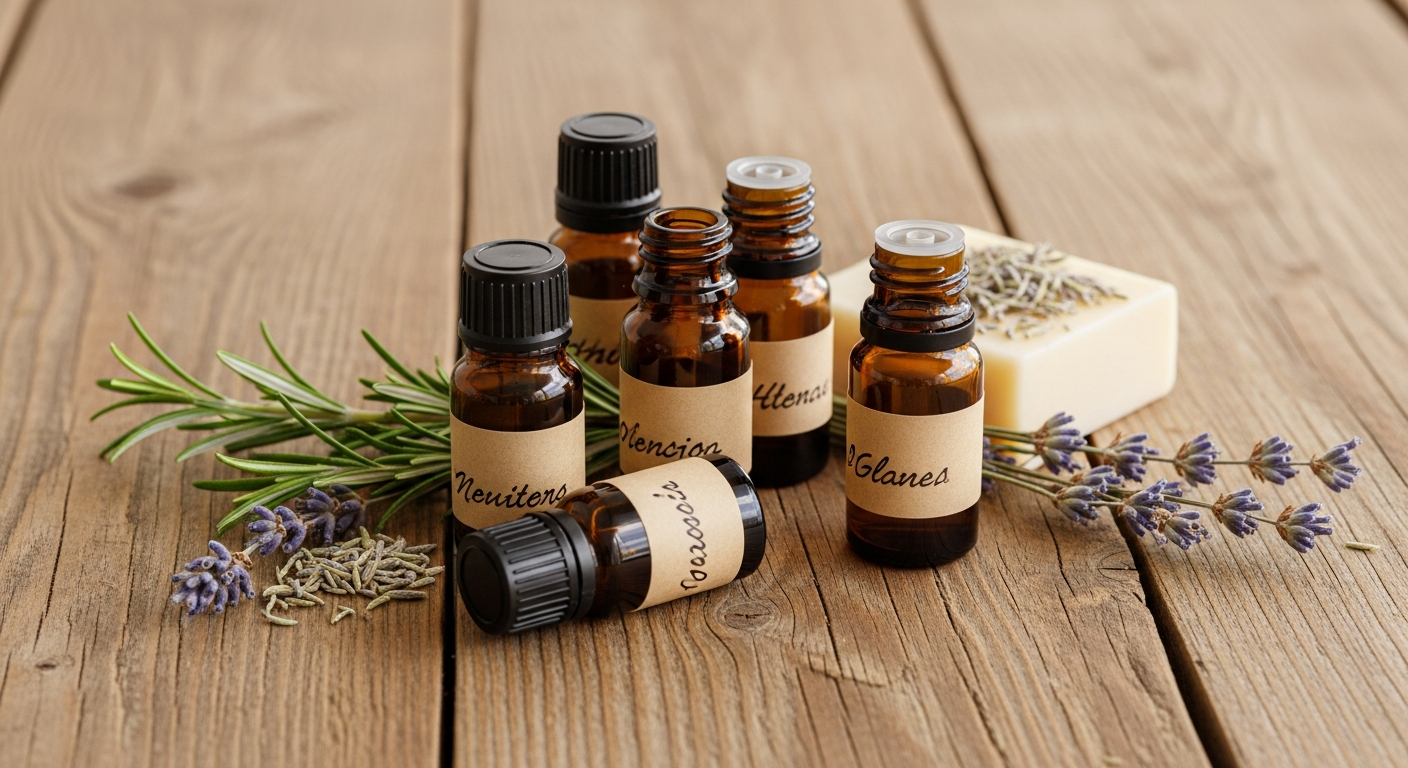
Blend 1 — The Spa Bar
Eucalyptus + Peppermint + Lavender
10 drops eucalyptus + 5 drops peppermint + 10 drops lavender per pound of soap base
This is my personal favorite for a daily shower bar. The eucalyptus and peppermint wake you up, and the lavender softens the whole blend so it doesn't feel aggressive. It smells like a really good spa — clean, calm, and a little invigorating.
Blend 2 — The Garden Bar
Lemon + Rose Geranium + Cedarwood
8 drops lemon + 8 drops rose geranium + 10 drops cedarwood per pound of soap base
This one is a little more complex and feels almost floral-woodsy. The lemon and rose geranium are bright and feminine, and the cedarwood grounds everything and helps anchor the citrus so it doesn't fade as fast. This makes a beautiful gift bar.
Blend 3 — The Morning Bar
Peppermint + Rosemary + Frankincense
8 drops peppermint + 7 drops rosemary + 10 drops frankincense per pound of soap base
If you want something herbaceous and grounding, this is it. The peppermint and rosemary are energizing, and the frankincense gives it a warm, resinous depth. I make this one in the fall and winter when I want something cozy but still clean.
One frugal note: if you don't have all these oils yet, start with just lavender. Single-note lavender soap is genuinely beautiful, and it gives you a successful first batch to build confidence before you start layering scents.
How Much Essential Oil Goes in Soap? (Usage Rates for Beginners)
For melt-and-pour soap, use 0.5 to 1 ounce of essential oil per pound of soap base. In practical terms, that's about 15 to 30 drops per 1-pound batch.
I made the mistake of adding way too much peppermint my first time. I thought more would equal a stronger-smelling bar. What I got instead was a bar that made my skin tingle uncomfortably for days. Less is genuinely more with essential oils.
| Method | Recommended Usage Rate |
|---|---|
| Melt & Pour | 0.5–1 oz per lb (15–30 drops) |
| Cold Process | 0.5–1.5 oz per lb |
A few specific notes: cinnamon, clove, and oregano should stay well under 0.5% of your soap weight (roughly 2–3 drops per pound) — they can cause skin irritation at higher concentrations even though they smell incredible. Citrus oils like lemon and orange can handle a slightly higher rate because they fade so quickly — adding 20–25 drops per pound is reasonable if you want the scent to last.
Why Your Homemade Soap Loses Its Scent (And Which Oils Last Longest)
This is something I really wish someone had explained to me before my first batch. I made a beautiful orange soap, let it cure for a few weeks, and when I went to use it, the scent was almost gone. I thought I'd done something wrong.
I hadn't. Here's what's actually happening.
Essential oils are volatile — the word literally comes from the Latin word for "to fly." Even at room temperature, they're slowly evaporating into the air. In cold process soap specifically, the heat generated during saponification (the chemical reaction that turns oils into soap) can drive off some of the more delicate oil compounds. Some essential oils, like lavender, bergamot, and ylang ylang, are actually chemically changed during this process — which is why lavender CP soap doesn't always smell exactly like the lavender oil you put in it.
Which oils fade fastest: Citrus oils — lemon, orange, grapefruit, bergamot — are all top notes with high volatility. They smell bright right after pouring but can fade significantly during a 4–6 week cure.
Which oils last longest: Base notes hold up much better over time. Patchouli has some of the best scent retention of any essential oil in soap — though its earthy, musky scent isn't for everyone. Cedarwood is my favorite affordable anchor oil — it's warm, woodsy, and widely available. Frankincense and sandalwood are beautiful base notes, though they can get pricey.
The practical tip: If you want your soap to smell good for as long as possible, anchor your blend with a base note. A few drops of cedarwood will help hold the lighter oils in place, even if the cedar scent itself isn't dominant.
One more encouraging thing: your soap bar might seem faint when it's dry, but the scent typically blooms when you use it. The outer layers protect what's inside, and as you wash away those layers, the full scent comes through. So don't judge your bars in the mold — judge them in the shower.
Is Essential Oil Soap Actually Good for Your Skin? Here's the Truth
Yes — for most people, essential oil soap is genuinely better for skin than conventional commercial soap. But there are some nuances worth knowing.
The biggest benefit isn't actually the essential oils themselves — it's the glycerine retention I mentioned at the start. Handmade soap keeps its glycerine, and glycerine is a humectant, meaning it draws moisture from the air into your skin. That's why people with dry or sensitive skin often notice a real difference when they switch to handmade soap, even before accounting for what essential oils are in it.
As for whether the therapeutic properties of essential oils survive the soapmaking process — the honest answer is "mostly, yes." According to aromatherapist Robert Tisserand, "in MOST instances essential oils do in fact retain their therapeutic action" after saponification, though the extent varies depending on the specific oil and which of its compounds react with lye. You won't get the same therapeutic dosage from soap as you would from a diluted serum applied and left on your skin — soap is rinsed off too quickly for that. But a well-made bar with real essential oils is still meaningfully different from one made with synthetic fragrance.
When to be careful: some people with very sensitive skin can react to concentrated essential oils even at normal usage rates. If you're making soap for someone with known skin sensitivities, start with just lavender or chamomile. And as mentioned earlier, keep cinnamon and clove concentrations low, use steam-distilled citrus oils to avoid phototoxicity, and avoid peppermint and eucalyptus in any bars your young children will use regularly.
The bottom line: a simple, well-made melt-and-pour bar with real essential oils and a good soap base is genuinely better for most people's skin than the average drugstore bar. And it costs less per bar than almost anything you can buy.
FAQ: Essential Oil Soap
What essential oil is good for soap?
Lavender is the best starting point — it's gentle for all skin types, blends well with almost everything, and holds its scent reasonably well in homemade soap. Tea tree and peppermint are also excellent beginner choices for their clean, fresh scents and skin benefits.
Is essential oil soap good for skin?
Yes, for most people. Handmade essential oil soap retains glycerine, a natural moisturizer that commercial soap manufacturers remove. Combined with real plant-derived essential oils, it's a genuinely gentler option than most conventional bar soaps — especially for dry or sensitive skin.
What essential oils are safe for kids in soap?
Lavender is the safest choice for children of all ages. For children under 10, avoid peppermint and eucalyptus — the menthol content can be too intense, especially around the face. Roman chamomile is also a gentle, kid-friendly option.
Can I use essential oils in melt-and-pour soap?
Yes — and melt-and-pour is actually the easiest way to start with essential oil soap making. You melt a pre-made soap base, stir in your essential oils, pour into a mold, and let it set. No lye, no special equipment, done in about 30 minutes.
How long does homemade essential oil soap last?
Melt-and-pour soap has a shelf life of about 1 year when stored in a cool, dry place. Cold process soap can last 1–2 years. For the best scent, plan to use your bars within 6 months — essential oils continue to slowly evaporate over time, so freshness matters.
What's the difference between essential oils and fragrance oils in soap?
Essential oils come from real plants — extracted through distillation or cold pressing. Fragrance oils are synthetic lab-created compounds designed to smell like specific scents. Fragrance oils hold their scent better in soap, but they don't offer plant-based benefits and may contain synthetic chemicals that some people prefer to avoid.
Which essential oils hold their scent longest in soap?
Base note oils have the best scent retention: patchouli, cedarwood, frankincense, and sandalwood. Adding a few drops of a base note to any blend will help anchor lighter top notes (citrus, peppermint) and extend the scent life of your bars significantly.