Pineapple Sage Tea: Benefits, How to Make It, and What It Actually Tastes Like (2026)
Last updated March 10, 2026
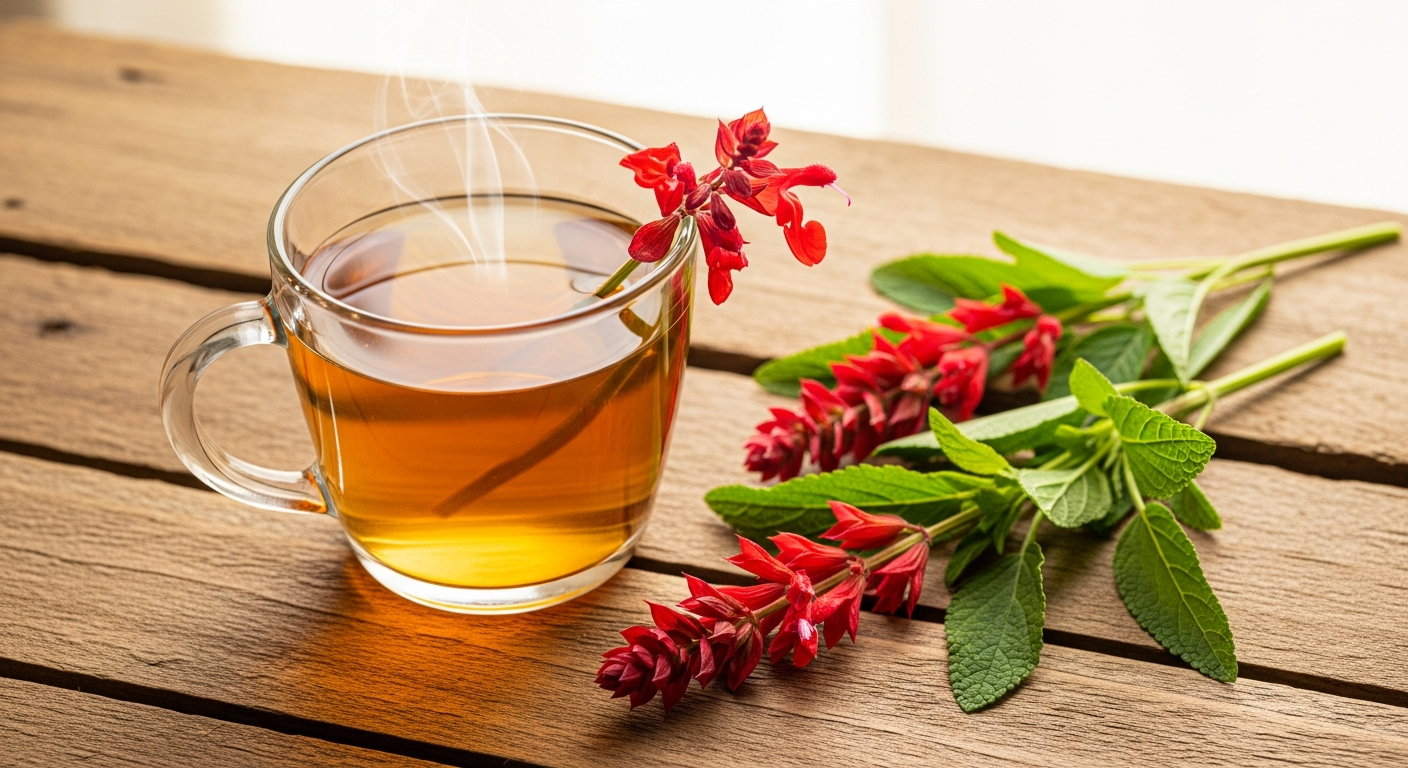 herbal tea with fresh red-flowered sprigs on rustic wood”>
I picked up my first pineapple sage plant at a farmers market on a whim — the vendor crushed a leaf between her fingers and held it out, and I was immediately sold on the smell. It was unmistakably tropical, sweet, almost candy-like. I planted it in a corner of my herb bed, watched it grow into a beautiful four-foot bush with brilliant red flowers, and then spent the whole summer wondering what to actually do with it. Once I figured out the tea, I was hooked. But I'll be honest: the first cup surprised me, and not in the way I expected.
This guide covers everything I've learned — the real benefits, the honest taste, and exactly how to brew it so your first cup is good instead of disappointing.
Quick Snapshot
Here's what you need to know before you scroll:
- What it is: Pineapple sage (Salvia elegans) is an herb native to Mexico and Central America, related to common sage but with its own distinct flavor profile and medicinal properties.
- Key benefits: Research suggests it may support mood and reduce anxiety, aid digestion, and help with blood pressure — all in a gentle, supportive way.
- Taste reality check: The leaves and the brewed tea both smell strongly of tropical pineapple. The actual flavor is earthy and herbal with a mild sweetness — not fruity like you'd expect from the scent.
- Fresh vs. dried: Fresh leaves make the best tea by far. Dried works in a pinch but loses most of the pineapple aroma.
- Caffeine-free: Yes, completely. Safe for evenings and caffeine-sensitive people.
Pineapple Sage vs. Regular Sage: They're Not the Same
If you landed here after searching "sage tea for your period" or "sage for wrinkles" — that's a different plant. Those searches refer to common sage (Salvia officinalis), the same herb you'd find in your spice cabinet. This article is about Salvia elegans, pineapple sage, which has its own unique flavor, appearance, and health profile.
The name "pineapple sage" comes entirely from the fragrance of the leaves — not the taste. When you brush against the plant or crush a leaf in your hand, the smell is genuinely tropical and sweet. The plant itself is hard to miss: it grows 4–5 feet tall with deeply veined, bright citrine-green leaves, distinctive square burgundy stems (a hallmark of the mint family), and clusters of brilliant red tubular flowers in late summer and fall that hummingbirds love.
Pineapple sage is native to the mountain regions of Mexico and Central America. In the US, it's a true perennial only in warm climates (Zones 8–11). Most of us grow it as an annual, replanting each spring. That's also one reason you don't see it commercially very often — the plant doesn't dry well. The pineapple aroma that makes it so appealing is carried in volatile compounds that fade quickly when dried, which makes it a poor candidate for mass commercial production. Fresh is where the magic lives.
4 Real Benefits of Pineapple Sage Tea (Backed by Research)
I want to be straightforward here: pineapple sage is a supportive herb, not a pharmaceutical. What the research shows is promising but still preliminary. I'm not going to tell you it cures anything — but there are real reasons herbalists have used it for generations, and the science is starting to catch up.
May Help Calm Anxiety and Support Mood
This is the benefit that draws most people to pineapple sage tea, and honestly, it's the reason I reach for it when I want something calming that isn't chamomile for the hundredth time. Research cited in multiple herbal medicine resources, including a study published through the National Institutes of Health (PMC6321363), points to anxiolytic (anti-anxiety) and antidepressant properties in pineapple sage. The effects appear to be mild and supportive — the kind of gentle lift you'd get from a good cup of something warm and herbal, not a dramatic intervention.
Pineapple sage also contains caffeic acid, a polyphenol antioxidant — meaning you're getting some antioxidant benefit alongside the calming properties. Again, we're talking about a cup of tea, not a supplement dose, but it's a nice bonus for a plant that's already easy to grow and pleasant to drink.
Supports Digestion
As a member of the mint family, pineapple sage has a long traditional history of use for upset stomach, bloating, and settling digestion after a heavy meal. It's a natural fit as an after-dinner tea, and it's one I come back to when something I ate isn't sitting right.
May Support Healthy Blood Pressure
The same body of research that documents pineapple sage's anxiolytic properties also points to potential antihypertensive effects — meaning it may help support healthy blood pressure levels. This is still preliminary and based on traditional use alongside early research, so I want to be clear: don't skip your medication in favor of tea. But if you're already managing your blood pressure and enjoy herbal teas, it's a gentle and pleasant addition to your routine. (More on medication awareness in the safety section below.)
Caffeine-Free
Pineapple sage tea contains zero caffeine. This matters especially for the anxiety angle — many people who struggle with anxiety are also trying to cut back on caffeine, since stimulants can make anxious feelings worse. Pineapple sage tea is safe to drink in the evening, good for those who are caffeine-sensitive, and won't interfere with sleep the way a cup of green tea might.
What Does Pineapple Sage Tea Actually Taste Like? (Honest Answer)
Let me tell you what I wish someone had told me before I brewed my first cup.
The brewed tea smells absolutely wonderful — warm, tropical, genuinely reminiscent of pineapple. You'll inhale the steam and feel like you're about to drink something fruity and exotic. Then you take a sip, and it's… herbal. Pleasant, mellow, subtly sweet — but earthy and herbal in the way all sage-family plants tend to be, not fruity in the way the scent promises.
Why It Smells Like Pineapple But Doesn't Taste Like It
The pineapple fragrance in the leaves comes from volatile aromatic compounds that are released into the air very readily — which is why crushing a leaf fills the room with that tropical scent. When you steep the leaves in water, those same aromatics come through strongly in the steam and the first smell of your cup. But volatile compounds don't carry the same intensity into the water itself, so what you taste is the broader flavor profile of the plant: mild, herby, slightly reminiscent of common sage, with a gentle sweetness underneath.
Fresh-brewed pineapple sage tea retains more of that tropical aroma than dried — one reason fresh is always the better choice when you have it. Dried pineapple sage tea is more subtle across the board and has a slight tartness to it. Both are good; just different.
Temperature matters, too. Drink your pineapple sage tea while it's still hot — as it cools, the aroma fades, and you lose the best part of the experience. Brew it, let it steep fully, and drink it promptly.
How to Bring Out More Pineapple Flavor
A squeeze of honey and fresh lemon juice goes a long way toward amplifying the sweetness and making the drink feel more tropical. But the real trick — and I love this one — is making pineapple juice ice cubes. Freeze 100% pineapple juice in an ice tray, then use those cubes in your iced pineapple sage tea instead of plain ice. As the cubes melt, they infuse the tea with actual pineapple flavor, and suddenly your cup tastes the way it smells.
The honest takeaway: if you want a tea that tastes strongly of pineapple, this might disappoint you. If you want something pleasantly herbal with a hint of tropical sweetness that smells incredible in your mug — you'll love it.
How to Make Pineapple Sage Tea: Fresh Leaves and Dried
Fresh Pineapple Sage Tea (Best Method)
Fresh pineapple sage makes by far the best cup, and if you're growing your own, this is exactly what to do with your harvest.
What you'll need:
- ¼ cup packed fresh pineapple sage leaves per 1¾ cups of water (or ½ cup leaves per quart for a larger batch)
- A mesh tea strainer or fine-mesh sieve
- Honey and fresh lemon juice, to taste
Steps:
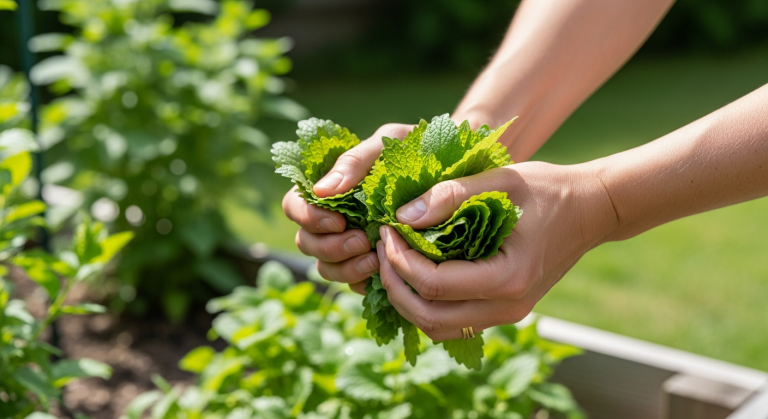
- Gather your fresh leaves and gently bruise or crush them between your palms before steeping. This breaks the cell walls and releases the aromatic oils into the water — don't skip this step.
- Bring your water to a boil, then remove it from the heat. Let it sit for about 30 seconds before adding the leaves — you want very hot water, but not a full rolling boil hitting the leaves directly.
- Add the bruised leaves to your mug or teapot and pour the hot water over them. Cover the mug with a small plate or lid to trap the steam and aromatics.
- Steep for 20 minutes. This is the most important thing I can tell you about pineapple sage tea — it needs much longer than most herbal teas. If you pull the leaves at 5 or 10 minutes, you'll get a pale, tasteless cup and wonder what all the fuss is about. Set a timer and wait the full 20 minutes.
- Strain out the leaves and add honey and lemon to taste. Serve hot for the best aroma.
For iced tea: Brew a concentrated batch (double the leaves), let it cool, and pour over pineapple juice ice cubes for a flavor-boosted summer drink.
This recipe makes 1–4 servings depending on batch size. A basic mesh strainer works perfectly for fresh leaves — any fine-mesh kitchen strainer you already have will do the job.
Dried Pineapple Sage Tea
If you're using store-bought dried pineapple sage or have some you've dried at home, here's how to brew it:
- Use 1 teaspoon of dried herb per 8 oz of water, or up to 1 tablespoon if you prefer a stronger cup.
- Pour hot water over the dried leaves and steep for 5–10 minutes.
- Strain and add honey and lemon to taste.
The flavor of dried pineapple sage is noticeably more muted than fresh — more subtly herby and slightly tart, without the strong pineapple aroma. It's still a pleasant drink, especially if fresh isn't available. One tip: try a double steep. Steep once, let the tea rest for a minute or two, then steep again briefly for a bit more complexity and depth.
Fresh vs. Dried Pineapple Sage for Tea: Which Is Better?
The short answer: fresh, every time, if you can get it. But here's the full picture so you can decide what works for your situation.
| Fresh | Dried | |
|---|---|---|
| Flavor | Strong pineapple aroma, nuanced herbal flavor | Mild, subtly herby, slightly tart |
| Availability | Seasonal (summer–fall) or garden-grown | Year-round if purchased |
| Sourcing | Garden, farmers market | Online, specialty herb shops |
| Shelf life | 5–7 days refrigerated | 1–3 years if stored well |
| Ease of use | Requires more leaves, longer steep | Convenient, consistent |
Storing fresh leaves: Wrap them loosely in a slightly damp paper towel and refrigerate in a bag or container for up to a week. For longer storage, freezing preserves significantly more of the pineapple aroma than drying — if you're at the end of your growing season and have more than you can use fresh, throw a batch in a freezer-safe bag.
A note on home-drying: You can dry pineapple sage, but go in knowing that the characteristic pineapple scent fades significantly in the process — it's just the nature of those volatile aromatic compounds. Dry it quickly at low temperature if you do, and use more of it per cup than you would fresh. It's worth doing if you have a big harvest, but don't dry your whole crop expecting the same cup you'd get in summer.
My recommendation: brew with fresh leaves when the plant is in season, and keep a small amount of dried on hand for the months when the garden is dormant.
How to Grow Pineapple Sage for Tea (Even in Small Spaces)
Pineapple sage is genuinely one of the easier herbs I've grown, and if you have a sunny spot and a bit of space, it's worth adding to your garden just for the tea alone — not to mention the hummingbirds it draws in late summer.
In most of the US, pineapple sage is grown as an annual — you plant it in spring after the last frost, enjoy it through the growing season, and let the frost take it in fall. In warmer zones (8–11), it'll come back as a perennial. Start from transplants if you can find them at a garden center, or grow from seed started indoors 6–8 weeks before your last frost date.
It wants full sun and well-drained soil, and it's not particularly fussy beyond that. The one thing to know is the size — pineapple sage gets big. Plan for 4–5 feet tall and give it a generous spot, or grow it in a large container (at least a 5-gallon pot) if space is tight.
When to harvest for tea: Pick leaves before the plant flowers for the most intense flavor. Younger, smaller leaves at the growing tips tend to have the strongest aroma. Once the red flowers appear in late summer and fall, the plant's energy shifts and the leaves can become a bit tougher — still usable, but harvest heavier earlier in the season. The flowers themselves are edible and make a beautiful garnish in a glass of iced tea.
Peak tea-brewing season runs from midsummer through early fall. Once frost is in the forecast, use up your remaining leaves or freeze what you can — the plant won't make it through winter in most climates.
Where to Buy Pineapple Sage Tea (If You Don't Grow It)
This is one herb where commercial availability is genuinely limited, and there's a real reason for that. Because pineapple sage doesn't dry well — losing most of its signature aroma in the process — it's not a great candidate for mass production the way chamomile or peppermint are. You won't find it at most grocery stores.
Your best options:
- Farmers markets (in season, July–October): If a local herb grower is there, ask. Fresh pineapple sage is sometimes available, and a small bundle gives you several cups of tea.
- Specialty herb shops and natural food stores: Some carry dried pineapple sage, though availability varies. It's worth calling ahead before making a trip.
- Online herb retailers and Amazon: A small number of sellers offer dried pineapple sage. If you go this route, look for USDA organic if possible, and check that pineapple sage is the primary ingredient rather than a filler in a larger blend. It's sometimes sold alongside rosemary, which is a pleasant pairing.
If you're buying a commercial tea blend, check the ingredient list — pineapple sage should be listed first or second. A blend that lists it last or in a proprietary blend mix may not give you much of the real herb.
Is Pineapple Sage Tea Safe? Side Effects to Know
For most healthy adults drinking pineapple sage tea in normal amounts, it's well-tolerated with no significant known side effects. Here's what I'd want a friend to know before she started drinking it regularly.
Thujone: Like all sage-family herbs, pineapple sage contains some thujone — a compound that can be problematic in very large amounts. Pineapple sage has notably lower thujone than common sage, and the amounts in a cup of tea are considered safe for typical use. That said, as with any herbal tea, occasional use is more conservative than drinking multiple cups a day, every day.
Pregnancy and nursing: Moderate, occasional use is generally considered safe, but if you're pregnant or nursing, it's worth checking with your care provider before making this a daily habit. That's true of most herbal teas, not a particular red flag for pineapple sage specifically.
Medication interactions: Because pineapple sage may have mild antidepressant and blood-pressure-lowering effects based on preliminary research, those who are already taking antidepressants or blood pressure medications should mention it to their provider. The interaction risk isn't documented as severe, but it's worth a quick conversation — especially if you're drinking it regularly.
No serious side effects are documented at normal tea-drinking quantities. I'm not a doctor, and nothing here is medical advice — but this is the kind of honest, practical information I look for before I add something new to my routine.
Pineapple Sage Tea FAQs
What is pineapple sage tea good for?
Pineapple sage tea is traditionally used to support mood, ease anxiety, settle digestion, and may help with healthy blood pressure levels. It's caffeine-free, making it a good evening tea for those who find stimulants worsen anxiety or sleep.
Is sage tea good for your period?
That benefit is associated with common sage (Salvia officinalis), not pineapple sage (Salvia elegans). They're different plants with different properties. If you're looking for information on sage tea and menstruation, you'll want an article specifically about common sage.
What does pineapple sage tea taste like?
It smells strongly of tropical pineapple, but the flavor is more earthy and herbal — mild, slightly sweet, with a quality similar to a gentler version of common sage. The scent is the star of the cup; the taste is pleasant but not fruity. Adding honey, lemon, and pineapple juice ice cubes brings out more sweetness.
Is pineapple sage the same as regular sage?
No. Pineapple sage (Salvia elegans) and common sage (Salvia officinalis) are different species with different flavors, appearances, and medicinal properties. Pineapple sage has a tropical fragrance, red flowers, and a milder, more herbal taste. Common sage is the culinary herb used in Thanksgiving stuffing.
Can you dry pineapple sage for tea?
Yes, but it loses most of its signature pineapple aroma in the drying process. Dried pineapple sage tea is still pleasant — more subtly herby and slightly tart — but it won't have the same aromatic punch as fresh. For best results, freeze excess fresh leaves rather than drying them.
How long do you steep pineapple sage tea?
Steep fresh leaves for 20 minutes — much longer than most herbal teas. Dried pineapple sage needs only 5–10 minutes. Pulling fresh leaves too early is the most common reason people get a weak, tasteless cup.
Is pineapple sage tea safe during pregnancy?
Moderate, occasional amounts are generally considered safe, but as with most herbal teas during pregnancy, it's a good idea to check with your care provider before drinking it regularly. There are no well-documented risks at normal tea quantities, but your provider knows your specific situation best.
Like trying new herbal teas from the garden? My honeysuckle tea guide covers another easy-to-grow herb with real benefits — worth a look if you enjoyed this one.