Purple Dead Nettle Medicinal Uses: What This Common Backyard Weed Can Actually Do
Last updated March 8, 2026
Every spring, a low-growing, purple-tinged plant takes over the bare spots in my garden beds before I've even made my seed order. For a few years, I pulled it without a second thought — it was just another weed to me. Then I learned what I was actually holding, and now I harvest it on purpose, fill jars with it, and use it all the way through allergy season. That little purple weed is purple dead nettle, and if it's growing in your yard right now, you've got something worth keeping.
| Plant name | Purple dead nettle (Lamium purpureum) |
| Family | Mint (Lamiaceae) |
| Harvest season | Late winter → spring (Feb–April, zone-dependent) |
| Key medicinal uses | Allergy relief, wound healing, anti-inflammatory, diuretic |
| Best preparations | Tea, tincture, salve, infused oil, fresh poultice |
| Safe for most people? | Yes — avoid internal use during pregnancy |
| Cost to get started | Free (forage from your yard) + ~$10–20 in supplies |
What Is Purple Dead Nettle?
Purple dead nettle (Lamium purpureum) is a member of the mint family (Lamiaceae) — which you can confirm by snapping the stem and finding it square rather than round. It's native to Eurasia but has naturalized across most of North America, which is why it shows up so reliably in garden beds and disturbed soil each spring. The "dead" in its name doesn't mean anything alarming — it simply means it doesn't sting, unlike stinging nettles. These two plants aren't even related; they just share part of a common name and a preference for showing up where you didn't plant them.
How to Identify Purple Dead Nettle (+ Don't Confuse It With Henbit)
Before you use any plant medicinally, you want to be confident in what you've got. The good news is that purple dead nettle is easy to identify once you know what to look for — and even if you mix it up with its closest look-alike, it's not a problem.
5 Ways to Identify Purple Dead Nettle (with Confidence)
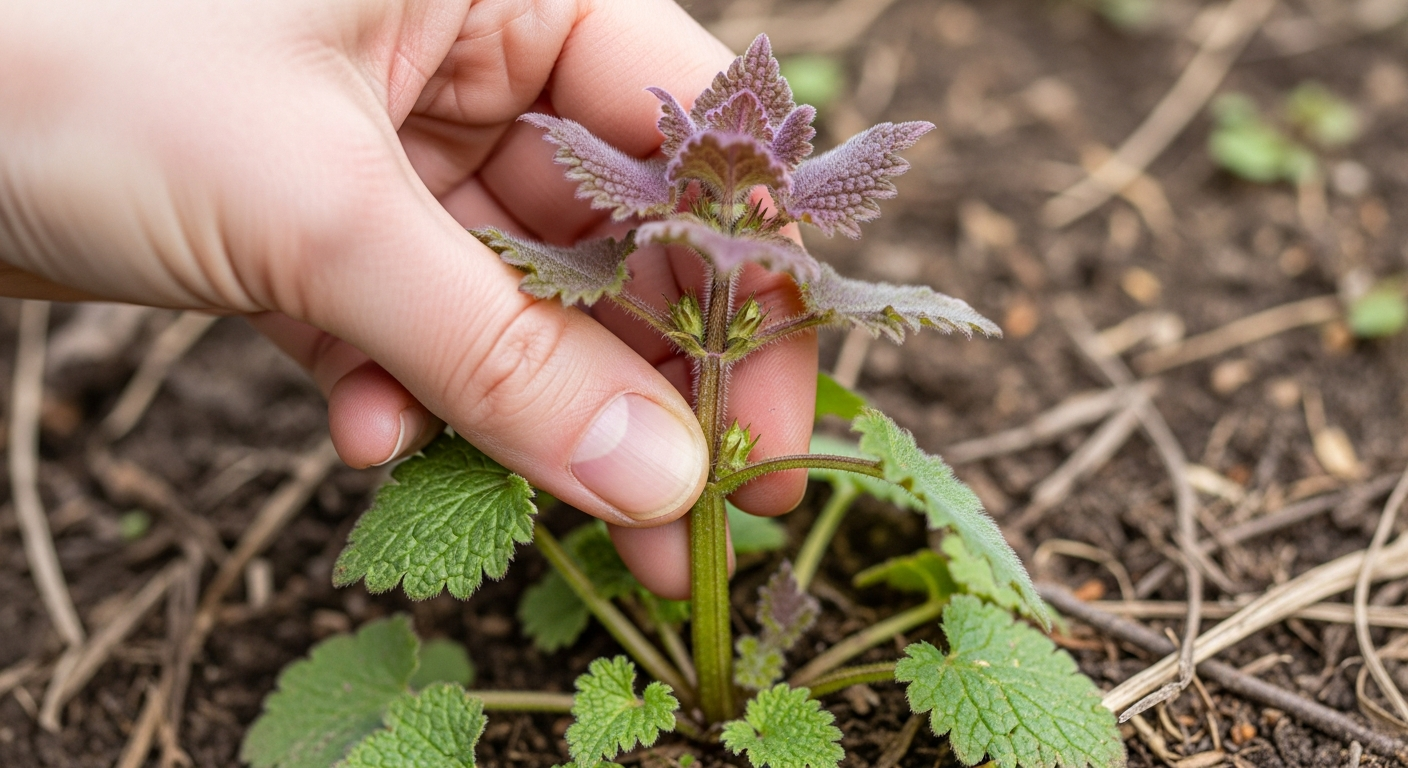
- Square stem. Roll it between your fingers — if it's got corners, it's in the mint family. This is the first thing I check with any unknown plant in my garden.
- Fuzzy, hairy leaves. The leaves have a soft, slightly rough texture, not smooth. If the leaves feel slick, it's probably not purple dead nettle.
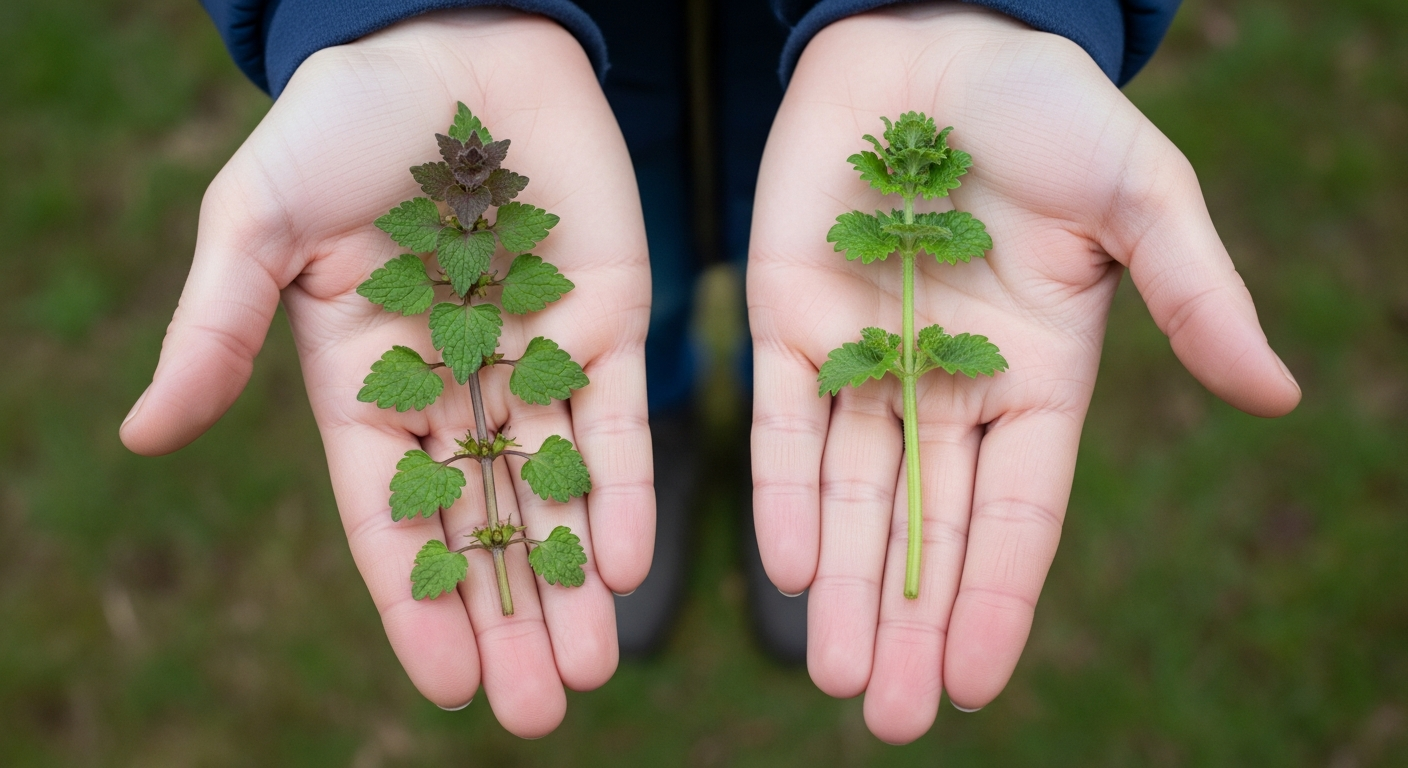
- Petiolate leaves — attached by a short stem. The leaves connect to the main stem via their own small stem. This is the key detail that separates purple dead nettle from henbit.
- Purple-tipped upper leaves. In sunlight, the top leaves turn a deep purple-green. The lower leaves stay greener. That purple coloring is often how people first notice the plant in early spring.
- Small pink-purple bilateral flowers. The flowers are tiny and two-lipped, with a hooded upper lip. They bloom in early spring before most other plants have even started.
Jen's tip: Before you bring any inside, hold the stems upside down and give them a good shake over the ground. Ants love to nest inside the flowers, and they will absolutely let you know how they feel about being transported to your kitchen.

Purple Dead Nettle vs. Henbit — The Simple Difference
These two plants come up at the same time, in the same places, and are so similar looking that even experienced foragers do a double-take. The key difference comes down to how the leaves attach to the stem. Purple dead nettle leaves have their own short stem connecting them to the main stalk (petiolate). Henbit leaves clasp directly around the square stem — no stem of their own.
Both plants are completely edible, both are in the mint family, and both have overlapping medicinal uses. If you're unsure which one you have, it doesn't matter for medicinal purposes — both are safe. Mixing them up is harmless.
Is It Stinging Nettle? (No — Here's Why)
Purple dead nettle and stinging nettle share part of a name, but that's where the connection ends. Stinging nettle is Urtica dioica — a completely different plant from a different family. Purple dead nettle has no stinging hairs, no barbs, and no sting whatsoever. You can handle it with bare hands, and many people eat it fresh directly from the plant.
What Purple Dead Nettle Can Do for You (The Medicinal Properties)
Here's what the science actually says — in normal person language.
Anti-Inflammatory and Pain Relief
Purple dead nettle contains compounds called flavonoids and phenylethanoid glycosides — these are the plant's active constituents that reduce the body's inflammatory response and block pain signals (a property scientists call antinociceptive). In vivo studies on Lamium species have confirmed both anti-inflammatory and pain-blocking effects. In practical terms, this means the plant may help with sore muscles, minor joint discomfort, and the general aches that come from physical work.
The salve preparation works best for this purpose — you apply it topically where it's needed and the infused plant compounds get to work directly. Results vary individually, and purple dead nettle isn't a substitute for addressing the underlying cause of chronic pain.
Seasonal Allergy Relief
This is probably the most talked-about use for purple dead nettle, and for good reason. The plant's flavonoids may inhibit histamine release — histamine is the compound your immune system produces that causes itchy eyes, a runny nose, and that miserable spring feeling that makes you want to stay inside. By reducing histamine at the source, the plant may help dial down the symptom load.
It won't replace prescription medication if you have severe seasonal allergies. But for milder symptoms — or as a supportive measure alongside whatever else you're doing — a cup of the tea or a daily dose of tincture at the start of allergy season is genuinely worth trying. I start drinking the tea every spring when my eyes first get itchy, and I do notice a difference in how quickly my symptoms settle down.
Start using it before your worst symptoms hit — it works better preventively than reactively. By the time you're miserable, you're playing catch-up. Tea and tincture are the best preparations for allergy support.
Wound Healing and Bleeding
Purple dead nettle has been used in European folk medicine to stanch small wounds for centuries, and the chemistry supports why it works. The plant is astringent, meaning it tightens tissue and can help slow minor bleeding. It's also styptic, which means it actively promotes clotting. Add antimicrobial properties that reduce infection risk, and you've got a plant that earns its place in a first-aid context.
A fresh poultice — crushed leaves applied directly — is the simplest way to use it for this purpose. The salve extends these benefits year-round, even when the fresh plant isn't available.
Digestive and Urinary Support
Purple dead nettle is a natural diuretic, meaning it supports kidney function and helps flush the system. Some people find it helpful as a supportive measure when dealing with a mild UTI, though it's not a replacement for medical treatment if an infection is serious. A note on quantity: large amounts of the tea can have a mild laxative effect. Keep servings to a cup or two at a time and you won't run into that.
Nutritional Value as a Spring Green
Beyond its medicinal uses, purple dead nettle is genuinely nutritious — high in vitamins A, C, and K, and a decent source of iron. Think of it as free spinach with a bonus medicinal profile. The texture is a bit fuzzy raw, so it works better lightly sautéed, stirred into soup, or blended into a smoothie than eaten straight in a salad.
Which Preparation Is Right for You?
The good news is there's no wrong way to start with purple dead nettle. Here's a quick guide to match the preparation to what you're trying to do.
| What you're trying to address | Best preparation | Skill needed | Time to ready |
|---|---|---|---|
| Seasonal allergies (ongoing) | Tincture | Beginner | 4 weeks |
| Seasonal allergies (quick) | Tea | Beginner | 5 minutes |
| Minor cut or insect bite | Fresh poultice | Beginner | Immediate |
| Muscle soreness or aches | Salve | Beginner-intermediate | 2–6 weeks |
| UTI or kidney support | Tea | Beginner | 5 minutes |
| Skin inflammation or irritation | Infused oil / salve | Beginner-intermediate | 1–6 weeks |
| General wellness | Tea | Beginner | 5 minutes |
When and How to Harvest Purple Dead Nettle
Purple dead nettle is an early spring plant — one of the first things to emerge in late winter before most of the garden wakes up. In warmer zones (zone 6 and south), you can start looking for it as early as February. In colder zones, expect it in March and April, sometimes even poking through the last of the snow. Look for the purple-tinged tops and tiny flowers — that's your easiest visual confirmation.
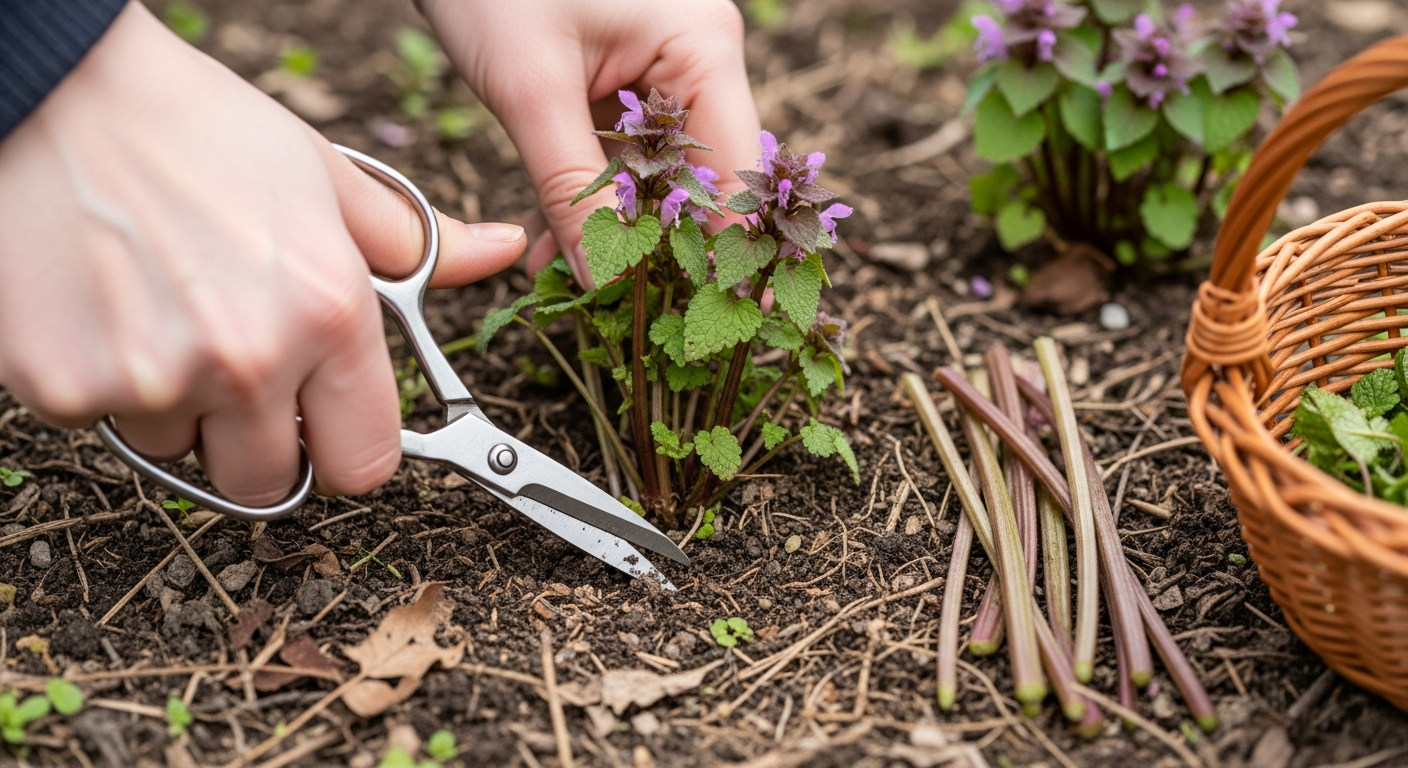
To harvest, snip the stems about half an inch from the ground using scissors or garden snips. Give the cut stems a good shake upside-down to dislodge any ants before bringing them inside, then rinse with cool water just before use. Don't soak them — they turn mushy quickly. The plant grows in clusters and is usually abundant once you spot it, so don't hold back.
Once the heat of late spring arrives, the plant dies back for the season — so harvest more than you think you need and dry the rest. I always kick myself in July when I wish I'd grabbed more in March.
5 Ways to Use Purple Dead Nettle Medicinally
You don't need a stocked apothecary to do any of this. Most of these preparations use things you already have at home.
1. Purple Dead Nettle Tea
Tea is the easiest starting point, and it's the preparation I reach for most often. Fresh or dried herb both work — use 2–3 tablespoons of fresh leaves per 8 ounces of hot water, or 1 tablespoon if you're using dried. Pour water that's just off the boil, then cover the cup while it steeps. That covering step matters — it traps the volatile medicinal compounds that would otherwise escape with the steam.
Steep for 5–8 minutes, then strain. Add raw honey to sweeten if you'd like. The flavor is earthy and mildly grassy — not minty, despite the mint family connection. It's mild enough to drink plain, and it pairs well with lemon balm or peppermint if you want something a little brighter. I make it the same way I'd make any herbal tea.
2. Tincture (For Longer Shelf Life + Allergy Season)
A tincture is worth making if you want something more concentrated and longer-lasting than tea. The shelf life is 1 year or more, which means one batch made in early spring can take you through allergy season and well into the following year. It's also easier to dose consistently than tea.
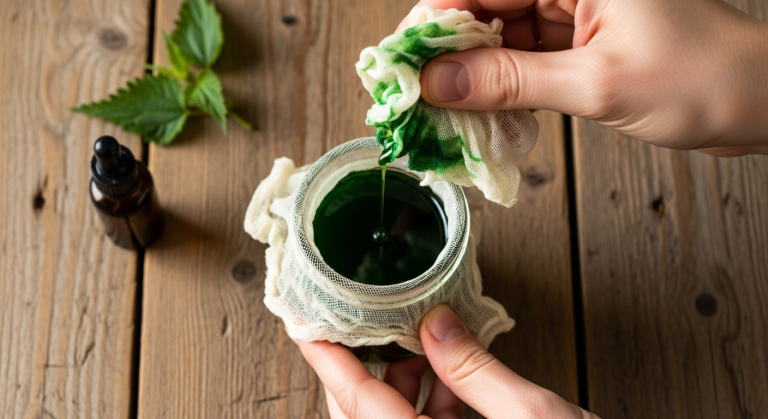
To make it: combine ¼ cup of chopped fresh purple dead nettle (or 2 tablespoons of dried) with ½ cup of high-proof vodka in a clean glass jar. Shake it well, then store it in a dark cabinet for 3–4 weeks, shaking every few days when you think of it. Strain through cheesecloth or a fine mesh strainer into a clean jar. A few drops to a full dropperful is a typical dose — start on the lower end and adjust from there. Mixing a dropperful with a spoonful of raw honey makes it much more palatable.
Make a batch every spring when the plant is fresh — one batch will last all the way through allergy season and beyond. I store mine in small amber glass dropper bottles — they block out the light that degrades tinctures over time, and make dosing easy without fumbling with a mason jar lid every time I need a dose. [Amazon amber dropper bottles]
3. Infused Oil (The Base for Salves and Skin Preparations)
Infused oil is the foundation for salves, lotions, and direct skin application — once you have a jar of infused oil, the salve step is only about 10 minutes away. The most important rule: use dried herb, not fresh. Fresh plant contains water that will cause your oil to go rancid quickly. Dry your harvest first, then infuse.
Here are the three methods, so you can choose what fits your timeline:
| Method | Instructions | Time | Best when |
|---|---|---|---|
| Slow (classic) | Pack dried herb in a jar, cover with oil, store in a cabinet and shake weekly | 4–6 weeks | Best potency — my default |
| Quick (double boiler) | Jar set in a pot of water over very low heat, stir occasionally | 2–3 hours | You need it today |
| Sunny window | Jar on a warm windowsill for 1 week, then move to a dark spot for 1 more week | ~2 weeks | Easy middle ground |
Good oil options: olive (most pantry-friendly), coconut (solid at room temp, great for salves), or sunflower. For anything going on skin, I prefer sunflower oil — it absorbs faster than olive and doesn't leave a greasy residue. [Amazon sunflower carrier oil]
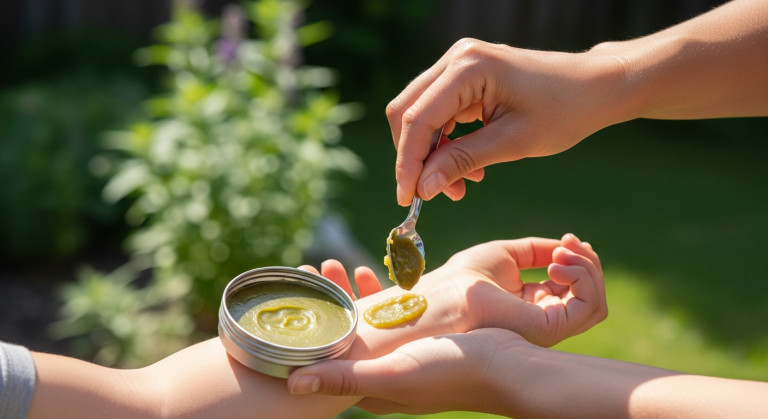
4. Salve (First Aid + Sore Muscles)
Salve is the most versatile preparation you can make — useful for minor cuts, bruises, muscle aches, and skin irritation. If you've made infused oil, you're most of the way there. The salve step takes about 10 minutes.
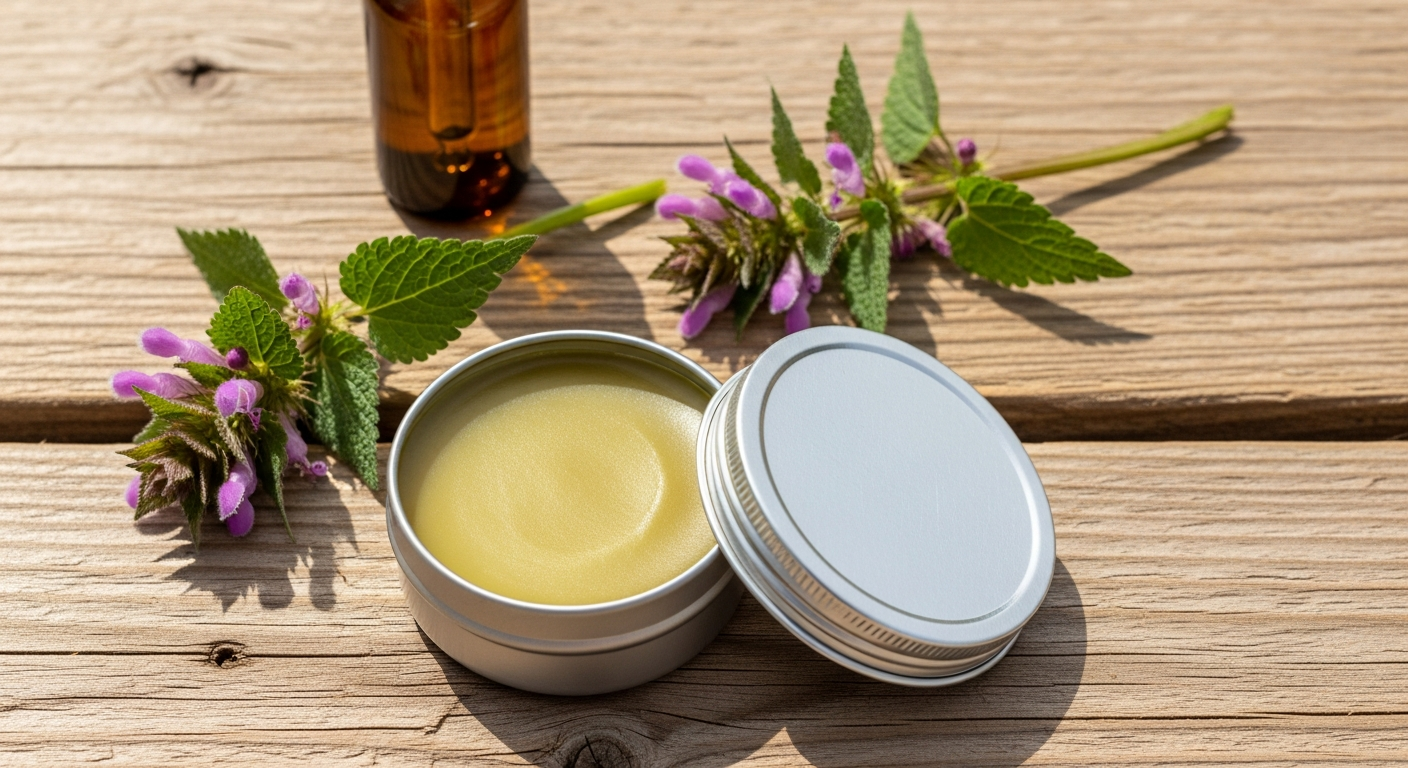
Combine 1 cup of strained infused oil with 3 tablespoons of beeswax in a double boiler or a glass jar set in a pot of simmering water. Stir until the beeswax melts fully into the oil. To test consistency, drop a small amount onto a cold plate — if it firms up too hard, add a bit more oil; if it's too soft, add a bit more wax. Pour into small tins or jars while still liquid and let cool completely before capping.
Beeswax pastilles melt much faster than a block and are easy to measure — a small bag will last you through several batches. [Amazon beeswax pastilles] I also add about 15 drops of lavender essential oil right before pouring into the tins — lavender adds its own anti-inflammatory properties and the scent is genuinely calming. [Amazon lavender essential oil] Apply a small amount to the affected area and rub in. Stored in a cool spot away from direct light, it keeps for about a year.
5. Poultice (The Simplest Thing You Can Do Right Now)
This is the zero-barrier, zero-equipment option — and the one that's been used the longest. Take a few fresh leaves, crush them in your hand or briefly chew them, and apply the resulting pulp directly to an insect bite, bee sting, or small wound. Hold it in place for a few minutes.
It's an old-fashioned first-aid skill that costs nothing and requires no planning. If you're out in the yard and get stung by something, the purple dead nettle is probably already growing nearby. There's something satisfying about that — the remedy right next to the hazard.
How to Dry and Store Purple Dead Nettle for Year-Round Use
The spring window is short. Even if you're not ready to make anything today, drying a batch takes about 10 minutes of active time and keeps your options open all year long. The dried herb can go into tea, tinctures, infused oils, or salves — so one batch covers all the preparations above.
Three ways to dry it:
- Air dry: Spread in a single layer on a clean dish towel or paper towel and leave in a warm spot with good airflow for a few days, until completely dry and crumbly.
- Dehydrator: 95–115°F for 1–4 hours — check it on the earlier end; it dries faster than you'd expect.
- Low oven: 175°F or below, spread on a baking sheet, for 8–10 hours. Check it periodically.
Once dry, store in an airtight jar away from heat and light. Label it with the date — dried herb stays potent for about 1 year, after which it starts losing medicinal strength even if it still looks fine.
If you dry herbs throughout the season — which I'd encourage — a dehydrator speeds the whole process up significantly. I use mine for everything from purple dead nettle to apple slices and dried fruit. It's one of those homestead investments that gets used constantly once you have it. [Amazon budget dehydrator]
Is Purple Dead Nettle Safe? (Honest Answers)
Yes, with a few sensible notes.
Generally Safe for Most People
Purple dead nettle is edible and has been used as both food and medicine for centuries across Europe and Asia. There's no documented toxicity. The "dead" in the name is a reference to its lack of sting — not any danger the plant poses. Most people can use it freely.
Pregnancy and Nursing
If you're pregnant or nursing, avoid internal use — meaning tea and tincture — unless your healthcare provider has specifically said it's fine. This is standard cautionary guidance that applies to most medicinal herbs during pregnancy, not something specific to a known risk with this plant. Using the salve topically is generally considered safe. Another wild plant worth knowing is mullein — especially if respiratory issues ever hit your household. My mullein tincture guide makes it easy to prep.
For Children
Fresh leaves and flowers are safe for children to nibble directly from the plant — it's a gentle spring green with no toxicity. If you're giving it to young children, remove the flower from its slightly scratchy calyx (the small green cup the flower sits in) first. For medicinal doses in children, check with your healthcare provider for appropriate guidance on quantity.
Things to Watch For
- Large amounts can cause mild laxative effects. Keep tea servings to a cup or two at a time and you're unlikely to encounter this.
- Some people experience mild skin irritation from handling. If you're harvesting a large amount, wash your hands afterward — especially before touching your eyes.
- No documented drug interactions for Lamium purpureum are on record (per the American Herbal Products Association's Botanical Safety Handbook), but if you're taking prescription medications, mention any new herbs to your doctor as a matter of habit.
Purple Dead Nettle FAQ
How do I use purple dead nettle medicinally?
The easiest way to start is with tea — steep 2–3 tablespoons of fresh leaves in hot water for 5–8 minutes, strain, and drink. For skin applications, crush fresh leaves and apply directly as a poultice. For a longer-lasting preparation, make a tincture (fresh plant + vodka, steep 4 weeks) or a salve (infused oil + beeswax).
What are the health benefits of purple dead nettle?
Purple dead nettle is anti-inflammatory, has mild antihistamine properties useful for seasonal allergies, helps with minor wound healing (astringent and antimicrobial), acts as a natural diuretic, and is nutritionally rich in vitamins A, C, and K.
Is purple dead nettle toxic to humans?
No. It's edible and has been used as food and medicine for centuries. Large amounts may cause mild laxative effects, so use moderately. The "dead" in its name means it doesn't sting — not that it's dangerous.
Can you tincture purple dead nettle?
Yes. Combine ¼ cup of chopped fresh purple dead nettle (or 2 tablespoons dried) with ½ cup of high-proof vodka. Shake, store in a dark cabinet for 3–4 weeks, then strain into an amber glass jar. Shelf life is 1 year or more.
Does purple dead nettle help with seasonal allergies?
It may. The plant's flavonoids can inhibit histamine release, which drives allergy symptoms. It's not a substitute for prescription medication in severe allergy cases, but many people find tea or tincture helpful as a daily preventive measure at the start of allergy season. Results vary individually.
What does purple dead nettle tea taste like?
Earthy and mildly grassy — not minty, despite being in the mint family. The flavor is mild enough to drink plain with honey, or blend with peppermint or lemon balm to brighten it up.