The Best Heated Water Hose for Livestock: What to Know Before You Buy (2026)
Last updated March 13, 2026
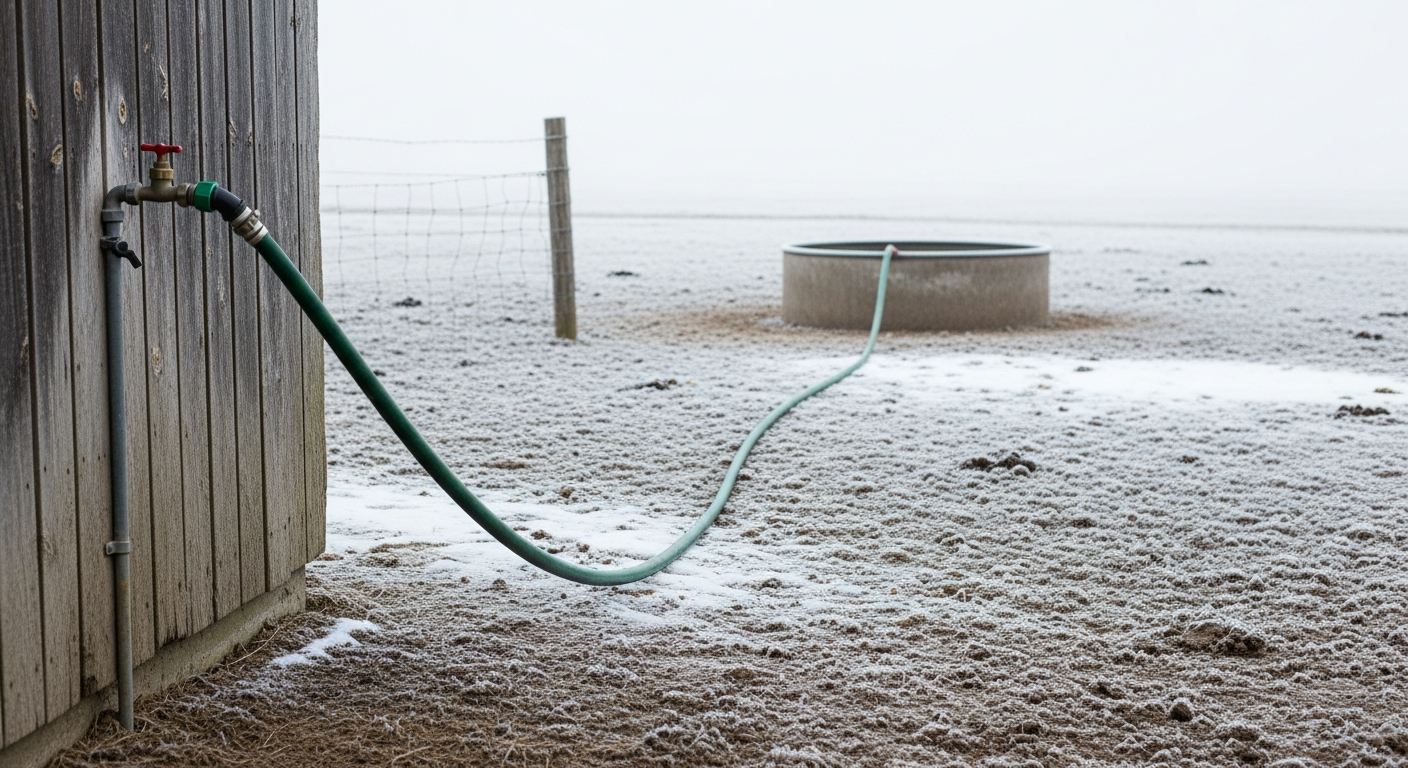
Your first winter with livestock teaches you things fast. One of the biggest surprises for most new homesteaders — including me — is how quickly water becomes the hardest part. Frozen hoses, frozen buckets, hauling warm water twice a day in the dark at 6 a.m. It gets old very fast. That's when you start hearing about heated water hoses, and you start wondering if they're actually worth the $150 to $300 price tag.
The short answer is yes — if your setup can accommodate one. But there are a few things I really wish someone had told me before I started researching these. This guide covers everything: how they work, the real gotchas to know before you order, how to choose between the two main brands, and what setup looks like. By the end, you'll know whether a heated hose will work for your property and which one to get.
Here's the quick version if you're already familiar with these hoses and just need to compare the two main options:
| Pirit Series IV | Allied Winterflo | |
|---|---|---|
| Best for | Long runs, single outlet setup | Short-medium runs, daisy-chaining |
| Lengths available | 10, 20, 40, 60, 100 ft | 25, 50 ft |
| Connect multiple hoses? | ❌ Voids warranty | ✅ Up to 4 (each needs its own outlet) |
| Warranty | 18 months | 12 months |
| Made in USA | ❌ | ✅ |
| Cold rating | -41°F tested | Not specified |
| Price range | ~$150–$300 | ~$180–$270 |
Not sure which one fits your situation? Keep reading — I'll break it down by scenario.
Does a Heated Water Hose Actually Work? (And Does It Heat the Water?)
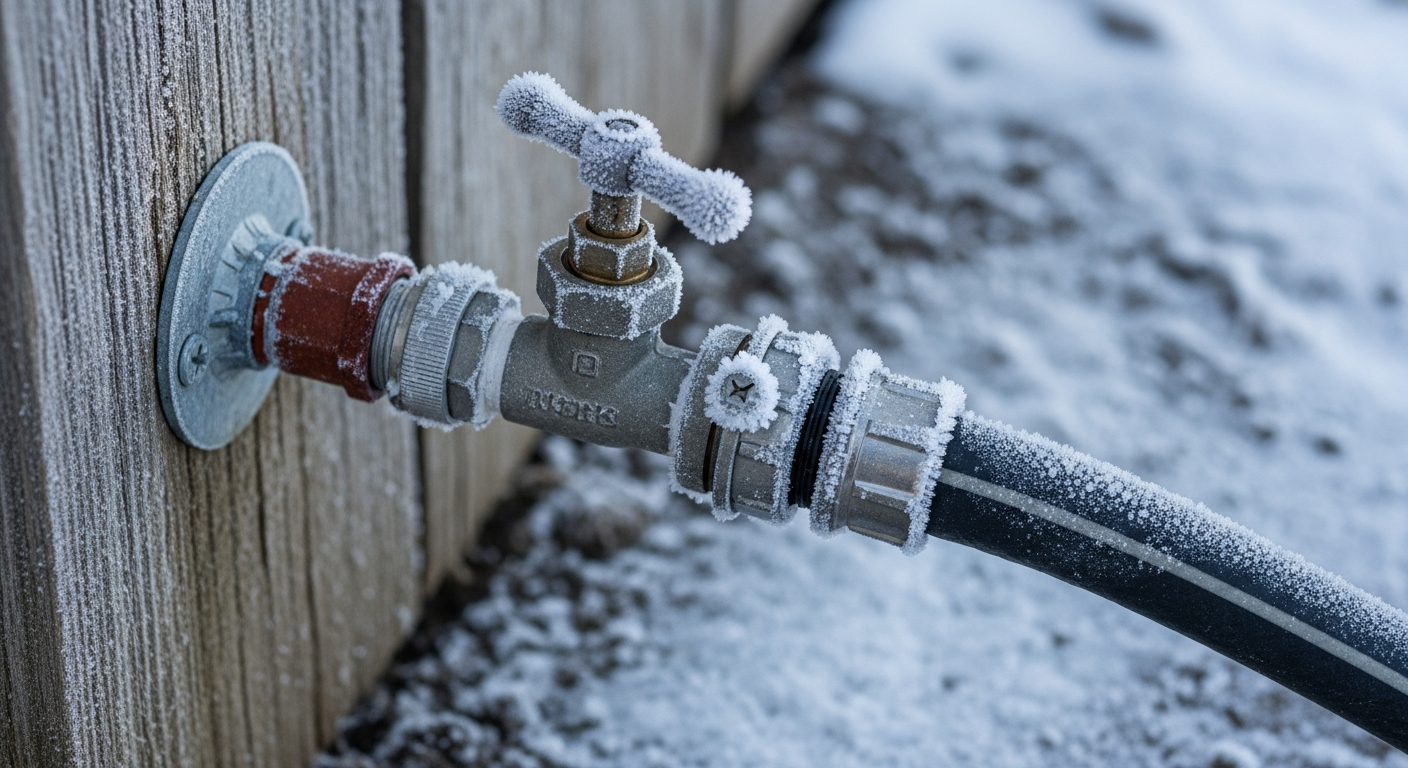
A heated water hose doesn't actually heat the water — it only prevents the hose itself from freezing. The hose contains an internal heating element that activates automatically when temperatures drop below 40°F and shuts off above 50°F, keeping water flowing through even in sub-zero conditions. The water comes out at ground or ambient temperature, not warmed.
That's the thing that catches most people off guard. These hoses are not a way to give your animals warm water in winter — they're a way to make sure water can still flow through the hose when it's 10 degrees outside. If your pipes and trough connection points don't freeze, you'll have running water all winter without hauling buckets.
Both Pirit and Winterflo use FDA-approved materials, which means the hose is safe for potable water and safe for all livestock to drink from. The thermostat does the work for you — you don't flip a switch when it gets cold. Just plug it in at the start of the season and leave it.
What to Know Before You Buy a Heated Livestock Hose
Before I ordered my heated hose, I spent a lot of time reading product listings and not much time reading actual homesteader experience. Here's what I found out the hard way — and what you need to know before you click "add to cart."
You Need a GFI Outlet Nearby — No Extension Cords Allowed
This is the one that almost stopped me in my tracks. A heated water hose must be plugged directly into a GFI outlet — the kind with the test and reset buttons, like you'd find in a bathroom, kitchen, or at an outdoor outlet box. You cannot use an extension cord.
This isn't just a manufacturer preference. The heating element draws a sustained electrical load, and using an extension cord creates both a fire hazard and a warranty-voiding situation. The manufacturers are clear on this point, and it's non-negotiable.
What that means practically: you need a working GFI outlet within hose-reach of your water trough. If your nearest outlet is 120 feet away and your longest hose option is 100 feet — which is the max for most brands — you have a problem. I'll cover solutions in the next section.
Available Lengths Are More Limited Than You'd Think
Heated hoses don't come in every length. You can't just order a 75-footer or a 35-footer. The available options are fixed:
- Pirit Series IV: 10 ft, 20 ft, 40 ft, 60 ft, 100 ft
- Allied Winterflo: 25 ft, 50 ft
Measure the actual distance from your outlet to your trough before you order, then round up to the next available size. Don't go shorter to save money — you'll end up with a hose that doesn't reach and have to buy again. And don't assume you can attach a regular garden hose extension to make up the difference. The heating element won't extend into it, which means that section of hose will freeze.
Can You Connect Two Heated Hoses Together?
Whether you can daisy-chain two heated hoses depends entirely on which brand you buy — and getting this wrong voids your warranty.
Pirit: Connecting two Pirit hoses together is not allowed and voids the warranty. If you need more than 100 feet, Pirit is not the right solution for your setup.
Winterflo: You can connect up to four Winterflo hoses together — but each one must be plugged into its own separate outlet. This is actually one of the main reasons I recommend Winterflo for certain setups. If you have two nearby GFI outlets and need 50 feet of coverage from each, you can run two Winterflo hoses end-to-end for up to 100 feet of reach total.
This difference between the brands is not mentioned anywhere in most product listings. It's a real-world consideration that can make or break whether a heated hose works for your property layout.
What If Your Outlet Is Too Far Away?
If your nearest GFI outlet isn't within hose range of your trough, you have a few options — none of them is "just use an extension cord."
Option 1: Reposition your water trough. This is the easiest fix if your layout is flexible. Moving the trough 20–30 feet closer to an existing outlet may solve the problem entirely.
Option 2: Install a weatherproof outdoor GFI outlet. This is what a lot of homesteaders end up doing, and it's the best long-term solution. It's an electrician job — typically $150–$300 depending on your area and how far the outlet needs to run — but it lasts forever. I've heard from more than a few homesteaders who said it was the best $200 they spent on the farm.
Option 3: Use a different solution entirely. If neither of the above works for your setup, a submersible tank de-icer does the same job from a different direction — it keeps the water in the trough from freezing rather than preventing the hose from freezing. It has its own outlet requirements, but it doesn't have the same distance limitations. Worth considering if the outlet situation isn't going to work out.
How Much Does a Heated Livestock Hose Cost to Run?
The wattage numbers on the product specs can look alarming if you don't translate them into real cost. Here's what you're actually looking at:
| Hose size | Wattage | Monthly cost (8 hrs/day)* | Seasonal cost (90 days)* |
|---|---|---|---|
| Winterflo 25 ft | 180W | ~$4 | ~$13 |
| Winterflo 50 ft | 360W | ~$8 | ~$25 |
| Pirit 100 ft | 500W | ~$11 | ~$35 |
Based on $0.13/kWh national average. Your rate may vary.
A few things keep that number lower than you might expect. The thermostat only activates when temps drop below 40°F, so you're not paying for heat on mild winter days. In my experience, we have about 60–90 hard days a winter in the Midwest where the hose actually needs to run, and it doesn't run all day — mostly overnight and in the early morning hours.
For context: that $35 seasonal estimate for a 100-foot hose is less than a bag of livestock feed. And animals that aren't drinking enough in winter are animals that get sick. The electricity cost is genuinely the least of your concerns here.
Pirit vs. Winterflo — Which Heated Livestock Hose Should You Buy?
Here's the full comparison using confirmed specs from manufacturer data and product listings:
| Feature | Pirit Series IV | Allied Winterflo |
|---|---|---|
| Made in USA | ❌ | ✅ |
| Lengths available | 10, 20, 40, 60, 100 ft | 25, 50 ft |
| Connect multiple hoses? | ❌ Voids warranty | ✅ Up to 4 (each needs outlet) |
| Thermostat activates | Below 40°F | Below 40°F |
| Shuts off above | 50°F | 50°F |
| Cold rating tested to | -41°F | Not specified |
| Wattage | ~180W per 25 ft | ~180W per 25 ft |
| Fittings | Nickel-plated brass | Standard brass |
| FDA approved | ✅ | ✅ |
| PSI rating | 200 PSI | Not specified |
| Warranty | 18 months | 12 months |
| Price range | ~$150–$300 | ~$180–$270 |
Choose Pirit if: You need more than 50 feet of coverage from a single outlet, you want the longest warranty (18 months), or you're in an extremely cold climate and want that -41°F tested rating. Pirit has more length options and the better cold-weather specification.
Choose Winterflo if: 25–50 feet is enough distance for your setup, you prefer a Made in USA product, or you need to daisy-chain two runs from two separate outlets to cover more distance. Winterflo's flexibility on connecting hoses makes it the right call for certain property layouts.
Both brands have nickel-plated or standard brass fittings (avoid cheap plastic fittings — they crack in extreme cold), and both are FDA approved for potable water. Either one will keep your livestock water flowing through a normal winter.
How to Set Up Your Heated Livestock Hose (Step-by-Step)
This is genuinely not complicated once your outlet situation is sorted out. Here's what to do before your first hard freeze.
Before you start:
- Measured the distance from your outlet to the trough
- Confirmed your GFI outlet is working (plug in a lamp or use a GFI tester)
- Ordered the right hose length (measuring twice first — don't assume)
- Have a hose hanger or cable anchor to keep the hose off frozen ground
Setup steps:
- Connect the hose to your outdoor spigot — hand-tight is fine, no tools needed
- Run the hose to your trough, routing it so it won't get stepped on or driven over
- Connect the hose to the trough fitting
- Plug into the GFI outlet
- After 30 minutes, feel the hose — it should be slightly warm to the touch. If it's not, check the outlet and verify the temperature outside is below 40°F (the thermostat won't activate above that)
- Confirm water is flowing normally to the trough
A few notes for longevity: store the hose indoors during the off-season — the heating element does degrade faster if it sits outside through a hot summer. Coil it loosely when storing — kinking shortens its life. A hose hanger attached near the outlet area keeps the hose elevated off wet or frozen ground during the season.
Best Heated Hose for Livestock: My Recommendation
For most homesteaders — especially those with a straightforward outlet-to-trough setup — I'd go with the Pirit Series IV. It has the longer warranty (18 months vs. 12), the wider range of lengths, and that -41°F cold rating matters if you're in a genuinely cold climate. The fact that you can't daisy-chain Pirit hoses is only a limitation if you need to cover more distance than one hose allows, which most small-scale homesteaders don't.
If 25–50 feet covers your distance and you either want Made in USA or need to run two segments from two outlets, the Allied Winterflo is a solid choice. Valley Vet sells the 25-foot version for around $179 with free shipping, which is the best price I've seen.
If budget is a real constraint, there are also Amazon-brand heated hoses (like HEATIT) that come in around the same price range — I'd read the reviews carefully and look for similar specs before going that route.
A couple of things worth adding to your order:
- A hose hanger or cable staples (~$10–15) to keep the hose elevated and protected
- A weatherproof outdoor outlet cover (~$8–12) if your GFI outlet is exposed to snow and rain
Neither of those is strictly required, but both extend the life of the setup significantly.
FAQ — Heated Water Hose for Livestock
Does a heated water hose actually heat the water? No. A heated water hose prevents the hose from freezing but does not warm the water. The water flows at ground or ambient temperature. The heating element activates only to keep the interior of the hose above freezing, not to heat the water passing through it.
Can you use an extension cord with a heated water hose? No. Heated hoses must be plugged directly into a GFI outlet. Extension cords are prohibited by manufacturers — they create a sustained electrical load that is a fire hazard and will void your warranty. If your outlet isn't within reach, installing a weatherproof outdoor GFI outlet is the right solution.
What temperature does a heated hose turn on? Most heated livestock hoses, including both Pirit and Winterflo, activate automatically when outside temperatures drop below 40°F and shut off when temperatures rise above 50°F. The thermostat is built into the hose — you don't need to manually control it.
Can I leave a heated hose outside all winter? Yes — that's exactly what they're designed for. For best results, keep the hose elevated off the ground with a hose hanger if possible, since prolonged contact with frozen ground adds wear. Store indoors in the off-season to extend the life of the heating element.
Is a heated water hose safe for chickens and other livestock? Yes. Both Pirit and Allied Winterflo are made from FDA-approved materials rated for potable water. They're safe for chickens, goats, cattle, and any other livestock.
How long does a heated water hose last? Pirit's warranty is 18 months; Winterflo's is 12 months. With proper care — storing indoors in the off-season and keeping the hose from kinking — many homesteaders report getting 3–5 years out of them.
What size heated hose do I need for livestock? Measure the distance from your outdoor GFI outlet to your livestock water trough, then round up to the next available size. Don't go shorter to save money — the hose needs to reach without being pulled tight or kinked. Remember that available lengths are fixed: Pirit comes in 10, 20, 40, 60, and 100 ft; Winterflo comes in 25 and 50 ft.