

Nurture Right 360 Incubator Review: Is It Worth It for Beginners? (2026)
Last updated March 12, 2026
Nurture Right 360 — Quick Snapshot
Rating: 4/5 | Best for: First-time hatchers, backyard chicken keepers on a budget
Capacity: 22 chicken eggs | Hatch rate: 50% (shipped eggs) to 80%+ (fresh eggs, proper setup)
One thing to know before you start: Set the temperature to 100.5°F — this incubator runs cold, and that single adjustment can make or break your hatch.
Bottom line: A solid beginner incubator at around $80 with features you'd pay twice as much for elsewhere.
My Honest Take: Is the Nurture Right 360 Worth It?
If you've been researching this incubator, you've probably already stumbled into a forum thread titled "Nurture Right 360 is trash." I saw it too, and I spent a lot of time digging into what's actually going on before writing this review.
Here's my honest answer: the Nurture Right 360 is a good incubator — especially for the price. It holds a 4.6/5 rating from over 3,172 reviews on Tractor Supply. But the mixed opinions online are real, and they have a specific cause. This incubator runs about 1°F cold, and if you don't know to correct for that, you'll lose eggs. A lot of the negative reviews come from users who set the temperature to 99.5°F and wondered why their hatch rate was disappointing.
The other issue is the lid. It has to seat precisely into a ring of notches on the base, and if it's even slightly off, the temperature fluctuates — a lot. Once I understood those two things, the divided reviews made complete sense.
For most first-time hatchers looking for a budget-friendly incubator with real features — auto turner, built-in candler, 360° visibility — yes, the Nurture Right 360 is worth it. Just go in knowing the quirks, and you'll do well.
Nurture Right 360 Features: What Works and What Doesn't
Here's a breakdown of each major feature based on what real users experience — not just what the box says.
Does the Nurture Right 360 Run Cold? (Yes — Here's What to Set It To)
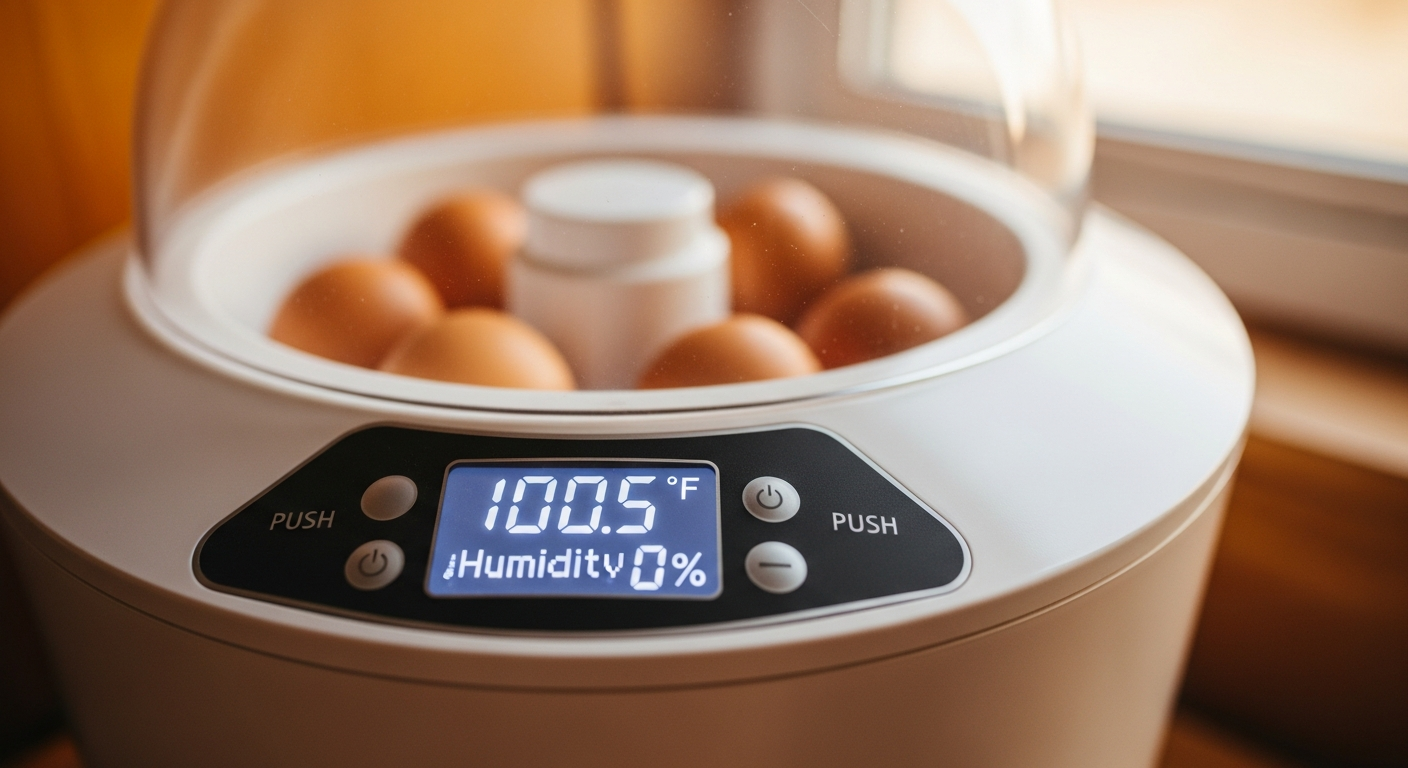
This is the single most important thing I can tell you before your first hatch: set the temperature to 100.5°F, not 99.5°F.
The Nurture Right 360 runs approximately 1°F cold. That means if you set it to the standard 99.5°F hatching temperature, your eggs are actually sitting at about 98.5°F — cold enough to slow development and significantly hurt your hatch rate. This tip is buried in forum threads, and I'm putting it at the top of this section because it matters that much.
One more quirk to know: the center of the incubator runs about 2°F cooler than the outer egg slots. It's minor, but it means eggs in the center get slightly different treatment than eggs on the outer ring. The easy fix is to rotate your eggs from the inner ring to the outer ring every few days to give them even heat exposure.
Always verify your actual temperature with a calibrated external thermometer — never rely solely on the built-in display. The built-in readout can drift, and you want to know what temperature your eggs are actually experiencing, not just what the unit thinks it's measuring.
Humidity Control (The A/B Water Port System)
The Nurture Right 360 has a dual-reservoir water system that's cleverly designed once you understand how it works. There are two external fill ports on the base — Port A and Port B — and knowing which one to use at what time is key to keeping humidity stable.
Use Port A only for days 1 through 18. Your target humidity during incubation is 45–55%. Fill Port A through the small external opening on the base — you never need to open the lid to add water, which is one of the genuinely great design features of this incubator. You'll also use the small vent on the lid to fine-tune humidity: open it slightly to lower humidity, close it slightly to raise it. Check and refill Port A every 24 hours — it's a manual system, not automatic.
Port B is for lockdown only — the final three days (Day 18–21 for chickens) when you need to bump humidity up to 65–70% so the chicks can hatch safely. Add water to Port B on Day 18 and top off Port A at the same time.
If your humidity is too high during incubation: first check that Port B isn't filled. Then try opening the vent slightly to let moisture escape. This is the most common cause of the "humidity too high" problem that comes up in searches.
Automatic Egg Turner
The automatic egg turner is one of the Nurture Right 360's best features — and also the one with the most uneven quality history. Most units work exactly as advertised: eggs rest on a rotating disk that tilts them gently several times a day, and the turner shuts off automatically three days before hatch so chicks can position themselves for hatching.
Here's what to do before adding your eggs: plug in the incubator and watch the turner move. Some units ship with a DOA (dead on arrival) turner — it's not common, but it happens. If the turner doesn't move within the first hour of being plugged in, return the unit immediately. Don't try to fix a defective turner with eggs already inside.
The longer-term reality: the turner motor can fail after two to three years of use, and Manna Pro does not stock replacement parts for older Nurture Right incubators. If your turner fails post-warranty, you'll likely need to replace the whole unit. Factor that in if you're planning to hatch multiple batches over several years.
If the turner ever fails mid-incubation, you can turn eggs manually three times a day. Mark one side of each egg with an X and the other with an O so you always know which direction you last turned them.
Built-in Candling Light
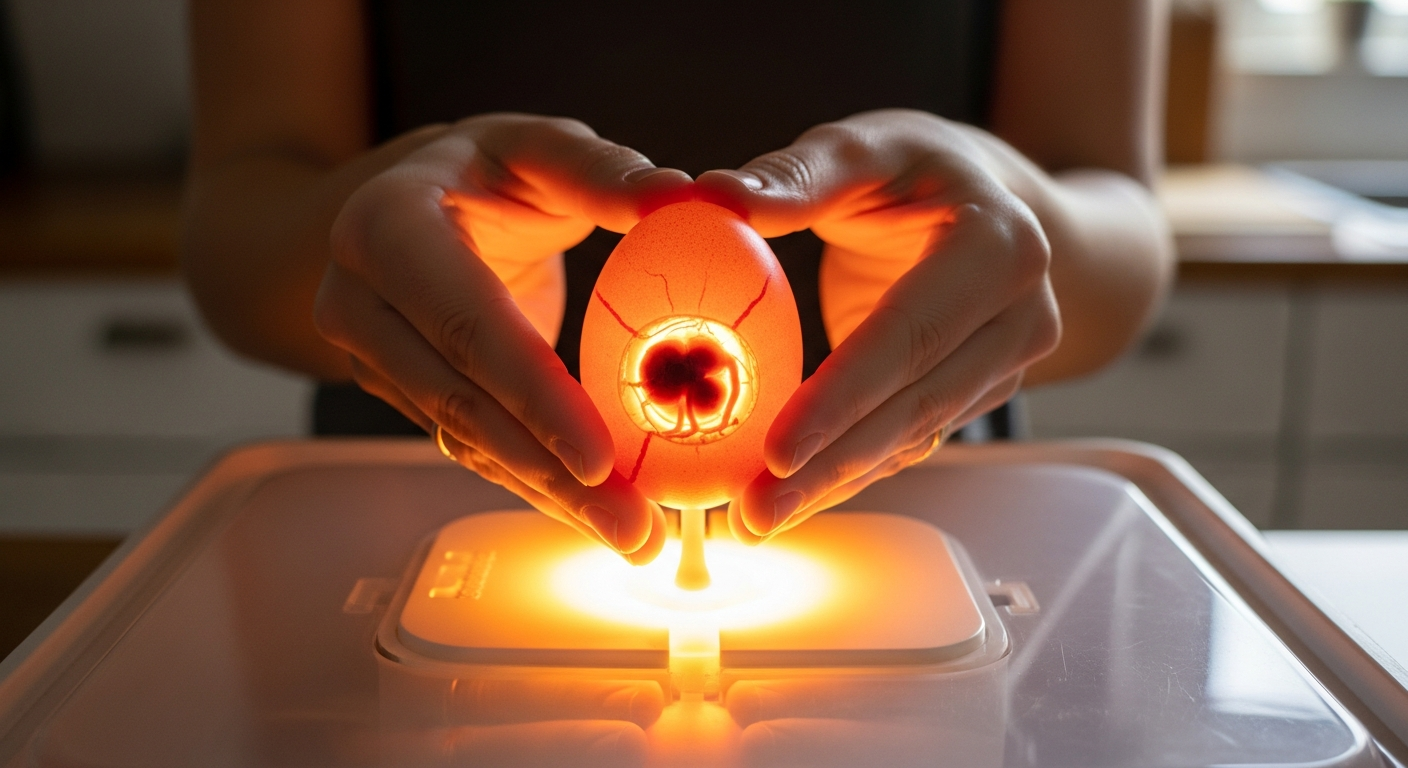
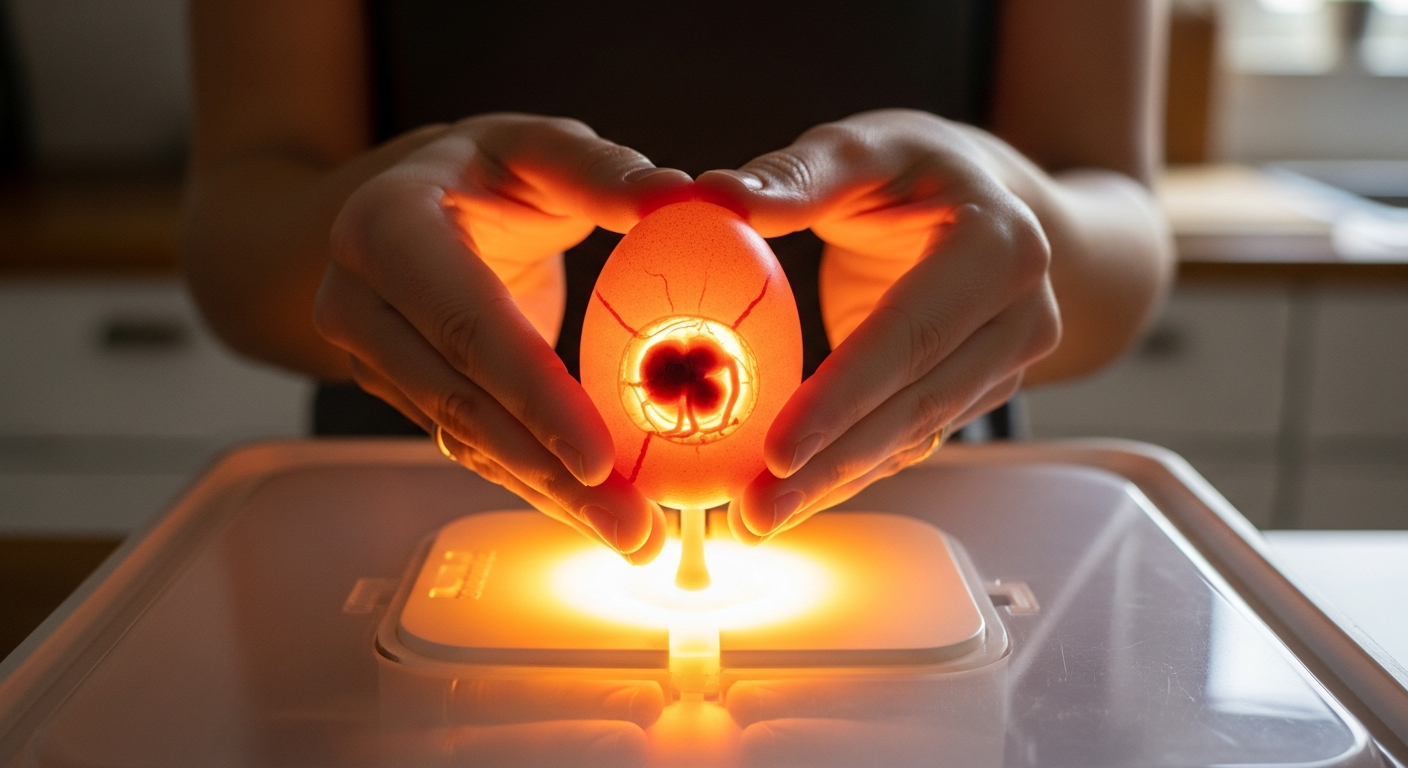
The built-in candling light is one of my favorite things about the Nurture Right 360. There's a bright LED right in the lid, and you don't need to buy a separate candler — which saves money and simplifies the process for first-timers who are already juggling a lot of new information.
To use it, you have two options. Remove the lid completely, set it on a flat surface, and hold each egg over the light one at a time — this gives you the clearest view. Or crack the lid just enough to pull one egg out at a time and candle it quickly to preserve temperature and humidity inside. Both methods work.
What to look for: by Day 7 you should see veining — thin red lines branching from a dark center point. By Day 14 you'll see a large dark mass filling most of the egg, with a clear air cell on the blunt end. If an egg shows no development by Day 10, it's likely infertile and can be removed.
The 360° Viewing Window
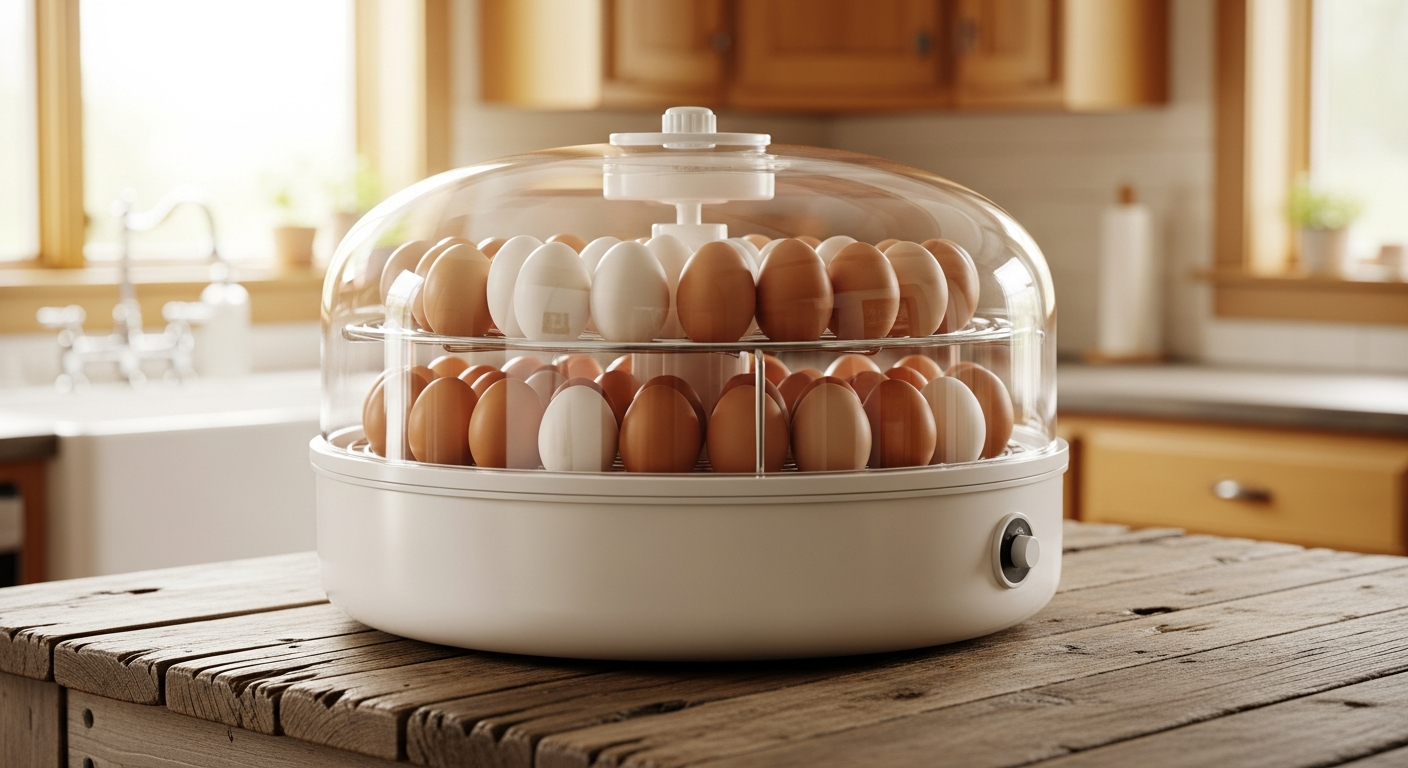
The 360° viewing window is what makes this incubator stand out on the shelf — and it genuinely lives up to the name. You get a full panoramic view of every egg from any angle, which means you won't miss a pip (the first crack a chick makes in the shell) or a hatch in progress.
Watching chicks break out of their shells is one of the most rewarding parts of keeping chickens, and the Nurture Right 360 is designed to make sure you're there for all of it. Newer models have improved lid clarity over older versions, so what you get today is noticeably better than early production units.
One thing to know: the lid sits directly on the base without handles or latches, which is part of what makes the unobstructed view possible. It also means you need to be intentional about seating the lid fully into the notches every time you open and close it — a partially seated lid is the most common cause of the temperature fluctuations that frustrate users.
Nurture Right 360 Pros and Cons
Pros:
- 360° panoramic view of all eggs from any angle
- External water fill ports — no need to open the lid during incubation
- Built-in LED egg candler (no separate candler needed)
- Auto egg turner included — no manual turning required
- Turner stops automatically 3 days before hatch
- Easy cleanup — base disassembles into 3 pieces
- Available at Tractor Supply in-store — easy in-person returns if your unit is defective
- Good feature set for the price (~$80)
- 4.6/5 stars from 3,172+ reviews
Cons:
- Runs ~1°F cold — must set to 100.5°F, not 99.5°F
- Lid must seat precisely into notches or temperature fluctuates
- No handles on the lid — awkward one-handed operation
- Center slot runs ~2°F cooler than outer slots
- No replacement parts available for older units
- Temperature alarm is very loud and difficult to disable
- Bulky eggs (duck, goose) fit awkwardly in the chicken-optimized turner
My Hatch Rates (and What to Realistically Expect)
Hatching for the first time is exciting and nerve-wracking in equal measure. Here's what you can realistically expect based on what users across dozens of reviews report — not just the best-case scenarios.
For shipped eggs, expect around a 50% hatch rate. This isn't a knock on the incubator — shipped eggs are stressed by temperature swings and jostling during transit, and some simply won't be viable by the time they arrive regardless of what incubator you use. A 50% hatch rate with shipped eggs is considered normal and even good.
For fresh local eggs, experienced users who set the incubator up correctly report hatch rates of 80% or better. The two biggest variables are the temperature setting (100.5°F, not 99.5°F) and lid seating. Users who trace disappointing hatches back to the incubator almost always find one of those two things was off.
If your first hatch isn't what you hoped, don't give up on the incubator — troubleshoot the setup first. More often than not, adjusting the temperature and double-checking lid seating makes a dramatic difference on the next batch.
7 Tips to Get the Best Hatch Rate with the Nurture Right 360
These tips come directly from experienced users — the BackYard Chickens community, specialty incubator reviewers, and people who've hatched dozens of batches with this unit. I've consolidated the most useful advice so you don't have to dig through forum threads to find it.
-
Set the temperature to 100.5°F. This is the single most important thing you can do. The incubator runs cold, and correcting for this one adjustment makes a measurable difference in hatch rates.
-
Verify with a calibrated external thermometer. Don't rely on the built-in display as your only source. A calibrated digital thermometer/hygrometer placed inside the incubator tells you what's actually happening at egg level — not just what the unit thinks it's measuring.
-
Check lid seating before every incubation. Before you add eggs, close the lid and run your finger around the base connection. It should feel seated firmly in the notches all the way around. A partially seated lid is the most common cause of unexplained temperature swings.
-
Rotate eggs from inner ring to outer ring every few days. The center of the incubator runs slightly cooler than the edges. Moving eggs between the inner and outer slots gives them more even heat exposure across the full incubation period.
-
Check the water level every 24 hours. The humidity system is manual. Port A can run dry quickly in a warm, dry room. A quick refill takes 30 seconds and keeps humidity stable throughout.
-
In cold rooms or garages, drape a doubled beach towel over the unit. Ambient room temperature affects the incubator's ability to hold heat consistently. A beach towel folded over the top and sides helps buffer against temperature swings in unheated spaces.
-
Don't open the lid during lockdown (Days 18–21). Every time you open the lid, the warm humid air the chicks need to hatch safely escapes. Unless there's a genuine emergency, keep it closed and watch through the 360° window.
Nurture Right 360 vs. Brinsea vs. Budget Incubators
Not sure where the Nurture Right 360 fits in the market? Here's a quick comparison across three price tiers.
| Budget Incubator (~$40) | Nurture Right 360 (~$80) | Brinsea ($300+) | |
|---|---|---|---|
| Price | ~$40 | ~$80 | $300+ |
| Auto Turner | Usually no | Yes | Yes |
| 360° View | No | Yes | No |
| Humidity Control | Manual | Manual | Automatic |
| Built-in Candler | No | Yes | No |
| Replacement Parts | N/A | No | Yes |
| Best For | Very tight budget; simple first try | Most beginners | Serious or frequent hatchers |
For most beginners, the Nurture Right 360 is the right choice. You get auto-turning, a built-in candler, and panoramic visibility without paying Brinsea prices. The Brinsea is genuinely better — it has automatic humidity control and long-term parts support — but the price difference is hard to justify for someone hatching one or two batches per year.
How to Set Up the Nurture Right 360 Step by Step
Here's the quick-start walkthrough for your first incubation. Follow these eight steps before adding any eggs.
-
Wash the unit before first use. Warm soapy water on the base and lid. Rinse completely, then dry.
-
Run a 24-hour dry test. Plug it in without any eggs inside and let it run for a full day. This confirms the unit is working properly and gives the temperature time to stabilize.
-
Set the temperature to 100.5°F. See the temperature section above — this is the most important step.
-
Fill Port A with room-temperature water. Leave Port B empty until Day 18 (lockdown).
-
Adjust the vent until humidity reads 45–55%. Open the small vent on the lid to lower humidity; close it slightly to raise it. Give it 30–60 minutes to stabilize after any adjustment.
-
Add your eggs. Place them in the auto-turner tray either on their sides or pointy end down. Do not stand them straight upright.
-
Check daily: temperature, humidity, water level in Port A. This takes about two minutes per day.
-
On Day 18, begin lockdown. Slide out the turner tray, fill both Port A and Port B, and stop opening the lid. Now you wait and watch through the 360° window.
Can You Hatch Duck Eggs in the Nurture Right 360?
Yes — but with some important caveats. The official capacity for duck eggs is 12–18 (compared to 22 chicken eggs), and the turner trays are designed for chicken-sized eggs. Larger duck eggs can shift or sit awkwardly in the holders, which may result in uneven turning.
Duck eggs also incubate differently: they take 28 days instead of 21, and they need higher humidity at lockdown — around 70–75% rather than the 65–70% used for chickens. Some duck breeds also benefit from lightly misting the eggs once daily during incubation to mimic the moisture a duck would naturally provide.
It works for ducks, but if you're primarily hatching ducks rather than chickens, a dedicated duck incubator with adjustable egg holders would give you more consistent results. For the occasional duck batch mixed in with chicken hatching, the Nurture Right 360 does the job.
Nurture Right 360 FAQ
Is the Nurture Right 360 a good incubator?
Yes — for the price. It's not perfect (it runs a degree cold, and the lid can be fussy), but when set up correctly it delivers 80%+ hatch rates for experienced users. For a first-time hatcher on a budget, it's one of the best options available.
How long does the Nurture Right 360 take to work?
Allow 24 hours for the incubator to fully stabilize before adding eggs. Chicken eggs take 21 days total; duck eggs take 28 days. The auto-turner runs continuously from Day 1 and stops automatically on Day 18.
What temperature should I set the Nurture Right 360 to?
Set it to 100.5°F. The Nurture Right 360 runs about 1°F cold, so a 100.5°F display setting delivers the correct 99.5°F egg temperature. Always verify with a calibrated external thermometer.
Why is my Nurture Right 360 humidity too high?
Check which water port is filled — Port B is only for lockdown (Day 18+). During incubation, use Port A only. Also try opening the vent on the lid slightly to allow more air exchange and let some moisture escape.
What are common problems with egg incubation?
With the Nurture Right 360, the three most common issues are: (1) temperature running cold — fix by setting to 100.5°F; (2) lid not seating properly — causing temperature swings; and (3) forgetting to refill Port A — causing humidity to drop unexpectedly.
Can you get replacement parts for the Nurture Right 360?
No. Manna Pro does not stock replacement parts for older Nurture Right incubators. If your auto-turner motor fails after the warranty period, the unit cannot be repaired. Budget to replace the unit every 3–4 years if needed.
What is the number one egg incubator?
The Brinsea is widely considered the gold standard — automatic humidity, precise temperature control, and long-term parts support — but at $300+, it's a significant investment. The Nurture Right 360 is the best incubator for beginners who want reliable features without paying Brinsea prices.
Is the Nurture Right 360 the same as the Harris Farms incubator?
Yes. The Nurture Right 360 is made by Harris Farms and sold under the Manna Pro brand. You'll see all three names on different product listings — they're all the same incubator.
Where to Buy the Nurture Right 360
The price on the Nurture Right 360 fluctuates — you'll typically find it somewhere between $60 and $100 depending on where you shop and whether any sales are running.
Amazon is usually the best place to start for price and convenience, and the return process is simple if your unit has a defective turner or any other problem.
Tractor Supply carries it in-store at most locations. I'd especially recommend this option if you're nervous about receiving a defective unit — you can walk it right back to the customer service counter without dealing with shipping a box. Check current stock at your local store before making the trip.
Chewy also carries it and occasionally runs it on sale, so it's worth a quick check if you're comparing prices.
One important note: if your unit arrives with an auto-turner that doesn't move, return it immediately. Don't wait, don't troubleshoot, don't try to hatch eggs in it. Get a replacement — the problem is in the unit, not in your setup.


